
Search
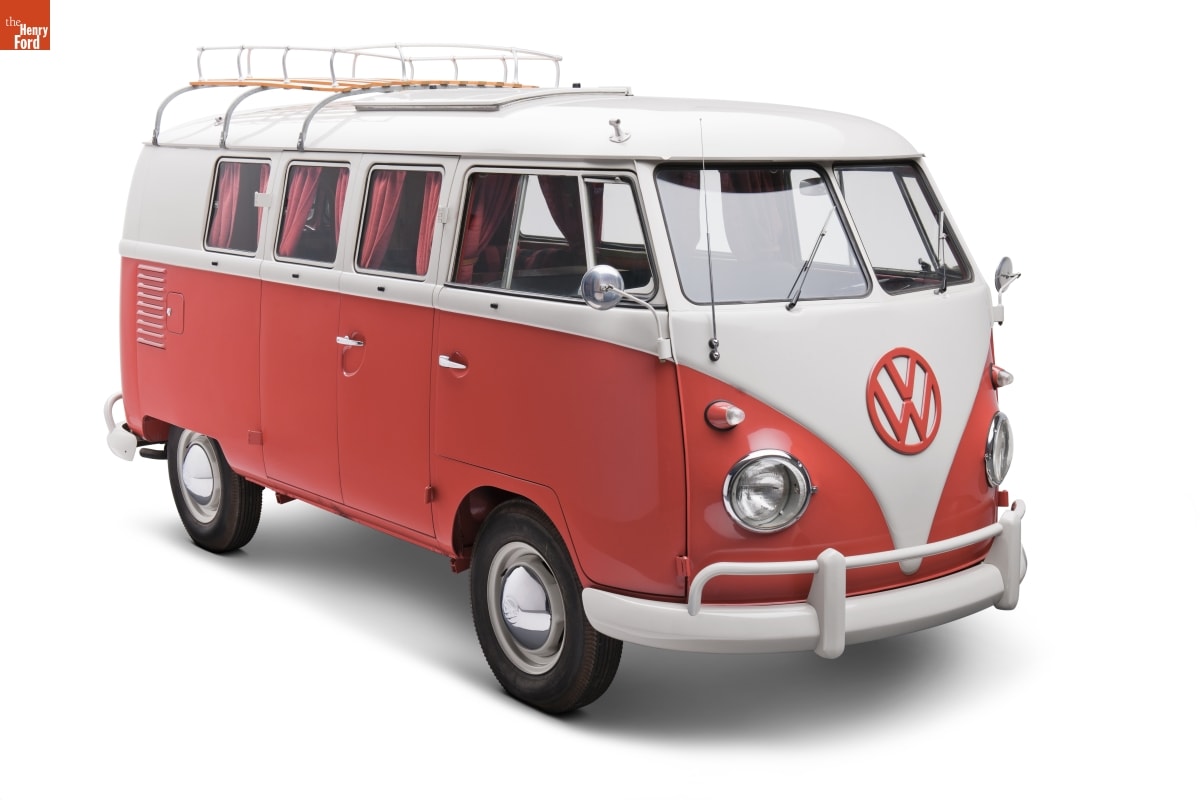
- 1959 Volkswagen Westfalia Camper - Volkswagen introduced its "box on wheels," the VW Type 2 Bus, in 1949. A few years later, VW contracted with Westfalia and introduced converted campers. First exported to the U.S. in 1956, Westfalia campers provided home-like camping comfort and created a postwar recreational-vehicle lifestyle. This soon-to-be cultural icon transported Americans down highways and byways and into the great outdoors.
- 1959
- Collections - Artifact
1959 Volkswagen Westfalia Camper
Volkswagen introduced its "box on wheels," the VW Type 2 Bus, in 1949. A few years later, VW contracted with Westfalia and introduced converted campers. First exported to the U.S. in 1956, Westfalia campers provided home-like camping comfort and created a postwar recreational-vehicle lifestyle. This soon-to-be cultural icon transported Americans down highways and byways and into the great outdoors.
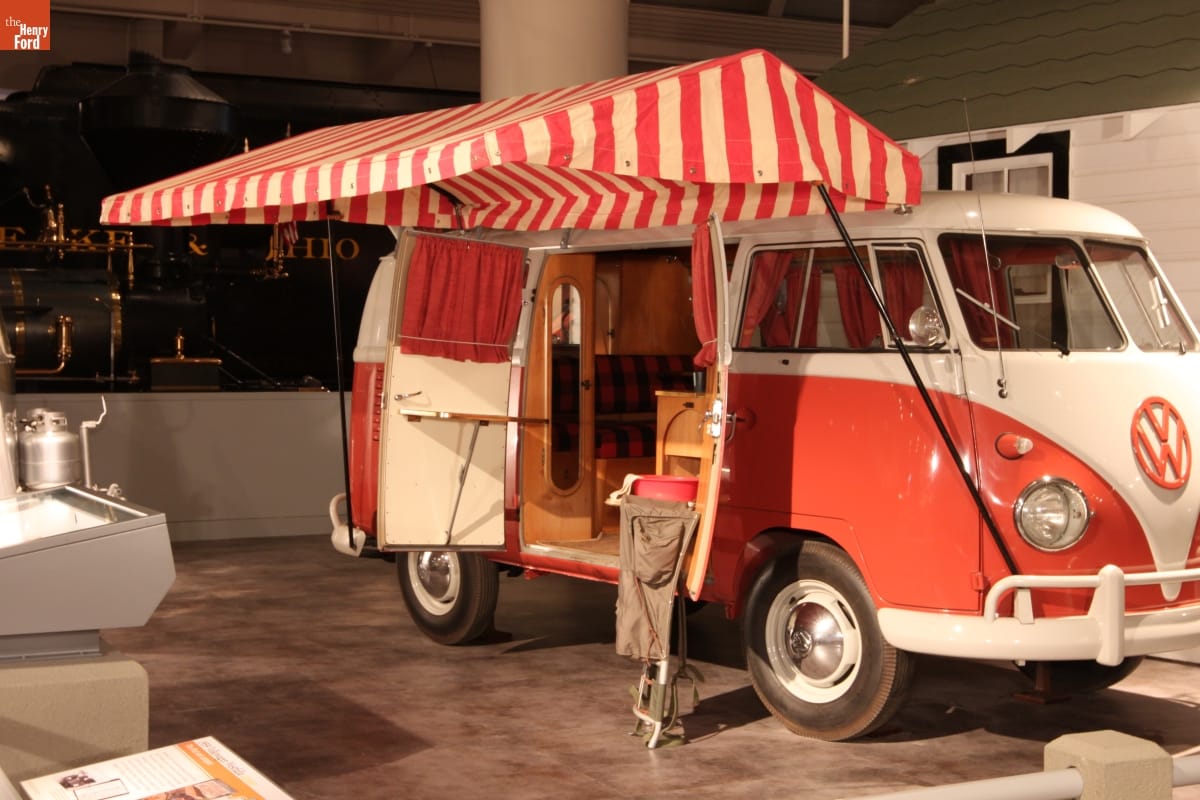
- Awning for Volkswagen Westfalia Camper, 1959 - Volkswagen began exporting Westfalia converted van campers to the United States in 1956. These ingeniously compact, versatile vehicles provided home-like camping comfort and helped shape postwar America's recreational lifestyle. To customize their van camping experience, Wesfalia owners could purchase optional pop up tents, side tents, and awnings in coordinating colors.
- 1959
- Collections - Artifact
Awning for Volkswagen Westfalia Camper, 1959
Volkswagen began exporting Westfalia converted van campers to the United States in 1956. These ingeniously compact, versatile vehicles provided home-like camping comfort and helped shape postwar America's recreational lifestyle. To customize their van camping experience, Wesfalia owners could purchase optional pop up tents, side tents, and awnings in coordinating colors.
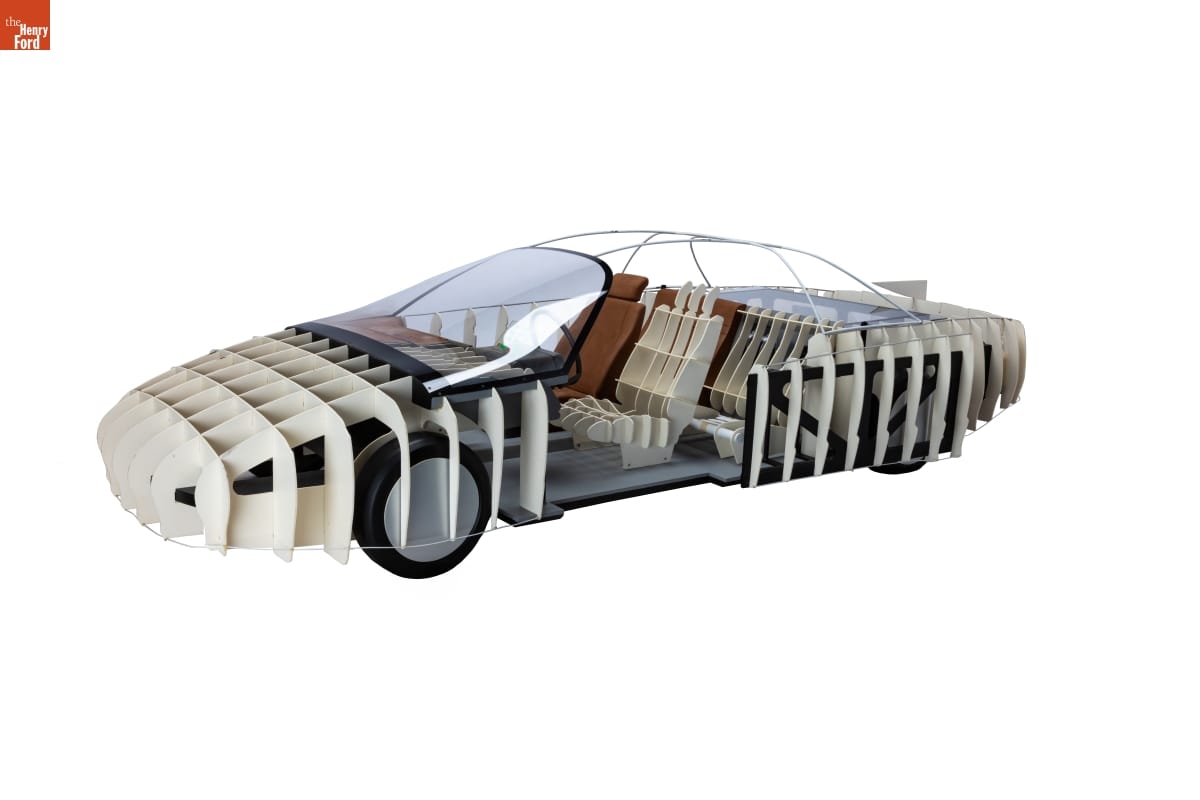
- Rear Engines - The "Probe" name had a long history at Ford Motor Company. It appeared on a series of five advanced concept cars from 1979 to 1984, including the mid-engine Probe V represented by this model. "Probe" then appeared on a production vehicle from 1989 to 1997 -- a sporty front-engine, front-wheel-drive car initially designed as the fourth-generation Mustang.
- April 18, 2017
- Collections - Set
Rear Engines
The "Probe" name had a long history at Ford Motor Company. It appeared on a series of five advanced concept cars from 1979 to 1984, including the mid-engine Probe V represented by this model. "Probe" then appeared on a production vehicle from 1989 to 1997 -- a sporty front-engine, front-wheel-drive car initially designed as the fourth-generation Mustang.
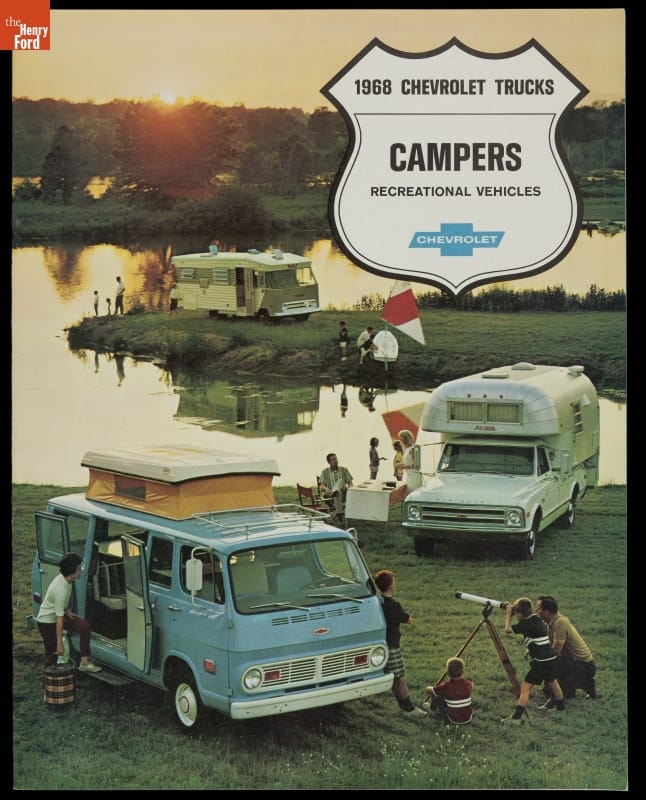
- Recreational Vehicles - Auto manufacturers embraced the market potential of campers and motorhomes in the 1960s, creating their own versions. This 1968 Chevrolet recreational vehicle catalog provided potential buyers with needed information and a variety of available choices.
- January 13, 2016
- Collections - Set
Recreational Vehicles
Auto manufacturers embraced the market potential of campers and motorhomes in the 1960s, creating their own versions. This 1968 Chevrolet recreational vehicle catalog provided potential buyers with needed information and a variety of available choices.
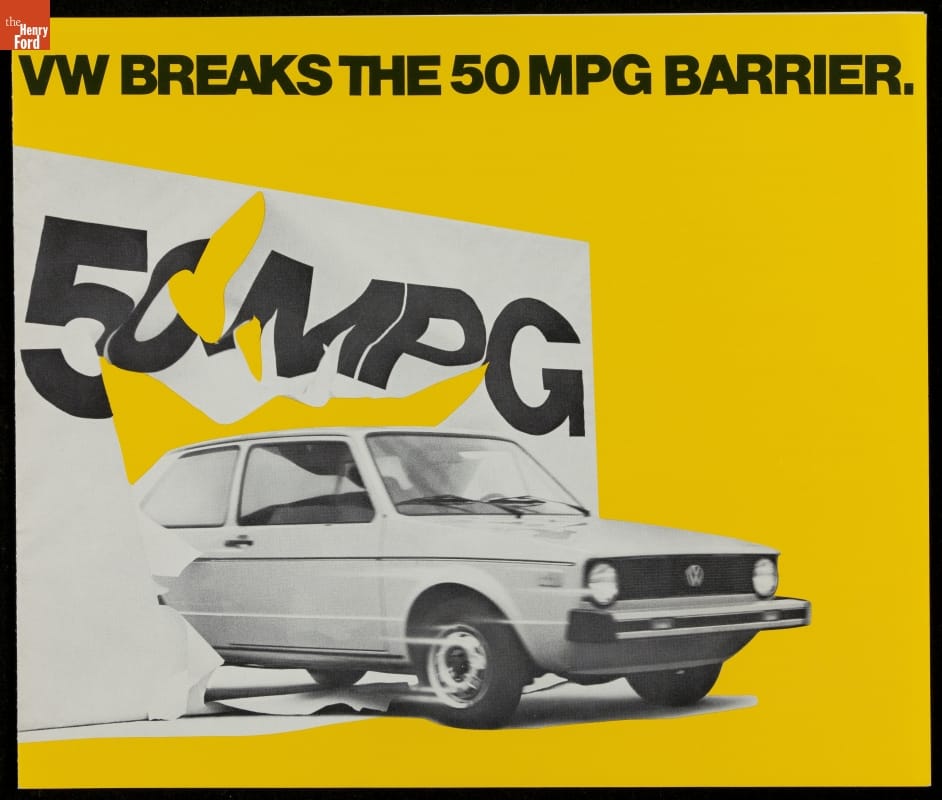
- 1977 Volkswagen Sales Brochure, "VW Breaks the 50 MPG Barrier" - As Americans turned to more energy-efficient cars than the American auto companies were turning out, they found that the Volkswagen Rabbit -- a small front-wheel-drive replacement for the VW Beetle available to Americans by the mid-1970s -- delivered superb fuel economy. Specifically, it was the diesel-powered Rabbit that averaged 52 mpg on the highway (and 39 mpg in the city).
- 1977
- Collections - Artifact
1977 Volkswagen Sales Brochure, "VW Breaks the 50 MPG Barrier"
As Americans turned to more energy-efficient cars than the American auto companies were turning out, they found that the Volkswagen Rabbit -- a small front-wheel-drive replacement for the VW Beetle available to Americans by the mid-1970s -- delivered superb fuel economy. Specifically, it was the diesel-powered Rabbit that averaged 52 mpg on the highway (and 39 mpg in the city).
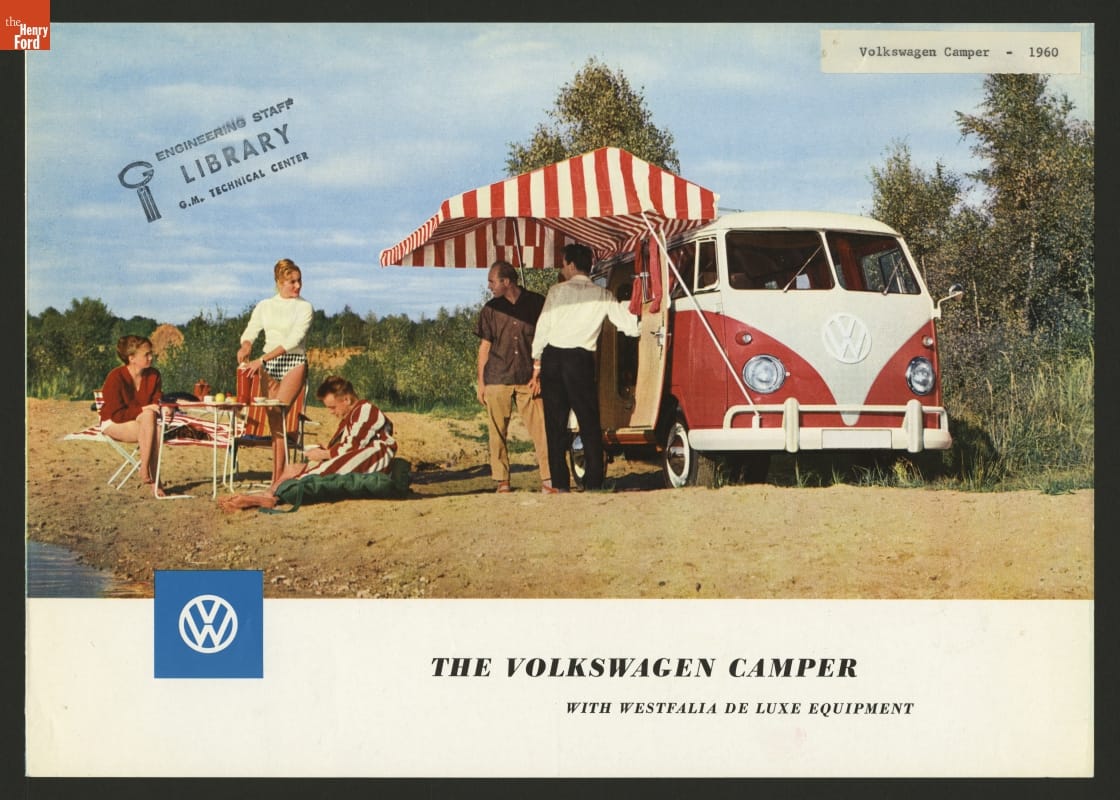
- "The Volkswagen Camper with Westfalia De Luxe Equipment," 1960 - This colorful 1960 catalog features the amenities found in the Volkswagen Camper. The VW Westfalia's interior transformed from dining room to kitchen to bedroom. Owners could also purchase exterior awnings. VW referred to the Westfalia as a house on wheels.
- 1960
- Collections - Artifact
"The Volkswagen Camper with Westfalia De Luxe Equipment," 1960
This colorful 1960 catalog features the amenities found in the Volkswagen Camper. The VW Westfalia's interior transformed from dining room to kitchen to bedroom. Owners could also purchase exterior awnings. VW referred to the Westfalia as a house on wheels.
- Featured on The Henry Ford's Innovation Nation: Season 2 - Volkswagen introduced its "box on wheels," the VW Type 2 Bus, in 1949. A few years later, VW contracted with Westfalia and introduced converted campers. First exported to the U.S. in 1956, Westfalia campers provided home-like camping comfort and created a postwar recreational-vehicle lifestyle. This soon-to-be cultural icon transported Americans down highways and byways and into the great outdoors.
- July 11, 2017
- Collections - Set
Featured on The Henry Ford's Innovation Nation: Season 2
Volkswagen introduced its "box on wheels," the VW Type 2 Bus, in 1949. A few years later, VW contracted with Westfalia and introduced converted campers. First exported to the U.S. in 1956, Westfalia campers provided home-like camping comfort and created a postwar recreational-vehicle lifestyle. This soon-to-be cultural icon transported Americans down highways and byways and into the great outdoors.
- Book Review: "Driving America" - Our new book Driving America, like the collection it documents, honors not only The Henry Ford’s focus on the everyday extraordinary, but the automobile’s defining role in our lives.

- October 17, 2013
- Collections - article
Book Review: "Driving America"
Our new book Driving America, like the collection it documents, honors not only The Henry Ford’s focus on the everyday extraordinary, but the automobile’s defining role in our lives.
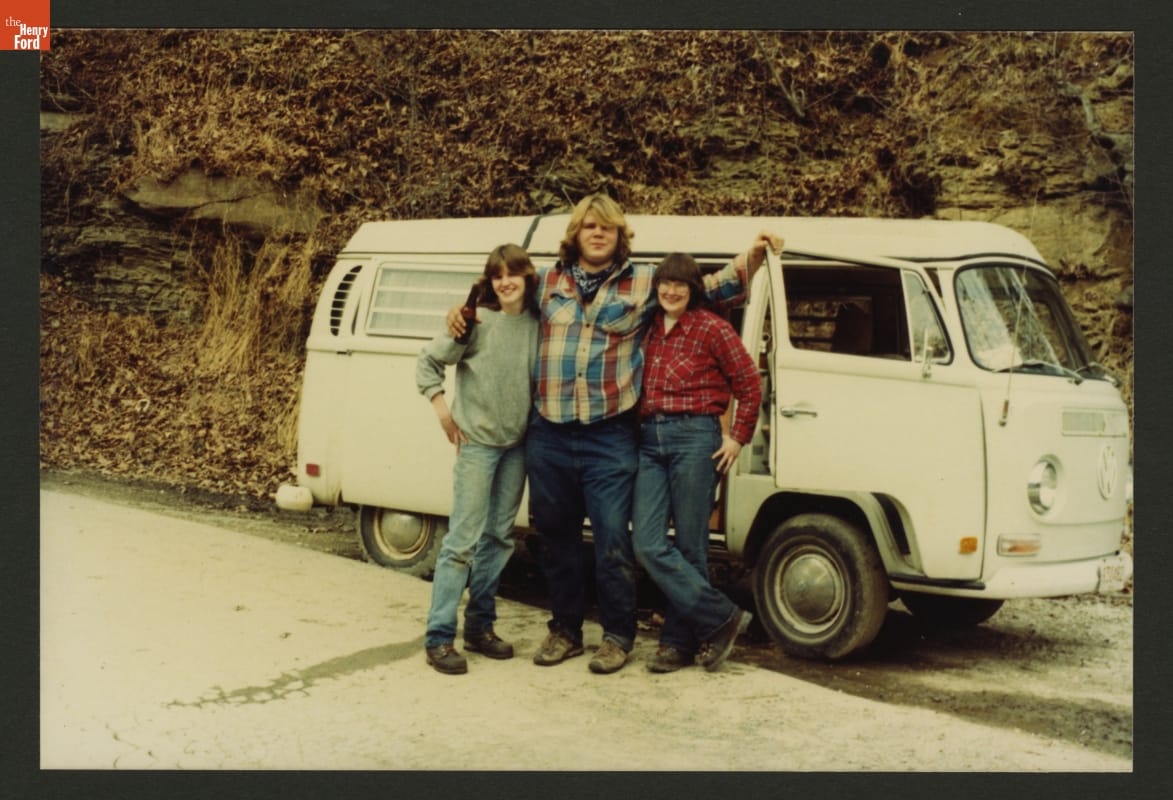
- Group in Front of 1970 Volkswagen Westfalia Van/Camper, 1981 - Young people embraced the Volkswagen Westafalia camper's functionality, low price, and versatile options. The pictured vehicle served as home base for a geology expedition to Kentucky in 1981.
- Spring 1981
- Collections - Artifact
Group in Front of 1970 Volkswagen Westfalia Van/Camper, 1981
Young people embraced the Volkswagen Westafalia camper's functionality, low price, and versatile options. The pictured vehicle served as home base for a geology expedition to Kentucky in 1981.
- The Dearborn Independent, Bound Volume of Issues, October 27, 1923-October 18, 1924 - Henry Ford purchased <em>The Dearborn Independent</em> and published it under his name from 1919 to 1927. It served as a forum for Ford's views, free from other media outlets that had attacked his work and values and were outside his control. <em>The Dearborn Independent</em> covered world events, business and economic news, and fiction from noted authors. Sadly, it also served as an outlet for Ford's anti-Semitic sentiments. Between 1920 and 1922, the weekly paper ran a series of front-page articles that denounced all things Jewish. Even after this series, many articles contained anti-Jewish language. Though Ford later apologized and printed a retraction, these notoriously anti-Semitic editorials and articles forever tarnished the influential automaker's reputation.

- 27 October 1923-18 October 1924
- Collections - Artifact
The Dearborn Independent, Bound Volume of Issues, October 27, 1923-October 18, 1924
Henry Ford purchased The Dearborn Independent and published it under his name from 1919 to 1927. It served as a forum for Ford's views, free from other media outlets that had attacked his work and values and were outside his control. The Dearborn Independent covered world events, business and economic news, and fiction from noted authors. Sadly, it also served as an outlet for Ford's anti-Semitic sentiments. Between 1920 and 1922, the weekly paper ran a series of front-page articles that denounced all things Jewish. Even after this series, many articles contained anti-Jewish language. Though Ford later apologized and printed a retraction, these notoriously anti-Semitic editorials and articles forever tarnished the influential automaker's reputation.