
Search
- California Scrambled Tofu -

- August 28, 2015
- Collections - Recipe
California Scrambled Tofu
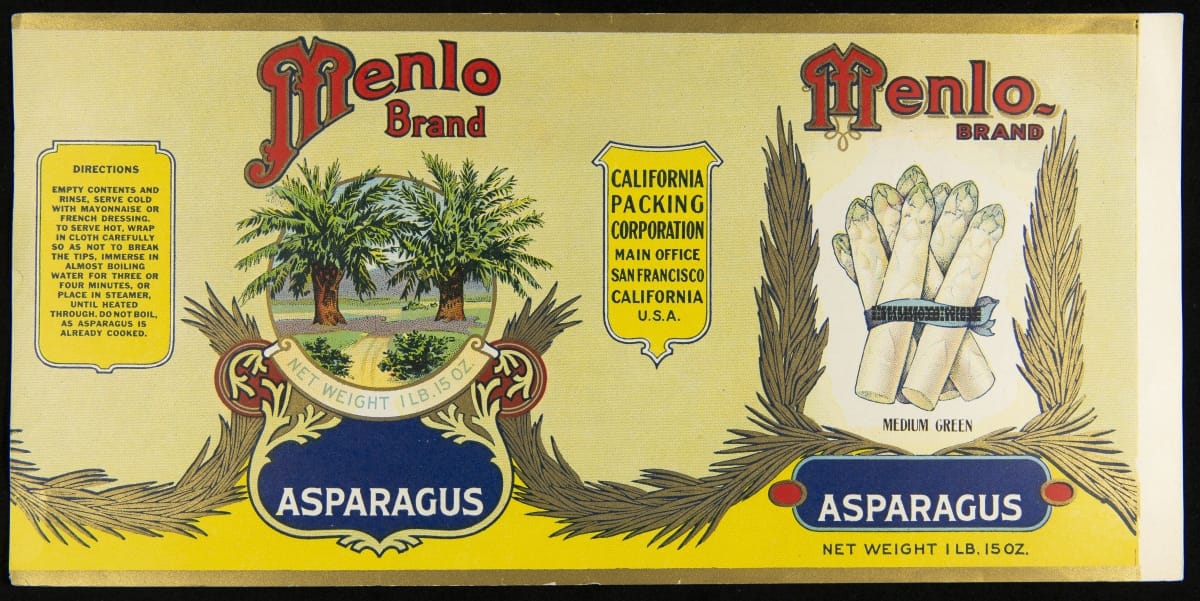
- Can Label, "Menlo Brand Asparagus," circa 1916 - Manufacturers of similar products sought ways to make their company's goods stand out on store shelves. Attractive labels, like this design for Menlo Brand Asparagus, helped catch the attention of potential customers - hopefully encouraging them to purchase the company's product rather than that of a competitor.
- circa 1916
- Collections - Artifact
Can Label, "Menlo Brand Asparagus," circa 1916
Manufacturers of similar products sought ways to make their company's goods stand out on store shelves. Attractive labels, like this design for Menlo Brand Asparagus, helped catch the attention of potential customers - hopefully encouraging them to purchase the company's product rather than that of a competitor.
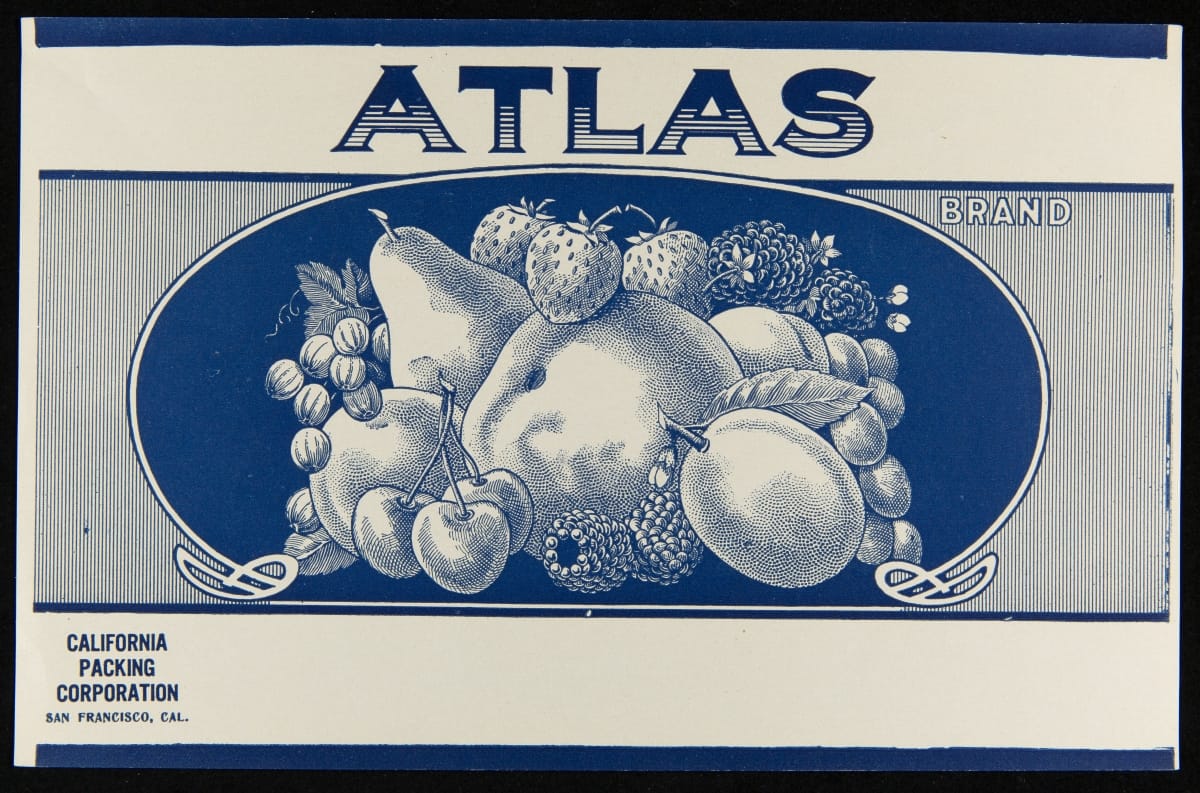
- Crate Label, "Atlas Brand Fruit," 1920-1930 - In 1869, the transcontinental railroad opened eastern markets to the West Coast produce industry for the first time. As produce companies shipped crates of fruits and vegetables across the country, they needed a way to distinguish their goods from their competitors'. Colorful, eye-catching labels, like this one for Atlas Brand Blackberries, were created to attract grocers purchasing goods from wholesale markets.
- 1920-1930
- Collections - Artifact
Crate Label, "Atlas Brand Fruit," 1920-1930
In 1869, the transcontinental railroad opened eastern markets to the West Coast produce industry for the first time. As produce companies shipped crates of fruits and vegetables across the country, they needed a way to distinguish their goods from their competitors'. Colorful, eye-catching labels, like this one for Atlas Brand Blackberries, were created to attract grocers purchasing goods from wholesale markets.
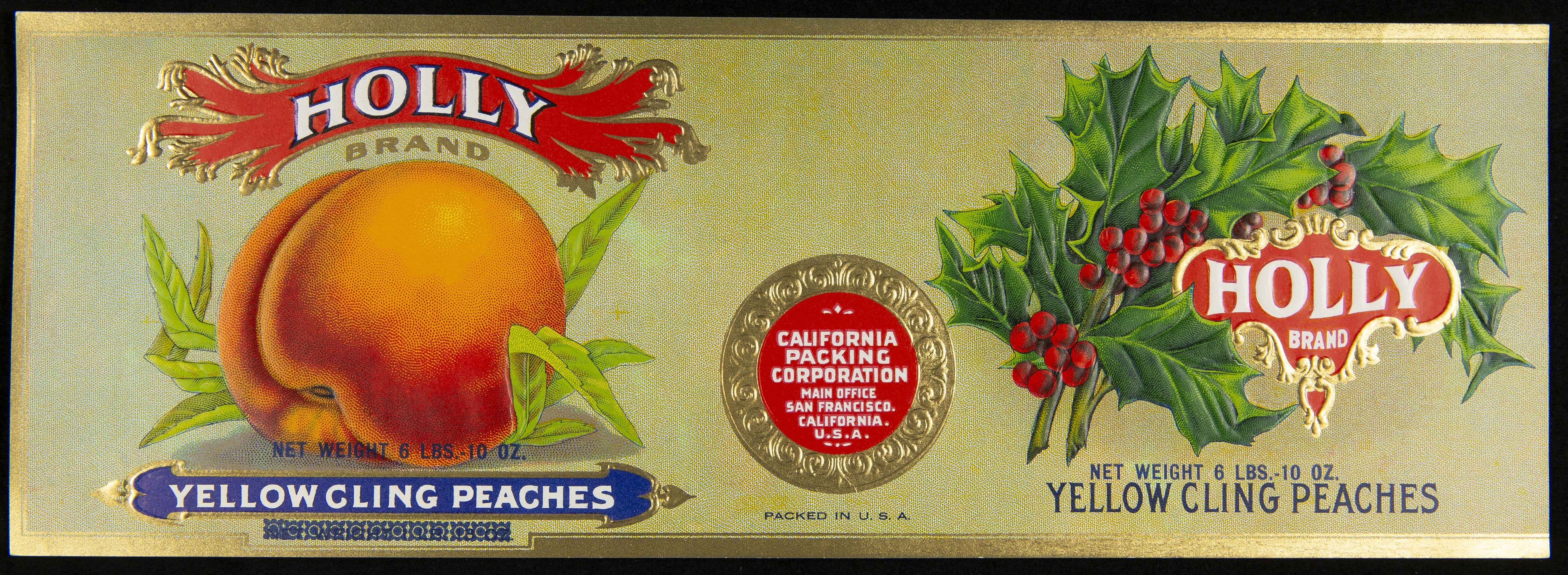
- Can Label, "Holly Brand Peaches," circa 1916 - Manufacturers of similar products sought ways to make their company's goods stand out on store shelves. Attractive labels, like this design for Holly Brand Peaches, helped catch the attention of potential customers - hopefully encouraging them to purchase the company's product rather than that of a competitor.
- circa 1916
- Collections - Artifact
Can Label, "Holly Brand Peaches," circa 1916
Manufacturers of similar products sought ways to make their company's goods stand out on store shelves. Attractive labels, like this design for Holly Brand Peaches, helped catch the attention of potential customers - hopefully encouraging them to purchase the company's product rather than that of a competitor.
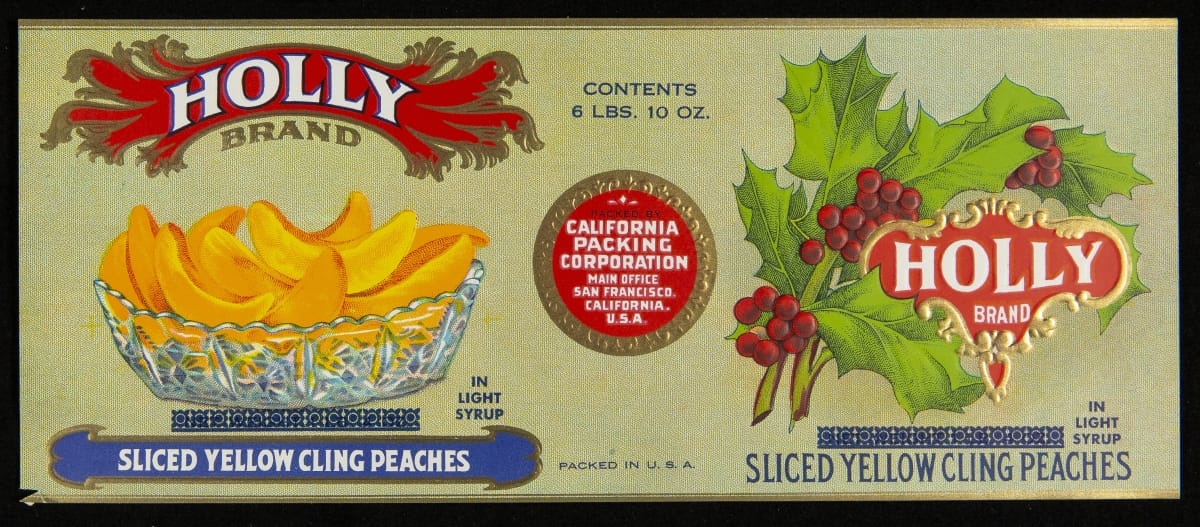
- Can Label, "Holly Brand Sliced Yellow Cling Peaches," 1920-1940 - Manufacturers of similar products sought ways to make their company's goods stand out on store shelves. Attractive labels, like this design for Holly Brand Sliced Yellow Cling Peaches, helped catch the attention of potential customers -- hopefully encouraging them to purchase the company's product rather than that of a competitor.
- 1920-1940
- Collections - Artifact
Can Label, "Holly Brand Sliced Yellow Cling Peaches," 1920-1940
Manufacturers of similar products sought ways to make their company's goods stand out on store shelves. Attractive labels, like this design for Holly Brand Sliced Yellow Cling Peaches, helped catch the attention of potential customers -- hopefully encouraging them to purchase the company's product rather than that of a competitor.
- Photograph Album, Asparagus Production, California Packing Corporation, circa 1925 -
- circa 1925
- Collections - Artifact
Photograph Album, Asparagus Production, California Packing Corporation, circa 1925
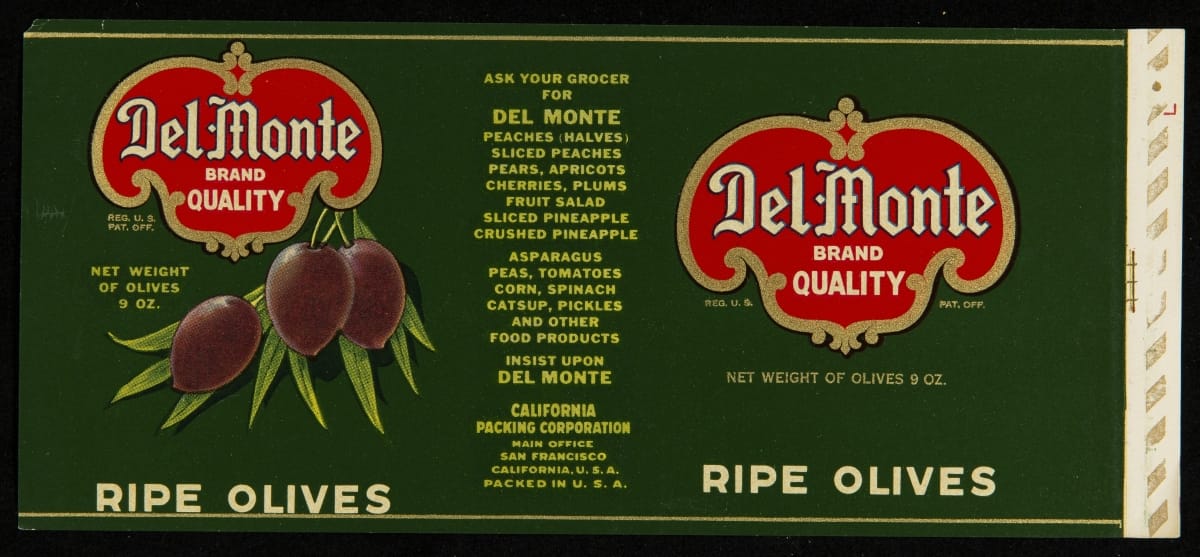
- Can Label, "Del Monte Brand Ripe Olives," circa 1920 - Manufacturers of similar products sought ways to make their companies' goods stand out on store shelves. Some companies established a uniform label design for their multi-product offerings -- a strategy which helped customers distinguish one brand over another. Del Monte Brand products were identified by the company's characteristic green label and its signature "shield" logo. These design features are still found on Del Monte products today.
- circa 1920
- Collections - Artifact
Can Label, "Del Monte Brand Ripe Olives," circa 1920
Manufacturers of similar products sought ways to make their companies' goods stand out on store shelves. Some companies established a uniform label design for their multi-product offerings -- a strategy which helped customers distinguish one brand over another. Del Monte Brand products were identified by the company's characteristic green label and its signature "shield" logo. These design features are still found on Del Monte products today.
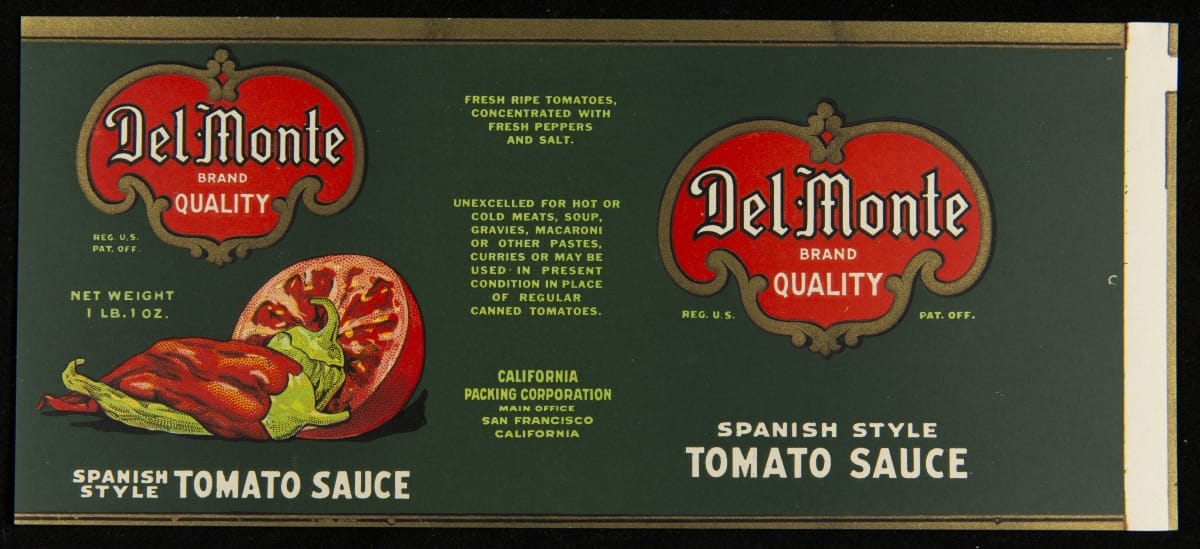
- Can Label, "Del Monte Brand Spanish Style Tomato Sauce," circa 1930 - Manufacturers of similar products sought ways to make their companies' goods stand out on store shelves. Some companies established a uniform label design for their multi-product offerings -- a strategy which helped customers distinguish one brand over another. Del Monte Brand products were identified by the company's characteristic green label and its signature "shield" logo. These design features are still found on Del Monte products today.
- circa 1930
- Collections - Artifact
Can Label, "Del Monte Brand Spanish Style Tomato Sauce," circa 1930
Manufacturers of similar products sought ways to make their companies' goods stand out on store shelves. Some companies established a uniform label design for their multi-product offerings -- a strategy which helped customers distinguish one brand over another. Del Monte Brand products were identified by the company's characteristic green label and its signature "shield" logo. These design features are still found on Del Monte products today.
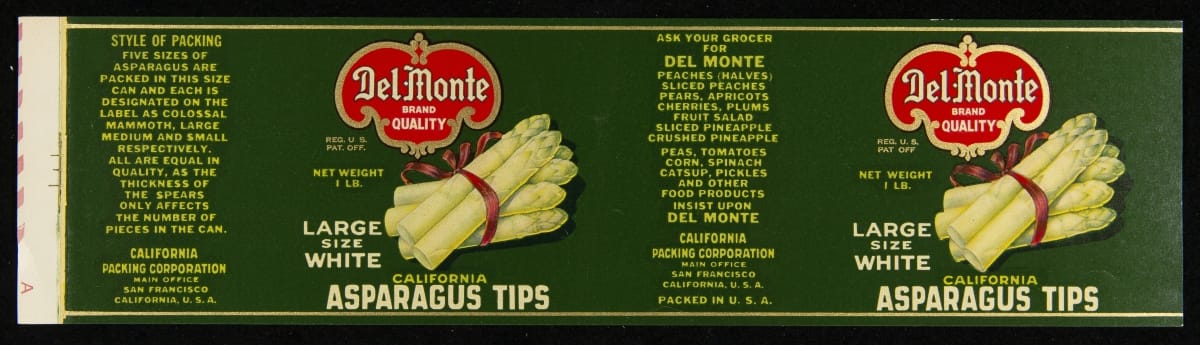
- Can Label, "Del Monte Brand Asparagus," circa 1926 - Manufacturers of similar products sought ways to make their companies' goods stand out on store shelves. Some companies established a uniform label design for their multi-product offerings -- a strategy which helped customers distinguish one brand over another. Del Monte Brand products were identified by the company's characteristic green label and its signature "shield" logo. These design features are still found on Del Monte products today.
- circa 1926
- Collections - Artifact
Can Label, "Del Monte Brand Asparagus," circa 1926
Manufacturers of similar products sought ways to make their companies' goods stand out on store shelves. Some companies established a uniform label design for their multi-product offerings -- a strategy which helped customers distinguish one brand over another. Del Monte Brand products were identified by the company's characteristic green label and its signature "shield" logo. These design features are still found on Del Monte products today.
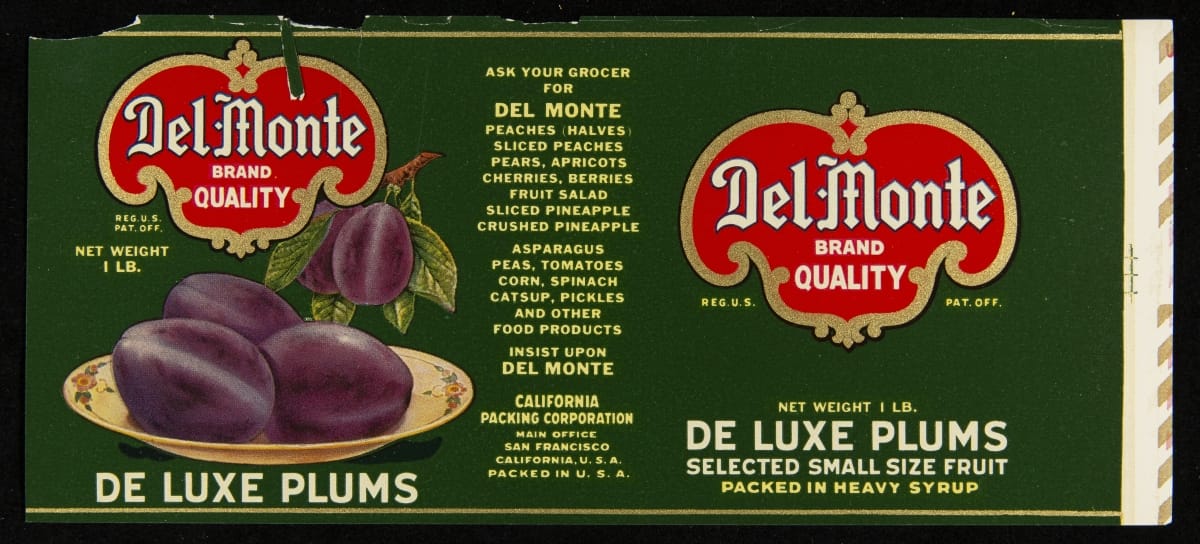
- Can Label, "Del Monte Brand De Luxe Plums," circa 1930 - Manufacturers of similar products sought ways to make their companies' goods stand out on store shelves. Some companies established a uniform label design for their multi-product offerings -- a strategy which helped customers distinguish one brand over another. Del Monte Brand products were identified by the company's characteristic green label and its signature "shield" logo. These design features are still found on Del Monte products today.
- circa 1930
- Collections - Artifact
Can Label, "Del Monte Brand De Luxe Plums," circa 1930
Manufacturers of similar products sought ways to make their companies' goods stand out on store shelves. Some companies established a uniform label design for their multi-product offerings -- a strategy which helped customers distinguish one brand over another. Del Monte Brand products were identified by the company's characteristic green label and its signature "shield" logo. These design features are still found on Del Monte products today.