
Search
- Portrait of Charles Batchelor, circa 1880 -
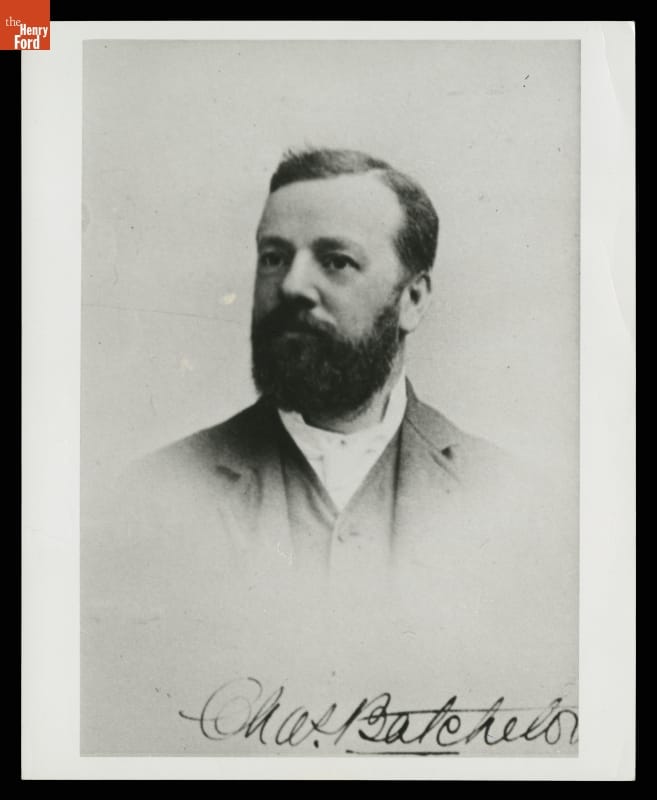
- circa 1880
- Collections - Artifact
Portrait of Charles Batchelor, circa 1880
- Portrait of Charles Batchelor, circa 1880 -
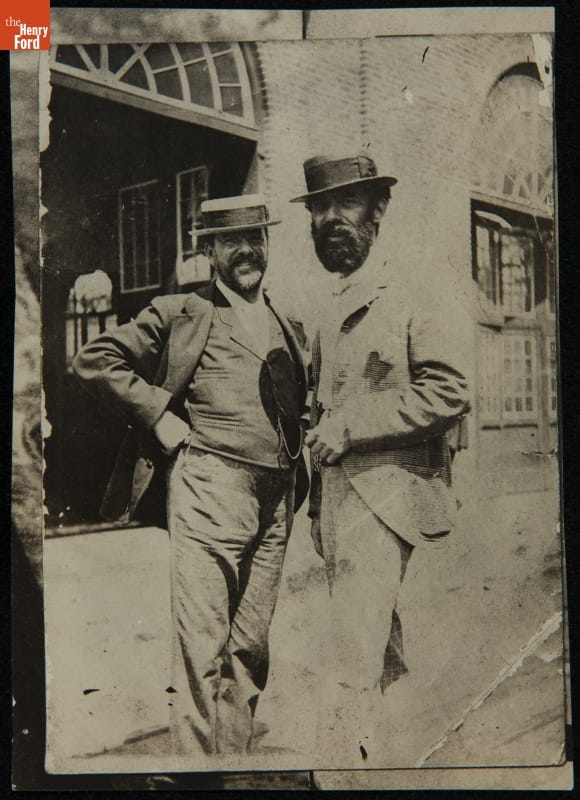
- circa 1880
- Collections - Artifact
Portrait of Charles Batchelor, circa 1880
- Portrait of Charles Batchelor, circa 1865 -
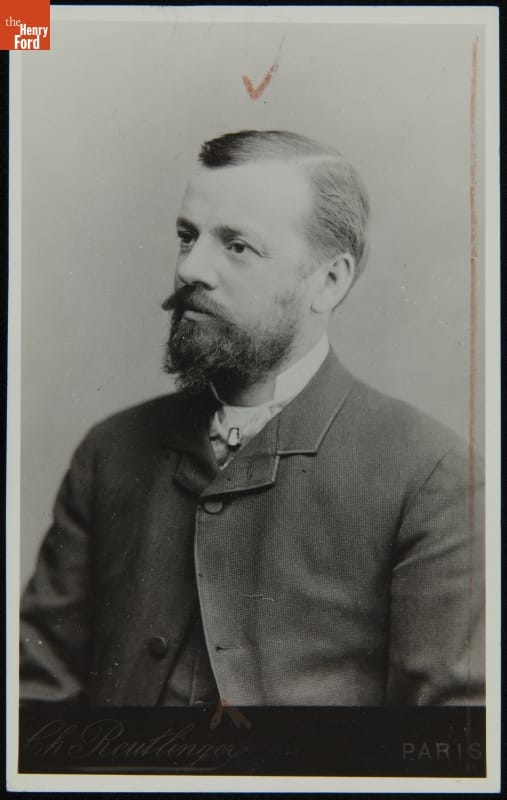
- circa 1865
- Collections - Artifact
Portrait of Charles Batchelor, circa 1865
- Portrait of Charles Batchelor, "First Photograph Made with Incandescent Light," 1880 -
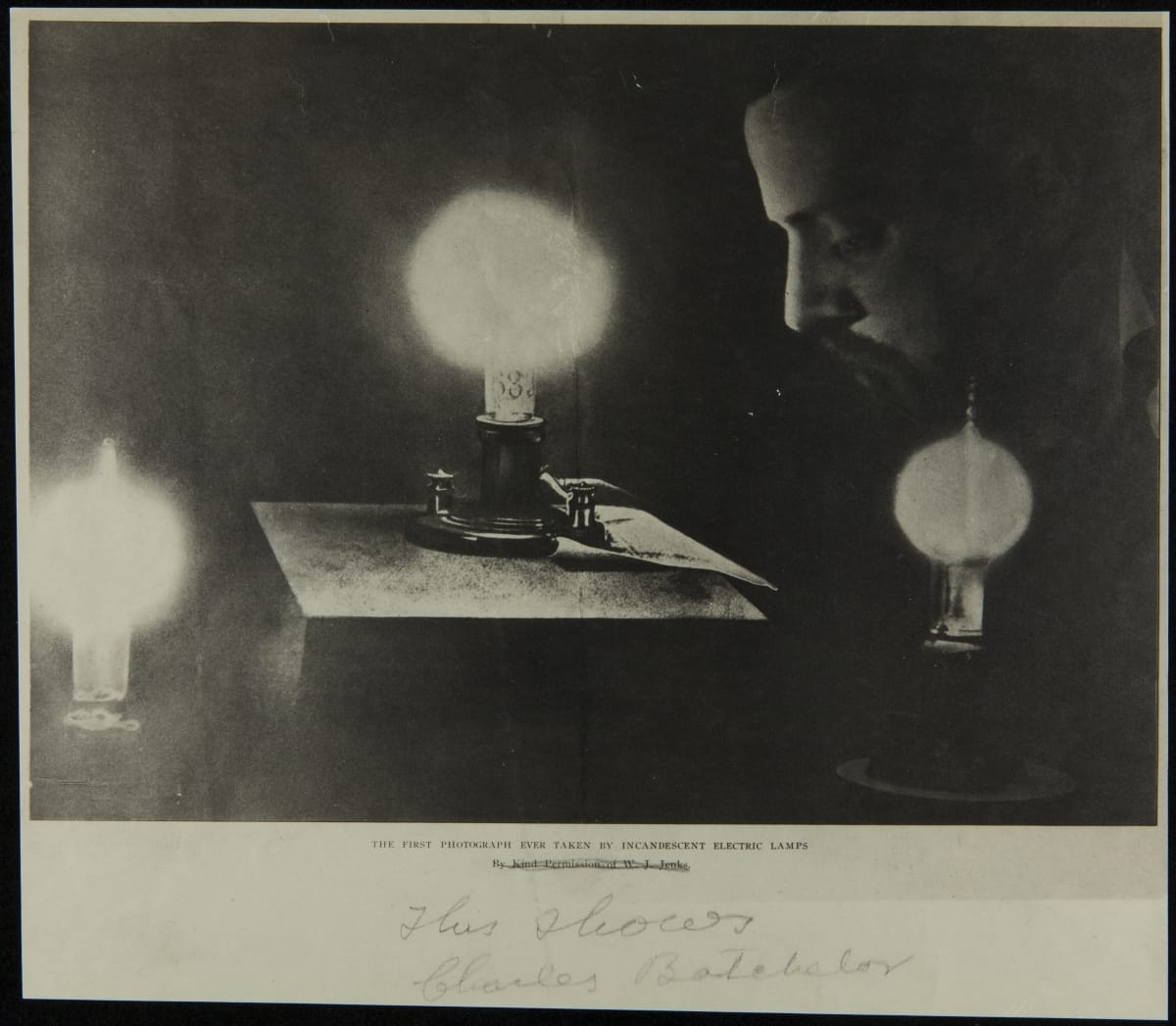
- 1880
- Collections - Artifact
Portrait of Charles Batchelor, "First Photograph Made with Incandescent Light," 1880
- Thomas Edison, Charles Batchelor, and Uriah Painter with Edison's Phonograph, April 18, 1878 - While in Washington, D.C., for an 1878 presentation to the National Academy of Sciences, inventor Thomas Edison, his lab assistant Charles Batchelor, and Philadelphia Inquirer correspondent Uriah Painter sat for famed Civil War photographer Mathew Brady. They posed with Edison's phonograph, a new invention that could, for the first time, record and reproduce sound. The machine made Edison an overnight celebrity.
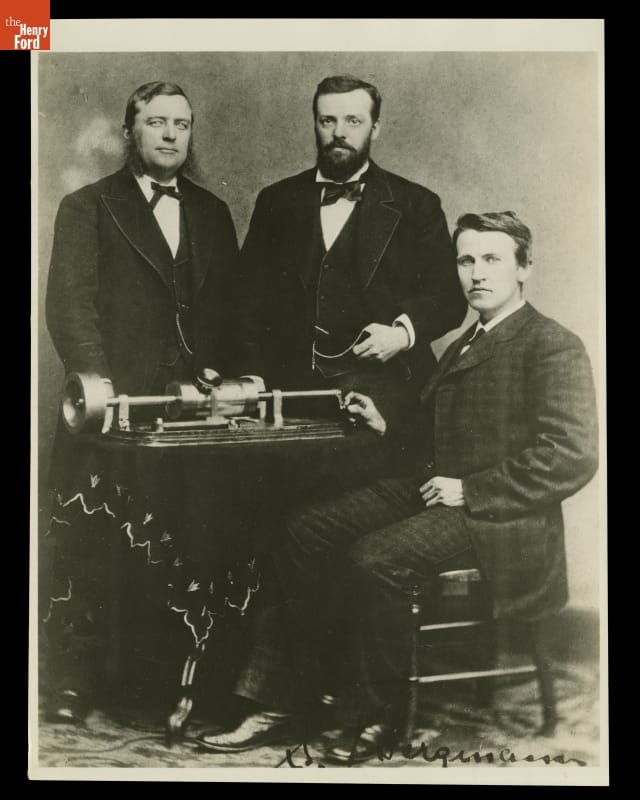
- April 18, 1878
- Collections - Artifact
Thomas Edison, Charles Batchelor, and Uriah Painter with Edison's Phonograph, April 18, 1878
While in Washington, D.C., for an 1878 presentation to the National Academy of Sciences, inventor Thomas Edison, his lab assistant Charles Batchelor, and Philadelphia Inquirer correspondent Uriah Painter sat for famed Civil War photographer Mathew Brady. They posed with Edison's phonograph, a new invention that could, for the first time, record and reproduce sound. The machine made Edison an overnight celebrity.
- Charles Lindbergh with His Father, Charles August Lindbergh, circa 1910 - Charles August Lindbergh was born in Stockholm, Sweden, and -- as an infant -- immigrated to the United States with his parents in 1859. After his first wife died, Lindbergh married Evangeline Land, with whom he had son Charles Augustus Lindbergh -- the future aviator. The elder Lindbergh represented Minnesota's 6th congressional district in the U.S. Congress from 1907 to 1917.
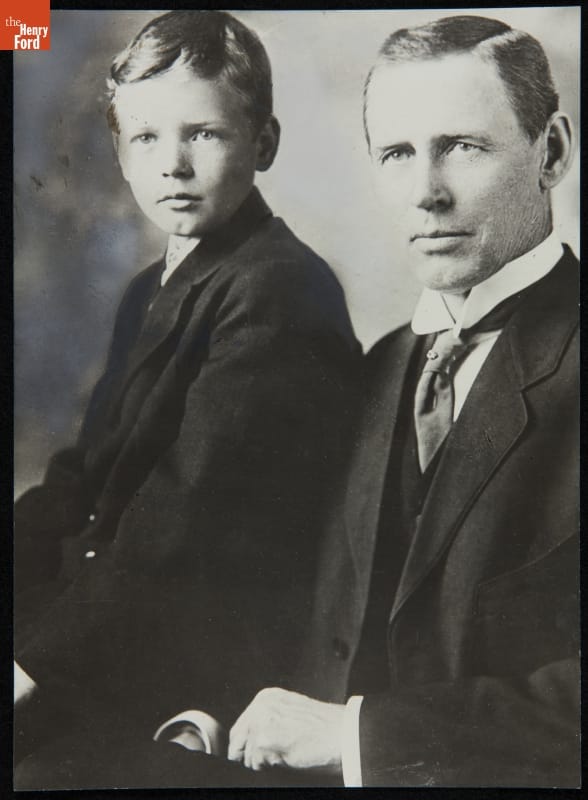
- circa 1910
- Collections - Artifact
Charles Lindbergh with His Father, Charles August Lindbergh, circa 1910
Charles August Lindbergh was born in Stockholm, Sweden, and -- as an infant -- immigrated to the United States with his parents in 1859. After his first wife died, Lindbergh married Evangeline Land, with whom he had son Charles Augustus Lindbergh -- the future aviator. The elder Lindbergh represented Minnesota's 6th congressional district in the U.S. Congress from 1907 to 1917.
- Charles Steinmetz, 1890 - Charles Steinmetz studied science and mathematics before moving to the United States in 1889. He joined the small electrical firm of Rudolf Eickemeyer, a fellow German immigrant who encouraged Steinmetz to experiment and publish his research. Eickemeyer provided Steinmetz with a laboratory and a wide range of practical experience. Within a few years, Steinmetz would become an accomplished electrical engineer.
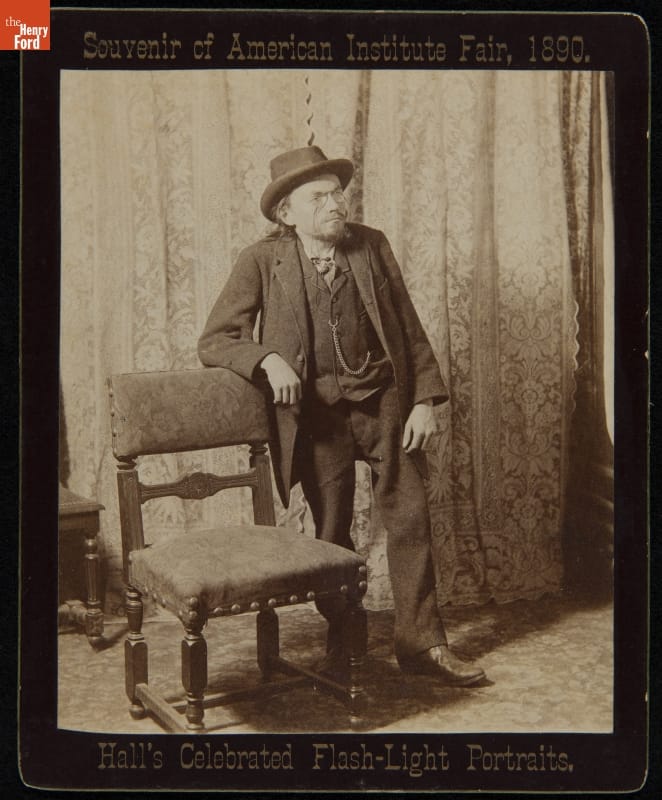
- 1890
- Collections - Artifact
Charles Steinmetz, 1890
Charles Steinmetz studied science and mathematics before moving to the United States in 1889. He joined the small electrical firm of Rudolf Eickemeyer, a fellow German immigrant who encouraged Steinmetz to experiment and publish his research. Eickemeyer provided Steinmetz with a laboratory and a wide range of practical experience. Within a few years, Steinmetz would become an accomplished electrical engineer.
- Charles Steinmetz Cabin - This cabin was originally located on a steep bank overlooking a tributary of the Mohawk River, just outside of Schenectady, New York. Its simplicity was a contrast to the General Electric laboratories where Steinmetz spent his workweek. It served as a getaway -- for quiet study or writing, but also for more animated weekend camp gatherings for selected friends and associates.
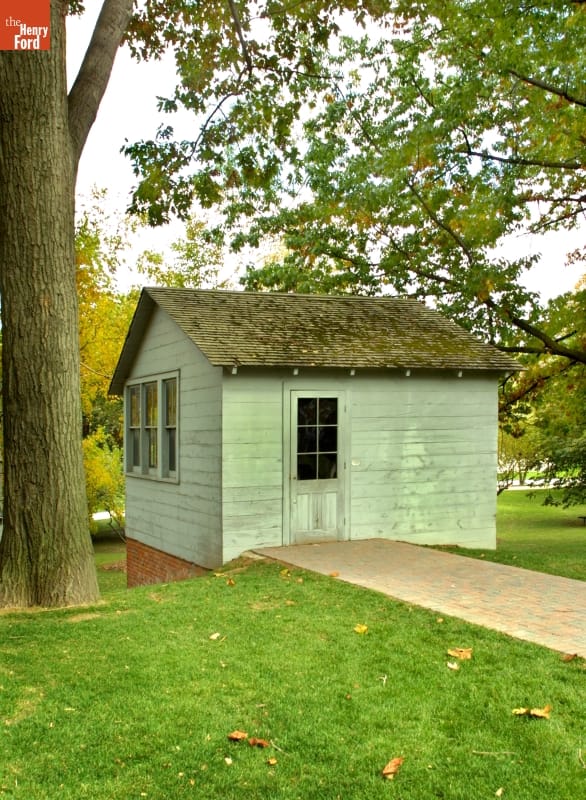
- 1896
- Collections - Artifact
Charles Steinmetz Cabin
This cabin was originally located on a steep bank overlooking a tributary of the Mohawk River, just outside of Schenectady, New York. Its simplicity was a contrast to the General Electric laboratories where Steinmetz spent his workweek. It served as a getaway -- for quiet study or writing, but also for more animated weekend camp gatherings for selected friends and associates.
- Charles Steinmetz, circa 1920 - Charles Steinmetz excelled at applying mathematical theory and scientific methods to practical engineering, helping define the role of "scientist-engineer" in the American electrical industry. Steinmetz developed important theories on alternating currents, conducted breakthrough experiments on power loss, and authored a number of influential textbooks. His innovations shaped the electrical engineering profession and improved and expanded electrical distribution systems.
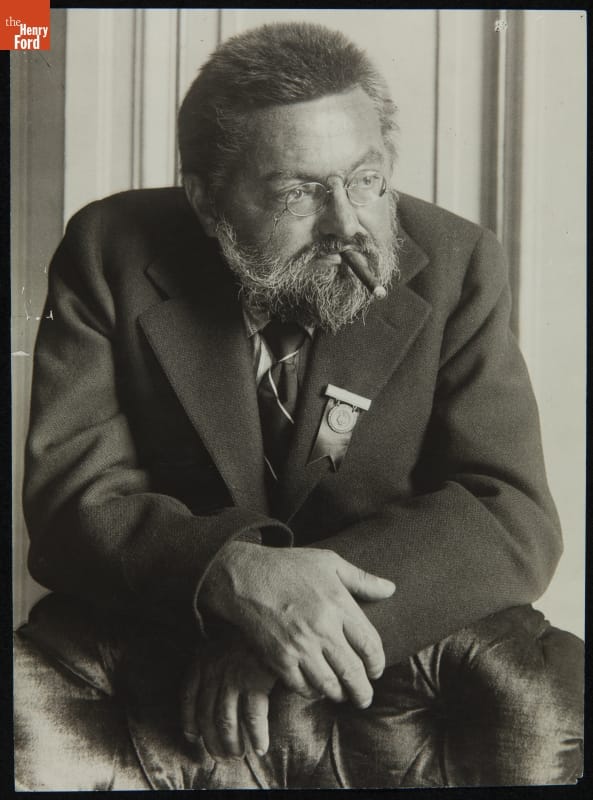
- circa 1920
- Collections - Artifact
Charles Steinmetz, circa 1920
Charles Steinmetz excelled at applying mathematical theory and scientific methods to practical engineering, helping define the role of "scientist-engineer" in the American electrical industry. Steinmetz developed important theories on alternating currents, conducted breakthrough experiments on power loss, and authored a number of influential textbooks. His innovations shaped the electrical engineering profession and improved and expanded electrical distribution systems.
- Charles Elachi - Imagine tackling problems that relatively few others would be able to fully understand, much less solve. Charles Elachi shares how he guides teams at NASA's Jet Propulsion Laboratory to do exactly that. He understands the importance of having fun even when the work is hard and demanding. He describes the work environment as a "serious playground." Elachi views innovation as rooted in taking risks and learning from failures. His message is "failure is going to happen." The key is to learn from it and move on. His hero is Teddy Roosevelt who thought it was better to try and even fail once in a while than "stay in the twilight" and not dare to do anything.

- October 08, 2013
- Collections - Video
Charles Elachi
Imagine tackling problems that relatively few others would be able to fully understand, much less solve. Charles Elachi shares how he guides teams at NASA's Jet Propulsion Laboratory to do exactly that. He understands the importance of having fun even when the work is hard and demanding. He describes the work environment as a "serious playground." Elachi views innovation as rooted in taking risks and learning from failures. His message is "failure is going to happen." The key is to learn from it and move on. His hero is Teddy Roosevelt who thought it was better to try and even fail once in a while than "stay in the twilight" and not dare to do anything.