
Search
- Behind the Scenes: Photographing the Interior of the Fair Lane Railroad Car - Get a behind-the-scenes look at what it takes to photograph the interior of the 1921 Fair Lane, Henry Ford’s private railroad car, on exhibit in Henry Ford Museum of American Innovation.

- August 26, 2021
- Collections - article
Behind the Scenes: Photographing the Interior of the Fair Lane Railroad Car
Get a behind-the-scenes look at what it takes to photograph the interior of the 1921 Fair Lane, Henry Ford’s private railroad car, on exhibit in Henry Ford Museum of American Innovation.
- Fair Lane: The Fords’ Private Railroad Car - Fair Lane, the private Pullman railroad car built for and used by Henry and Clara Ford, turns 100 years old in 2021. It provides a fascinating window into business and pleasure travel for the wealthy in the early 20th century.

- July 28, 2021
- Collections - article
Fair Lane: The Fords’ Private Railroad Car
Fair Lane, the private Pullman railroad car built for and used by Henry and Clara Ford, turns 100 years old in 2021. It provides a fascinating window into business and pleasure travel for the wealthy in the early 20th century.
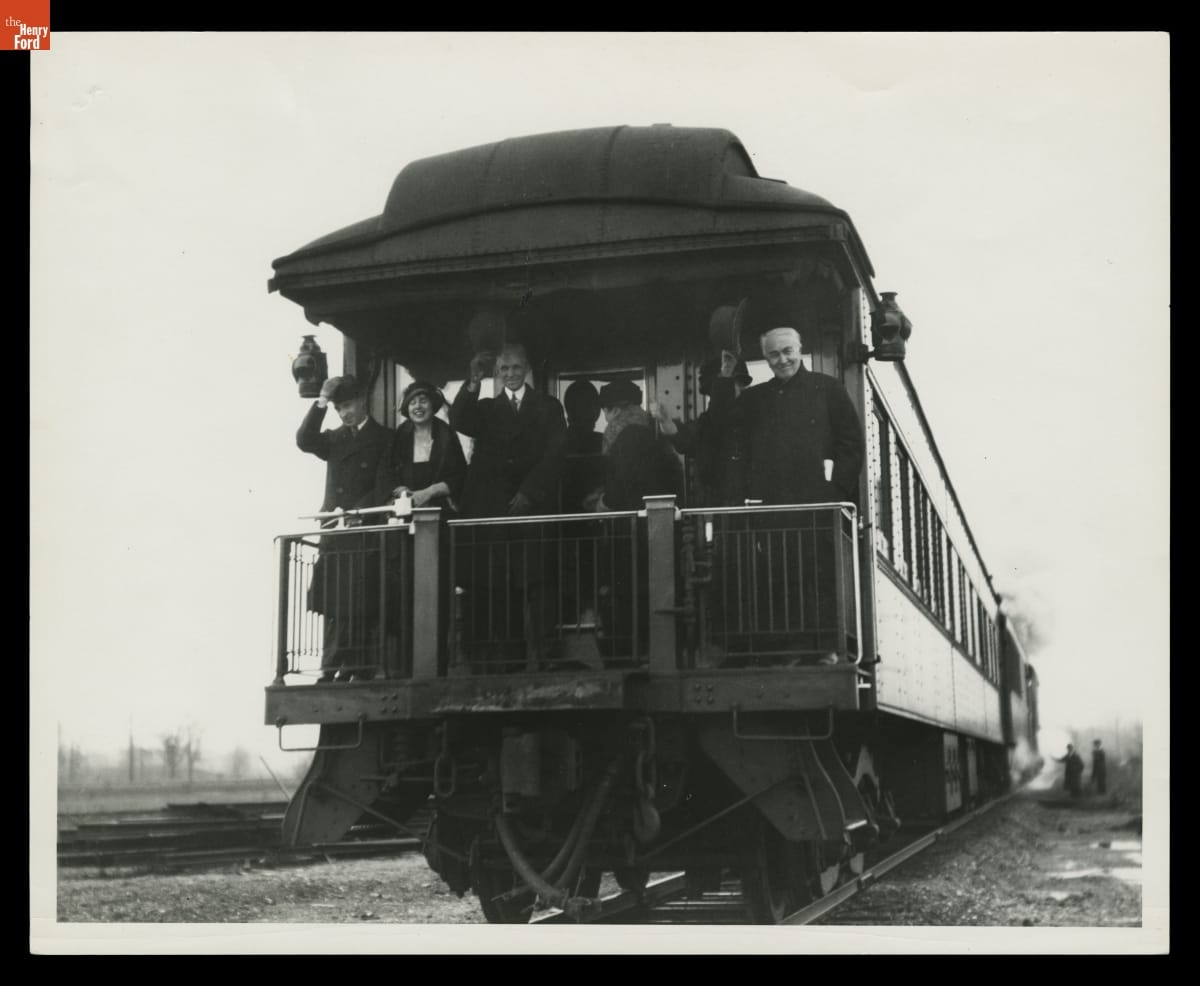
- Fair Lane: The Fords' Private Railroad Car - By 1920, Henry and Clara Ford found it difficult to travel by railroad. Henry Ford was widely recognized -- pestered by the public and hounded by reporters. The Fords purchased a private railroad car they called <em>Fair Lane</em>, so they could travel conveniently and quietly across the extensive American railroad network. The Fords made more than 400 trips with <em>Fair Lane</em> from 1921 to 1942.
- August 04, 2021
- Collections - Set
Fair Lane: The Fords' Private Railroad Car
By 1920, Henry and Clara Ford found it difficult to travel by railroad. Henry Ford was widely recognized -- pestered by the public and hounded by reporters. The Fords purchased a private railroad car they called Fair Lane, so they could travel conveniently and quietly across the extensive American railroad network. The Fords made more than 400 trips with Fair Lane from 1921 to 1942.
- The Fair Lane Business Car: Restrained Luxury - Henry Ford’s private railroad car Fair Lane was one of the largest passenger railcars built when it was completed by Pullman in 1921.

- August 24, 2021
- Collections - article
The Fair Lane Business Car: Restrained Luxury
Henry Ford’s private railroad car Fair Lane was one of the largest passenger railcars built when it was completed by Pullman in 1921.
- Architectural Rendering, "Fair Lane," 1914 - Scholars have known that Henry Ford approached Frank Lloyd Wright to design his home. This drawing is evidence that Wright worked on the project before his departure for Europe in September 1909. The commission then went to Wright's assistant, Marion Mahony, who submitted this rendering to Clara Ford in February 1914. Soon after, Henry Ford replaced Mahony with William Van Tine, who completed the house.

- 1914
- Collections - Artifact
Architectural Rendering, "Fair Lane," 1914
Scholars have known that Henry Ford approached Frank Lloyd Wright to design his home. This drawing is evidence that Wright worked on the project before his departure for Europe in September 1909. The commission then went to Wright's assistant, Marion Mahony, who submitted this rendering to Clara Ford in February 1914. Soon after, Henry Ford replaced Mahony with William Van Tine, who completed the house.
- Powerhouse at Fair Lane Estate, 1949 - Fair Lane, Henry and Clara Ford's estate on the Rouge River in Dearborn, Michigan, included its own hydroelectric power plant. The four-story powerhouse, built of the same limestone as the mansion, contained two turbines driven by water diverted from a dam on the river. The turbines turned generators that produced 110 kilowatts of electricity.
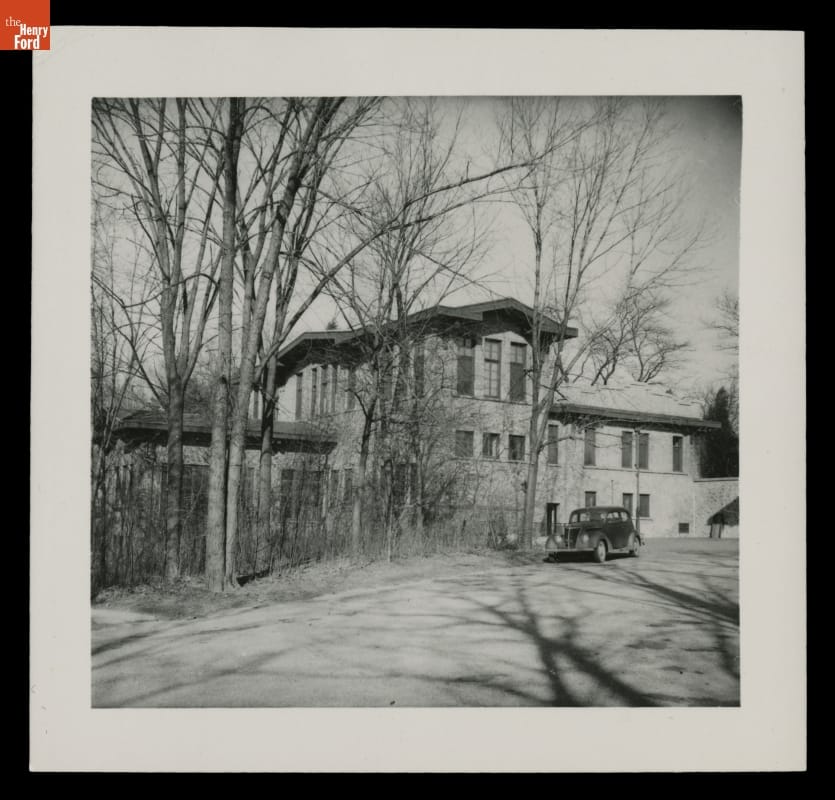
- January 13, 1949
- Collections - Artifact
Powerhouse at Fair Lane Estate, 1949
Fair Lane, Henry and Clara Ford's estate on the Rouge River in Dearborn, Michigan, included its own hydroelectric power plant. The four-story powerhouse, built of the same limestone as the mansion, contained two turbines driven by water diverted from a dam on the river. The turbines turned generators that produced 110 kilowatts of electricity.
- Powerhouse at Fair Lane Estate, 1921 - Fair Lane, Henry and Clara Ford's estate on the Rouge River in Dearborn, Michigan, included its own hydroelectric power plant. The four-story powerhouse, built of the same limestone as the mansion, contained two turbines driven by water diverted from a dam on the river. The turbines turned generators that produced 110 kilowatts of electricity.
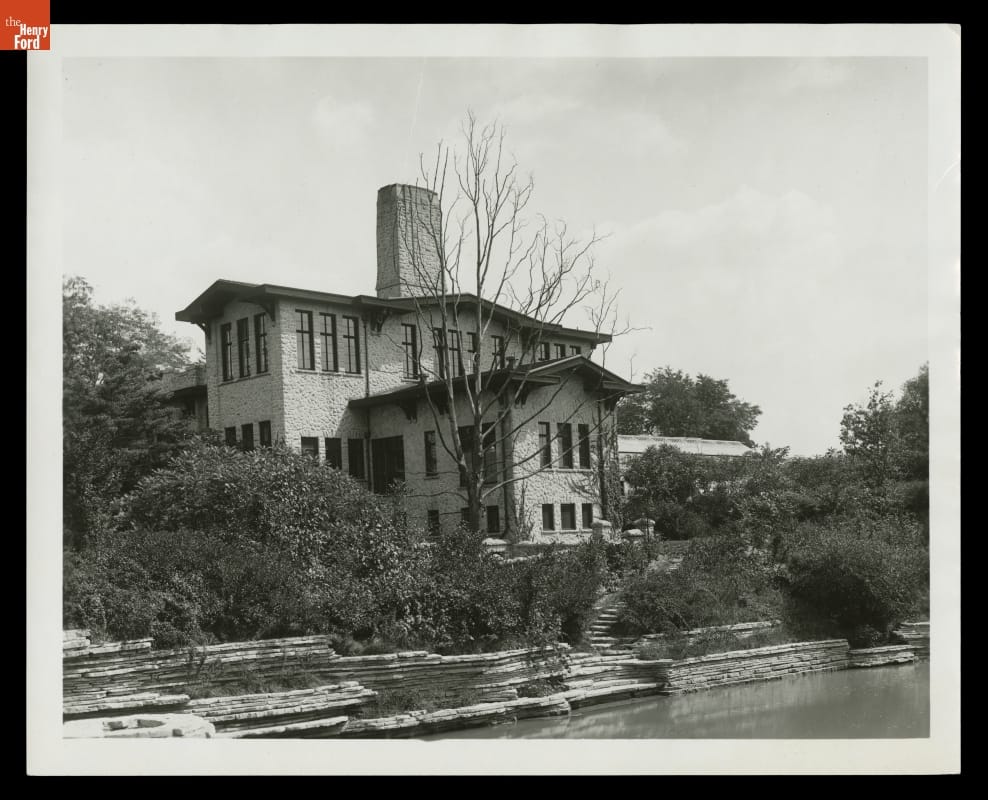
- 1921
- Collections - Artifact
Powerhouse at Fair Lane Estate, 1921
Fair Lane, Henry and Clara Ford's estate on the Rouge River in Dearborn, Michigan, included its own hydroelectric power plant. The four-story powerhouse, built of the same limestone as the mansion, contained two turbines driven by water diverted from a dam on the river. The turbines turned generators that produced 110 kilowatts of electricity.
- Powerhouse at Fair Lane Estate, 1928 - Fair Lane, Henry and Clara Ford's estate on the Rouge River in Dearborn, Michigan, included its own hydroelectric power plant. The four-story powerhouse, built of the same limestone as the mansion, contained two turbines driven by water diverted from a dam on the river. The turbines turned generators that produced 110 kilowatts of electricity.
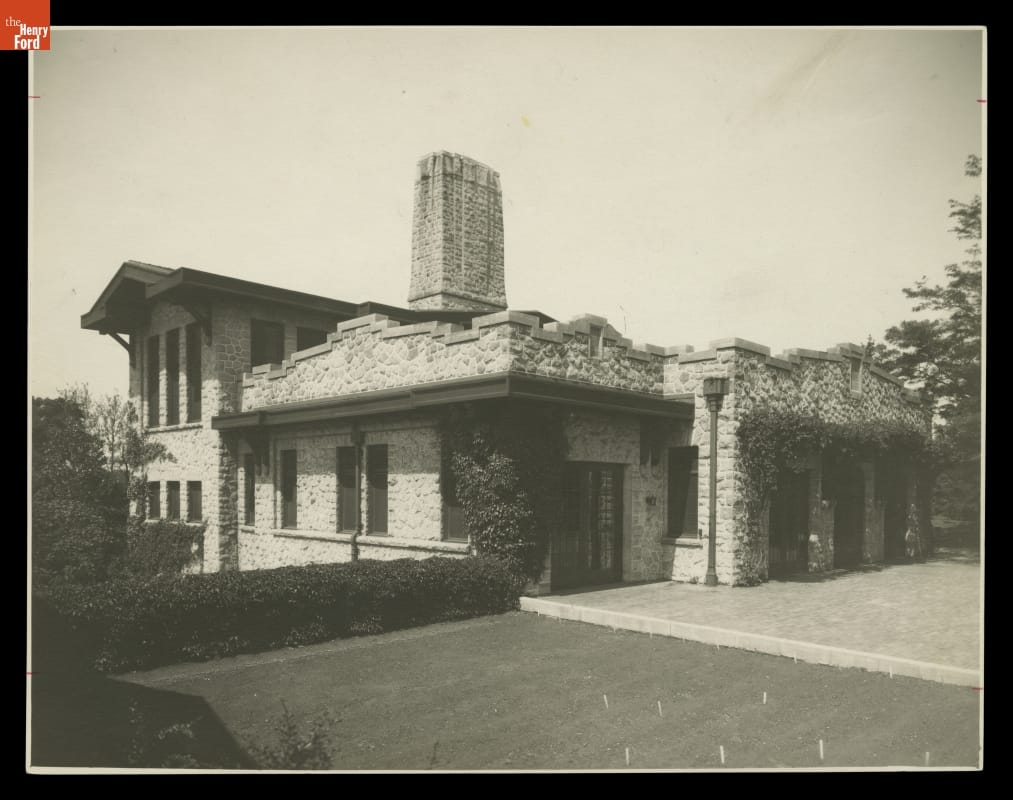
- June 07, 1928
- Collections - Artifact
Powerhouse at Fair Lane Estate, 1928
Fair Lane, Henry and Clara Ford's estate on the Rouge River in Dearborn, Michigan, included its own hydroelectric power plant. The four-story powerhouse, built of the same limestone as the mansion, contained two turbines driven by water diverted from a dam on the river. The turbines turned generators that produced 110 kilowatts of electricity.
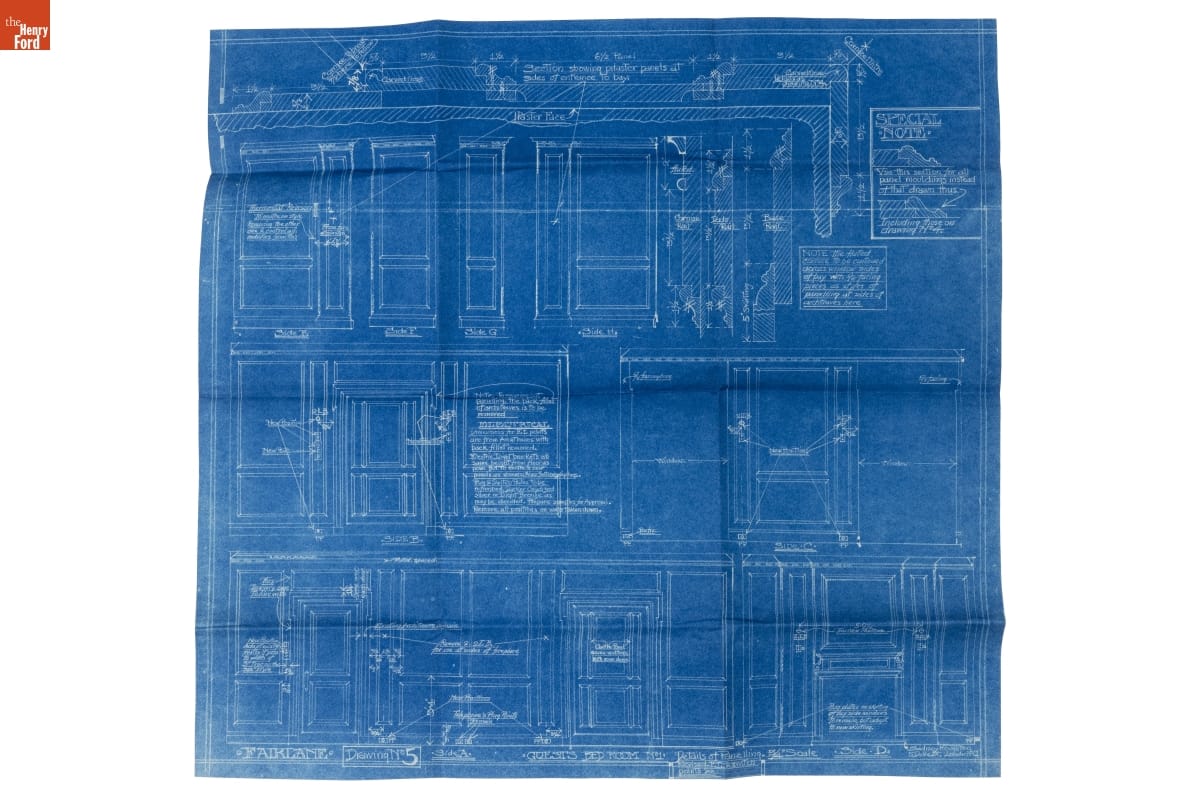
- Paneling in Fair Lane Guest Bedroom, 1922 - Sidney Houghton, a London-based interior designer, met Henry Ford during World War I. Houghton worked on Ford's "Eagle Boats," supplied to the U.S. and British Navies. Following the War, Henry and Clara Ford commissioned Houghton to create a variety of interiors for their home and other projects. Houghton submitted this drawing detailing the interiors of Fair Lane, the Ford Estate in Dearborn, Michigan.
- 1922
- Collections - Artifact
Paneling in Fair Lane Guest Bedroom, 1922
Sidney Houghton, a London-based interior designer, met Henry Ford during World War I. Houghton worked on Ford's "Eagle Boats," supplied to the U.S. and British Navies. Following the War, Henry and Clara Ford commissioned Houghton to create a variety of interiors for their home and other projects. Houghton submitted this drawing detailing the interiors of Fair Lane, the Ford Estate in Dearborn, Michigan.
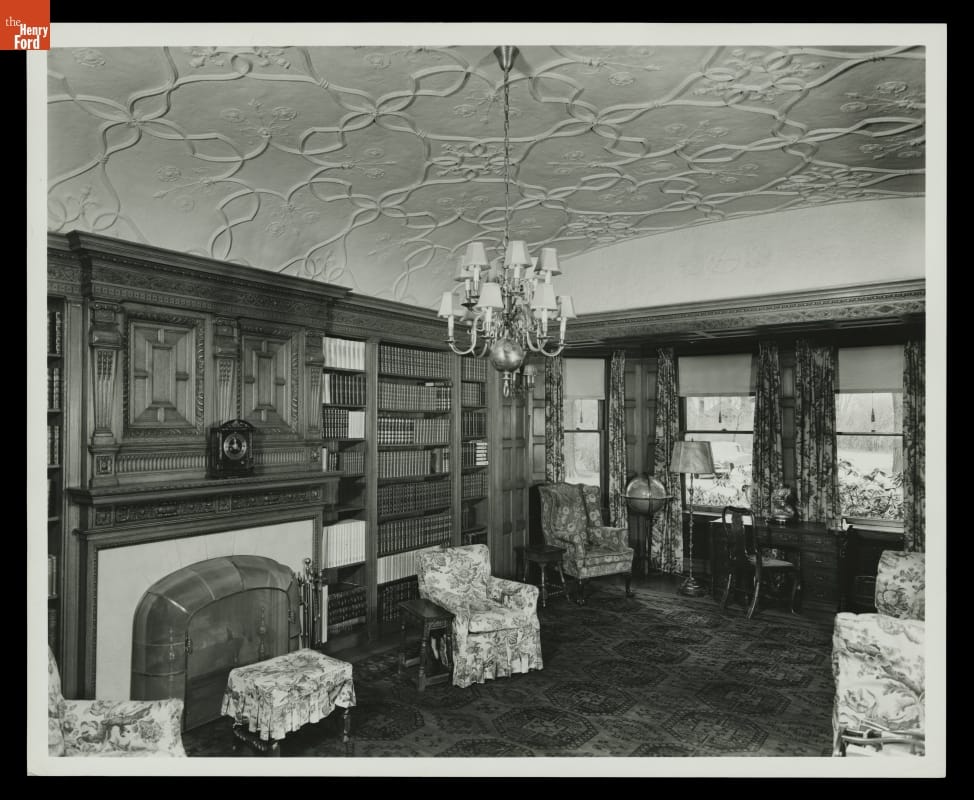
- Interior of Fair Lane, Dearborn, Michigan, 1951 - In the early 1910s, Henry and Clara Ford selected 1300 acres of farmland in Dearborn, Michigan, as the site for a new house -- shunning the eastern suburbs chosen by many of Detroit's wealthy citizens. In 1916, the couple moved into their newly constructed 31,000-square-foot home. The mansion contained 56 rooms including seven bedrooms, fifteen baths, and other standard living spaces.
- April 27, 1951
- Collections - Artifact
Interior of Fair Lane, Dearborn, Michigan, 1951
In the early 1910s, Henry and Clara Ford selected 1300 acres of farmland in Dearborn, Michigan, as the site for a new house -- shunning the eastern suburbs chosen by many of Detroit's wealthy citizens. In 1916, the couple moved into their newly constructed 31,000-square-foot home. The mansion contained 56 rooms including seven bedrooms, fifteen baths, and other standard living spaces.