
Search
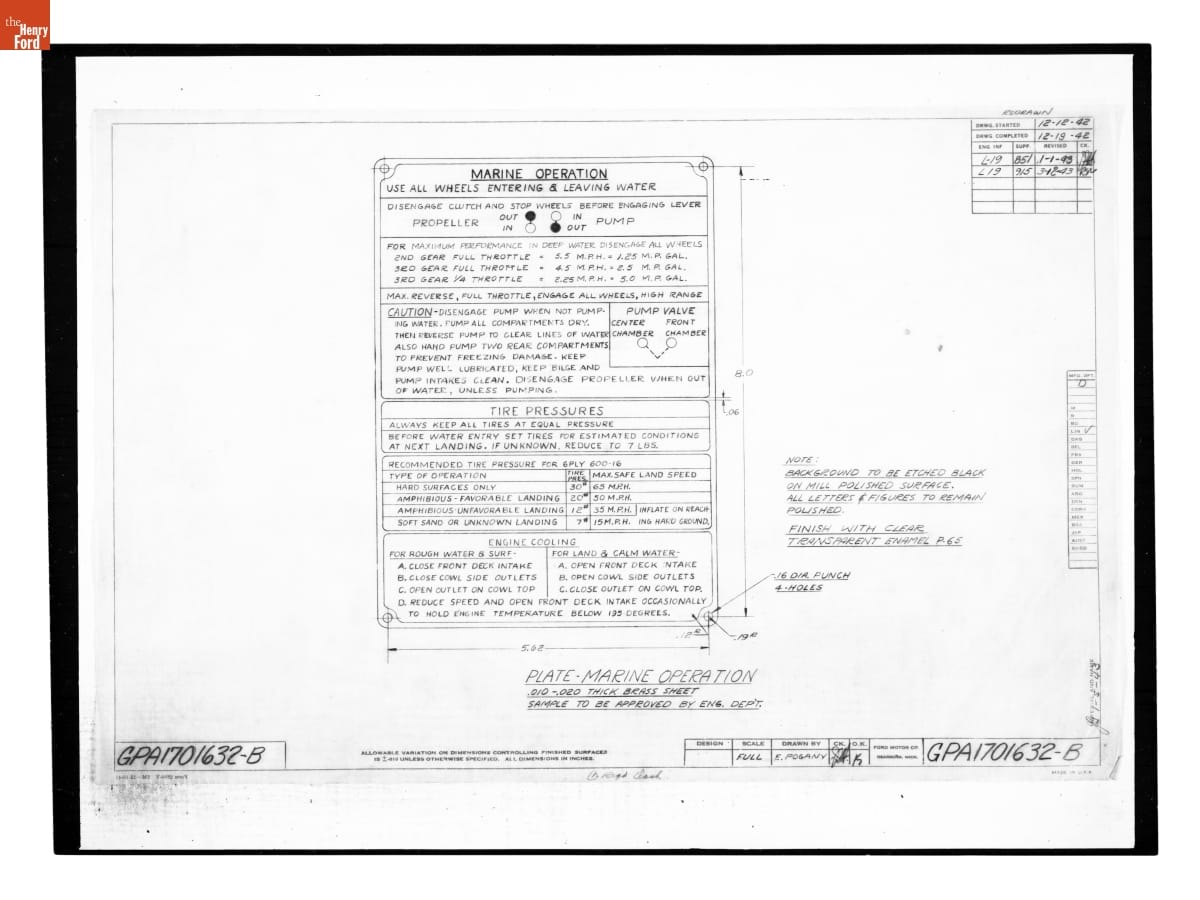
- Drawing, "Plate - Marine Operation," Ford GPA, March 12, 1943 - The Ford Motor Company created over a million parts drawings from 1903 to 1957. Many of these drawings specify engineering requirements for the components of Ford-made vehicles--including automobiles, trucks, tractors, military vehicles and Tri-motor airplanes. Others document assembly components, stages of casting and forging, or experimental designs. Beginning in the 1940s, Ford transferred the drawings to microfilm.
- March 12, 1943
- Collections - Artifact
Drawing, "Plate - Marine Operation," Ford GPA, March 12, 1943
The Ford Motor Company created over a million parts drawings from 1903 to 1957. Many of these drawings specify engineering requirements for the components of Ford-made vehicles--including automobiles, trucks, tractors, military vehicles and Tri-motor airplanes. Others document assembly components, stages of casting and forging, or experimental designs. Beginning in the 1940s, Ford transferred the drawings to microfilm.
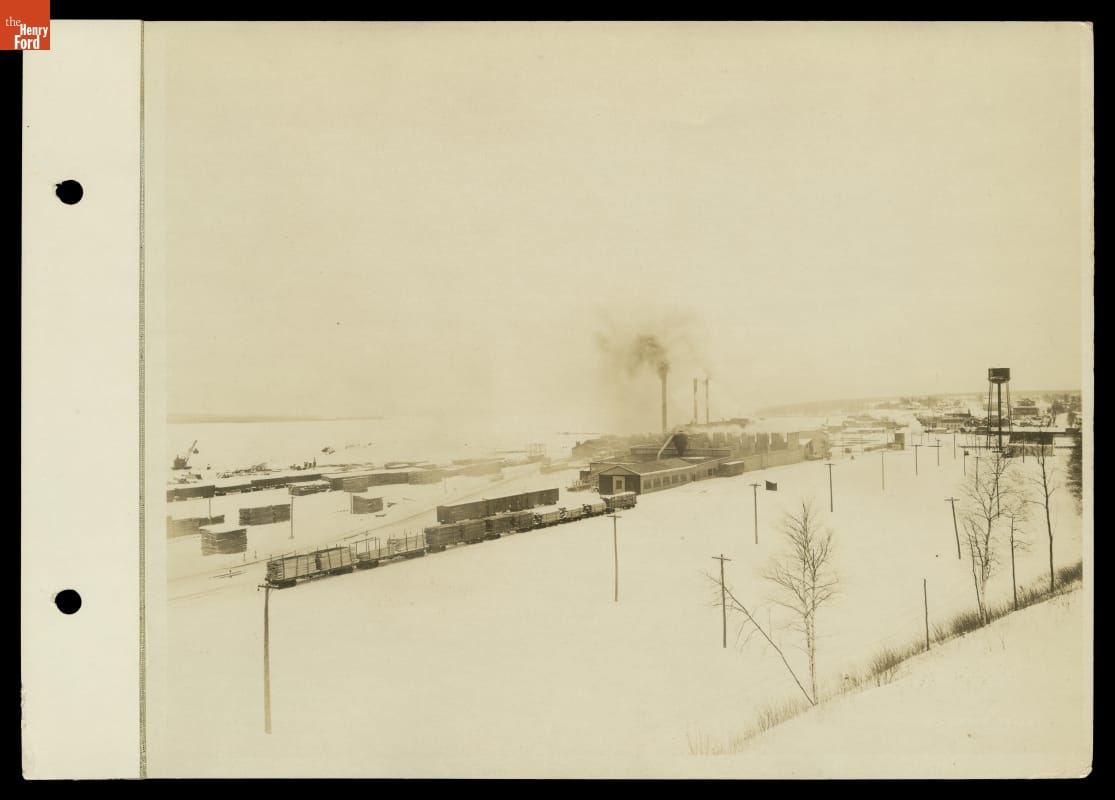
- Ford Motor Company Lumbering Operations at Keating Spur, L'Anse, Michigan, 1926 - In 1919, Henry Ford began buying vast amounts of forestland in Michigan's Upper Peninsula. These prime hardwood forests supplied the lumber used to create vehicle bodies and parts. Other products such as railroad ties, shipping containers and chemical byproducts were also made -- all to support Ford's automobile operations and his goal of manufacturing self-sufficiency.
- February 16, 1926
- Collections - Artifact
Ford Motor Company Lumbering Operations at Keating Spur, L'Anse, Michigan, 1926
In 1919, Henry Ford began buying vast amounts of forestland in Michigan's Upper Peninsula. These prime hardwood forests supplied the lumber used to create vehicle bodies and parts. Other products such as railroad ties, shipping containers and chemical byproducts were also made -- all to support Ford's automobile operations and his goal of manufacturing self-sufficiency.
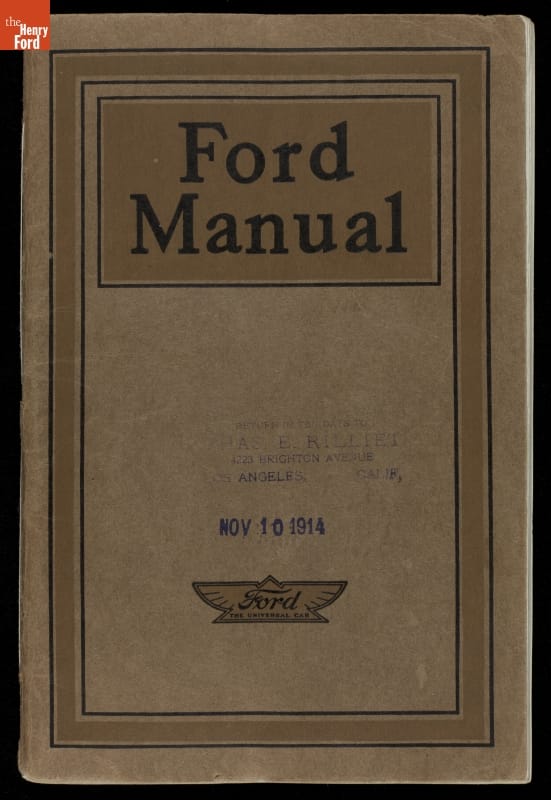
- "Ford Manual for Owners and Operators of Ford Cars," Ford Motor Company, 1914 - As cars became affordable and more people began using them, owners needed to know how to operate them properly. This 1914 manual helped the layperson -- without a mechanical or technical automotive background -- understand and drive the Ford Model T. Ford touted the T's simplicity, but its manual still provided over 140 answers to possible questions owners might have.
- 1914
- Collections - Artifact
"Ford Manual for Owners and Operators of Ford Cars," Ford Motor Company, 1914
As cars became affordable and more people began using them, owners needed to know how to operate them properly. This 1914 manual helped the layperson -- without a mechanical or technical automotive background -- understand and drive the Ford Model T. Ford touted the T's simplicity, but its manual still provided over 140 answers to possible questions owners might have.
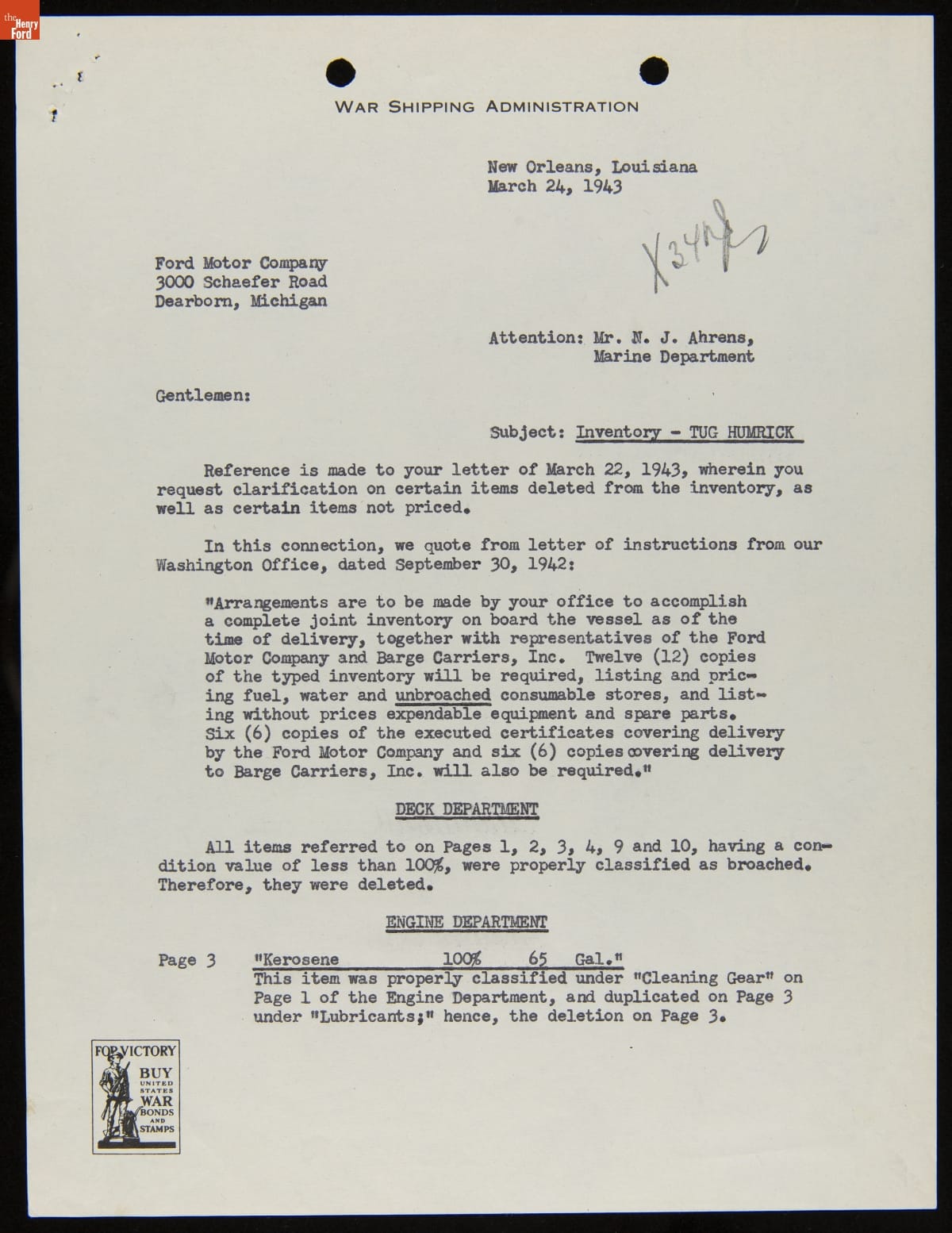
- Letter to Ford Motor Company regarding Inventory Discrepancies on Ford Tugboat "Humerick," March 24, 1943 - Ford Motor Company owned a fleet of barges, tugs, canal boats, cargo carriers, and ocean freighters that transported company products and materials before the Second World War. In 1942, with growing military demands, the United States began requisitioning all available ships for wartime service. Government maritime and shipping administrations worked with Ford to identify and acquire ships needed for the war effort.
- March 22, 1943
- Collections - Artifact
Letter to Ford Motor Company regarding Inventory Discrepancies on Ford Tugboat "Humerick," March 24, 1943
Ford Motor Company owned a fleet of barges, tugs, canal boats, cargo carriers, and ocean freighters that transported company products and materials before the Second World War. In 1942, with growing military demands, the United States began requisitioning all available ships for wartime service. Government maritime and shipping administrations worked with Ford to identify and acquire ships needed for the war effort.
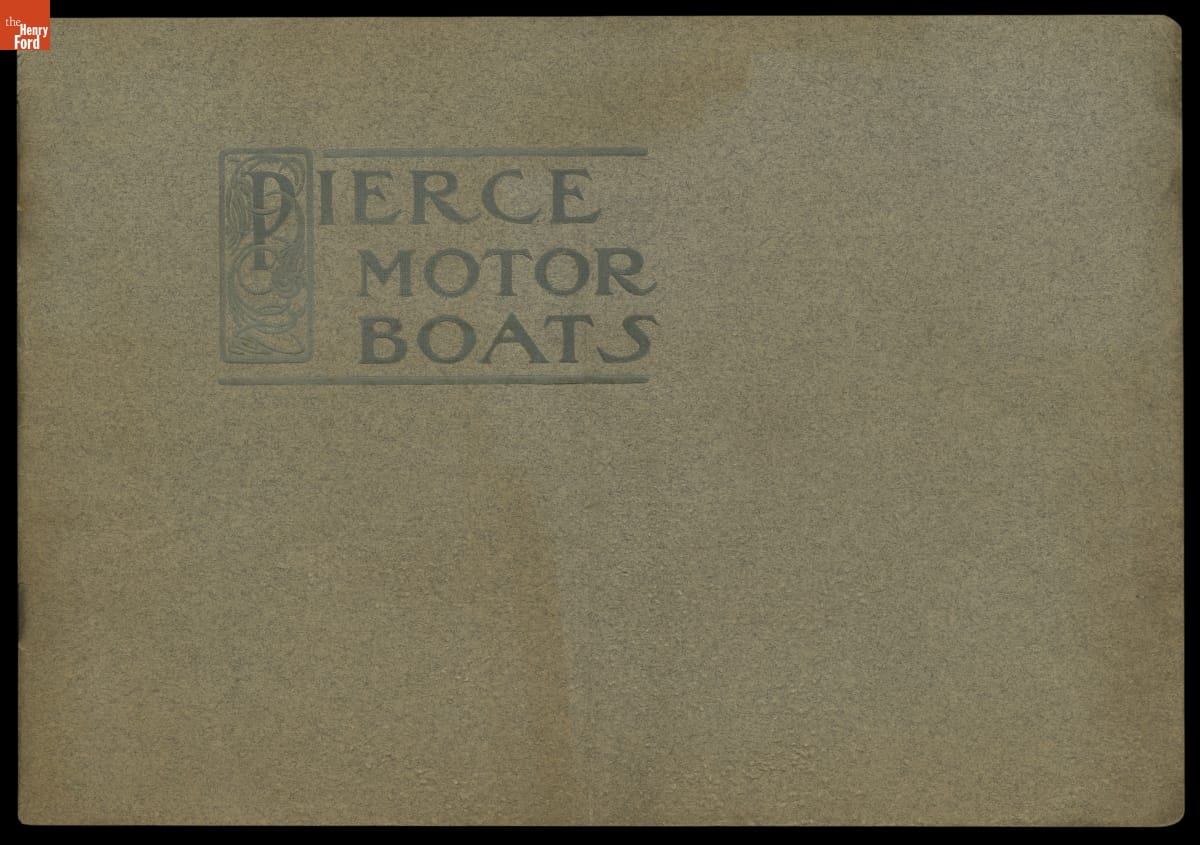
- "Pierce Marine Motors and Complete Motor Boats," circa 1910 - Andrew J. Pierce formed the Pierce Engine Company in Racine, Wisconsin, and manufactured stationary engines and marine engines. The company entered the automobile market in 1904 with its one-cylinder Pierce-Racine runabout. Two- and four-cylinder cars soon joined the lineup, and total auto production was somewhere above 2,000 vehicles before Pierce-Racine was acquired by tractor manufacturer Case in 1910.
- circa 1910
- Collections - Artifact
"Pierce Marine Motors and Complete Motor Boats," circa 1910
Andrew J. Pierce formed the Pierce Engine Company in Racine, Wisconsin, and manufactured stationary engines and marine engines. The company entered the automobile market in 1904 with its one-cylinder Pierce-Racine runabout. Two- and four-cylinder cars soon joined the lineup, and total auto production was somewhere above 2,000 vehicles before Pierce-Racine was acquired by tractor manufacturer Case in 1910.
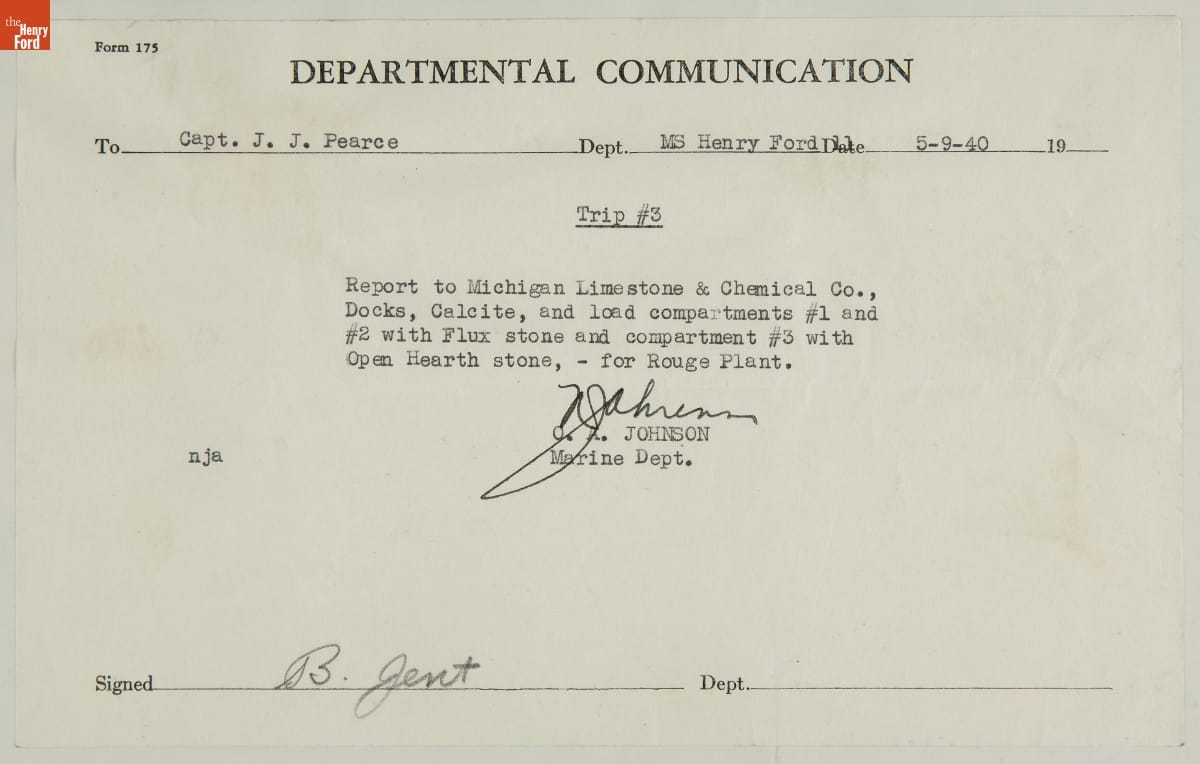
- Ship's Log for MS Henry Ford II, Trip 3, May 10-13, 1940 - Henry Ford had two ore freighters built in 1924 and named them after his grandsons, Henry Ford II and Benson Ford. The ships plied the Great Lakes, transporting raw materials to and from Ford's River Rouge manufacturing complex. A ship's log kept record of the cargo, loading and unloading ports, sailing dates, general weather conditions, and reasons for delay.
- 10 May 1940-13 May 1940
- Collections - Artifact
Ship's Log for MS Henry Ford II, Trip 3, May 10-13, 1940
Henry Ford had two ore freighters built in 1924 and named them after his grandsons, Henry Ford II and Benson Ford. The ships plied the Great Lakes, transporting raw materials to and from Ford's River Rouge manufacturing complex. A ship's log kept record of the cargo, loading and unloading ports, sailing dates, general weather conditions, and reasons for delay.
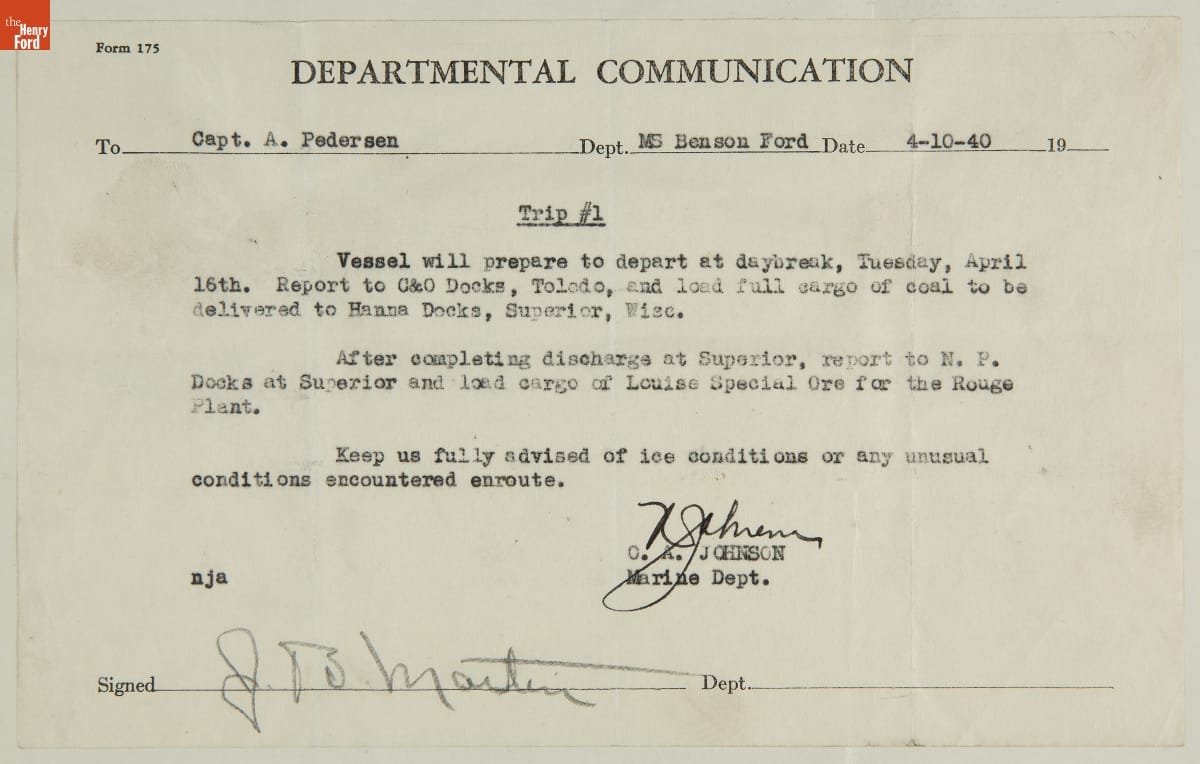
- Ship's Log for MS Benson Ford, Trip 1, April 16-24, 1940 - Henry Ford had two ore freighters built in 1924 and named them after his grandsons, Henry Ford II and Benson Ford. The ships plied the Great Lakes, transporting raw materials to and from Ford's River Rouge manufacturing complex. A ship's log kept record of the cargo, loading and unloading ports, sailing dates, general weather conditions, and reasons for delay.
- 16 April 1940-24 April 1940
- Collections - Artifact
Ship's Log for MS Benson Ford, Trip 1, April 16-24, 1940
Henry Ford had two ore freighters built in 1924 and named them after his grandsons, Henry Ford II and Benson Ford. The ships plied the Great Lakes, transporting raw materials to and from Ford's River Rouge manufacturing complex. A ship's log kept record of the cargo, loading and unloading ports, sailing dates, general weather conditions, and reasons for delay.
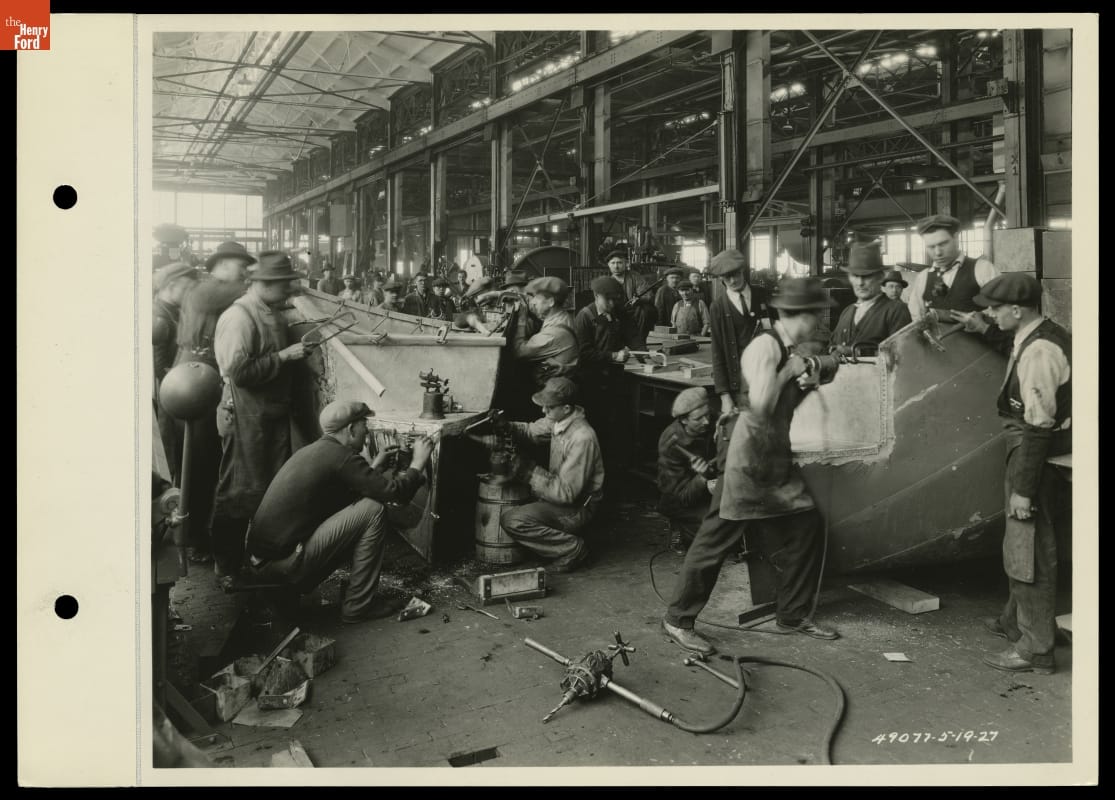
- Salvage Boats at Ford Motor Company Rouge Plant Shipyard, 1927 - Completed in 1928 along the newly dredged River Rouge, Ford Motor Company's Rouge Plant quickly became an icon of modern industrial productivity. The factory's ship salvaging project exemplified Henry Ford's vision of efficiency at the plant. Workers disassembled surplus vessels, saving hardware and reconditioning functional machinery. Then, in the Rouge's production foundry, they melted down remaining scraps into reusable steel.
- May 19, 1927
- Collections - Artifact
Salvage Boats at Ford Motor Company Rouge Plant Shipyard, 1927
Completed in 1928 along the newly dredged River Rouge, Ford Motor Company's Rouge Plant quickly became an icon of modern industrial productivity. The factory's ship salvaging project exemplified Henry Ford's vision of efficiency at the plant. Workers disassembled surplus vessels, saving hardware and reconditioning functional machinery. Then, in the Rouge's production foundry, they melted down remaining scraps into reusable steel.
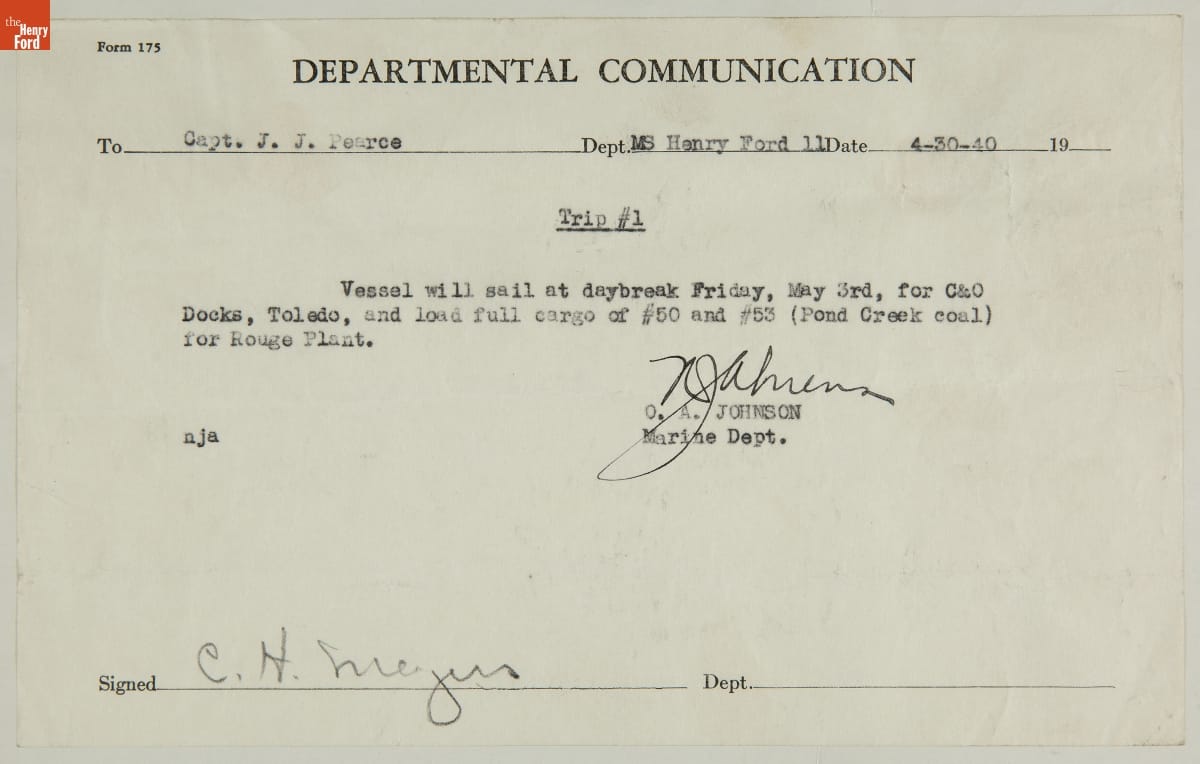
- Ship's Log for MS Henry Ford II, Trip 1, May 3-4, 1940 - Henry Ford had two ore freighters built in 1924 and named them after his grandsons, Henry Ford II and Benson Ford. The ships plied the Great Lakes, transporting raw materials to and from Ford's River Rouge manufacturing complex. A ship's log kept record of the cargo, loading and unloading ports, sailing dates, general weather conditions, and reasons for delay.
- 03 May 1940-04 May 1940
- Collections - Artifact
Ship's Log for MS Henry Ford II, Trip 1, May 3-4, 1940
Henry Ford had two ore freighters built in 1924 and named them after his grandsons, Henry Ford II and Benson Ford. The ships plied the Great Lakes, transporting raw materials to and from Ford's River Rouge manufacturing complex. A ship's log kept record of the cargo, loading and unloading ports, sailing dates, general weather conditions, and reasons for delay.
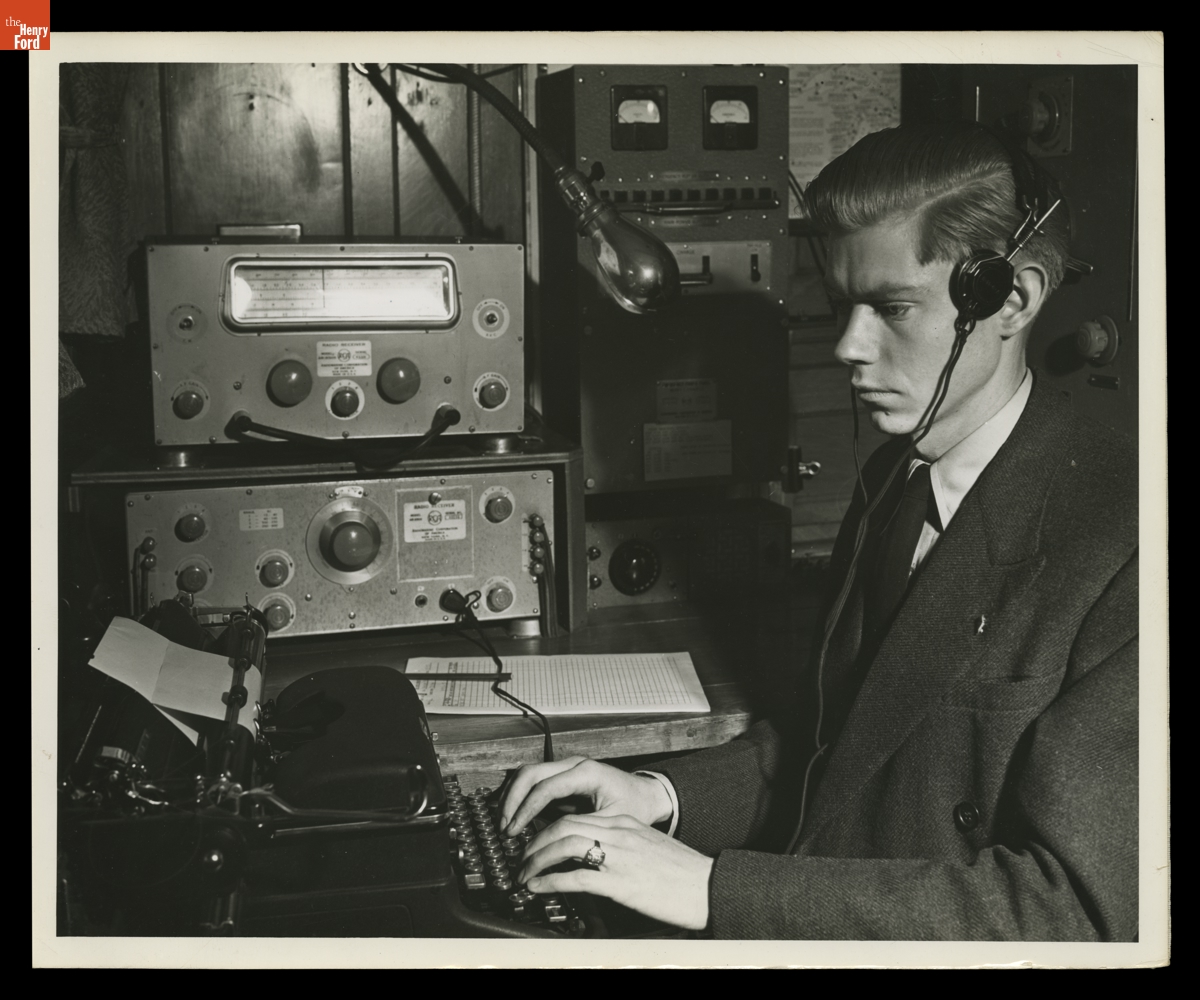
- Radio Operator at a Typewriter aboard the Ford Motor Company Ship, "Benson Ford," April 1945 - Henry Ford had two freighters built in 1924 and named them after his grandsons, Henry Ford II and Benson Ford. The ships traveled the Great Lakes, transporting raw materials and finished products to and from Ford's Rouge manufacturing complex. In its early years, the <em>Benson Ford</em> carried a crew of 36 -- officers, engineers, oilers, sailors, cooks, and other specialists.
- April 14, 1945
- Collections - Artifact
Radio Operator at a Typewriter aboard the Ford Motor Company Ship, "Benson Ford," April 1945
Henry Ford had two freighters built in 1924 and named them after his grandsons, Henry Ford II and Benson Ford. The ships traveled the Great Lakes, transporting raw materials and finished products to and from Ford's Rouge manufacturing complex. In its early years, the Benson Ford carried a crew of 36 -- officers, engineers, oilers, sailors, cooks, and other specialists.