
Search
- Ford Radio Beacon Station - Early pilots depended on landmarks, preventing reliable navigation in bad weather. Henry Ford's engineers developed a radio beacon that simultaneously transmitted two Morse code letters, allowing pilots to steer until the separate signals merged into a steady hum. The original beacon station at Ford Airport (shown here) was removed in 1933 and is now on display inside the museum.
- October 31, 2016
- Collections - Set
Ford Radio Beacon Station
Early pilots depended on landmarks, preventing reliable navigation in bad weather. Henry Ford's engineers developed a radio beacon that simultaneously transmitted two Morse code letters, allowing pilots to steer until the separate signals merged into a steady hum. The original beacon station at Ford Airport (shown here) was removed in 1933 and is now on display inside the museum.
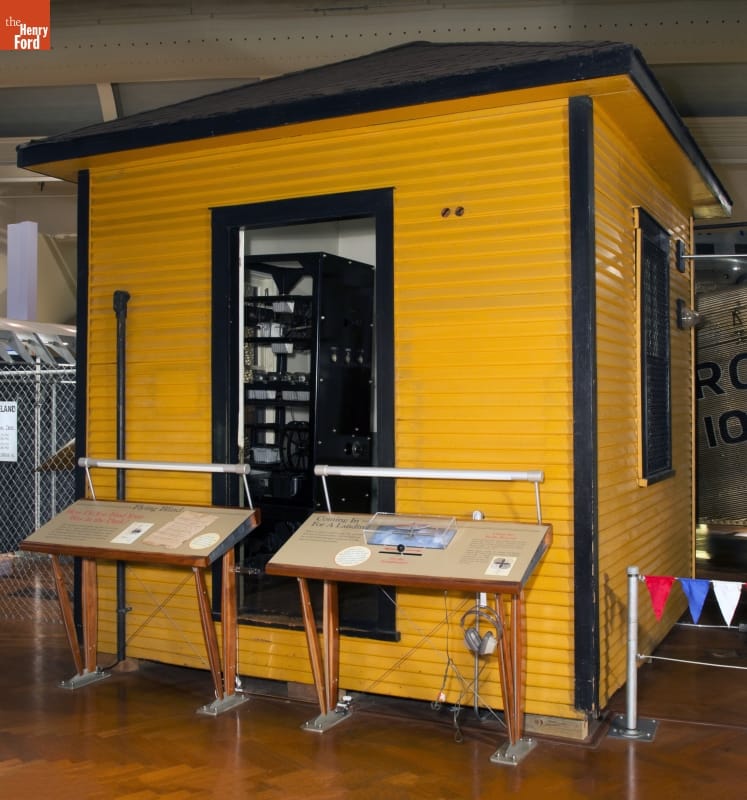
- Radio Beacon Station Building Used at Ford Airport, 1927 - Early pilots depended on visible landmarks, preventing reliable navigation in bad weather. Henry Ford's engineers developed a radio beacon that simultaneously transmitted two Morse code letters. Pilots steered until the separate signals merged into one steady hum. The original beacon station building at Ford Airport was removed in 1933 and is now displayed in Henry Ford Museum of American Innovation.
- 1927
- Collections - Artifact
Radio Beacon Station Building Used at Ford Airport, 1927
Early pilots depended on visible landmarks, preventing reliable navigation in bad weather. Henry Ford's engineers developed a radio beacon that simultaneously transmitted two Morse code letters. Pilots steered until the separate signals merged into one steady hum. The original beacon station building at Ford Airport was removed in 1933 and is now displayed in Henry Ford Museum of American Innovation.
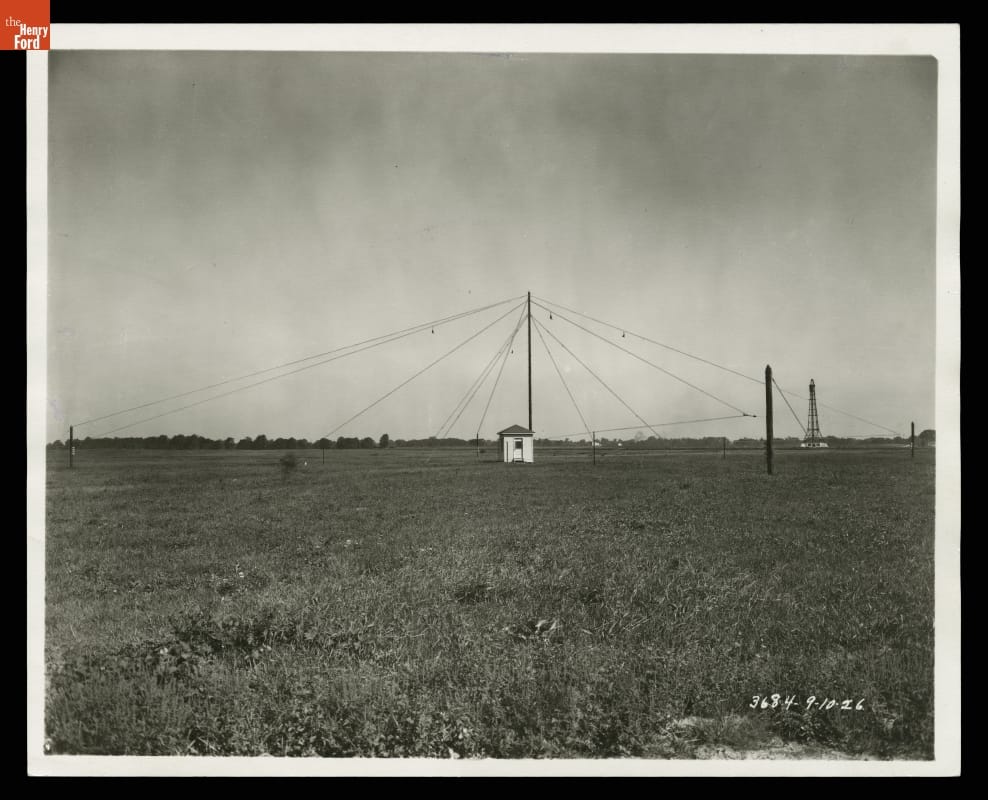
- Radio Beacon Transmitting Station and Antennas at Ford Airport, 1926 - Early pilots depended on landmarks, preventing reliable navigation in bad weather. Henry Ford's engineers developed a radio beacon that simultaneously transmitted two Morse code letters, allowing pilots to steer until the separate signals merged into a steady hum. The original beacon station at Ford Airport (shown here) was removed in 1933 and is now on display inside the museum.
- September 10, 1926
- Collections - Artifact
Radio Beacon Transmitting Station and Antennas at Ford Airport, 1926
Early pilots depended on landmarks, preventing reliable navigation in bad weather. Henry Ford's engineers developed a radio beacon that simultaneously transmitted two Morse code letters, allowing pilots to steer until the separate signals merged into a steady hum. The original beacon station at Ford Airport (shown here) was removed in 1933 and is now on display inside the museum.
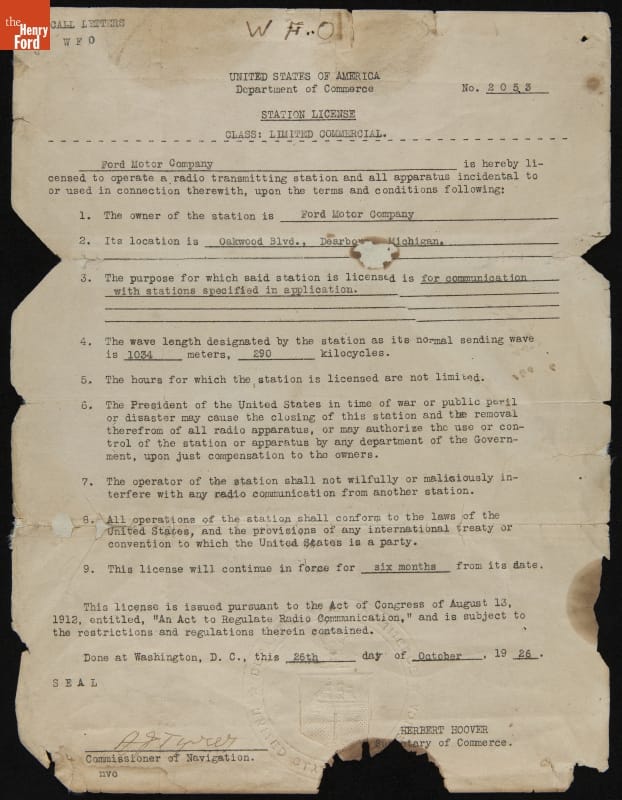
- Radio Station "WFO" License for Operating the Ford Aircraft Radio Beacon, October 1926 - Early pilots depended on landmarks, preventing reliable navigation in bad weather. Ford engineers developed a radio beacon that used Morse signals to guide pilots; when an aircraft was over its destination, the beacon could also send a signal to the pilot. This radio station license allowed the operation of the radio beacon at Ford Airport.
- October 26, 1926
- Collections - Artifact
Radio Station "WFO" License for Operating the Ford Aircraft Radio Beacon, October 1926
Early pilots depended on landmarks, preventing reliable navigation in bad weather. Ford engineers developed a radio beacon that used Morse signals to guide pilots; when an aircraft was over its destination, the beacon could also send a signal to the pilot. This radio station license allowed the operation of the radio beacon at Ford Airport.
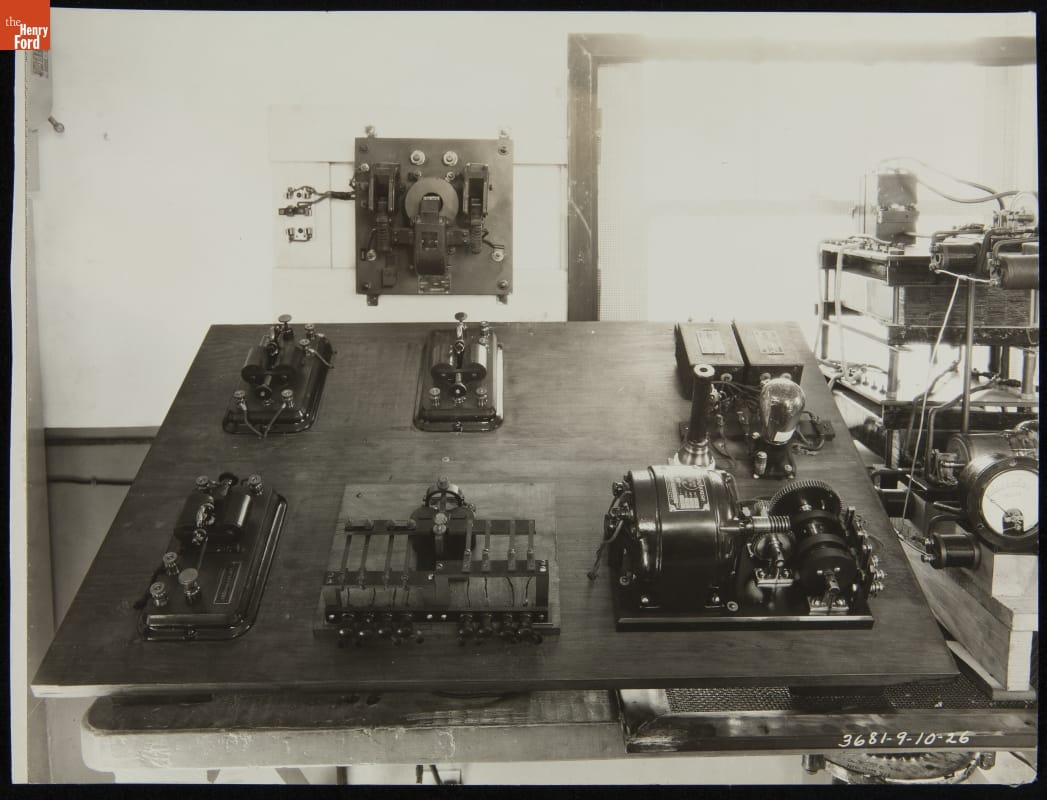
- Equipment Inside the Radio Beacon Station Building at Ford Airport, September 10, 1926 - Early pilots depended on landmarks, preventing reliable navigation in bad weather. Henry Ford's engineers developed a radio beacon that simultaneously transmitted two Morse code letters, allowing pilots to steer until the separate signals merged into a steady hum. The original beacon station at Ford Airport (shown here) was removed in 1933 and is now on display inside the museum.
- September 10, 1926
- Collections - Artifact
Equipment Inside the Radio Beacon Station Building at Ford Airport, September 10, 1926
Early pilots depended on landmarks, preventing reliable navigation in bad weather. Henry Ford's engineers developed a radio beacon that simultaneously transmitted two Morse code letters, allowing pilots to steer until the separate signals merged into a steady hum. The original beacon station at Ford Airport (shown here) was removed in 1933 and is now on display inside the museum.
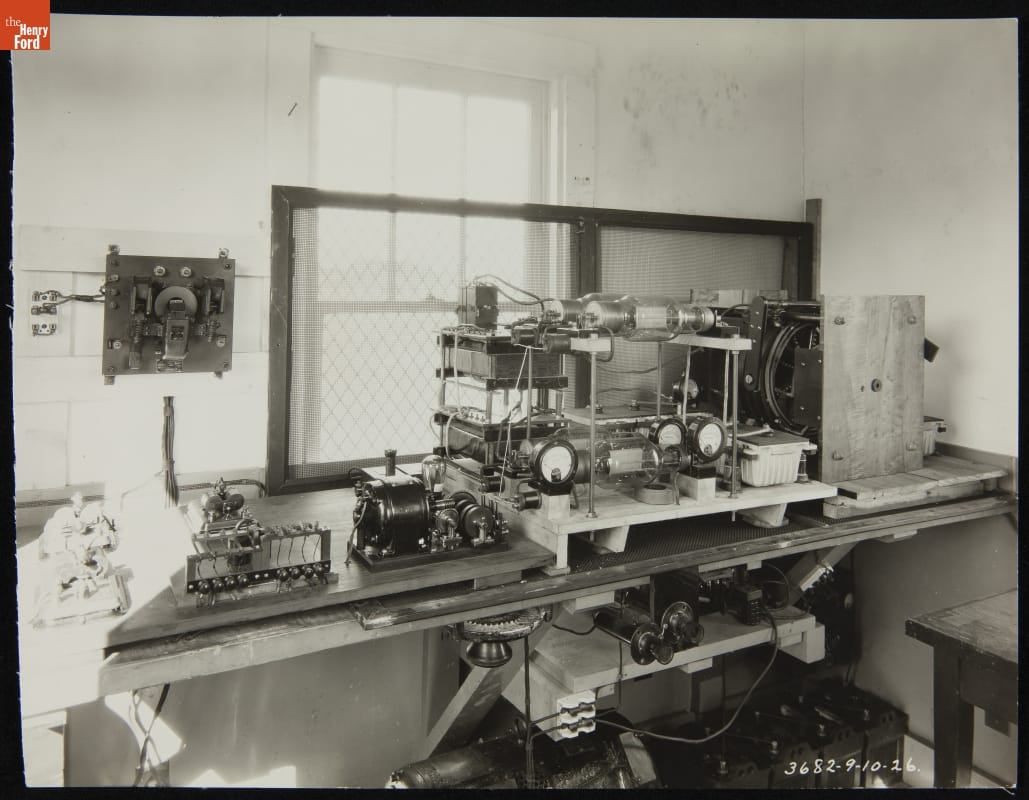
- Equipment Inside the Radio Beacon Station Building at Ford Airport, September 10, 1926 - Early pilots depended on landmarks, preventing reliable navigation in bad weather. Henry Ford's engineers developed a radio beacon that simultaneously transmitted two Morse code letters, allowing pilots to steer until the separate signals merged into a steady hum. The original beacon station at Ford Airport (shown here) was removed in 1933 and is now on display inside the museum.
- September 10, 1926
- Collections - Artifact
Equipment Inside the Radio Beacon Station Building at Ford Airport, September 10, 1926
Early pilots depended on landmarks, preventing reliable navigation in bad weather. Henry Ford's engineers developed a radio beacon that simultaneously transmitted two Morse code letters, allowing pilots to steer until the separate signals merged into a steady hum. The original beacon station at Ford Airport (shown here) was removed in 1933 and is now on display inside the museum.
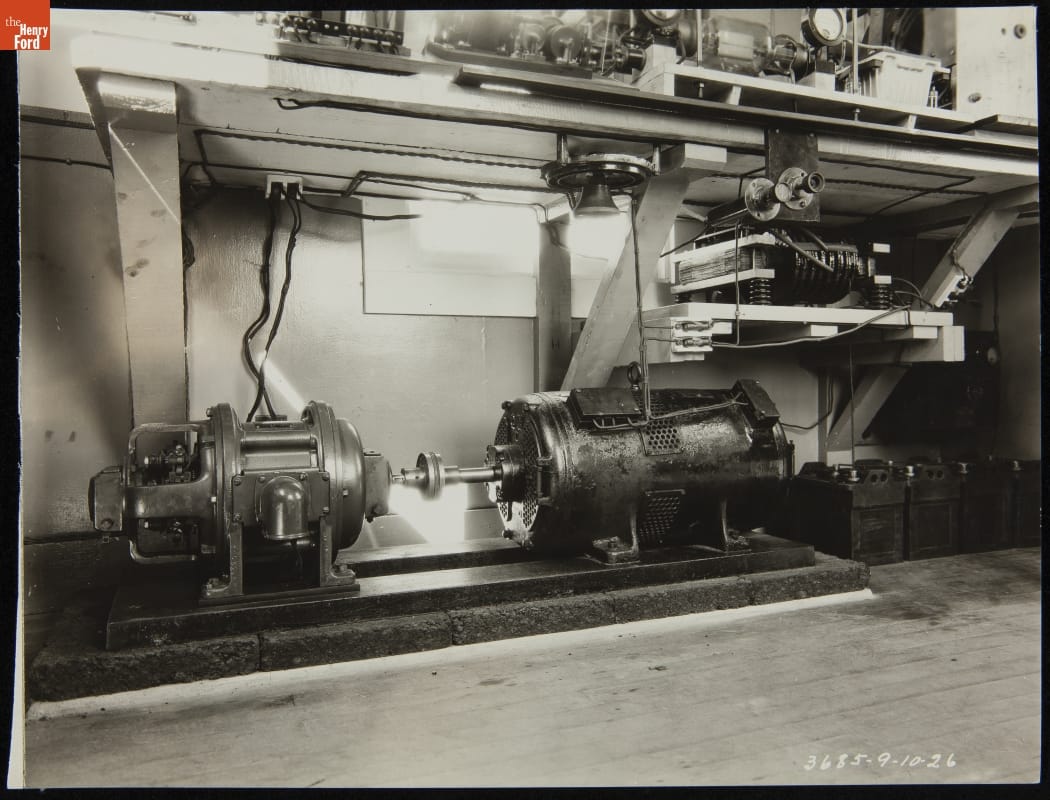
- Equipment Inside the Radio Beacon Station Building at Ford Airport, September 10, 1926 - Early pilots depended on landmarks, preventing reliable navigation in bad weather. Henry Ford's engineers developed a radio beacon that simultaneously transmitted two Morse code letters, allowing pilots to steer until the separate signals merged into a steady hum. The original beacon station at Ford Airport (shown here) was removed in 1933 and is now on display inside the museum.
- September 10, 1926
- Collections - Artifact
Equipment Inside the Radio Beacon Station Building at Ford Airport, September 10, 1926
Early pilots depended on landmarks, preventing reliable navigation in bad weather. Henry Ford's engineers developed a radio beacon that simultaneously transmitted two Morse code letters, allowing pilots to steer until the separate signals merged into a steady hum. The original beacon station at Ford Airport (shown here) was removed in 1933 and is now on display inside the museum.
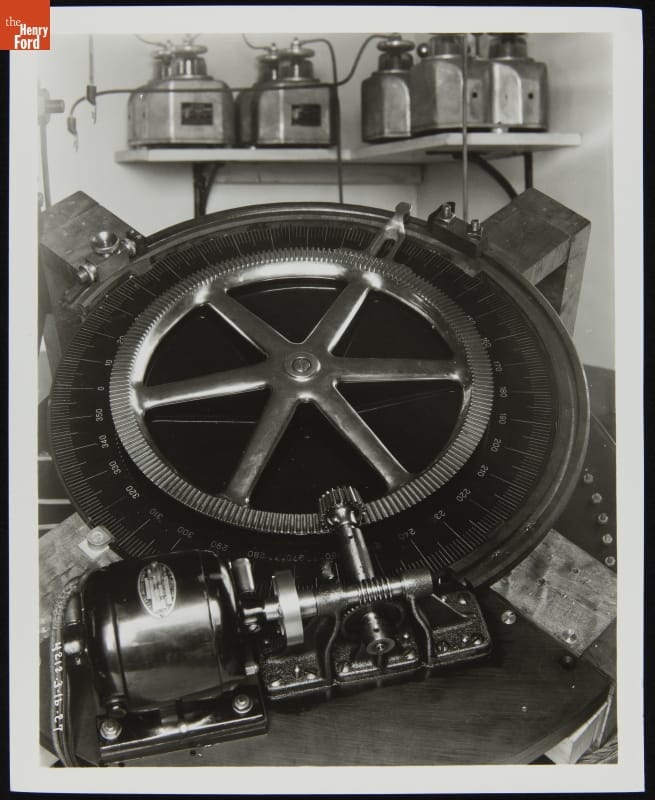
- Equipment Inside the Radio Beacon Station Building at Ford Airport, March 16, 1927 - Early pilots depended on landmarks, preventing reliable navigation in bad weather. Henry Ford's engineers developed a radio beacon that simultaneously transmitted two Morse code letters, allowing pilots to steer until the separate signals merged into a steady hum. The original beacon station at Ford Airport (shown here) was removed in 1933 and is now on display inside the museum.
- March 16, 1927
- Collections - Artifact
Equipment Inside the Radio Beacon Station Building at Ford Airport, March 16, 1927
Early pilots depended on landmarks, preventing reliable navigation in bad weather. Henry Ford's engineers developed a radio beacon that simultaneously transmitted two Morse code letters, allowing pilots to steer until the separate signals merged into a steady hum. The original beacon station at Ford Airport (shown here) was removed in 1933 and is now on display inside the museum.
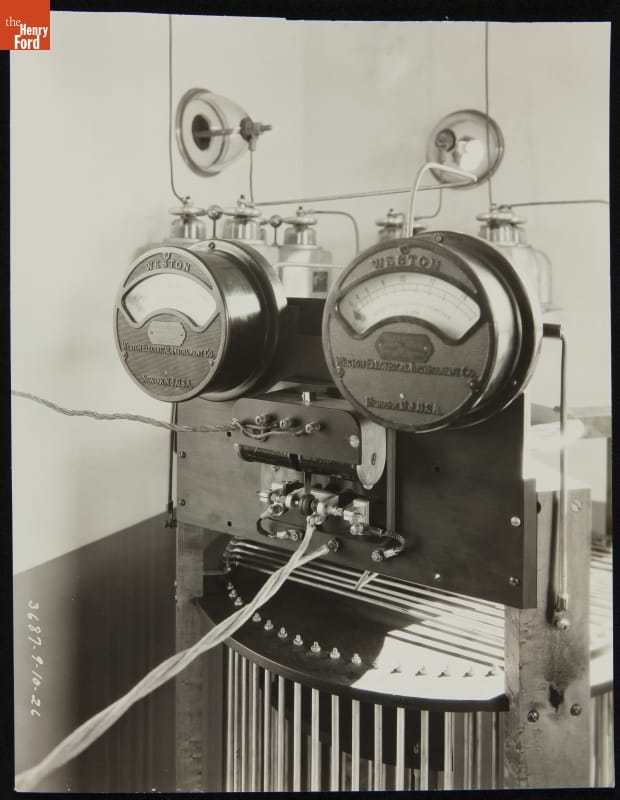
- Detail of Goniometer Used inside the Radio Beacon Transmitting Station at Ford Airport, 1926 - Early pilots depended on landmarks, preventing reliable navigation in bad weather. Henry Ford's engineers developed a radio beacon that simultaneously transmitted two Morse code letters, allowing pilots to steer until the separate signals merged into a steady hum. The original beacon station at Ford Airport (shown here) was removed in 1933 and is now on display inside the museum.
- September 10, 1926
- Collections - Artifact
Detail of Goniometer Used inside the Radio Beacon Transmitting Station at Ford Airport, 1926
Early pilots depended on landmarks, preventing reliable navigation in bad weather. Henry Ford's engineers developed a radio beacon that simultaneously transmitted two Morse code letters, allowing pilots to steer until the separate signals merged into a steady hum. The original beacon station at Ford Airport (shown here) was removed in 1933 and is now on display inside the museum.
- Detail of Goniometer Used inside the Radio Beacon Transmitting Station at Ford Airport, 1926 - Early pilots depended on landmarks, preventing reliable navigation in bad weather. Henry Ford's engineers developed a radio beacon that simultaneously transmitted two Morse code letters, allowing pilots to steer until the separate signals merged into a steady hum. The original beacon station at Ford Airport (shown here) was removed in 1933 and is now on display inside the museum.
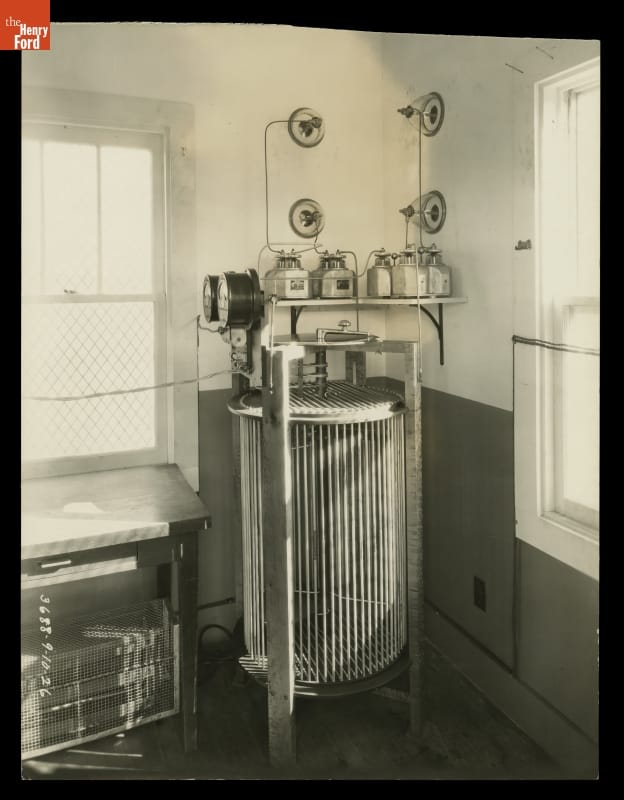
- September 10, 1926
- Collections - Artifact
Detail of Goniometer Used inside the Radio Beacon Transmitting Station at Ford Airport, 1926
Early pilots depended on landmarks, preventing reliable navigation in bad weather. Henry Ford's engineers developed a radio beacon that simultaneously transmitted two Morse code letters, allowing pilots to steer until the separate signals merged into a steady hum. The original beacon station at Ford Airport (shown here) was removed in 1933 and is now on display inside the museum.