
Search
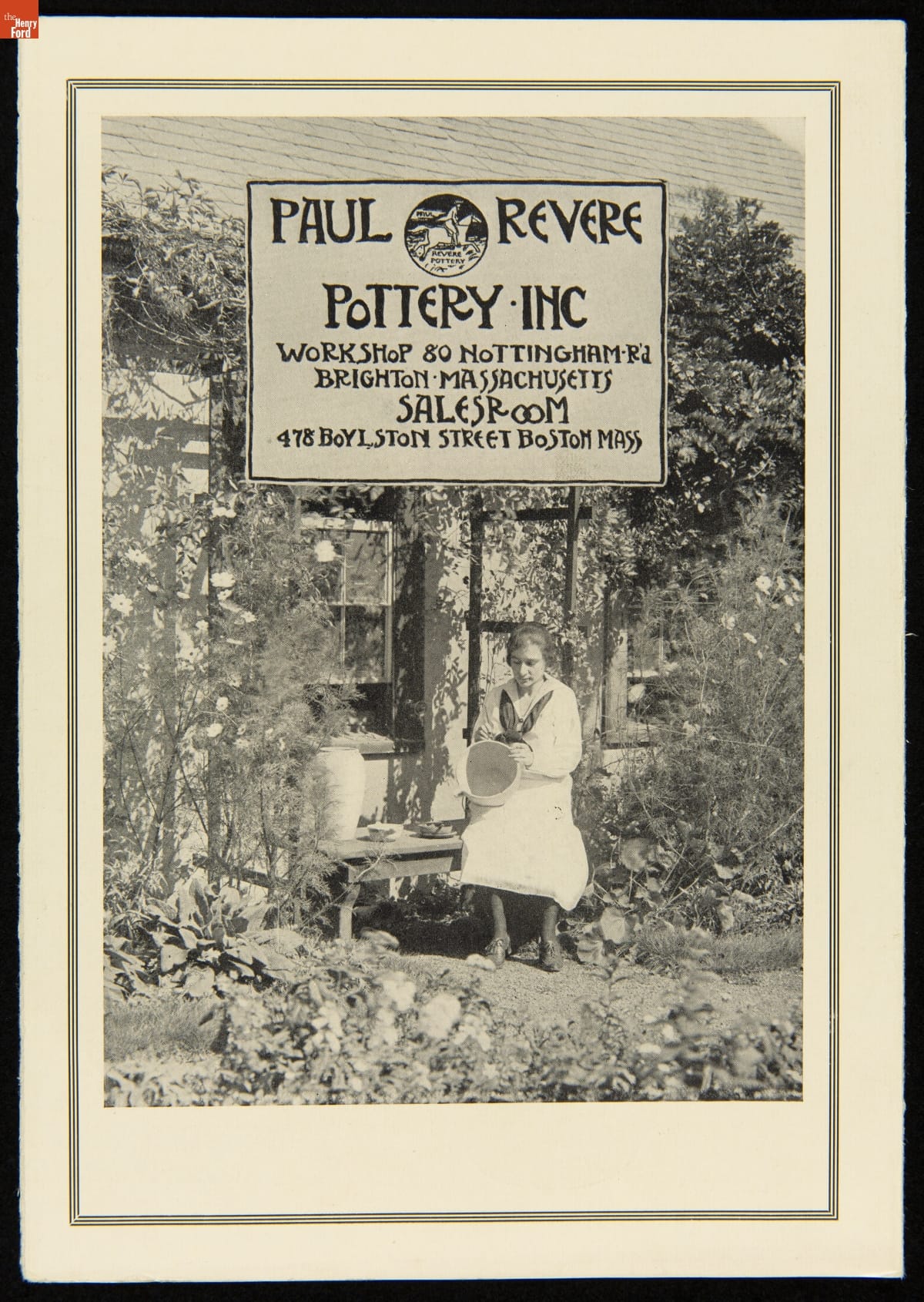
- Catalog for the Paul Revere Pottery, circa 1930 - The Paul Revere Pottery evolved from a settlement house founded in 1899 to help women in Boston's North End immigrant community. Founders Edith Guerrier, a librarian, and Edith Brown, an artist, convinced patron Helen Osborne Storrow to fund the pottery in 1906. The venture proved successful, producing remarkable Arts and Crafts wares through the 1930s.
- circa 1930
- Collections - Artifact
Catalog for the Paul Revere Pottery, circa 1930
The Paul Revere Pottery evolved from a settlement house founded in 1899 to help women in Boston's North End immigrant community. Founders Edith Guerrier, a librarian, and Edith Brown, an artist, convinced patron Helen Osborne Storrow to fund the pottery in 1906. The venture proved successful, producing remarkable Arts and Crafts wares through the 1930s.
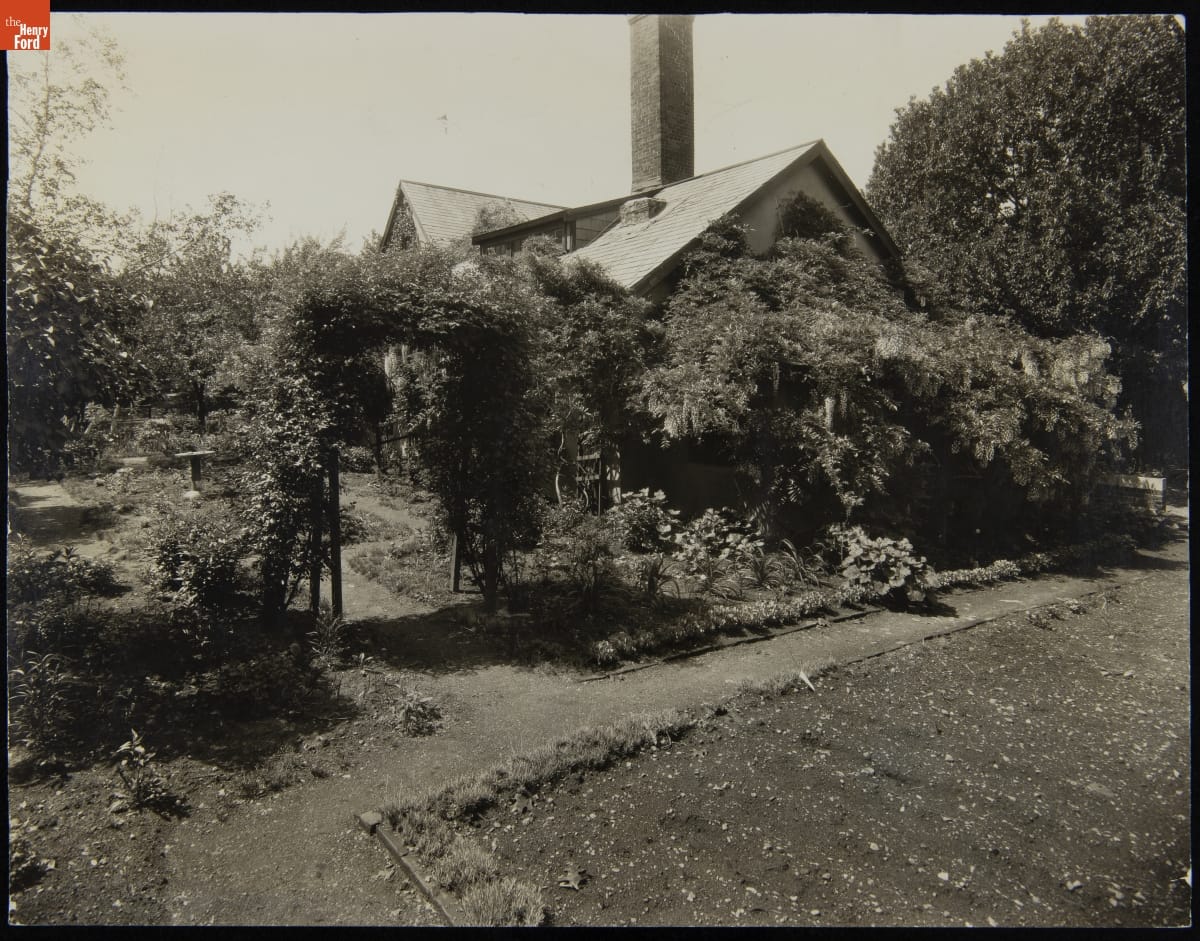
- Garden at the Paul Revere Pottery, 1930-1936 - The Paul Revere Pottery evolved from a settlement house founded in 1899 to help women in Boston's North End immigrant community. Founders Edith Guerrier, a librarian, and Edith Brown, an artist, convinced patron Helen Osborne Storrow to fund the pottery in 1906. The venture proved successful, producing remarkable Arts and Crafts wares through the 1930s.
- 1930-1936
- Collections - Artifact
Garden at the Paul Revere Pottery, 1930-1936
The Paul Revere Pottery evolved from a settlement house founded in 1899 to help women in Boston's North End immigrant community. Founders Edith Guerrier, a librarian, and Edith Brown, an artist, convinced patron Helen Osborne Storrow to fund the pottery in 1906. The venture proved successful, producing remarkable Arts and Crafts wares through the 1930s.
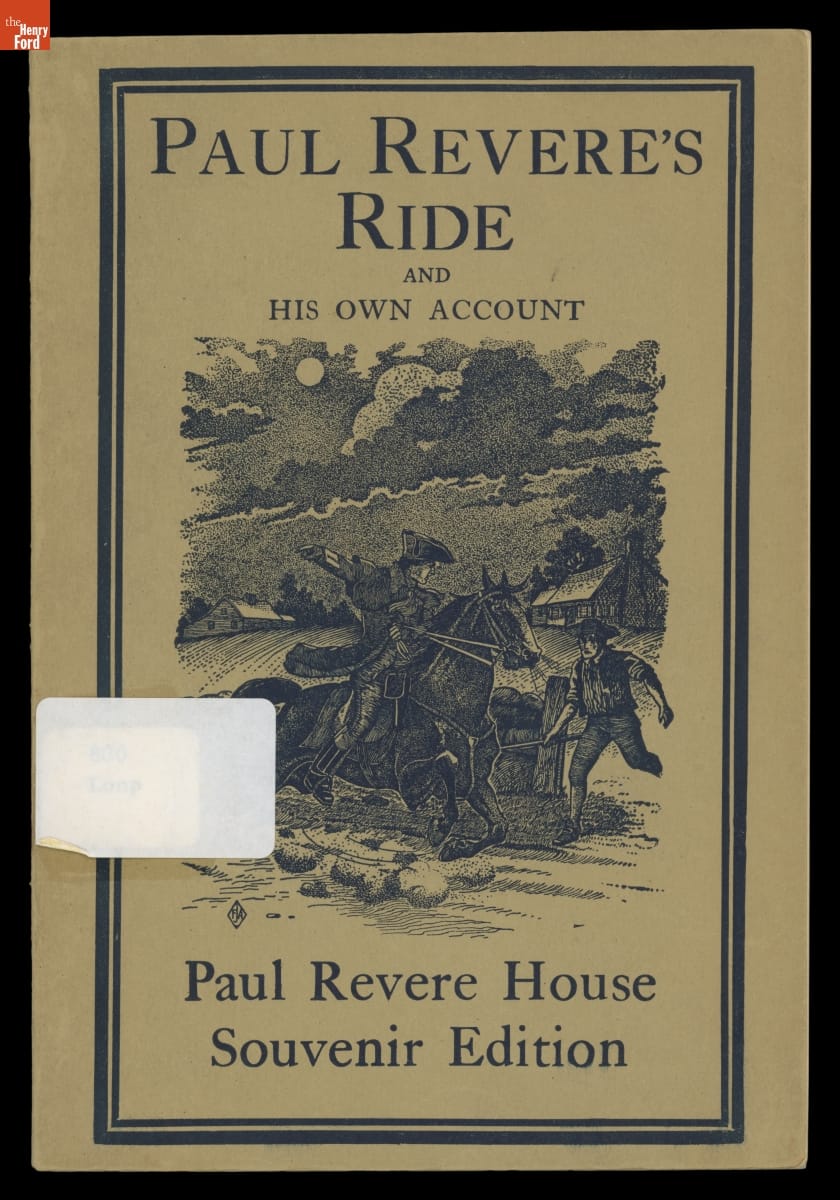
- Paul Revere's Ride, 1907 -
- 1907
- Collections - Artifact
Paul Revere's Ride, 1907
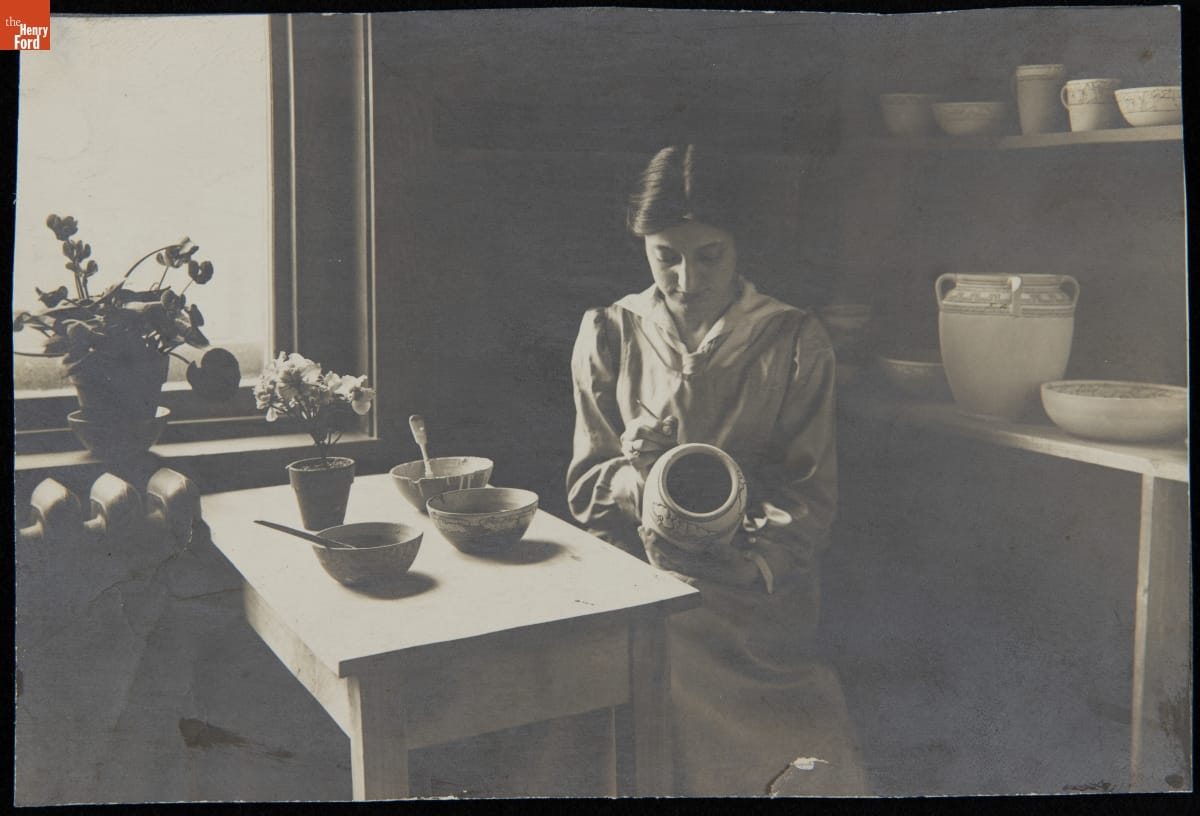
- A Woman Paints a Piece of Pottery at the Paul Revere Pottery, 1930-1936 - The Paul Revere Pottery evolved from a settlement house founded in 1899 to help women in Boston's North End immigrant community. Founders Edith Guerrier, a librarian, and Edith Brown, an artist, convinced patron Helen Osborne Storrow to fund the pottery in 1906. The venture proved successful, producing remarkable Arts and Crafts wares through the 1930s.
- 1930-1936
- Collections - Artifact
A Woman Paints a Piece of Pottery at the Paul Revere Pottery, 1930-1936
The Paul Revere Pottery evolved from a settlement house founded in 1899 to help women in Boston's North End immigrant community. Founders Edith Guerrier, a librarian, and Edith Brown, an artist, convinced patron Helen Osborne Storrow to fund the pottery in 1906. The venture proved successful, producing remarkable Arts and Crafts wares through the 1930s.
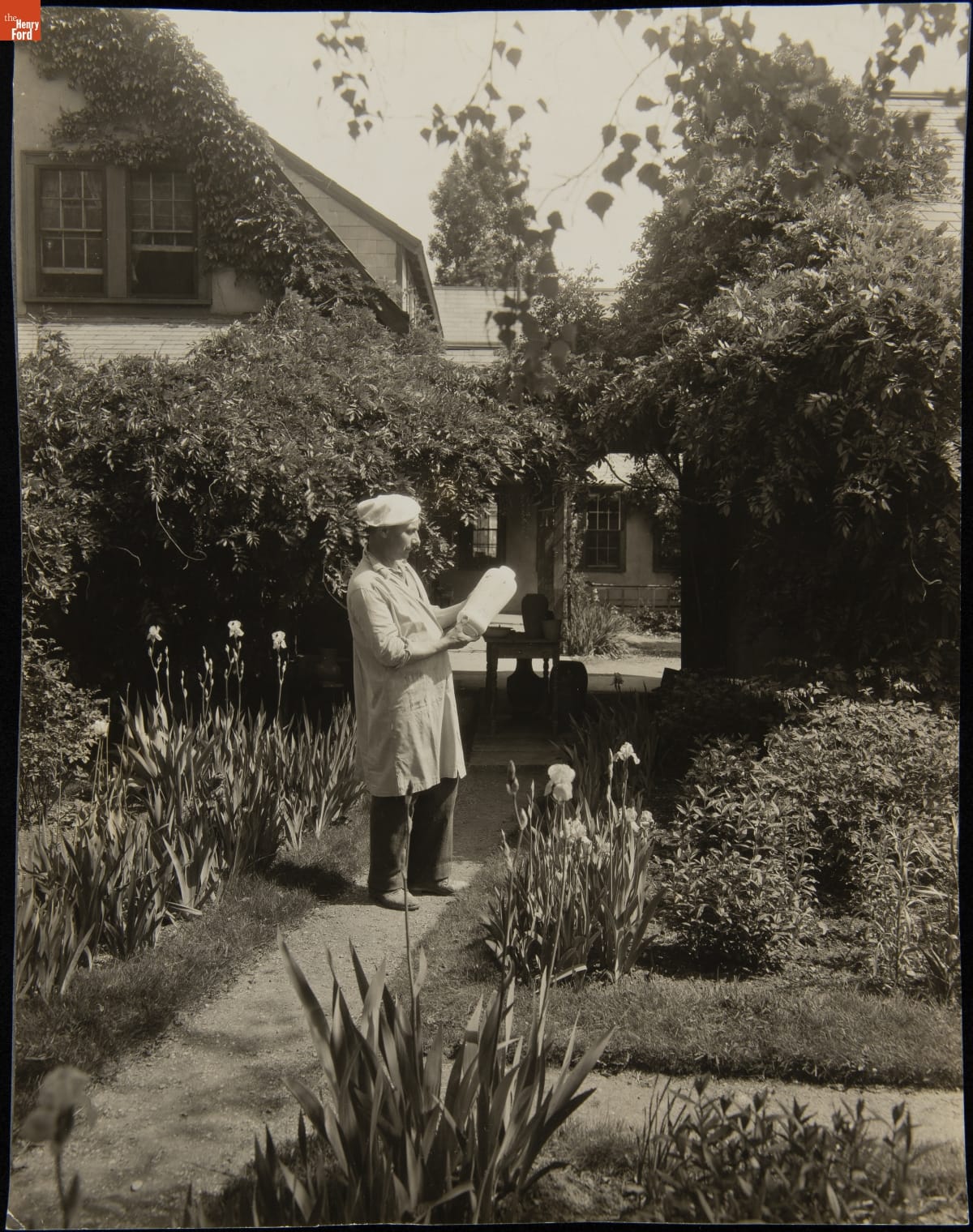
- A Man Holds a Piece of Pottery in the Garden of the Paul Revere Pottery, 1930-1936 - The Paul Revere Pottery evolved from a settlement house founded in 1899 to help women in Boston's North End immigrant community. Founders Edith Guerrier, a librarian, and Edith Brown, an artist, convinced patron Helen Osborne Storrow to fund the pottery in 1906. The venture proved successful, producing remarkable Arts and Crafts wares through the 1930s.
- 1930-1936
- Collections - Artifact
A Man Holds a Piece of Pottery in the Garden of the Paul Revere Pottery, 1930-1936
The Paul Revere Pottery evolved from a settlement house founded in 1899 to help women in Boston's North End immigrant community. Founders Edith Guerrier, a librarian, and Edith Brown, an artist, convinced patron Helen Osborne Storrow to fund the pottery in 1906. The venture proved successful, producing remarkable Arts and Crafts wares through the 1930s.
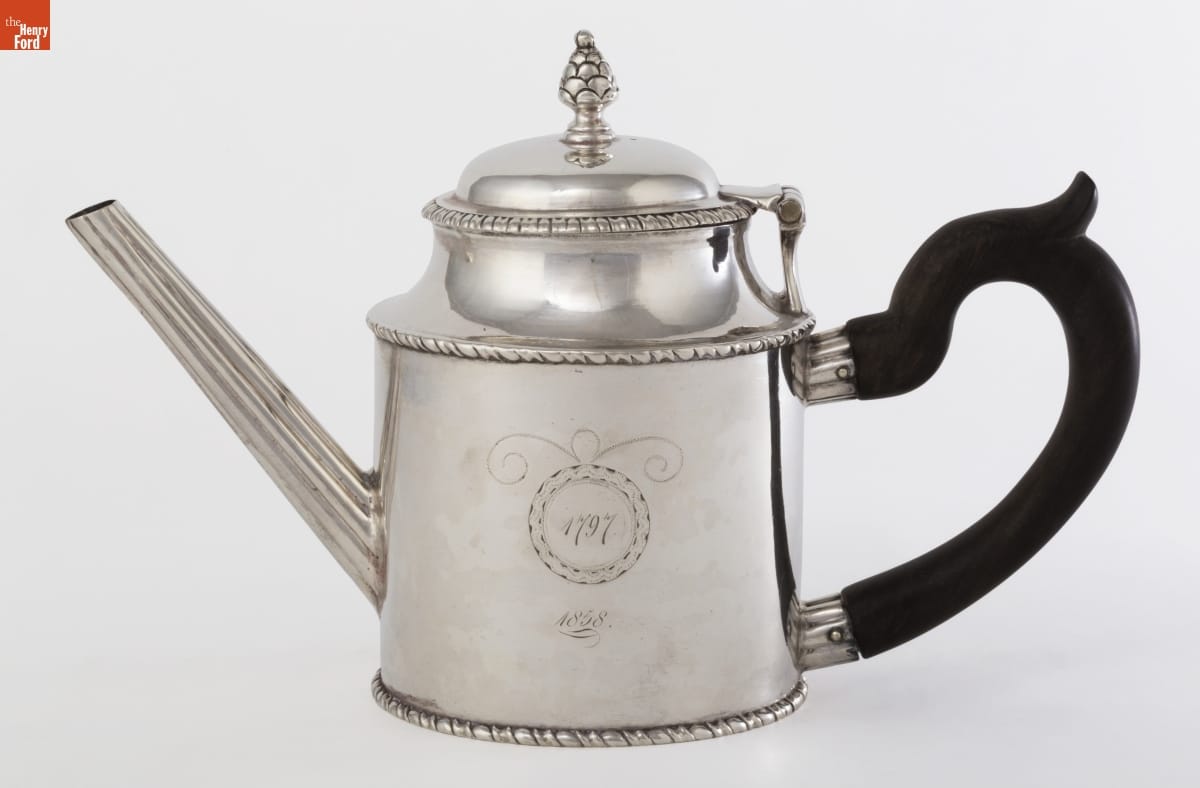
- Teapot, Made by Paul Revere, 1782 - Silversmith Paul Revere fashioned this neoclassical-style teapot in 1782. One of six known examples, these drum-shaped teapots were unique to Revere's shop. The monogram on the bottom, verified by entries in Revere's record books, confirm that this teapot was made for Boston merchant Joseph Henshaw and his wife, Sarah. The decorative engravings are later additions.
- 1782
- Collections - Artifact
Teapot, Made by Paul Revere, 1782
Silversmith Paul Revere fashioned this neoclassical-style teapot in 1782. One of six known examples, these drum-shaped teapots were unique to Revere's shop. The monogram on the bottom, verified by entries in Revere's record books, confirm that this teapot was made for Boston merchant Joseph Henshaw and his wife, Sarah. The decorative engravings are later additions.
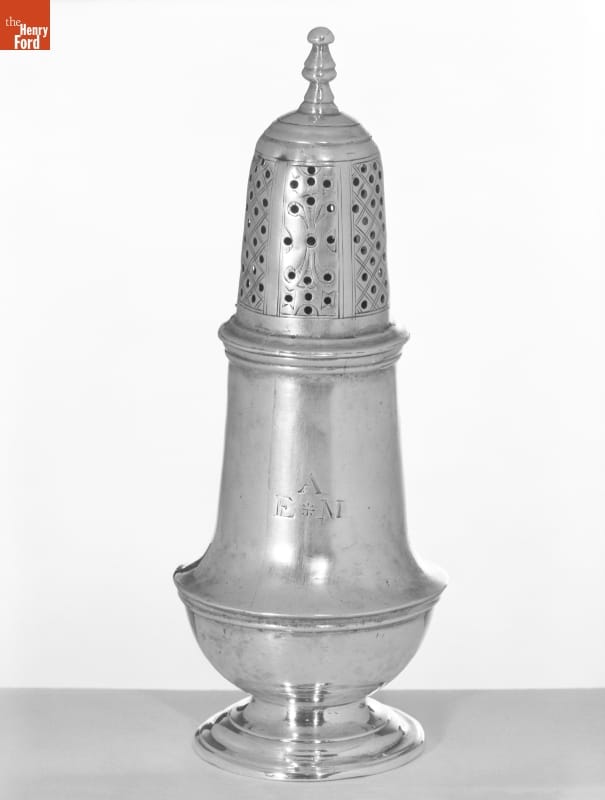
- Caster, Made by Paul Revere, 1760-1785 -
- 1760-1785
- Collections - Artifact
Caster, Made by Paul Revere, 1760-1785
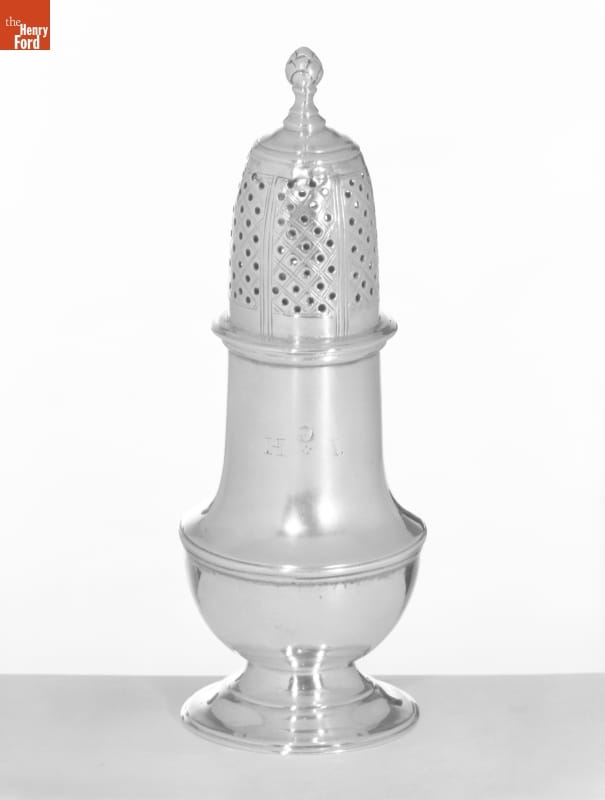
- Caster, Made by Paul Revere, 1760-1780 -
- 1760-1780
- Collections - Artifact
Caster, Made by Paul Revere, 1760-1780
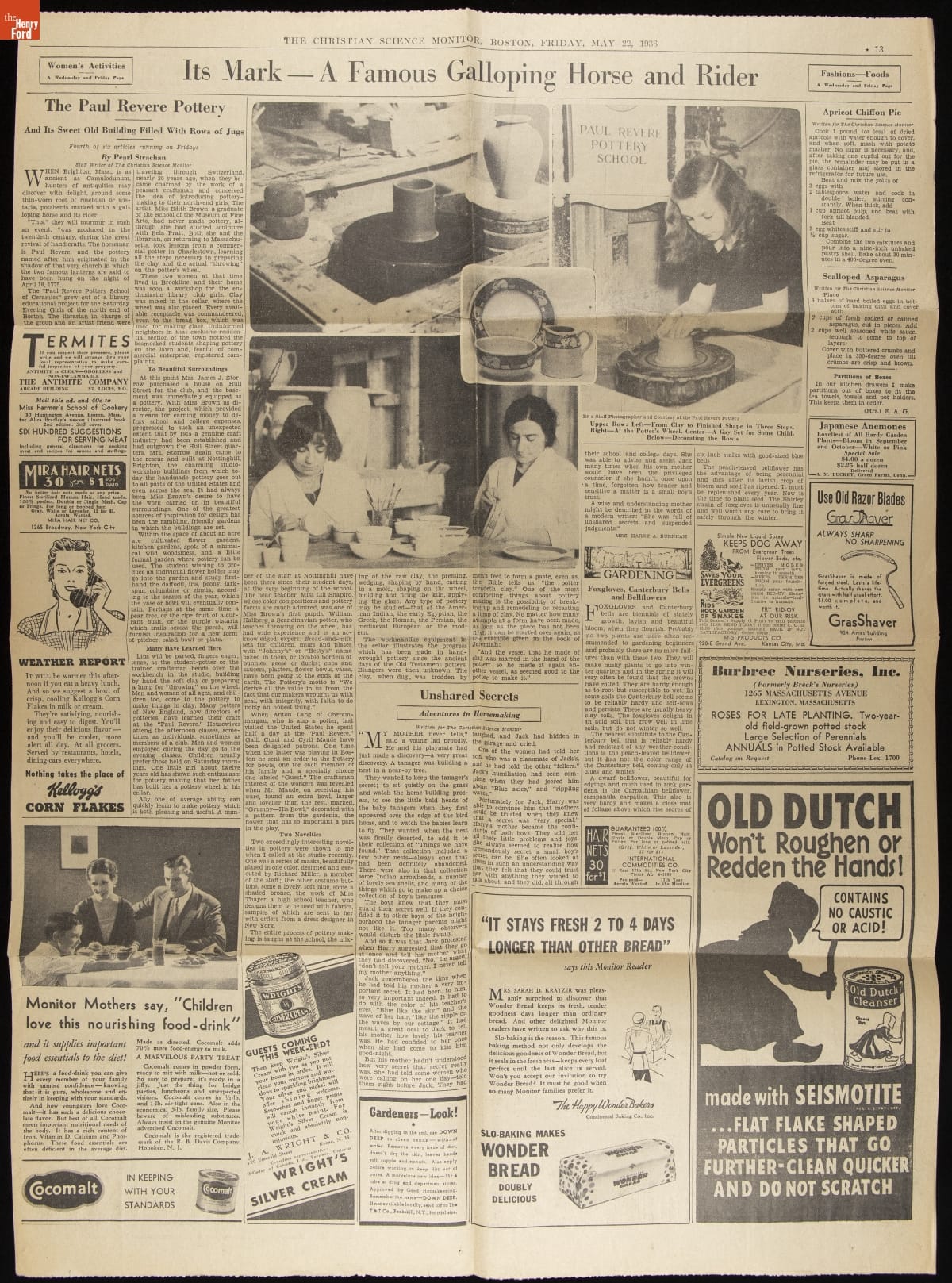
- The Paul Revere Pottery and its Old Building Filled with Rows of Jugs, May 22, 1936 - The Paul Revere Pottery evolved from a settlement house founded in 1899 to help women in Boston's North End immigrant community. Founders Edith Guerrier, a librarian, and Edith Brown, an artist, convinced patron Helen Osborne Storrow to fund the pottery in 1906. The venture proved successful, producing remarkable Arts and Crafts wares through the 1930s.
- May 22, 1936
- Collections - Artifact
The Paul Revere Pottery and its Old Building Filled with Rows of Jugs, May 22, 1936
The Paul Revere Pottery evolved from a settlement house founded in 1899 to help women in Boston's North End immigrant community. Founders Edith Guerrier, a librarian, and Edith Brown, an artist, convinced patron Helen Osborne Storrow to fund the pottery in 1906. The venture proved successful, producing remarkable Arts and Crafts wares through the 1930s.
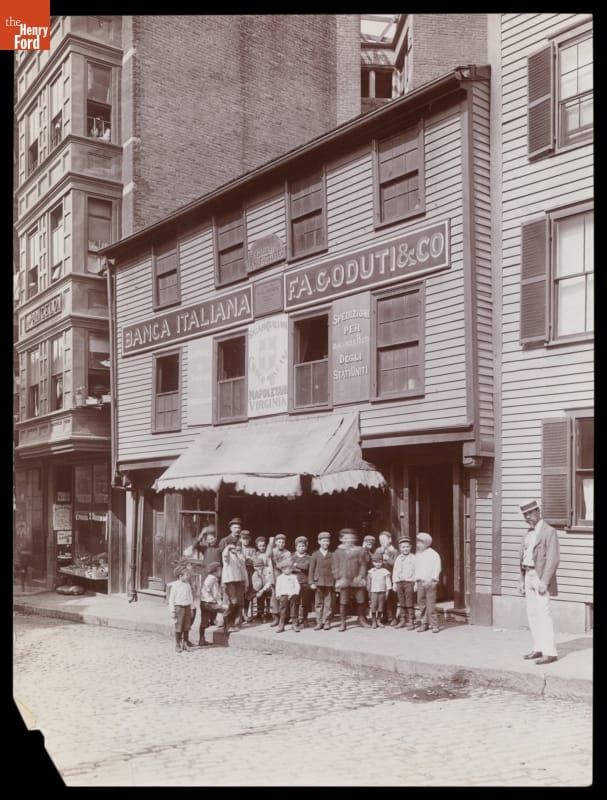
- Children in Front of Paul Revere's House in Boston's North End, circa 1900 - From 1895 to 1924, the Detroit Publishing Company was one of the major image publishers in the world. The company's wide-ranging stock of original photographs documented life and landscapes from across the nation and around the globe. From the tens of thousands of negatives, the company created prints, postcards, lantern slides, panoramas, and other merchandise for sale to educators, businessmen, advertisers, homeowners and travelers.
- circa 1900
- Collections - Artifact
Children in Front of Paul Revere's House in Boston's North End, circa 1900
From 1895 to 1924, the Detroit Publishing Company was one of the major image publishers in the world. The company's wide-ranging stock of original photographs documented life and landscapes from across the nation and around the globe. From the tens of thousands of negatives, the company created prints, postcards, lantern slides, panoramas, and other merchandise for sale to educators, businessmen, advertisers, homeowners and travelers.