
Search
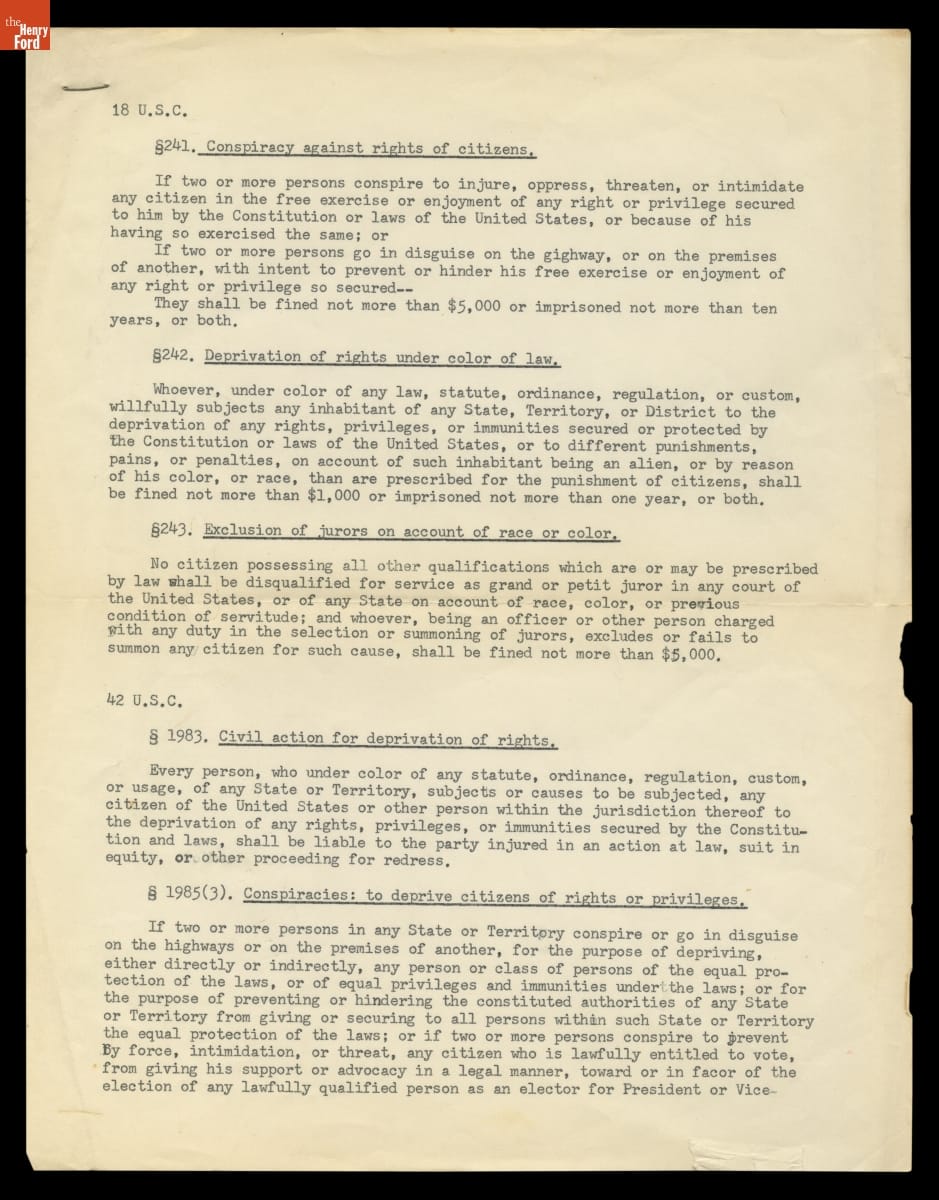
- Citations of U.S. Civil Rights Laws, Used by Sullivan Jackson -
- 1958
- Collections - Artifact
Citations of U.S. Civil Rights Laws, Used by Sullivan Jackson
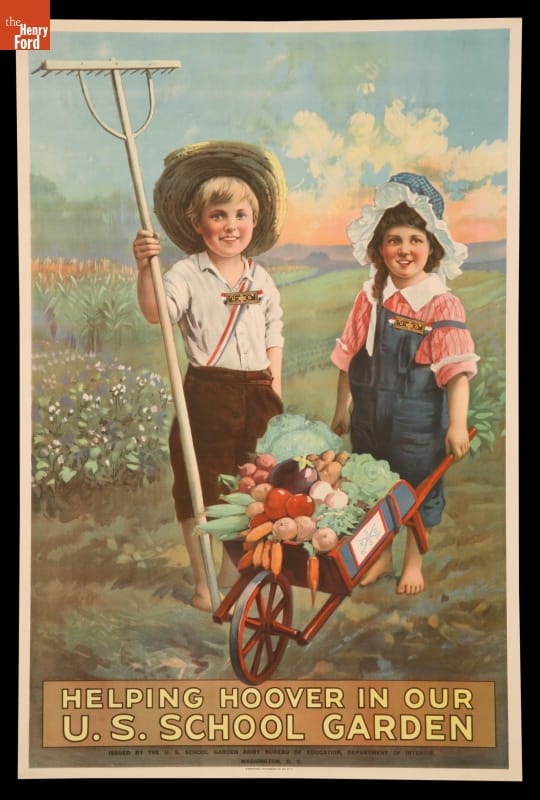
- World War I Poster, "Helping Hoover in Our U.S. School Garden," circa 1918 - During the First World War, governments of all the warring nations used poster campaigns to encourage civilian and military support of the war effort. Artists widely used an innovative advertising technique for these posters that moved away from a factual depiction of a product's material or event's subject to an emphasis on appealing to the viewer's emotions.
- circa 1919
- Collections - Artifact
World War I Poster, "Helping Hoover in Our U.S. School Garden," circa 1918
During the First World War, governments of all the warring nations used poster campaigns to encourage civilian and military support of the war effort. Artists widely used an innovative advertising technique for these posters that moved away from a factual depiction of a product's material or event's subject to an emphasis on appealing to the viewer's emotions.
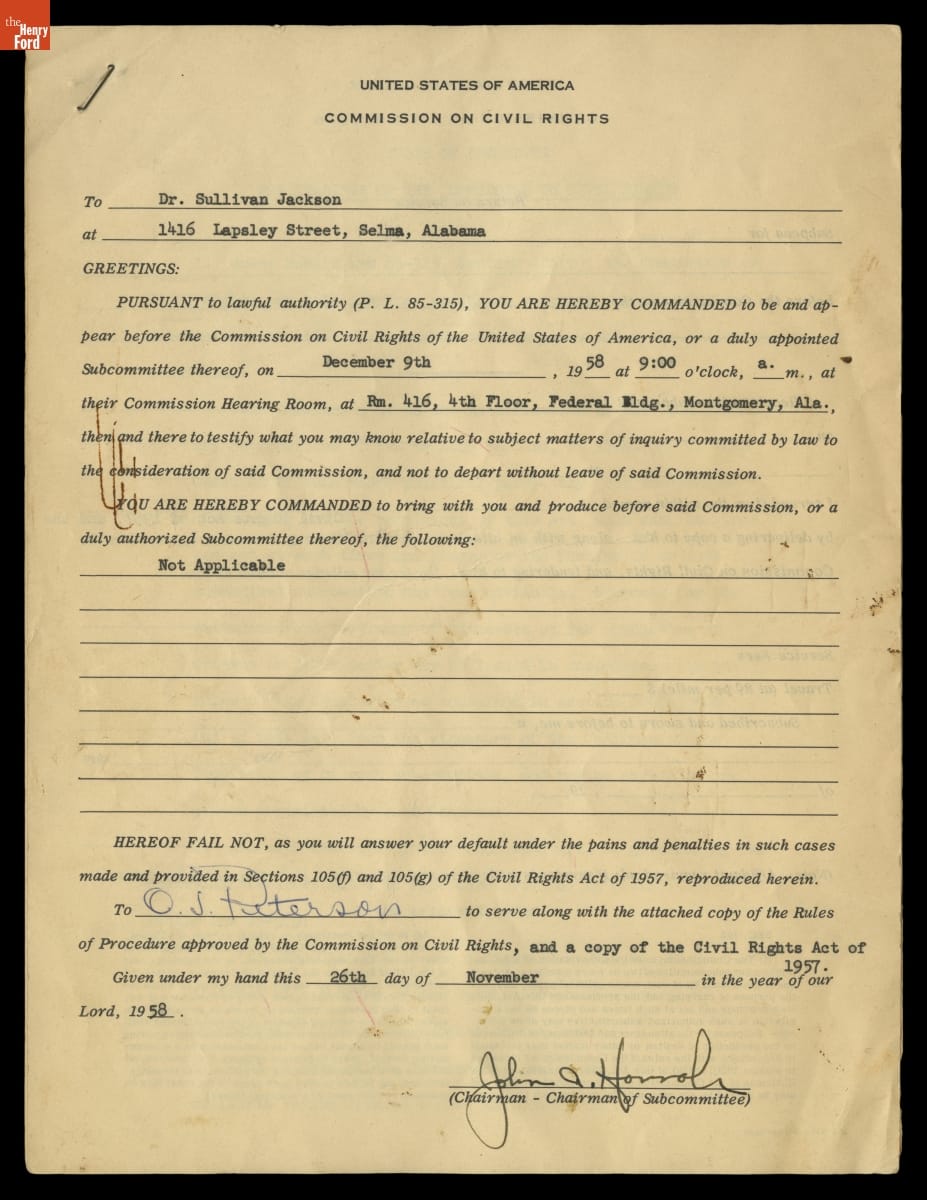
- Order to Sullivan Jackson to Appear before the U.S. Commission on Civil Rights, November 26, 1958 - The 1957 Civil Rights Act created the U.S. Commission on Civil Rights to investigate voter discrimination. In December 1958, Dr. Sullivan Jackson testified before the commission, discussing discrimination in Selma, Alabama. In the early 1960s, Selma would become the center of the struggle for voting rights, culminating in the Voting Rights Act of 1965.
- December 09, 1958
- Collections - Artifact
Order to Sullivan Jackson to Appear before the U.S. Commission on Civil Rights, November 26, 1958
The 1957 Civil Rights Act created the U.S. Commission on Civil Rights to investigate voter discrimination. In December 1958, Dr. Sullivan Jackson testified before the commission, discussing discrimination in Selma, Alabama. In the early 1960s, Selma would become the center of the struggle for voting rights, culminating in the Voting Rights Act of 1965.
- World War I Poster, "Raised 'Em Myself in my U.S. School Garden," circa 1918 - During the First World War, governments of all the warring nations used poster campaigns to encourage civilian and military support of the war effort. Artists widely used an innovative advertising technique for these posters that moved away from a factual depiction of a product's material or event's subject to an emphasis on appealing to the viewer's emotions.

- circa 1919
- Collections - Artifact
World War I Poster, "Raised 'Em Myself in my U.S. School Garden," circa 1918
During the First World War, governments of all the warring nations used poster campaigns to encourage civilian and military support of the war effort. Artists widely used an innovative advertising technique for these posters that moved away from a factual depiction of a product's material or event's subject to an emphasis on appealing to the viewer's emotions.
- World War II Poster, "Call to Farms. Join in the U.S. Crop Corps," circa 1943 - During the Second World War, all of the national governments of the warring nations used poster campaigns to encourage civilian and military support of the war effort. The advertising technique of these posters followed the innovative style developed during the First World War. By appealing to the viewer's emotions this poster helped the U.S. to rally the home front workers and consumers.

- circa 1943
- Collections - Artifact
World War II Poster, "Call to Farms. Join in the U.S. Crop Corps," circa 1943
During the Second World War, all of the national governments of the warring nations used poster campaigns to encourage civilian and military support of the war effort. The advertising technique of these posters followed the innovative style developed during the First World War. By appealing to the viewer's emotions this poster helped the U.S. to rally the home front workers and consumers.
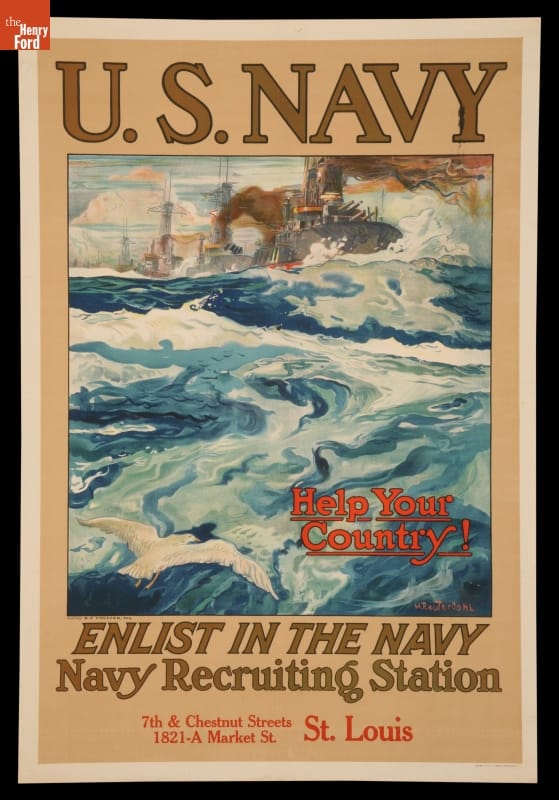
- World War I Poster, "U.S. Navy. Help Your Country! Enlist in the Navy," circa 1917 - During the First World War, governments of all the warring nations used poster campaigns to encourage civilian and military support of the war effort. Artists widely used an innovative advertising technique for these posters that moved away from a factual depiction of a product's material or event's subject to an emphasis on appealing to the viewer's emotions.
- circa 1917
- Collections - Artifact
World War I Poster, "U.S. Navy. Help Your Country! Enlist in the Navy," circa 1917
During the First World War, governments of all the warring nations used poster campaigns to encourage civilian and military support of the war effort. Artists widely used an innovative advertising technique for these posters that moved away from a factual depiction of a product's material or event's subject to an emphasis on appealing to the viewer's emotions.
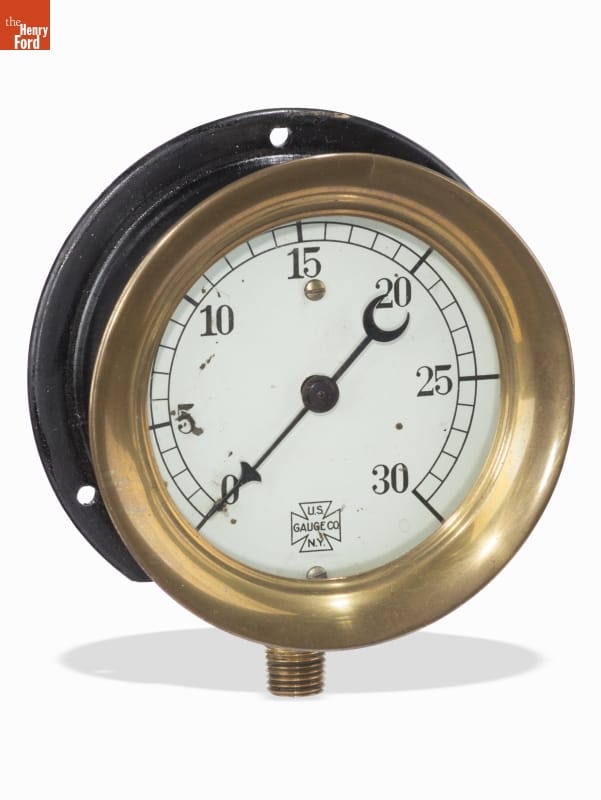
- U.S. Gauge Co. Gauge -
- Collections - Artifact
U.S. Gauge Co. Gauge
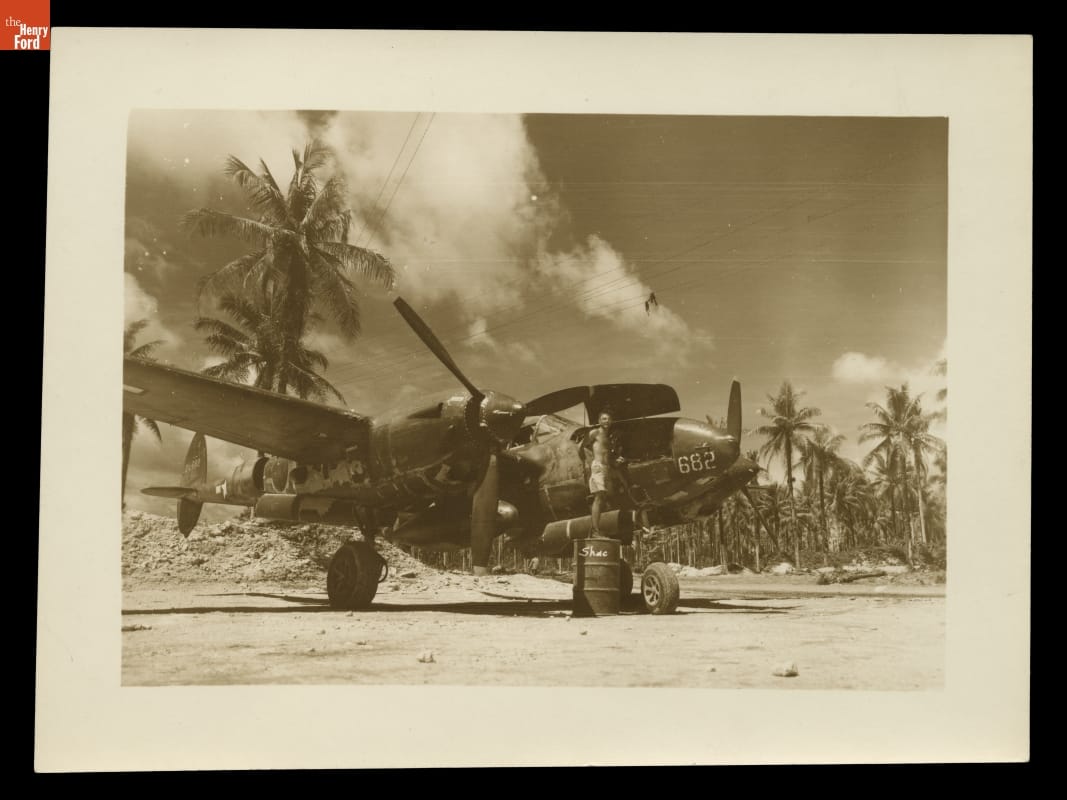
- P-38 Fighter Airplane, U.S. Army Air Forces, Pacific Theatre of World War II, circa 1943 - The twin-engine Lockheed P-38 fighter airplane was used by the U.S. Army Air Forces in the Pacific Theatre during World War II. Auxiliary fuel drop tanks, like the one seen here between the airplane's right engine and its fuselage, increased the P-38's range. After the war, land speed racers used surplus drop tanks to build streamlined bodies for their cars.
- circa 1943
- Collections - Artifact
P-38 Fighter Airplane, U.S. Army Air Forces, Pacific Theatre of World War II, circa 1943
The twin-engine Lockheed P-38 fighter airplane was used by the U.S. Army Air Forces in the Pacific Theatre during World War II. Auxiliary fuel drop tanks, like the one seen here between the airplane's right engine and its fuselage, increased the P-38's range. After the war, land speed racers used surplus drop tanks to build streamlined bodies for their cars.
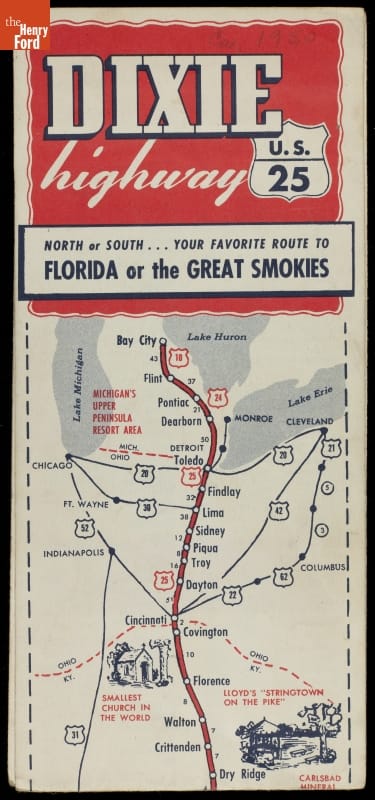
- "Dixie Highway, U.S. 25," circa 1950 - This brochure from about 1950 uses the more familiar trail name for Route 25 from Michigan to Florida -- the Dixie Highway.
- circa 1950
- Collections - Artifact
"Dixie Highway, U.S. 25," circa 1950
This brochure from about 1950 uses the more familiar trail name for Route 25 from Michigan to Florida -- the Dixie Highway.
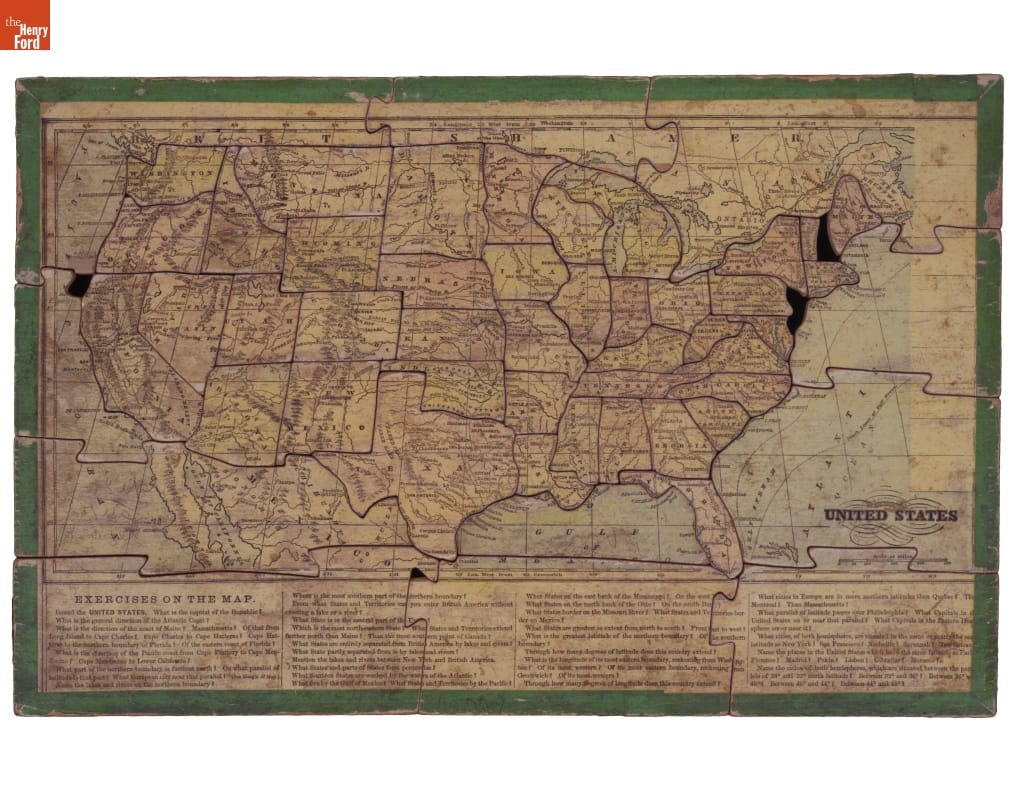
- U.S. Map Puzzle, 1880-1890 - In the late 1800s, American children could learn about the geography of the United States by correctly fitting together this puzzle's state-shaped pieces. On the reverse is a colorful advertisement for the White Sewing Machine Company -- the maker of this puzzle.
- 1880-1890
- Collections - Artifact
U.S. Map Puzzle, 1880-1890
In the late 1800s, American children could learn about the geography of the United States by correctly fitting together this puzzle's state-shaped pieces. On the reverse is a colorful advertisement for the White Sewing Machine Company -- the maker of this puzzle.