
Search
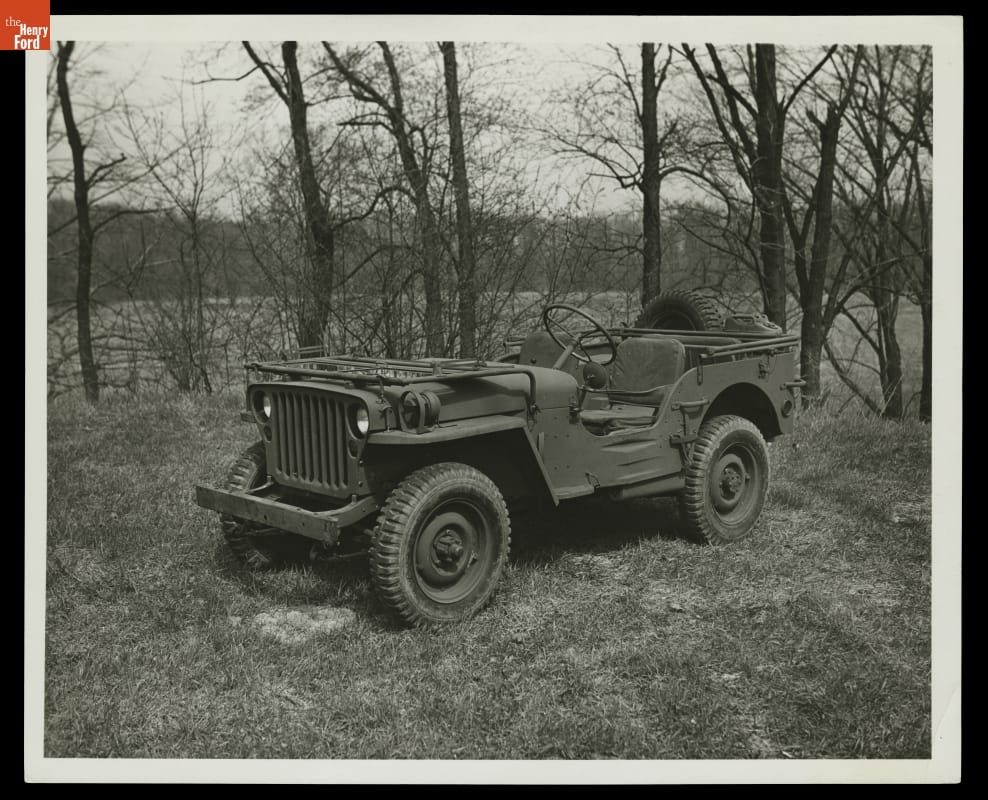
- Ford GPW Military Vehicle in Woods, April 1943 - Like other American automakers, Ford Motor Company suspended civilian production during World War II. Instead, the company devoted its employees and factories to manufacturing Allied war materiel. Ford facilities produced aircraft engines, bomber airplanes, gliders, tanks, armored cars, and -- as seen here -- GPW jeep vehicles. More than 282,000 jeeps rolled off Ford assembly lines from 1941-1945.
- April 29, 1943
- Collections - Artifact
Ford GPW Military Vehicle in Woods, April 1943
Like other American automakers, Ford Motor Company suspended civilian production during World War II. Instead, the company devoted its employees and factories to manufacturing Allied war materiel. Ford facilities produced aircraft engines, bomber airplanes, gliders, tanks, armored cars, and -- as seen here -- GPW jeep vehicles. More than 282,000 jeeps rolled off Ford assembly lines from 1941-1945.
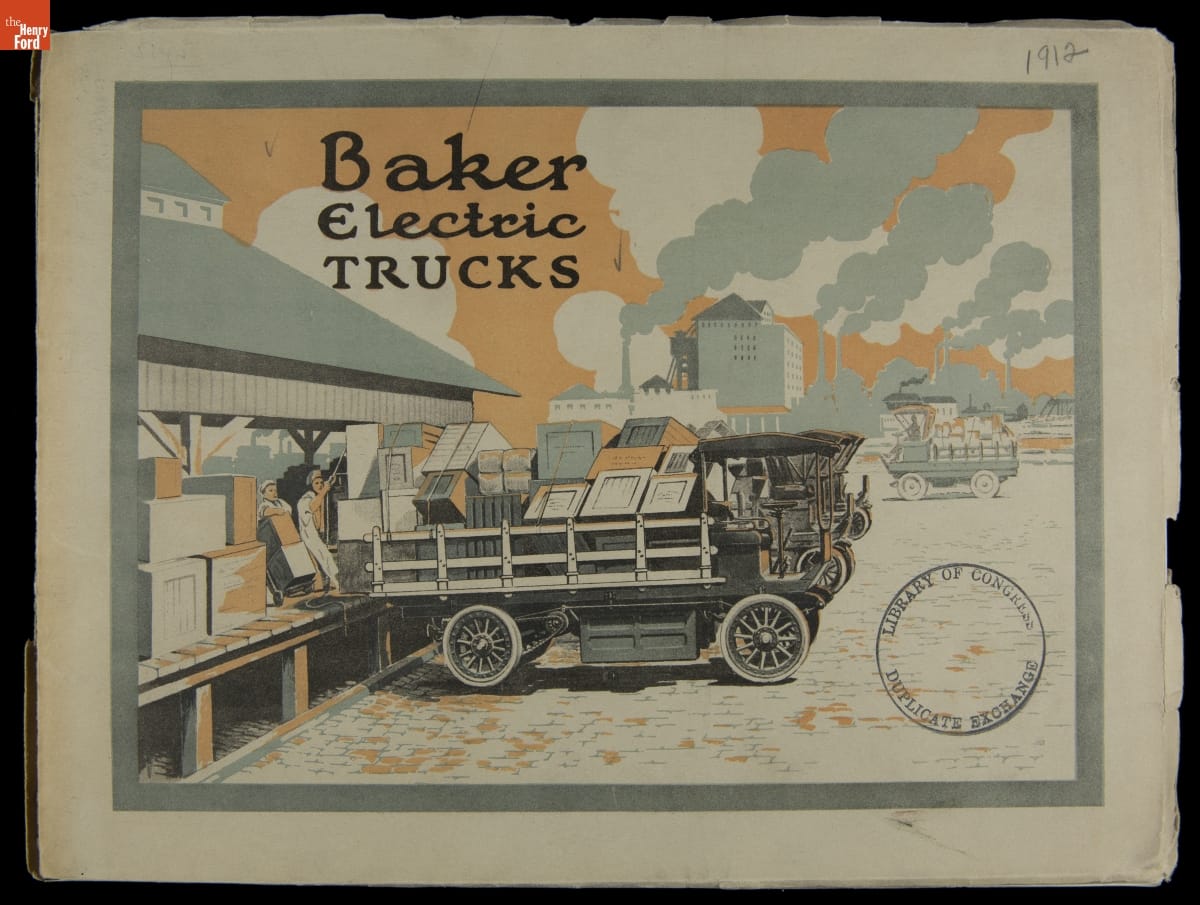
- Baker Motor Vehicle Company Catalog, "Baker Electric Trucks," 1912 - Baker Motor Vehicle Company of Cleveland, Ohio, was established in 1899. From the start, it specialized in electric vehicles. Delivery trucks, like those in this Baker catalog, were well suited to electric power. Their routine schedules permitted regular charging, and their defined routes reduced the risk of batteries dying far from a charging station.
- 1912
- Collections - Artifact
Baker Motor Vehicle Company Catalog, "Baker Electric Trucks," 1912
Baker Motor Vehicle Company of Cleveland, Ohio, was established in 1899. From the start, it specialized in electric vehicles. Delivery trucks, like those in this Baker catalog, were well suited to electric power. Their routine schedules permitted regular charging, and their defined routes reduced the risk of batteries dying far from a charging station.
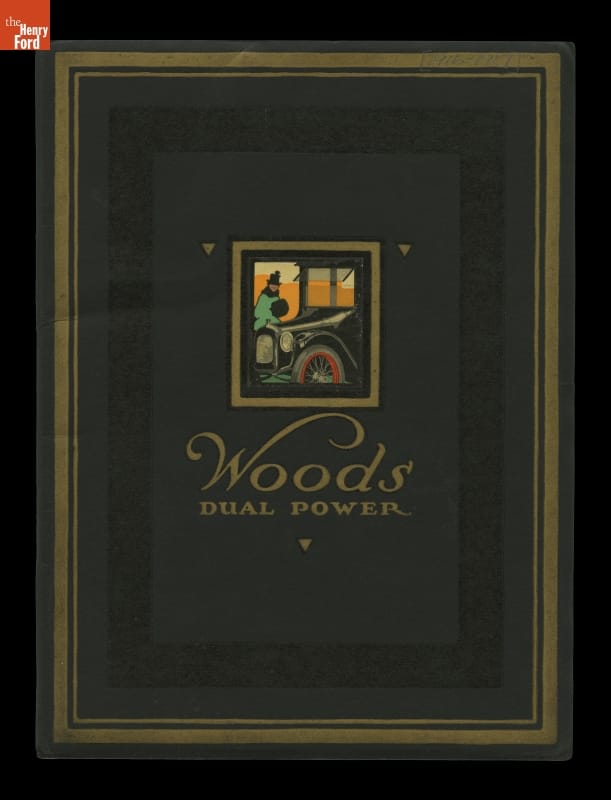
- Woods Dual Power Vehicles Catalog, 1916 - This 1916 catalog showcases the Woods Dual-Power automobile. Batteries and gasoline powered the vehicle. The Woods Motor Vehicle Company hoped to draw in buyers with the best of both power sources. It didn't work. The company failed a few years later.
- 1916
- Collections - Artifact
Woods Dual Power Vehicles Catalog, 1916
This 1916 catalog showcases the Woods Dual-Power automobile. Batteries and gasoline powered the vehicle. The Woods Motor Vehicle Company hoped to draw in buyers with the best of both power sources. It didn't work. The company failed a few years later.
- 1916 Woods Dual-Power Coupe: Hybrid Before Hybrids Were Cool - In 1916, gasoline was cheap, and no one cared about tailpipe emissions. But this hybrid wasn’t about fuel prices or pollution—Woods Motor Vehicle Company built it to capture new customers.

- January 18, 2020
- Collections - article
1916 Woods Dual-Power Coupe: Hybrid Before Hybrids Were Cool
In 1916, gasoline was cheap, and no one cared about tailpipe emissions. But this hybrid wasn’t about fuel prices or pollution—Woods Motor Vehicle Company built it to capture new customers.
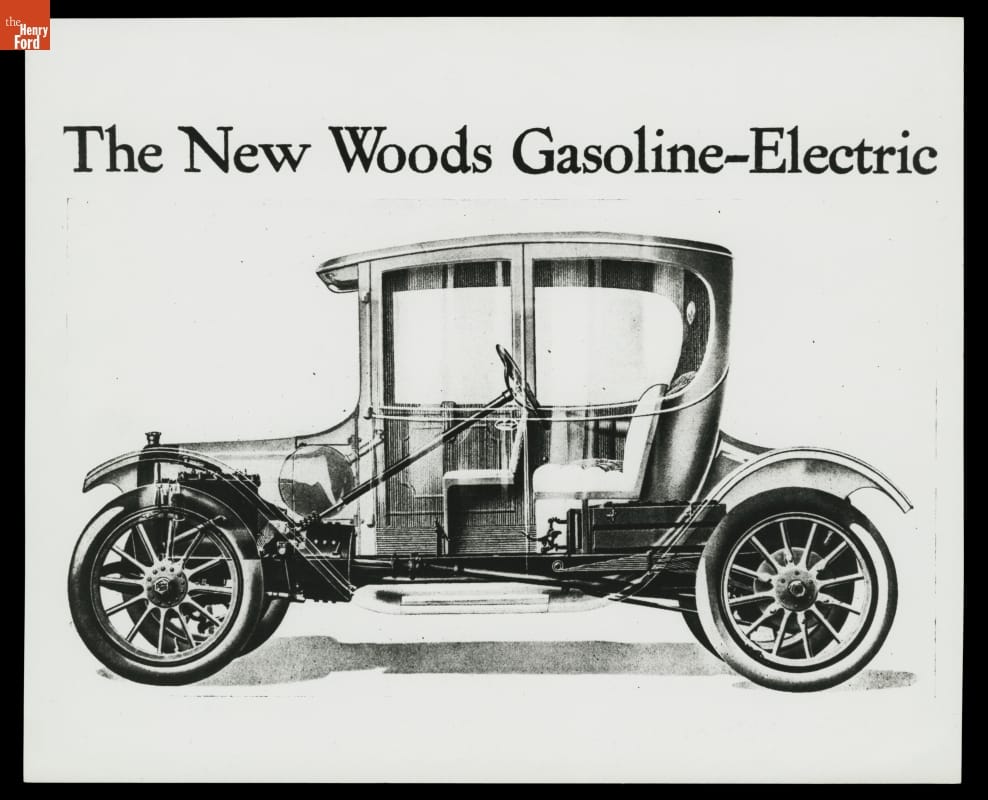
- Photograph of Line Drawing "The New Woods Gasoline-Electric Dual Power Automobile," circa 1916 - This image from a 1916 issue of <EM>The Horseless Age</EM> shows a cutaway version of the Woods Gasoline-Electric car. You can see the batteries under the driver's seat and the engine and gas tank in the front. The Woods Dual-Power vehicle supposedly combined the best of both. Customers, however, had other ideas and the car and company disappeared in 1918.
- 1916
- Collections - Artifact
Photograph of Line Drawing "The New Woods Gasoline-Electric Dual Power Automobile," circa 1916
This image from a 1916 issue of The Horseless Age shows a cutaway version of the Woods Gasoline-Electric car. You can see the batteries under the driver's seat and the engine and gas tank in the front. The Woods Dual-Power vehicle supposedly combined the best of both. Customers, however, had other ideas and the car and company disappeared in 1918.
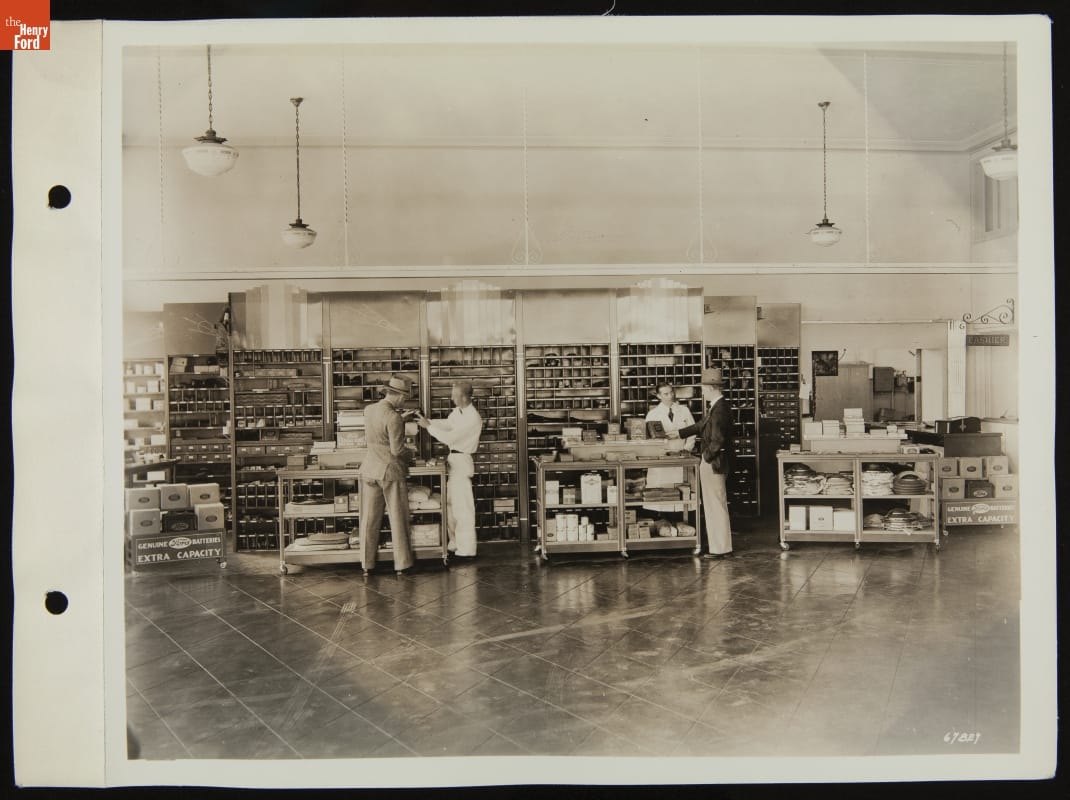
- Bill Wood Motor Company Parts and Accessories Display, Oakland, California, February 1937 - Ford Motor Company inaugurated a system of competing dealership franchises in 1914. Dealers sold Ford vehicles, offered repair services, and stocked spare parts and automobile accessories. Dealership parts and service departments lured customers with displays and advertisements. The department also served as a reminder to potential car buyers that the dealership provided extra services after the sale.
- February 08, 1937
- Collections - Artifact
Bill Wood Motor Company Parts and Accessories Display, Oakland, California, February 1937
Ford Motor Company inaugurated a system of competing dealership franchises in 1914. Dealers sold Ford vehicles, offered repair services, and stocked spare parts and automobile accessories. Dealership parts and service departments lured customers with displays and advertisements. The department also served as a reminder to potential car buyers that the dealership provided extra services after the sale.
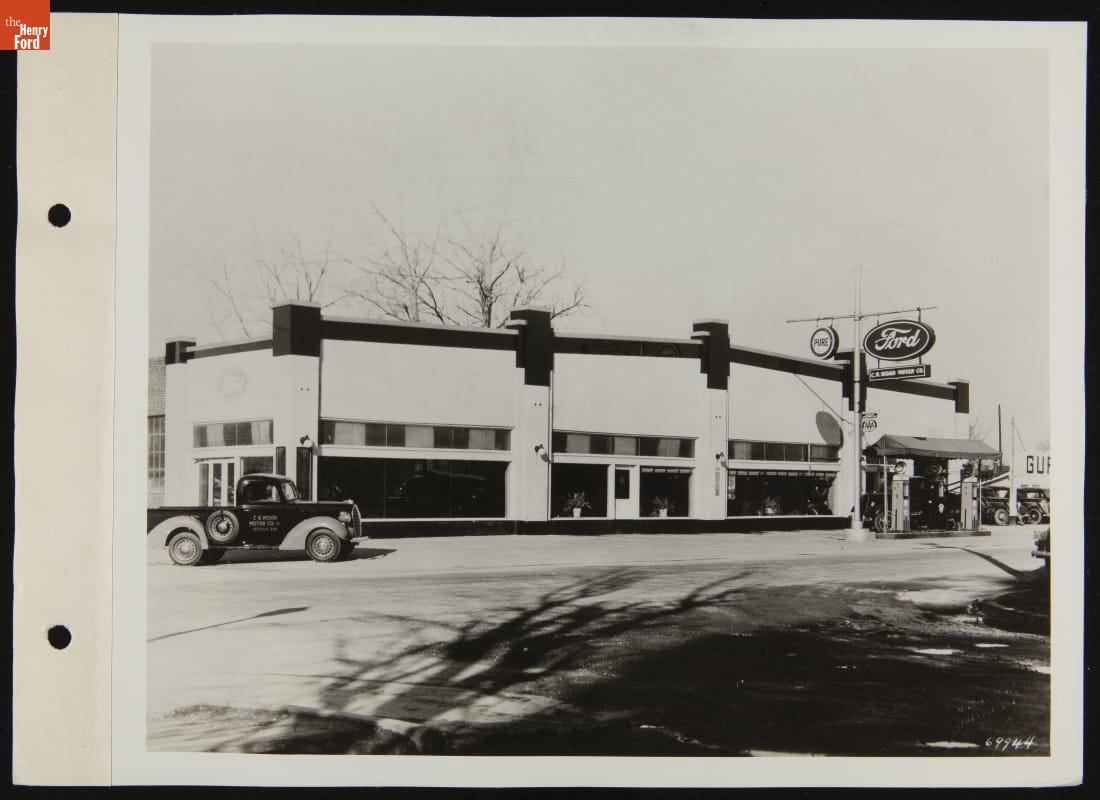
- C. B. Wood Motor Company, Super Service Station, Osceola, Arkansas, March 1938 - In the 1930s, Ford Motor Company promoted the "Super Service Station" concept for its franchisee dealers. These stations provided one-stop shopping for motorists by selling gasoline, motor oil, parts, and accessories along with new Ford vehicles. The stations also provided automotive service and repairs.
- March 08, 1938
- Collections - Artifact
C. B. Wood Motor Company, Super Service Station, Osceola, Arkansas, March 1938
In the 1930s, Ford Motor Company promoted the "Super Service Station" concept for its franchisee dealers. These stations provided one-stop shopping for motorists by selling gasoline, motor oil, parts, and accessories along with new Ford vehicles. The stations also provided automotive service and repairs.
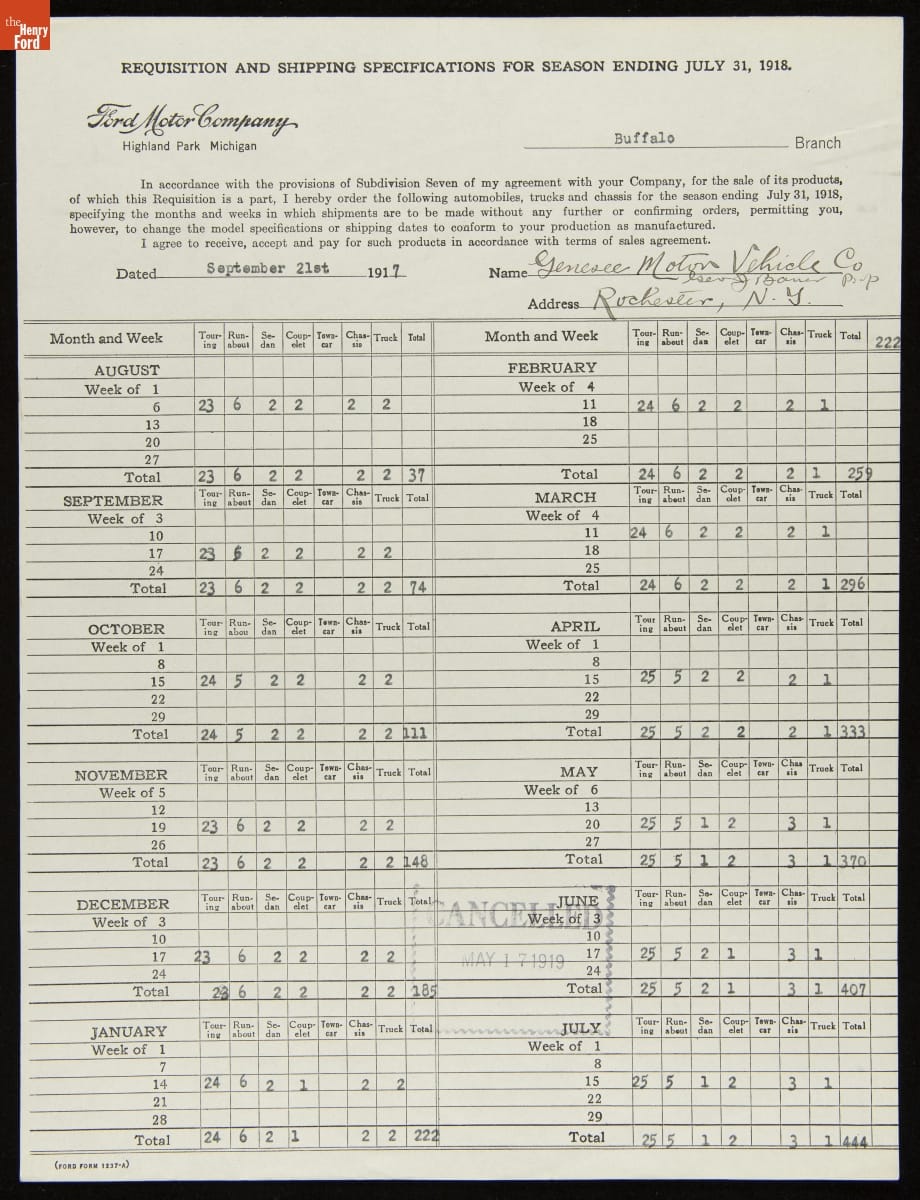
- Cancelled Requisition Form for Genesee Motor Vehicle Company, Rochester, New York, May 17, 1919 - Though it operated some direct-sales offices in major cities, Ford Motor Company sold most of its Model T cars through franchise agreements with independent dealers. Each franchisee received the right to sell Ford cars within a specific territory. Ford encouraged dealers by offering discounts and rebates to high sellers. But low-selling dealers risked losing their territories.
- May 17, 1919
- Collections - Artifact
Cancelled Requisition Form for Genesee Motor Vehicle Company, Rochester, New York, May 17, 1919
Though it operated some direct-sales offices in major cities, Ford Motor Company sold most of its Model T cars through franchise agreements with independent dealers. Each franchisee received the right to sell Ford cars within a specific territory. Ford encouraged dealers by offering discounts and rebates to high sellers. But low-selling dealers risked losing their territories.
- Sales Catalog for 1899 Waverley Electric Motor Vehicles made by the Indiana Bicycle Company - Car brochures have evolved from straightforward product catalogues into polished creative sales tools. Their quality paper, rich color, inventive formats, and sophisticated graphic design all contribute to a buyer's developing impression of a car in a showroom. Advertising might entice people to a dealership, but brochures extend and deepen the relationship between vehicle and potential buyer.

- 1899
- Collections - Artifact
Sales Catalog for 1899 Waverley Electric Motor Vehicles made by the Indiana Bicycle Company
Car brochures have evolved from straightforward product catalogues into polished creative sales tools. Their quality paper, rich color, inventive formats, and sophisticated graphic design all contribute to a buyer's developing impression of a car in a showroom. Advertising might entice people to a dealership, but brochures extend and deepen the relationship between vehicle and potential buyer.
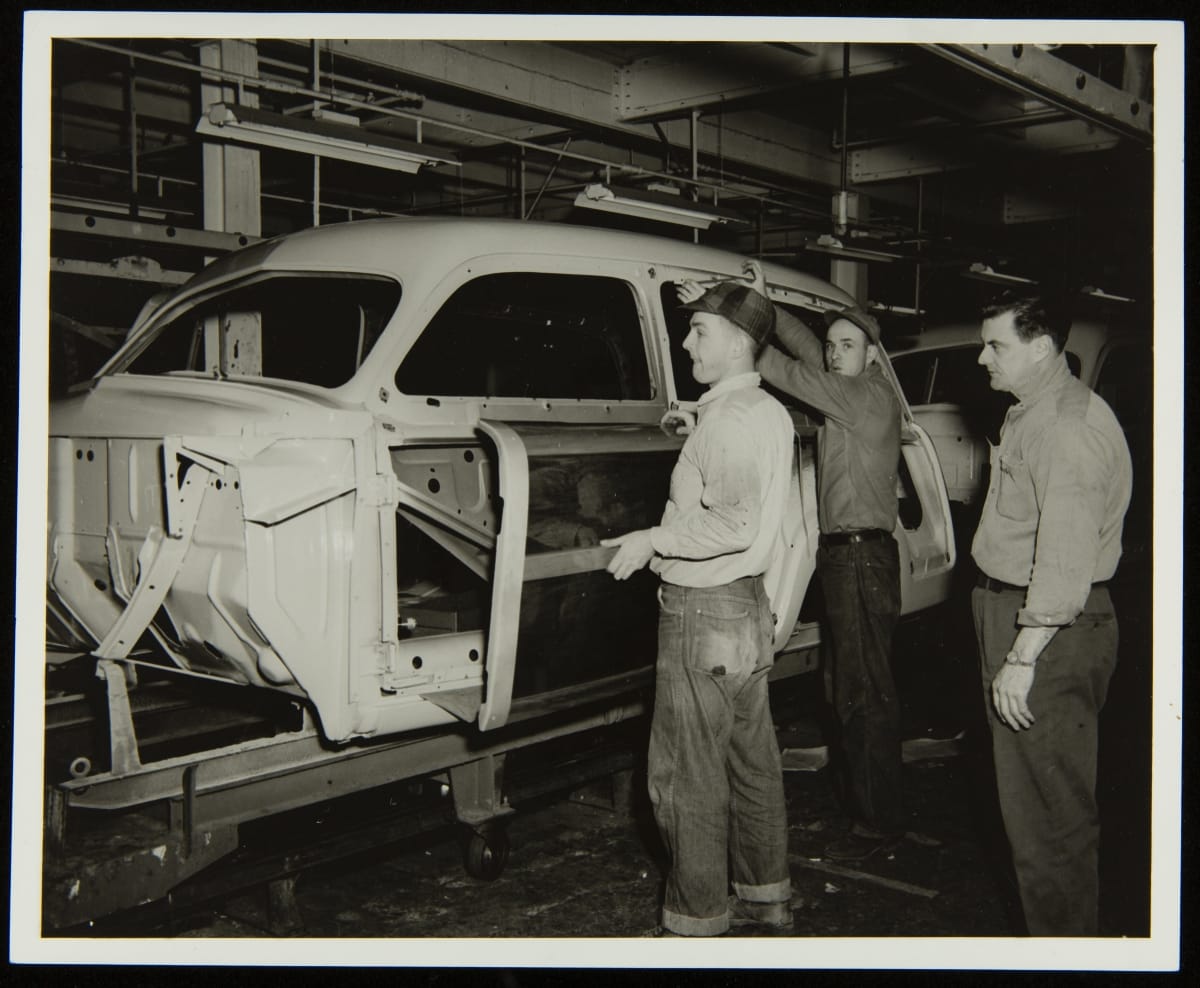
- Ford Motor Company Iron Mountain Plant, Wood Body Station Wagon Assembly, circa 1949 - Ford Motor Company built wood station wagon bodies at its Iron Mountain plant in Michigan's Upper Peninsula. For 1949, Ford eliminated wood framing from its wagons in favor of steel. Wood was still used on the wagons, but in the form of specially laminated paneling bolted onto the steel frames. Iron Mountain closed when Ford switched to all-steel wagons in 1952.
- circa 1949
- Collections - Artifact
Ford Motor Company Iron Mountain Plant, Wood Body Station Wagon Assembly, circa 1949
Ford Motor Company built wood station wagon bodies at its Iron Mountain plant in Michigan's Upper Peninsula. For 1949, Ford eliminated wood framing from its wagons in favor of steel. Wood was still used on the wagons, but in the form of specially laminated paneling bolted onto the steel frames. Iron Mountain closed when Ford switched to all-steel wagons in 1952.