
Search
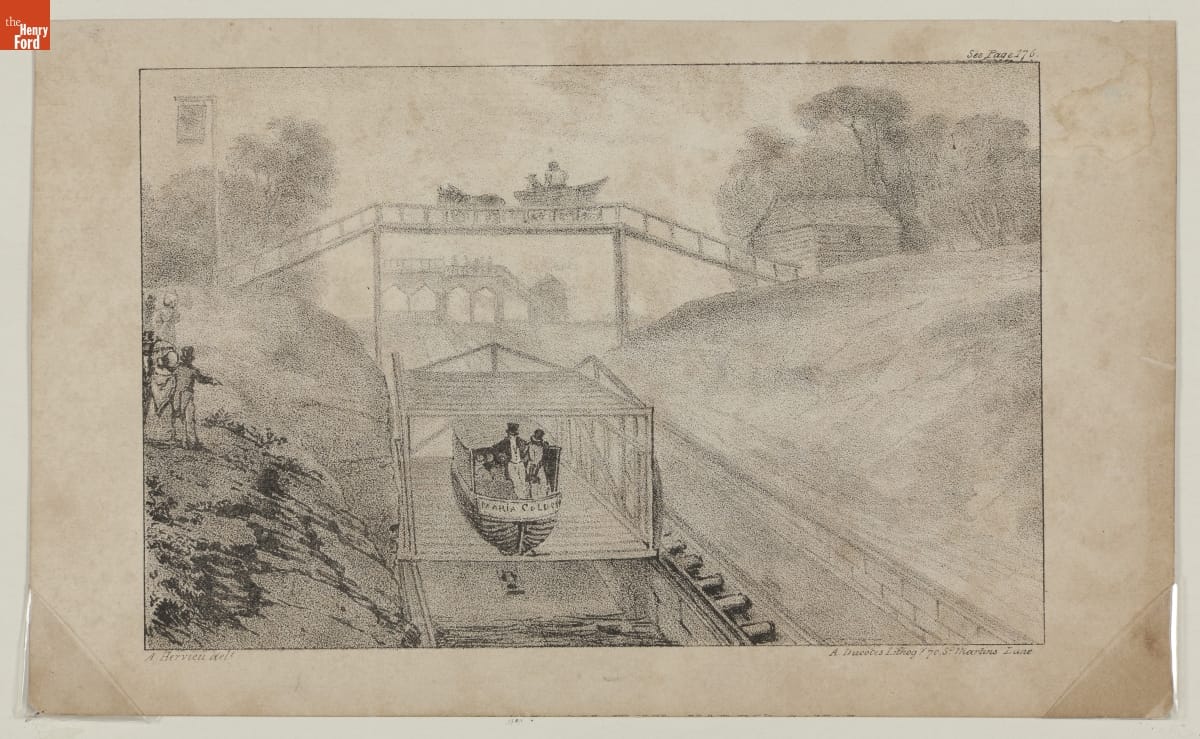
- Lithograph, Canal Boat on New Jersey Canal, circa 1830 - This image illustrates a method of shifting boats from one level to another that was used on parts of New Jersey canals. A boat was floated, and then fastened, on a submerged wheeled cradle. The cradle was then lowered or pulled up an inclined plane. At the new level the cradle moved on submerged tracks, and the boat was released.
- circa 1830
- Collections - Artifact
Lithograph, Canal Boat on New Jersey Canal, circa 1830
This image illustrates a method of shifting boats from one level to another that was used on parts of New Jersey canals. A boat was floated, and then fastened, on a submerged wheeled cradle. The cradle was then lowered or pulled up an inclined plane. At the new level the cradle moved on submerged tracks, and the boat was released.
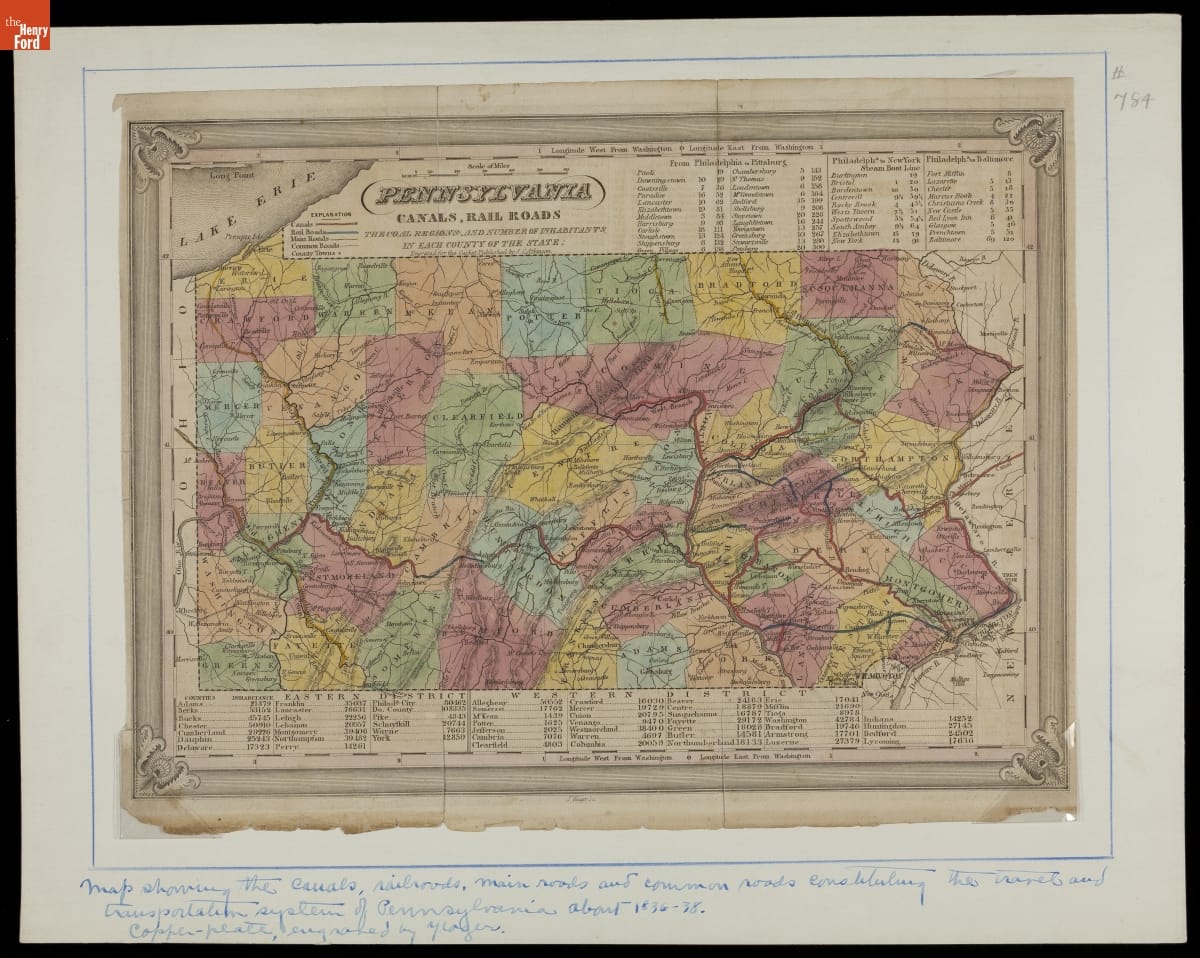
- Map of Canals and Railroads in Pennsylvania, circa 1837 - This copperplate engraving illustrates the travel and transportation system of Pennsylvania about 1836-1838. The map shows the railroads, large and small roads, and canals that crisscrossed the landscape.
- 1836-1838
- Collections - Artifact
Map of Canals and Railroads in Pennsylvania, circa 1837
This copperplate engraving illustrates the travel and transportation system of Pennsylvania about 1836-1838. The map shows the railroads, large and small roads, and canals that crisscrossed the landscape.
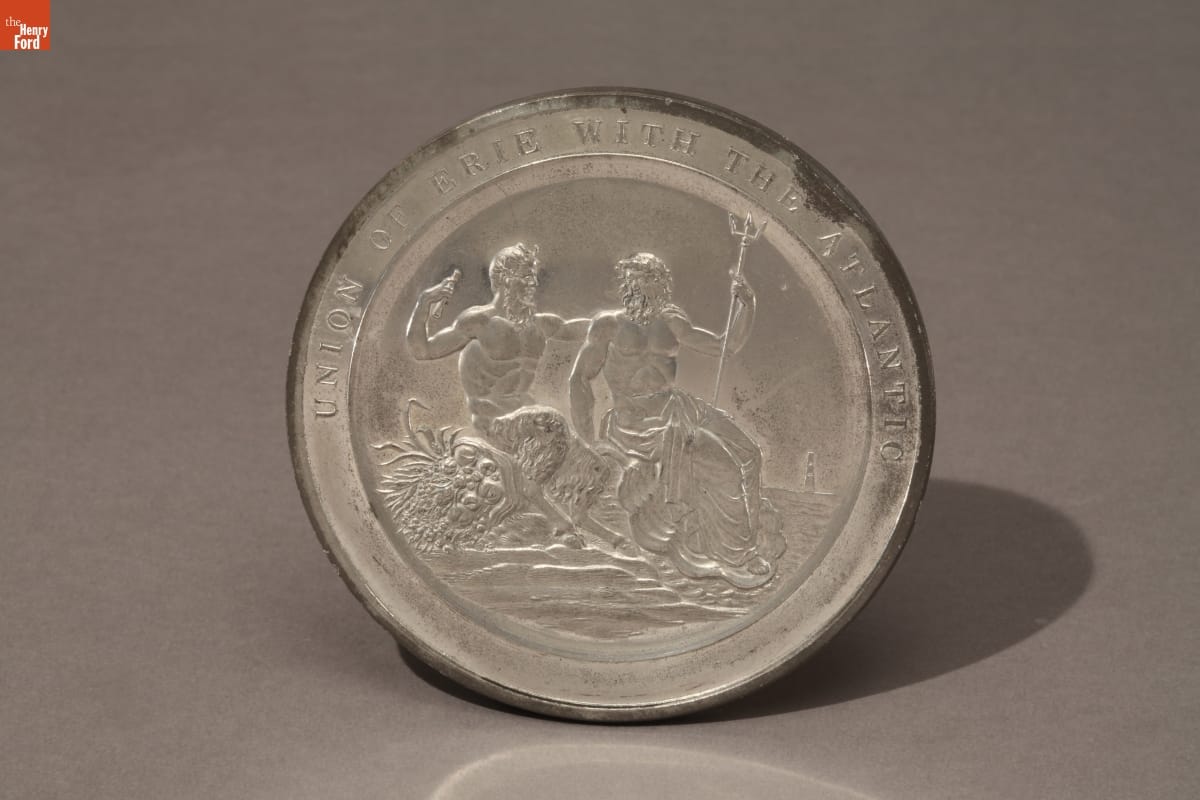
- Erie Canal Completion Medal, 1826 - The Erie Canal crossed the state of New York, opening a water route from the Atlantic Ocean to the Great Lakes. This medal commemorated the canal's completion in 1825.
- 1826
- Collections - Artifact
Erie Canal Completion Medal, 1826
The Erie Canal crossed the state of New York, opening a water route from the Atlantic Ocean to the Great Lakes. This medal commemorated the canal's completion in 1825.
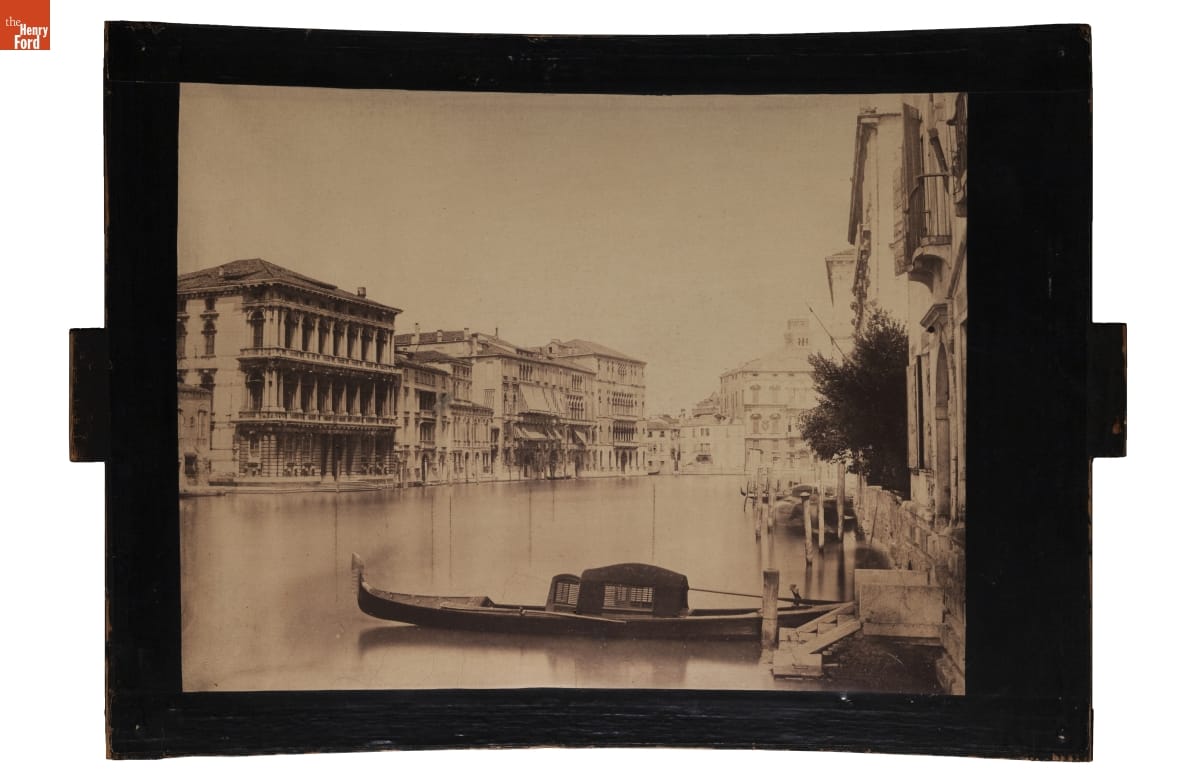
- Megalethoscope Slide, "Grand Canal" - Invented by Carlo Ponti in the early 1860s, a megalethoscope is a device used to view a translucent, multilayered photograph. By opening or closing various panels, a person saw the image change. When lit from behind, pinpricks and paint or colored tissue applied to the back or a secondary layer of the photograph transform the scene to reveal hidden images and create an illusion of nighttime.
- Collections - Artifact
Megalethoscope Slide, "Grand Canal"
Invented by Carlo Ponti in the early 1860s, a megalethoscope is a device used to view a translucent, multilayered photograph. By opening or closing various panels, a person saw the image change. When lit from behind, pinpricks and paint or colored tissue applied to the back or a secondary layer of the photograph transform the scene to reveal hidden images and create an illusion of nighttime.
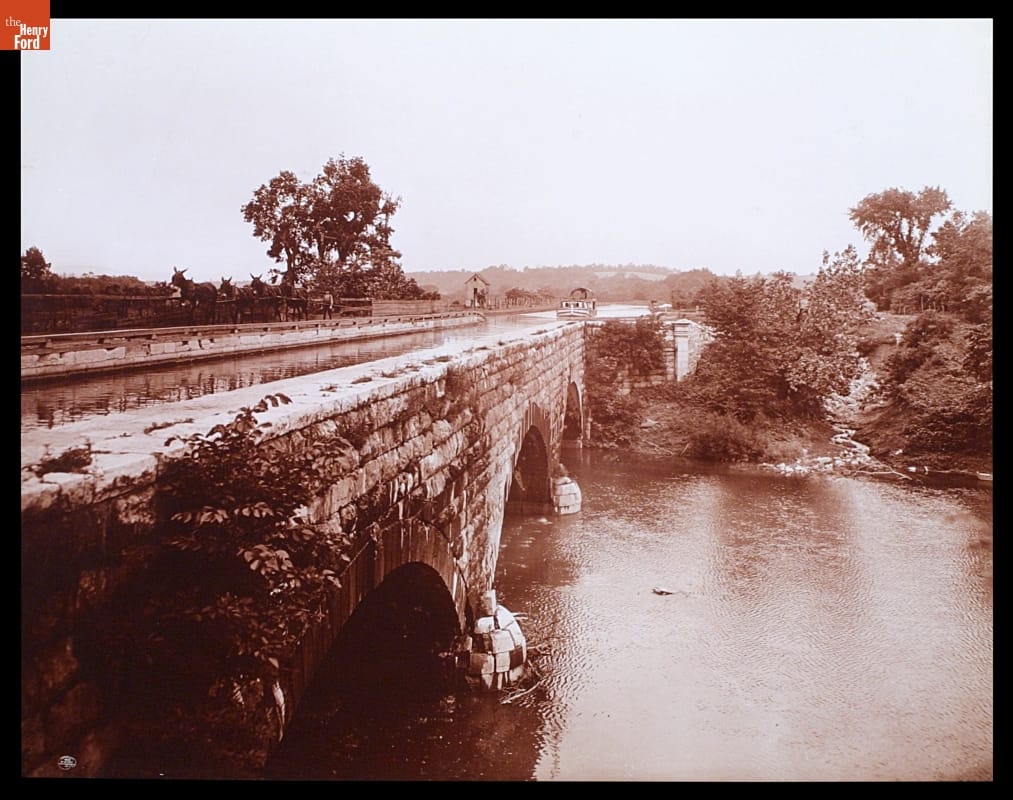
- Canal Boat on the Chesapeake and Ohio Canal at Williamsport, Maryland, 1903 - President George Washington was devoted to improving the Potomac, the only river bisecting the Appalachian mountain barrier and an important trade route. Americans continued work on the waterway, completing the Chesapeake and Ohio Canal in 1850. In this Detroit Publishing Company photograph, a team of mules pulls a boat over one of the canal's aqueducts.
- 1903
- Collections - Artifact
Canal Boat on the Chesapeake and Ohio Canal at Williamsport, Maryland, 1903
President George Washington was devoted to improving the Potomac, the only river bisecting the Appalachian mountain barrier and an important trade route. Americans continued work on the waterway, completing the Chesapeake and Ohio Canal in 1850. In this Detroit Publishing Company photograph, a team of mules pulls a boat over one of the canal's aqueducts.
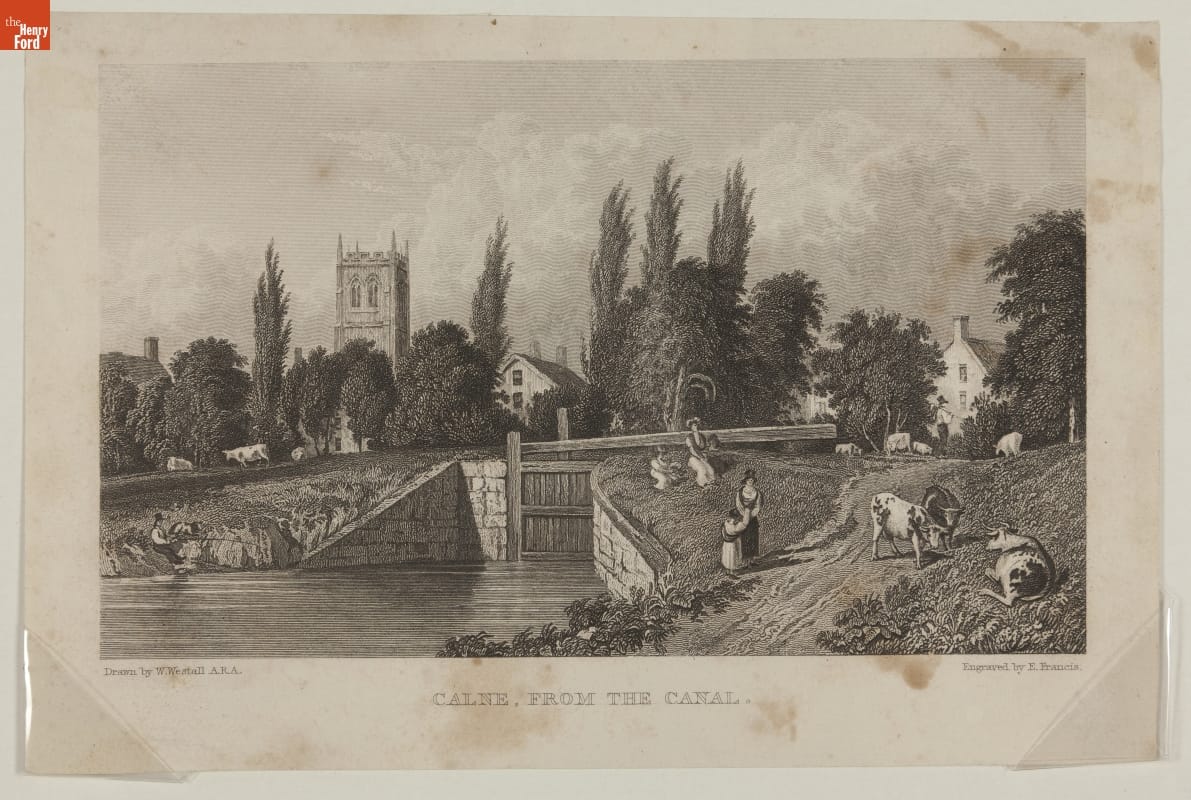
- "Calne, from the Canal" (Small English Canal Lock depicted 1835-1840), Steel Engraving - Before railroads, rivers provided quick transportation routes for people and goods. Canals connected these waterways and opened up new areas to increased trade. Locks lifted or lowered a boat from one navigable section to another. This steel engraving depicts the canal locks at Calne, England.
- 1835-1840
- Collections - Artifact
"Calne, from the Canal" (Small English Canal Lock depicted 1835-1840), Steel Engraving
Before railroads, rivers provided quick transportation routes for people and goods. Canals connected these waterways and opened up new areas to increased trade. Locks lifted or lowered a boat from one navigable section to another. This steel engraving depicts the canal locks at Calne, England.
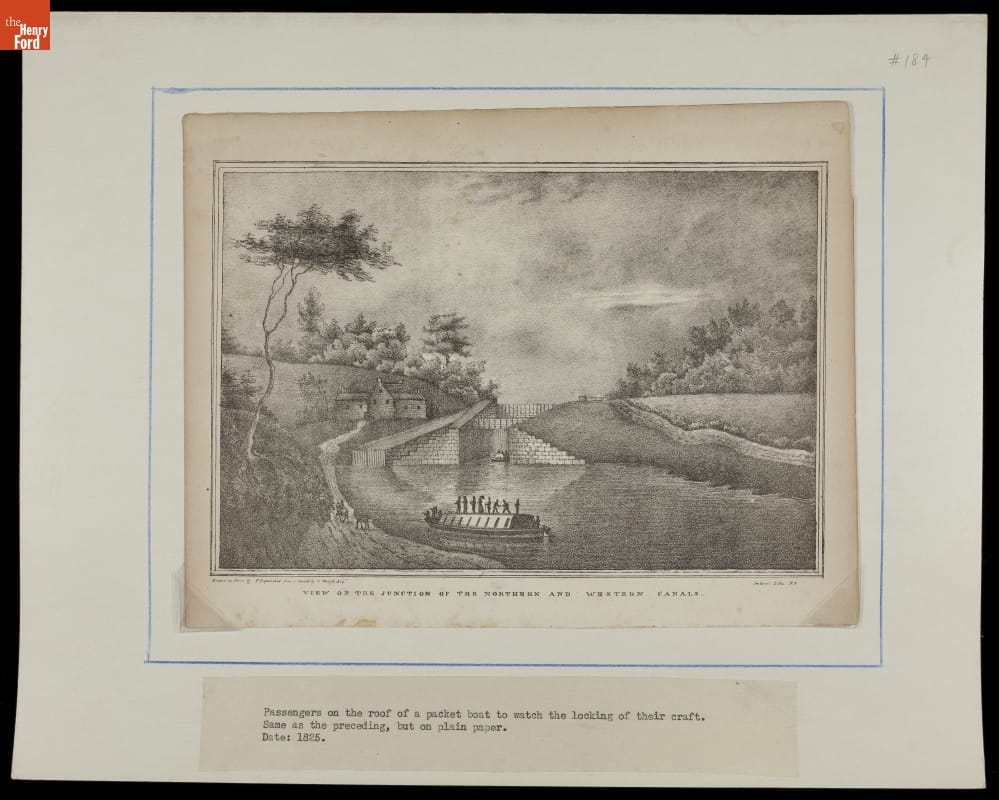
- "View of the Junction of the Northern and Western Canals," 1825 - Canals opened new lands to settlement and commerce in the first half of the 19th century. New York's Erie Canal, completed in 1825, connected Albany with Buffalo. It also joined with other canals to make more areas of the state accessible. This print shows the junction of the "Northern" (Champlain) and the "Western" (Erie) canals.
- 1825
- Collections - Artifact
"View of the Junction of the Northern and Western Canals," 1825
Canals opened new lands to settlement and commerce in the first half of the 19th century. New York's Erie Canal, completed in 1825, connected Albany with Buffalo. It also joined with other canals to make more areas of the state accessible. This print shows the junction of the "Northern" (Champlain) and the "Western" (Erie) canals.
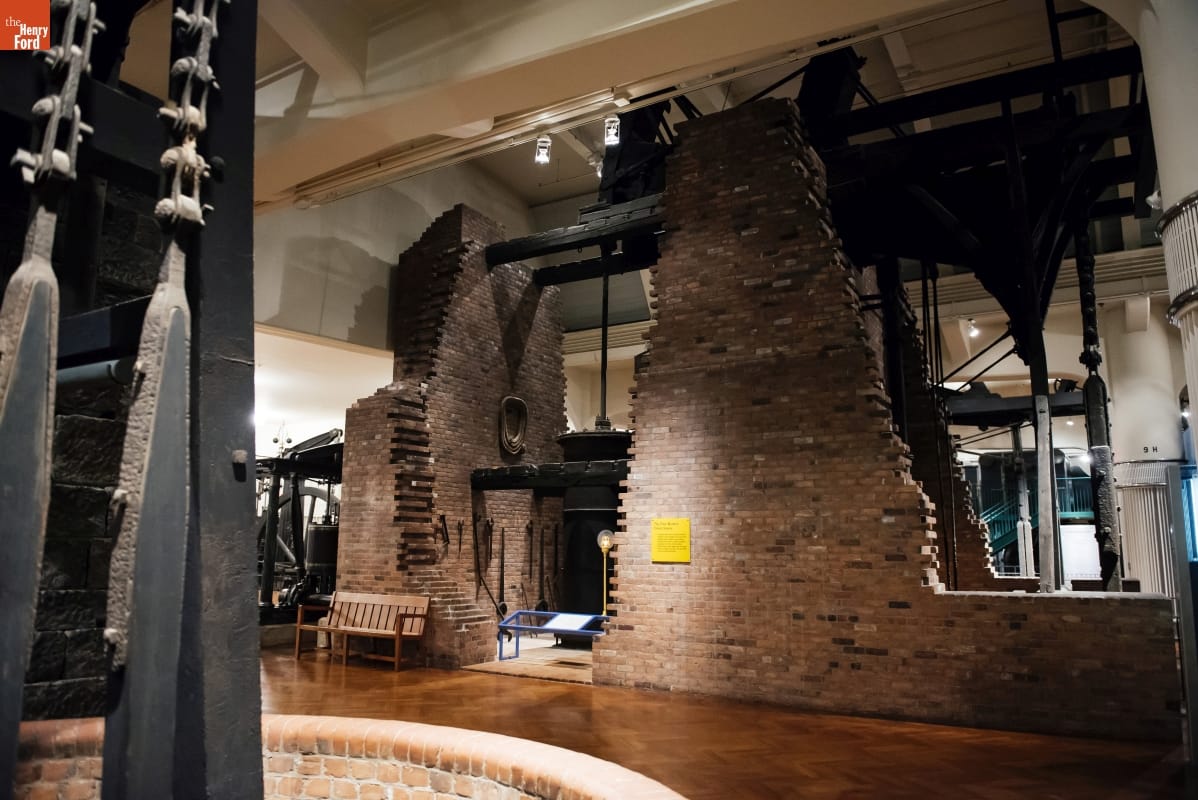
- Watt Canal Pumping Engine, 1796 - Boulton and Watt built this engine for the Warwick and Birmingham Canal Navigation Company in 1796. It was used at the Bowyer Street pumping station in Birmingham, England, to pump water on the Bordesley Canal until 1854, when it was superseded by a more modern engine. The engine remained in the pumping station until coming to The Henry Ford in 1929.
- 1796
- Collections - Artifact
Watt Canal Pumping Engine, 1796
Boulton and Watt built this engine for the Warwick and Birmingham Canal Navigation Company in 1796. It was used at the Bowyer Street pumping station in Birmingham, England, to pump water on the Bordesley Canal until 1854, when it was superseded by a more modern engine. The engine remained in the pumping station until coming to The Henry Ford in 1929.
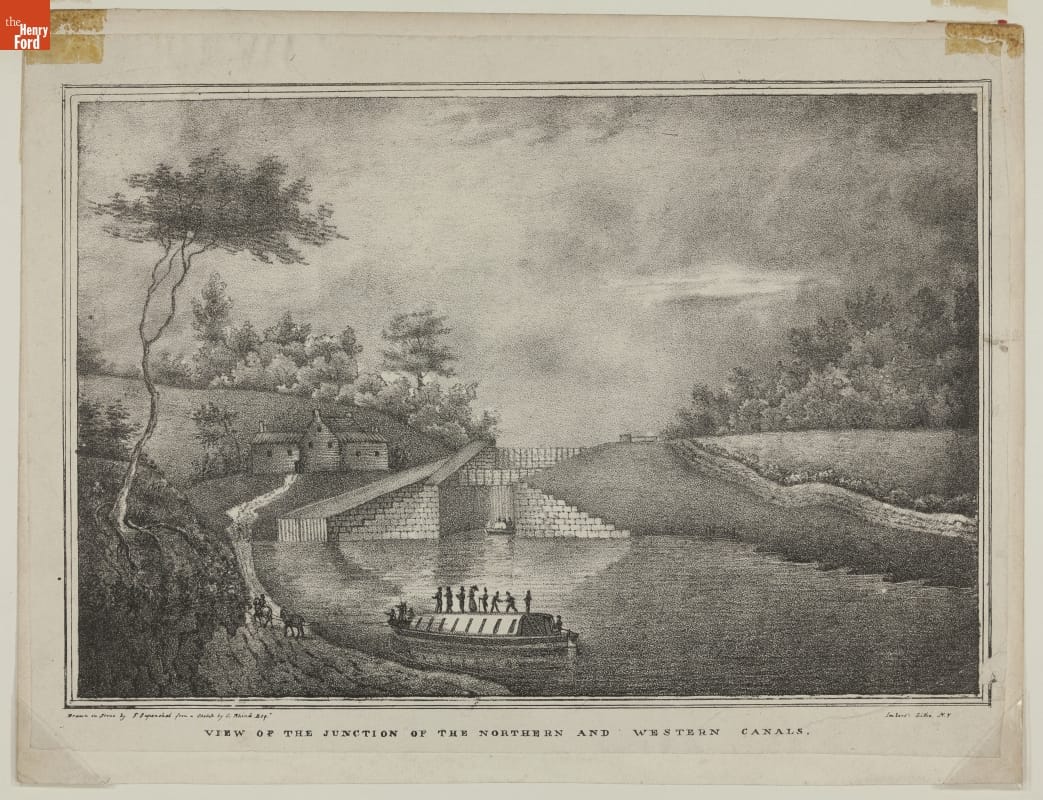
- Lithograph, "View of the Junction of the Northern and Western Canals," 1825 - The construction of Erie Canal, connecting the Hudson River to Lake Erie, began in 1817 and completed in 1825, opened the Midwest of the United States to settlement and commerce. Passengers assembled on the roof of a packet boat on the Erie Canal to watch the process of pulling the boat through a lock, while experienced travelers remained below.
- 1825
- Collections - Artifact
Lithograph, "View of the Junction of the Northern and Western Canals," 1825
The construction of Erie Canal, connecting the Hudson River to Lake Erie, began in 1817 and completed in 1825, opened the Midwest of the United States to settlement and commerce. Passengers assembled on the roof of a packet boat on the Erie Canal to watch the process of pulling the boat through a lock, while experienced travelers remained below.
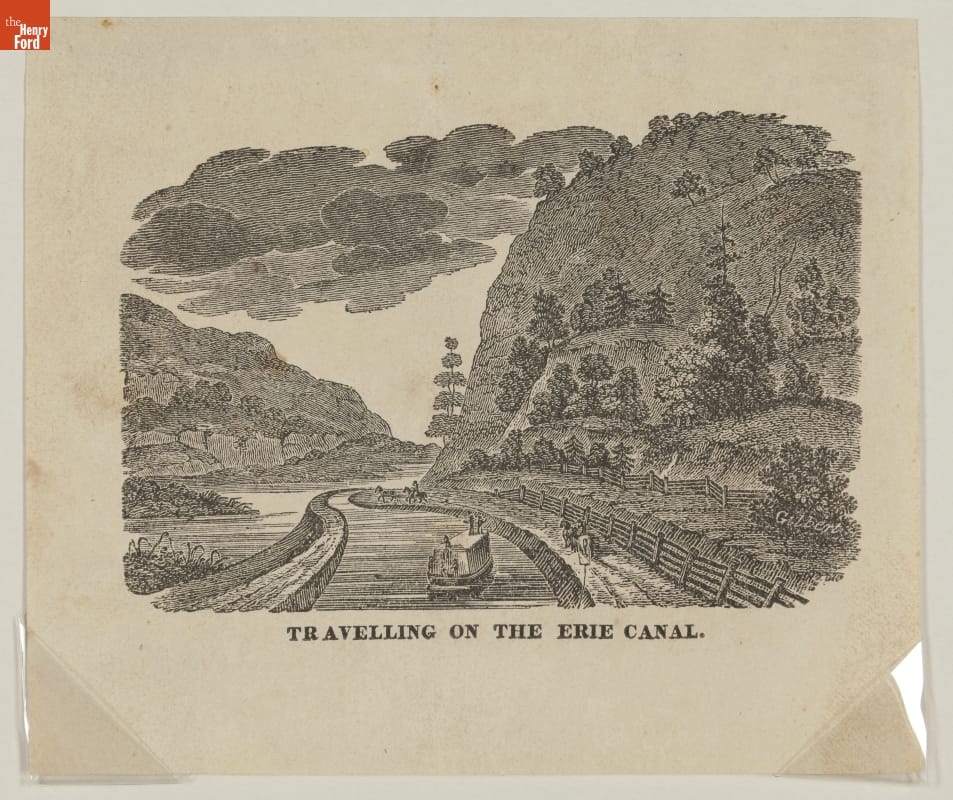
- "Travelling on the Erie Canal," circa 1843 - The first half of the 19th century was the heyday of canal construction in the United States, opening up new territories to settlement and commerce. The Erie Canal, connecting Albany to Buffalo, began in 1817 and was completed in 1825. This 1843 wood engraving, showing a packet boat traveling the canal, is a copy of an earlier illustration.
- 1826
- Collections - Artifact
"Travelling on the Erie Canal," circa 1843
The first half of the 19th century was the heyday of canal construction in the United States, opening up new territories to settlement and commerce. The Erie Canal, connecting Albany to Buffalo, began in 1817 and was completed in 1825. This 1843 wood engraving, showing a packet boat traveling the canal, is a copy of an earlier illustration.