
Search
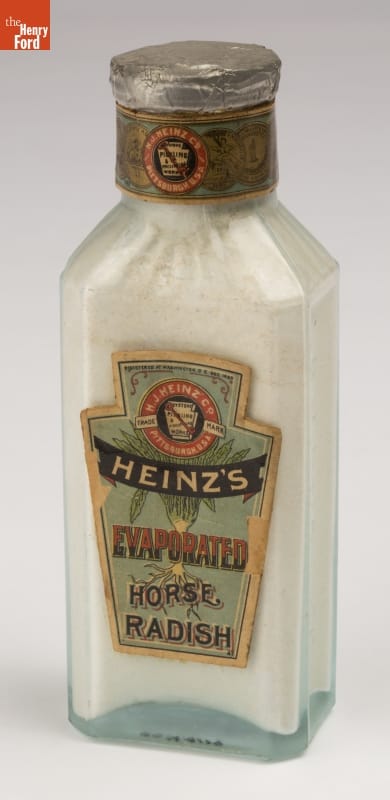
- Heinz Horseradish Bottle, circa 1891 - In the late 19th century, when many foods were still sold in bulk, H.J. Heinz developed a strong name-brand image and individual packages for his products. This, along with aggressive advertising, kept the company name and trademark in the public eye. Heinz's clear glass bottles were appealing to look at and allowed customers to see the quality of the product.
- circa 1891
- Collections - Artifact
Heinz Horseradish Bottle, circa 1891
In the late 19th century, when many foods were still sold in bulk, H.J. Heinz developed a strong name-brand image and individual packages for his products. This, along with aggressive advertising, kept the company name and trademark in the public eye. Heinz's clear glass bottles were appealing to look at and allowed customers to see the quality of the product.
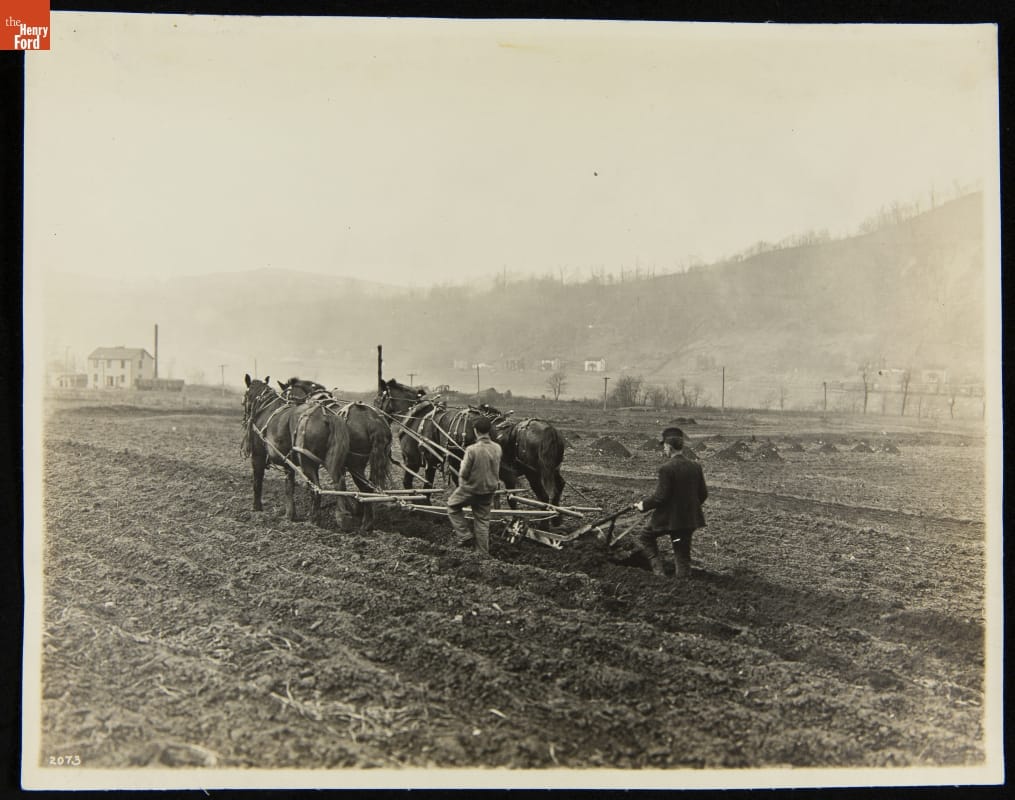
- Plowing for Horseradish, H. J. Heinz Company, circa 1905 - While most people recognize the H. J. Heinz Company for its ketchup, its first product was actually horseradish -- sold out of H. J. Heinz's family home in 1869. Though the product line quickly expanded to include pickled foods, preserves, and condiments, horseradish remained a mainstay for many years. In this photograph, the field is being plowed and prepared for the years' horseradish crop.
- circa 1905
- Collections - Artifact
Plowing for Horseradish, H. J. Heinz Company, circa 1905
While most people recognize the H. J. Heinz Company for its ketchup, its first product was actually horseradish -- sold out of H. J. Heinz's family home in 1869. Though the product line quickly expanded to include pickled foods, preserves, and condiments, horseradish remained a mainstay for many years. In this photograph, the field is being plowed and prepared for the years' horseradish crop.
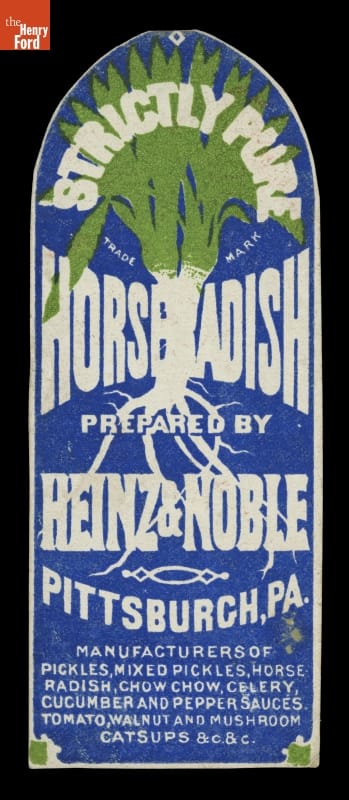
- Product Label for Bottled Horseradish by Heinz & Noble, "Strictly Pure," 1872 - Henry J. Heinz began selling prepared horseradish to nearby grocery stores in 1869, and quickly expanded his product line to include a variety of pickled foods and condiments. Heinz based his reputation on superior, consistent products and distinctive packaging. Eye-catching labels attracted and informed customers, and clear glass bottles revealed a high-quality, "strictly pure" product.
- 1872
- Collections - Artifact
Product Label for Bottled Horseradish by Heinz & Noble, "Strictly Pure," 1872
Henry J. Heinz began selling prepared horseradish to nearby grocery stores in 1869, and quickly expanded his product line to include a variety of pickled foods and condiments. Heinz based his reputation on superior, consistent products and distinctive packaging. Eye-catching labels attracted and informed customers, and clear glass bottles revealed a high-quality, "strictly pure" product.
- “Strictly Pure”: The Heinz Label - Henry J. Heinz began selling prepared horseradish to nearby grocery stores in 1869, and quickly expanded his product line to include a variety of pickled foods and condiments. To ensure his success among competitors, Heinz based his reputation on superior, consistent products and distinctive packaging. Eye-catching labels attracted customers, and clear glass bottles revealed a high-quality product.

- October 16, 2015
- Collections - Set
“Strictly Pure”: The Heinz Label
Henry J. Heinz began selling prepared horseradish to nearby grocery stores in 1869, and quickly expanded his product line to include a variety of pickled foods and condiments. To ensure his success among competitors, Heinz based his reputation on superior, consistent products and distinctive packaging. Eye-catching labels attracted customers, and clear glass bottles revealed a high-quality product.
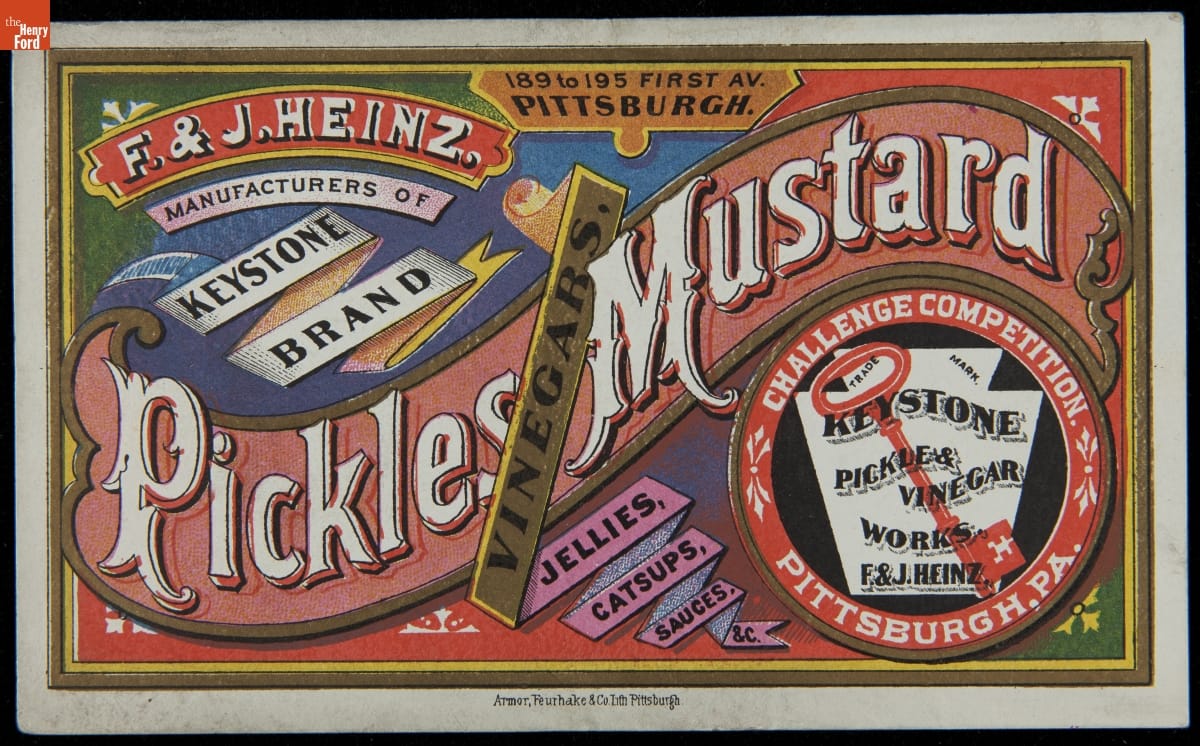
- Heinz: 57 Varieties and then some! - In 1869, H.J. Heinz entered his first business partnership to form Heinz & Noble, which sold pickled foods and condiments until going out of business in 1875. In 1876, Heinz persuaded family members to begin a new company -- F. & J. Heinz -- with H.J. Heinz running the company behind the scenes until he could rebuild his reputation and take over the company.
- September 02, 2014
- Collections - Set
Heinz: 57 Varieties and then some!
In 1869, H.J. Heinz entered his first business partnership to form Heinz & Noble, which sold pickled foods and condiments until going out of business in 1875. In 1876, Heinz persuaded family members to begin a new company -- F. & J. Heinz -- with H.J. Heinz running the company behind the scenes until he could rebuild his reputation and take over the company.
- “Where We Began”: The Heinz House - The Heinz House, a gift from the H.J. Heinz Company, was ceremoniously accepted in 1954 by William Clay Ford, grandson of Henry Ford and recently named Chairman of the Board of Trustees of the Edison Institute (now The Henry Ford). The Heinz House was the first historic structure added to Greenfield Village since the death of Henry Ford in 1947.

- October 16, 2015
- Collections - Set
“Where We Began”: The Heinz House
The Heinz House, a gift from the H.J. Heinz Company, was ceremoniously accepted in 1954 by William Clay Ford, grandson of Henry Ford and recently named Chairman of the Board of Trustees of the Edison Institute (now The Henry Ford). The Heinz House was the first historic structure added to Greenfield Village since the death of Henry Ford in 1947.
- Trade Cards Catch the Eye - As color printing gained momentum in the late 19th century, trade cards became a major means of advertising goods and services to potential customers. Cheap and effective, trade cards promoted products like medicine, food, stoves, sewing machines, and seeds. Americans often saved these vibrant advertisements found in product packages and distributed by local merchants. This set highlights colorful trade cards of several entrepreneurial companies.

- April 20, 2020
- Collections - Set
Trade Cards Catch the Eye
As color printing gained momentum in the late 19th century, trade cards became a major means of advertising goods and services to potential customers. Cheap and effective, trade cards promoted products like medicine, food, stoves, sewing machines, and seeds. Americans often saved these vibrant advertisements found in product packages and distributed by local merchants. This set highlights colorful trade cards of several entrepreneurial companies.
- The Secret Life of a Heinz Recipe Book - Learn what historical research turned up about a Heinz recipe book in the collections of The Henry Ford.

- June 12, 2019
- Collections - article
The Secret Life of a Heinz Recipe Book
Learn what historical research turned up about a Heinz recipe book in the collections of The Henry Ford.
- Stories from the Initiative for Entrepreneurship - Get a round-up of the many entrepreneurial stories and artifacts we uncovered in our collections as part of the William Davidson Foundation Initiative for Entrepreneurship.

- December 18, 2020
- Collections - article
Stories from the Initiative for Entrepreneurship
Get a round-up of the many entrepreneurial stories and artifacts we uncovered in our collections as part of the William Davidson Foundation Initiative for Entrepreneurship.
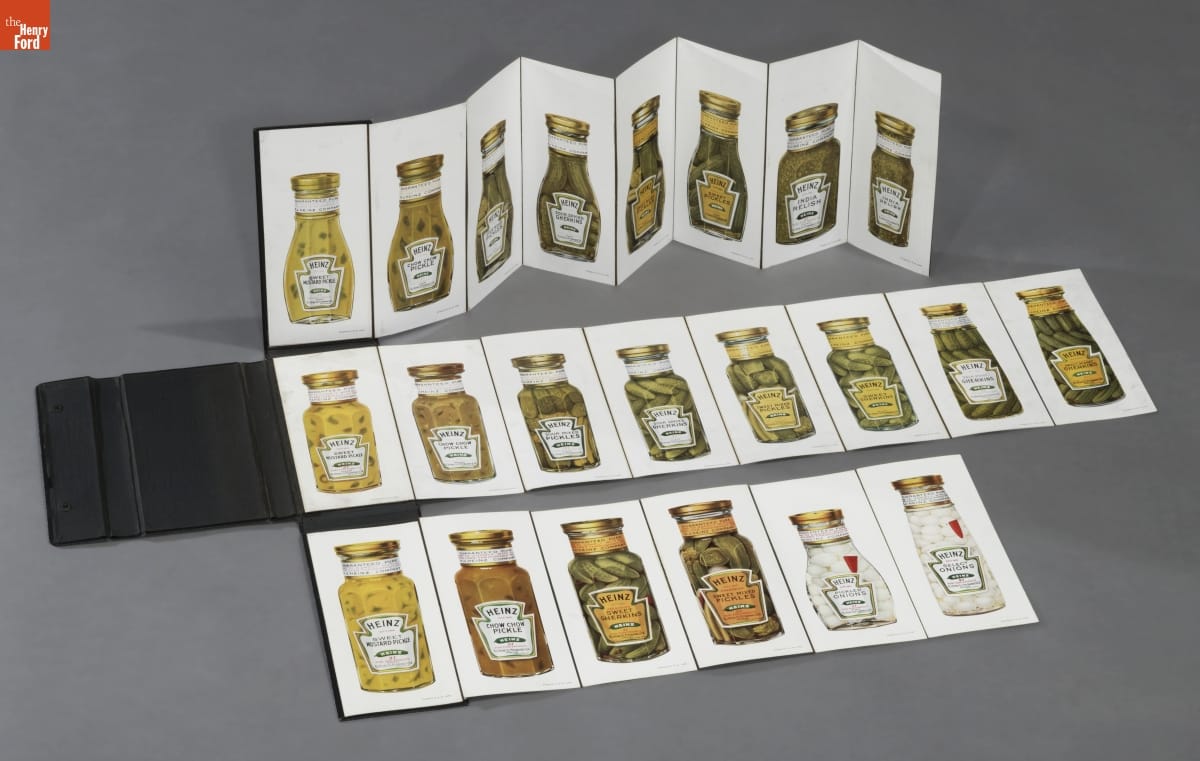
- Henry J. Heinz: His Recipe for Success - With a unique flair for marketing and a high standard of production, H. J. Heinz changed Americans' attitudes towards processed food products. From exclusively selling horseradish in 1869 to offering over 60 varieties of products, Heinz built an empire and became a household name. This selection of items highlights the passion, dedication, and creativity of the entrepreneur behind one of the most recognizable companies in the world.
- May 09, 2019
- Collections - Set
Henry J. Heinz: His Recipe for Success
With a unique flair for marketing and a high standard of production, H. J. Heinz changed Americans' attitudes towards processed food products. From exclusively selling horseradish in 1869 to offering over 60 varieties of products, Heinz built an empire and became a household name. This selection of items highlights the passion, dedication, and creativity of the entrepreneur behind one of the most recognizable companies in the world.