
Search
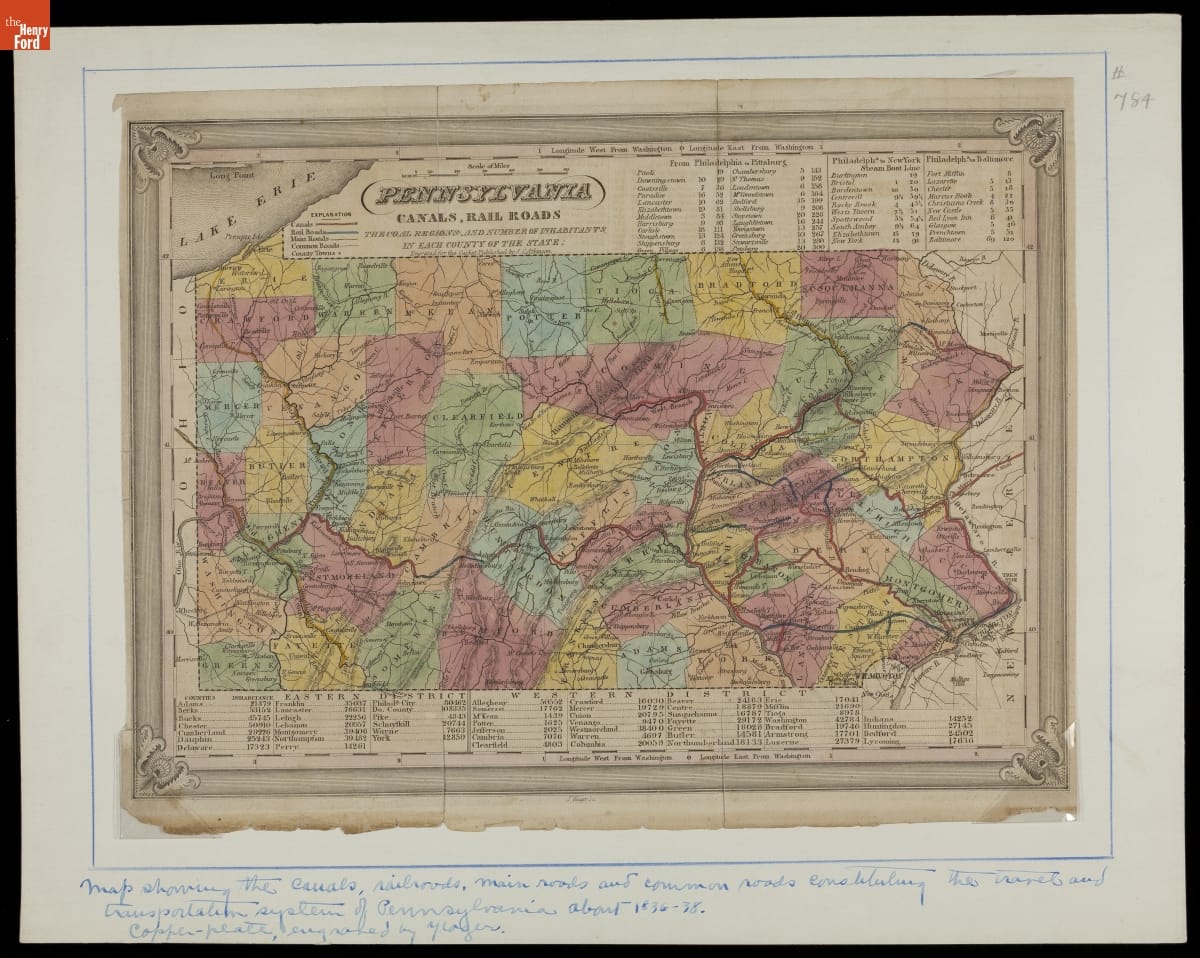
- Map of Canals and Railroads in Pennsylvania, circa 1837 - This copperplate engraving illustrates the travel and transportation system of Pennsylvania about 1836-1838. The map shows the railroads, large and small roads, and canals that crisscrossed the landscape.
- 1836-1838
- Collections - Artifact
Map of Canals and Railroads in Pennsylvania, circa 1837
This copperplate engraving illustrates the travel and transportation system of Pennsylvania about 1836-1838. The map shows the railroads, large and small roads, and canals that crisscrossed the landscape.
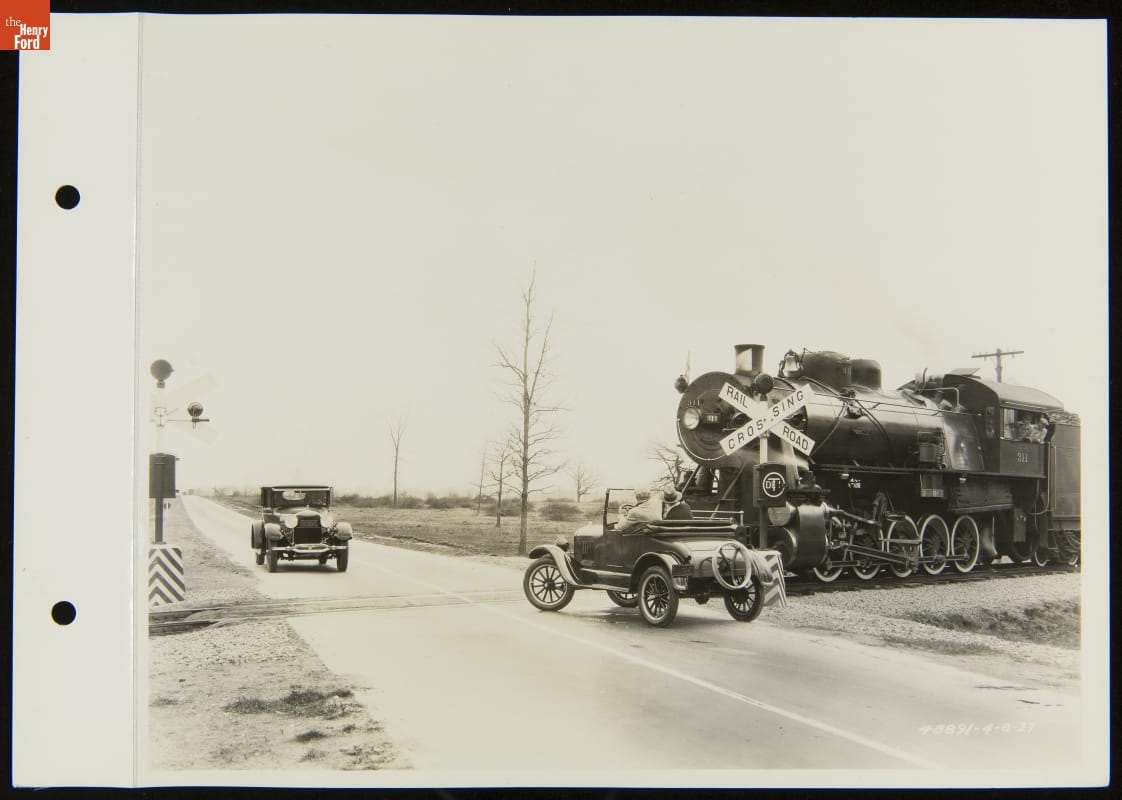
- Railroad Crossing, Detroit, Toledo & Ironton Railroad, April 1927 - For as long as trains and automobiles have coexisted, some motorists have felt the need to "race" a train to the crossing. Some early magazine advertisements encouraged the practice, showing daring drivers outrunning speeding express trains. Few habits are so dangerous. A speeding train can take more than a mile to stop. Even in a tie, the motorist loses.
- April 04, 1927
- Collections - Artifact
Railroad Crossing, Detroit, Toledo & Ironton Railroad, April 1927
For as long as trains and automobiles have coexisted, some motorists have felt the need to "race" a train to the crossing. Some early magazine advertisements encouraged the practice, showing daring drivers outrunning speeding express trains. Few habits are so dangerous. A speeding train can take more than a mile to stop. Even in a tie, the motorist loses.
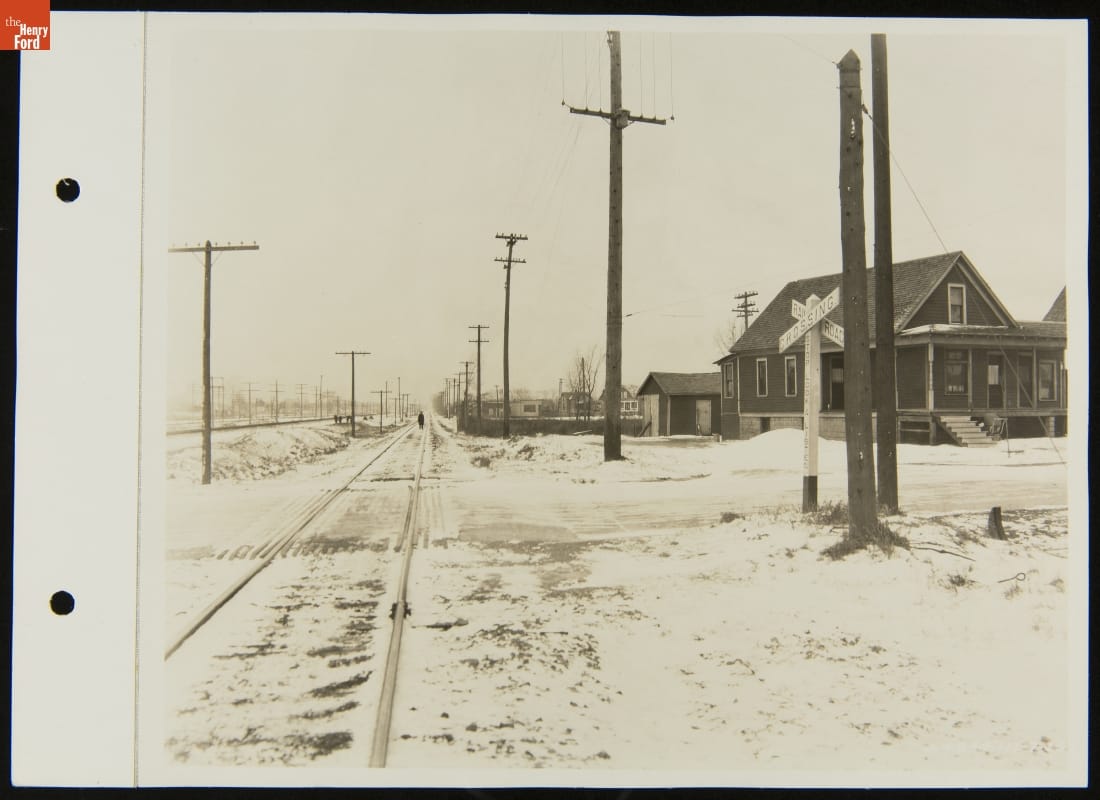
- Railroad Crossing, Detroit, Toledo & Ironton Railroad, December 1925 - Busy railroad crossings were protected by a signal person or, later, automated warning devices. Quieter crossings -- those on little-used branch lines or spurs, or over lightly traveled rural roads -- might only be marked with a sign. Designs varied by railroad company, but most used an X-shaped sign with a message like "Stop, Look and Listen" or "Look Out for the Cars."
- December 01, 1925
- Collections - Artifact
Railroad Crossing, Detroit, Toledo & Ironton Railroad, December 1925
Busy railroad crossings were protected by a signal person or, later, automated warning devices. Quieter crossings -- those on little-used branch lines or spurs, or over lightly traveled rural roads -- might only be marked with a sign. Designs varied by railroad company, but most used an X-shaped sign with a message like "Stop, Look and Listen" or "Look Out for the Cars."
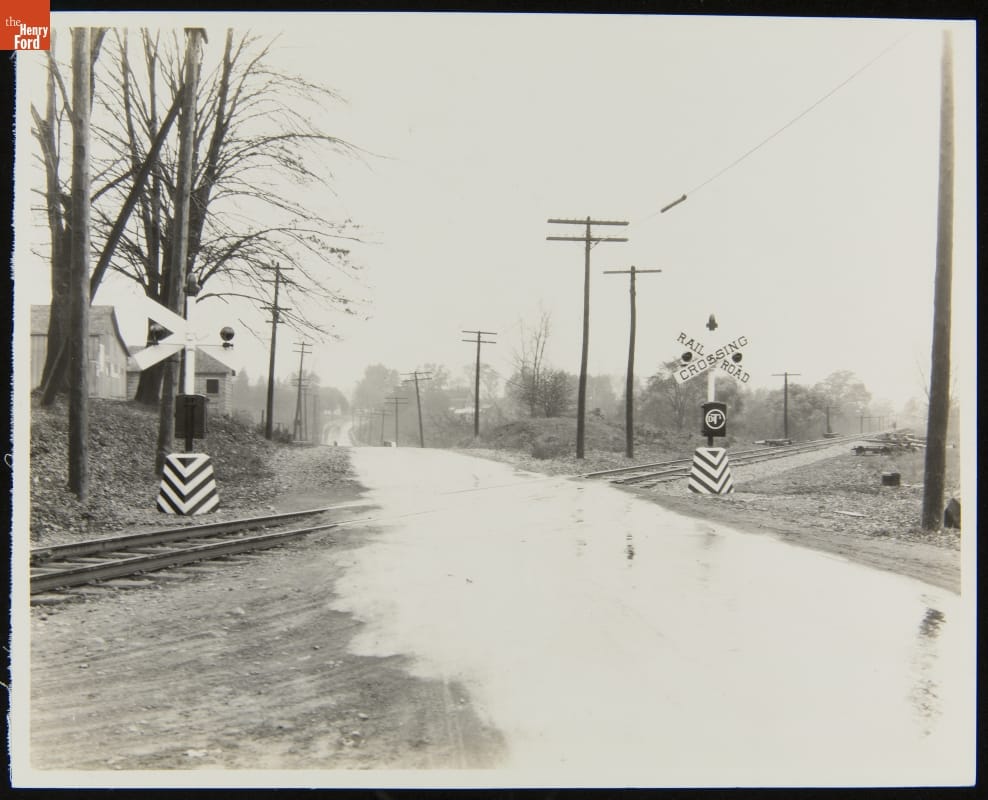
- Railroad Crossing, Detroit, Toledo, and Ironton Railroad, October 1925 - The first automated, flashing red light railroad crossing signal appeared around 1913. The flashing lights mimicked the motion of a lantern being swung back and forth -- long a signal for "stop" on American railroads. The X-shaped crossbuck sign, in wide use by 1900, was inspired by the skull and crossbones -- a universal symbol for danger.
- October 27, 1926
- Collections - Artifact
Railroad Crossing, Detroit, Toledo, and Ironton Railroad, October 1925
The first automated, flashing red light railroad crossing signal appeared around 1913. The flashing lights mimicked the motion of a lantern being swung back and forth -- long a signal for "stop" on American railroads. The X-shaped crossbuck sign, in wide use by 1900, was inspired by the skull and crossbones -- a universal symbol for danger.
- Railroad Crossing, Detroit, Toledo & Ironton Railroad, March 1926 - Depending on traffic -- either on the track or on the road -- a railroad crossing might be protected by something as elaborate as a set of moving gates or as simple as a bell. The bell in this photo, seen atop the pole at far right, rang to warn pedestrians and motorists when a train approached the crossing.
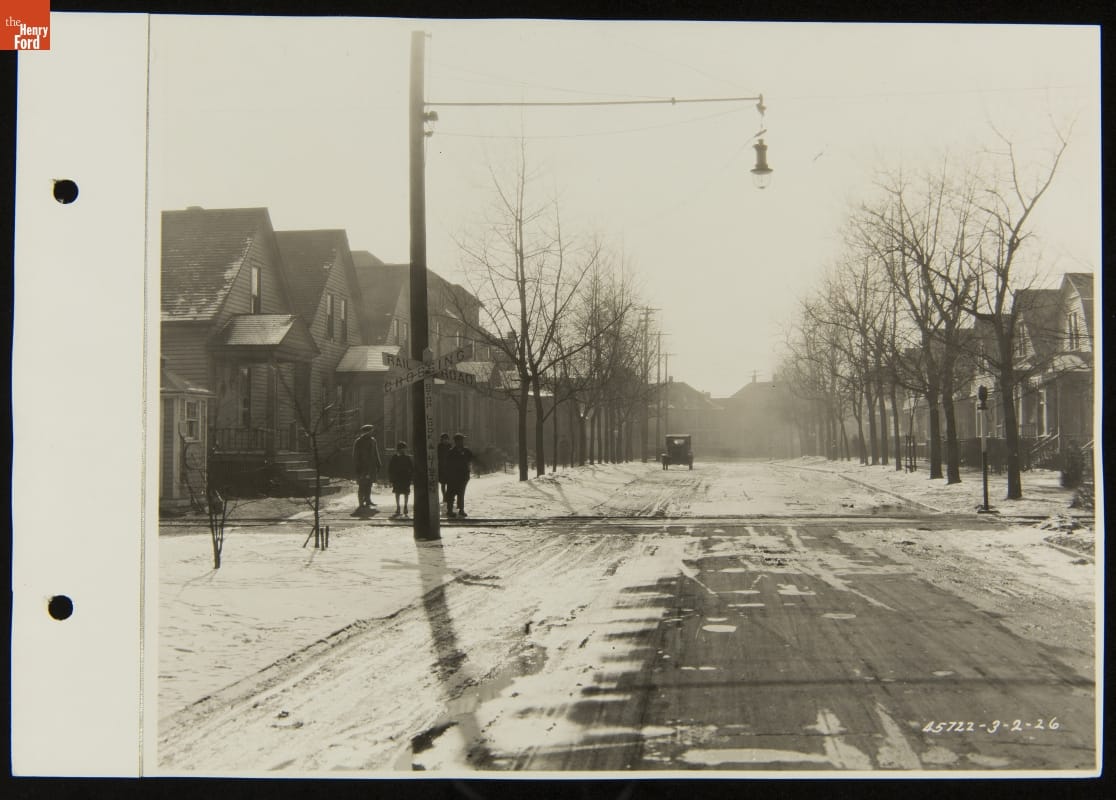
- March 02, 1926
- Collections - Artifact
Railroad Crossing, Detroit, Toledo & Ironton Railroad, March 1926
Depending on traffic -- either on the track or on the road -- a railroad crossing might be protected by something as elaborate as a set of moving gates or as simple as a bell. The bell in this photo, seen atop the pole at far right, rang to warn pedestrians and motorists when a train approached the crossing.
- Railroad Crossing, Detroit, Toledo & Ironton Railroad, October 1925 - Apart from eliminating it altogether, the safest way to protect a railroad crossing is with movable gates. The earliest gates, introduced around 1870, were hand-operated by an employee stationed at the crossing. Automated gates first appeared in the 1930s. Four-quadrant gates completely block off the road, while more common two-quadrant gates block each lane only in the direction of travel.
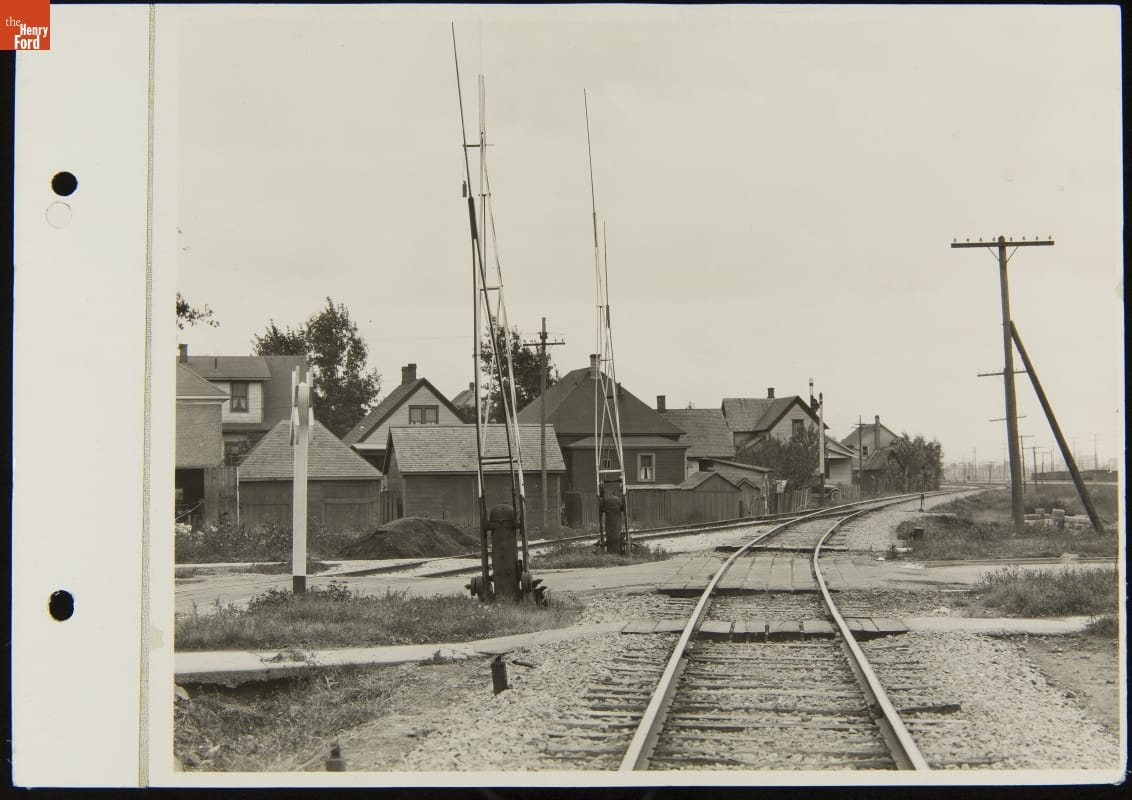
- October 01, 1925
- Collections - Artifact
Railroad Crossing, Detroit, Toledo & Ironton Railroad, October 1925
Apart from eliminating it altogether, the safest way to protect a railroad crossing is with movable gates. The earliest gates, introduced around 1870, were hand-operated by an employee stationed at the crossing. Automated gates first appeared in the 1930s. Four-quadrant gates completely block off the road, while more common two-quadrant gates block each lane only in the direction of travel.
- Railroad Crossing, Detroit, Toledo & Ironton Railroad, November 1925 - Henry Ford owned and operated the Detroit, Toledo & Ironton Railroad from 1920 to 1929. He spent $15 million improving the railroad and its structures. Many grade crossings, where the railroad intersected with public roads, received flashing lights or other warning devices. Ford also experimented with new road surfaces within crossings. Several were paved with concrete.
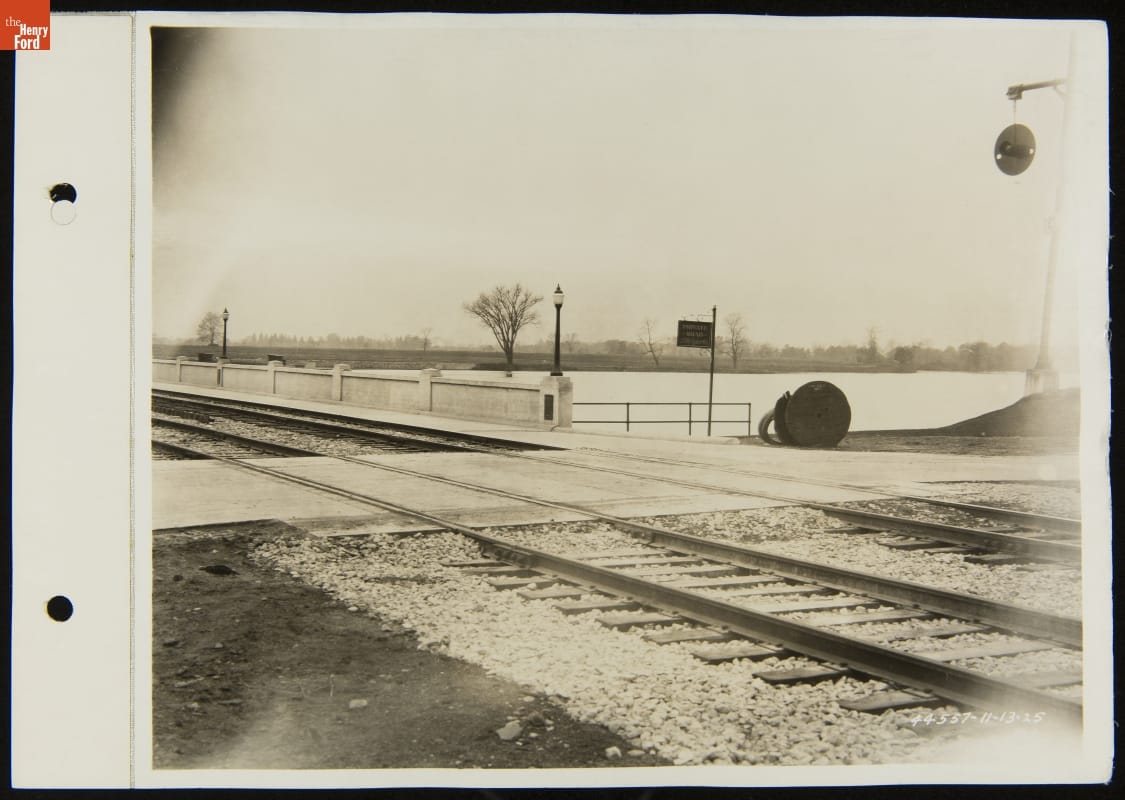
- November 01, 1925
- Collections - Artifact
Railroad Crossing, Detroit, Toledo & Ironton Railroad, November 1925
Henry Ford owned and operated the Detroit, Toledo & Ironton Railroad from 1920 to 1929. He spent $15 million improving the railroad and its structures. Many grade crossings, where the railroad intersected with public roads, received flashing lights or other warning devices. Ford also experimented with new road surfaces within crossings. Several were paved with concrete.
- Railroad Signal Lights, Detroit, Toledo & Ironton Railroad, February 1927 - The DT&I controlled train movements with an automatic block signaling system. The railroad line was sectioned into blocks. An electrical circuit in the track detected if a train was in a given block, or if the track was clear. The circuit then operated semaphore signals, like this one, that instructed an engineer how to proceed depending on the blade's position.
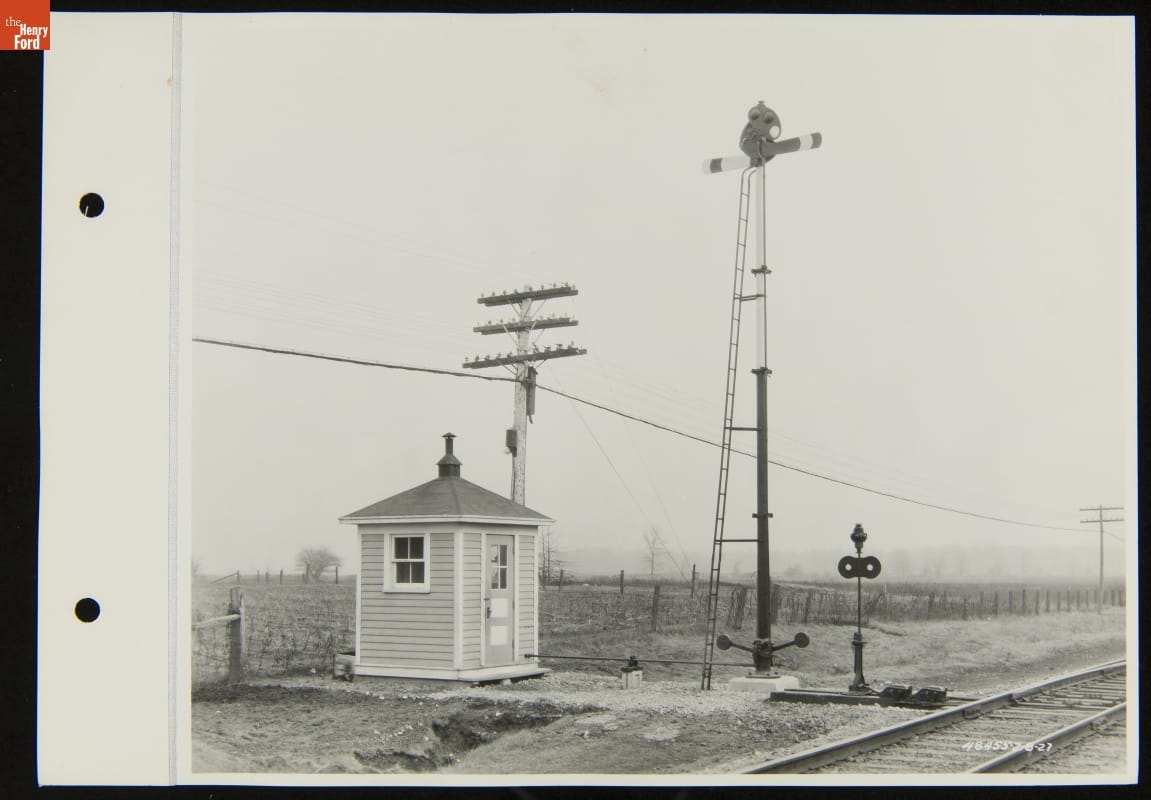
- February 08, 1927
- Collections - Artifact
Railroad Signal Lights, Detroit, Toledo & Ironton Railroad, February 1927
The DT&I controlled train movements with an automatic block signaling system. The railroad line was sectioned into blocks. An electrical circuit in the track detected if a train was in a given block, or if the track was clear. The circuit then operated semaphore signals, like this one, that instructed an engineer how to proceed depending on the blade's position.
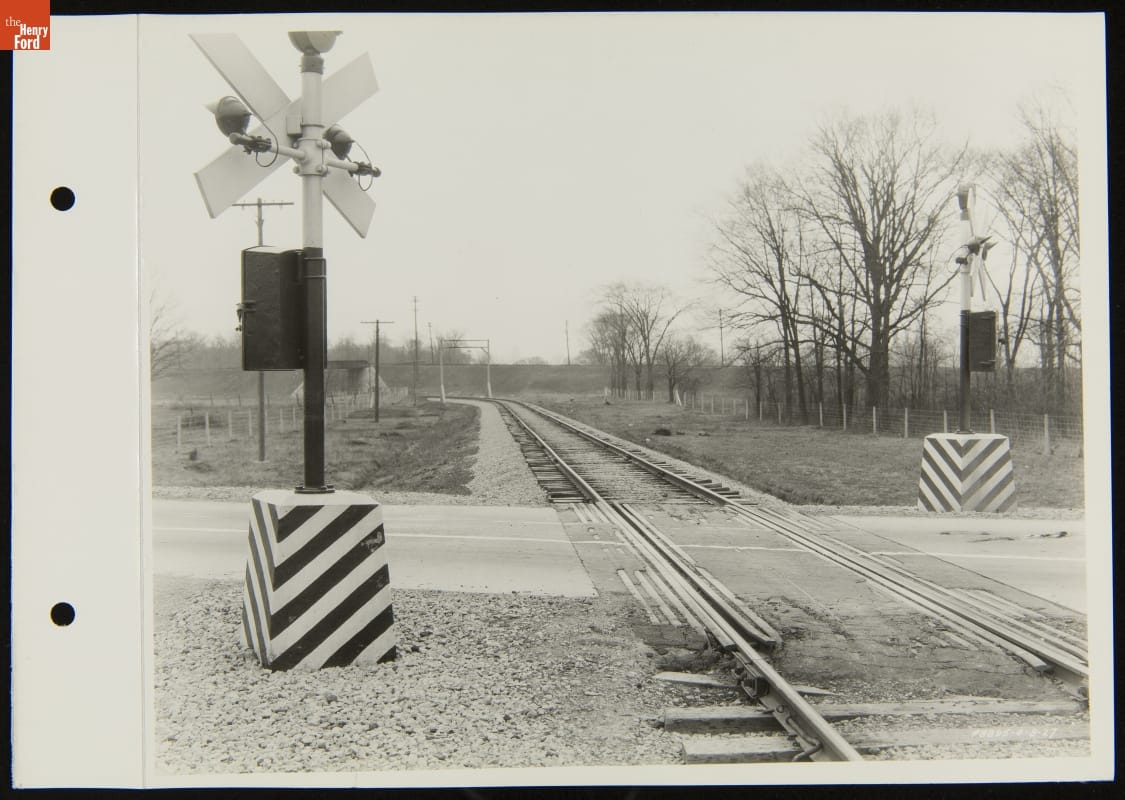
- Railroad Crossing, Detroit, Toledo, and Ironton Railroad, April 1927 - Henry Ford owned and operated the Detroit, Toledo & Ironton Railroad from 1920 to 1929. He spent $15 million improving the railroad and its structures. Many grade crossings, where the railroad intersected with public roads, received flashing lights or other warning devices. Ford also experimented with new road surfaces within crossings. Several were paved with concrete.
- April 08, 1927
- Collections - Artifact
Railroad Crossing, Detroit, Toledo, and Ironton Railroad, April 1927
Henry Ford owned and operated the Detroit, Toledo & Ironton Railroad from 1920 to 1929. He spent $15 million improving the railroad and its structures. Many grade crossings, where the railroad intersected with public roads, received flashing lights or other warning devices. Ford also experimented with new road surfaces within crossings. Several were paved with concrete.
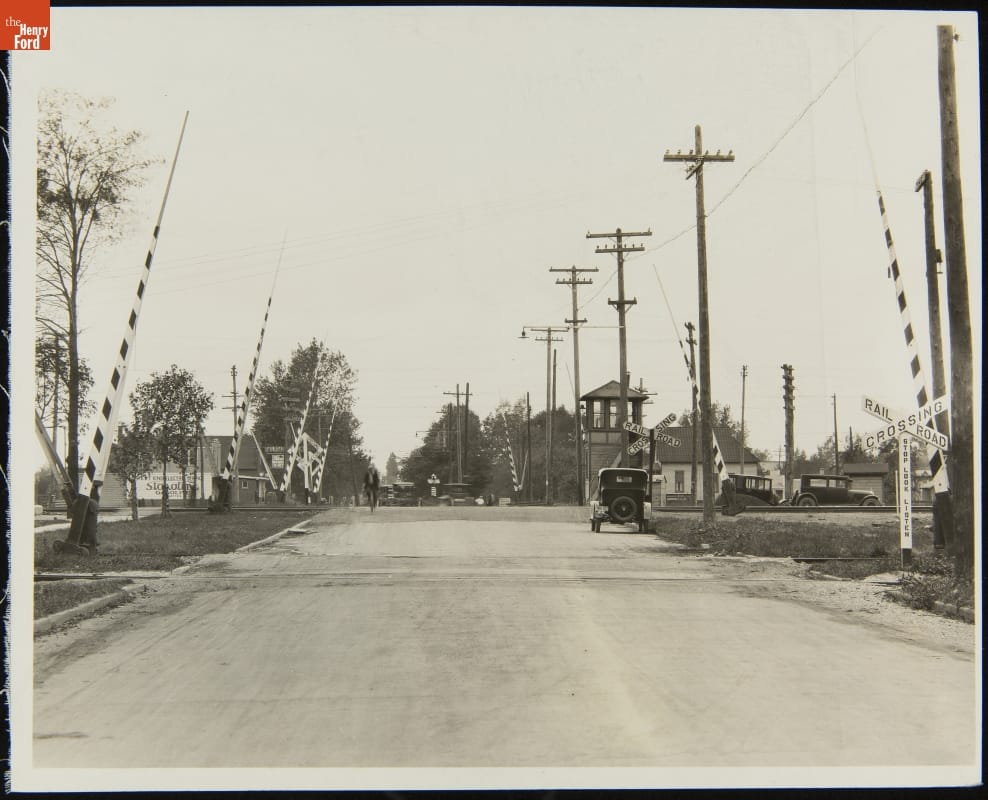
- Railroad Crossing, Detroit, Toledo, and Ironton Railroad, October 1925 - Apart from eliminating it altogether, the safest way to protect a railroad crossing is with movable gates. The earliest gates, introduced around 1870, were hand-operated by an employee stationed at the crossing. Automated gates first appeared in the 1930s. Four-quadrant gates completely block off the road, while more common two-quadrant gates block each lane only in the direction of travel.
- October 01, 1925
- Collections - Artifact
Railroad Crossing, Detroit, Toledo, and Ironton Railroad, October 1925
Apart from eliminating it altogether, the safest way to protect a railroad crossing is with movable gates. The earliest gates, introduced around 1870, were hand-operated by an employee stationed at the crossing. Automated gates first appeared in the 1930s. Four-quadrant gates completely block off the road, while more common two-quadrant gates block each lane only in the direction of travel.