
Search
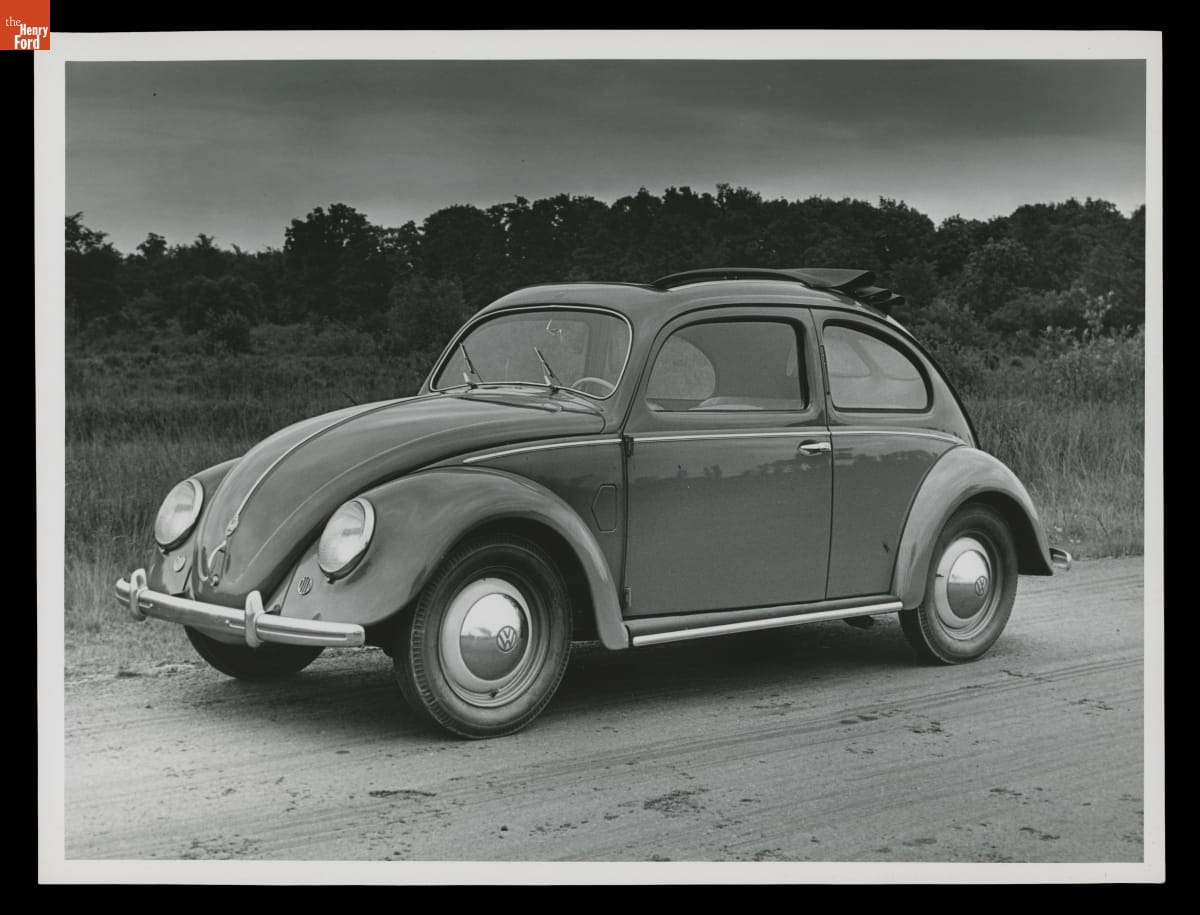
- Volkswagen Sedan, 1950 - Volkswagen's Type 1 Beetle sedan was different. Its compact size and rear-mounted, air-cooled engine set it apart from American cars. The Beetle appealed to a different type of American consumer -- one who favored thrifty practicality over flashy style. VW sold more than 21 million units during the car's 65-year production run.
- 1950
- Collections - Artifact
Volkswagen Sedan, 1950
Volkswagen's Type 1 Beetle sedan was different. Its compact size and rear-mounted, air-cooled engine set it apart from American cars. The Beetle appealed to a different type of American consumer -- one who favored thrifty practicality over flashy style. VW sold more than 21 million units during the car's 65-year production run.
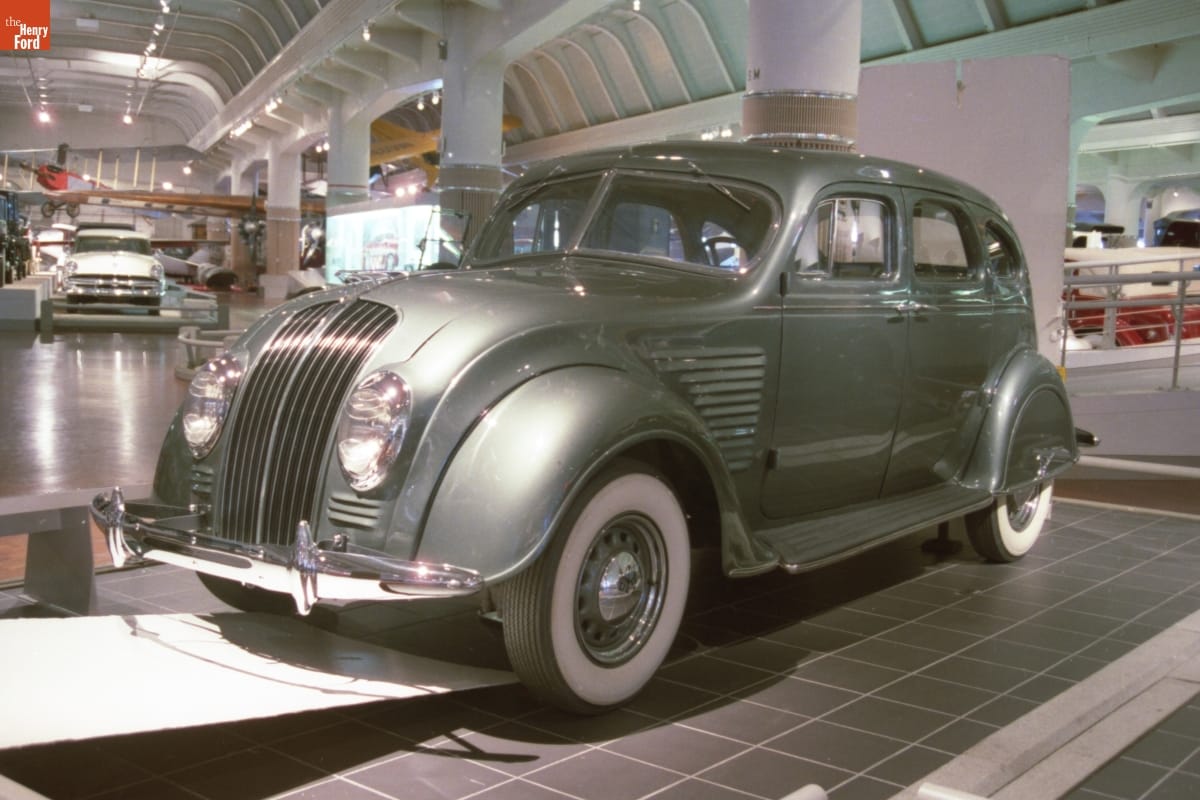
- 1934 DeSoto Airflow Sedan - The Airflow offers a cautionary tale: incredibly well-engineered, with a shape developed using wind tunnel tests and an interior that incorporated new and durable material -- its sales were hugely disappointing. The design was too advanced for the public, at a time when the market was strained. However, its influence on the <EM>style</EM> of other cars began to appear almost immediately.
- 1934
- Collections - Artifact
1934 DeSoto Airflow Sedan
The Airflow offers a cautionary tale: incredibly well-engineered, with a shape developed using wind tunnel tests and an interior that incorporated new and durable material -- its sales were hugely disappointing. The design was too advanced for the public, at a time when the market was strained. However, its influence on the style of other cars began to appear almost immediately.
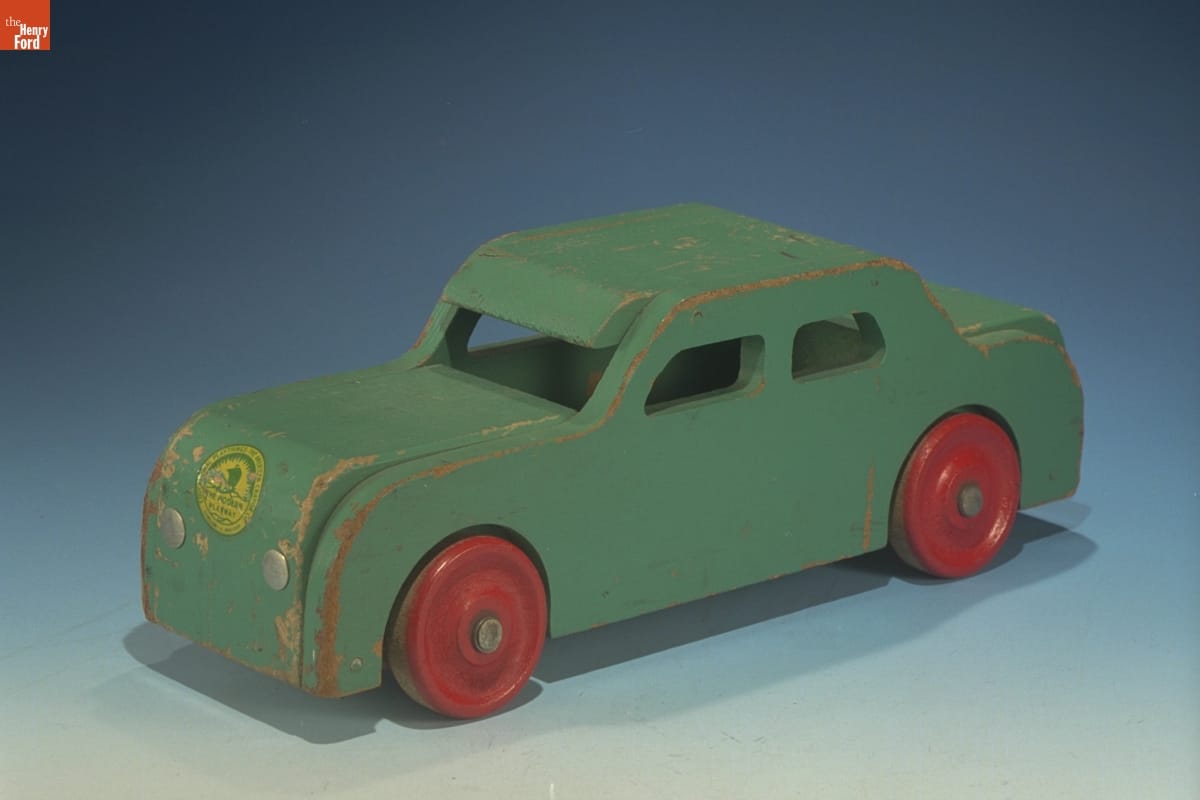
- Toy Sedan, 1930-1942 -
- 1930-1942
- Collections - Artifact
Toy Sedan, 1930-1942
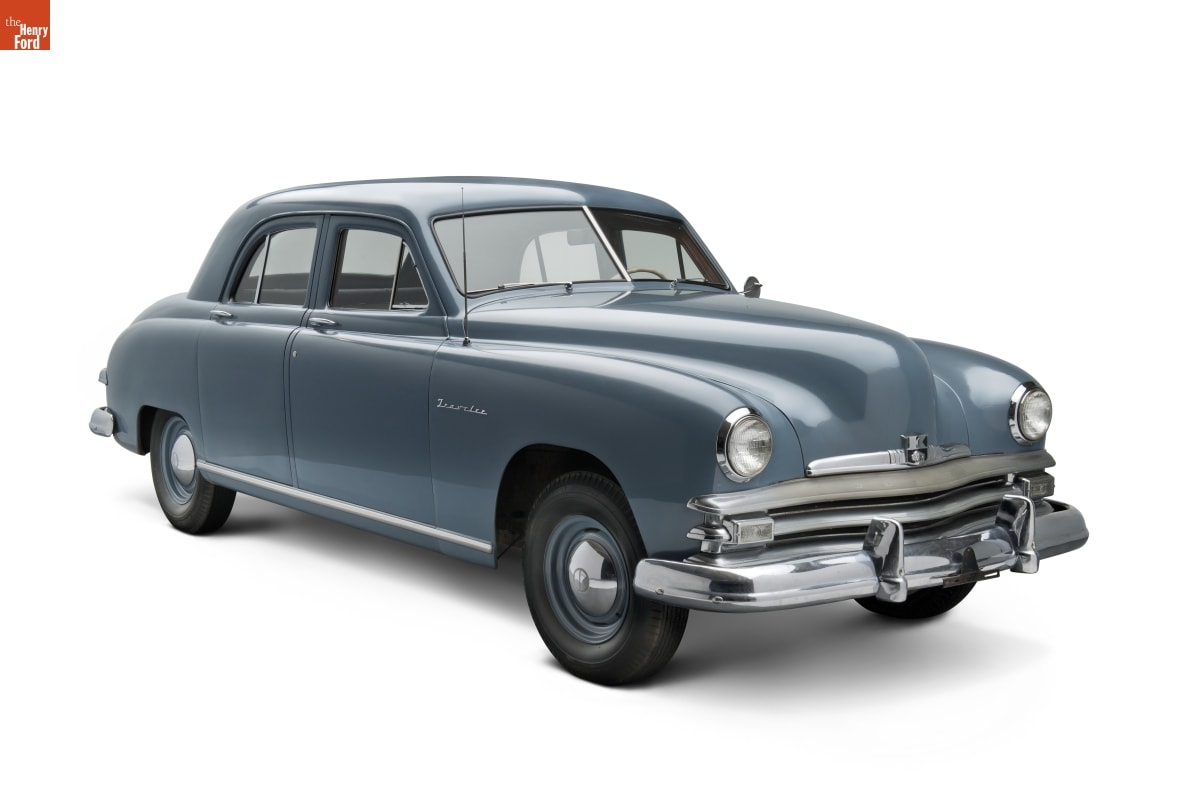
- 1949 Kaiser Traveler Sedan - Henry Kaiser, who had become famous building ships during World War II, and Joseph Frazer, an experienced auto executive, combined in 1945 to form a new car company. Kaisers were stylish and well built, but competing against established car companies proved too big a task. American Kaiser production ceased in 1955, although cars were made in Argentina between 1958 and 1962.
- 1949
- Collections - Artifact
1949 Kaiser Traveler Sedan
Henry Kaiser, who had become famous building ships during World War II, and Joseph Frazer, an experienced auto executive, combined in 1945 to form a new car company. Kaisers were stylish and well built, but competing against established car companies proved too big a task. American Kaiser production ceased in 1955, although cars were made in Argentina between 1958 and 1962.
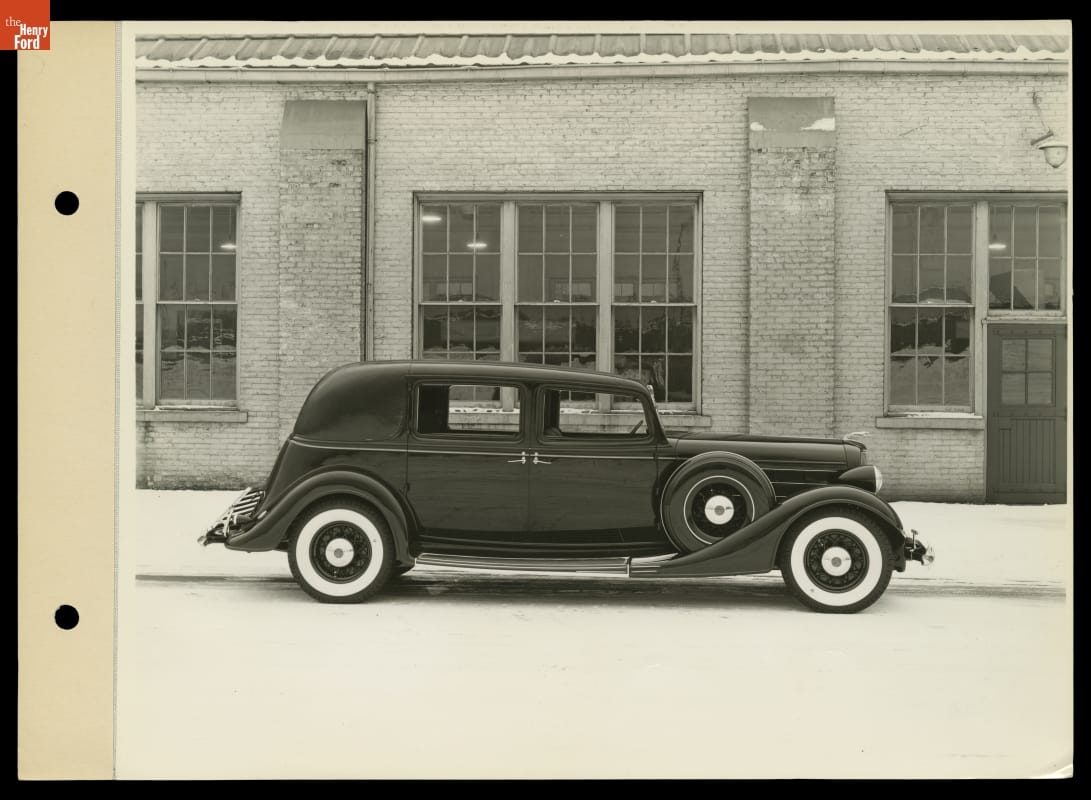
- Lincoln Brougham Sedan, 1934 - Lincoln, like all upmarket automakers, suffered during the Great Depression. The company went from an annual production of 7,641 for 1929 to just 2,411 for 1934 -- and it would fall farther. A four-door, seven-passenger V-12 Brougham like this one started at $6,800. Many customers couldn't even afford $585 for a new four-door Ford, much less a pricey Lincoln.
- December 20, 1934
- Collections - Artifact
Lincoln Brougham Sedan, 1934
Lincoln, like all upmarket automakers, suffered during the Great Depression. The company went from an annual production of 7,641 for 1929 to just 2,411 for 1934 -- and it would fall farther. A four-door, seven-passenger V-12 Brougham like this one started at $6,800. Many customers couldn't even afford $585 for a new four-door Ford, much less a pricey Lincoln.
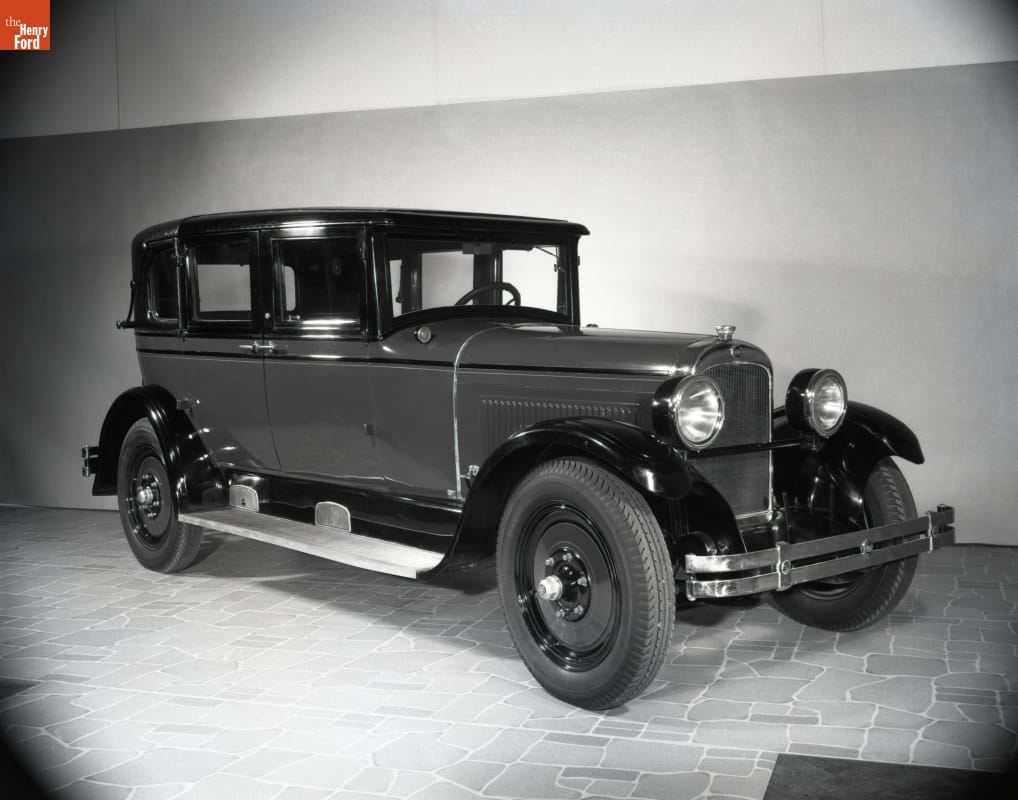
- 1926 Nash Sedan - Nash Motors Company was established in Kenosha, Wisconsin, in 1916 and developed a line of successful cars and trucks. They were quality vehicles distinguished by a number of innovations over the years. This 1926 Model 264 Advanced Six sedan includes a floor-mounted heating vent in the rear compartment. Nash merged with Hudson to form American Motors Corporation in 1954.
- 1926
- Collections - Artifact
1926 Nash Sedan
Nash Motors Company was established in Kenosha, Wisconsin, in 1916 and developed a line of successful cars and trucks. They were quality vehicles distinguished by a number of innovations over the years. This 1926 Model 264 Advanced Six sedan includes a floor-mounted heating vent in the rear compartment. Nash merged with Hudson to form American Motors Corporation in 1954.
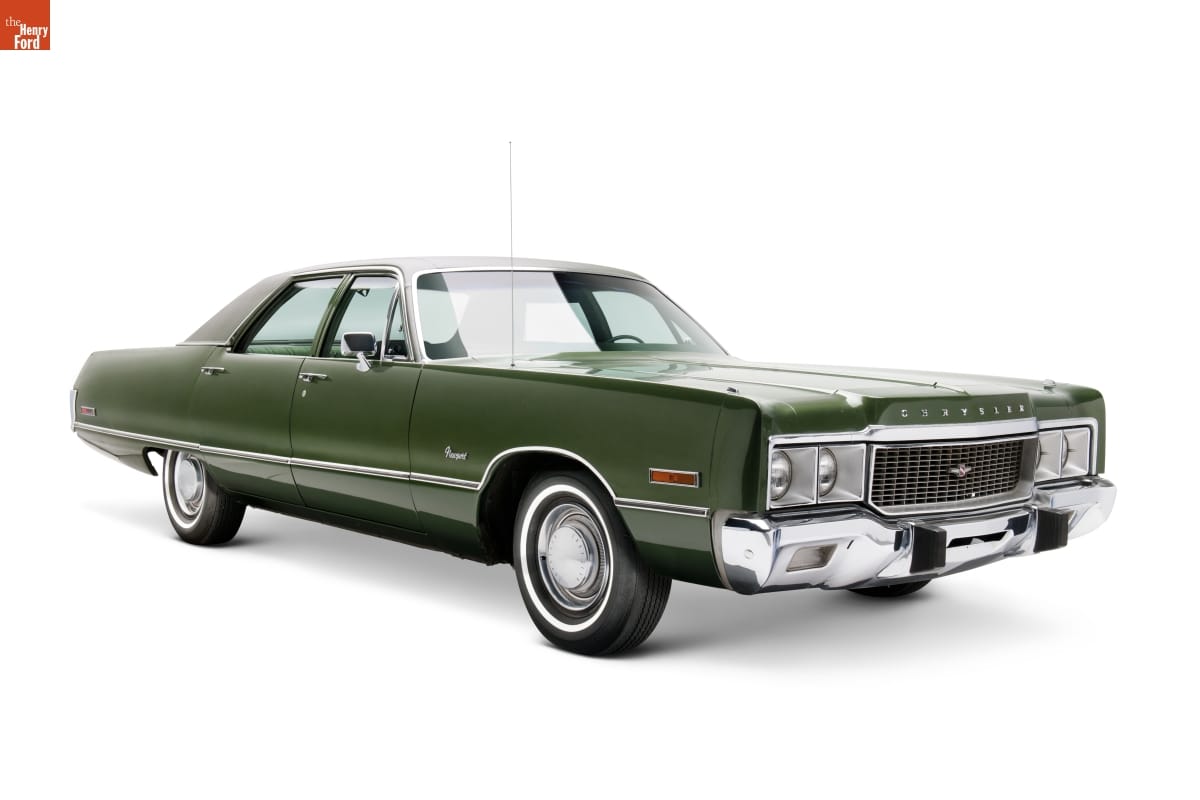
- 1973 Chrysler Newport Sedan - Americans have long shown a preference for buying the biggest cars they can afford, and by the 1970s American cars were truly huge. This Chrysler is 19'-2" long, with a trunk 6'-6" wide. The 400-cubic-inch engine is also large, but government-mandated exhaust emission controls resulted in an output of only 185 horsepower. The vinyl-covered roof was a popular option on many cars.
- 1973
- Collections - Artifact
1973 Chrysler Newport Sedan
Americans have long shown a preference for buying the biggest cars they can afford, and by the 1970s American cars were truly huge. This Chrysler is 19'-2" long, with a trunk 6'-6" wide. The 400-cubic-inch engine is also large, but government-mandated exhaust emission controls resulted in an output of only 185 horsepower. The vinyl-covered roof was a popular option on many cars.
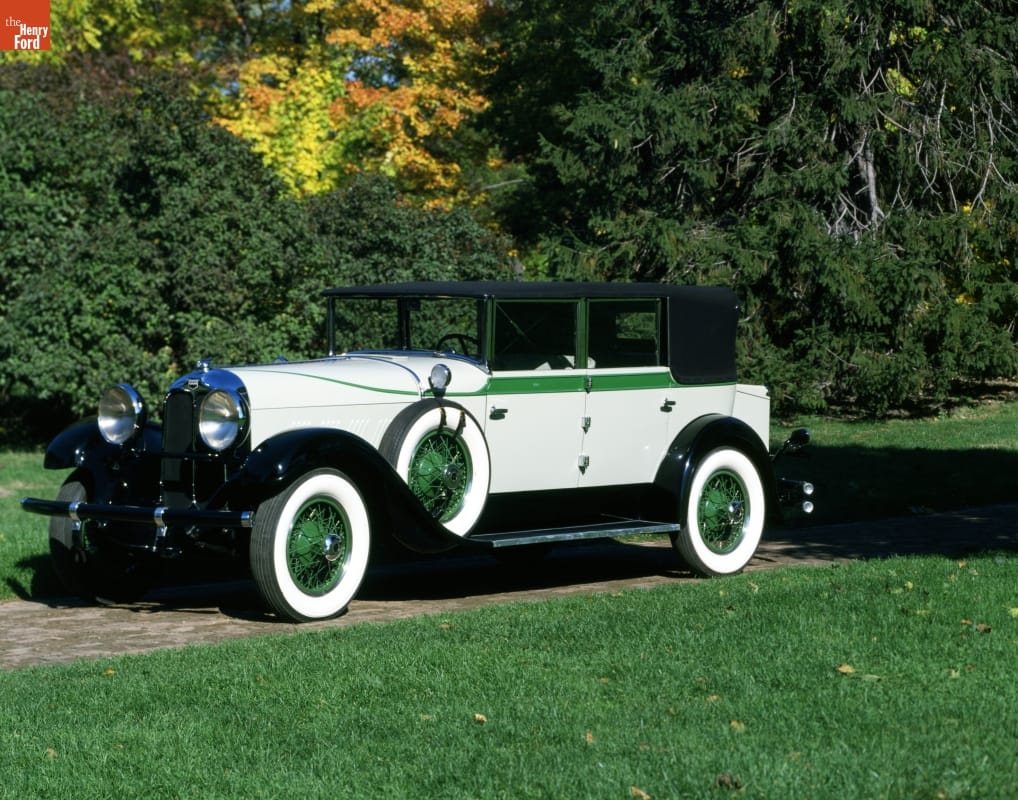
- 1930 Auburn Convertible Sedan - The Auburn Automobile Company, based in namesake Auburn, Indiana, began regular auto production in 1903. Errett Lobban Cord took the helm in 1924 and gave Auburn cars modern styling and advanced engineering. This 1930 Model 8-95 phaeton boasted an eight-cylinder engine good for 95 horsepower. Auburn could not survive the Great Depression, and the company ended operations in 1937.
- 1930
- Collections - Artifact
1930 Auburn Convertible Sedan
The Auburn Automobile Company, based in namesake Auburn, Indiana, began regular auto production in 1903. Errett Lobban Cord took the helm in 1924 and gave Auburn cars modern styling and advanced engineering. This 1930 Model 8-95 phaeton boasted an eight-cylinder engine good for 95 horsepower. Auburn could not survive the Great Depression, and the company ended operations in 1937.
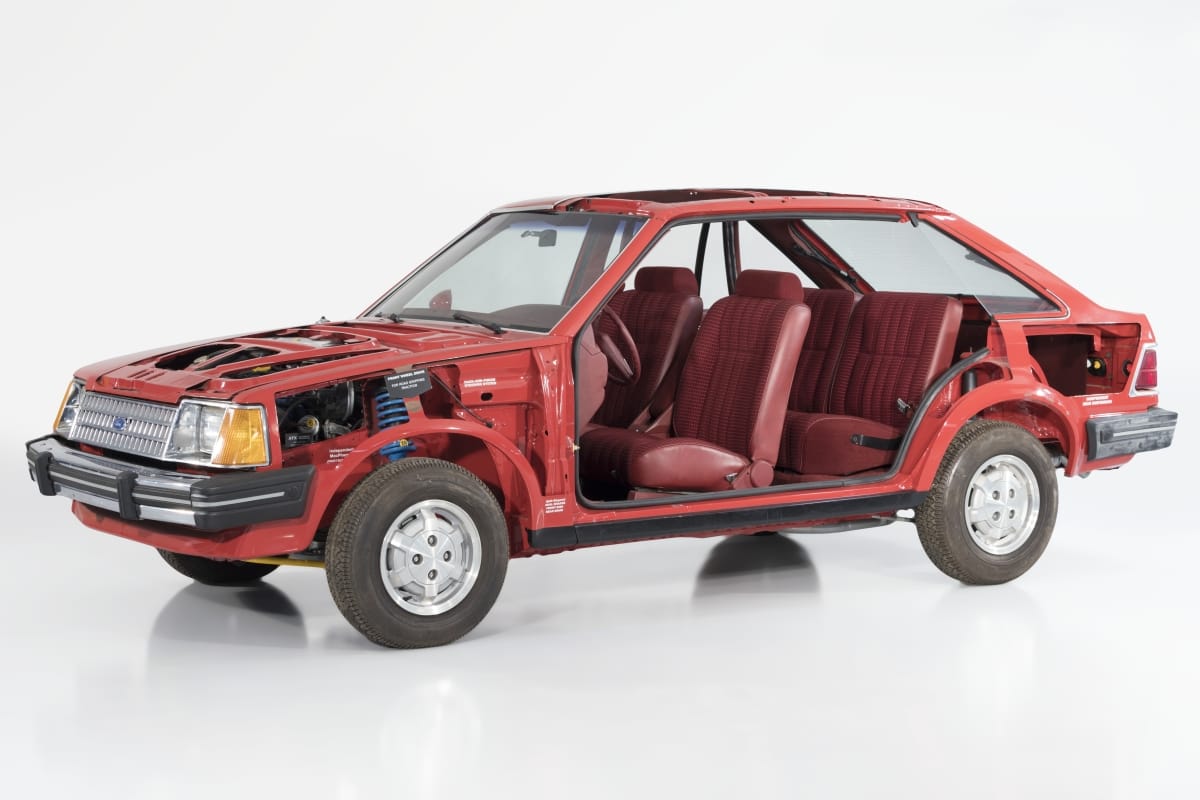
- Ford Escort Sedan Cutaway - Ford Motor Company introduced the Escort to the American market for 1981. At the time, Ford described it as the company's most completely new car since the 1928 Model A. All the Escort's major components -- the engine, the front-wheel-drive transaxle, the suspension, and the body -- were designed specifically for it and not adapted from other models.
- Collections - Artifact
Ford Escort Sedan Cutaway
Ford Motor Company introduced the Escort to the American market for 1981. At the time, Ford described it as the company's most completely new car since the 1928 Model A. All the Escort's major components -- the engine, the front-wheel-drive transaxle, the suspension, and the body -- were designed specifically for it and not adapted from other models.
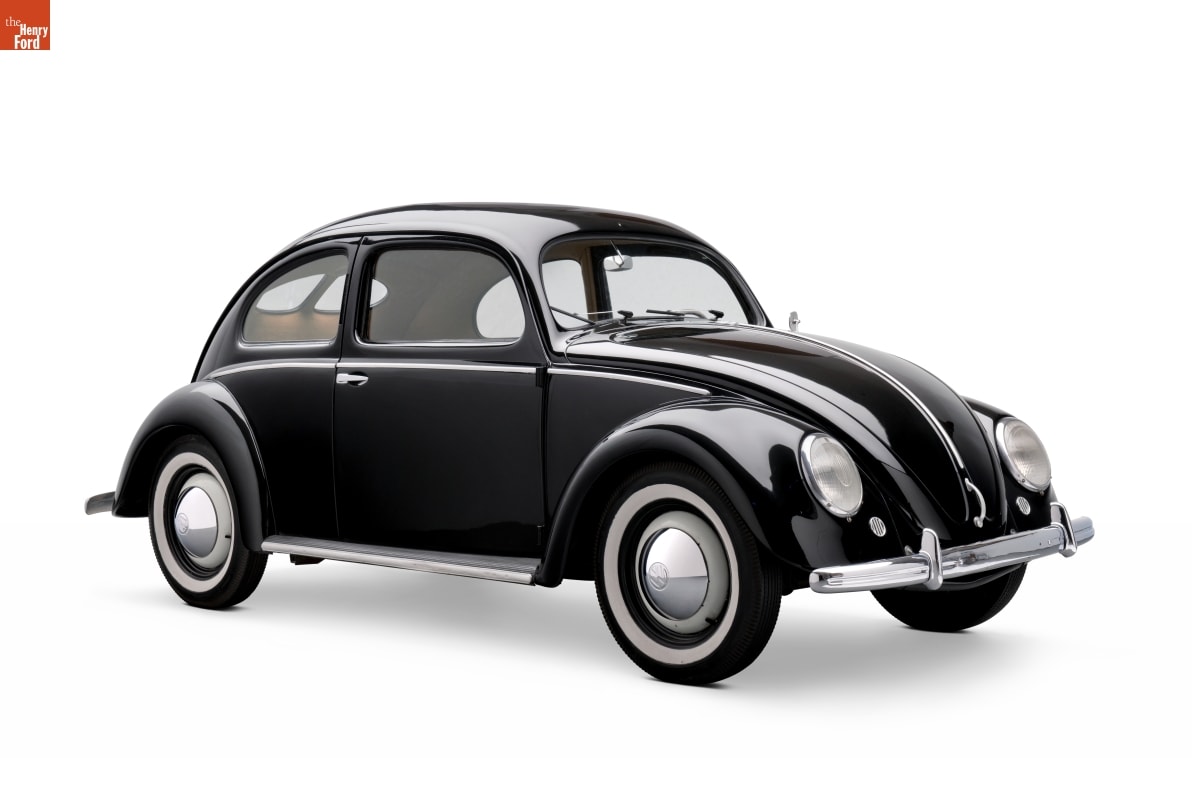
- 1949 Volkswagen Sedan - The Volkswagen Beetle was different from any American car. It looked like an insect, its engine was where the trunk should be, and it didn't have a radiator. But it recalled the spirit of Henry Ford's legendary Model T. Both cars were simple, reliable, economical, and never deviated from their basic original design. The VW would go on to break the Ford's all-time sales record.
- 1949
- Collections - Artifact
1949 Volkswagen Sedan
The Volkswagen Beetle was different from any American car. It looked like an insect, its engine was where the trunk should be, and it didn't have a radiator. But it recalled the spirit of Henry Ford's legendary Model T. Both cars were simple, reliable, economical, and never deviated from their basic original design. The VW would go on to break the Ford's all-time sales record.