
Search
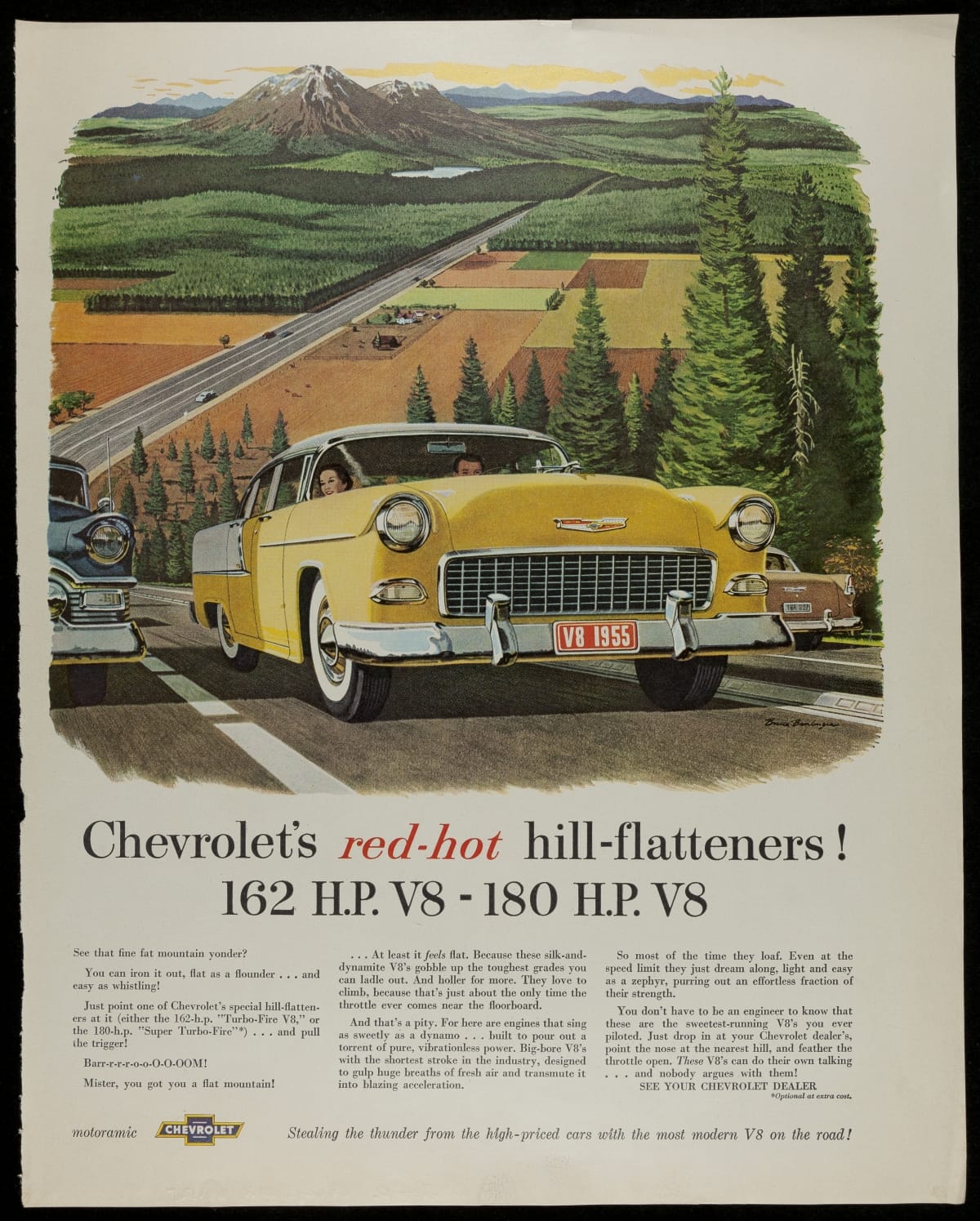
- 1955 Chevrolet Advertisement, "Chevrolet's Red-Hot Hill Flatteners!" - The automobile is a paradox -- a practical tool that plays host to both human needs and fantasies. Like car consumers, automotive ads seem to land somewhere between fantasy and reality, emotions and rationality. Many ads incorporate apparent opposites: fantasy can sell practicality, and vice versa. Sometimes the car has disappeared completely -- an emotional appeal prompts us to complete the ad.
- 1955
- Collections - Artifact
1955 Chevrolet Advertisement, "Chevrolet's Red-Hot Hill Flatteners!"
The automobile is a paradox -- a practical tool that plays host to both human needs and fantasies. Like car consumers, automotive ads seem to land somewhere between fantasy and reality, emotions and rationality. Many ads incorporate apparent opposites: fantasy can sell practicality, and vice versa. Sometimes the car has disappeared completely -- an emotional appeal prompts us to complete the ad.
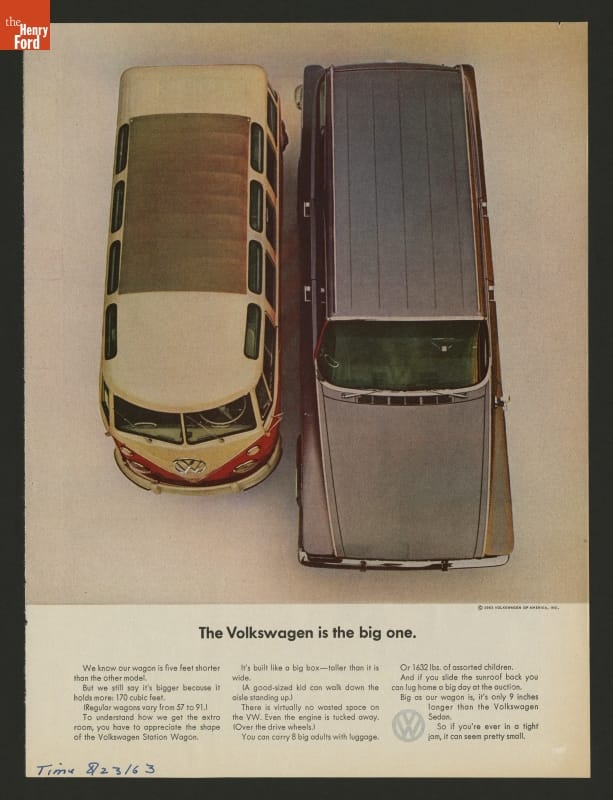
- 1963 Volkswagen Ad, "The Volkswagen is the Big One" - In this 1963 advertisement, Volkswagen compares its roominess against a typical American station wagon. The shorter, yet taller, VW Type 2 Microbus had more room. The ad touted the vehicle's carrying capacity for adults, children, or large purchases. VW tried to capture a family market, but its Microbus became better known as an icon of the 1960s counterculture movement.
- 1963
- Collections - Artifact
1963 Volkswagen Ad, "The Volkswagen is the Big One"
In this 1963 advertisement, Volkswagen compares its roominess against a typical American station wagon. The shorter, yet taller, VW Type 2 Microbus had more room. The ad touted the vehicle's carrying capacity for adults, children, or large purchases. VW tried to capture a family market, but its Microbus became better known as an icon of the 1960s counterculture movement.
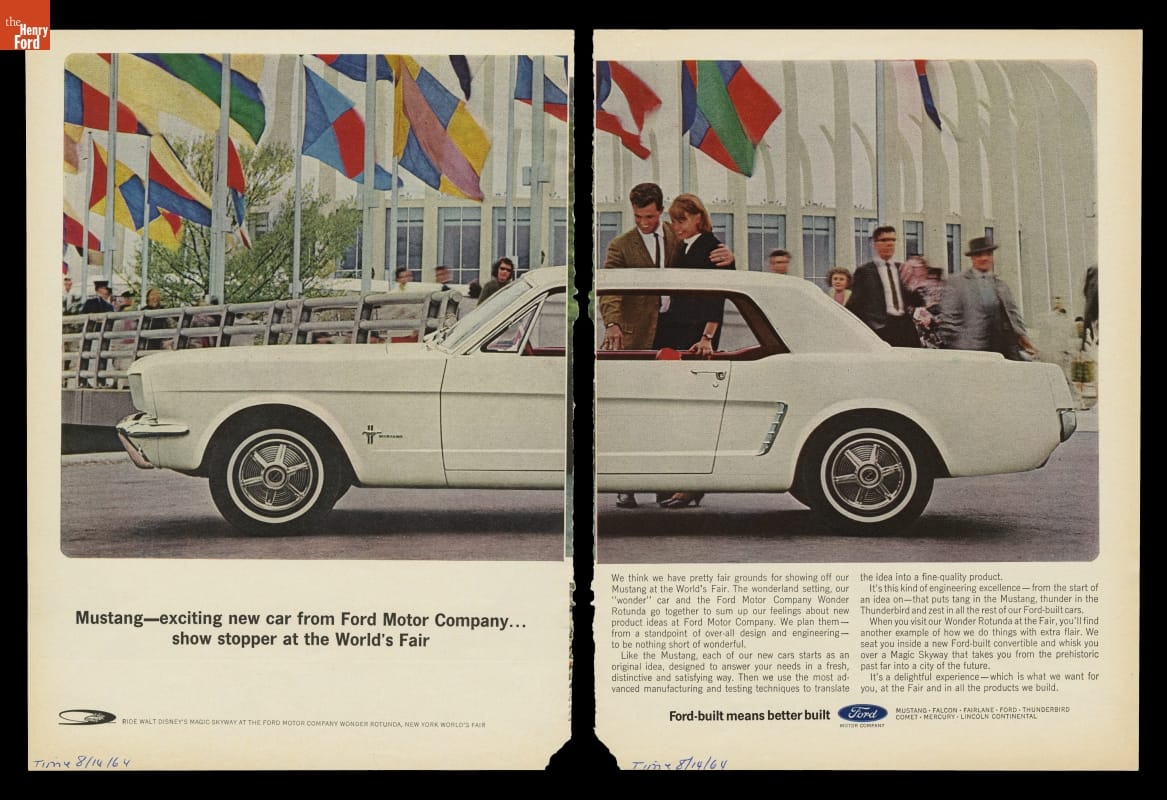
- Advertisement for the 1965 Ford Mustang, "Exciting New Car from Ford Motor Company... Show Stopper at the World's Fair" - Introduced at the 1964 New York World's Fair, the Mustang was a show stopper. Ford Motor Company effectively advertised the exciting, youth-oriented, and attractive vehicle to the public. In a little over two years, Ford would sell more than one million Mustangs.
- August 14, 1964
- Collections - Artifact
Advertisement for the 1965 Ford Mustang, "Exciting New Car from Ford Motor Company... Show Stopper at the World's Fair"
Introduced at the 1964 New York World's Fair, the Mustang was a show stopper. Ford Motor Company effectively advertised the exciting, youth-oriented, and attractive vehicle to the public. In a little over two years, Ford would sell more than one million Mustangs.
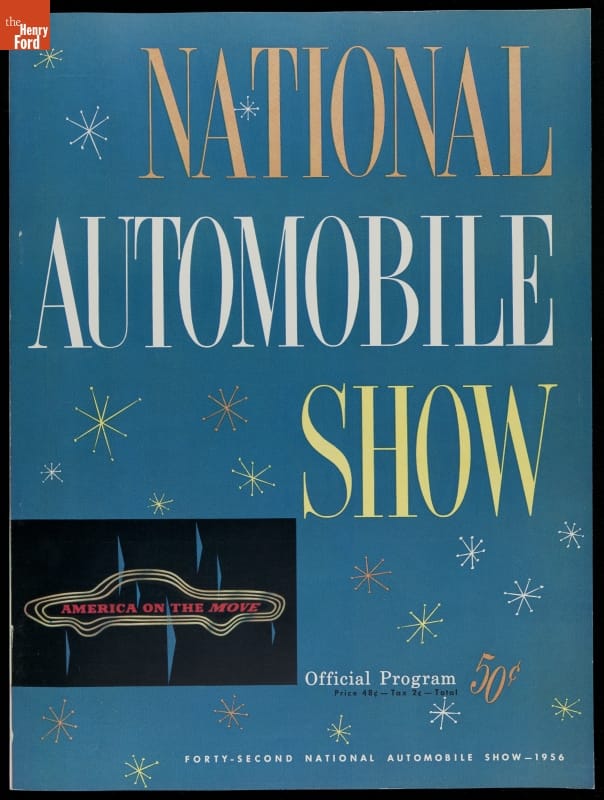
- National Automobile Show Official Program, 1956 - Auto shows in America date all the way back to 1900. Printed programs for these shows reflected the hopes and dreams of manufacturers, dealers and prospective buyers. Advertisements for new products filled many pages of the programs, including those featuring the "Forward Look," an innovative new look created by Chrysler director of styling Virgil Exner.
- 1956
- Collections - Artifact
National Automobile Show Official Program, 1956
Auto shows in America date all the way back to 1900. Printed programs for these shows reflected the hopes and dreams of manufacturers, dealers and prospective buyers. Advertisements for new products filled many pages of the programs, including those featuring the "Forward Look," an innovative new look created by Chrysler director of styling Virgil Exner.
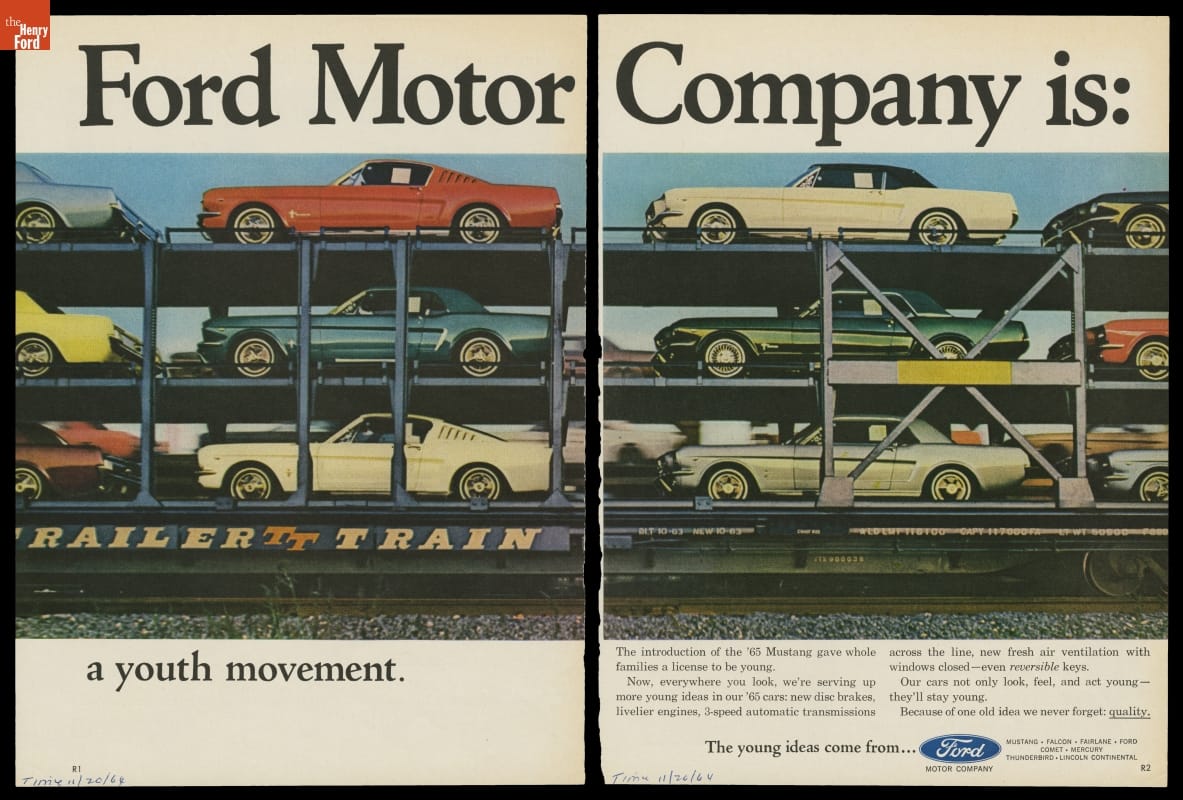
- Advertisement for 1965 Ford Cars, "Ford Motor Company is: a Youth Movement" - In the mid-1960s, as the baby boomer generation got behind the wheel, they needed a young-looking and attractive car. And Ford provided it: the Mustang.
- November 20, 1964
- Collections - Artifact
Advertisement for 1965 Ford Cars, "Ford Motor Company is: a Youth Movement"
In the mid-1960s, as the baby boomer generation got behind the wheel, they needed a young-looking and attractive car. And Ford provided it: the Mustang.
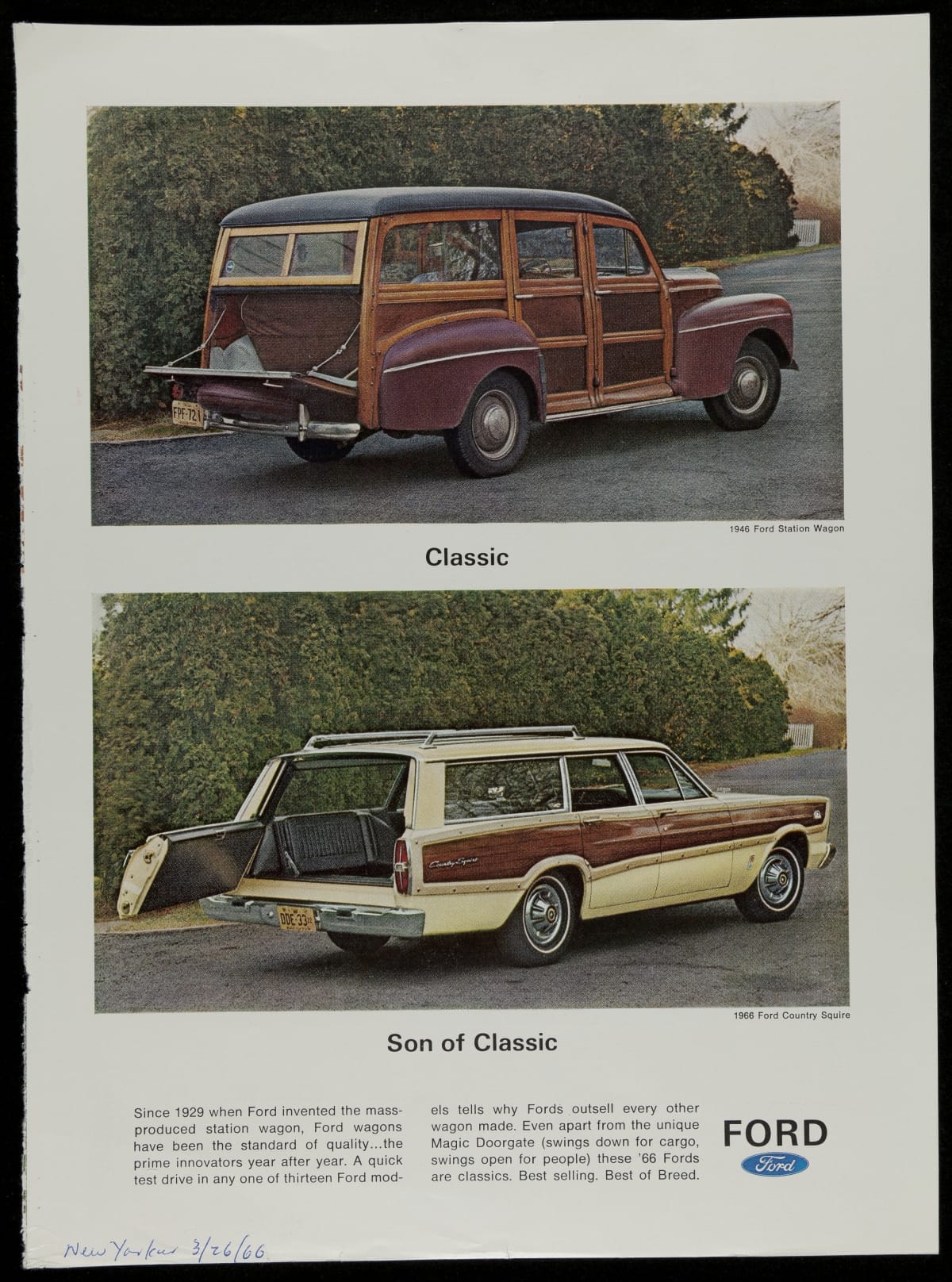
- 1966 Ford Station Wagon Advertisement, "Classic - Son of Classic" - The automobile is a paradox -- a practical tool that plays host to both human needs and fantasies. Like car consumers, automotive ads seem to land somewhere between fantasy and reality, emotions and rationality. Many ads incorporate apparent opposites: fantasy can sell practicality, and vice versa. Sometimes the car has disappeared completely -- an emotional appeal prompts us to complete the ad.
- 1966
- Collections - Artifact
1966 Ford Station Wagon Advertisement, "Classic - Son of Classic"
The automobile is a paradox -- a practical tool that plays host to both human needs and fantasies. Like car consumers, automotive ads seem to land somewhere between fantasy and reality, emotions and rationality. Many ads incorporate apparent opposites: fantasy can sell practicality, and vice versa. Sometimes the car has disappeared completely -- an emotional appeal prompts us to complete the ad.
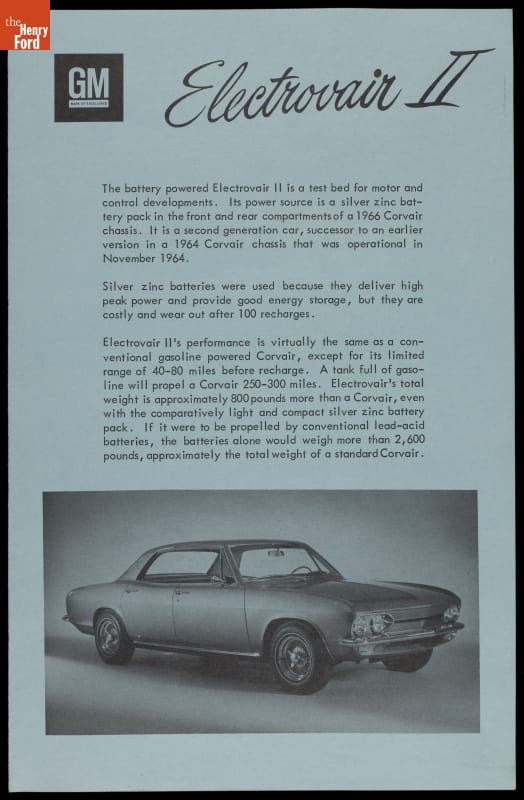
- "GM Electrovair II" Brochure, 1966 - General Motors' 1966 Electrovair II concept car was powered by battery packs in the vehicle's front and rear compartments. GM used silver-zinc batteries rather than conventional lead-acid units. Silver-zinc batteries were more expensive, but they were also lighter, which improved the Electrovair II's range. Still, the concept car weighed 800 pounds more than a gasoline-powered Corvair.
- 1966
- Collections - Artifact
"GM Electrovair II" Brochure, 1966
General Motors' 1966 Electrovair II concept car was powered by battery packs in the vehicle's front and rear compartments. GM used silver-zinc batteries rather than conventional lead-acid units. Silver-zinc batteries were more expensive, but they were also lighter, which improved the Electrovair II's range. Still, the concept car weighed 800 pounds more than a gasoline-powered Corvair.
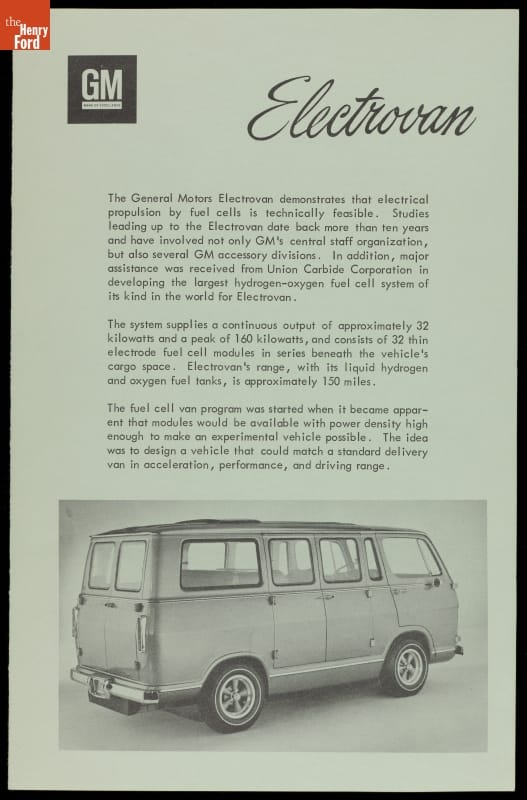
- "GM Electrovan" Brochure, 1966 - General Motors revealed its Electrovan to the press and public in 1966. It was the world's first vehicle powered by hydrogen fuel cells. The chemical reaction between hydrogen fuel and oxygen produced electricity to operate the van's motor. The only byproducts were water and heat. But the equipment of the time was large, expensive, and too dangerous for everyday use.
- 1966
- Collections - Artifact
"GM Electrovan" Brochure, 1966
General Motors revealed its Electrovan to the press and public in 1966. It was the world's first vehicle powered by hydrogen fuel cells. The chemical reaction between hydrogen fuel and oxygen produced electricity to operate the van's motor. The only byproducts were water and heat. But the equipment of the time was large, expensive, and too dangerous for everyday use.
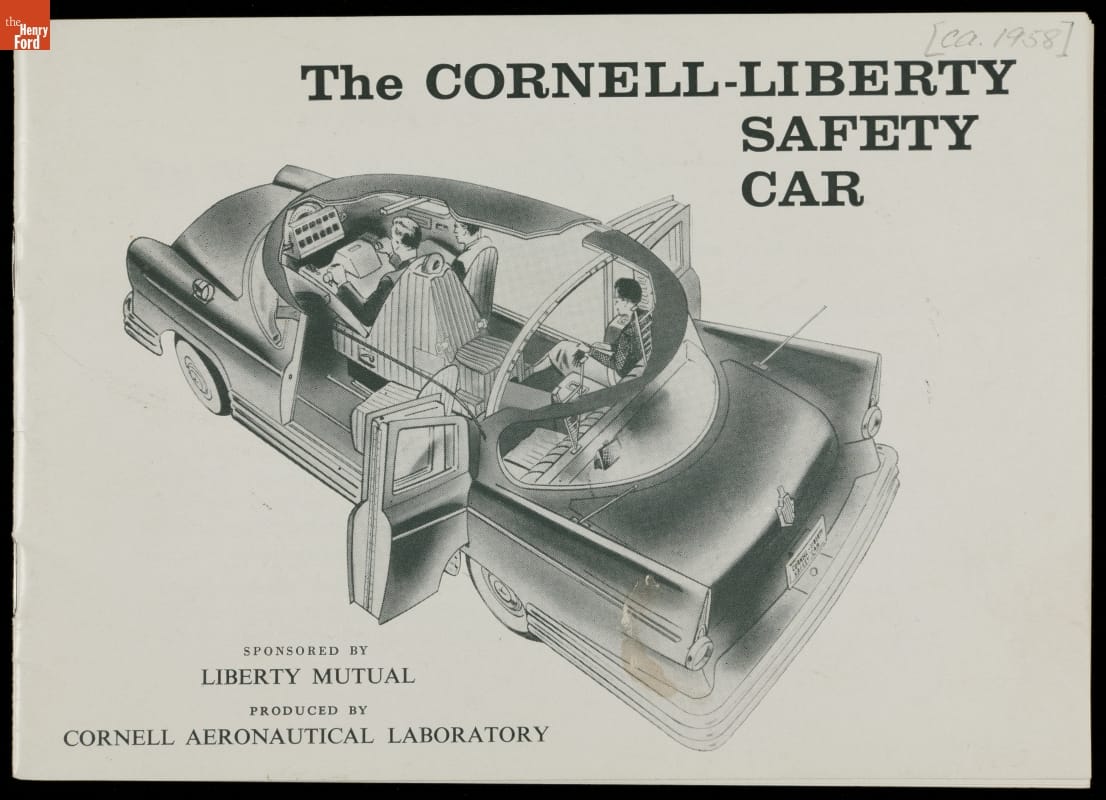
- "The Cornell-Liberty Safety Car" Brochure, 1957 - After five years of crash testing and research, the Cornell Aeronautical Laboratory--in partnership with Liberty Mutual Insurance Company--developed the 1957 Safety Car. This brochure outlines a history of the project, includes photographs, and lists the safety features designed to prevent automobile accidents and protect drivers and passengers against serious injury in the event of a collision.
- 1957
- Collections - Artifact
"The Cornell-Liberty Safety Car" Brochure, 1957
After five years of crash testing and research, the Cornell Aeronautical Laboratory--in partnership with Liberty Mutual Insurance Company--developed the 1957 Safety Car. This brochure outlines a history of the project, includes photographs, and lists the safety features designed to prevent automobile accidents and protect drivers and passengers against serious injury in the event of a collision.
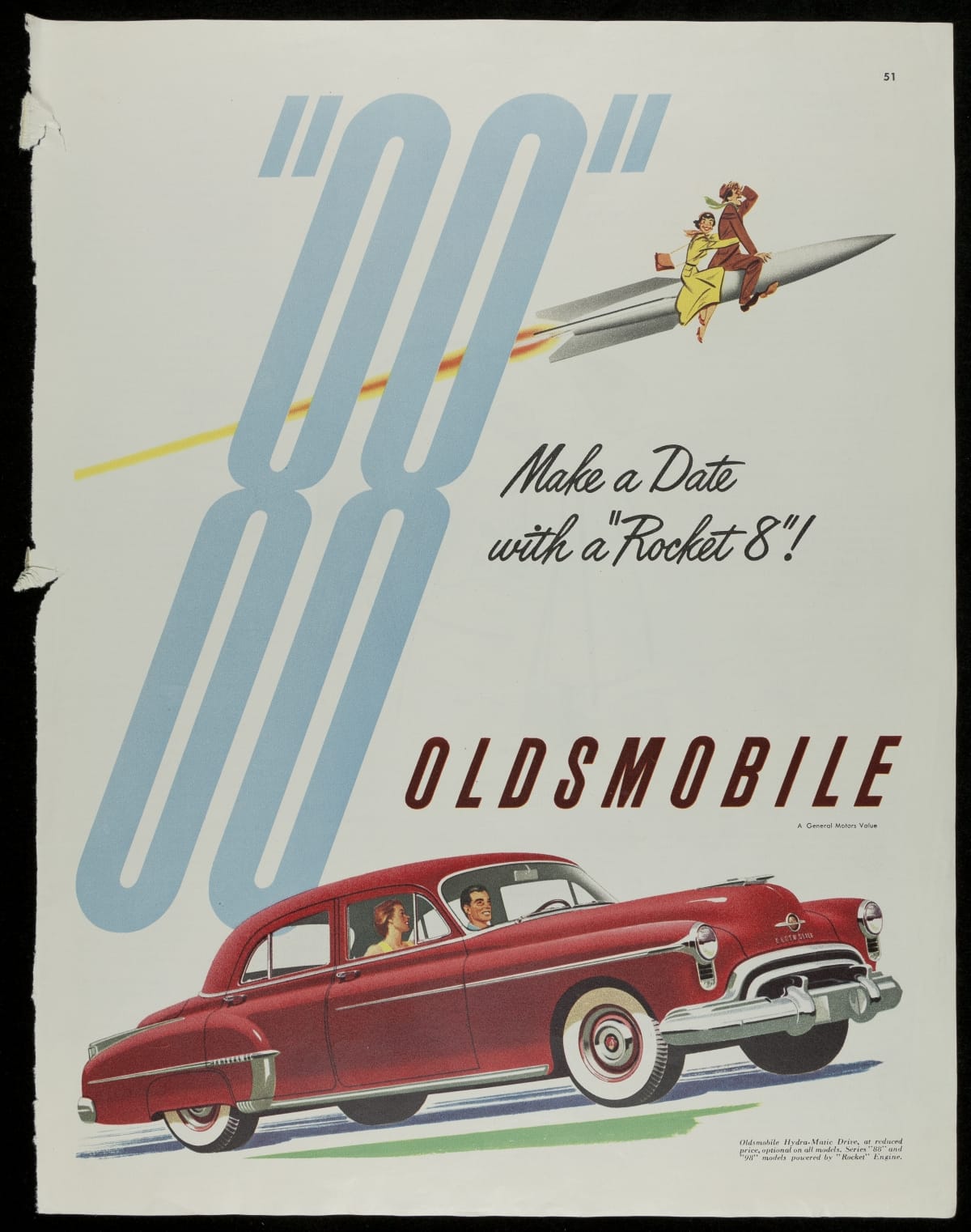
- 1950 Oldsmobile 88 Advertisement, "Make a Date with a Rocket 8!" - Oldsmobile introduced the 88 for 1949. It featured a new "Rocket" V-8 engine displacing 303 cubic inches and producing 135 horsepower. The car was a hit with racers and gearheads. It also inspired the song "Rocket 88," released by Jackie Brentson and his Delta Cats in 1951 and widely considered one of the first rock and roll records.
- July 29, 1950
- Collections - Artifact
1950 Oldsmobile 88 Advertisement, "Make a Date with a Rocket 8!"
Oldsmobile introduced the 88 for 1949. It featured a new "Rocket" V-8 engine displacing 303 cubic inches and producing 135 horsepower. The car was a hit with racers and gearheads. It also inspired the song "Rocket 88," released by Jackie Brentson and his Delta Cats in 1951 and widely considered one of the first rock and roll records.