
Search
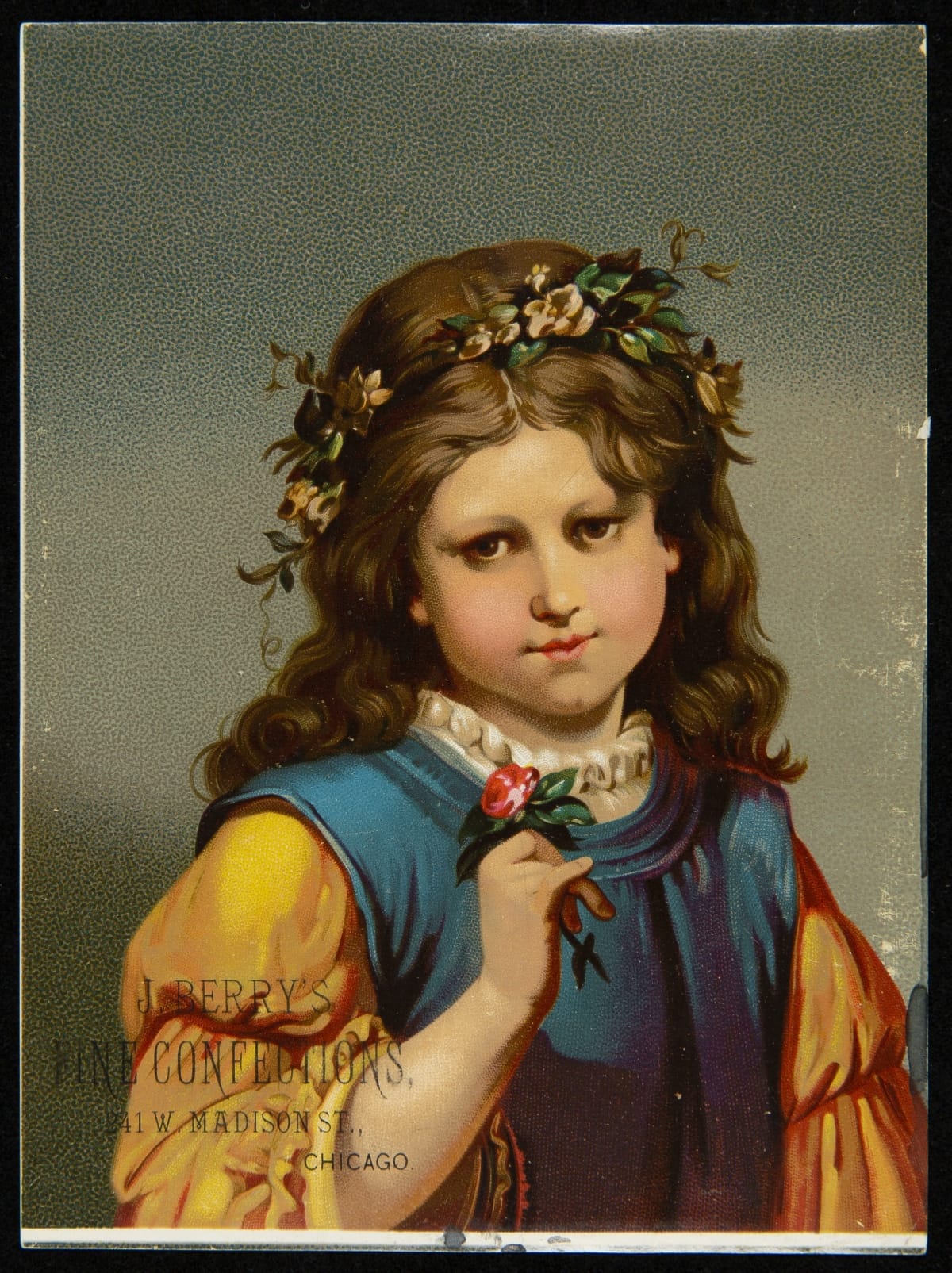
- Label, "J. Berry's Fine Confections," 1886-1905 -
- 1886-1905
- Collections - Artifact
Label, "J. Berry's Fine Confections," 1886-1905
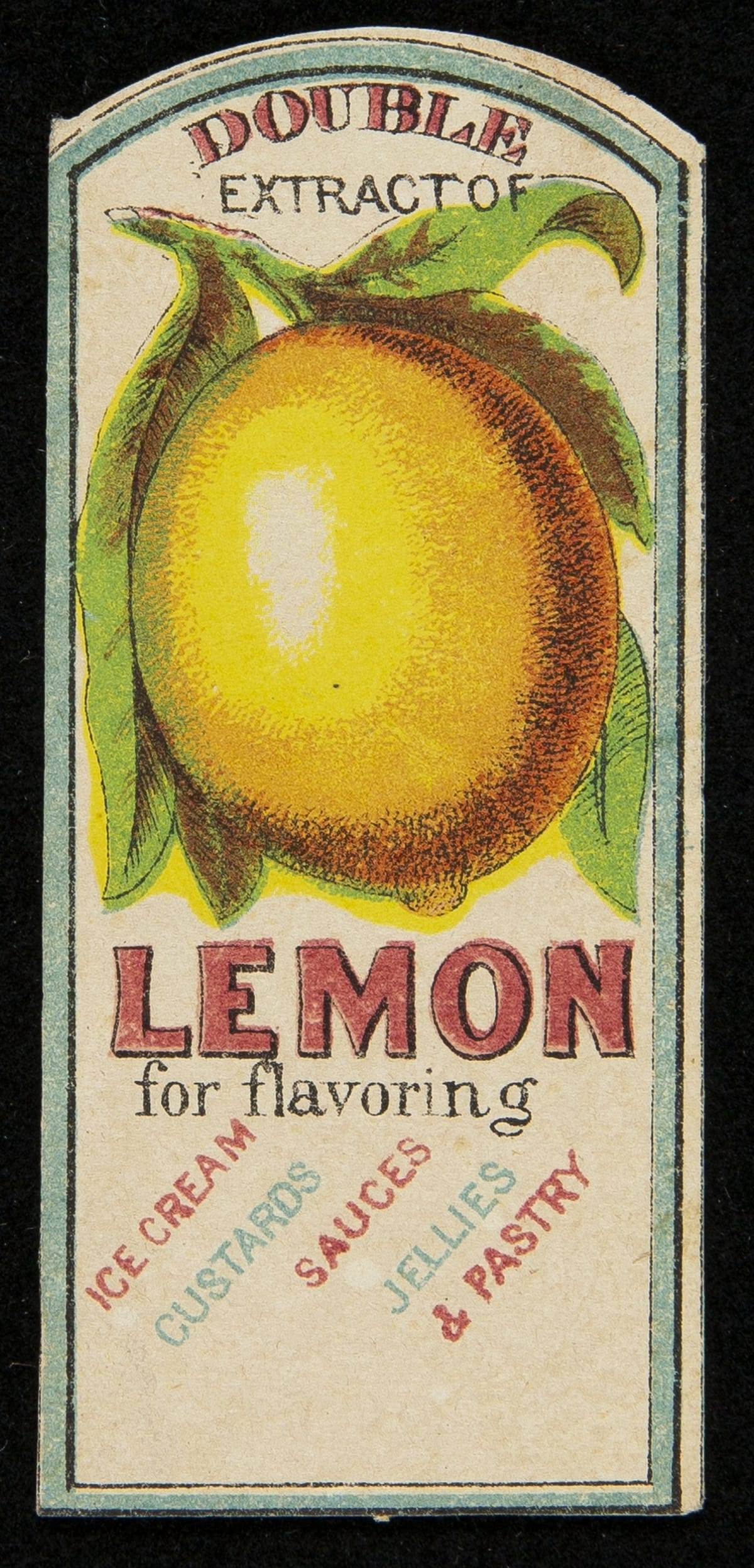
- Label for Double Extract of Lemon, 1880-1910 -
- 1880-1910
- Collections - Artifact
Label for Double Extract of Lemon, 1880-1910
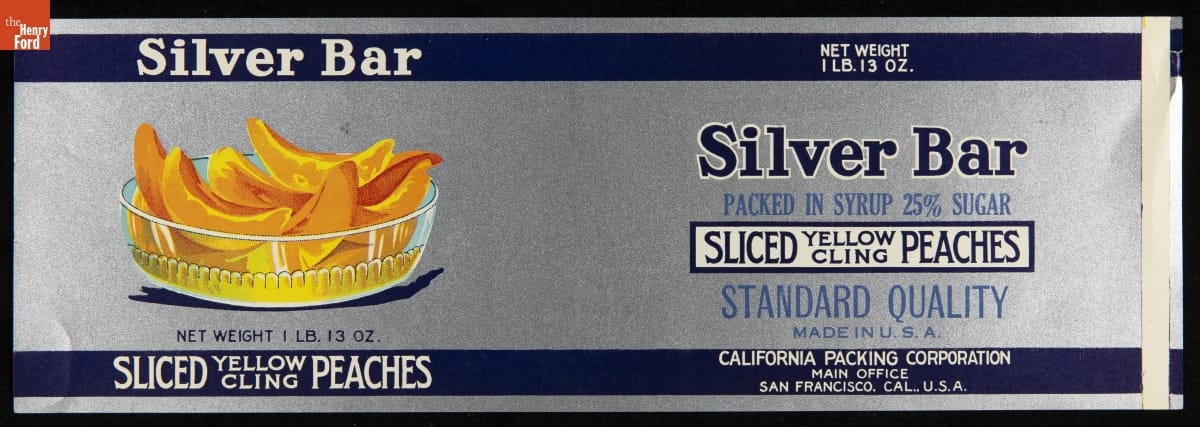
- Can Label, "Silver Bar Brand Sliced Yellow Cling Peaches," circa 1920 - Manufacturers of similar products sought ways to make their company's goods stand out on store shelves. Attractive labels, like this design for Silver Bar Brand Yellow Cling Peaches, helped catch the attention of potential customers -- hopefully encouraging them to purchase the company's product rather than that of a competitor.
- circa 1920
- Collections - Artifact
Can Label, "Silver Bar Brand Sliced Yellow Cling Peaches," circa 1920
Manufacturers of similar products sought ways to make their company's goods stand out on store shelves. Attractive labels, like this design for Silver Bar Brand Yellow Cling Peaches, helped catch the attention of potential customers -- hopefully encouraging them to purchase the company's product rather than that of a competitor.
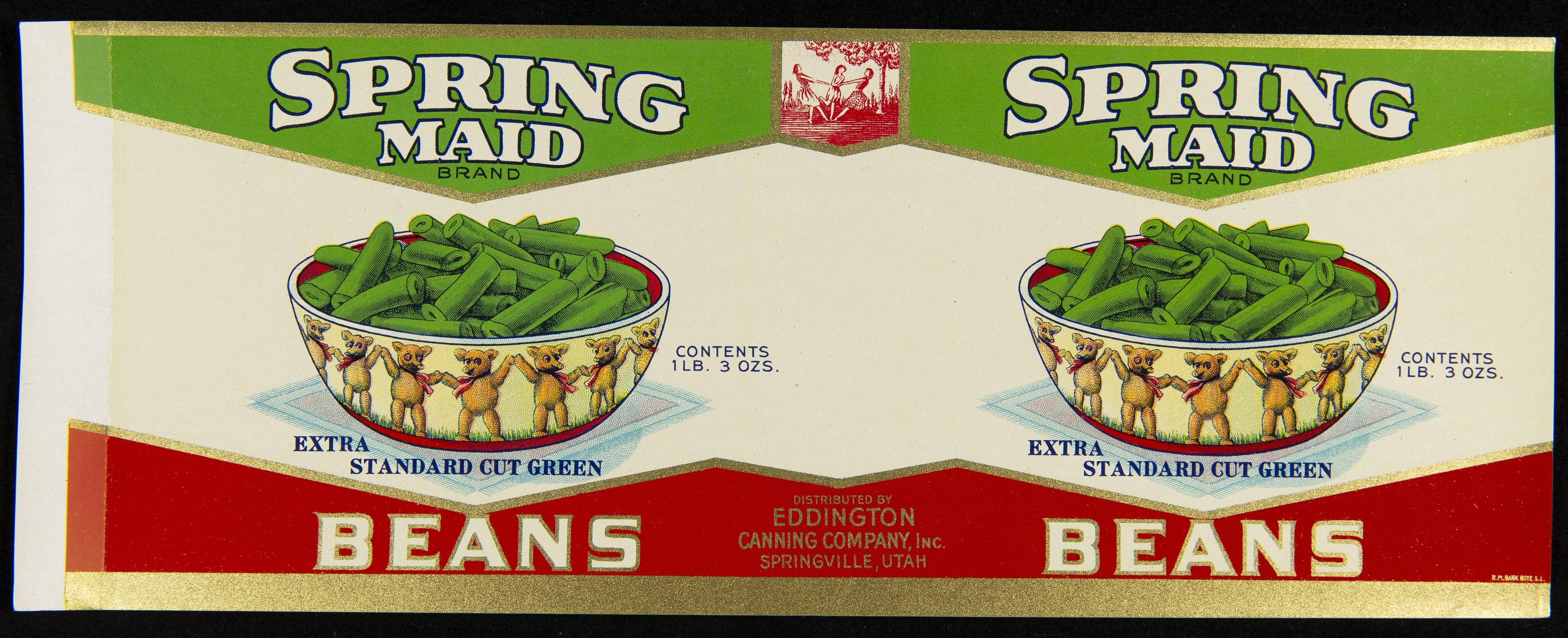
- Can Label, "Spring Maid Brand Cut Green Beans," 1904-1958 - Manufacturers of similar products sought ways to make their company's goods stand out on store shelves. Attractive labels, like this design for Spring Maid Brand Cut Green Beans, helped catch the attention of potential customers - hopefully encouraging them to purchase the company's product rather than that of a competitor.
- 1904-1958
- Collections - Artifact
Can Label, "Spring Maid Brand Cut Green Beans," 1904-1958
Manufacturers of similar products sought ways to make their company's goods stand out on store shelves. Attractive labels, like this design for Spring Maid Brand Cut Green Beans, helped catch the attention of potential customers - hopefully encouraging them to purchase the company's product rather than that of a competitor.
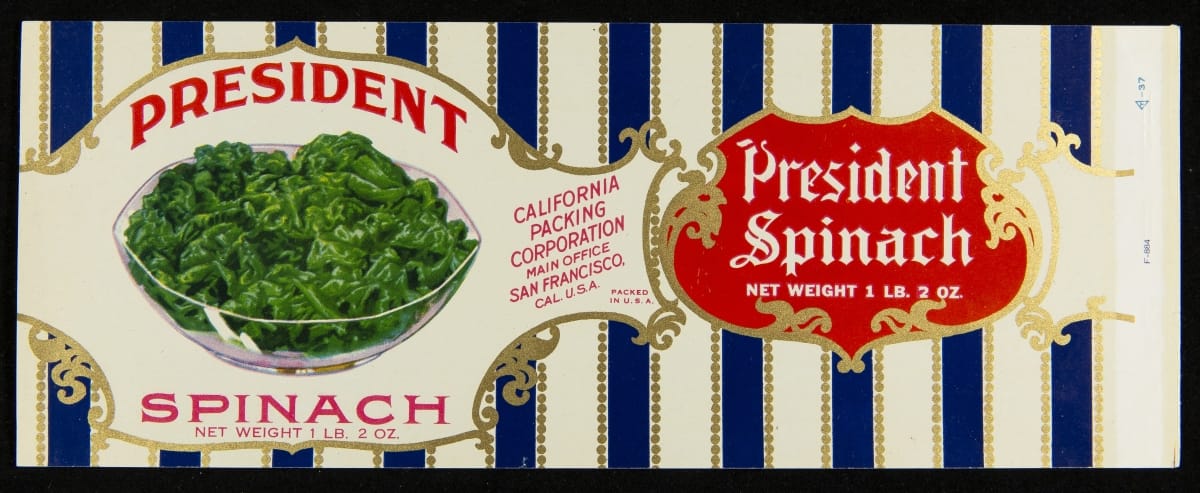
- Can Label, "President Brand Spinach," 1920-1940 - Manufacturers of similar products sought ways to make their company's goods stand out on store shelves. Attractive labels, like this design for President Brand Spinach, helped catch the attention of potential customers -- hopefully encouraging them to purchase the company's product rather than that of a competitor.
- 1920-1940
- Collections - Artifact
Can Label, "President Brand Spinach," 1920-1940
Manufacturers of similar products sought ways to make their company's goods stand out on store shelves. Attractive labels, like this design for President Brand Spinach, helped catch the attention of potential customers -- hopefully encouraging them to purchase the company's product rather than that of a competitor.
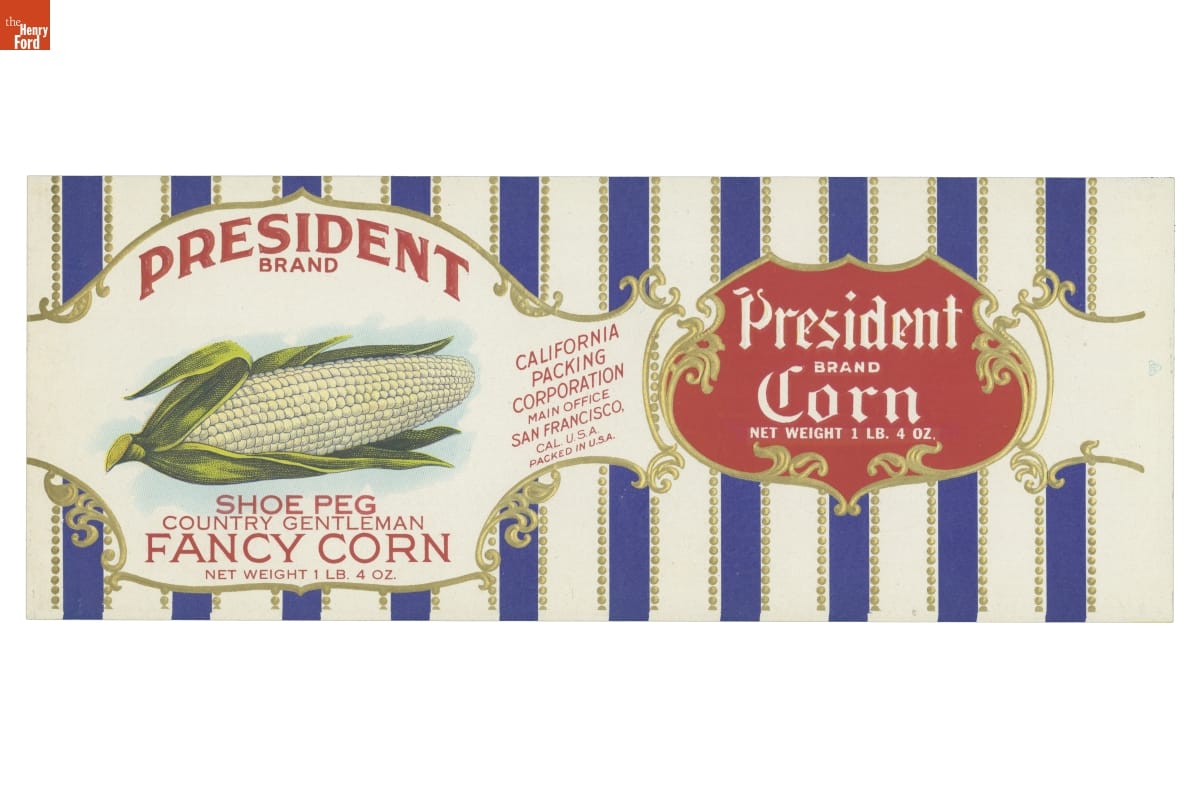
- "Shoe Peg Country Gentleman Fancy Corn," circa 1918 - Manufacturers of similar products sought ways to make their company's goods stand out on store shelves. Attractive labels, like this elegant design for President Brand "Shoe Peg Country Gentleman Fancy Corn," helped catch the attention of potential customers--hopefully encouraging them to purchase the company's product rather than that of a competitor.
- circa 1918
- Collections - Artifact
"Shoe Peg Country Gentleman Fancy Corn," circa 1918
Manufacturers of similar products sought ways to make their company's goods stand out on store shelves. Attractive labels, like this elegant design for President Brand "Shoe Peg Country Gentleman Fancy Corn," helped catch the attention of potential customers--hopefully encouraging them to purchase the company's product rather than that of a competitor.
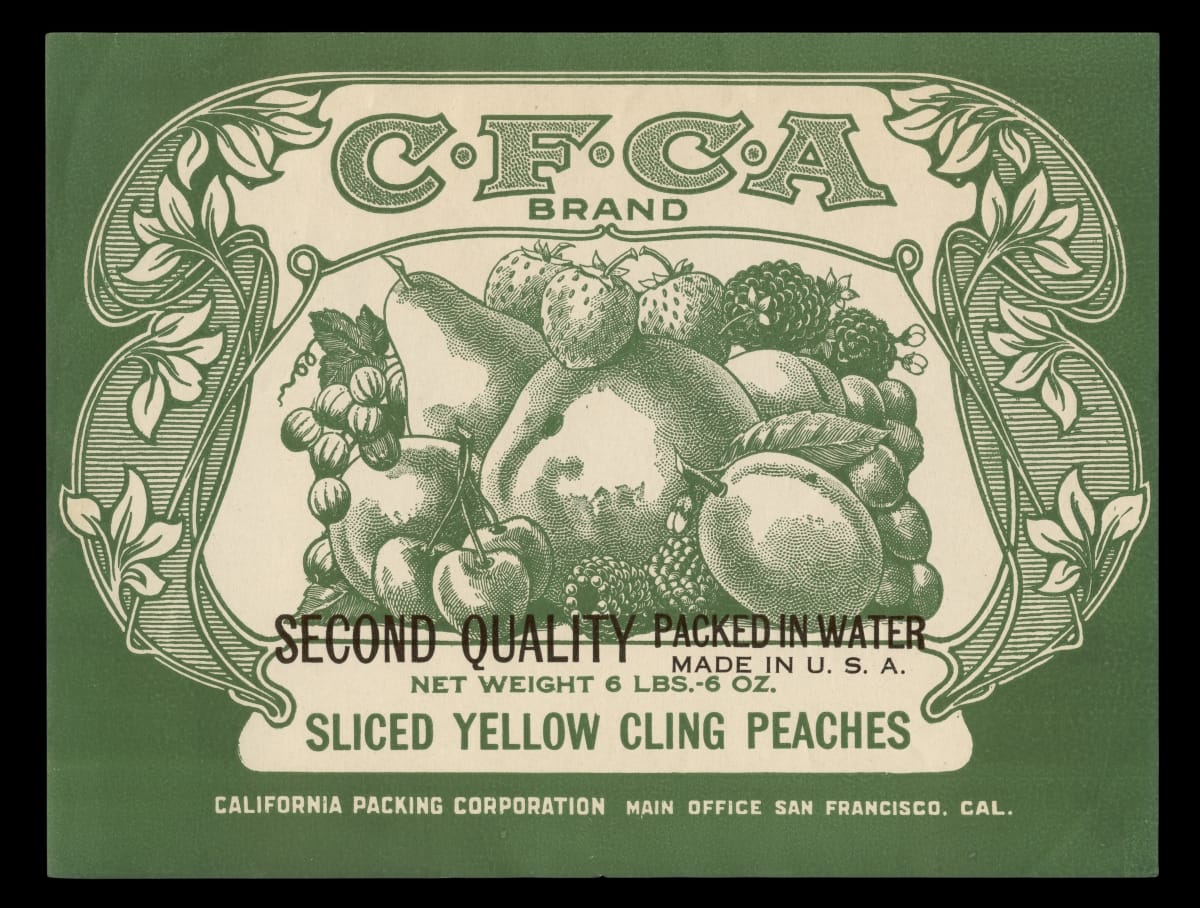
- Crate Label, "C.F.C.A. Brand Sliced Yellow Cling Peaches," 1920-1930 - In 1869, the transcontinental railroad opened eastern markets to the West Coast produce industry for the first time. As produce companies shipped crates of fruits and vegetables across the country, they needed a way to distinguish their goods from their competitors'. Colorful, eye-catching labels, like this one for C.F.C.A. Brand Sliced Yellow Cling Peaches, were created to attract grocers purchasing goods from wholesale markets.
- 1920-1930
- Collections - Artifact
Crate Label, "C.F.C.A. Brand Sliced Yellow Cling Peaches," 1920-1930
In 1869, the transcontinental railroad opened eastern markets to the West Coast produce industry for the first time. As produce companies shipped crates of fruits and vegetables across the country, they needed a way to distinguish their goods from their competitors'. Colorful, eye-catching labels, like this one for C.F.C.A. Brand Sliced Yellow Cling Peaches, were created to attract grocers purchasing goods from wholesale markets.
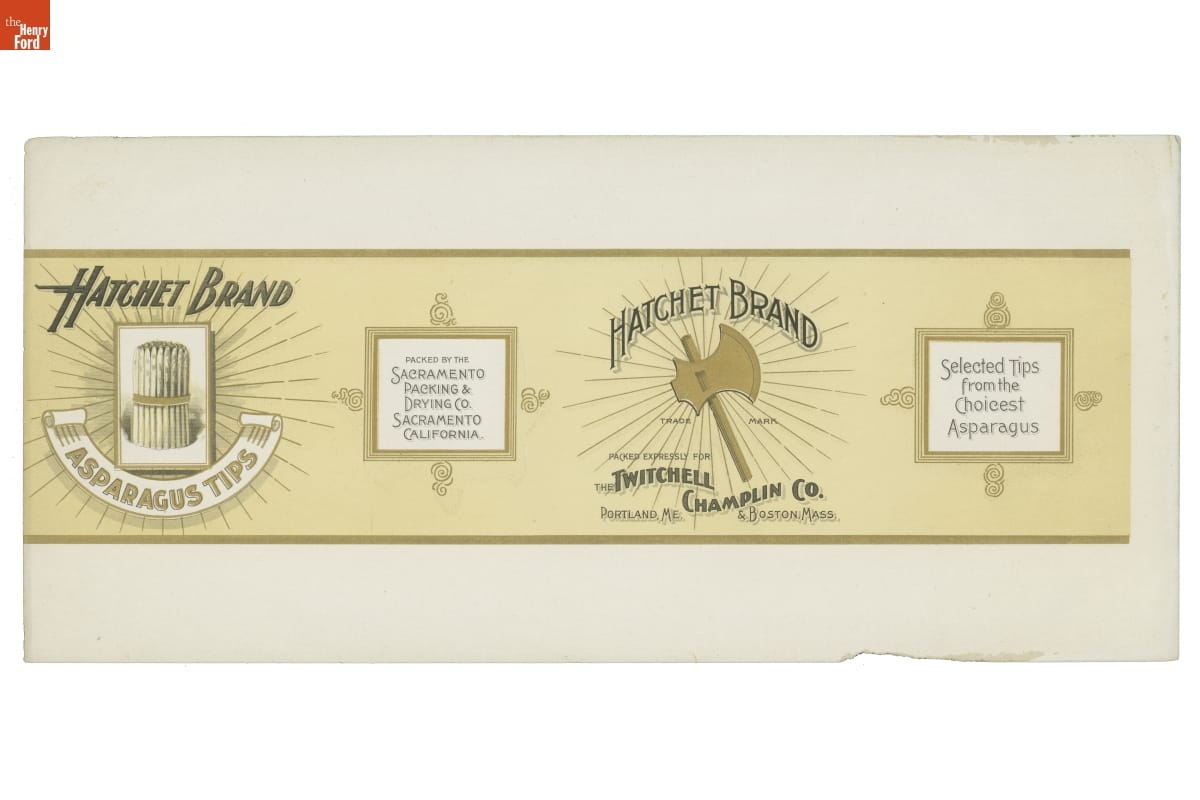
- Can Label, "Hatchet Brand Asparagus Tips," circa 1900 - Manufacturers of similar products sought ways to make their company's goods stand out on store shelves. Attractive labels, like this design for Hatchet Brand Asparagus Tips, helped catch the attention of potential customers, familiarize them with the brand image, and encourage them to purchase the company's product rather than that of a competitor.
- circa 1900
- Collections - Artifact
Can Label, "Hatchet Brand Asparagus Tips," circa 1900
Manufacturers of similar products sought ways to make their company's goods stand out on store shelves. Attractive labels, like this design for Hatchet Brand Asparagus Tips, helped catch the attention of potential customers, familiarize them with the brand image, and encourage them to purchase the company's product rather than that of a competitor.
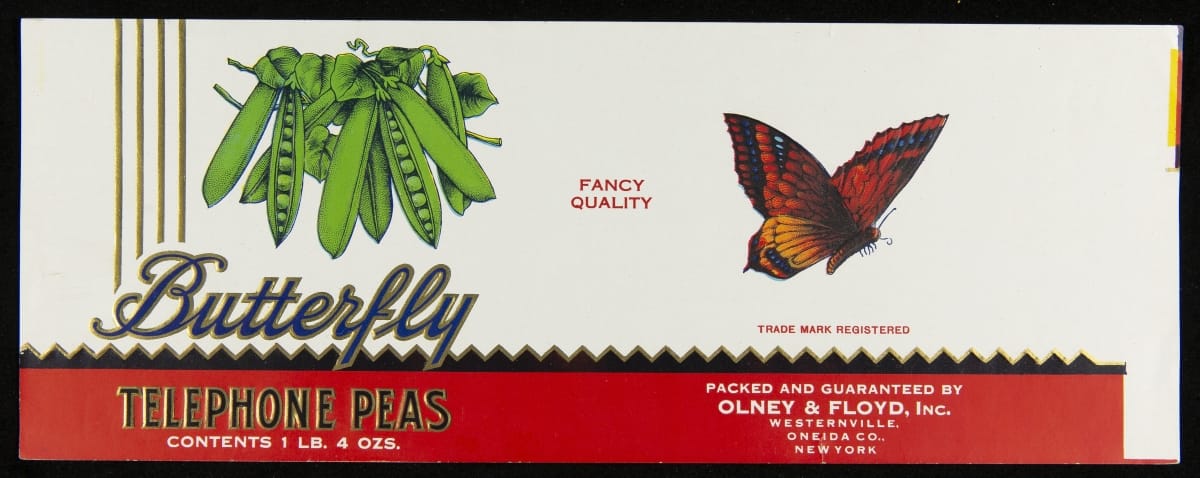
- Can Label, "Butterfly Brand Telephone Peas," circa 1950 - Throughout the late-19th to early-20th centuries, lithographers created labels to help sell products. Manufacturers of foodstuffs utilized the same design for several different products -- a strategy which helped customers distinguish one brand over another. Olney and Floyd's Butterfly Brand products were easy to identify with their colorful, eye-catching labels and signature butterfly.
- circa 1950
- Collections - Artifact
Can Label, "Butterfly Brand Telephone Peas," circa 1950
Throughout the late-19th to early-20th centuries, lithographers created labels to help sell products. Manufacturers of foodstuffs utilized the same design for several different products -- a strategy which helped customers distinguish one brand over another. Olney and Floyd's Butterfly Brand products were easy to identify with their colorful, eye-catching labels and signature butterfly.
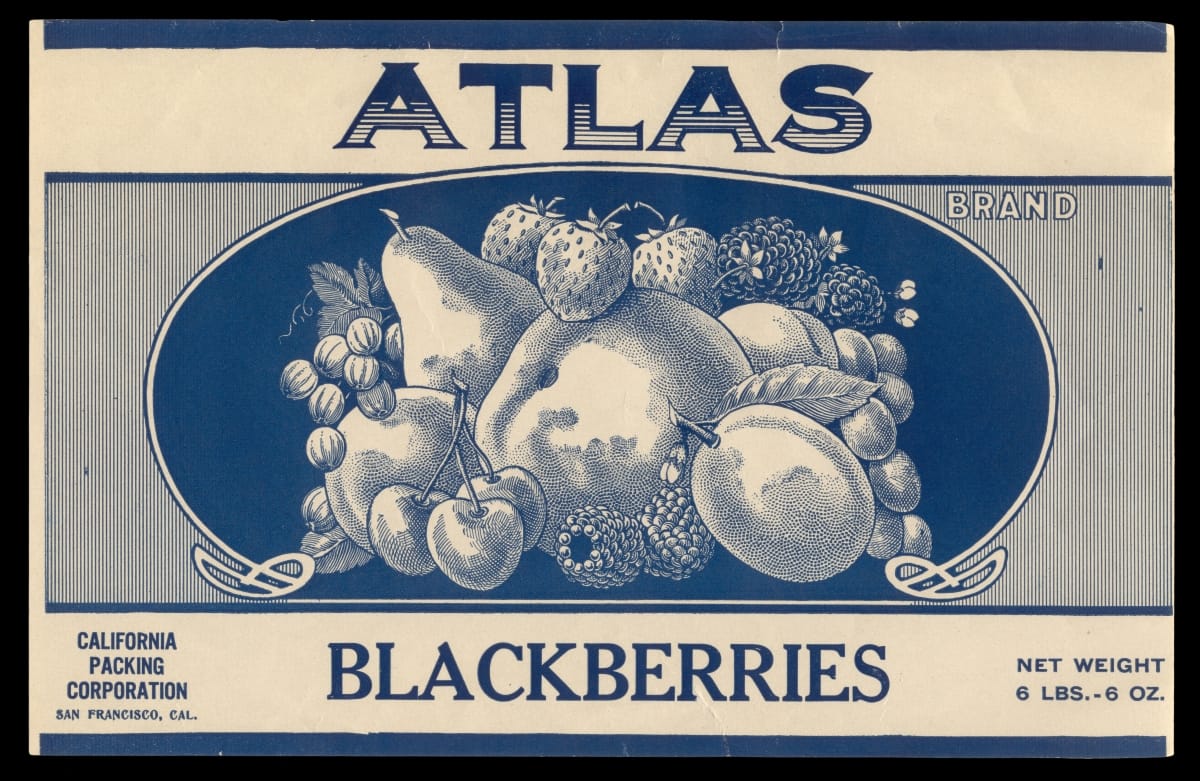
- Crate Label, "Atlas Brand Blackberries," 1920-1930 - In 1869, the transcontinental railroad opened eastern markets to the West Coast produce industry for the first time. As produce companies shipped crates of fruits and vegetables across the country, they needed a way to distinguish their goods from their competitors'. Colorful, eye-catching labels, like this one for Atlas Brand Blackberries, were created to attract grocers purchasing goods from wholesale markets.
- 1920-1930
- Collections - Artifact
Crate Label, "Atlas Brand Blackberries," 1920-1930
In 1869, the transcontinental railroad opened eastern markets to the West Coast produce industry for the first time. As produce companies shipped crates of fruits and vegetables across the country, they needed a way to distinguish their goods from their competitors'. Colorful, eye-catching labels, like this one for Atlas Brand Blackberries, were created to attract grocers purchasing goods from wholesale markets.