
Search
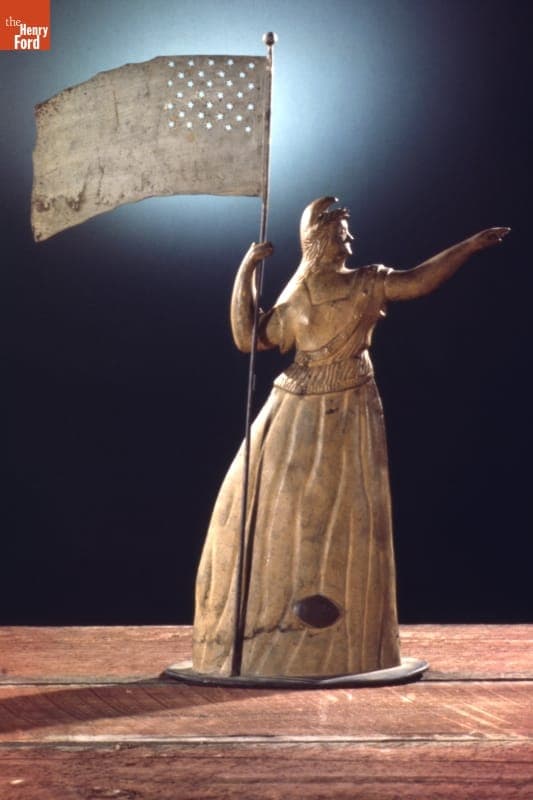
- "Goddess of Liberty" Weathervane, 1867-1872 - Weathervanes point into the direction of the wind. This helped viewers anticipate weather changes before local forecasts became common after 1920. Functional weathervanes required a basic pointing device and directional arms, but manufacturers added decorative elements, or ornaments, to appeal to consumer interests. Patriotic symbols became common around the time of the Civil War. This figure carried the 32-star flag adopted in 1858.
- 1867-1872
- Collections - Artifact
"Goddess of Liberty" Weathervane, 1867-1872
Weathervanes point into the direction of the wind. This helped viewers anticipate weather changes before local forecasts became common after 1920. Functional weathervanes required a basic pointing device and directional arms, but manufacturers added decorative elements, or ornaments, to appeal to consumer interests. Patriotic symbols became common around the time of the Civil War. This figure carried the 32-star flag adopted in 1858.
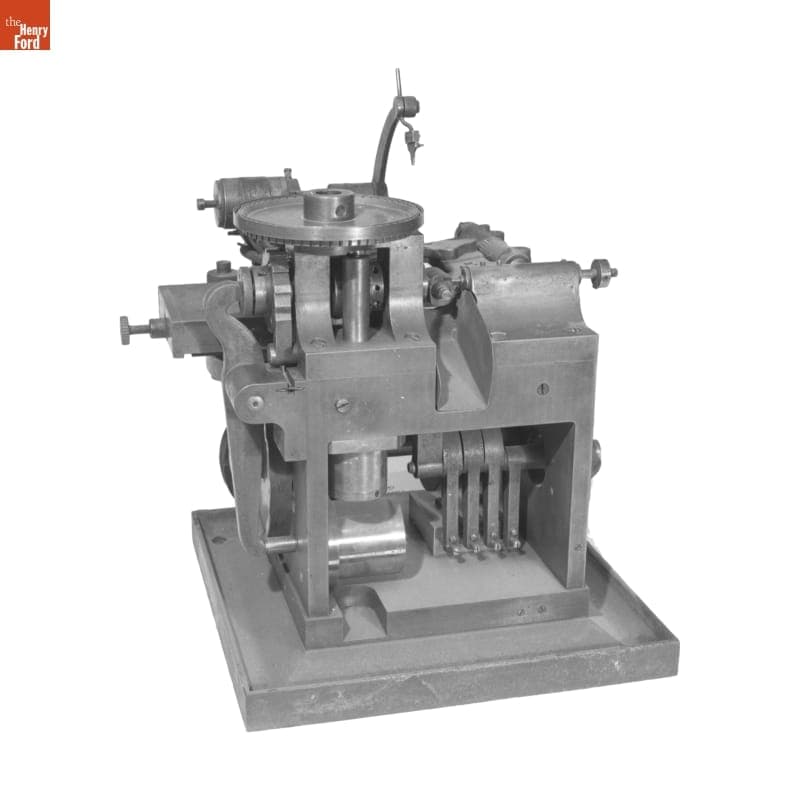
- Air-activated Gear Cutter, Used by the Waltham Watch Company, circa 1895 - The Waltham Watch Company was a world-famous example of a highly mechanized manufacturer of quality consumer goods. Specialized labor, new machines, and interchangeable parts combined to create the company's low-cost, high-grade watches. Duane Church, Waltham's superintendent of toolmakers, developed precision watchmaking machinery that produced interchangeable parts without the aid of gauges and templates. Church invented this gear cutter in the early 1890s.
- circa 1895
- Collections - Artifact
Air-activated Gear Cutter, Used by the Waltham Watch Company, circa 1895
The Waltham Watch Company was a world-famous example of a highly mechanized manufacturer of quality consumer goods. Specialized labor, new machines, and interchangeable parts combined to create the company's low-cost, high-grade watches. Duane Church, Waltham's superintendent of toolmakers, developed precision watchmaking machinery that produced interchangeable parts without the aid of gauges and templates. Church invented this gear cutter in the early 1890s.
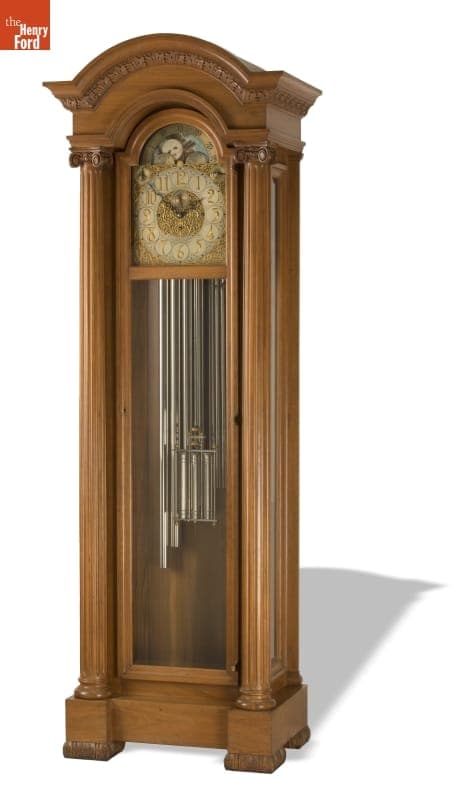
- Tall Case Clock, Used by Henry Ford at the Ford Motor Company Engineering Laboratory - Sidney Houghton, a high-end interior designer based in London, was commissioned by Henry Ford for a number of projects in the 1920s. In 1924, Houghton furnished Henry and Edsel Ford's personal offices in the newly completed Ford Engineering Laboratory. Houghton designed and fabricated everything for the offices -- from furniture to lighting to textiles -- at his workshops in England.
- 1920-1930
- Collections - Artifact
Tall Case Clock, Used by Henry Ford at the Ford Motor Company Engineering Laboratory
Sidney Houghton, a high-end interior designer based in London, was commissioned by Henry Ford for a number of projects in the 1920s. In 1924, Houghton furnished Henry and Edsel Ford's personal offices in the newly completed Ford Engineering Laboratory. Houghton designed and fabricated everything for the offices -- from furniture to lighting to textiles -- at his workshops in England.
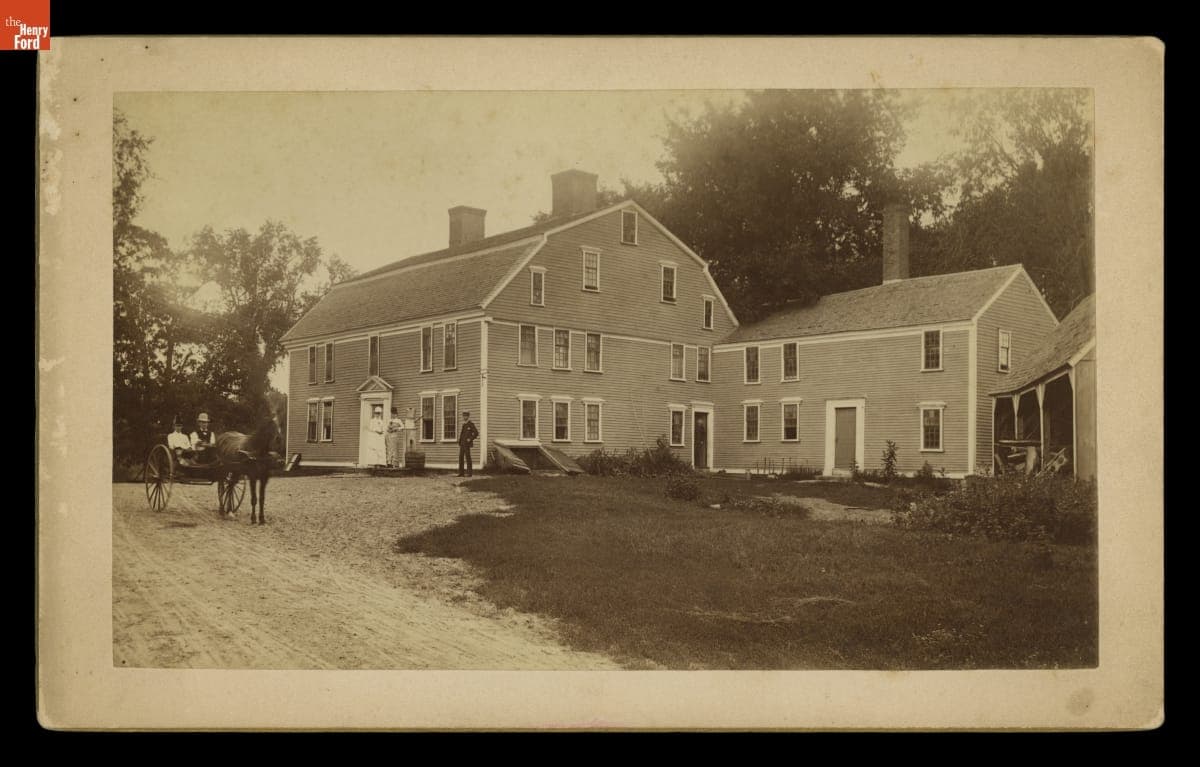
- Carriage outside Wayside Inn, South Sudbury, Massachusetts, 1884-1890 - An 1862 stay at the old Howe Tavern in Sudbury, Massachusetts, inspired Henry Wadsworth Longfellow's popular poem <em>Tales of a Wayside Inn</em>. The former stagecoach stop continued to operate as a boarding house but soon began to attract tourists. Literary fans and curious travelers arrived eager to experience what they called "Longfellow's Wayside Inn" for themselves.
- 1884-1890
- Collections - Artifact
Carriage outside Wayside Inn, South Sudbury, Massachusetts, 1884-1890
An 1862 stay at the old Howe Tavern in Sudbury, Massachusetts, inspired Henry Wadsworth Longfellow's popular poem Tales of a Wayside Inn. The former stagecoach stop continued to operate as a boarding house but soon began to attract tourists. Literary fans and curious travelers arrived eager to experience what they called "Longfellow's Wayside Inn" for themselves.
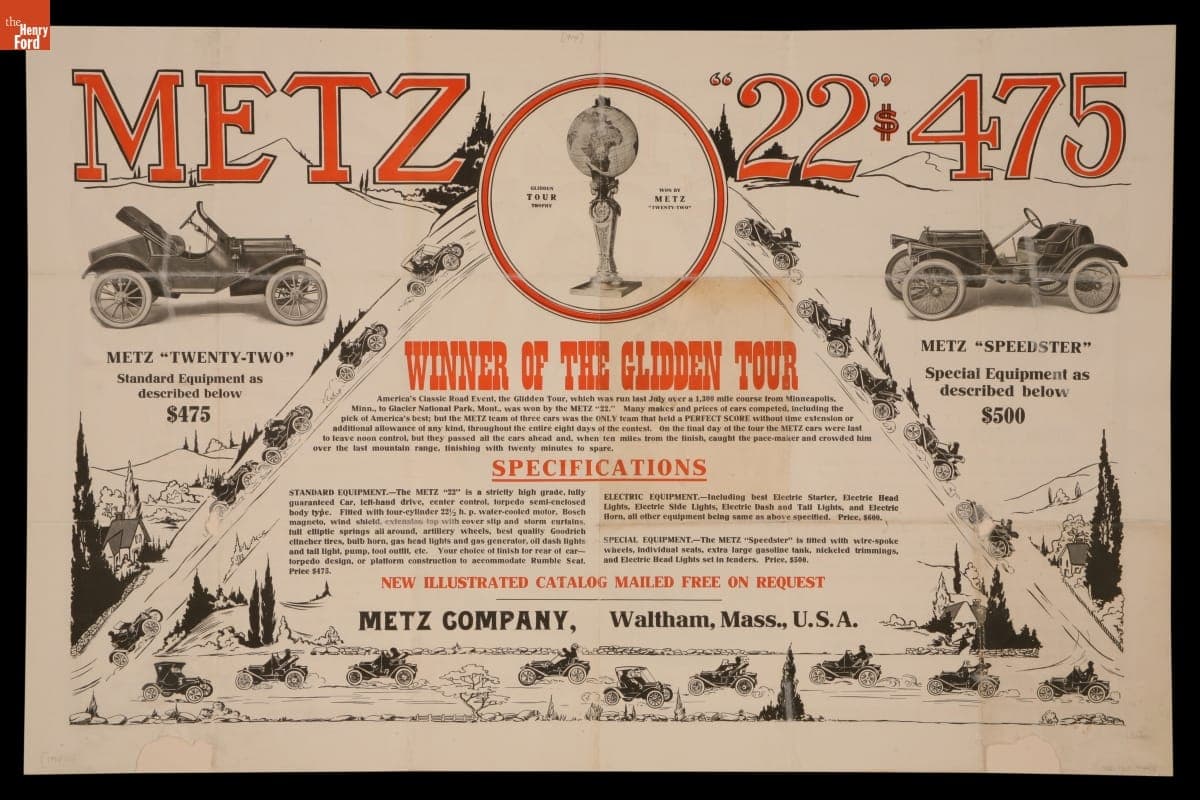
- Advertising Poster for Metz Automobiles, "Metz '22,' Winner of the Glidden Tour," 1913 - The Metz Company operated in Waltham, Massachusetts, circa 1909 to 1921. Its first automobiles were inexpensive kit cars purchased by customers -- and shipped to them -- in installments. Metz shifted to fully assembled vehicles in 1911. Two years later, Metz Model 22 cars won the Glidden Tour, a reliability and endurance competition sponsored by the American Automobile Association.
- 1913
- Collections - Artifact
Advertising Poster for Metz Automobiles, "Metz '22,' Winner of the Glidden Tour," 1913
The Metz Company operated in Waltham, Massachusetts, circa 1909 to 1921. Its first automobiles were inexpensive kit cars purchased by customers -- and shipped to them -- in installments. Metz shifted to fully assembled vehicles in 1911. Two years later, Metz Model 22 cars won the Glidden Tour, a reliability and endurance competition sponsored by the American Automobile Association.
- Type A-11 Navigation Wrist Watch, 1943-1945 -
- 1943-1945
- Collections - Artifact
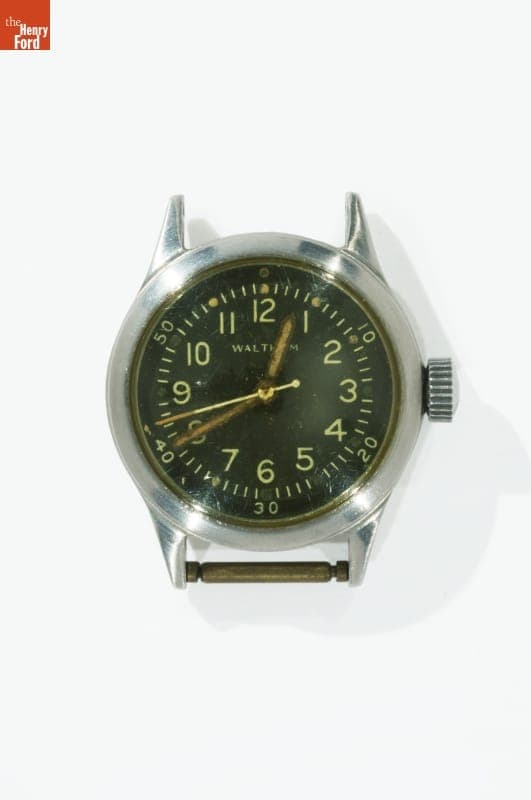
Type A-11 Navigation Wrist Watch, 1943-1945
- Wrist Watch, 1945-1946 -
- 1945-1946
- Collections - Artifact
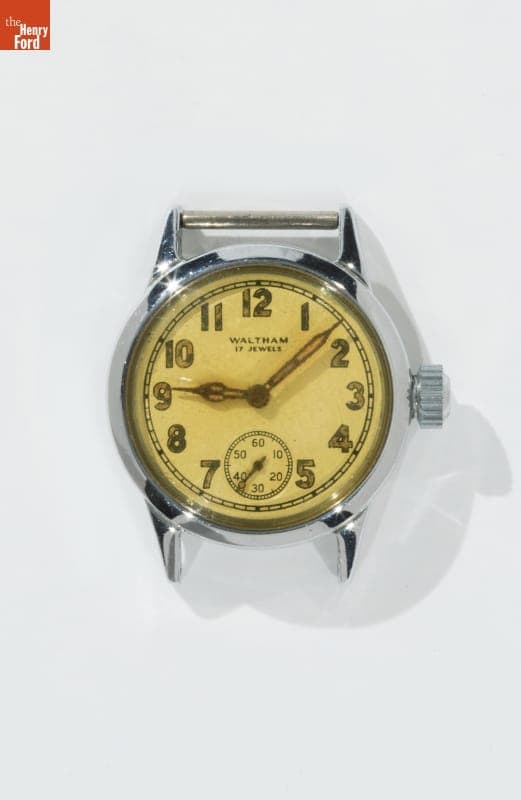
Wrist Watch, 1945-1946
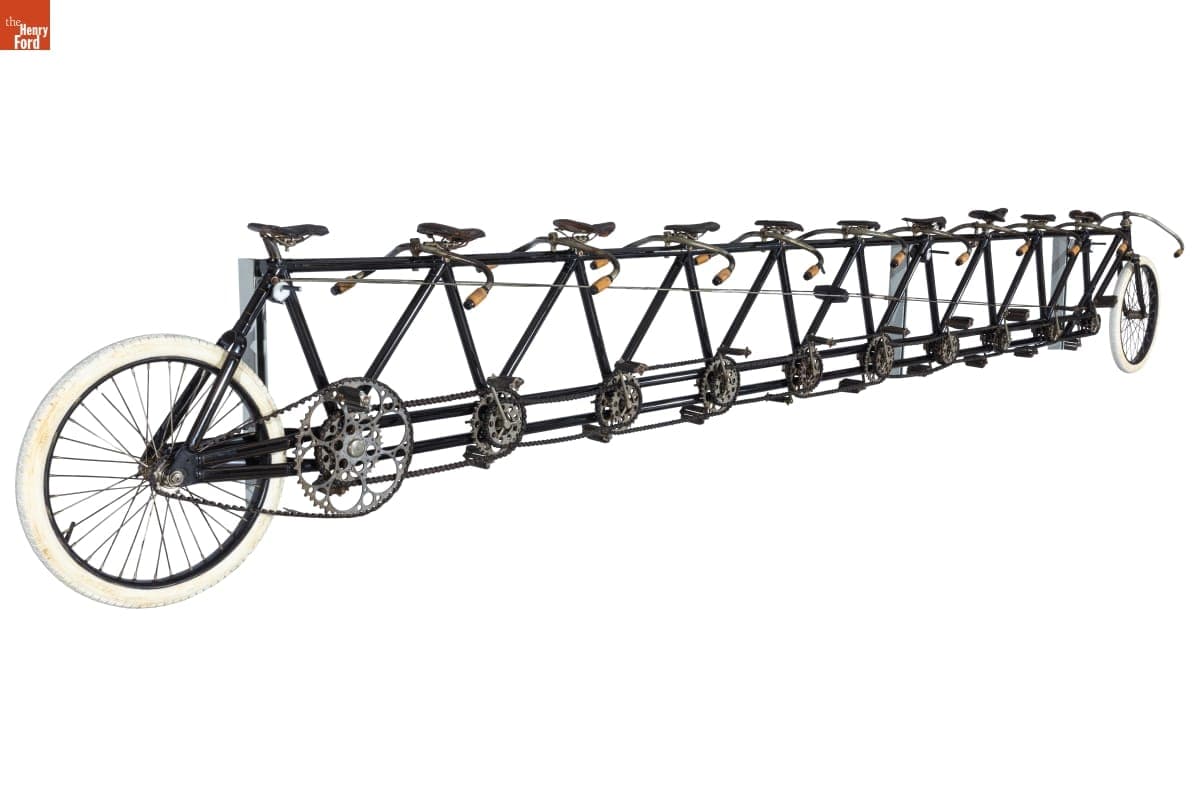
- Ten-Person Oriten Bicycle, 1896 - Charles Metz of Waltham, Massachusetts, built the Orient Oriten in 1896 as a way to promote his Orient line of bicycles. Metz featured this 23-foot-long, 305-pound ten-seater at bicycle meets and races throughout the country. Though difficult to ride, the vehicle could reach speeds of 45 miles per hour. The Henry Ford owns the only surviving Oriten.
- 1896
- Collections - Artifact
Ten-Person Oriten Bicycle, 1896
Charles Metz of Waltham, Massachusetts, built the Orient Oriten in 1896 as a way to promote his Orient line of bicycles. Metz featured this 23-foot-long, 305-pound ten-seater at bicycle meets and races throughout the country. Though difficult to ride, the vehicle could reach speeds of 45 miles per hour. The Henry Ford owns the only surviving Oriten.
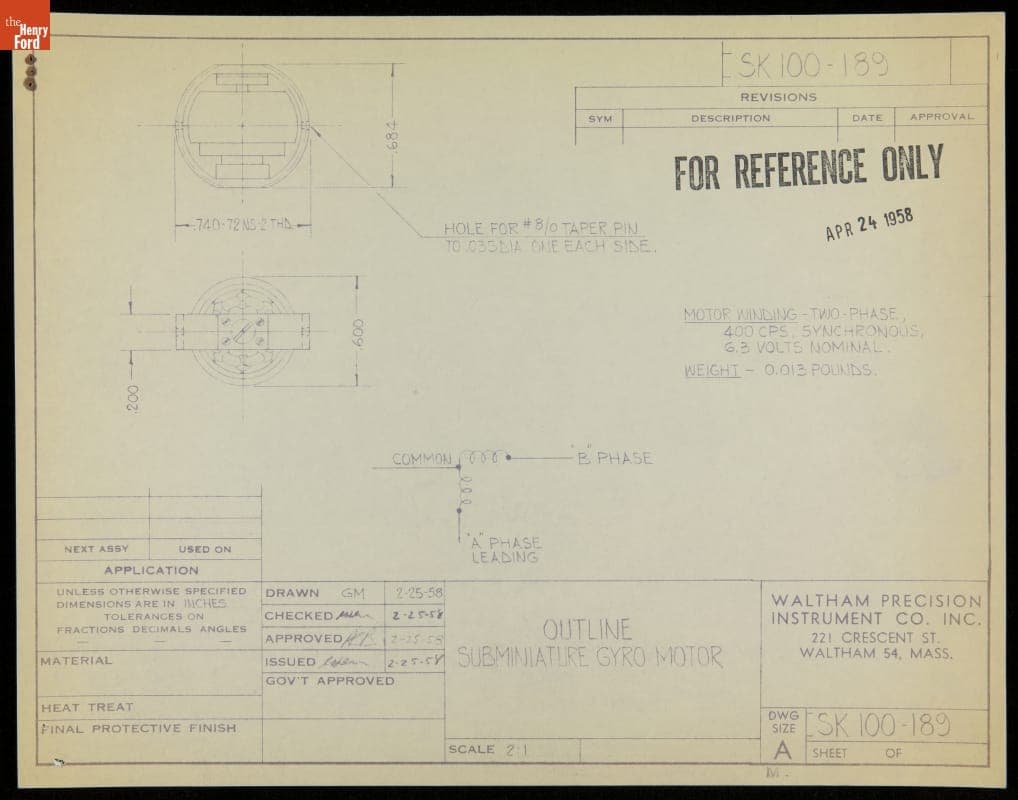
- Outline of Subminiature Gyro Motor, Reference Number SK 100-189, 1958 -
- February 25, 1958
- Collections - Artifact
Outline of Subminiature Gyro Motor, Reference Number SK 100-189, 1958
- Rocking Chair, 1855-1880 -

- 1855-1880
- Collections - Artifact
Rocking Chair, 1855-1880