
Search
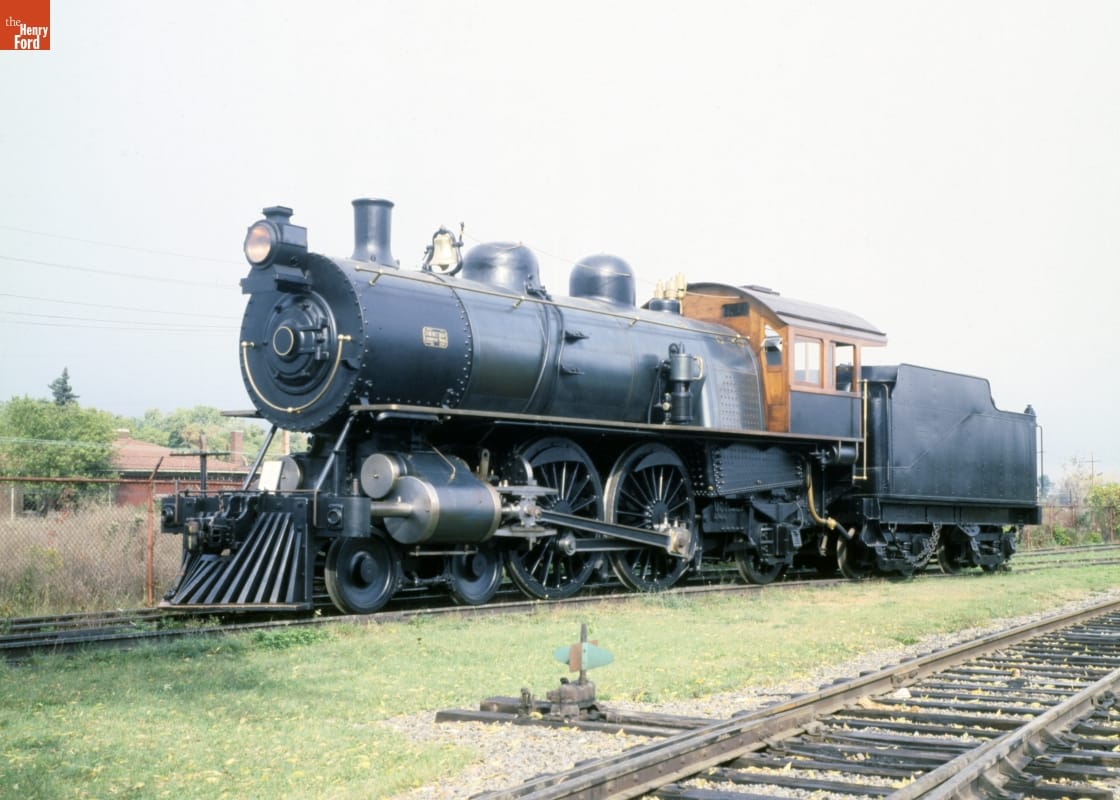
- American Locomotive Company Steam Locomotive, 1902 - The American Locomotive Company of Schenectady, New York, built this locomotive in 1902. It is a 4-4-2 Atlantic type, with four leading wheels, four driving wheels, and two trailing wheels. The Atlantic was designed to pull light wooden passenger cars at high speeds. This locomotive operated on the Michigan Central Railroad's Detroit-Chicago line until heavier steel cars made it obsolete.
- 1902
- Collections - Artifact
American Locomotive Company Steam Locomotive, 1902
The American Locomotive Company of Schenectady, New York, built this locomotive in 1902. It is a 4-4-2 Atlantic type, with four leading wheels, four driving wheels, and two trailing wheels. The Atlantic was designed to pull light wooden passenger cars at high speeds. This locomotive operated on the Michigan Central Railroad's Detroit-Chicago line until heavier steel cars made it obsolete.
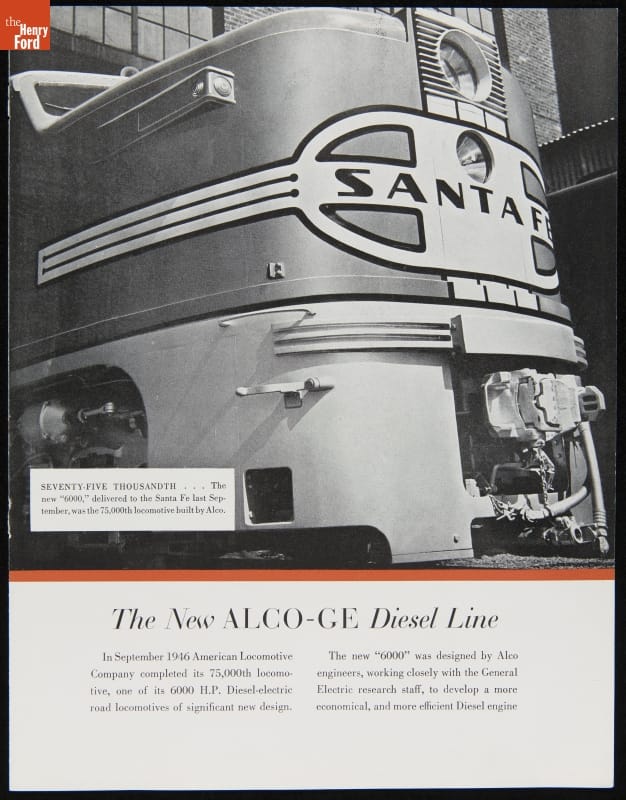
- American Locomotive Company Sales Brochure, 1946, "The New ALCO-GE Diesel Line" - The American Locomotive Company, established in 1901, wisely transitioned from manufacturing steam locomotives to diesel-electric units in the 1920s. ALCO locomotives, built in partnership with General Electric, were popular with American railroads until GE ended the collaboration in 1953 and became a direct competitor. ALCO's market share fell steadily until the company was forced to end production in 1969.
- 1946
- Collections - Artifact
American Locomotive Company Sales Brochure, 1946, "The New ALCO-GE Diesel Line"
The American Locomotive Company, established in 1901, wisely transitioned from manufacturing steam locomotives to diesel-electric units in the 1920s. ALCO locomotives, built in partnership with General Electric, were popular with American railroads until GE ended the collaboration in 1953 and became a direct competitor. ALCO's market share fell steadily until the company was forced to end production in 1969.
- American Locomotive Company Annual Report, 1950 - The American Locomotive Company, established in 1901, wisely transitioned from manufacturing steam locomotives to diesel-electric units in the 1920s. ALCO locomotives, built in partnership with General Electric, were popular with American railroads until GE ended the collaboration in 1953 and became a direct competitor. ALCO's market share fell steadily until the company was forced to end production in 1969.
- 1950
- Collections - Artifact
American Locomotive Company Annual Report, 1950
The American Locomotive Company, established in 1901, wisely transitioned from manufacturing steam locomotives to diesel-electric units in the 1920s. ALCO locomotives, built in partnership with General Electric, were popular with American railroads until GE ended the collaboration in 1953 and became a direct competitor. ALCO's market share fell steadily until the company was forced to end production in 1969.
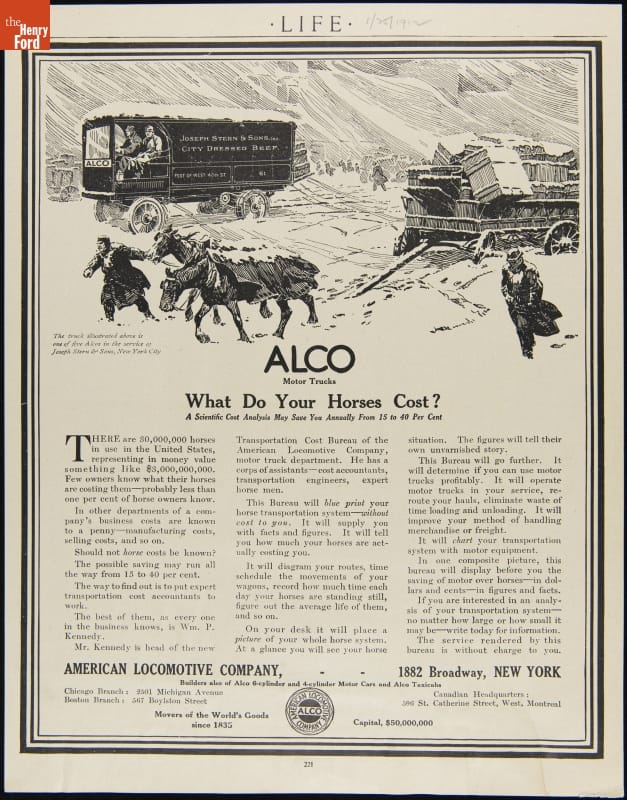
- American Locomotive Company Advertisement, "ALCO Motor Trucks, What do Your Horses Cost?" January 25, 1912 - Horse-drawn delivery wagons remained in use well into the 1920s -- particularly in smaller towns and rural areas. But this advertisement for ALCO trucks explains why they ultimately disappeared. Once roads were sufficiently improved, horse-drawn wagons simply could not compete with motorized trucks. While they might cost more up front, trucks were significantly less expensive to operate and maintain over time.
- January 25, 1912
- Collections - Artifact
American Locomotive Company Advertisement, "ALCO Motor Trucks, What do Your Horses Cost?" January 25, 1912
Horse-drawn delivery wagons remained in use well into the 1920s -- particularly in smaller towns and rural areas. But this advertisement for ALCO trucks explains why they ultimately disappeared. Once roads were sufficiently improved, horse-drawn wagons simply could not compete with motorized trucks. While they might cost more up front, trucks were significantly less expensive to operate and maintain over time.
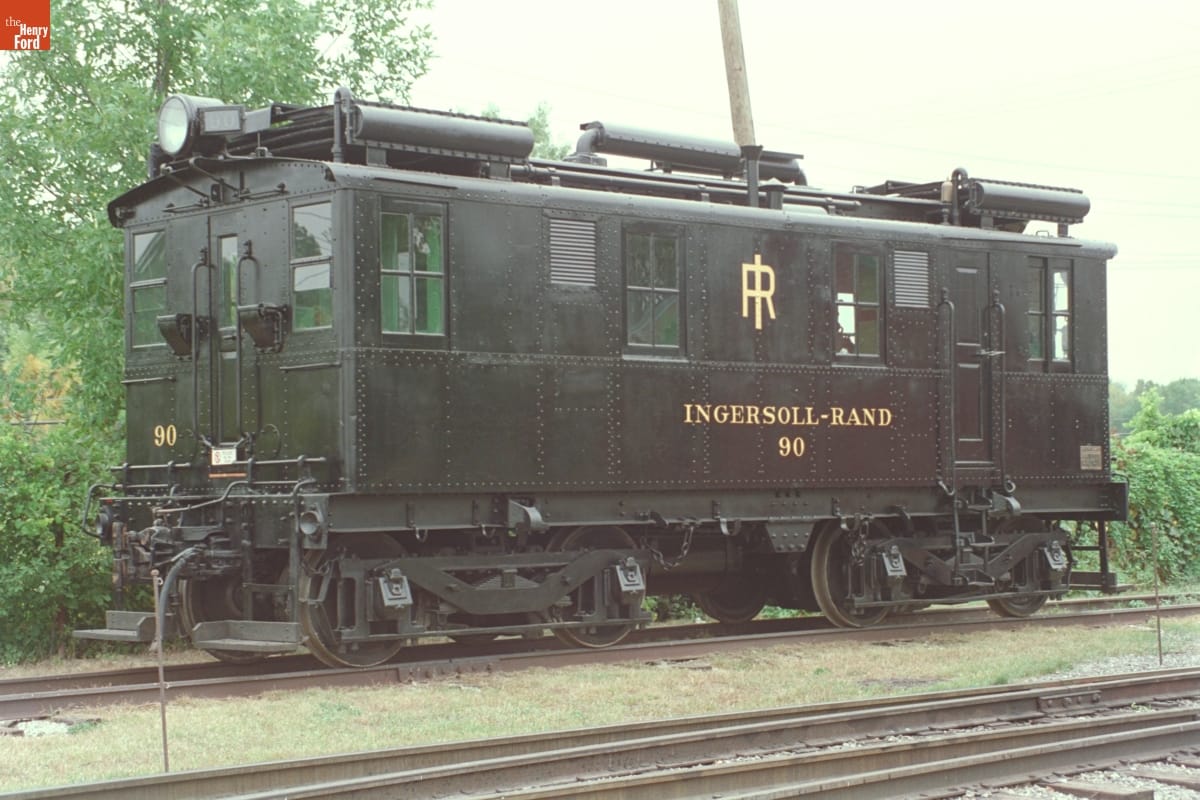
- Ingersoll-Rand Number 90 Diesel-Electric Locomotive, 1926 - This is one of the earliest diesel-electric locomotives used on American railroads. Diesel-electrics offered many advantages over steam locomotives. They required less maintenance, were more fuel efficient, and could be operated by smaller crews. This locomotive's body houses an Ingersoll-Rand diesel engine that drives a General Electric generator, which in turn powers electric motors on the axles.
- 1926
- Collections - Artifact
Ingersoll-Rand Number 90 Diesel-Electric Locomotive, 1926
This is one of the earliest diesel-electric locomotives used on American railroads. Diesel-electrics offered many advantages over steam locomotives. They required less maintenance, were more fuel efficient, and could be operated by smaller crews. This locomotive's body houses an Ingersoll-Rand diesel engine that drives a General Electric generator, which in turn powers electric motors on the axles.
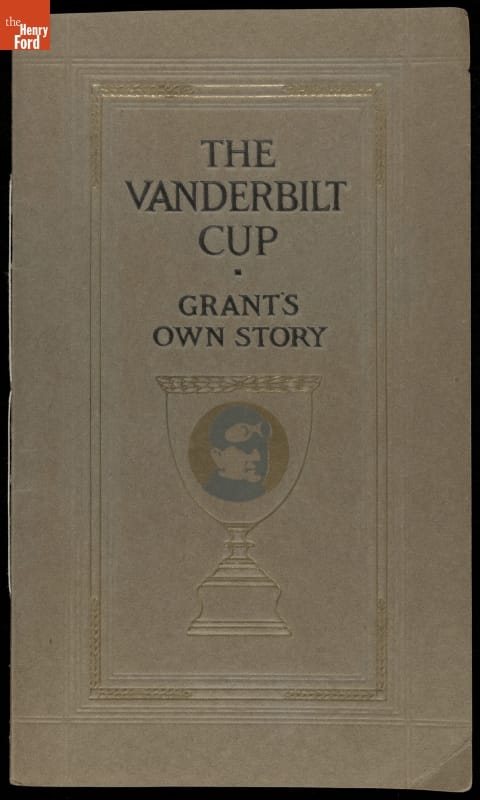
- "The Vanderbilt Cup: Grant's Own Story," 1911 - Harry Grant raced to two consecutive Vanderbilt Cup victories in 1909 and 1910. In this booklet, Grant explains his driving skills and strategies instrumental in these wins. He also praises the quality of his vehicle -- the "Black Beast" -- built by the American Locomotive Company. The company was also the publisher of this promotional tract.
- 1911
- Collections - Artifact
"The Vanderbilt Cup: Grant's Own Story," 1911
Harry Grant raced to two consecutive Vanderbilt Cup victories in 1909 and 1910. In this booklet, Grant explains his driving skills and strategies instrumental in these wins. He also praises the quality of his vehicle -- the "Black Beast" -- built by the American Locomotive Company. The company was also the publisher of this promotional tract.