
Search
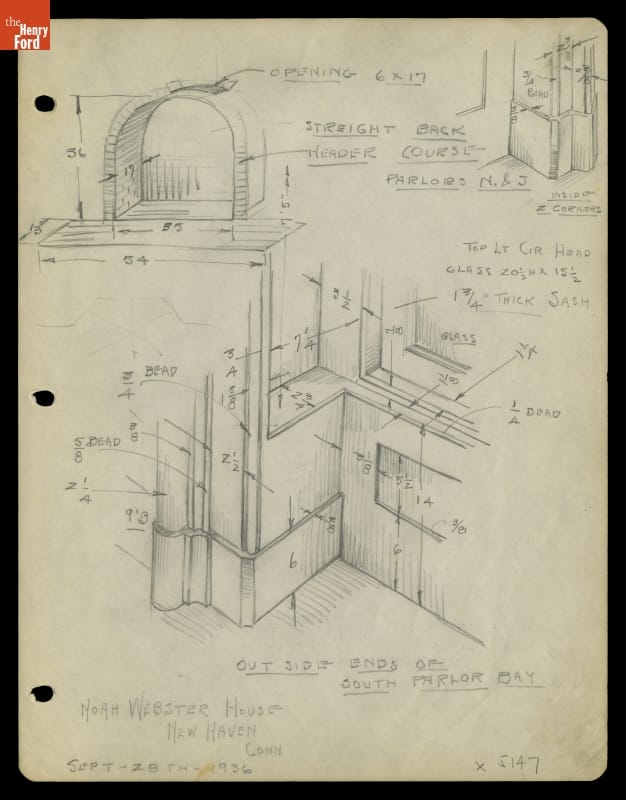
- Drawing, Outside Ends of South Parlor Bay, Noah Webster House, New Haven, Connecticut, September 28, 1936 -
- September 28, 1936
- Collections - Artifact
Drawing, Outside Ends of South Parlor Bay, Noah Webster House, New Haven, Connecticut, September 28, 1936
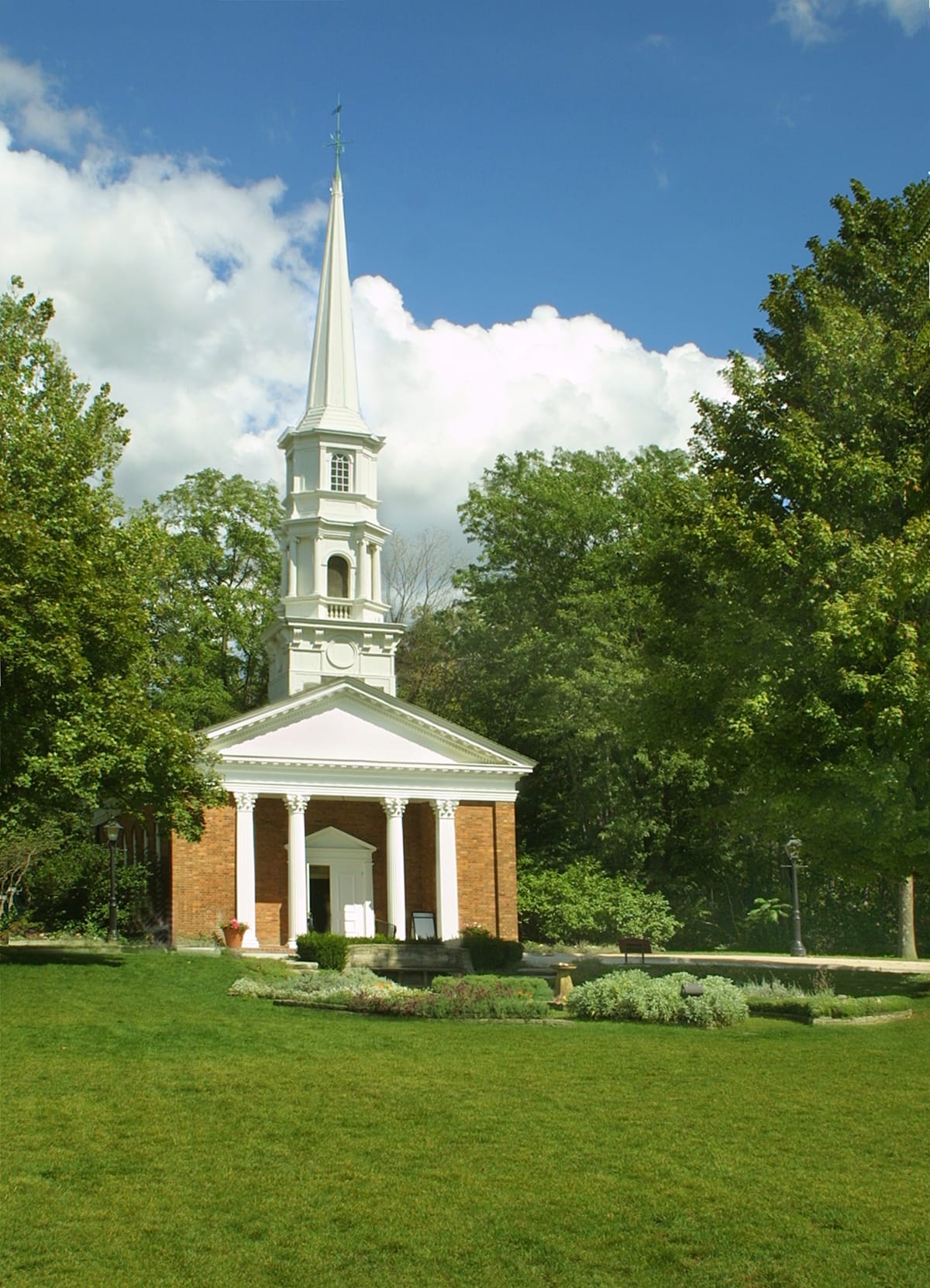
- Martha-Mary Chapel - Churches were a center of community life in the 1700s, a place where townspeople came together to attend services and socialize. The Martha-Mary Chapel, with its architecture inspired by New England's colonial-era churches, was built in Greenfield Village in 1929. This chapel was named after Henry Ford's mother, Mary Litogot Ford, and his mother-in-law, Martha Bench Bryant.
- 1929
- Collections - Artifact
Martha-Mary Chapel
Churches were a center of community life in the 1700s, a place where townspeople came together to attend services and socialize. The Martha-Mary Chapel, with its architecture inspired by New England's colonial-era churches, was built in Greenfield Village in 1929. This chapel was named after Henry Ford's mother, Mary Litogot Ford, and his mother-in-law, Martha Bench Bryant.
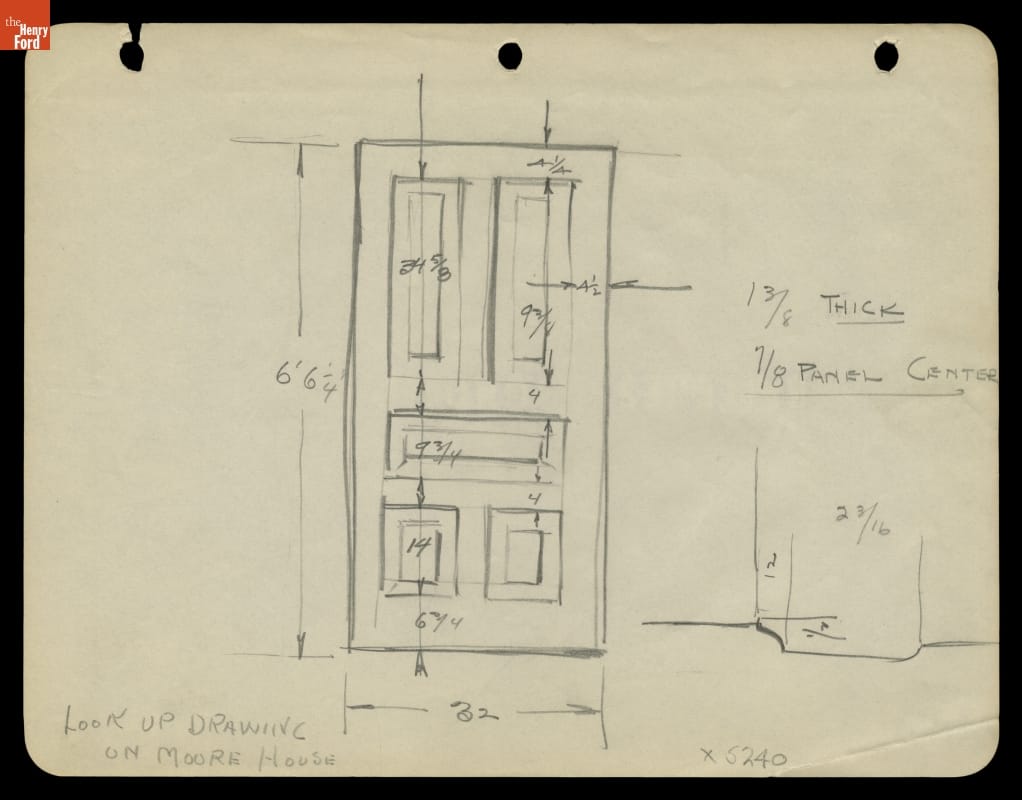
- Drawing, Wright Cycle Shop, Dayton, Ohio, 1936 - In October 1936, Henry Ford purchased the bicycle shop used by Wilbur and Orville Wright in Dayton, Ohio. Over the next 18 months, Ford relocated and reassembled the building at his Greenfield Village museum complex in Dearborn, Michigan. Before the move, architect Edward Cutler made detailed drawings of the shop to ensure the project's accuracy.
- 1936
- Collections - Artifact
Drawing, Wright Cycle Shop, Dayton, Ohio, 1936
In October 1936, Henry Ford purchased the bicycle shop used by Wilbur and Orville Wright in Dayton, Ohio. Over the next 18 months, Ford relocated and reassembled the building at his Greenfield Village museum complex in Dearborn, Michigan. Before the move, architect Edward Cutler made detailed drawings of the shop to ensure the project's accuracy.
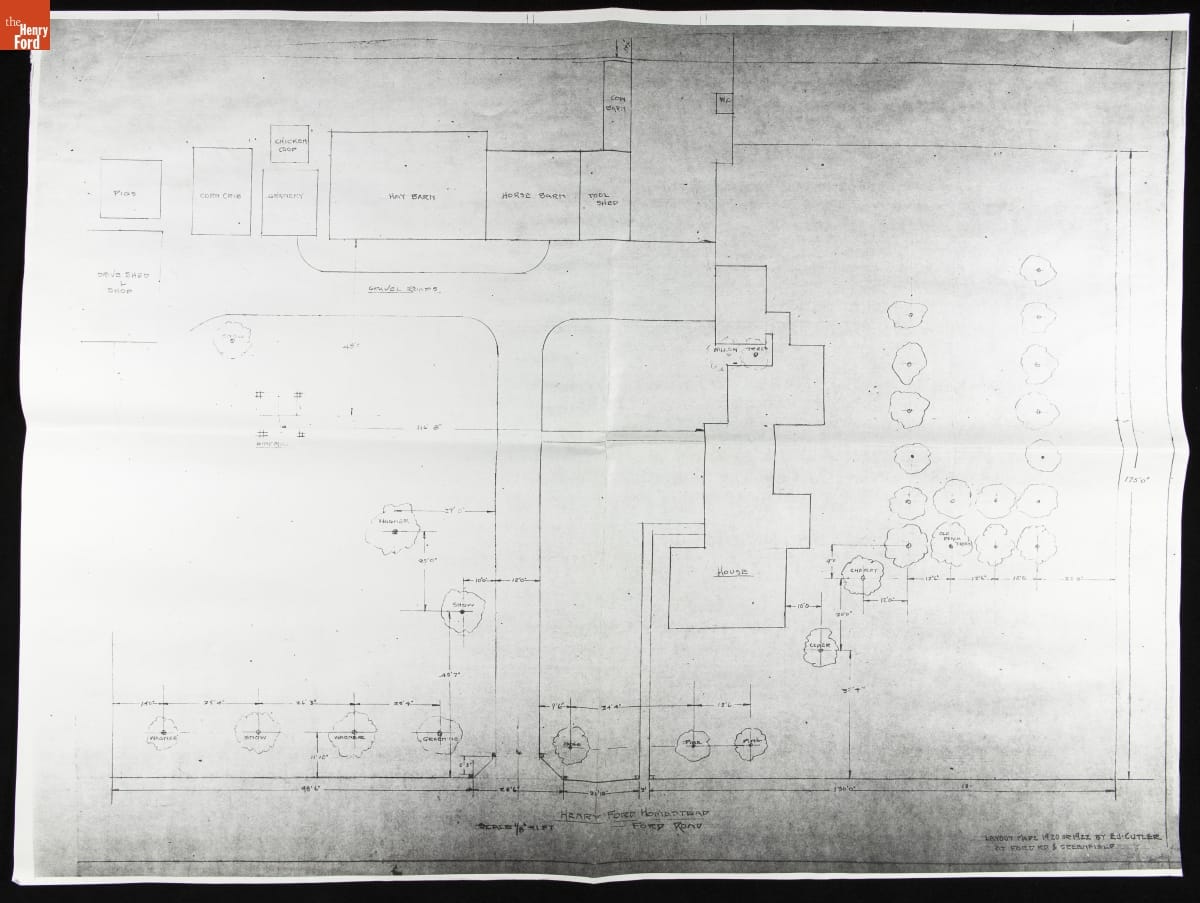
- Layout Map of Ford Road and Greenfield Road, Dearborn, Michigan, 1920-1922 -
- 1920-1922
- Collections - Artifact
Layout Map of Ford Road and Greenfield Road, Dearborn, Michigan, 1920-1922
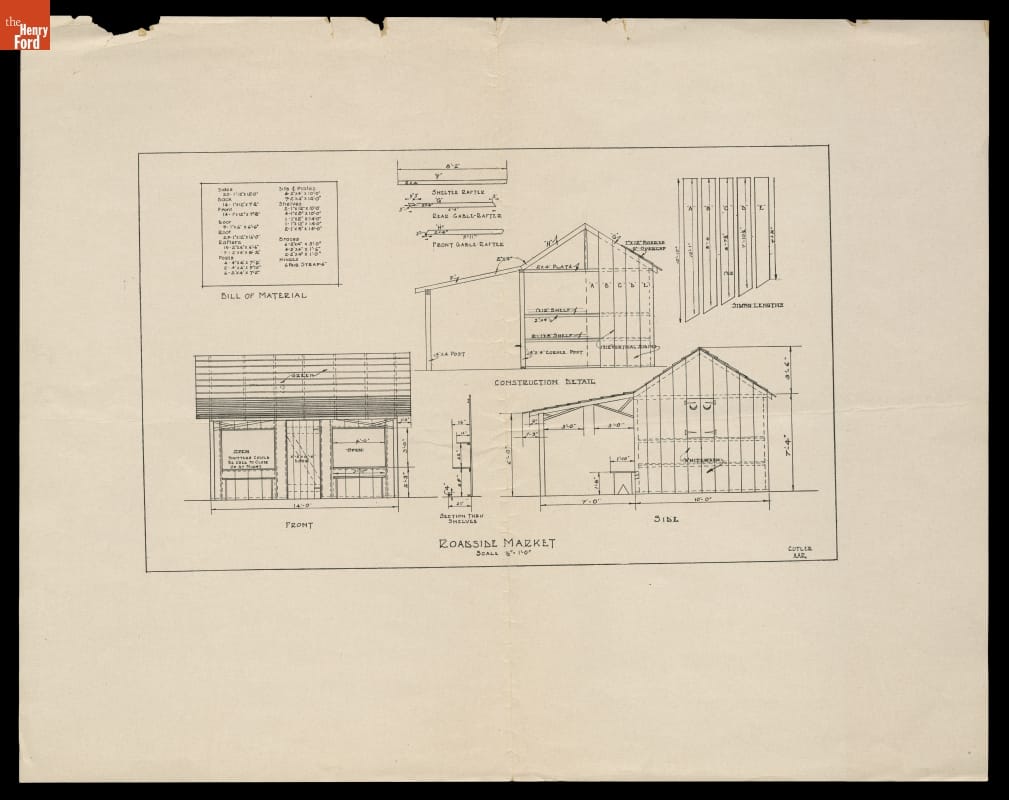
- Building Plans for a Roadside Market, for Selling Produce Grown by Greenfield Village School Students, 1930 - Clara Ford tried to help rural farm women during her presidency of the National Women's Farm & Garden Association. She developed a design for a neat but inexpensive roadside market building that could show off fresh farm produce. She had Edward Cutler, the Historical Architect of Greenfield Village, draw up these plans for the building.
- 1930
- Collections - Artifact
Building Plans for a Roadside Market, for Selling Produce Grown by Greenfield Village School Students, 1930
Clara Ford tried to help rural farm women during her presidency of the National Women's Farm & Garden Association. She developed a design for a neat but inexpensive roadside market building that could show off fresh farm produce. She had Edward Cutler, the Historical Architect of Greenfield Village, draw up these plans for the building.
- Menlo Park Laboratory - When Edison moved to Menlo Park, New Jersey, in spring of 1876 the laboratory building contained his entire operation -- a handful of collaborators, office, library, and machine shop as well as laboratory. As the scale of Edison's investigations grew so did the complex, but this building -- dedicated to experimental activities -- was always understood to be the heart of the enterprise.

- 1876-1883
- Collections - Artifact
Menlo Park Laboratory
When Edison moved to Menlo Park, New Jersey, in spring of 1876 the laboratory building contained his entire operation -- a handful of collaborators, office, library, and machine shop as well as laboratory. As the scale of Edison's investigations grew so did the complex, but this building -- dedicated to experimental activities -- was always understood to be the heart of the enterprise.
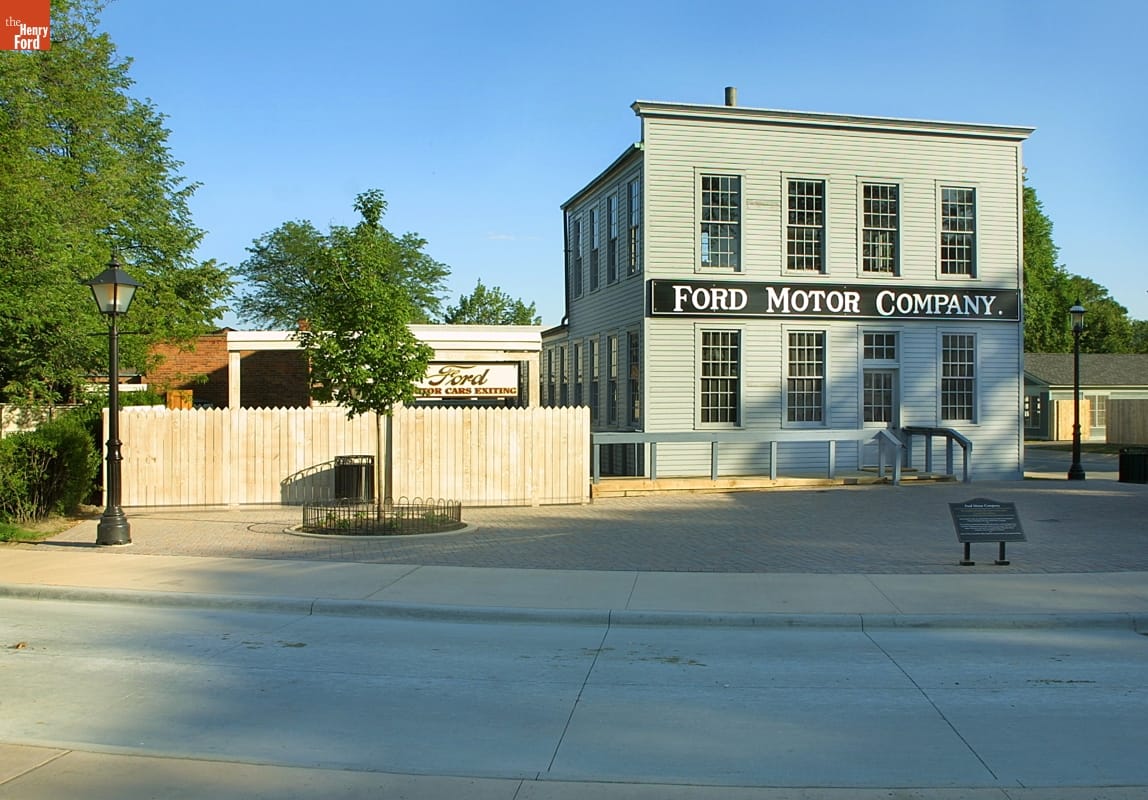
- Ford Motor Company (Mack Avenue Plant) - Henry Ford's third automobile company, formed in 1903, set up shop in a former wagon factory on Detroit's Mack Avenue. Ford's small crew assembled Model A cars from components made elsewhere. Within 18 months, Ford Motor Company moved to a larger facility on Piquette Avenue. This building is a replica about one-fourth the size of the original Mack Avenue plant.
- 1945
- Collections - Artifact
Ford Motor Company (Mack Avenue Plant)
Henry Ford's third automobile company, formed in 1903, set up shop in a former wagon factory on Detroit's Mack Avenue. Ford's small crew assembled Model A cars from components made elsewhere. Within 18 months, Ford Motor Company moved to a larger facility on Piquette Avenue. This building is a replica about one-fourth the size of the original Mack Avenue plant.
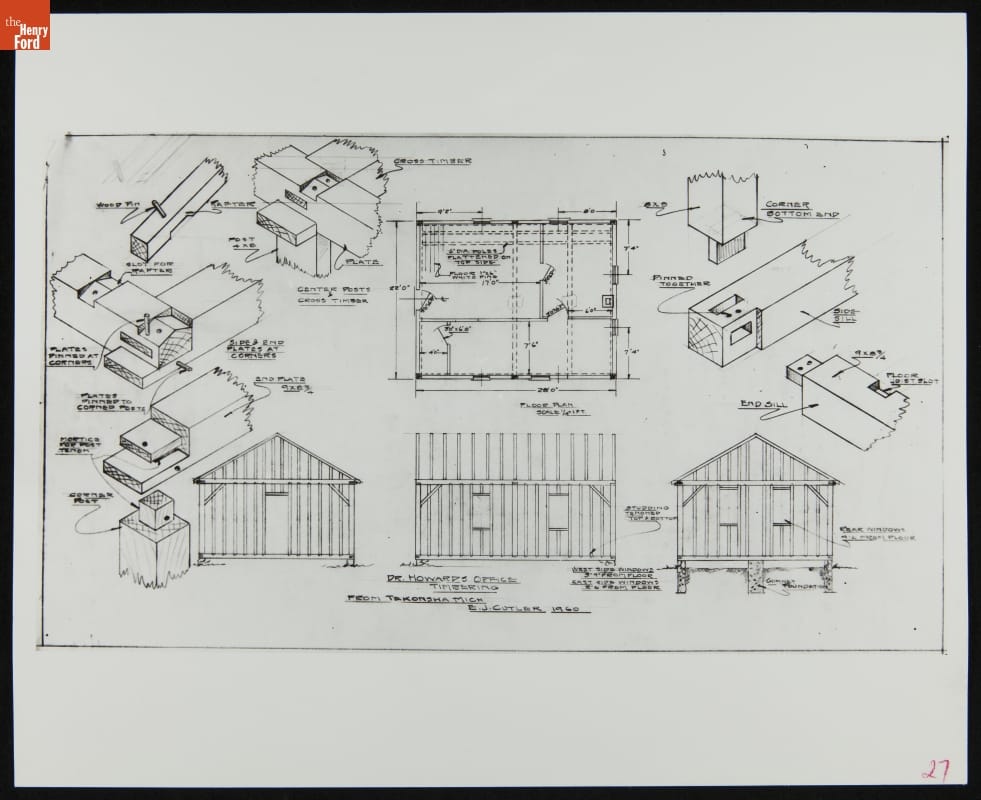
- Photograph of a Drawing of Dr. Howard's Office, July 19, 1960 -
- July 19, 1960
- Collections - Artifact
Photograph of a Drawing of Dr. Howard's Office, July 19, 1960
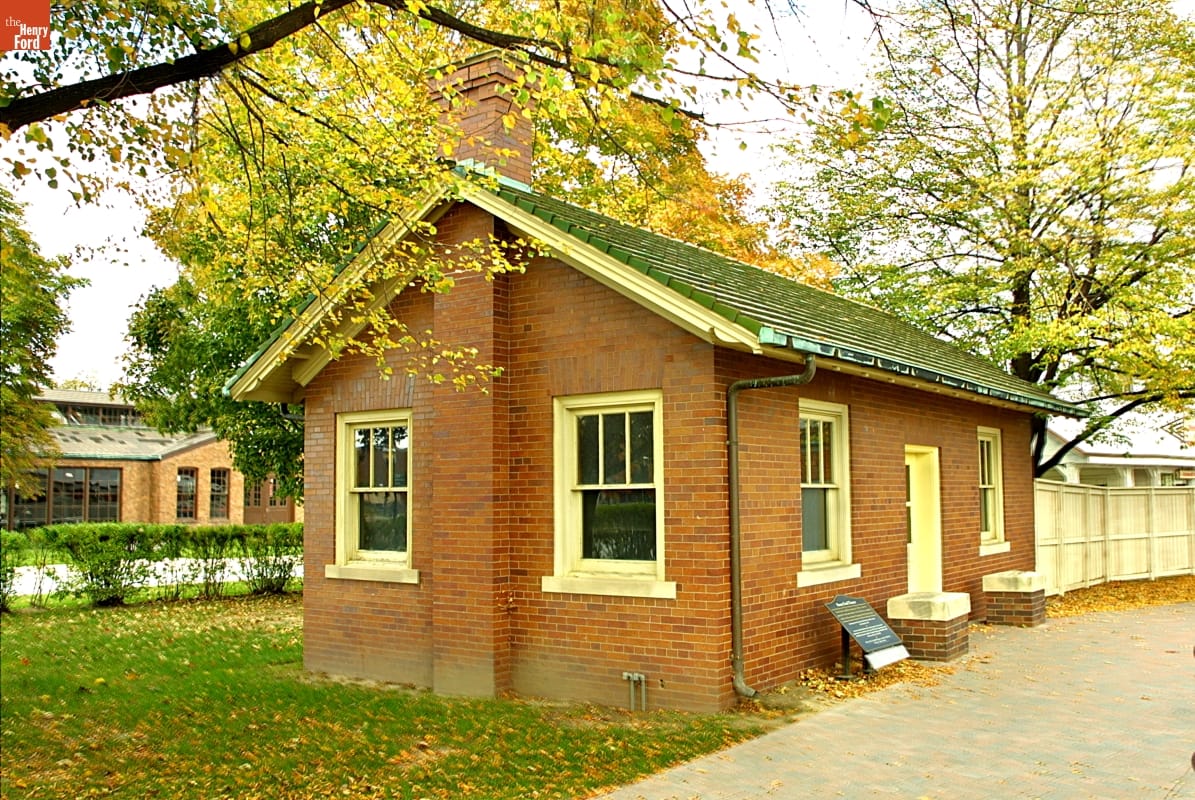
- Henry Ford Theater (Edsel Ford Workshop) - When Edsel Ford passed away in 1943, Henry and Clara Ford constructed this building to memorialize their son. It was based on a workshop that father and son shared above the garage at the family home in Detroit's Boston-Edison neighborhood, where the Fords lived while Edsel was a teenager. The short posts framing the door are from the original site.
- 1943-1944
- Collections - Artifact
Henry Ford Theater (Edsel Ford Workshop)
When Edsel Ford passed away in 1943, Henry and Clara Ford constructed this building to memorialize their son. It was based on a workshop that father and son shared above the garage at the family home in Detroit's Boston-Edison neighborhood, where the Fords lived while Edsel was a teenager. The short posts framing the door are from the original site.
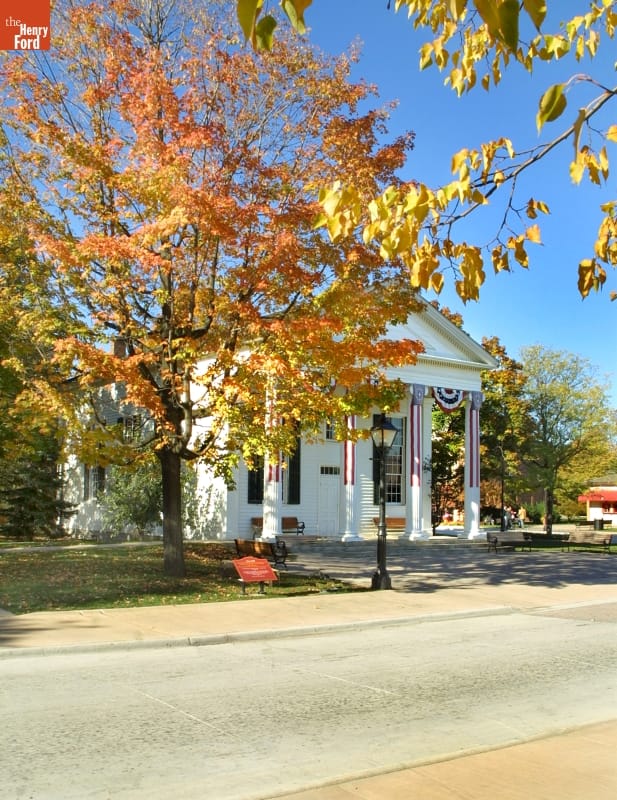
- Greenfield Village Town Hall - An iconic sight in New England communities, the town hall was the place where local citizens would come together to participate in town meetings. These buildings also became gathering places for political elections, theatrical performances, and social events. Built in Greenfield Village in 1929, this town hall was patterned after New England town halls of the early 1800s.
- 1929
- Collections - Artifact
Greenfield Village Town Hall
An iconic sight in New England communities, the town hall was the place where local citizens would come together to participate in town meetings. These buildings also became gathering places for political elections, theatrical performances, and social events. Built in Greenfield Village in 1929, this town hall was patterned after New England town halls of the early 1800s.