
Search
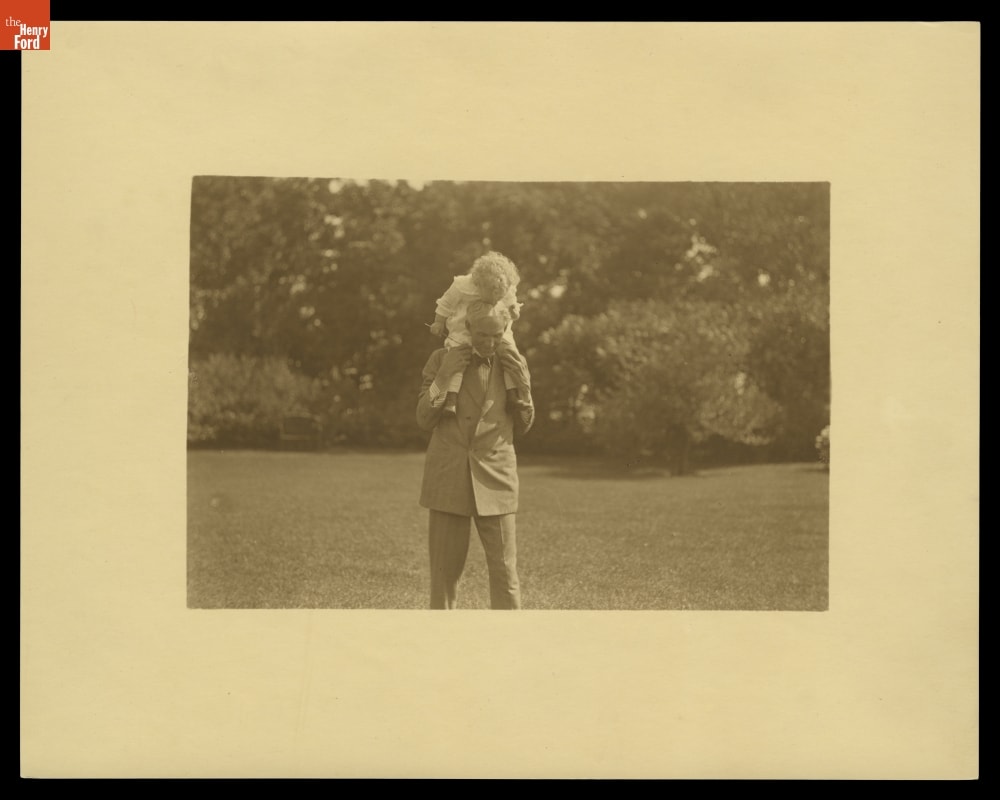
- Henry Ford Carrying Grandson Henry Ford II at Fair Lane, Dearborn, Michigan, 1919 - In the early 1910s, Henry and Clara Ford selected 1300 acres of farmland in Dearborn, Michigan, as the site for a new home. They called the estate Fair Lane. Surrounded by woods, meadows, gardens, and the nature they loved, Henry and Clara found this home a peaceful respite. Here they could wander the landscaped grounds, entertain guests, and play with grandchildren.
- 1919
- Collections - Artifact
Henry Ford Carrying Grandson Henry Ford II at Fair Lane, Dearborn, Michigan, 1919
In the early 1910s, Henry and Clara Ford selected 1300 acres of farmland in Dearborn, Michigan, as the site for a new home. They called the estate Fair Lane. Surrounded by woods, meadows, gardens, and the nature they loved, Henry and Clara found this home a peaceful respite. Here they could wander the landscaped grounds, entertain guests, and play with grandchildren.
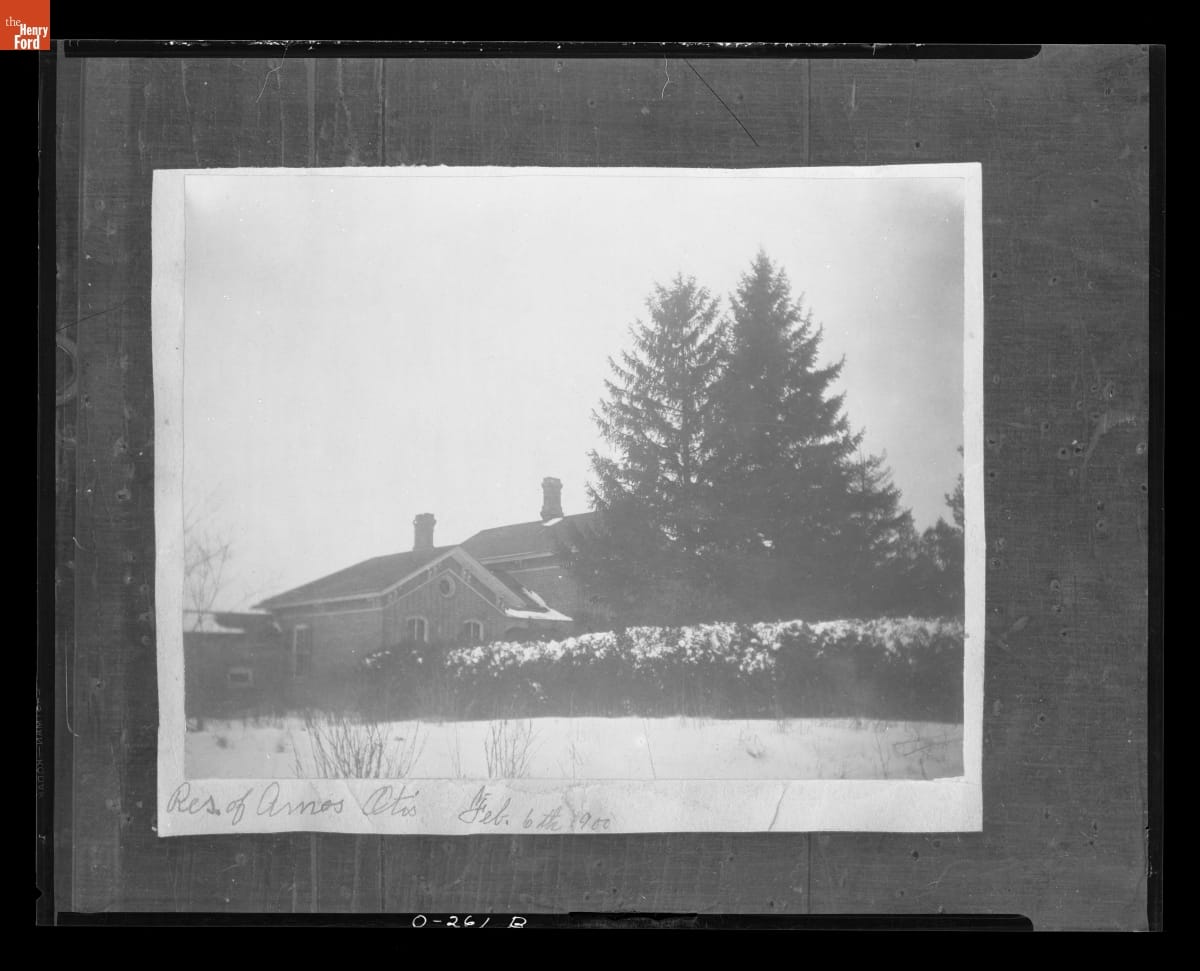
- Amos Otis Residence, Dearborn, Michigan, February 1900 -
- February 06, 1900
- Collections - Artifact
Amos Otis Residence, Dearborn, Michigan, February 1900
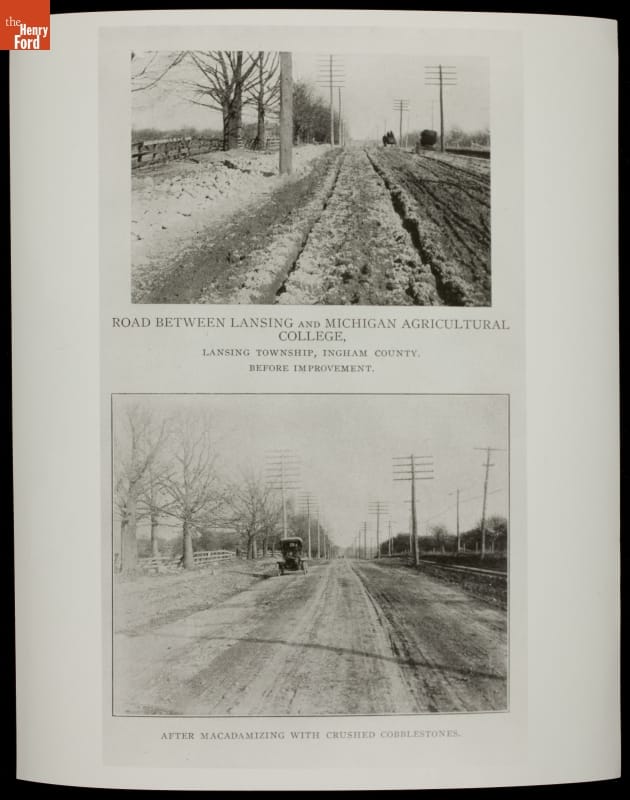
- Dirt Road Between Lansing and Michigan Agricultural College, Before and After Improvements, 1905-1906 - The establishment of the Michigan State Highway Department in 1905 made state funding available to township and county road commissions for improvements and repairs. The State Highway Commissioner published biennial reports highlighting the progress of "reward roads" -- projects funded by the state. These images from his first report show crushed stone applied to a rutted road near the state capital.
- 1905-1906
- Collections - Artifact
Dirt Road Between Lansing and Michigan Agricultural College, Before and After Improvements, 1905-1906
The establishment of the Michigan State Highway Department in 1905 made state funding available to township and county road commissions for improvements and repairs. The State Highway Commissioner published biennial reports highlighting the progress of "reward roads" -- projects funded by the state. These images from his first report show crushed stone applied to a rutted road near the state capital.
- Newspaper Article, "Henry Ford Gives $10,000,000 in 1914 Profits to His Employes" - When Henry Ford introduced the moving assembly line in 1913 he loved it but his employees didn't. The work was boring and relentless, and worker turnover was high. To get workers to stay, Henry more than doubled their pay, from $2.34 per day to $5 per day. It was headline news in Detroit and around the country.

- January 05, 1914
- Collections - Artifact
Newspaper Article, "Henry Ford Gives $10,000,000 in 1914 Profits to His Employes"
When Henry Ford introduced the moving assembly line in 1913 he loved it but his employees didn't. The work was boring and relentless, and worker turnover was high. To get workers to stay, Henry more than doubled their pay, from $2.34 per day to $5 per day. It was headline news in Detroit and around the country.
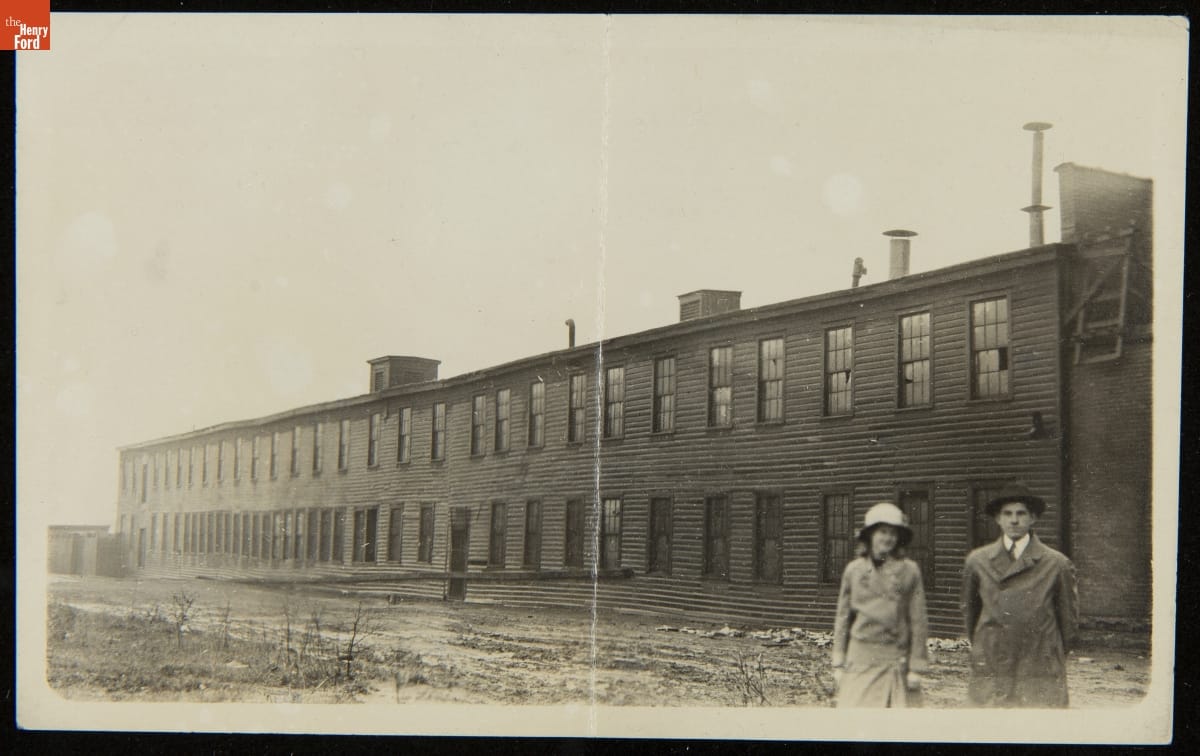
- Ford Motor Company Branch in Walkerville, Ontario, Canada, 1928 - Ford established Ford Motor Company of Canada in 1904. The Canadian subsidiary set up operations in a former wagon works in Walkerville, Ontario, near Windsor and across the Detroit River from Detroit, Michigan. In 1953, the post-World War II boom prompted Ford to relocate its Canadian headquarters and assembly facilities to Oakville, Ontario, on Lake Ontario's western shore.
- circa 1928
- Collections - Artifact
Ford Motor Company Branch in Walkerville, Ontario, Canada, 1928
Ford established Ford Motor Company of Canada in 1904. The Canadian subsidiary set up operations in a former wagon works in Walkerville, Ontario, near Windsor and across the Detroit River from Detroit, Michigan. In 1953, the post-World War II boom prompted Ford to relocate its Canadian headquarters and assembly facilities to Oakville, Ontario, on Lake Ontario's western shore.
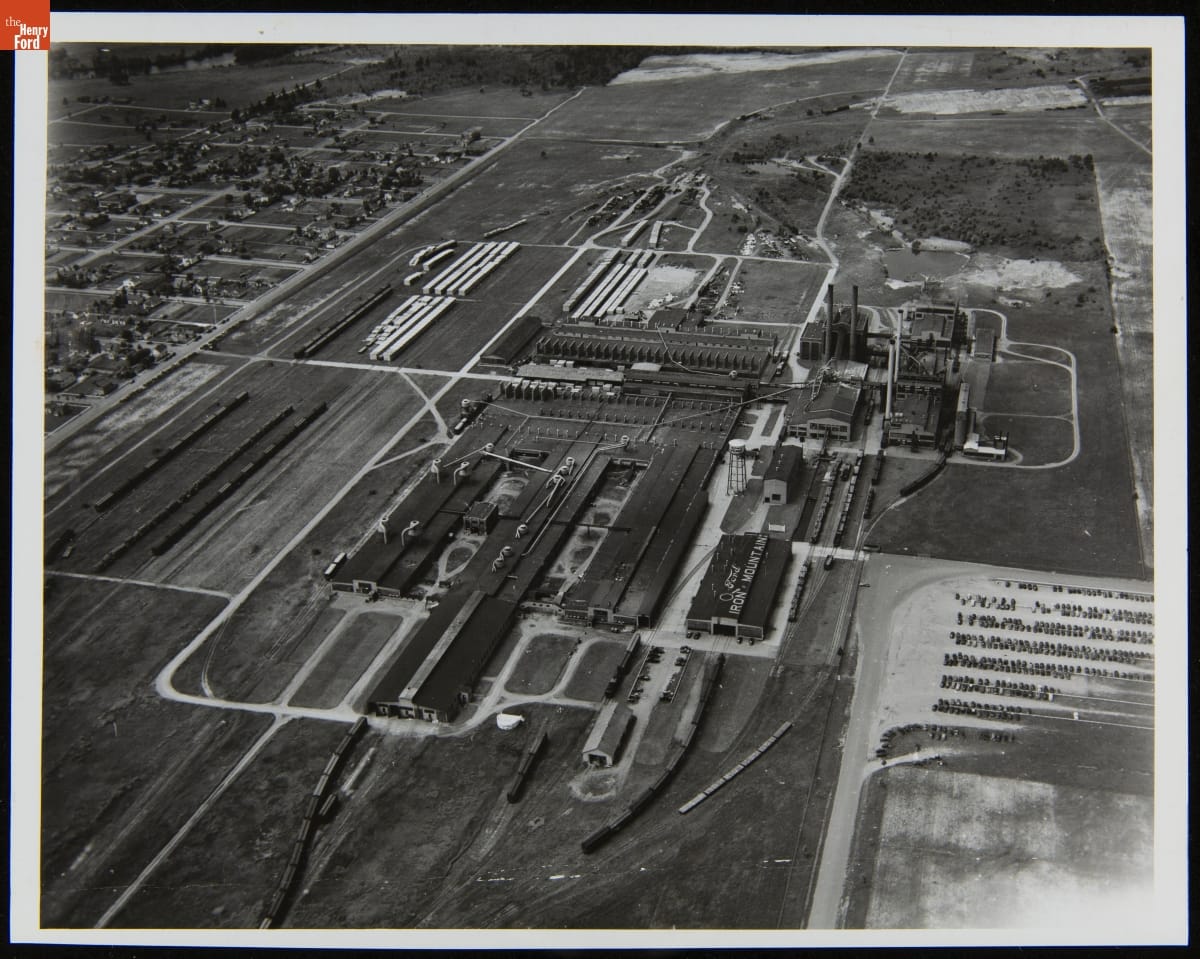
- Aerial View of Ford Motor Company Branch in Iron Mountain, Michigan, 1946 - Ford Motor Company's Iron Mountain plant, located in Michigan's Upper Peninsula, produced wood body frames and parts for the automaker's various models. After Ford adopted all-steel sedan bodies for the 1937 model year, Iron Mountain focused on station wagon bodies. Some 300 skilled craftspeople worked at the plant until 1952, when Ford wagons switched to all-steel bodies.
- 1946
- Collections - Artifact
Aerial View of Ford Motor Company Branch in Iron Mountain, Michigan, 1946
Ford Motor Company's Iron Mountain plant, located in Michigan's Upper Peninsula, produced wood body frames and parts for the automaker's various models. After Ford adopted all-steel sedan bodies for the 1937 model year, Iron Mountain focused on station wagon bodies. Some 300 skilled craftspeople worked at the plant until 1952, when Ford wagons switched to all-steel bodies.
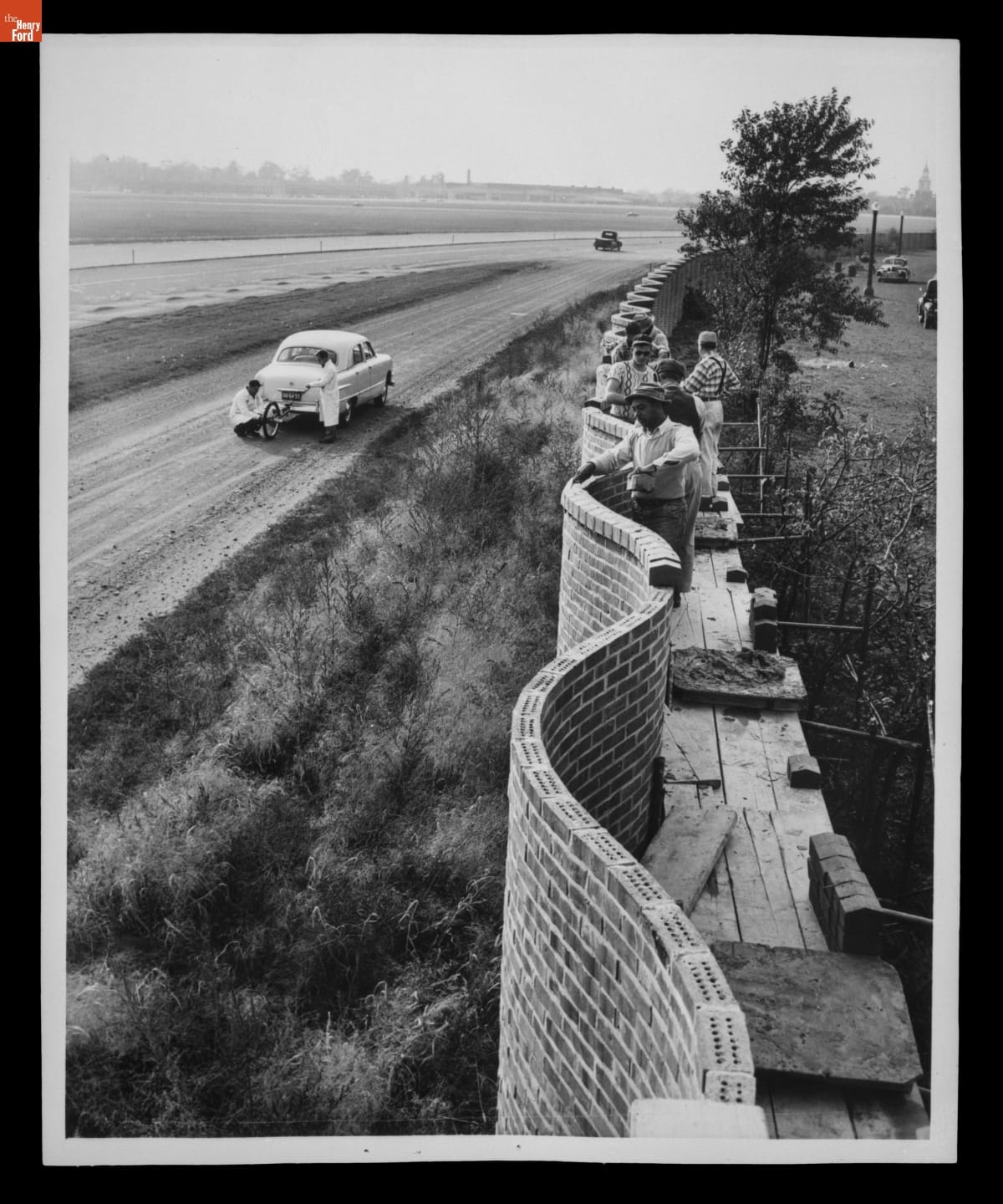
- Construction of Wall Between Ford Motor Company Test Track and Greenfield Village (Village Road), October 1951 - Ford Motor Company opened a formal proving ground, located on the former site of Ford Airport in Dearborn, Michigan, in the late 1930s. By the early 1950s, the facility included a water pit, a steep hill, and 11 miles of roadways with varying surfaces of concrete, cobblestone, macadam, gravel, and brick -- complete with potholes and simulated railroad crossings.
- October 18, 1951
- Collections - Artifact
Construction of Wall Between Ford Motor Company Test Track and Greenfield Village (Village Road), October 1951
Ford Motor Company opened a formal proving ground, located on the former site of Ford Airport in Dearborn, Michigan, in the late 1930s. By the early 1950s, the facility included a water pit, a steep hill, and 11 miles of roadways with varying surfaces of concrete, cobblestone, macadam, gravel, and brick -- complete with potholes and simulated railroad crossings.
- Child Charging a Rauch & Lang Electric Car in a Home Garage, 1917 - Safety was a frequent theme in electric automobile advertising. Certainly, electric cars were safer to start than hand-cranked gasoline cars. But manufacturers also stressed that electrics were safe to charge. This illustration, from a 1917 Rauch and Lang Carriage Company catalog, vividly makes the point with a child holding the plug while mother turns on the power.

- 1917
- Collections - Artifact
Child Charging a Rauch & Lang Electric Car in a Home Garage, 1917
Safety was a frequent theme in electric automobile advertising. Certainly, electric cars were safer to start than hand-cranked gasoline cars. But manufacturers also stressed that electrics were safe to charge. This illustration, from a 1917 Rauch and Lang Carriage Company catalog, vividly makes the point with a child holding the plug while mother turns on the power.
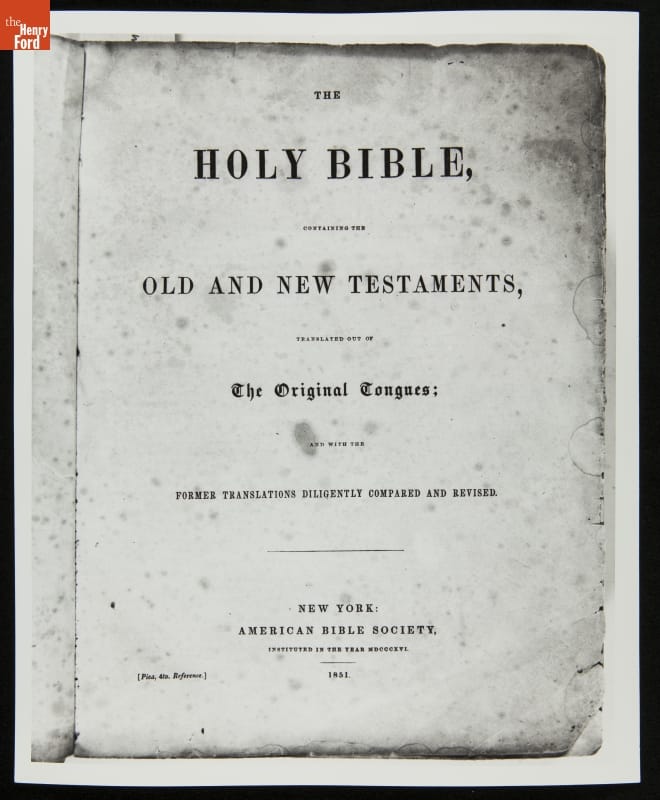
- Title Page of the Family Bible Belonging to Margaret Ahern (Henry Ford's Foster Grandmother), 1851 - Margaret Ahern (or O'hern), Henry Ford's foster grandmother, received this bible as a Christmas gift from her friend Mrs. Thomas W. Palmer. Margaret Ford, Henry's sister, inherited the bible, and years later, she gave it to Henry when he was restoring the Ford home. The bible contains pages for recording significant family events. Ford family births, marriage and deaths were documented.
- 1851
- Collections - Artifact
Title Page of the Family Bible Belonging to Margaret Ahern (Henry Ford's Foster Grandmother), 1851
Margaret Ahern (or O'hern), Henry Ford's foster grandmother, received this bible as a Christmas gift from her friend Mrs. Thomas W. Palmer. Margaret Ford, Henry's sister, inherited the bible, and years later, she gave it to Henry when he was restoring the Ford home. The bible contains pages for recording significant family events. Ford family births, marriage and deaths were documented.
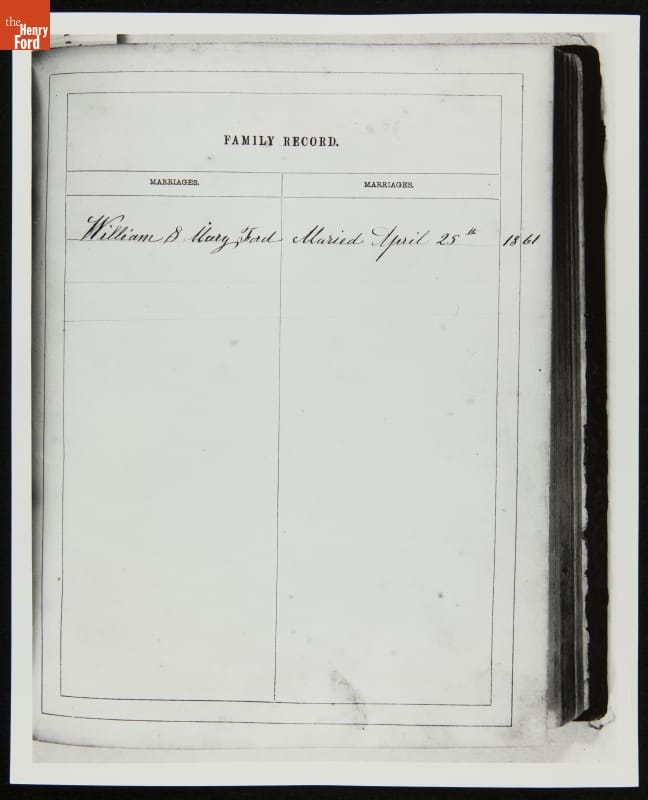
- Marriage of William and Mary Ford (Henry Ford's Parents) Recorded in a Family Bible, 1861 - Many 19th-century Americans recorded births, deaths and marriages in family bibles. Subsequent generations sometimes add and update entries. The Ford family bible originally belonged to Margaret Ahern (or O'hern), Henry Ford's foster grandmother. It was passed down to Henry's sister, Margaret. Margaret later gave the bible to Henry. This page records the marriage of William and Mary Ford, Henry's parents.
- April 25, 1861
- Collections - Artifact
Marriage of William and Mary Ford (Henry Ford's Parents) Recorded in a Family Bible, 1861
Many 19th-century Americans recorded births, deaths and marriages in family bibles. Subsequent generations sometimes add and update entries. The Ford family bible originally belonged to Margaret Ahern (or O'hern), Henry Ford's foster grandmother. It was passed down to Henry's sister, Margaret. Margaret later gave the bible to Henry. This page records the marriage of William and Mary Ford, Henry's parents.