
Search
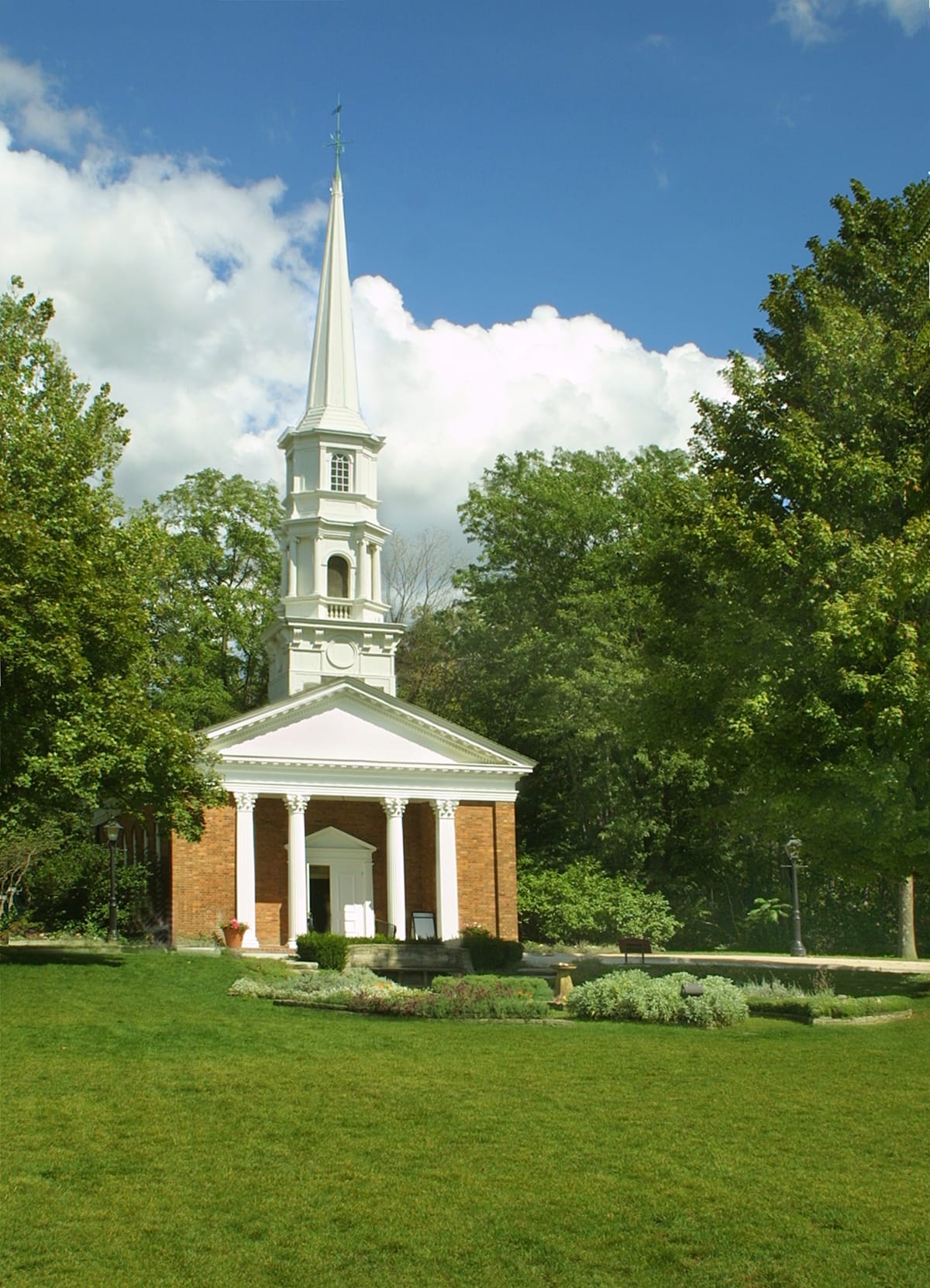
- Martha-Mary Chapel - Churches were a center of community life in the 1700s, a place where townspeople came together to attend services and socialize. The Martha-Mary Chapel, with its architecture inspired by New England's colonial-era churches, was built in Greenfield Village in 1929. This chapel was named after Henry Ford's mother, Mary Litogot Ford, and his mother-in-law, Martha Bench Bryant.
- 1929
- Collections - Artifact
Martha-Mary Chapel
Churches were a center of community life in the 1700s, a place where townspeople came together to attend services and socialize. The Martha-Mary Chapel, with its architecture inspired by New England's colonial-era churches, was built in Greenfield Village in 1929. This chapel was named after Henry Ford's mother, Mary Litogot Ford, and his mother-in-law, Martha Bench Bryant.
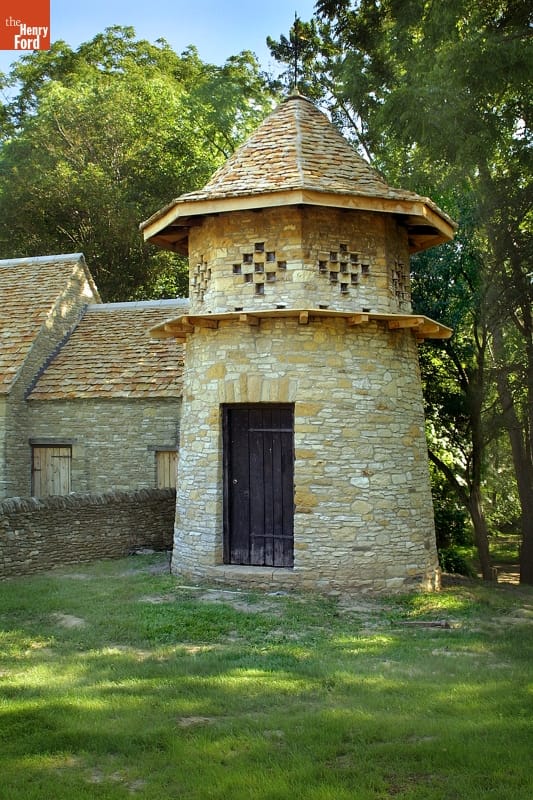
- Cotswold Dovecote - Henry and Clara Ford were avid birders and built this dovecote, modeled on one in Chesham, England. Dovecotes, which could only be owned by privileged landlords, were built to attract roosting birds, which helped control insects and provided manure for fertilizer. The nests could be reached from inside the dovecote where the eggs could be gathered, or birds trapped for food.
- circa 1935
- Collections - Artifact
Cotswold Dovecote
Henry and Clara Ford were avid birders and built this dovecote, modeled on one in Chesham, England. Dovecotes, which could only be owned by privileged landlords, were built to attract roosting birds, which helped control insects and provided manure for fertilizer. The nests could be reached from inside the dovecote where the eggs could be gathered, or birds trapped for food.
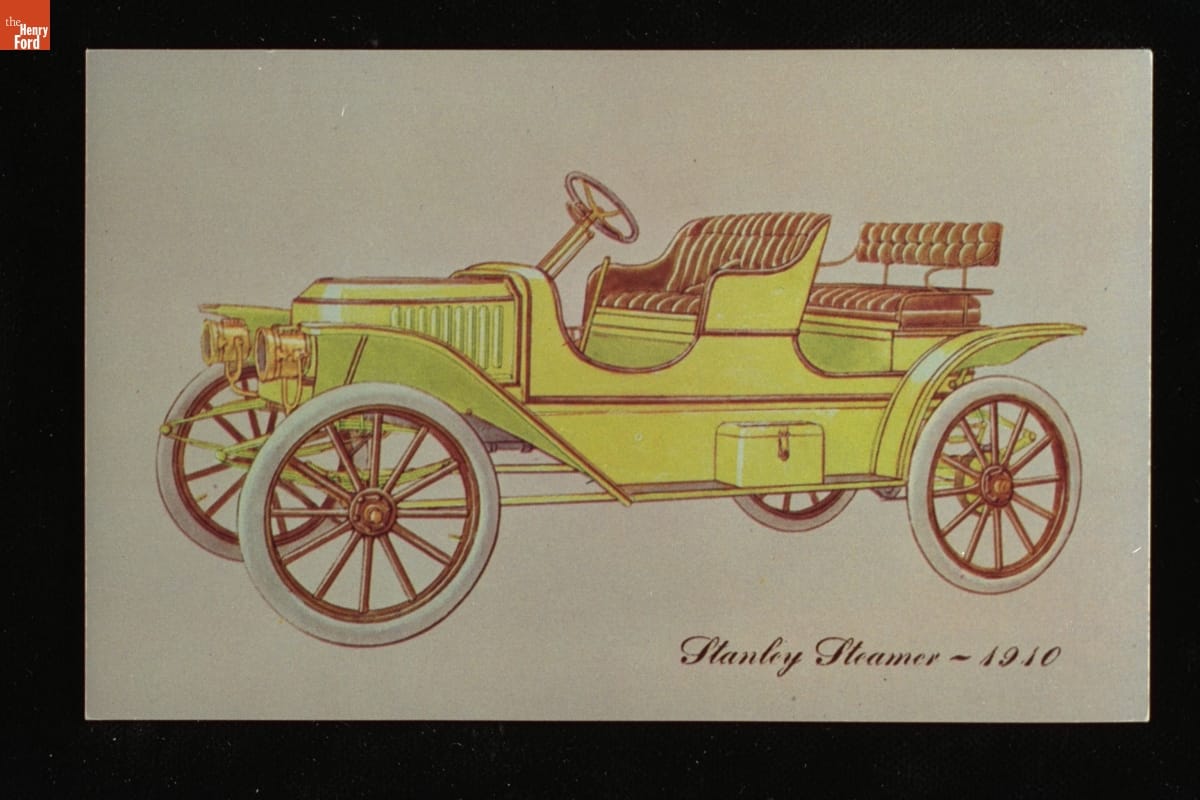
- Stanley Steamer - 1910 - This postcard, featuring an illustration of a 1910 Stanley runabout, was published by the Autoprints company of New York. Postcards like this were sold to visitors at Henry Ford Museum & Greenfield Village in the 1950s. Brothers Francis and Freelan Stanley formed Stanley Motor Carriage Company in 1902. The firm produced steam-powered cars exclusively until it ended operations in 1924.
- 1910
- Collections - Artifact
Stanley Steamer - 1910
This postcard, featuring an illustration of a 1910 Stanley runabout, was published by the Autoprints company of New York. Postcards like this were sold to visitors at Henry Ford Museum & Greenfield Village in the 1950s. Brothers Francis and Freelan Stanley formed Stanley Motor Carriage Company in 1902. The firm produced steam-powered cars exclusively until it ended operations in 1924.
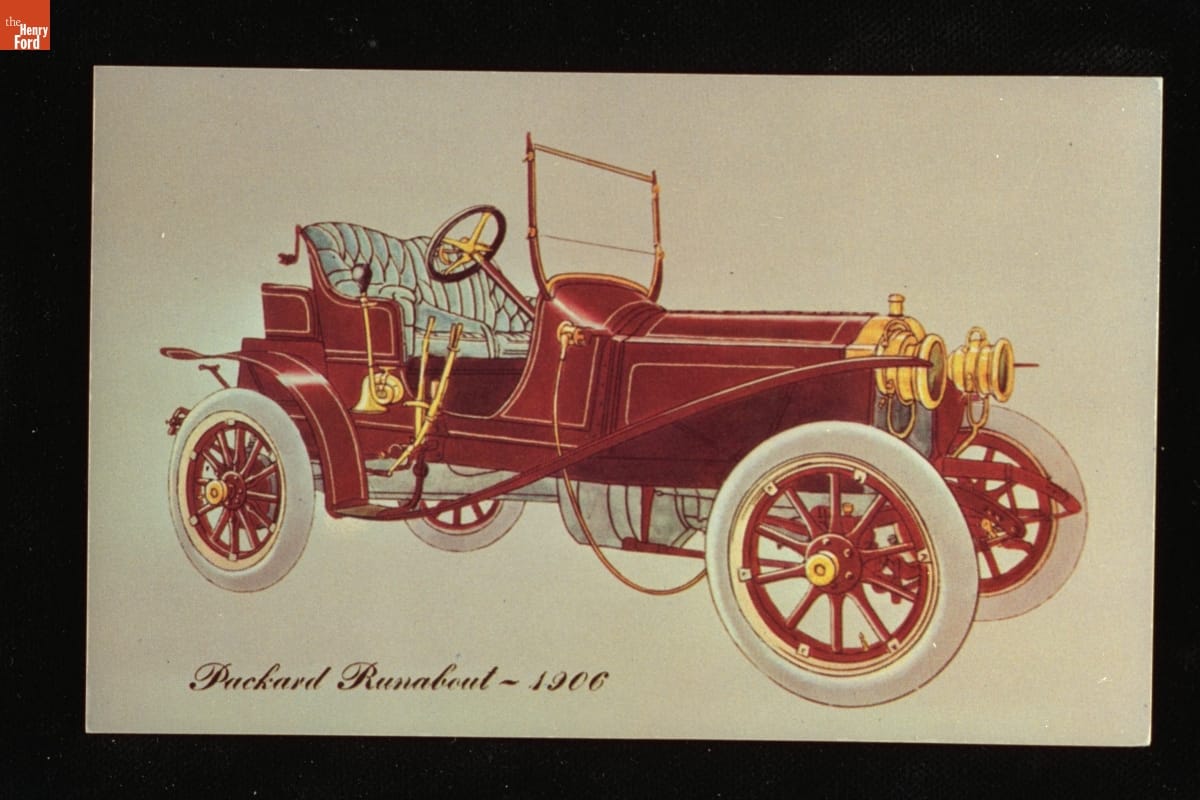
- Packard Runabout - 1906 - This postcard, featuring an illustration of an early Packard automobile, was published by the Autoprints company of New York. Postcards like this were sold to visitors at Henry Ford Museum & Greenfield Village in the 1950s. James Ward Packard founded Packard Motor Car Company in 1899. It became America's premier luxury marque and largely remained so until production ended in 1958.
- 1906
- Collections - Artifact
Packard Runabout - 1906
This postcard, featuring an illustration of an early Packard automobile, was published by the Autoprints company of New York. Postcards like this were sold to visitors at Henry Ford Museum & Greenfield Village in the 1950s. James Ward Packard founded Packard Motor Car Company in 1899. It became America's premier luxury marque and largely remained so until production ended in 1958.
- Portrait of Isabelle and J.R. Jones, before 1924 -
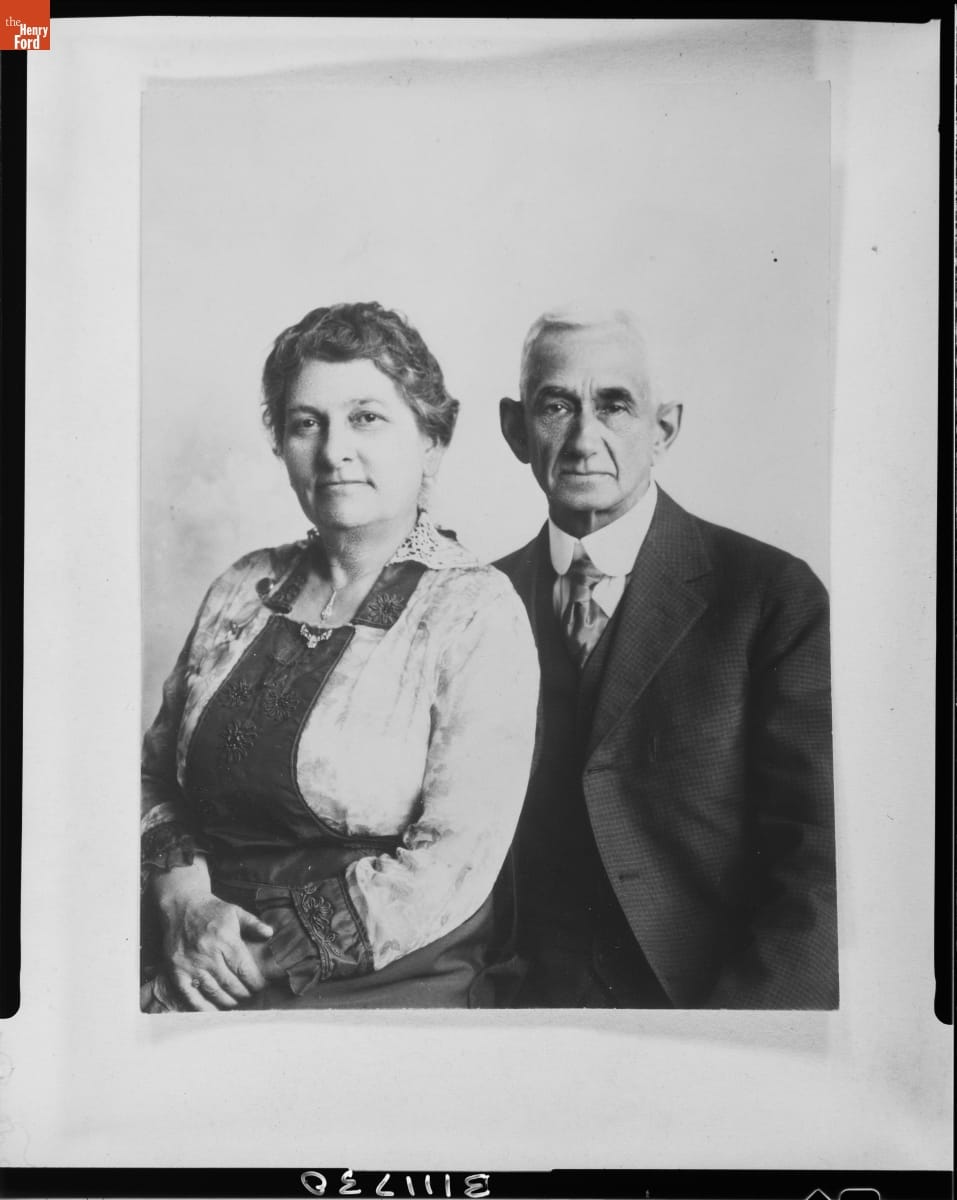
- circa 1920
- Collections - Artifact
Portrait of Isabelle and J.R. Jones, before 1924
- "Ford Model A Tonneau - 1903" - This postcard, featuring an illustration of an early Ford automobile, was published by the Autoprints company of New York. Postcards like this were sold to visitors at Henry Ford Museum & Greenfield Village in the 1950s. Ford Motor Company, founded by Henry Ford in 1903, revolutionized the American auto industry with the Model T and the moving assembly line.
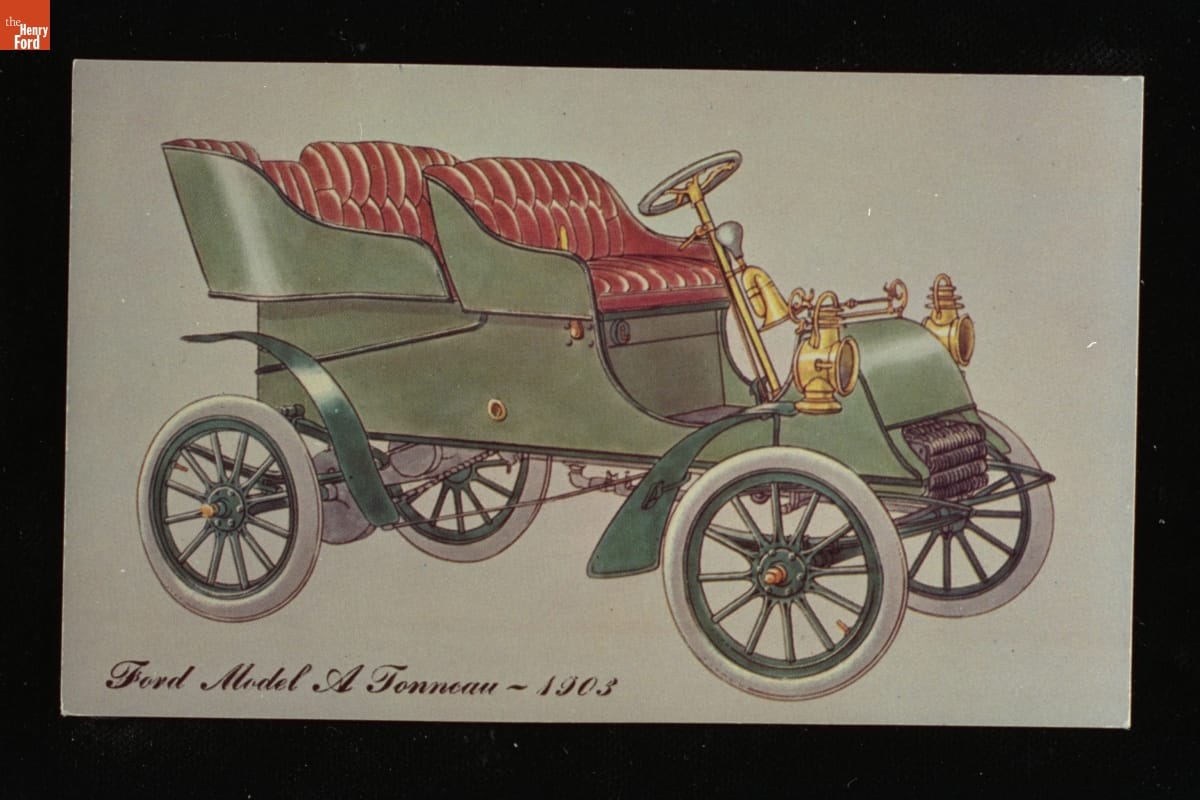
- 1903
- Collections - Artifact
"Ford Model A Tonneau - 1903"
This postcard, featuring an illustration of an early Ford automobile, was published by the Autoprints company of New York. Postcards like this were sold to visitors at Henry Ford Museum & Greenfield Village in the 1950s. Ford Motor Company, founded by Henry Ford in 1903, revolutionized the American auto industry with the Model T and the moving assembly line.
- Printing Office & Tin Shop - The Printing Office was built in Greenfield Village in 1933. For decades, the building served as a utilitarian print shop for Greenfield Village. At one time, the building housed a recreated 19th-century small town newspaper print shop and tinsmithing studio. Now, only the print shop remains.
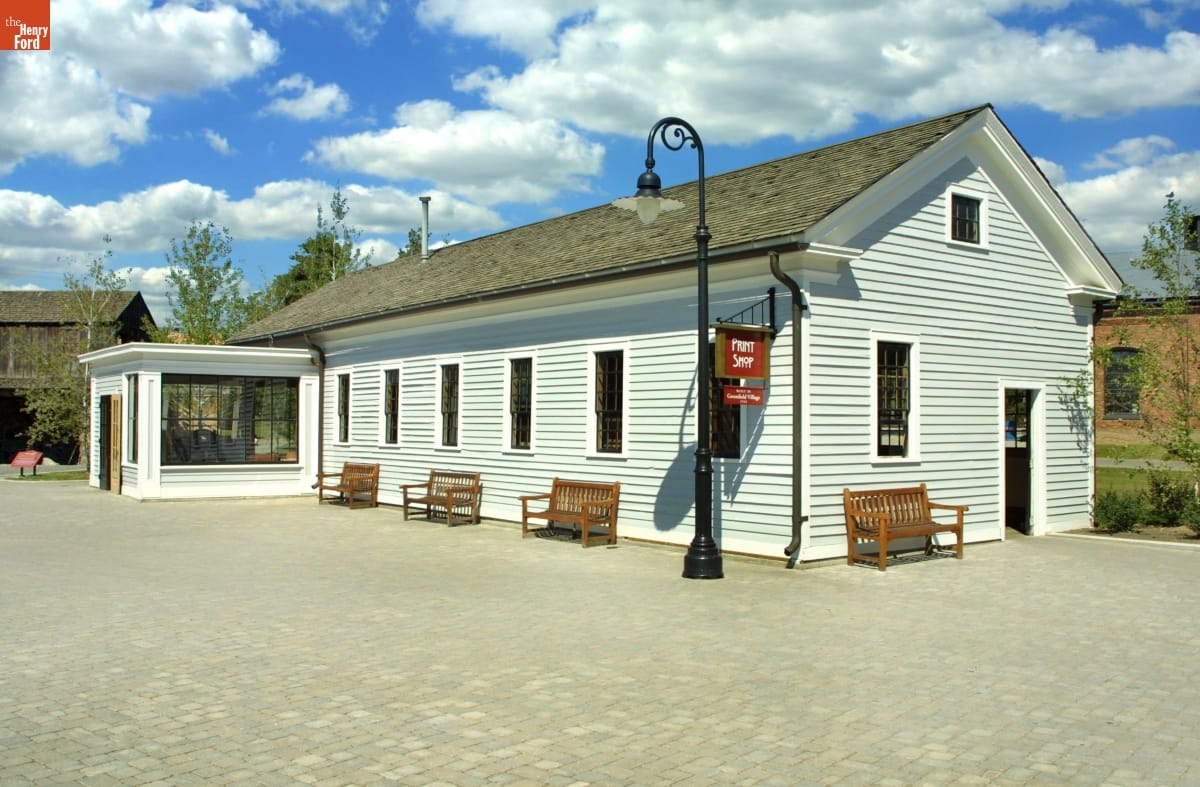
- 1933
- Collections - Artifact
Printing Office & Tin Shop
The Printing Office was built in Greenfield Village in 1933. For decades, the building served as a utilitarian print shop for Greenfield Village. At one time, the building housed a recreated 19th-century small town newspaper print shop and tinsmithing studio. Now, only the print shop remains.
- Threshing Scene, circa 1870 -
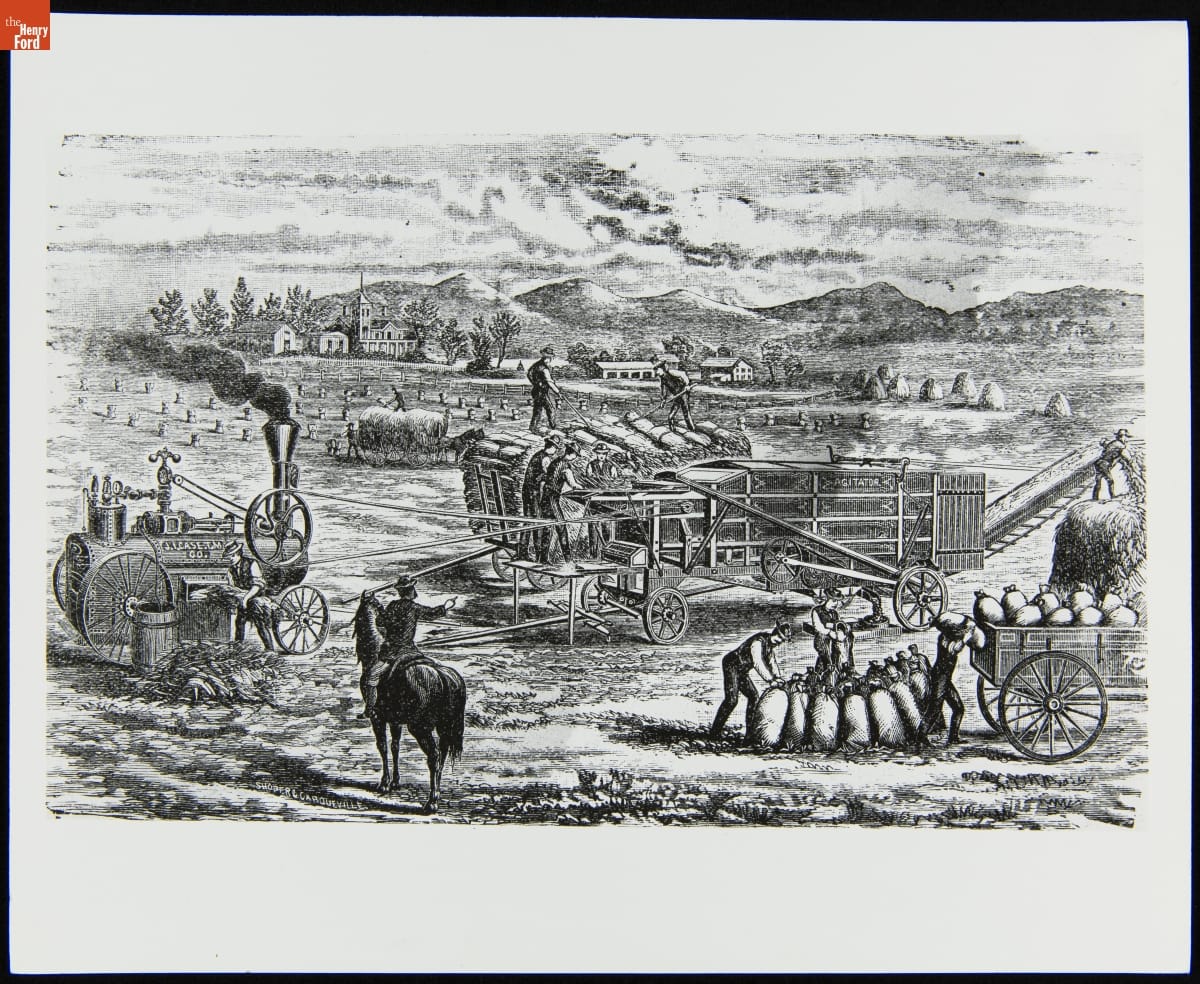
- circa 1870
- Collections - Artifact
Threshing Scene, circa 1870
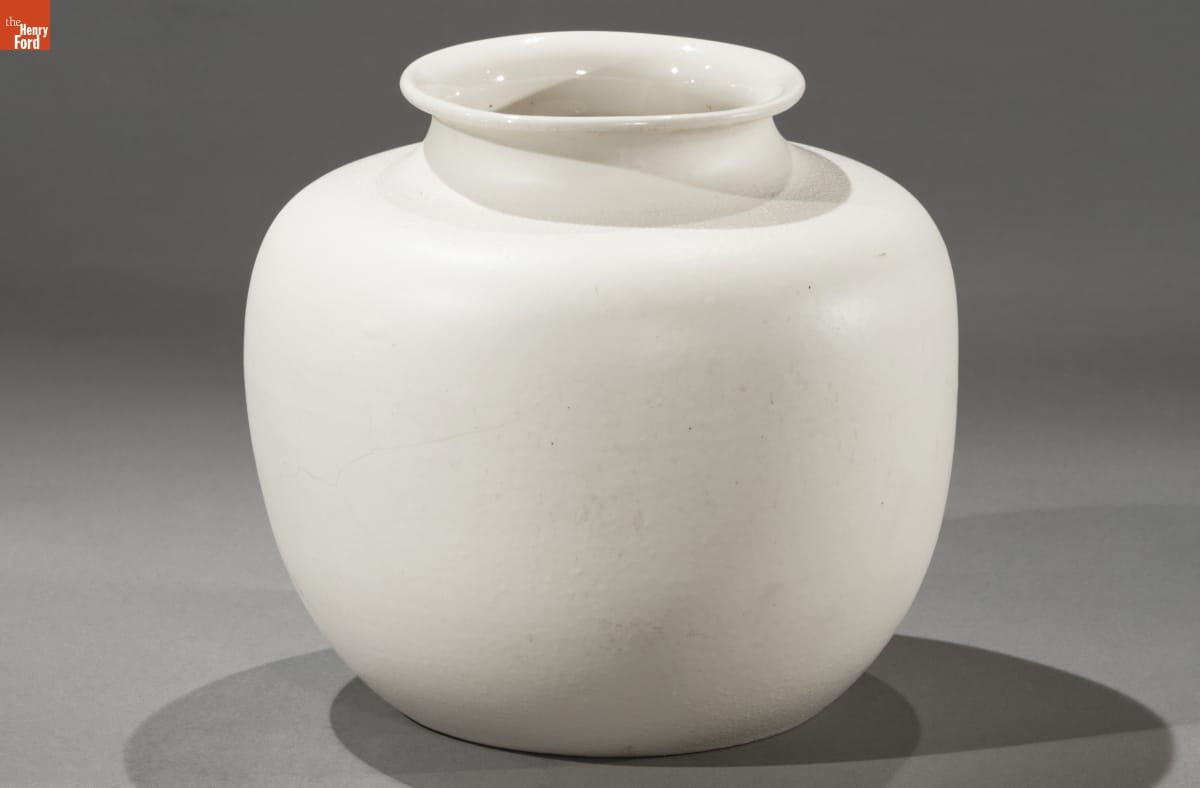
- Vase, 1942 -
- 1942
- Collections - Artifact
Vase, 1942
- Menlo Park Laboratory - When Edison moved to Menlo Park, New Jersey, in spring of 1876 the laboratory building contained his entire operation -- a handful of collaborators, office, library, and machine shop as well as laboratory. As the scale of Edison's investigations grew so did the complex, but this building -- dedicated to experimental activities -- was always understood to be the heart of the enterprise.

- 1876-1883
- Collections - Artifact
Menlo Park Laboratory
When Edison moved to Menlo Park, New Jersey, in spring of 1876 the laboratory building contained his entire operation -- a handful of collaborators, office, library, and machine shop as well as laboratory. As the scale of Edison's investigations grew so did the complex, but this building -- dedicated to experimental activities -- was always understood to be the heart of the enterprise.