
Search
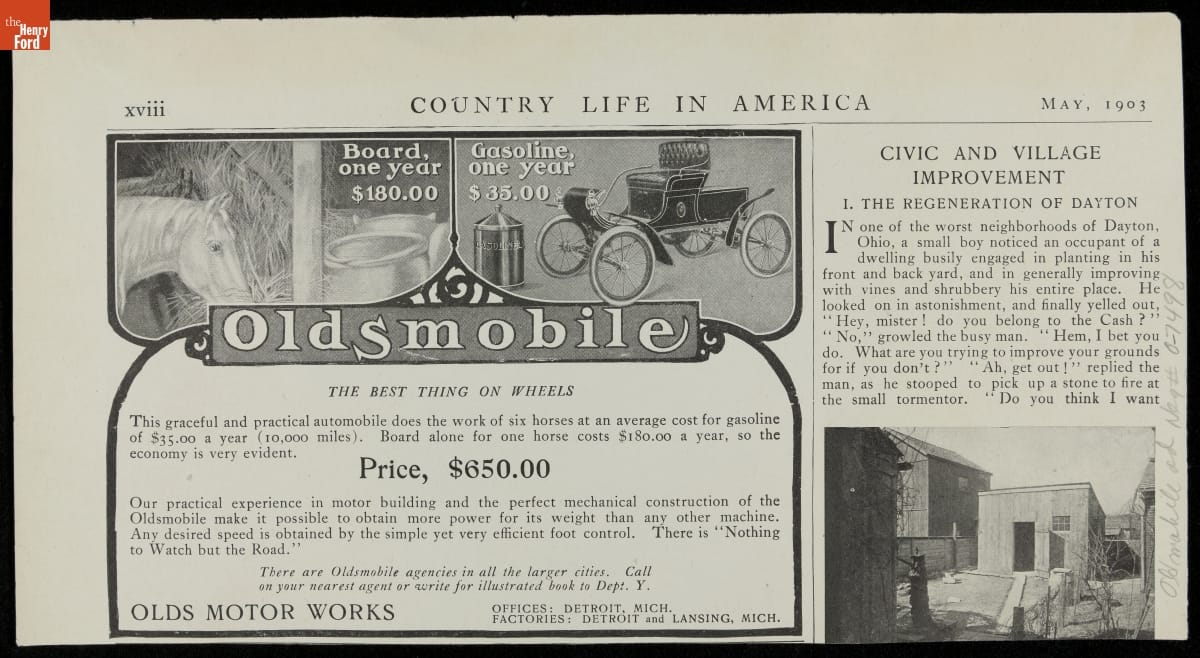
- Advertisement for Olds Motor Works, "Oldsmobile, the Best Thing on Wheels," 1903 - Many would-be customers balked at the high price of an automobile. Oldsmobile offered a popular counterargument in this 1903 advertisement. The car required $35 in gasoline for a year of operation, while a horse needed $180 in food. What's more, the car only used gas when it ran, while a horse had to be fed whether it worked or not.
- May 01, 1903
- Collections - Artifact
Advertisement for Olds Motor Works, "Oldsmobile, the Best Thing on Wheels," 1903
Many would-be customers balked at the high price of an automobile. Oldsmobile offered a popular counterargument in this 1903 advertisement. The car required $35 in gasoline for a year of operation, while a horse needed $180 in food. What's more, the car only used gas when it ran, while a horse had to be fed whether it worked or not.
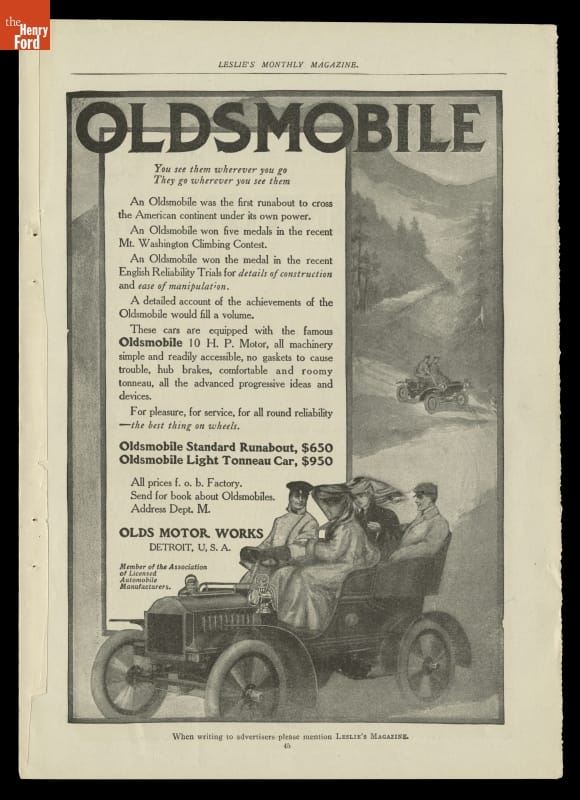
- Advertisement for the 1905 Oldsmobile, "You See Them Wherever You Go" - The Curved Dash runabout made Oldsmobile a success, but some customers wanted something more modern than the little runabout's decidedly carriage-inspired look. Oldsmobile's "French Front" touring model featured a long hood out front, just like sophisticated import automobiles. But the Olds hood was largely for show -- the one-cylinder engine still sat under the seat.
- 1904-1905
- Collections - Artifact
Advertisement for the 1905 Oldsmobile, "You See Them Wherever You Go"
The Curved Dash runabout made Oldsmobile a success, but some customers wanted something more modern than the little runabout's decidedly carriage-inspired look. Oldsmobile's "French Front" touring model featured a long hood out front, just like sophisticated import automobiles. But the Olds hood was largely for show -- the one-cylinder engine still sat under the seat.
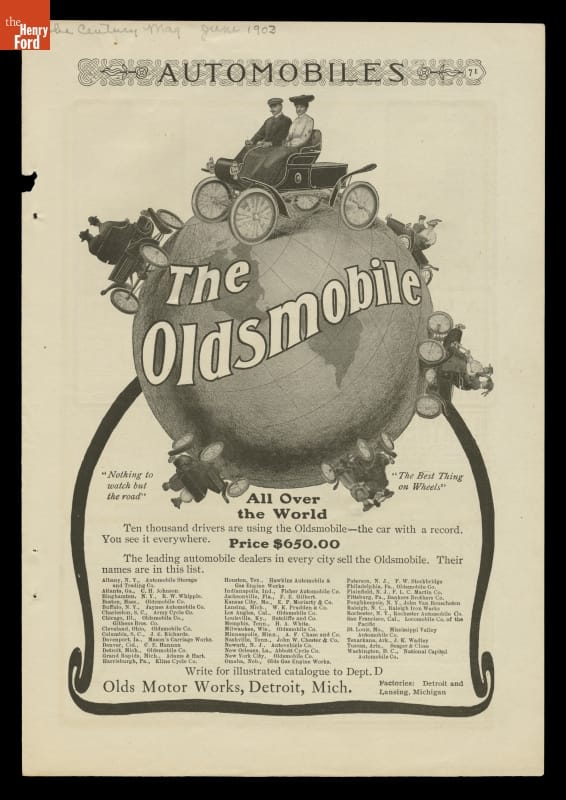
- Olds Motor Works Advertisement from June 1903, "The Oldsmobile All Over the World" - The Curved Dash Oldsmobile arguably was the world's first mass-produced automobile. By 1904, Olds Motor Works built 5,000 cars a year. At just $650, the little runabout was within the means of middle-class buyers. This 1903 advertisement promotes the Oldsmobile's wide use and availability. It also hints at the car's dependability: "Nothing to watch but the road."
- June 01, 1903
- Collections - Artifact
Olds Motor Works Advertisement from June 1903, "The Oldsmobile All Over the World"
The Curved Dash Oldsmobile arguably was the world's first mass-produced automobile. By 1904, Olds Motor Works built 5,000 cars a year. At just $650, the little runabout was within the means of middle-class buyers. This 1903 advertisement promotes the Oldsmobile's wide use and availability. It also hints at the car's dependability: "Nothing to watch but the road."
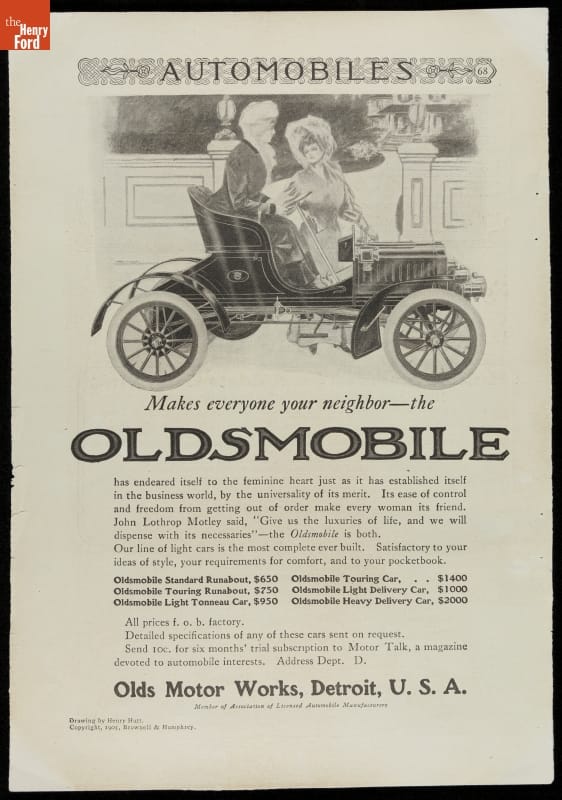
- "Makes Everyone Your Neighbor--the Oldsmobile" Olds Motor Works Advertisement, 1905 - From the beginning, carmakers directed some advertisements specifically to women. This 1905 Oldsmobile ad promoted the car's reliability and ease of operation. But it also advertised a more fundamental benefit for female drivers. With an automobile, women could escape the dull drudgery of the home and connect with friends anywhere. The Oldsmobile "makes everyone your neighbor."
- 1905
- Collections - Artifact
"Makes Everyone Your Neighbor--the Oldsmobile" Olds Motor Works Advertisement, 1905
From the beginning, carmakers directed some advertisements specifically to women. This 1905 Oldsmobile ad promoted the car's reliability and ease of operation. But it also advertised a more fundamental benefit for female drivers. With an automobile, women could escape the dull drudgery of the home and connect with friends anywhere. The Oldsmobile "makes everyone your neighbor."
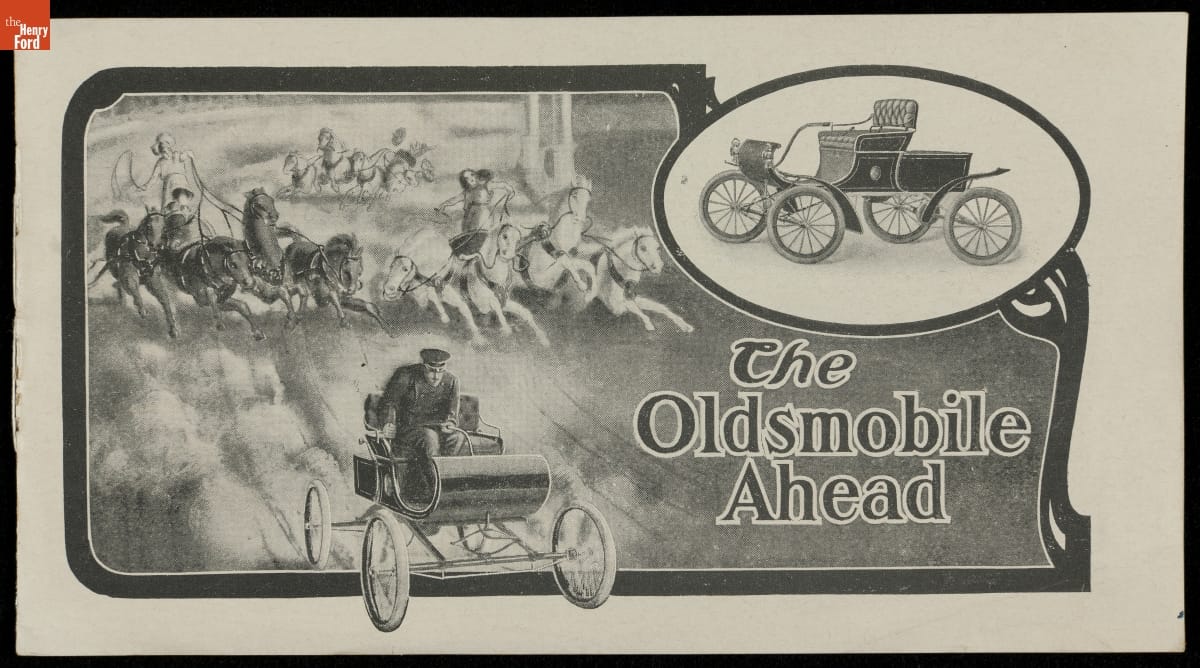
- Sales Brochure for the 1903 Oldsmobile, Olds Motor Works, "The Oldsmobile Ahead" - Olds Motor Works introduced its Curved Dash automobile in 1901. The one-cylinder runabout wasn't particularly powerful or robust, but at $650 it was relatively cheap. The car was a hit and Oldsmobile was building 5,000 units a year by 1904, making the Curved Dash the first mass-produced car in the United States -- if not the world.
- 1903
- Collections - Artifact
Sales Brochure for the 1903 Oldsmobile, Olds Motor Works, "The Oldsmobile Ahead"
Olds Motor Works introduced its Curved Dash automobile in 1901. The one-cylinder runabout wasn't particularly powerful or robust, but at $650 it was relatively cheap. The car was a hit and Oldsmobile was building 5,000 units a year by 1904, making the Curved Dash the first mass-produced car in the United States -- if not the world.
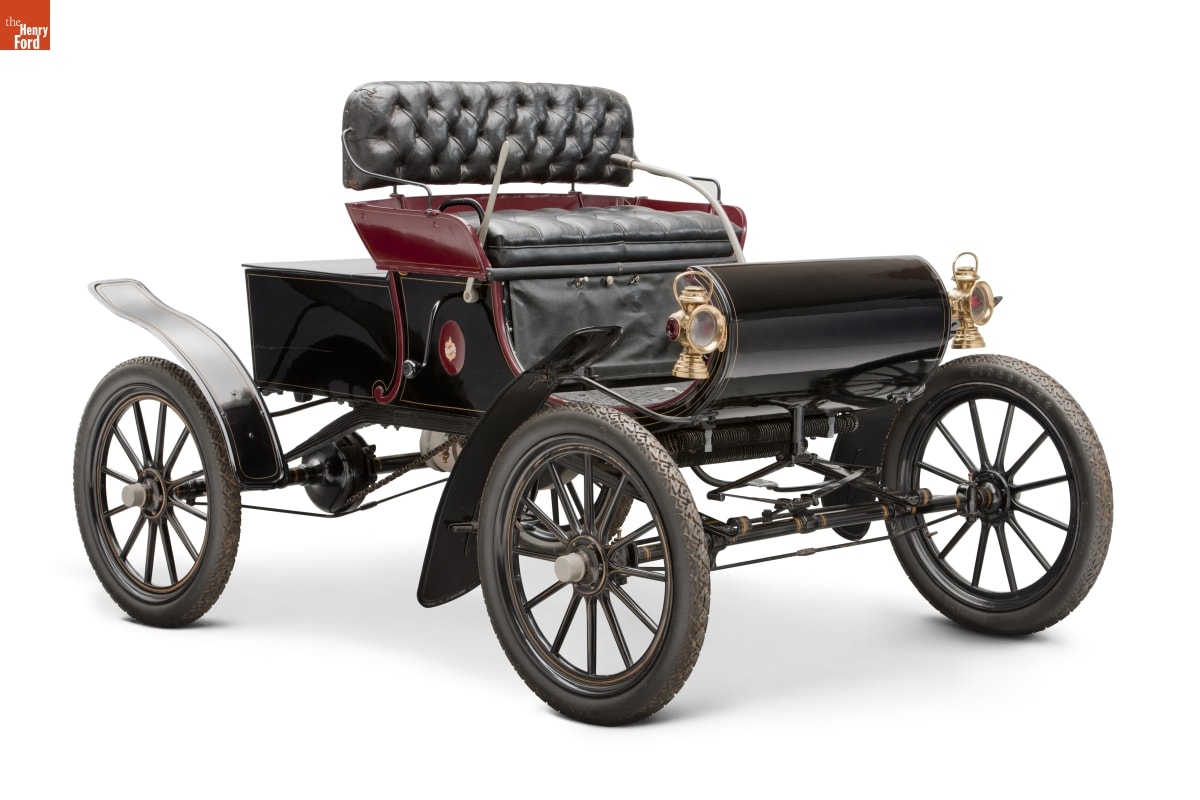
- 1903 Oldsmobile Curved Dash Runabout - When it inspires a song, you know it's popular. This Olds was the bestselling car in America from 1902 to 1905. Automobiles had an emotional appeal. A driver in 1901 said that controlling a car satisfied "an almost universal sense, the love of power." Despite the attraction, cars were not a significant player in the transportation world. In 1903 some 4,000 people bought Oldsmobiles, but more than 900,000 bought buggies and carriages.
- 1903
- Collections - Artifact
1903 Oldsmobile Curved Dash Runabout
When it inspires a song, you know it's popular. This Olds was the bestselling car in America from 1902 to 1905. Automobiles had an emotional appeal. A driver in 1901 said that controlling a car satisfied "an almost universal sense, the love of power." Despite the attraction, cars were not a significant player in the transportation world. In 1903 some 4,000 people bought Oldsmobiles, but more than 900,000 bought buggies and carriages.
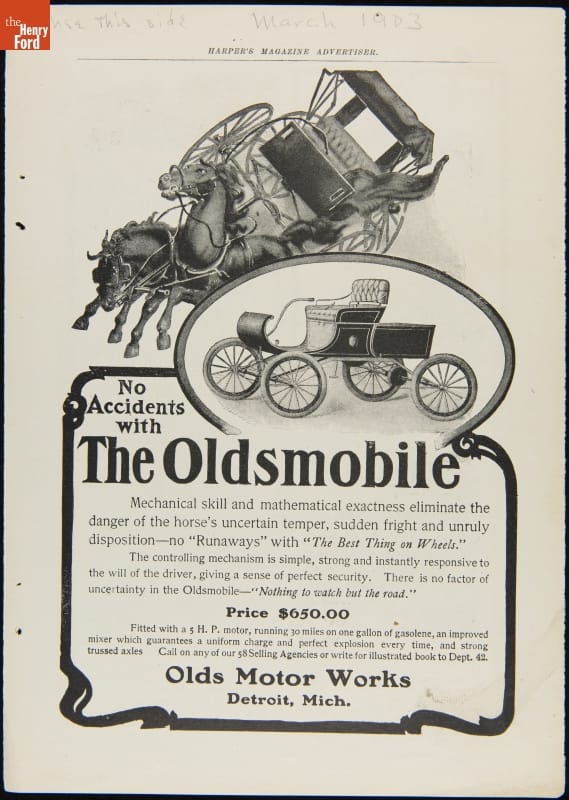
- March 1903 Olds Motor Works Advertisement, "No Accidents with the Oldsmobile" - Advertisements for the Curved Dash Olds, built from 1901 to 1907, often focused on the little car's advantages over horse-drawn transportation. This 1903 ad from <em>Harper's</em> magazine cautioned readers that the horse had an uncertain temperament and, if frightened, it could cause accidents. By contrast, the mechanical Oldsmobile gave drivers "a sense of perfect security."
- March 01, 1903
- Collections - Artifact
March 1903 Olds Motor Works Advertisement, "No Accidents with the Oldsmobile"
Advertisements for the Curved Dash Olds, built from 1901 to 1907, often focused on the little car's advantages over horse-drawn transportation. This 1903 ad from Harper's magazine cautioned readers that the horse had an uncertain temperament and, if frightened, it could cause accidents. By contrast, the mechanical Oldsmobile gave drivers "a sense of perfect security."
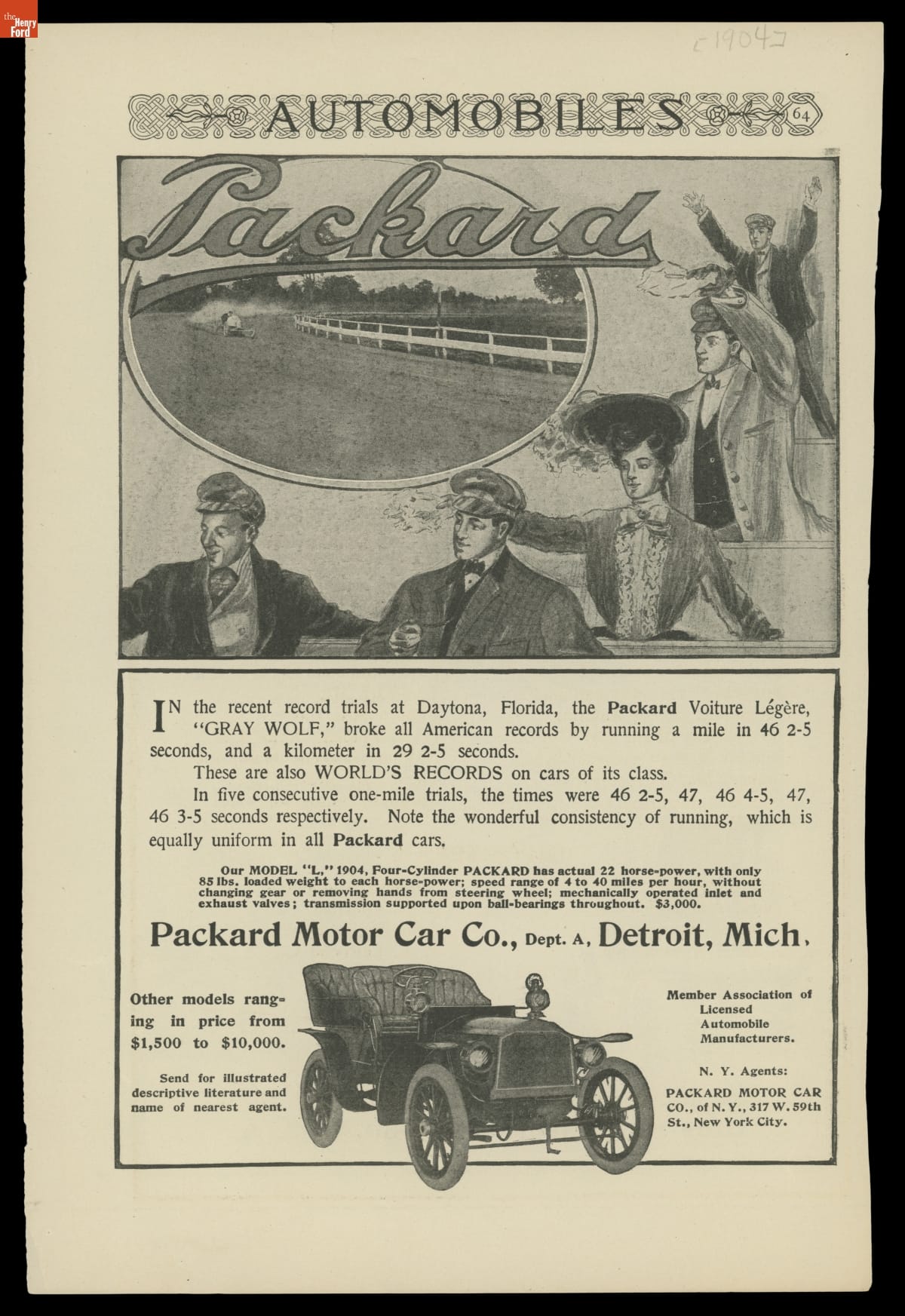
- Packard Motor Car Company and Olds Motor Works Advertisements, 1904 - Advertisements for Packard and Oldsmobile appear on this page taken from a 1904 magazine. Like most early automobile ads, the copy focuses on reputation, performance, and price. The Packard advertisement is an early example of racing as a marketing tool, while the Olds ad makes a specific appeal to city-dwelling customers.
- 1904
- Collections - Artifact
Packard Motor Car Company and Olds Motor Works Advertisements, 1904
Advertisements for Packard and Oldsmobile appear on this page taken from a 1904 magazine. Like most early automobile ads, the copy focuses on reputation, performance, and price. The Packard advertisement is an early example of racing as a marketing tool, while the Olds ad makes a specific appeal to city-dwelling customers.
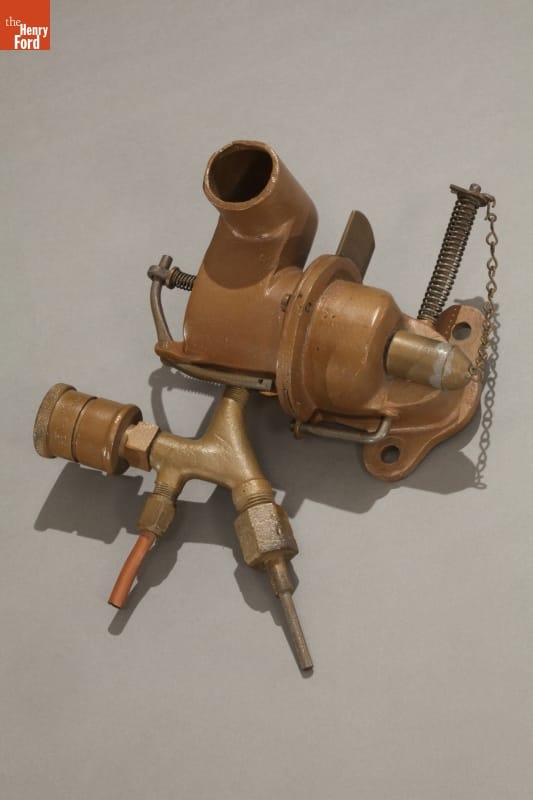
- Curved Dash Oldsmobile Carburetor, 1903 - Carburetors mix fuel and air in the correct proportion to make the car's engine operate smoothly. Early carburetors needed frequent adjustment because of inconsistent fuel quality and changing weather conditions. For convenience, some cars had a knob that allowed the driver to adjust the carburetor as they drove -- much easier than climbing out and opening the hood to make the adjustment.
- 1903
- Collections - Artifact
Curved Dash Oldsmobile Carburetor, 1903
Carburetors mix fuel and air in the correct proportion to make the car's engine operate smoothly. Early carburetors needed frequent adjustment because of inconsistent fuel quality and changing weather conditions. For convenience, some cars had a knob that allowed the driver to adjust the carburetor as they drove -- much easier than climbing out and opening the hood to make the adjustment.
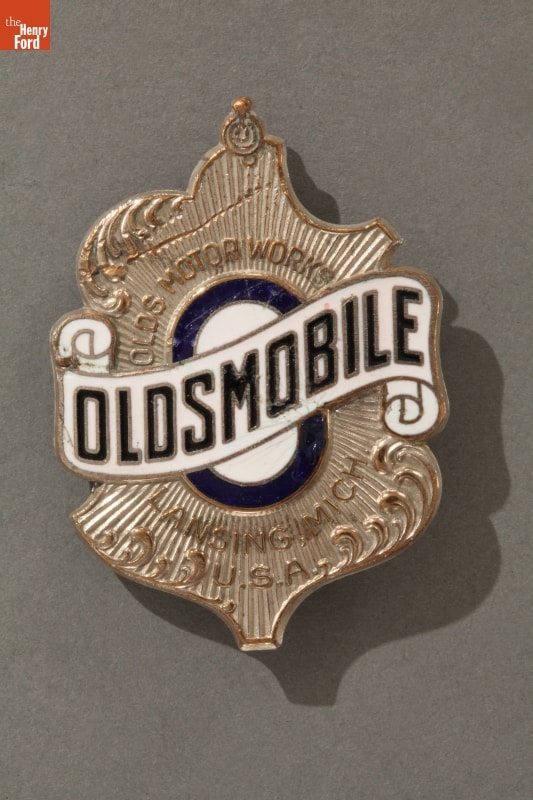
- Oldsmobile Radiator Emblem, circa 1925 - An automobile manufacturer's badge is fundamental to the company's brand identity -- just as the maker's name is often important to <EM>our</EM> identity as consumers and drivers. Early automobile badges tended to be small and often discreetly located; today they have evolved into enlarged, prominently placed, and frequently symmetrical logos -- easy to recognize, even at a glance in a rear-view mirror.
- circa 1925
- Collections - Artifact
Oldsmobile Radiator Emblem, circa 1925
An automobile manufacturer's badge is fundamental to the company's brand identity -- just as the maker's name is often important to our identity as consumers and drivers. Early automobile badges tended to be small and often discreetly located; today they have evolved into enlarged, prominently placed, and frequently symmetrical logos -- easy to recognize, even at a glance in a rear-view mirror.