
Search
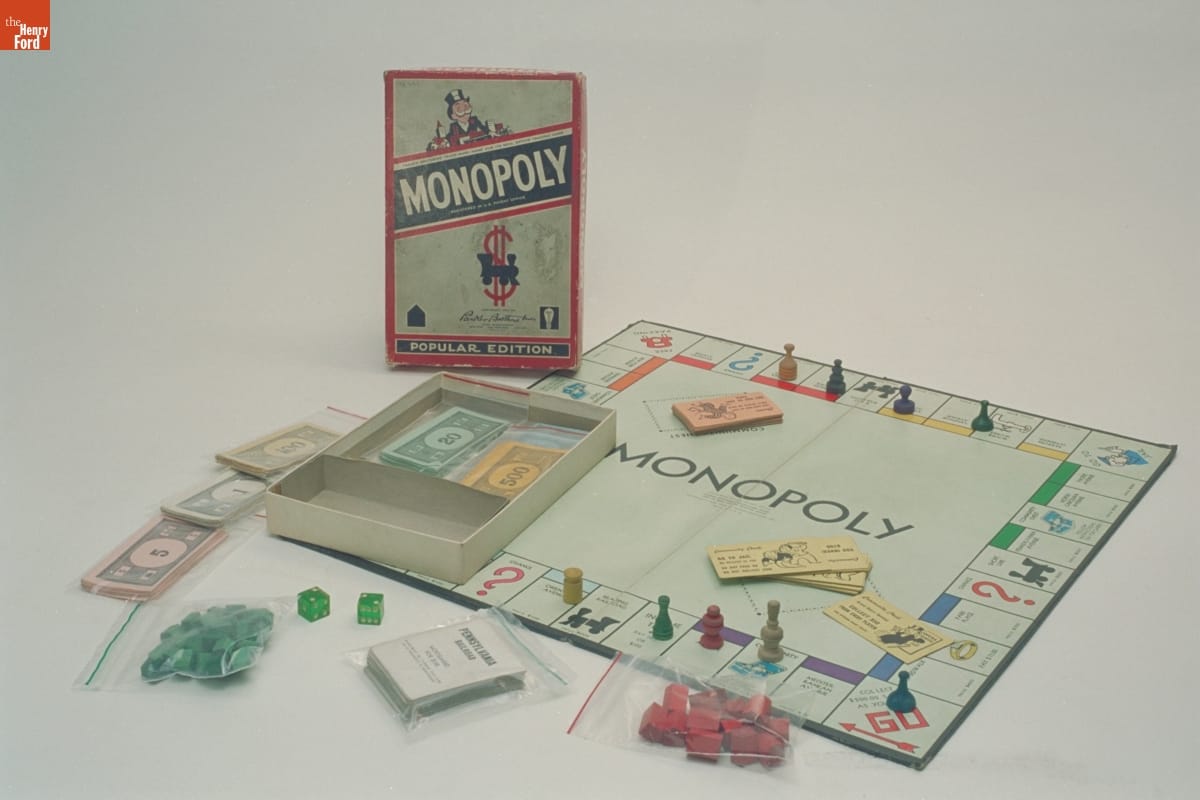
- Monopoly Game, 1954-1960 - Buy property. Build hotels. Charge rent. Make money. Monopoly derived from The Landlord's Game created in 1904 -- a game with the objective to point out the <EM>inequities</EM> of wealth. Monopoly's fun and popularity, however, came from amassing piles of play money and winning it all. Parker Brothers secured the game's rights in 1935 and it became the most popular board game in history.
- 1954-1960
- Collections - Artifact
Monopoly Game, 1954-1960
Buy property. Build hotels. Charge rent. Make money. Monopoly derived from The Landlord's Game created in 1904 -- a game with the objective to point out the inequities of wealth. Monopoly's fun and popularity, however, came from amassing piles of play money and winning it all. Parker Brothers secured the game's rights in 1935 and it became the most popular board game in history.
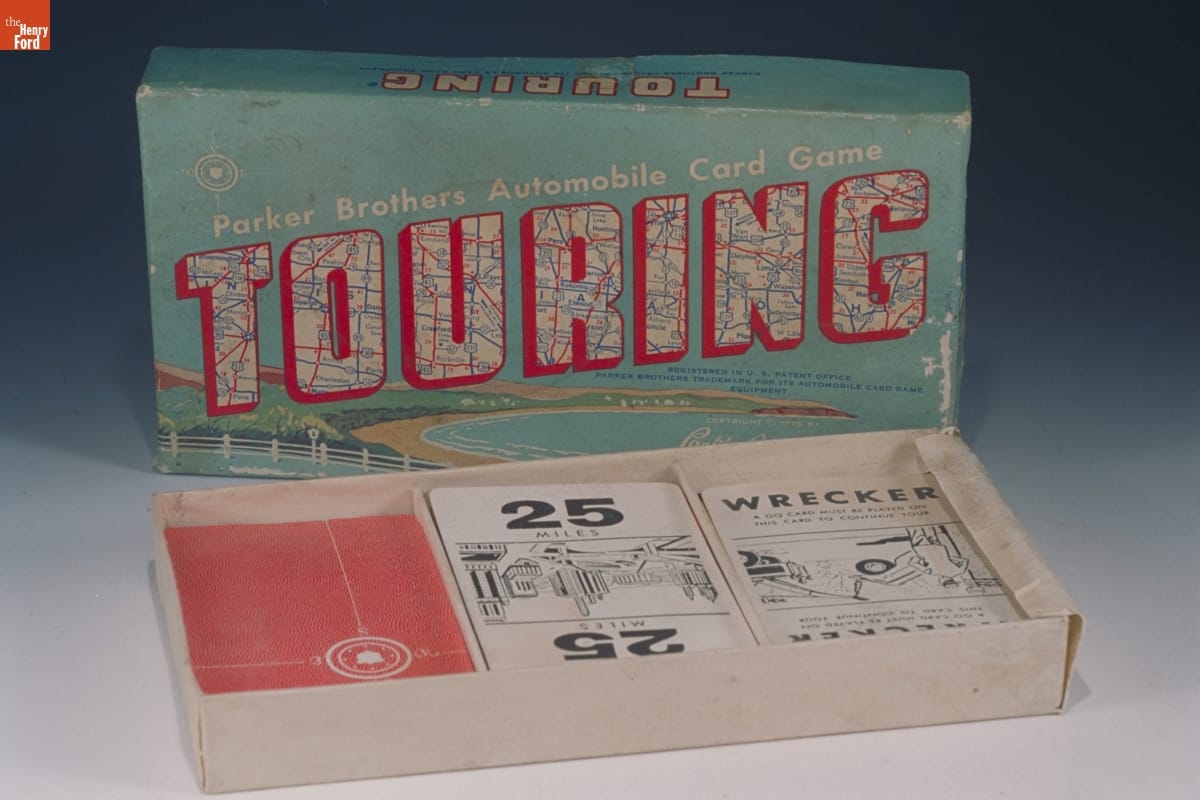
- Touring: Automobile Card Game, 1958-1965 - Players race to win in this 1958 version of Touring: Parker Brothers Automobile Card Game. Players collect mile cards to advance, but "Broken spring," "Collision" or "Out of gas" cards can slow the tourist down. A version of this game has been around since 1906. Parker Brothers purchased the rights to this game in 1925.
- 1958-1965
- Collections - Artifact
Touring: Automobile Card Game, 1958-1965
Players race to win in this 1958 version of Touring: Parker Brothers Automobile Card Game. Players collect mile cards to advance, but "Broken spring," "Collision" or "Out of gas" cards can slow the tourist down. A version of this game has been around since 1906. Parker Brothers purchased the rights to this game in 1925.
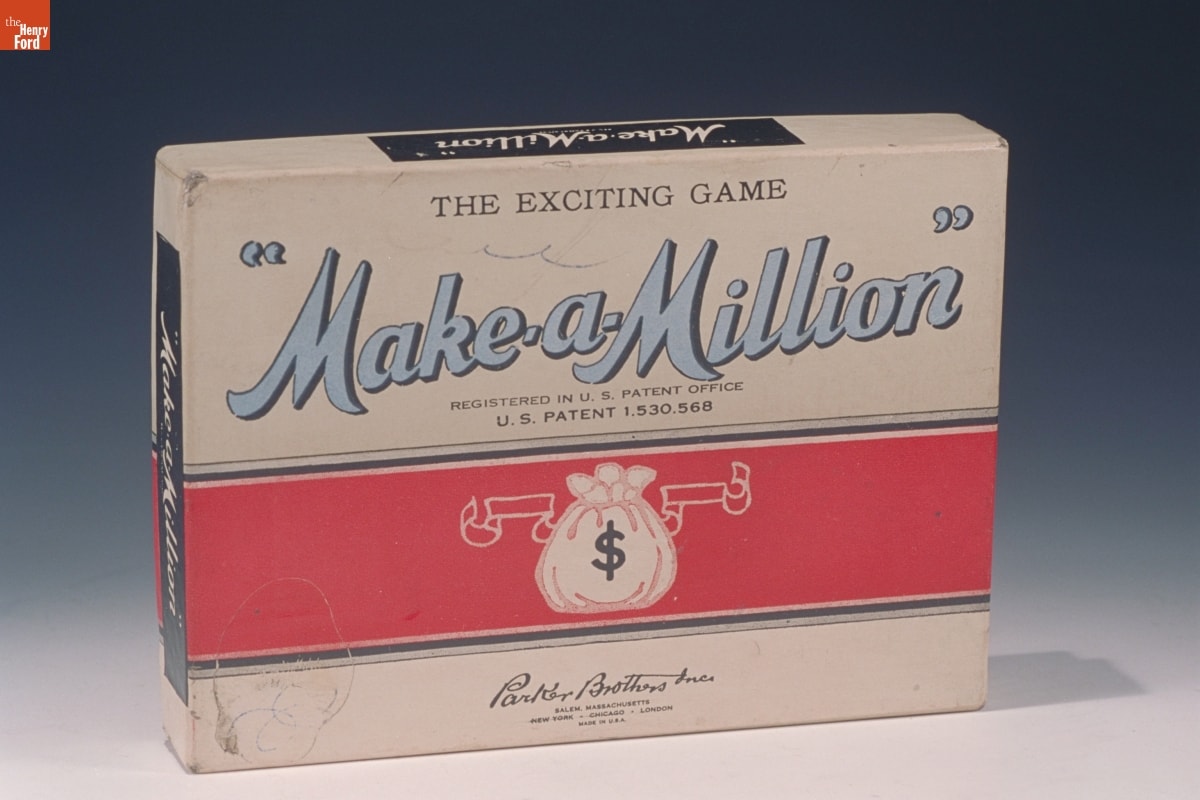
- The Exciting Game: "Make-A-Million," 1945-1955 - Parker Brothers copyrighted this card game in 1934. Teams work to make a million dollars (points) by winning tricks during the play of the game. A 55-card deck contains 52 colored number and money cards -- money cards count to the total. An additional three wild cards -- tiger, bull, and bear -- influence values won during play.
- 1945-1955
- Collections - Artifact
The Exciting Game: "Make-A-Million," 1945-1955
Parker Brothers copyrighted this card game in 1934. Teams work to make a million dollars (points) by winning tricks during the play of the game. A 55-card deck contains 52 colored number and money cards -- money cards count to the total. An additional three wild cards -- tiger, bull, and bear -- influence values won during play.
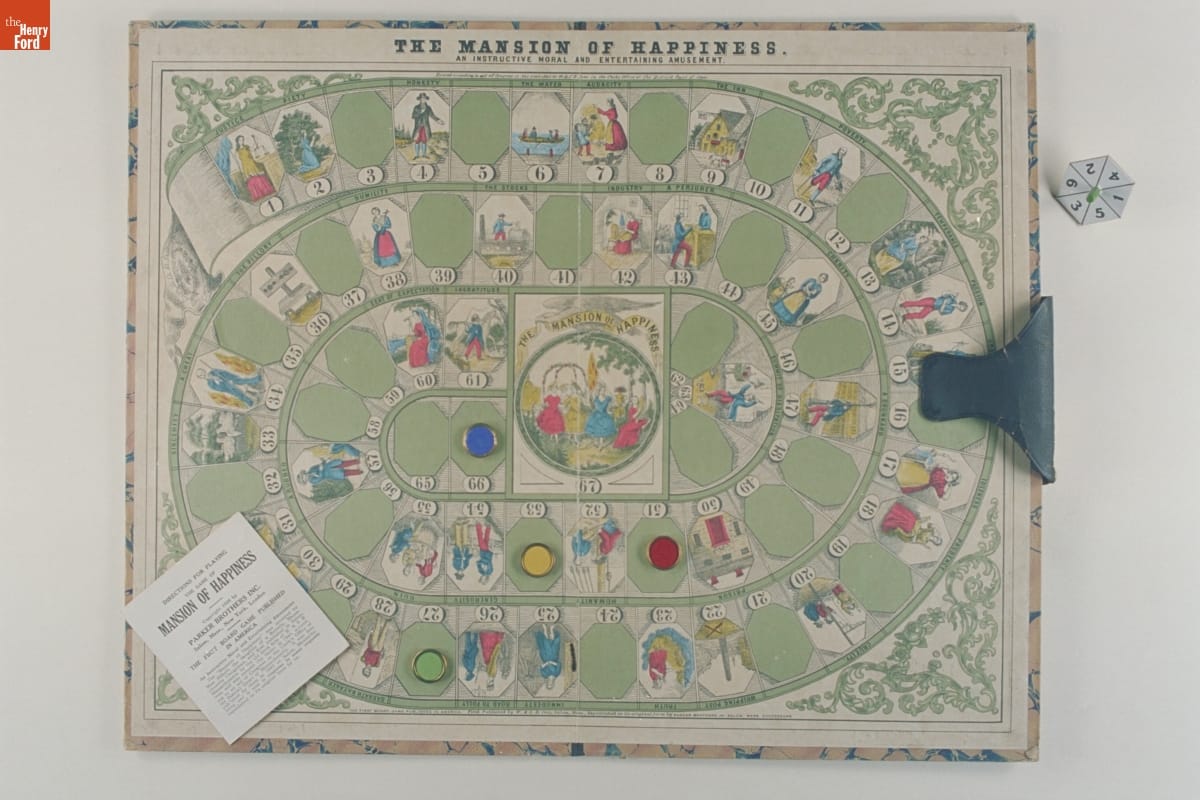
- The Mansion of Happiness Game, 1926-1930 - The 19th-century game "The Mansion of Happiness" taught children moral lessons and instilled values of thrift, honesty and industry as they journeyed around the board. Developed in the 1840s by Anne W. Abbott, a daughter of a New England clergyman, the game remained popular throughout the 1800s. Versions and copies of this moral-lessons game were made well into the 1900s.
- 1926-1930
- Collections - Artifact
The Mansion of Happiness Game, 1926-1930
The 19th-century game "The Mansion of Happiness" taught children moral lessons and instilled values of thrift, honesty and industry as they journeyed around the board. Developed in the 1840s by Anne W. Abbott, a daughter of a New England clergyman, the game remained popular throughout the 1800s. Versions and copies of this moral-lessons game were made well into the 1900s.
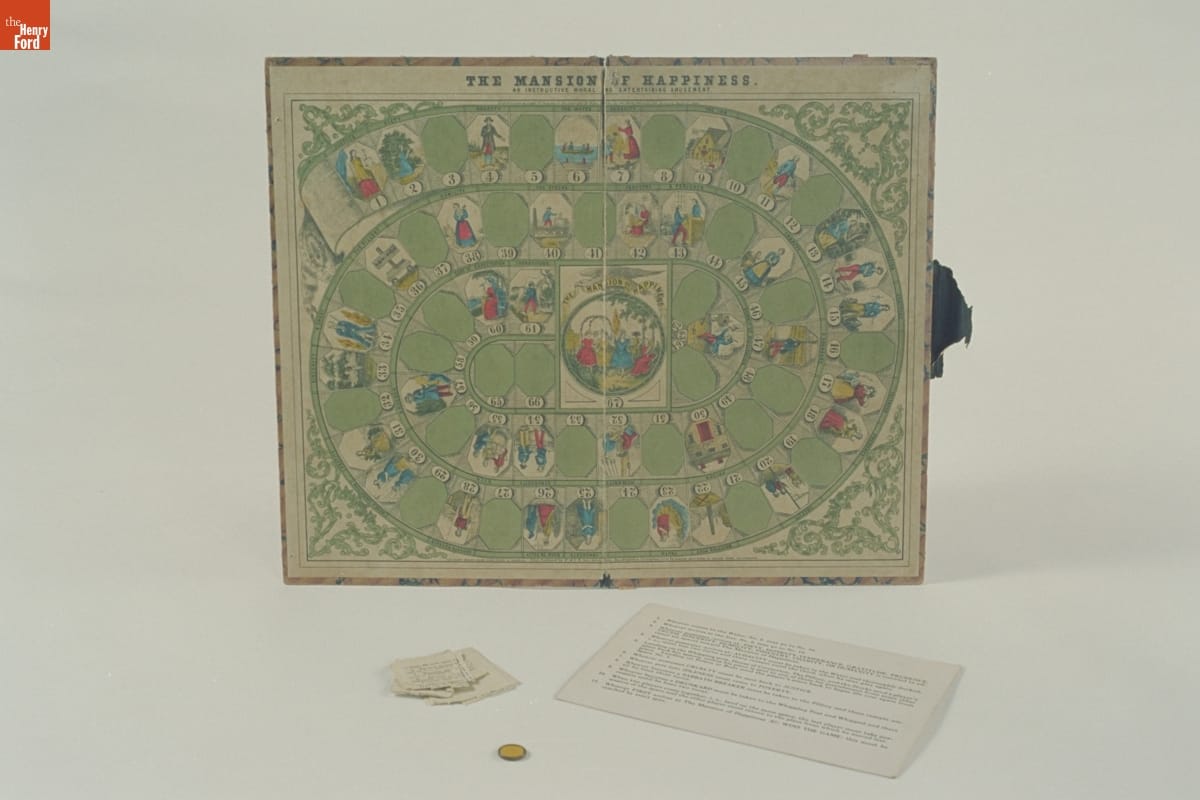
- The Mansion of Happiness Game, 1920-1950 - The 19th-century game "The Mansion of Happiness" taught children moral lessons and instilled values of thrift, honesty and industry as they journeyed around the board. Developed in the 1840s by Anne W. Abbott, a daughter of a New England clergyman, the game remained popular throughout the 1800s. Versions and copies of this moral-lessons game were made well into the 1900s.
- 1920-1950
- Collections - Artifact
The Mansion of Happiness Game, 1920-1950
The 19th-century game "The Mansion of Happiness" taught children moral lessons and instilled values of thrift, honesty and industry as they journeyed around the board. Developed in the 1840s by Anne W. Abbott, a daughter of a New England clergyman, the game remained popular throughout the 1800s. Versions and copies of this moral-lessons game were made well into the 1900s.
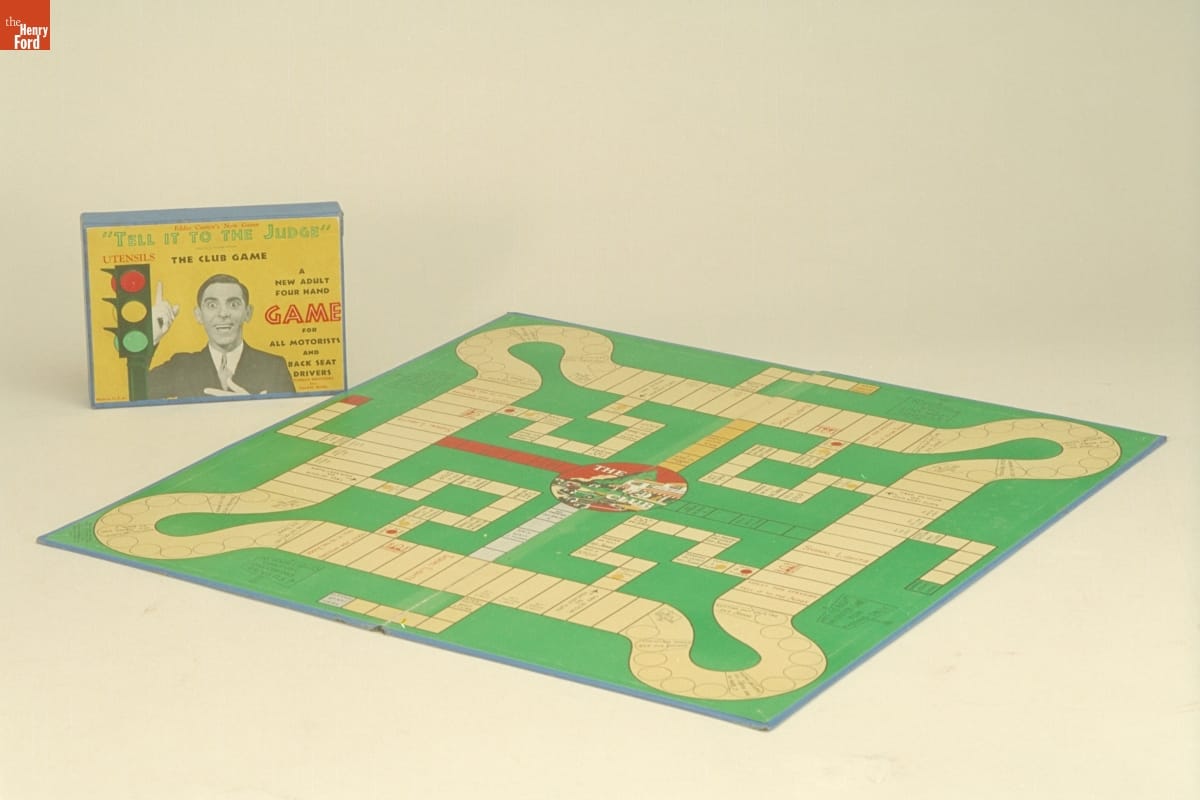
- Eddie Cantor's "Tell it to the Judge" Game, circa 1936 - Game companies have used famous individuals to help sell their toys and games. Eddie Cantor, radio, film and Broadway personality, lent his name to this Parker Brothers' game created in the 1930s. Game play sometimes has little relationship to the celebrity endorsing the product. Players in this game race around the board avoiding tickets and fines.
- circa 1936
- Collections - Artifact
Eddie Cantor's "Tell it to the Judge" Game, circa 1936
Game companies have used famous individuals to help sell their toys and games. Eddie Cantor, radio, film and Broadway personality, lent his name to this Parker Brothers' game created in the 1930s. Game play sometimes has little relationship to the celebrity endorsing the product. Players in this game race around the board avoiding tickets and fines.
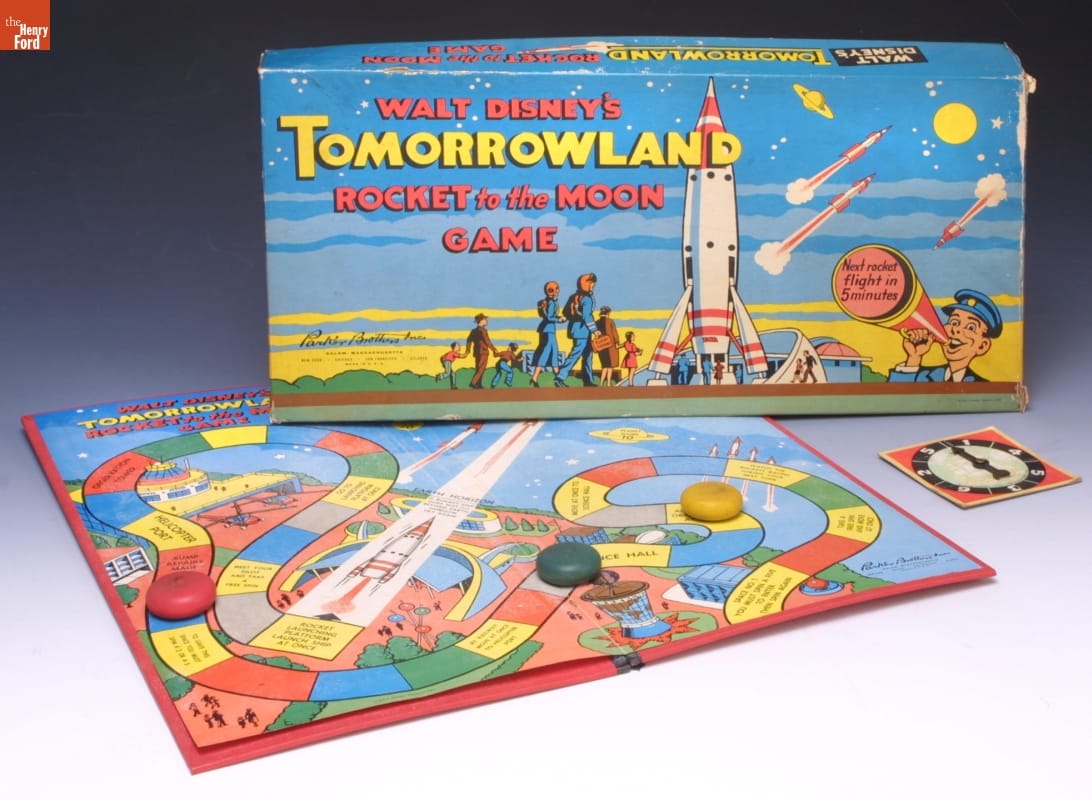
- Walt Disney's Tomorrowland Rocket to the Moon Game, 1956 - Disneyland, America's first theme park, opened in 1955 in Anaheim, California. With the consummate skill of a filmmaker and storyteller, Walt Disney (with his Imagineers) reduced popular American themes to their essence to create each land and attraction. Tomorrowland, including Rocket to the Moon, was designed to be an optimistic interpretation of how science and technology would improve people's lives.
- 1956
- Collections - Artifact
Walt Disney's Tomorrowland Rocket to the Moon Game, 1956
Disneyland, America's first theme park, opened in 1955 in Anaheim, California. With the consummate skill of a filmmaker and storyteller, Walt Disney (with his Imagineers) reduced popular American themes to their essence to create each land and attraction. Tomorrowland, including Rocket to the Moon, was designed to be an optimistic interpretation of how science and technology would improve people's lives.
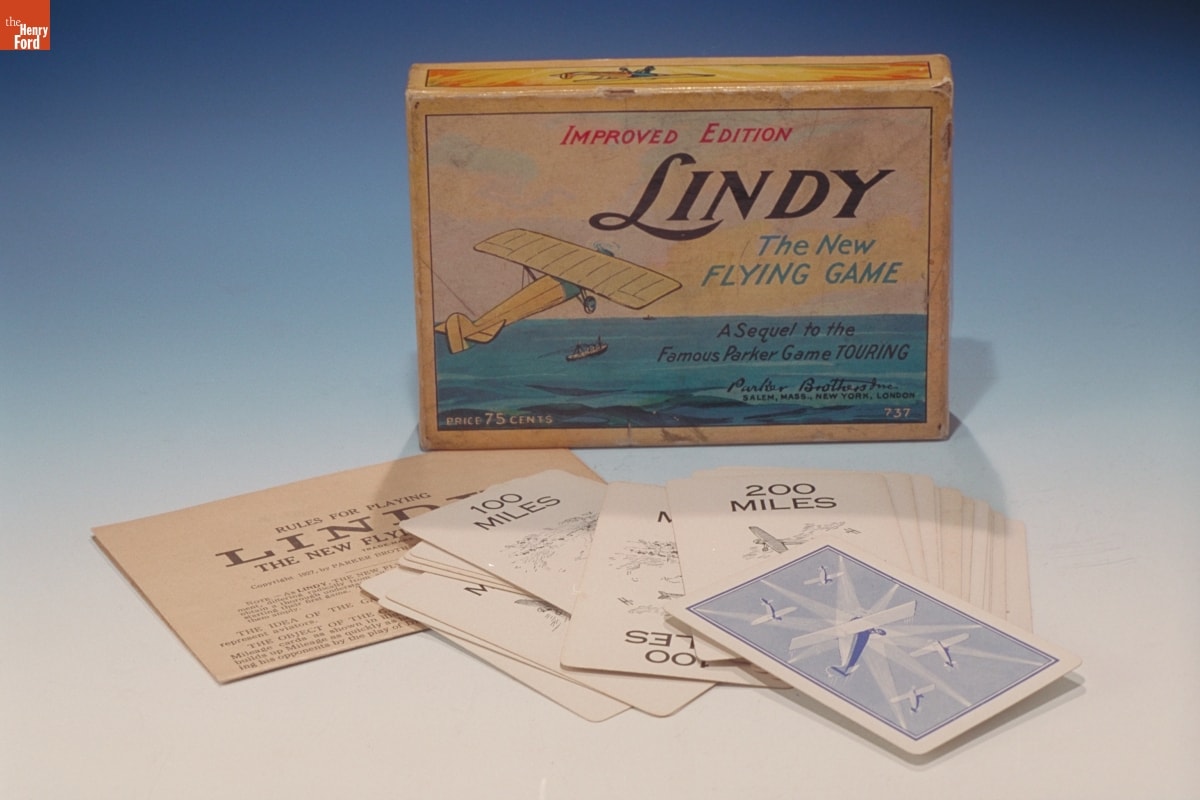
- Lindy, The New Flying Game, 1927 - In 1927, Charles Lindbergh became the first person to fly solo across the Atlantic. Americans were captivated by this amazing feat. Parker Brothers capitalized on the public's fascination with their new hero and produced this game. Similar to their Touring card game, Lindy requires players to collect mileage cards to win. Other cards help or hinder the traveler's progress.
- 1927
- Collections - Artifact
Lindy, The New Flying Game, 1927
In 1927, Charles Lindbergh became the first person to fly solo across the Atlantic. Americans were captivated by this amazing feat. Parker Brothers capitalized on the public's fascination with their new hero and produced this game. Similar to their Touring card game, Lindy requires players to collect mileage cards to win. Other cards help or hinder the traveler's progress.
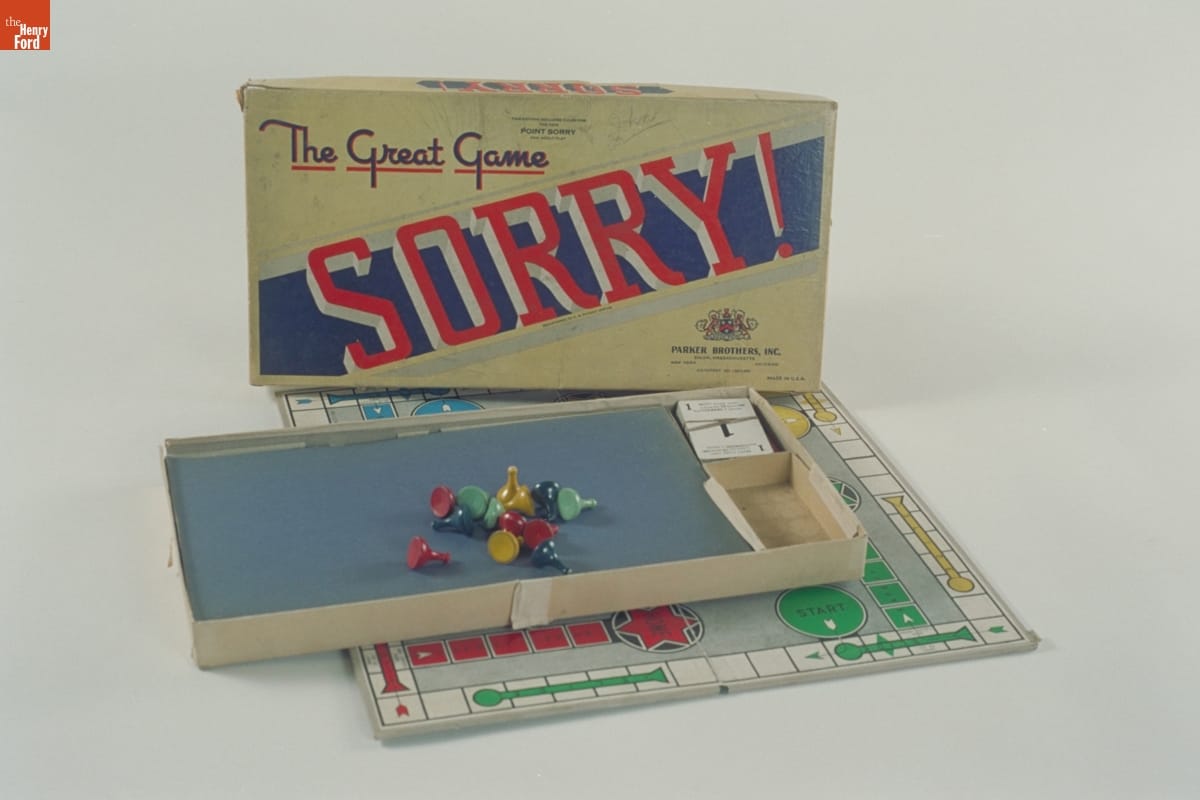
- The Great Game: Sorry!, 1950-1960 - Parker Brothers' Sorry! is based on Pachisi -- a game that originated in India. In this version, players draw cards and move their game pieces from start to home around a cross-shaped board. Landing on another players' marker sends that player back to start. Other game companies have created similar versions using dice.
- 1950-1960
- Collections - Artifact
The Great Game: Sorry!, 1950-1960
Parker Brothers' Sorry! is based on Pachisi -- a game that originated in India. In this version, players draw cards and move their game pieces from start to home around a cross-shaped board. Landing on another players' marker sends that player back to start. Other game companies have created similar versions using dice.
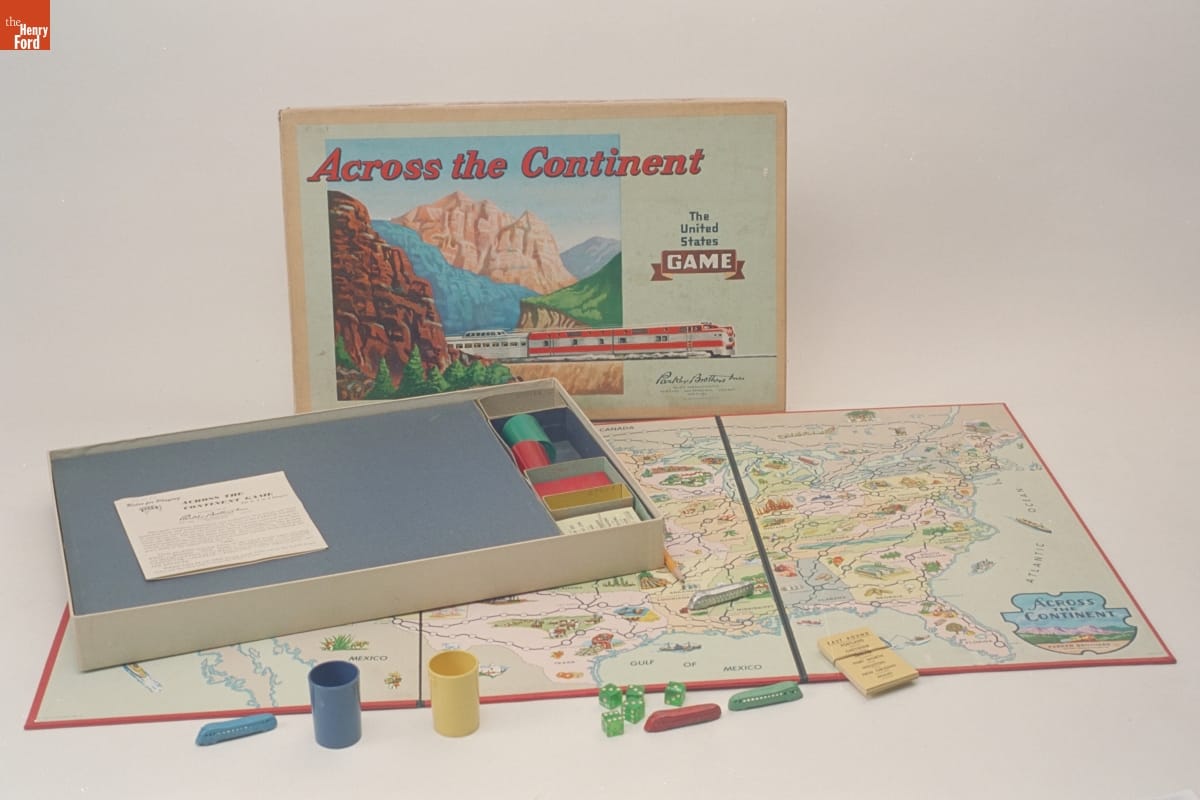
- Across the Continent Game, 1952-1960 - Players race "Across the Continent" in the 1952 version of this Parker Brothers game. Players roll the dice and move train-shaped game pieces from coast to coast, then back again to win. The game is also educational -- players learn about the cities, commercial and agricultural products, and the scenic beauty of the United States through the colorful illustrations that dot the board.
- 1952-1960
- Collections - Artifact
Across the Continent Game, 1952-1960
Players race "Across the Continent" in the 1952 version of this Parker Brothers game. Players roll the dice and move train-shaped game pieces from coast to coast, then back again to win. The game is also educational -- players learn about the cities, commercial and agricultural products, and the scenic beauty of the United States through the colorful illustrations that dot the board.