
Search
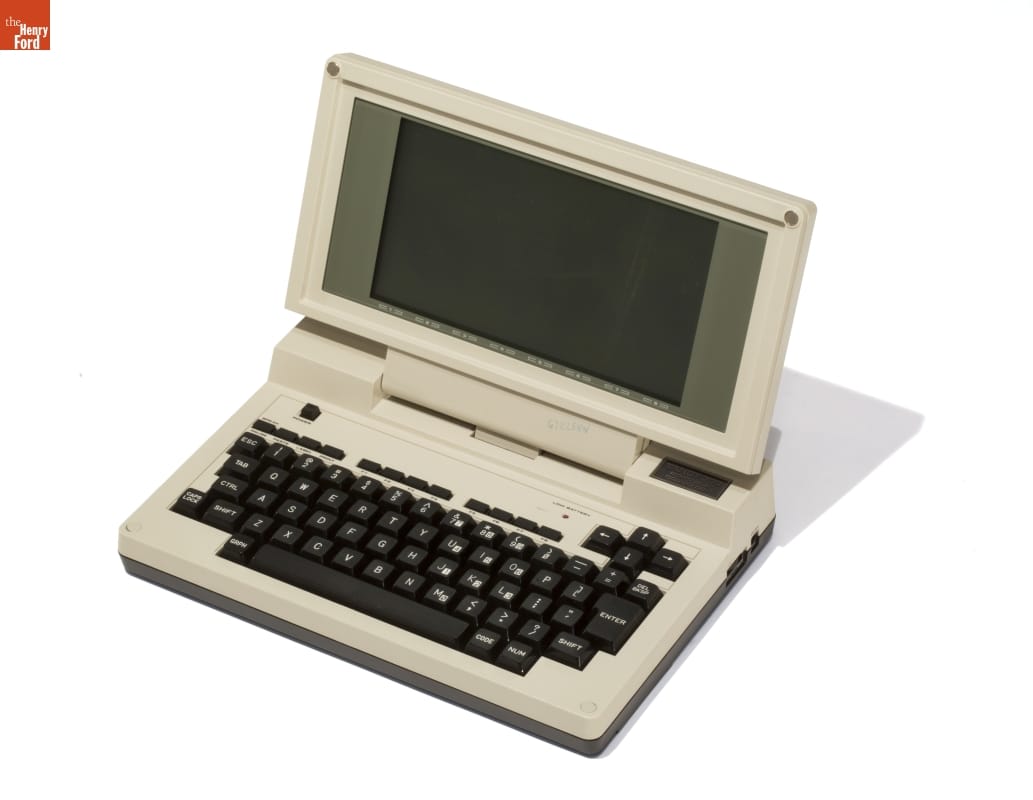
- Tandy Laptop Computer, Model 200, 1985 - The TRS-80 Model 200 was among the first generation of notebook-style computers. They were lightweight, rugged, and had rechargeable, efficient batteries. These qualities made them popular among field journalists and scientists. The in-built modem allowed users to electronically transmit pages of text. Microsoft co-founder Bill Gates was responsible for writing a large portion of the programming code for this computer.
- 1985
- Collections - Artifact
Tandy Laptop Computer, Model 200, 1985
The TRS-80 Model 200 was among the first generation of notebook-style computers. They were lightweight, rugged, and had rechargeable, efficient batteries. These qualities made them popular among field journalists and scientists. The in-built modem allowed users to electronically transmit pages of text. Microsoft co-founder Bill Gates was responsible for writing a large portion of the programming code for this computer.
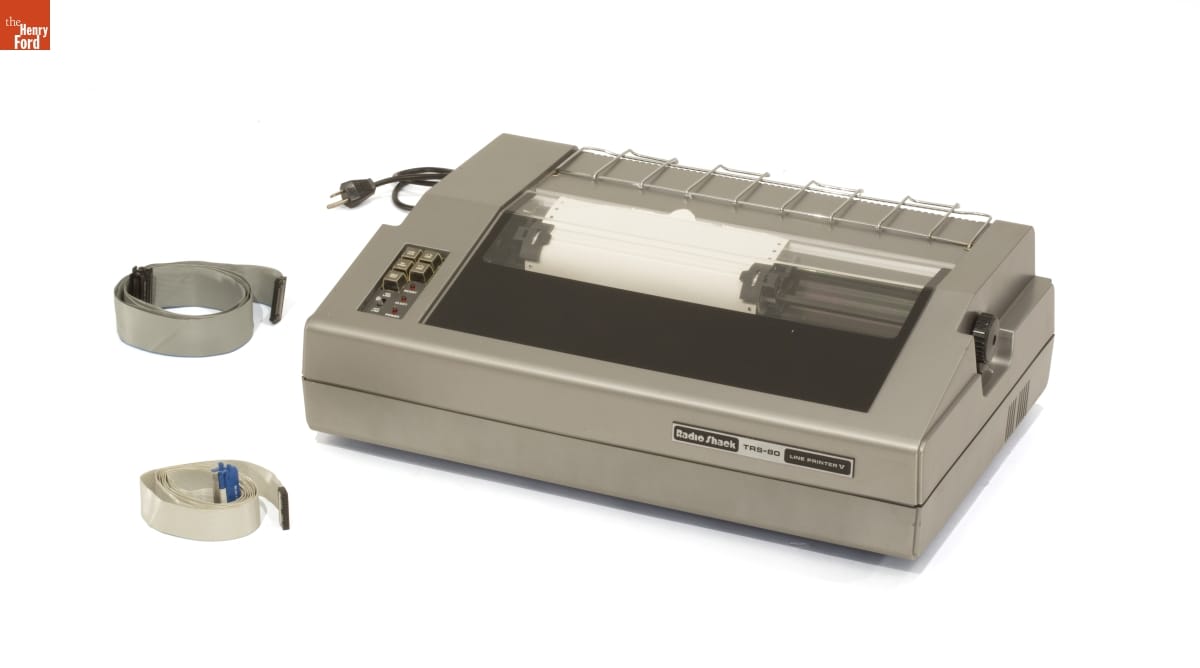
- Radio Shack Line Printer, Model TRS-80 V, circa 1980 - Dot matrix printers were introduced to the computing market in the 1970s. Their operation is similar to a typewriter: a print head moves across the page, striking an inked ribbon, producing characters. As hardware improved, speed and typeface options increased. However groundbreaking, by the 1990s, dot matrix printers were replaced by inkjet and laser printers, capable of producing photorealistic images.
- circa 1980
- Collections - Artifact
Radio Shack Line Printer, Model TRS-80 V, circa 1980
Dot matrix printers were introduced to the computing market in the 1970s. Their operation is similar to a typewriter: a print head moves across the page, striking an inked ribbon, producing characters. As hardware improved, speed and typeface options increased. However groundbreaking, by the 1990s, dot matrix printers were replaced by inkjet and laser printers, capable of producing photorealistic images.
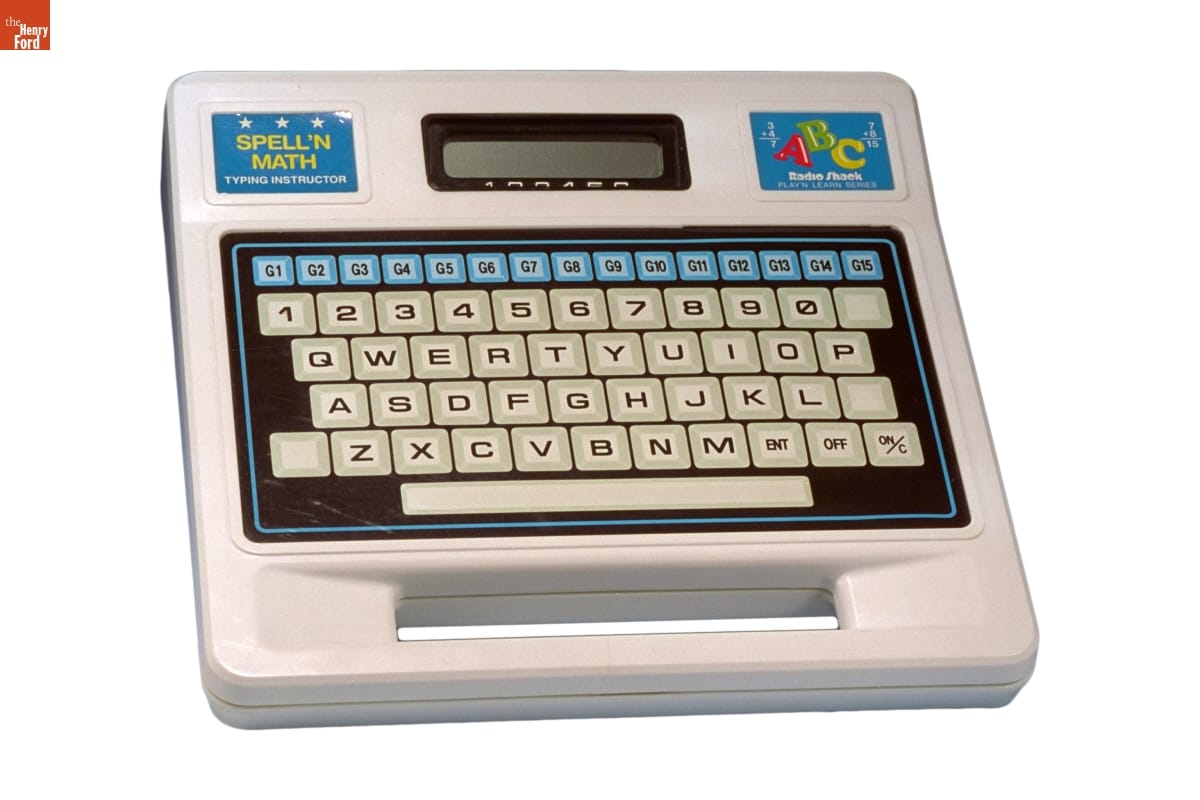
- Radio Shack Spell 'N Math, circa 1978 - This Spell 'N Math toy -- from Radio Shack's "Play'n Learn" line of portable electronic games -- quizzes children on spelling and math through different pre-programmed games. The keyboard helps familiarize them with the QWERTY layout that is standard on English-language typewriters and computers.
- circa 1978
- Collections - Artifact
Radio Shack Spell 'N Math, circa 1978
This Spell 'N Math toy -- from Radio Shack's "Play'n Learn" line of portable electronic games -- quizzes children on spelling and math through different pre-programmed games. The keyboard helps familiarize them with the QWERTY layout that is standard on English-language typewriters and computers.
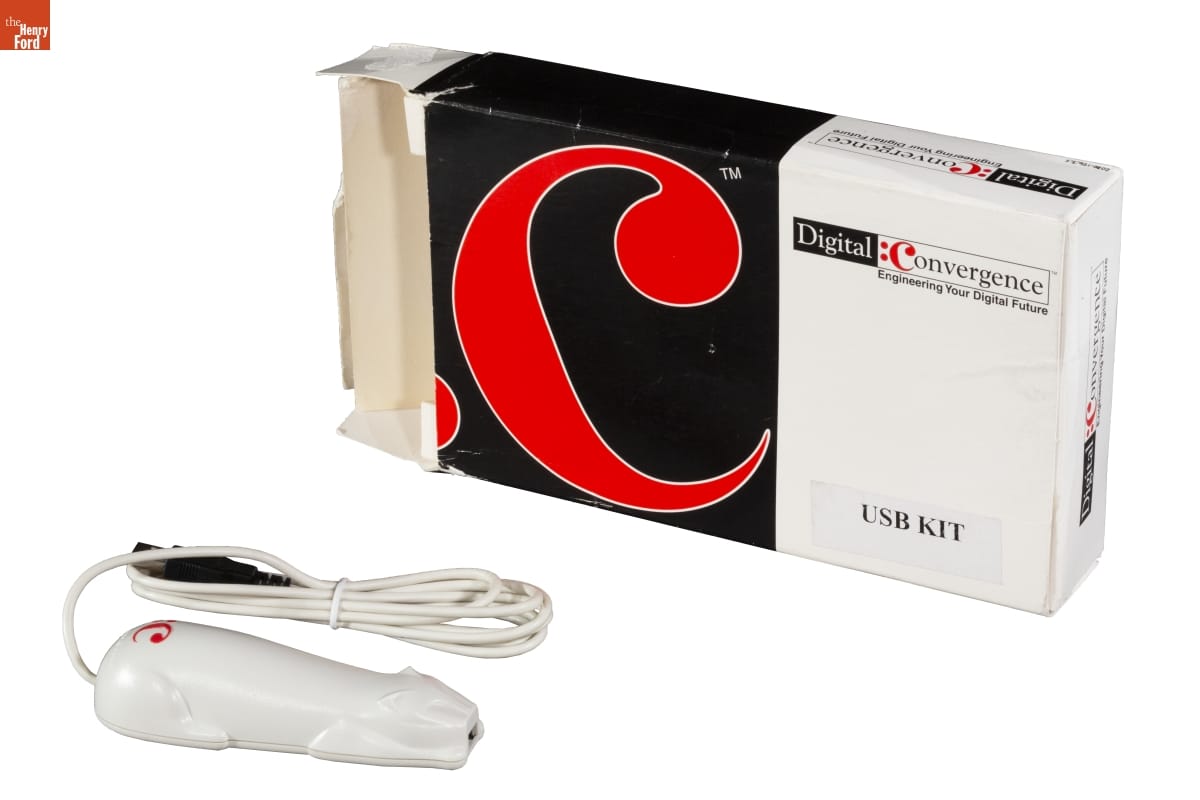
- :CueCat Keystroke Automation Technology Barcode Reader, 2000 -
- 2000
- Collections - Artifact
:CueCat Keystroke Automation Technology Barcode Reader, 2000
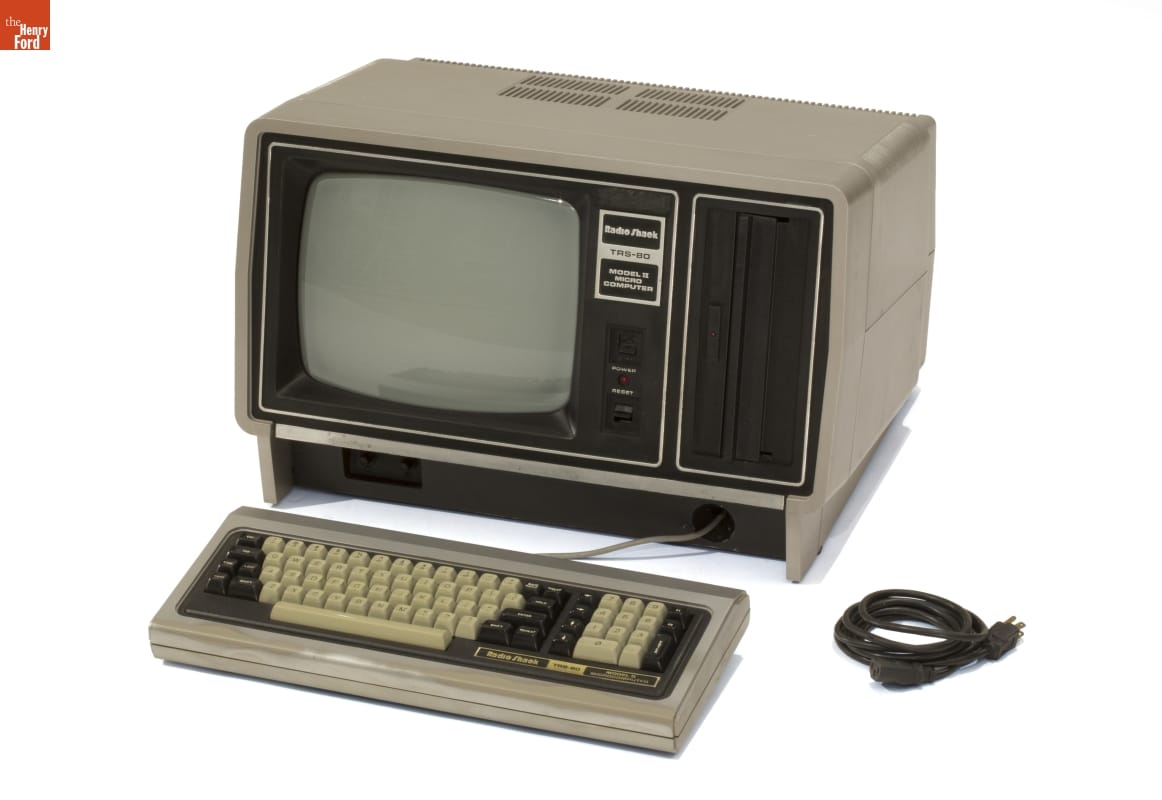
- Radio Shack Personal Computer, Model TRS-80 II, 1979-1980 - Introduced in 1979 by popular electronics company Tandy RadioShack, this microcomputer was marketed as a powerful, multitasking business machine. Big and small businesses alike established a culture of personal computers in the workplace. In opposition to previous generations who built and programmed their own machines, TRS users were discouraged by the company to tamper with its proprietary hardware and software.
- 1979-1980
- Collections - Artifact
Radio Shack Personal Computer, Model TRS-80 II, 1979-1980
Introduced in 1979 by popular electronics company Tandy RadioShack, this microcomputer was marketed as a powerful, multitasking business machine. Big and small businesses alike established a culture of personal computers in the workplace. In opposition to previous generations who built and programmed their own machines, TRS users were discouraged by the company to tamper with its proprietary hardware and software.
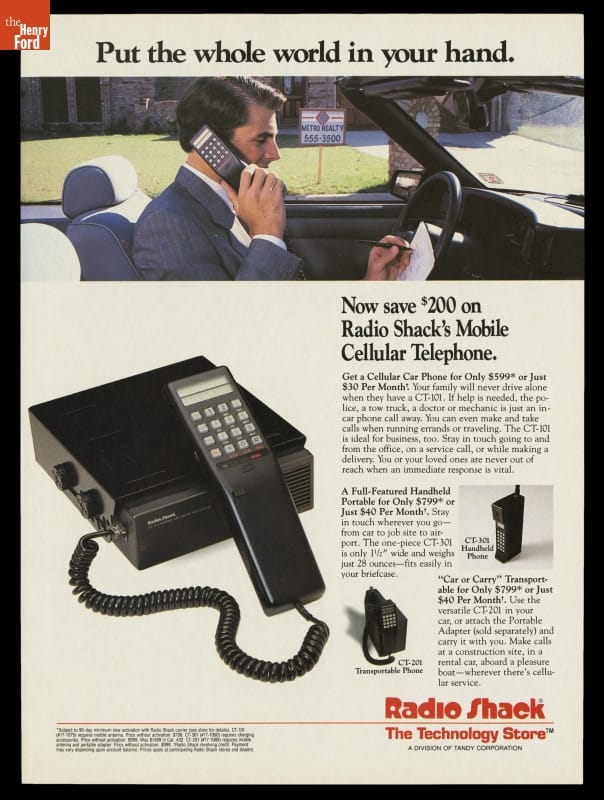
- Radio Shack Mobile Cellular Telephone Ad, "Put the Whole World in Your Hands," 1989 - In the early days of mobile phones, advertisements stressed their usefulness in business and staying connected. Mobile phones could go from car to office to home. This ad for a Radio Shack cellphone, which appeared in The New Yorker in 1989 emphasizes the high status of cellphone users and the portability of the phones.
- April 10, 1989
- Collections - Artifact
Radio Shack Mobile Cellular Telephone Ad, "Put the Whole World in Your Hands," 1989
In the early days of mobile phones, advertisements stressed their usefulness in business and staying connected. Mobile phones could go from car to office to home. This ad for a Radio Shack cellphone, which appeared in The New Yorker in 1989 emphasizes the high status of cellphone users and the portability of the phones.
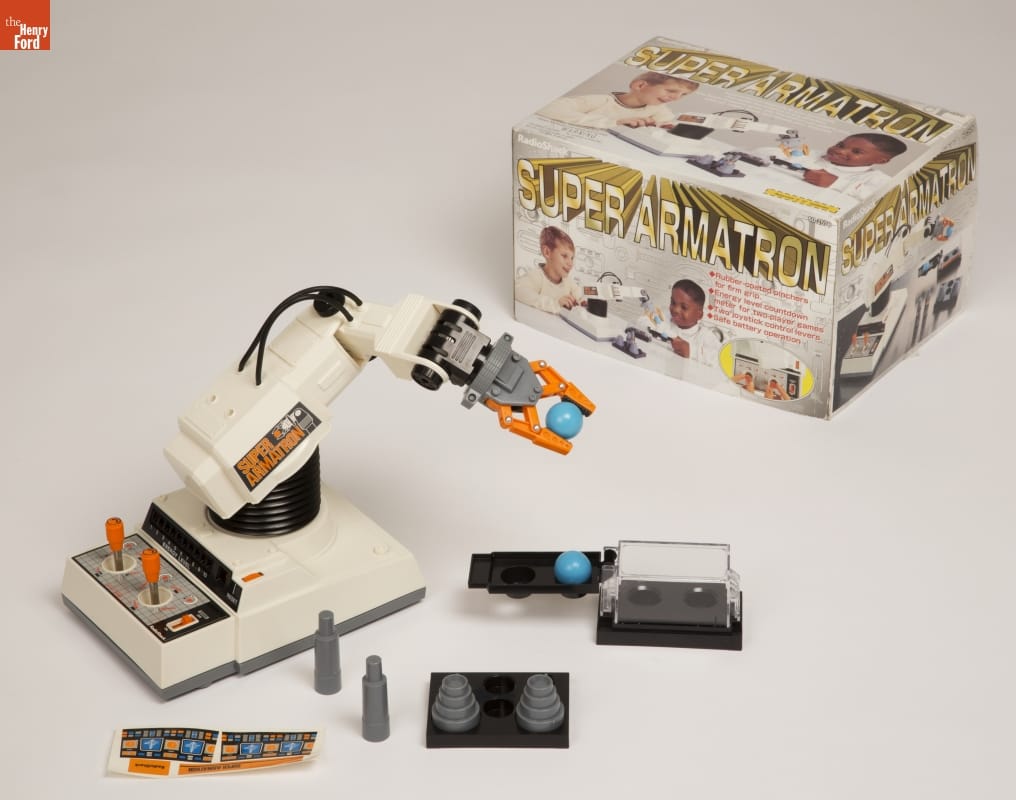
- Super Armatron Robot Toy, circa 1996 -
- circa 1996
- Collections - Artifact
Super Armatron Robot Toy, circa 1996
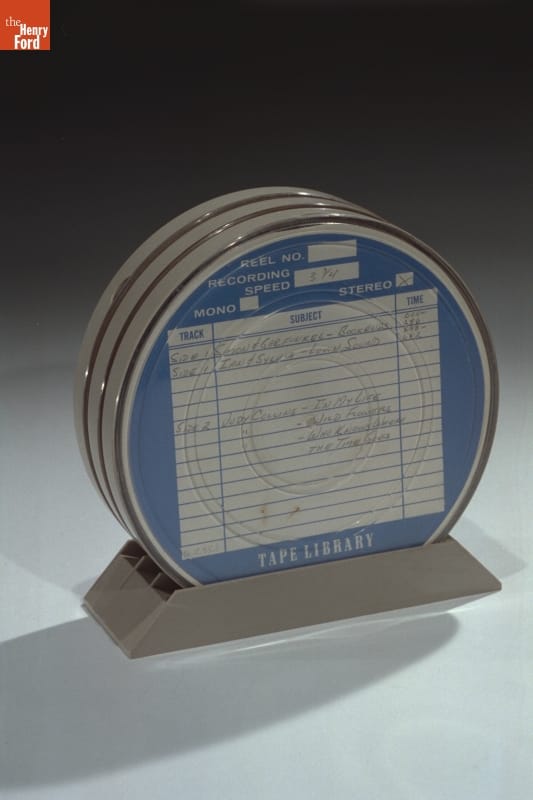
- Radio Shack Reel-to-Reel Audio Tape Library, Recordings of Various Artists, 1970-1980 - The transformative effects of magnetic tape upon sound, broadcast, and computing history cannot be overstated. In 1930, German companies AEG and BASF revised wire recording technology by using a new material: plastic tape coated with magnetic iron pigment. Its proposed applications were varied, idealistic and practical: recording music and radio, factory automation, data storage, media lending libraries, and many others.
- 1970-1980
- Collections - Artifact
Radio Shack Reel-to-Reel Audio Tape Library, Recordings of Various Artists, 1970-1980
The transformative effects of magnetic tape upon sound, broadcast, and computing history cannot be overstated. In 1930, German companies AEG and BASF revised wire recording technology by using a new material: plastic tape coated with magnetic iron pigment. Its proposed applications were varied, idealistic and practical: recording music and radio, factory automation, data storage, media lending libraries, and many others.
- Tape Recording Featuring Radio Program "Folk Weekends" (WETA), 1977-1982 - The transformative effects of magnetic tape upon sound, broadcast, and computing history cannot be overstated. In 1930, German companies AEG and BASF revised wire recording technology by using a new material: plastic tape coated with magnetic iron pigment. Its proposed applications were varied, idealistic and practical: recording music and radio, factory automation, data storage, media lending libraries, and many others.
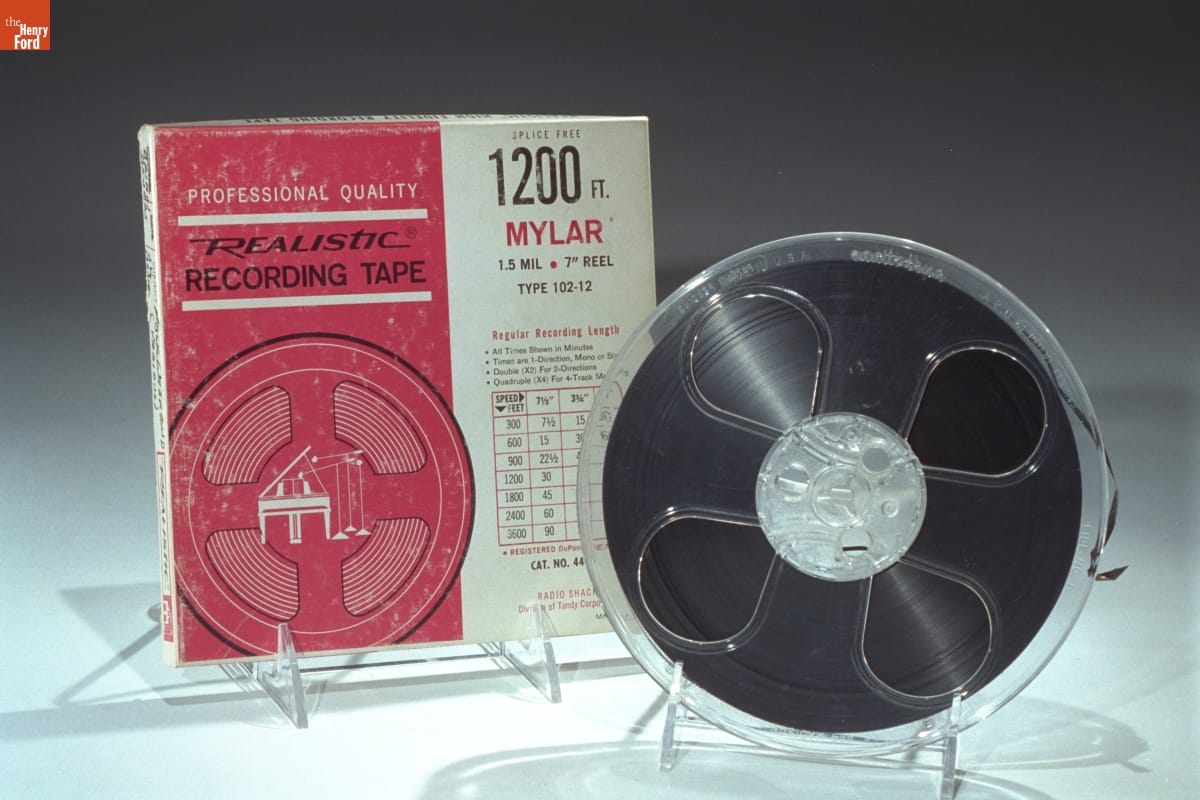
- 1977-1982
- Collections - Artifact
Tape Recording Featuring Radio Program "Folk Weekends" (WETA), 1977-1982
The transformative effects of magnetic tape upon sound, broadcast, and computing history cannot be overstated. In 1930, German companies AEG and BASF revised wire recording technology by using a new material: plastic tape coated with magnetic iron pigment. Its proposed applications were varied, idealistic and practical: recording music and radio, factory automation, data storage, media lending libraries, and many others.
- TRS-80 Personal Computer, circa 1980 -
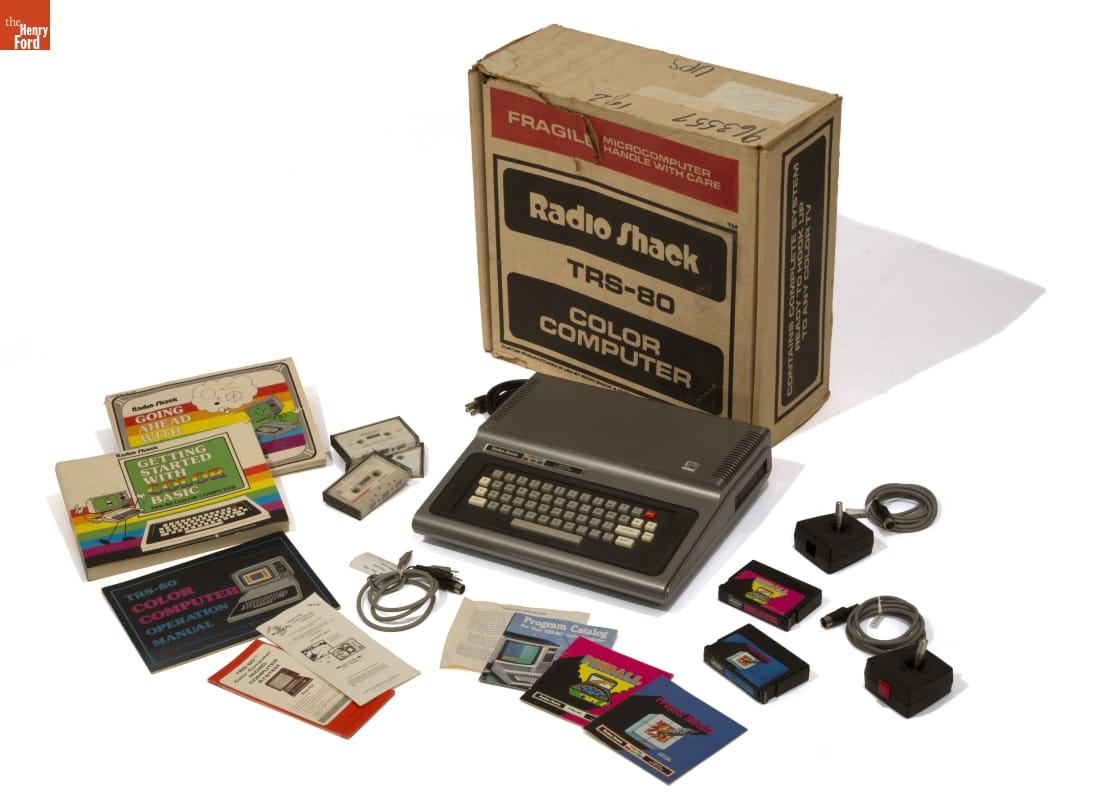
- 1978
- Collections - Artifact
TRS-80 Personal Computer, circa 1980