
Search
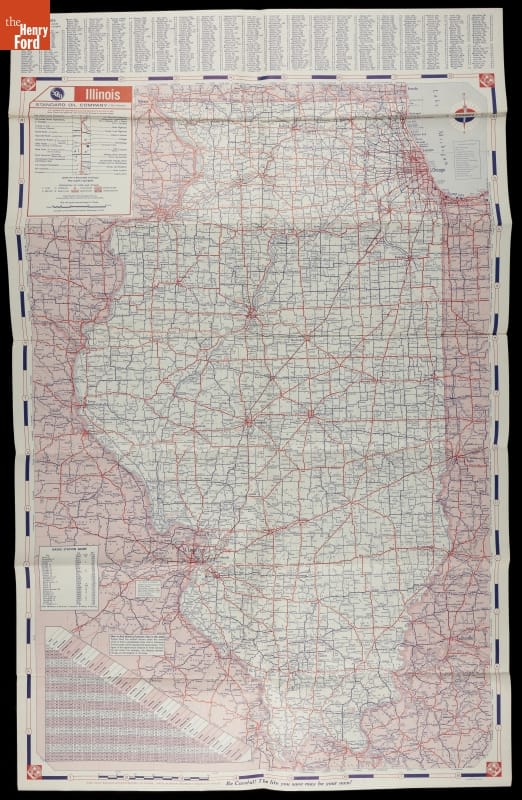
- Illinois Road Map, circa 1955 - Along with the regular automobile service provided by gasoline stations, travelers during the early and mid-20th century could usually find a free road map. Standard Oil supplied this map of Illinois to motorists at their stations.
- circa 1955
- Collections - Artifact
Illinois Road Map, circa 1955
Along with the regular automobile service provided by gasoline stations, travelers during the early and mid-20th century could usually find a free road map. Standard Oil supplied this map of Illinois to motorists at their stations.
- Standard Oil Company DDT Can, 1950-1960 -

- 1950-1960
- Collections - Artifact
Standard Oil Company DDT Can, 1950-1960
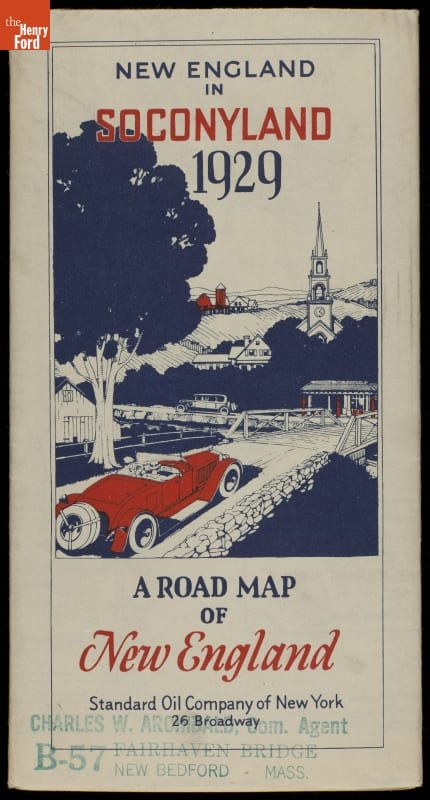
- Road Map, "New England in Soconyland," 1929 - After the federal government established a system of numbered and marked highways in 1926, road maps became more popular. As oil companies competed fiercely for motorists' business at roadside service stations, handing out free road maps became a way to ensure customer loyalty. This map was produced and distributed by the Standard Oil Company of New York.
- 1929
- Collections - Artifact
Road Map, "New England in Soconyland," 1929
After the federal government established a system of numbered and marked highways in 1926, road maps became more popular. As oil companies competed fiercely for motorists' business at roadside service stations, handing out free road maps became a way to ensure customer loyalty. This map was produced and distributed by the Standard Oil Company of New York.
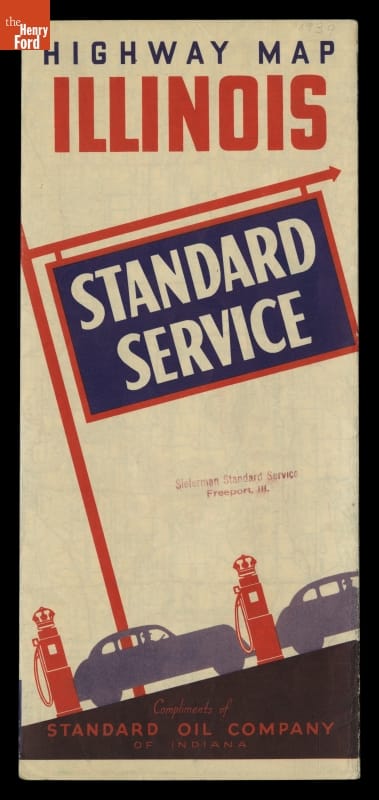
- Standard Service Highway Map of Illinois, Chicago and Vicinity, circa 1939 - Motorists during the early and mid-20th century usually could receive a free road map from local service stations. In 1939, Standard Oil Company provided this highway map to travelers visiting Illinois. This foldout map not only depicts the network of roads in Illinois and several of its key cities, but also provides a road map of the United States.
- circa 1939
- Collections - Artifact
Standard Service Highway Map of Illinois, Chicago and Vicinity, circa 1939
Motorists during the early and mid-20th century usually could receive a free road map from local service stations. In 1939, Standard Oil Company provided this highway map to travelers visiting Illinois. This foldout map not only depicts the network of roads in Illinois and several of its key cities, but also provides a road map of the United States.
- Trade Card for Eureka Harness Oil, Standard Oil Co., circa 1900 - In the last third of the nineteenth century, an unprecedented variety of consumer goods and services flooded the American market. Advertisers, armed with new methods of color printing, bombarded potential customers with trade cards. Americans enjoyed and often saved the vibrant little advertisements found in product packages or distributed by local merchants. Many survive as historical records of commercialism in the United States.
- circa 1900
- Collections - Artifact
Trade Card for Eureka Harness Oil, Standard Oil Co., circa 1900
In the last third of the nineteenth century, an unprecedented variety of consumer goods and services flooded the American market. Advertisers, armed with new methods of color printing, bombarded potential customers with trade cards. Americans enjoyed and often saved the vibrant little advertisements found in product packages or distributed by local merchants. Many survive as historical records of commercialism in the United States.
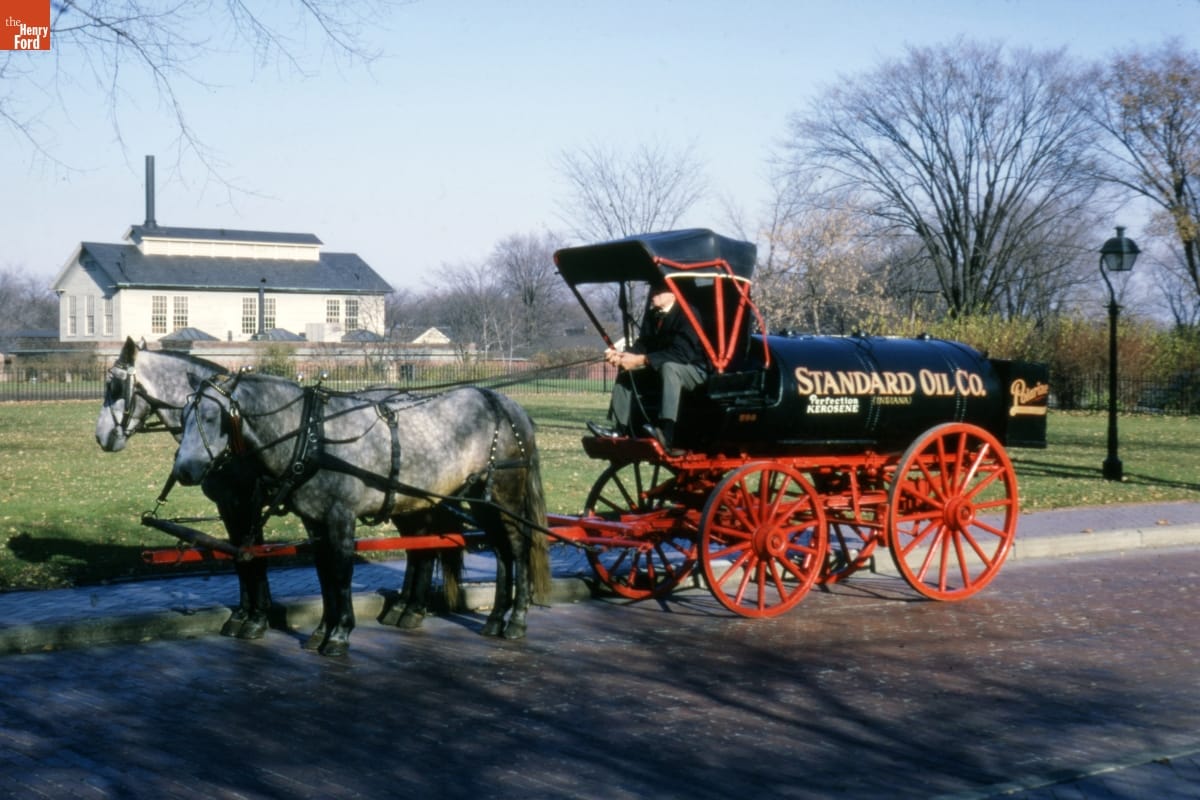
- Oil Tank Wagon for Standard Oil Company, circa 1892 - By the time Standard Oil ordered this wagon in 1892, petroleum products were common in the rural and urban United States. The wagon has three separate compartments -- for kerosene, for lubricating oil, and for gasoline. As late as the 1920s, horse-drawn wagons were still the primary means for moving these products from the railroad depot to the customer.
- circa 1892
- Collections - Artifact
Oil Tank Wagon for Standard Oil Company, circa 1892
By the time Standard Oil ordered this wagon in 1892, petroleum products were common in the rural and urban United States. The wagon has three separate compartments -- for kerosene, for lubricating oil, and for gasoline. As late as the 1920s, horse-drawn wagons were still the primary means for moving these products from the railroad depot to the customer.
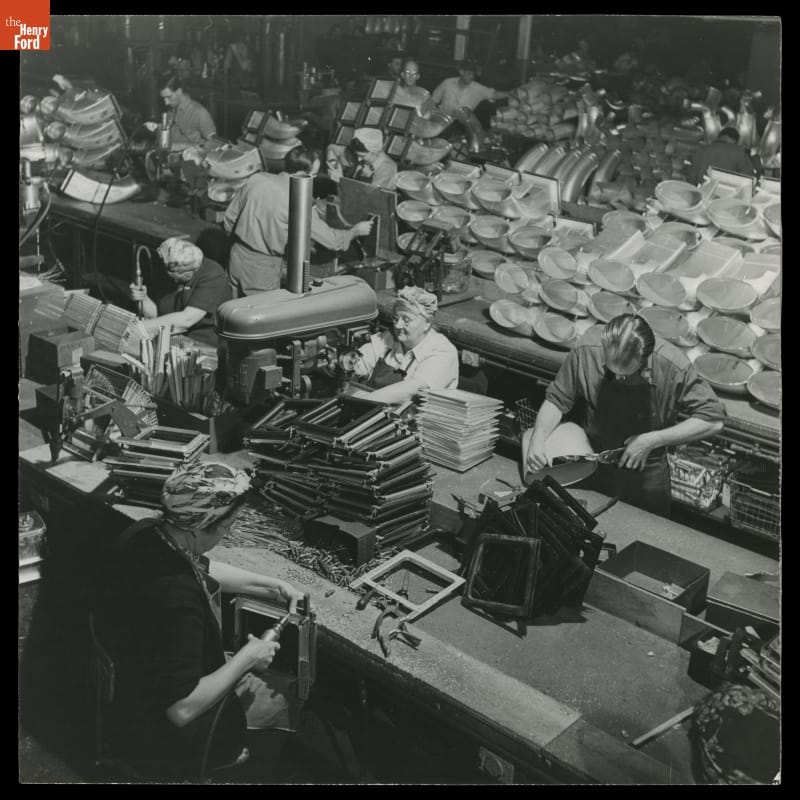
- Women Workers Assembling Air Ducts for B-24 Bombers, Willow Run Bomber Plant, circa 1943 - Women represented approximately one-third of the workers at Ford Motor Company's Willow Run plant, where they did everything from clerical work in the offices to riveting and welding on the assembly line. During World War II, women joined the workforce in record numbers to take on essential jobs traditionally held by men who had joined the armed forces.
- circa 1943
- Collections - Artifact
Women Workers Assembling Air Ducts for B-24 Bombers, Willow Run Bomber Plant, circa 1943
Women represented approximately one-third of the workers at Ford Motor Company's Willow Run plant, where they did everything from clerical work in the offices to riveting and welding on the assembly line. During World War II, women joined the workforce in record numbers to take on essential jobs traditionally held by men who had joined the armed forces.
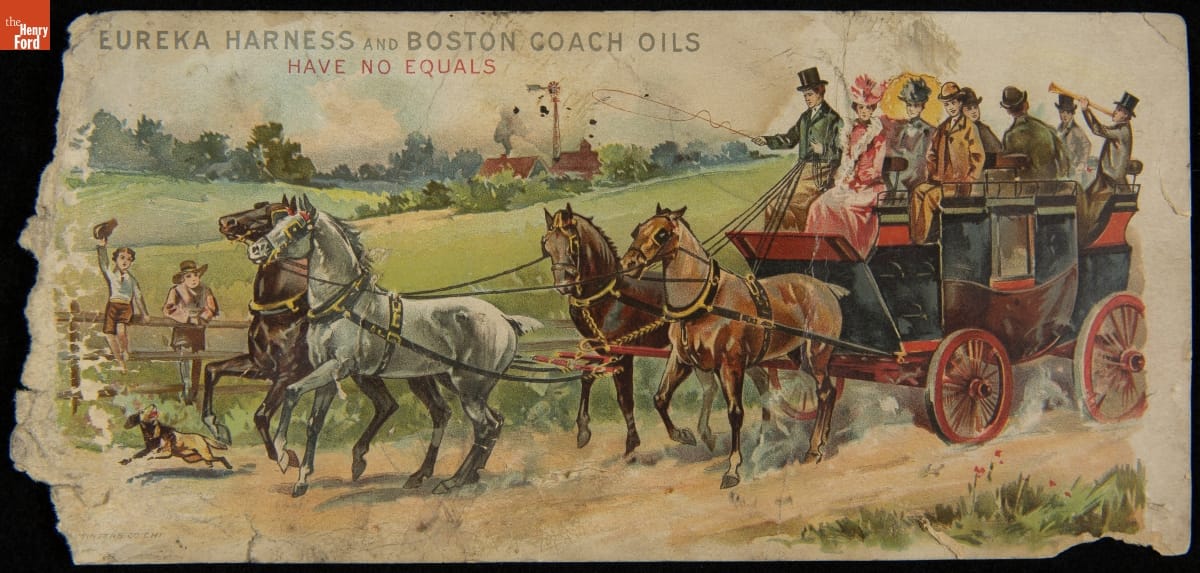
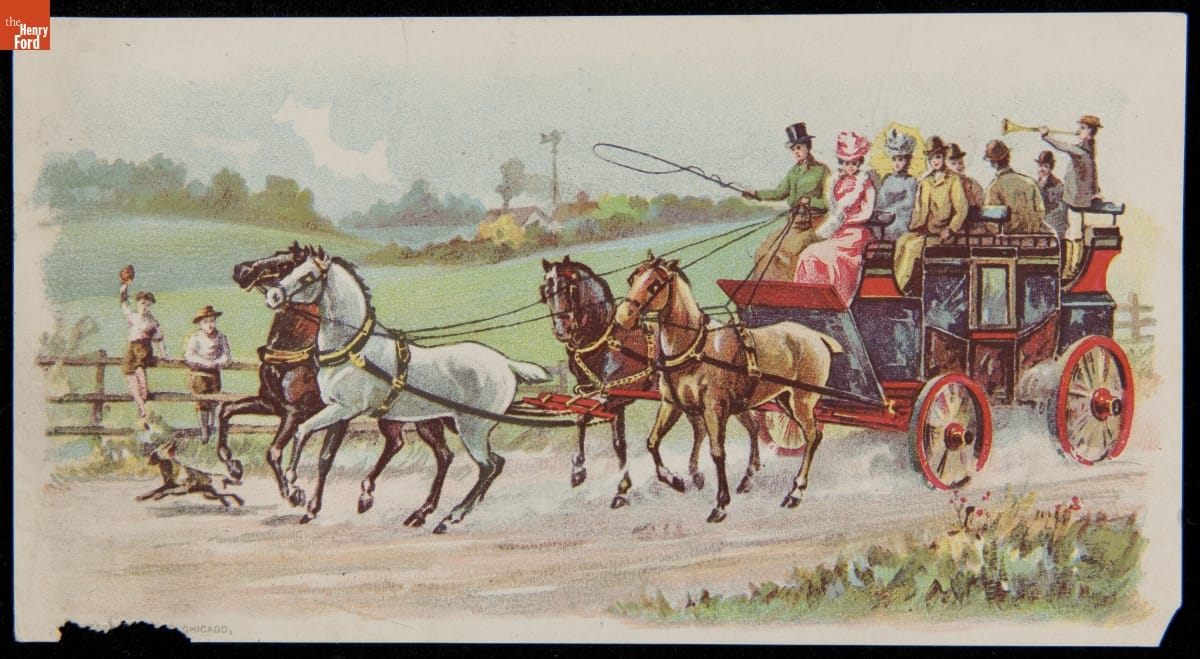
- Trade Card for Eureka Harness Oil and Boston Coach Axle Oil, circa 1893 - In the last third of the nineteenth century, an unprecedented variety of consumer goods and services flooded the American market. Advertisers, armed with new methods of color printing, bombarded potential customers with trade cards. Americans enjoyed and often saved the vibrant little advertisements found in product packages or distributed by local merchants. Many survive as historical records of commercialism in the United States.
- circa 1893
- Collections - Artifact
Trade Card for Eureka Harness Oil and Boston Coach Axle Oil, circa 1893
In the last third of the nineteenth century, an unprecedented variety of consumer goods and services flooded the American market. Advertisers, armed with new methods of color printing, bombarded potential customers with trade cards. Americans enjoyed and often saved the vibrant little advertisements found in product packages or distributed by local merchants. Many survive as historical records of commercialism in the United States.
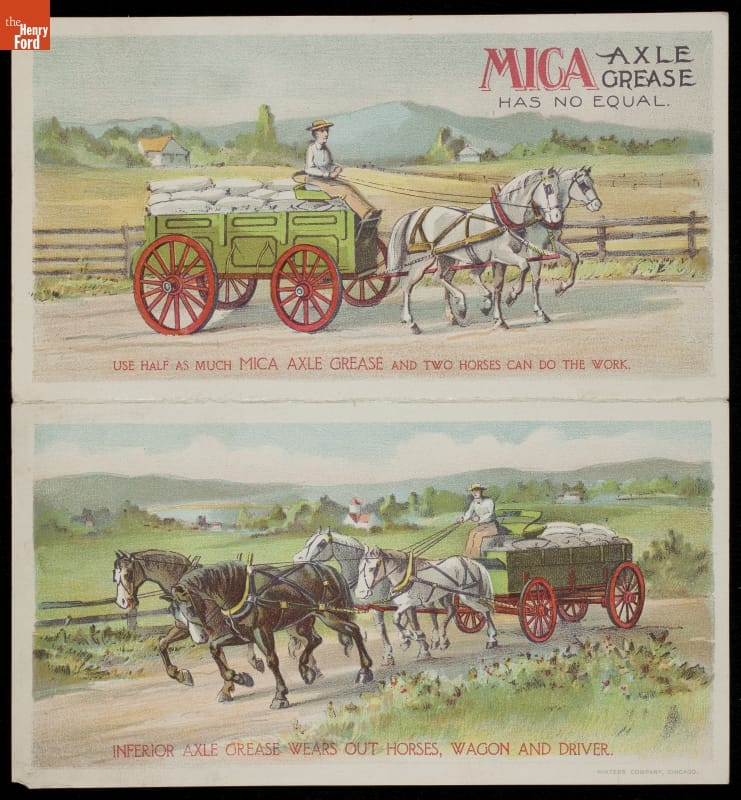
- Trade Card for Mica Axle Grease, Standard Oil Co., 1880-1900 - In the last third of the nineteenth century, an unprecedented variety of consumer goods and services flooded the American market. Advertisers, armed with new methods of color printing, bombarded potential customers with trade cards. Americans enjoyed and often saved the vibrant little advertisements found in product packages or distributed by local merchants. Many survive as historical records of commercialism in the United States.
- 1880-1900
- Collections - Artifact
Trade Card for Mica Axle Grease, Standard Oil Co., 1880-1900
In the last third of the nineteenth century, an unprecedented variety of consumer goods and services flooded the American market. Advertisers, armed with new methods of color printing, bombarded potential customers with trade cards. Americans enjoyed and often saved the vibrant little advertisements found in product packages or distributed by local merchants. Many survive as historical records of commercialism in the United States.