
Search
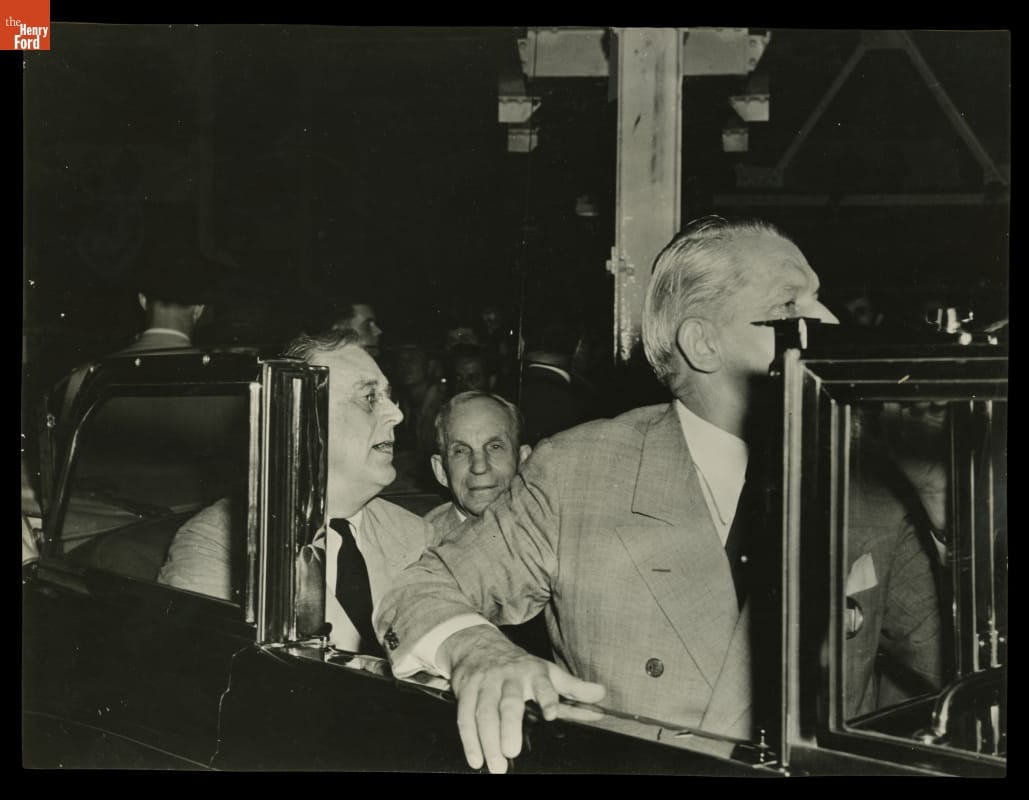
- President Franklin Roosevelt, Henry Ford and Charles Sorensen Touring the Ford Willow Run Bomber Plant, 1942 - President Franklin D. Roosevelt and First Lady Eleanor Roosevelt visited Ford Motor Company's Willow Run bomber plant on September 18, 1942. The Roosevelts, accompanied by Henry Ford, Edsel Ford, and Charles Sorensen -- the production manager behind Willow Run's success -- toured the plant's massive interior in "Sunshine Special," the president's 1939 Lincoln limousine.
- September 18, 1942
- Collections - Artifact
President Franklin Roosevelt, Henry Ford and Charles Sorensen Touring the Ford Willow Run Bomber Plant, 1942
President Franklin D. Roosevelt and First Lady Eleanor Roosevelt visited Ford Motor Company's Willow Run bomber plant on September 18, 1942. The Roosevelts, accompanied by Henry Ford, Edsel Ford, and Charles Sorensen -- the production manager behind Willow Run's success -- toured the plant's massive interior in "Sunshine Special," the president's 1939 Lincoln limousine.
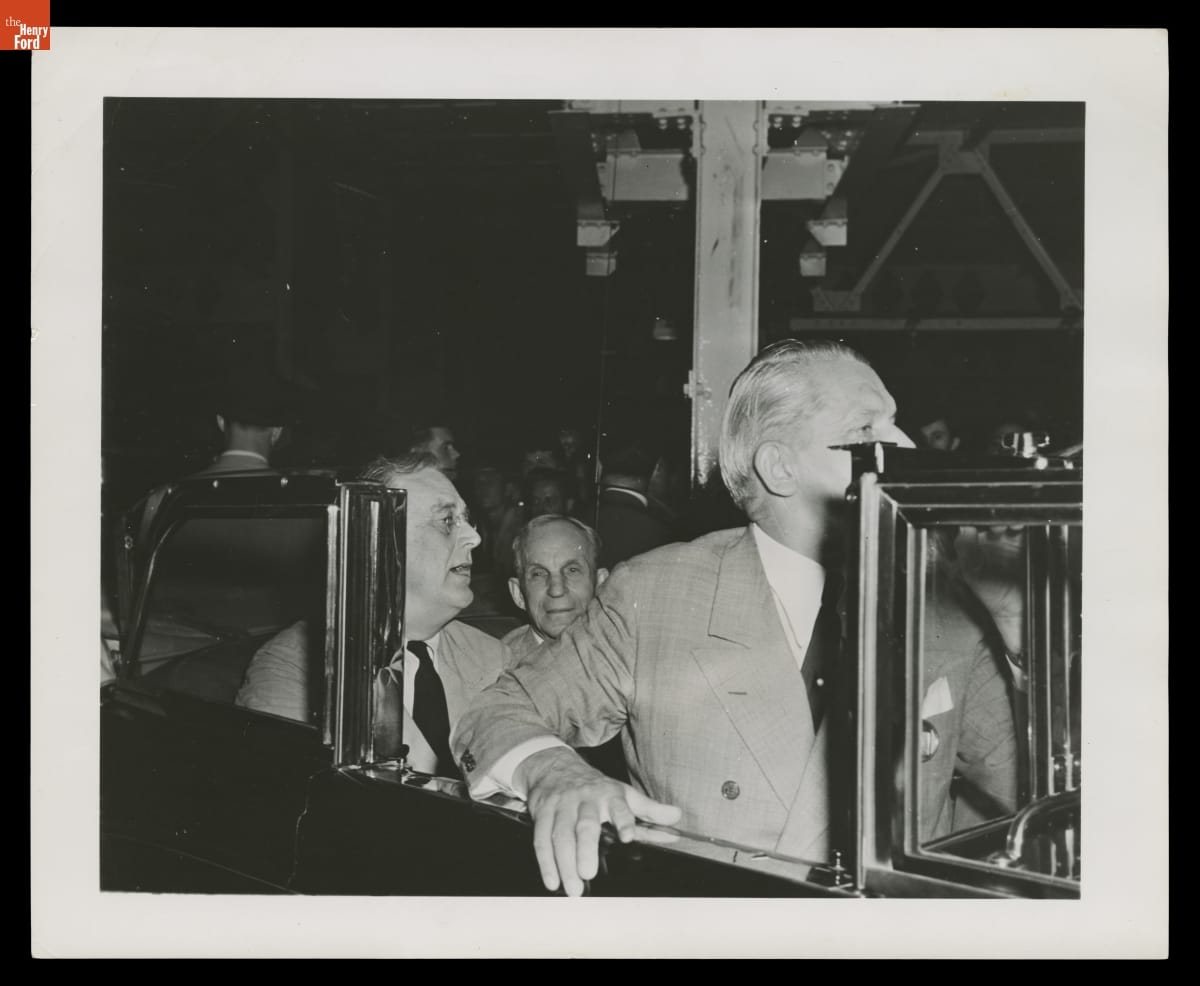
- President Franklin Roosevelt, Henry Ford and Charles Sorensen Touring the Ford Willow Run Bomber Plant, 1942 - President Franklin D. Roosevelt and First Lady Eleanor Roosevelt visited Ford Motor Company's Willow Run bomber plant on September 18, 1942. The Roosevelts, accompanied by Henry Ford, Edsel Ford, and Charles Sorensen -- the production manager behind Willow Run's success -- toured the plant's massive interior in "Sunshine Special," the president's 1939 Lincoln limousine.
- September 18, 1942
- Collections - Artifact
President Franklin Roosevelt, Henry Ford and Charles Sorensen Touring the Ford Willow Run Bomber Plant, 1942
President Franklin D. Roosevelt and First Lady Eleanor Roosevelt visited Ford Motor Company's Willow Run bomber plant on September 18, 1942. The Roosevelts, accompanied by Henry Ford, Edsel Ford, and Charles Sorensen -- the production manager behind Willow Run's success -- toured the plant's massive interior in "Sunshine Special," the president's 1939 Lincoln limousine.
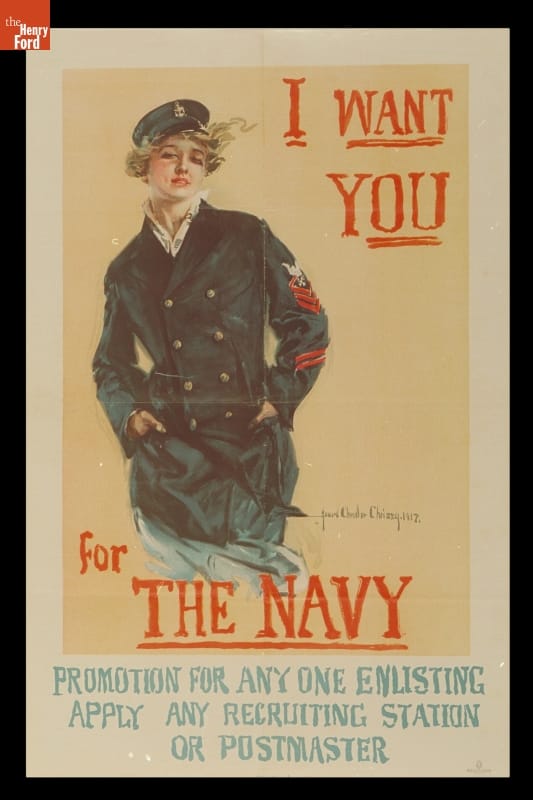
- World War I Poster, "I Want You for the Navy," 1917 - During the First World War, artists widely used an innovative advertising technique for posters that moved away from a factual depiction of a product's material or event's subject to an emphasis on appealing to the viewer's emotions. This poster promotes enlistment in the U.S. Navy with a sexually provocative portrayal a young woman. The text "I Want You" further reinforces this emotional message.
- 1917
- Collections - Artifact
World War I Poster, "I Want You for the Navy," 1917
During the First World War, artists widely used an innovative advertising technique for posters that moved away from a factual depiction of a product's material or event's subject to an emphasis on appealing to the viewer's emotions. This poster promotes enlistment in the U.S. Navy with a sexually provocative portrayal a young woman. The text "I Want You" further reinforces this emotional message.
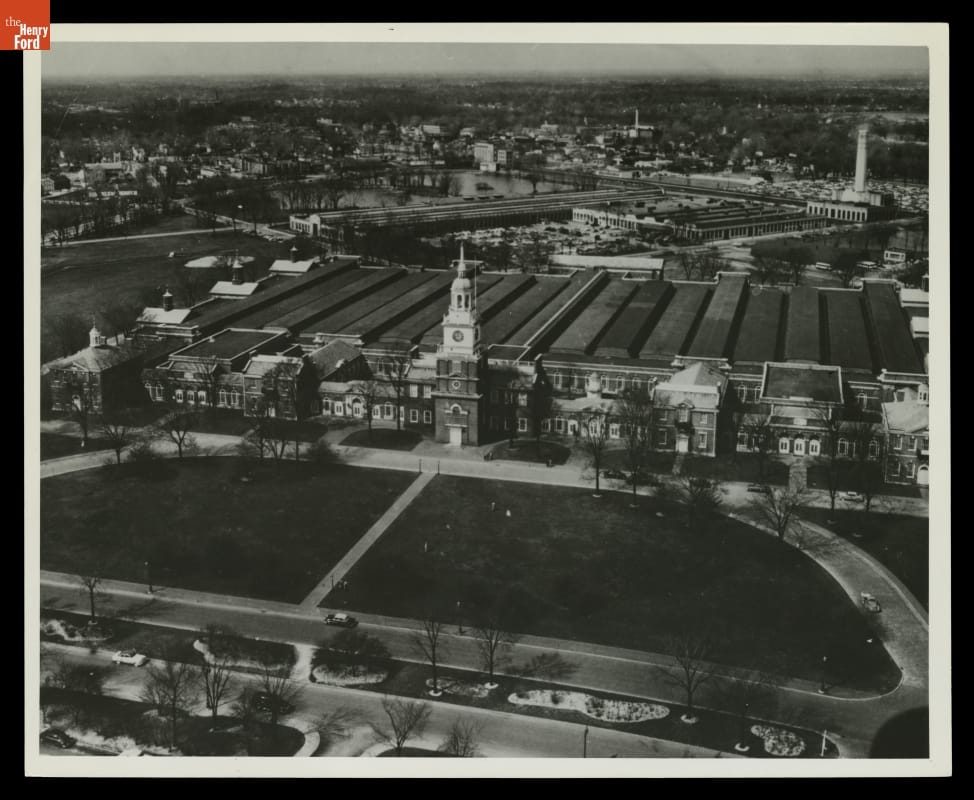
- Aerial View of Henry Ford Museum, circa 1953 - Henry Ford commissioned Detroit architect Robert O. Derrick to design his museum building in Dearborn, Michigan. Derrick incorporated multiple references to colonial structures, including the museum's most prominent facade: a detailed replica of Philadelphia's Independence Hall. Construction on the sprawling museum began in 1929 and was completed in the mid-1930s.
- circa 1953
- Collections - Artifact
Aerial View of Henry Ford Museum, circa 1953
Henry Ford commissioned Detroit architect Robert O. Derrick to design his museum building in Dearborn, Michigan. Derrick incorporated multiple references to colonial structures, including the museum's most prominent facade: a detailed replica of Philadelphia's Independence Hall. Construction on the sprawling museum began in 1929 and was completed in the mid-1930s.
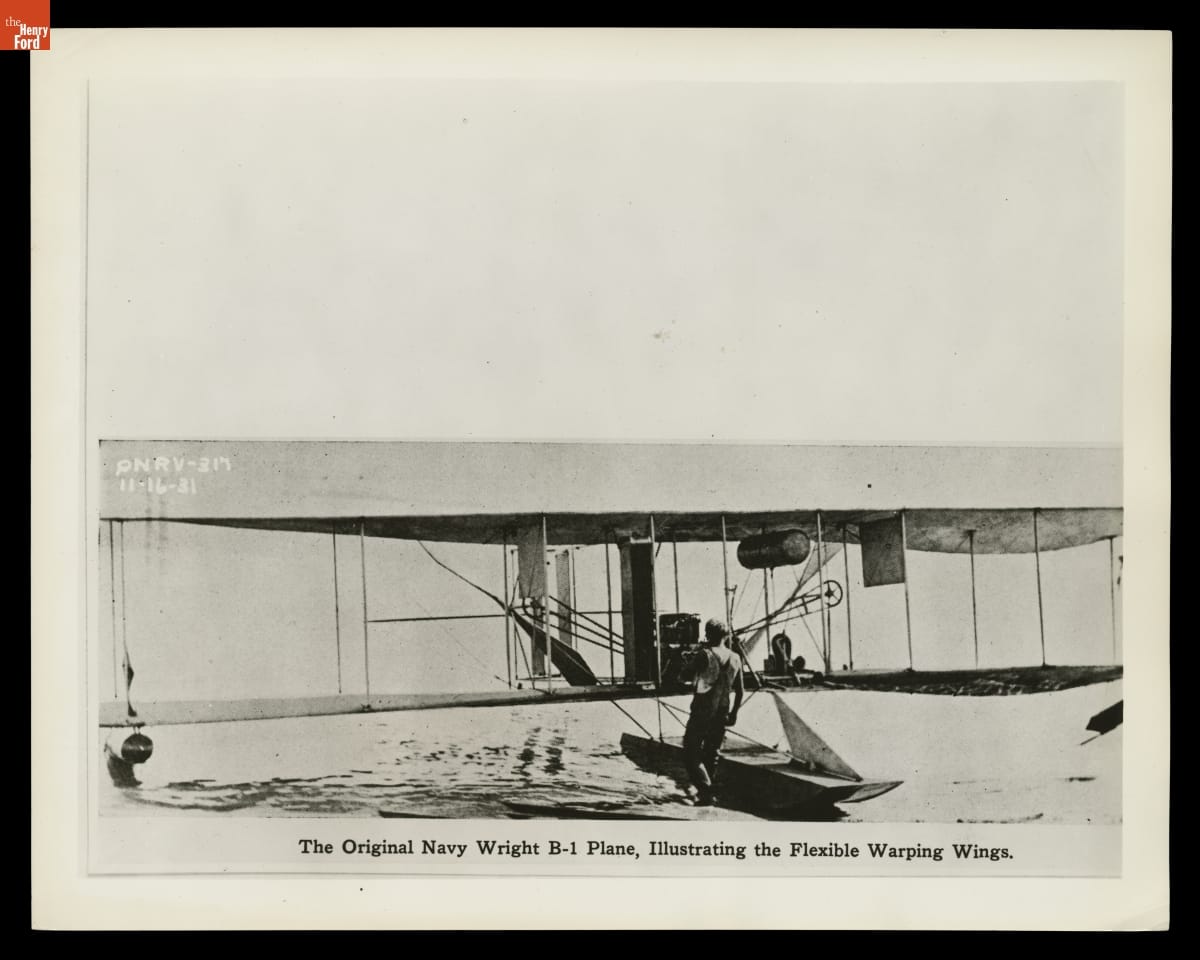
- "Original Navy Wright B-1 Plane, Illustrating the Flexible Warping Wings," circa 1912 - Among the Wright brothers' breakthroughs in inventing the airplane was their system of control. By twisting -- or warping -- the wings in flight, a pilot could control the plane's lateral movement. The Wrights were still using this control technique when they built the Model B, their most successful commercial aircraft, from 1910 to 1914.
- 1911-1913
- Collections - Artifact
"Original Navy Wright B-1 Plane, Illustrating the Flexible Warping Wings," circa 1912
Among the Wright brothers' breakthroughs in inventing the airplane was their system of control. By twisting -- or warping -- the wings in flight, a pilot could control the plane's lateral movement. The Wrights were still using this control technique when they built the Model B, their most successful commercial aircraft, from 1910 to 1914.
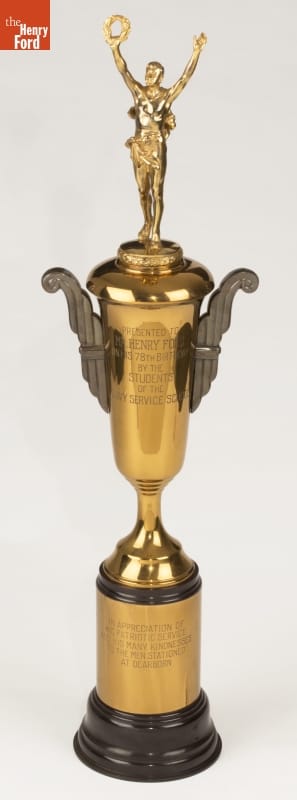
- Trophy Presented to Henry Ford by the Navy Service School on the Occasion of his Birthday, 1941 - Henry Ford was recognized as more than an automotive industrialist; throughout his many years in the public eye he was acknowledged by many civic and corporate associations. In 1940, Henry Ford leased land at the Ford Motor Company's Rouge plant to the U.S. Navy to establish a Navy Service School to train servicemen; this trophy was presented to Mr. Ford in gratitude for his patriotic contributions.
- July 30, 1941
- Collections - Artifact
Trophy Presented to Henry Ford by the Navy Service School on the Occasion of his Birthday, 1941
Henry Ford was recognized as more than an automotive industrialist; throughout his many years in the public eye he was acknowledged by many civic and corporate associations. In 1940, Henry Ford leased land at the Ford Motor Company's Rouge plant to the U.S. Navy to establish a Navy Service School to train servicemen; this trophy was presented to Mr. Ford in gratitude for his patriotic contributions.
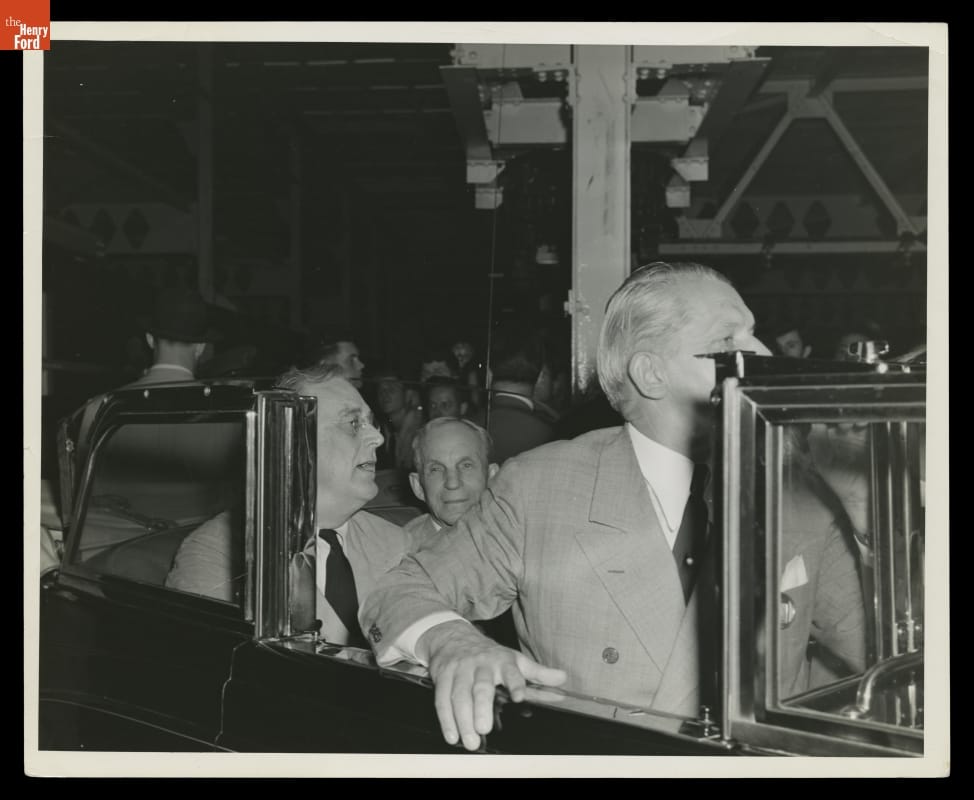
- Henry Ford and President Franklin Roosevelt Touring the Willow Run Bomber Plant, 1942 - President Franklin D. Roosevelt and First Lady Eleanor Roosevelt visited Ford Motor Company's Willow Run bomber plant on September 18, 1942. The Roosevelts, accompanied by Henry Ford, Edsel Ford, and Charles Sorensen -- the production manager behind Willow Run's success -- toured the plant's massive interior in "Sunshine Special," the president's 1939 Lincoln limousine.
- September 18, 1942
- Collections - Artifact
Henry Ford and President Franklin Roosevelt Touring the Willow Run Bomber Plant, 1942
President Franklin D. Roosevelt and First Lady Eleanor Roosevelt visited Ford Motor Company's Willow Run bomber plant on September 18, 1942. The Roosevelts, accompanied by Henry Ford, Edsel Ford, and Charles Sorensen -- the production manager behind Willow Run's success -- toured the plant's massive interior in "Sunshine Special," the president's 1939 Lincoln limousine.
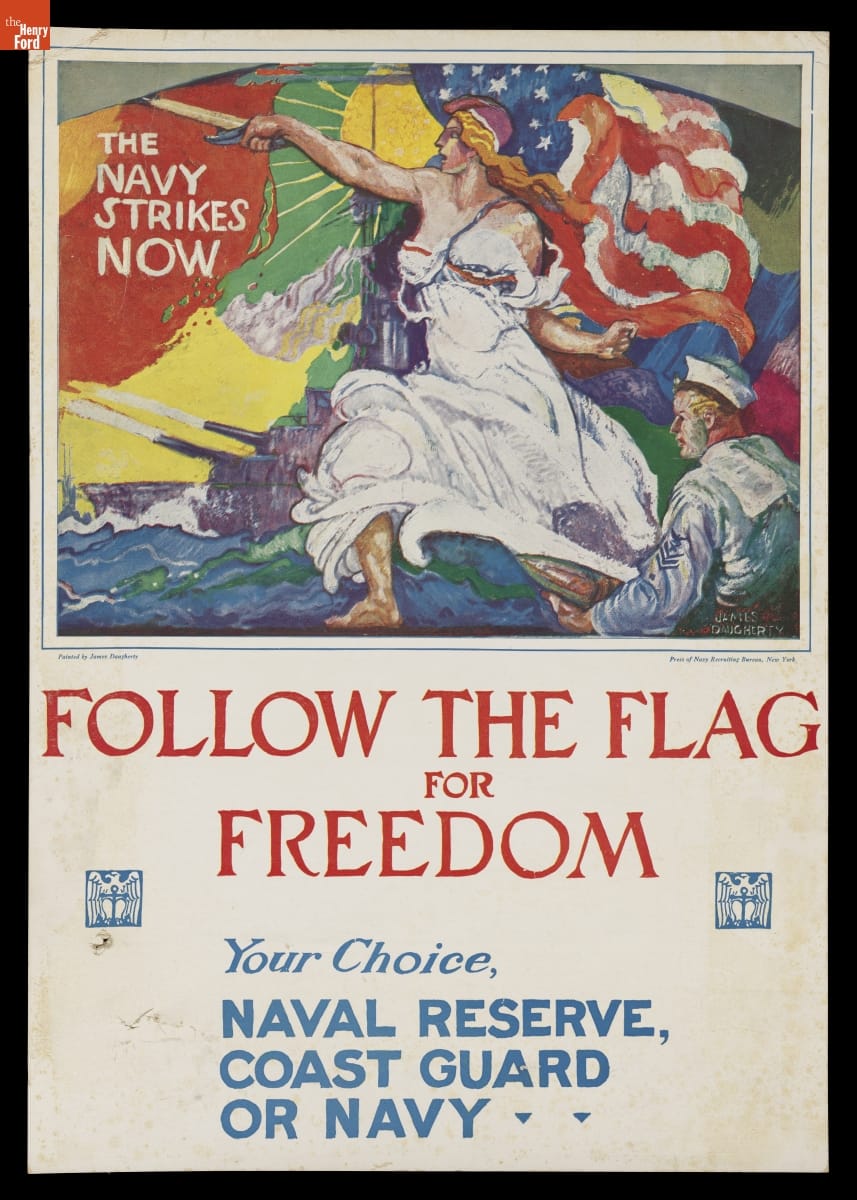
- World War I Poster, "The Navy Strikes Now, Follow the Flag for Freedom," 1917-1918 -
- 1917-1918
- Collections - Artifact
World War I Poster, "The Navy Strikes Now, Follow the Flag for Freedom," 1917-1918
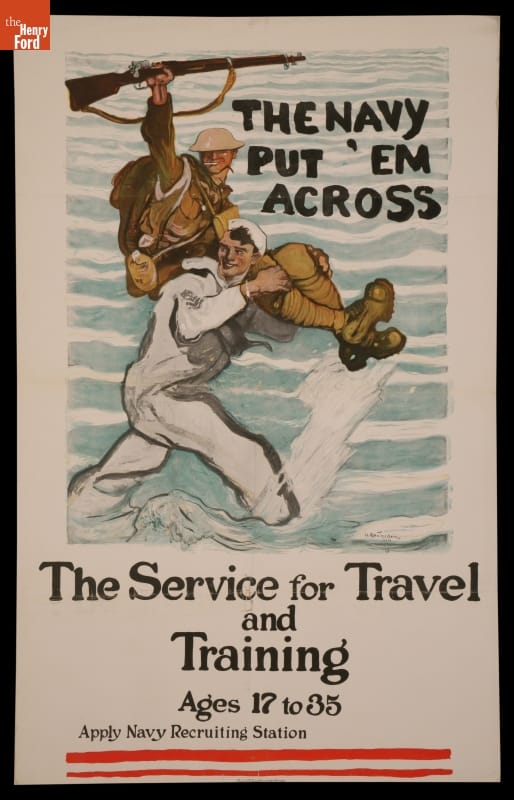
- World War I Poster, "The Navy Put 'em Across," 1918 - During the First World War, governments of all the warring nations used poster campaigns to encourage civilian and military support of the war effort. Artists widely used an innovative advertising technique for these posters that moved away from a factual depiction of a product's material or event's subject to an emphasis on appealing to the viewer's emotions.
- 1918
- Collections - Artifact
World War I Poster, "The Navy Put 'em Across," 1918
During the First World War, governments of all the warring nations used poster campaigns to encourage civilian and military support of the war effort. Artists widely used an innovative advertising technique for these posters that moved away from a factual depiction of a product's material or event's subject to an emphasis on appealing to the viewer's emotions.
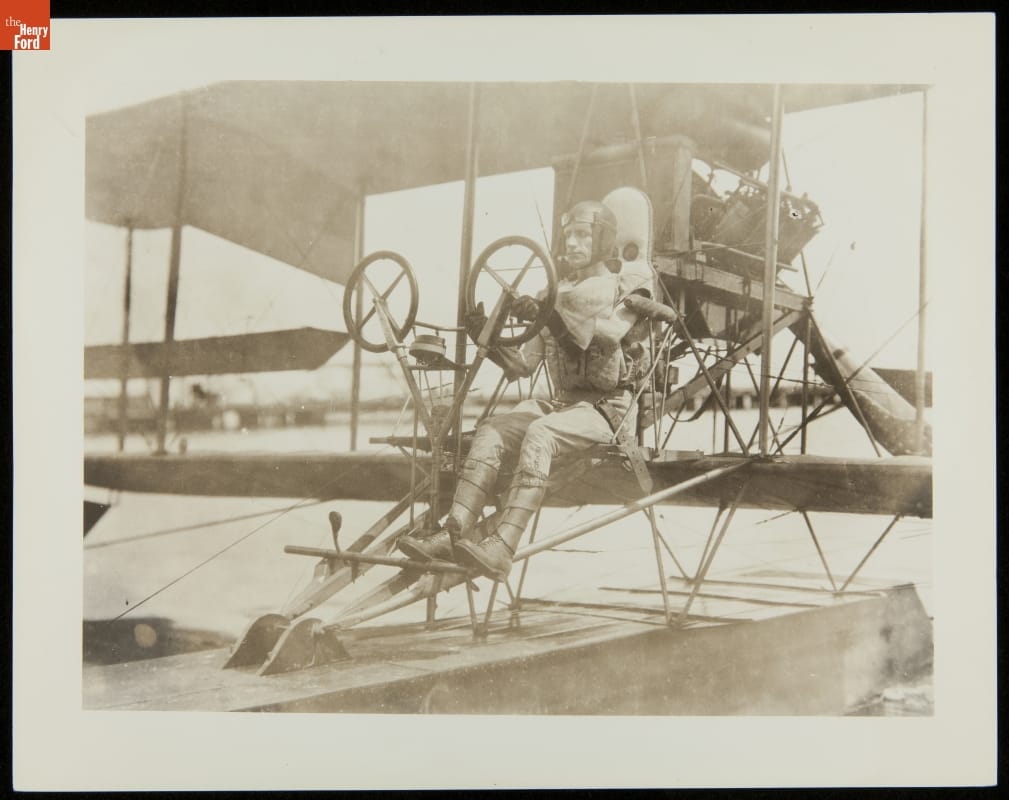
- Naval Aviator Albert Cushing Read in Curtiss Airplane, 1915 - In addition to his pioneering work with aileron control surfaces, Glenn Curtiss designed and built some of the earliest seaplanes in the United States. His first experiments involved little more than strapping a canoe to the bottom of a standard airplane. But by 1911, the potential of Curtiss's flying boats had earned him a contract with the U.S. Navy.
- 1915
- Collections - Artifact
Naval Aviator Albert Cushing Read in Curtiss Airplane, 1915
In addition to his pioneering work with aileron control surfaces, Glenn Curtiss designed and built some of the earliest seaplanes in the United States. His first experiments involved little more than strapping a canoe to the bottom of a standard airplane. But by 1911, the potential of Curtiss's flying boats had earned him a contract with the U.S. Navy.