
Search
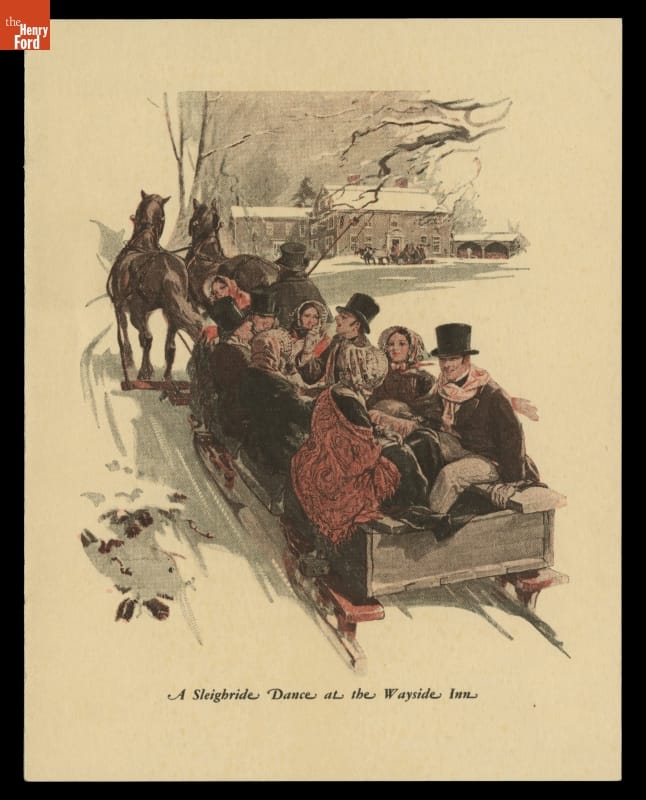
- Souvenir Card, "A Sleighride Dance at the Wayside Inn," 1927 -
- January 18, 1927
- Collections - Artifact
Souvenir Card, "A Sleighride Dance at the Wayside Inn," 1927
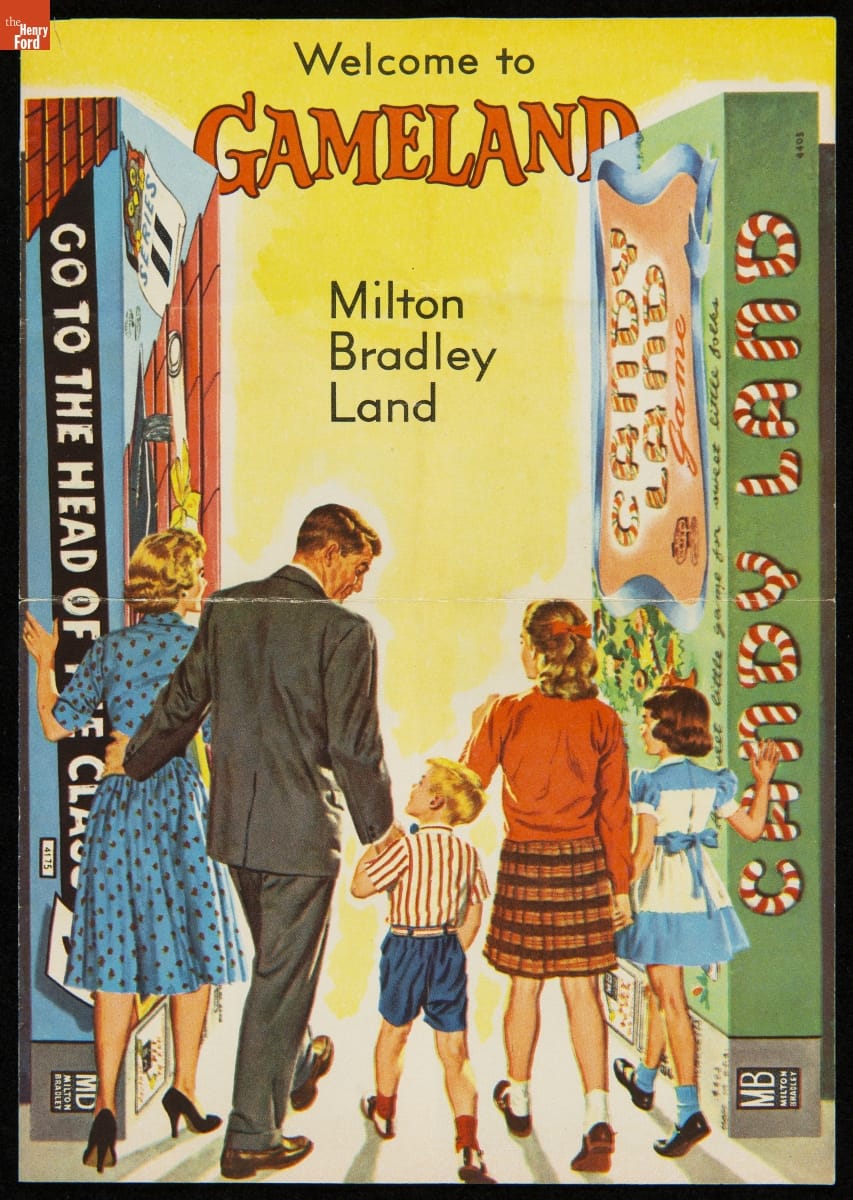
- Milton Bradley Company Catalog, "Welcome to Gameland," 1964 - Milton Bradley, a Springfield, Massachusetts, lithographer, published his first board game in 1860. It was a hit, and Bradley soon became a leader in the growing American game business. By his death in 1911, Bradley's company was one of the nation's best known and most prolific game and toy manufacturers. Milton Bradley products remained popular even after the company's 1984 acquisition by Hasbro, Inc.
- 1964
- Collections - Artifact
Milton Bradley Company Catalog, "Welcome to Gameland," 1964
Milton Bradley, a Springfield, Massachusetts, lithographer, published his first board game in 1860. It was a hit, and Bradley soon became a leader in the growing American game business. By his death in 1911, Bradley's company was one of the nation's best known and most prolific game and toy manufacturers. Milton Bradley products remained popular even after the company's 1984 acquisition by Hasbro, Inc.
- Milton Bradley Company Trade Catalog, "Bradley's The World's Best Games," 1919-1920 - Milton Bradley, a Springfield, Massachusetts, lithographer, published his first board game in 1860. It was a hit, and Bradley soon became a leader in the growing American game business. By his death in 1911, Bradley's company was one of the nation's best known and most prolific game and toy manufacturers. Milton Bradley products remained popular even after the company's 1984 acquisition by Hasbro, Inc.
- 1919-1920
- Collections - Artifact
Milton Bradley Company Trade Catalog, "Bradley's The World's Best Games," 1919-1920
Milton Bradley, a Springfield, Massachusetts, lithographer, published his first board game in 1860. It was a hit, and Bradley soon became a leader in the growing American game business. By his death in 1911, Bradley's company was one of the nation's best known and most prolific game and toy manufacturers. Milton Bradley products remained popular even after the company's 1984 acquisition by Hasbro, Inc.
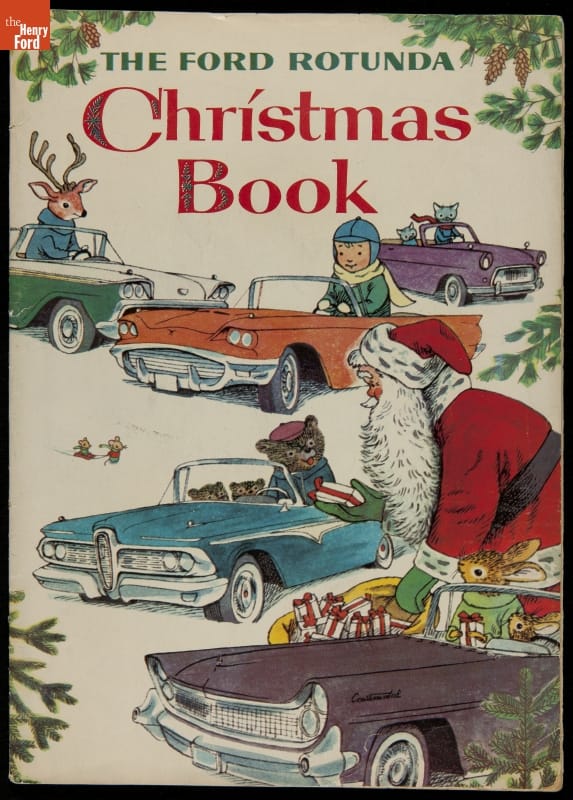
- Children's Activity Book, "Christmas at the Ford Rotunda," 1958 - After the Century of Progress Exposition ended in 1934, Ford Motor Company brought its central Rotunda building from that fair back to Dearborn. From 1936 to 1962, Ford recreated the excitement of a World's Fair exposition on its home turf. This souvenir Christmas book from 1958 was illustrated by noted children's book illustrator Richard Scarry.
- 1958
- Collections - Artifact
Children's Activity Book, "Christmas at the Ford Rotunda," 1958
After the Century of Progress Exposition ended in 1934, Ford Motor Company brought its central Rotunda building from that fair back to Dearborn. From 1936 to 1962, Ford recreated the excitement of a World's Fair exposition on its home turf. This souvenir Christmas book from 1958 was illustrated by noted children's book illustrator Richard Scarry.
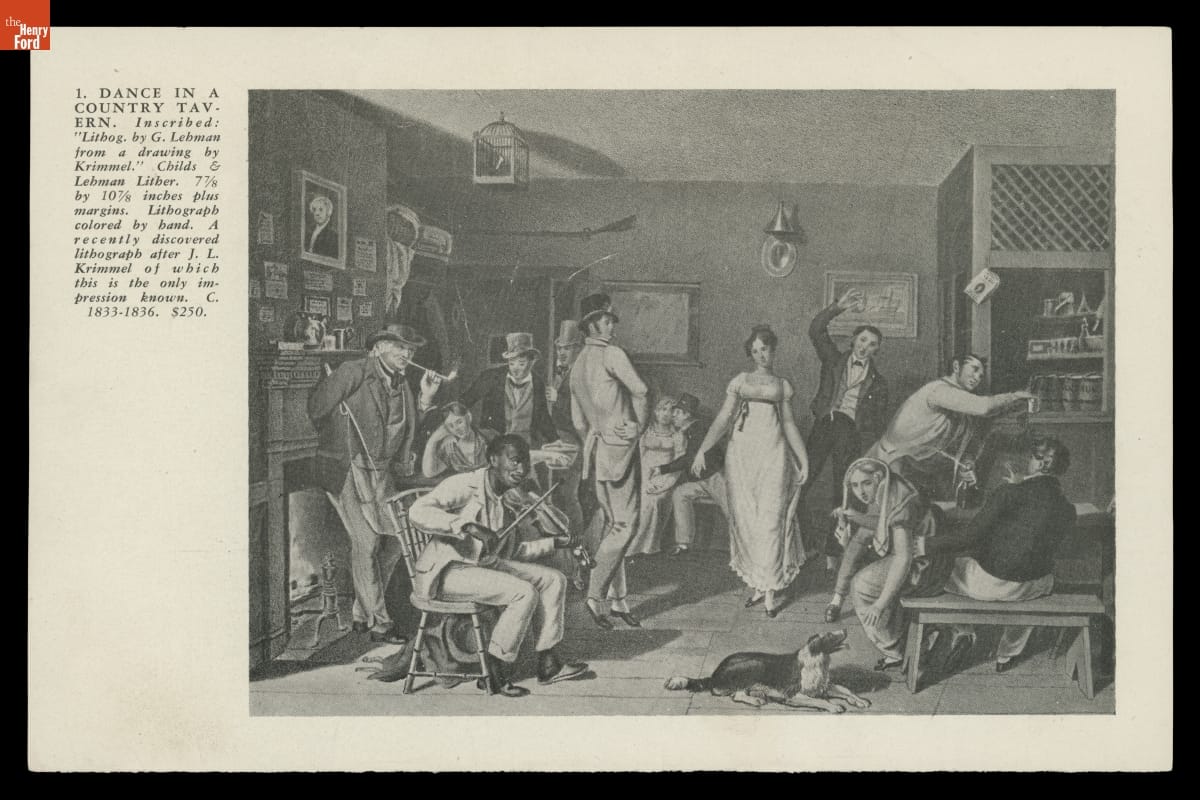
- The Print, "Dance in a Country Tavern," Offered for Sale in "The Old Print Shop Portfolio" Catalog, December 1948 - In the late 1810s, German-born Philadelphia artist John Lewis Krimmel (1786-1821) depicted the people and events at a country tavern. Krimmel's richly detailed portrait holds many clues to the lives of Americans in the early republic. Printmakers created prints of this drawing years after Krimmel's death.
- December 01, 1948
- Collections - Artifact
The Print, "Dance in a Country Tavern," Offered for Sale in "The Old Print Shop Portfolio" Catalog, December 1948
In the late 1810s, German-born Philadelphia artist John Lewis Krimmel (1786-1821) depicted the people and events at a country tavern. Krimmel's richly detailed portrait holds many clues to the lives of Americans in the early republic. Printmakers created prints of this drawing years after Krimmel's death.
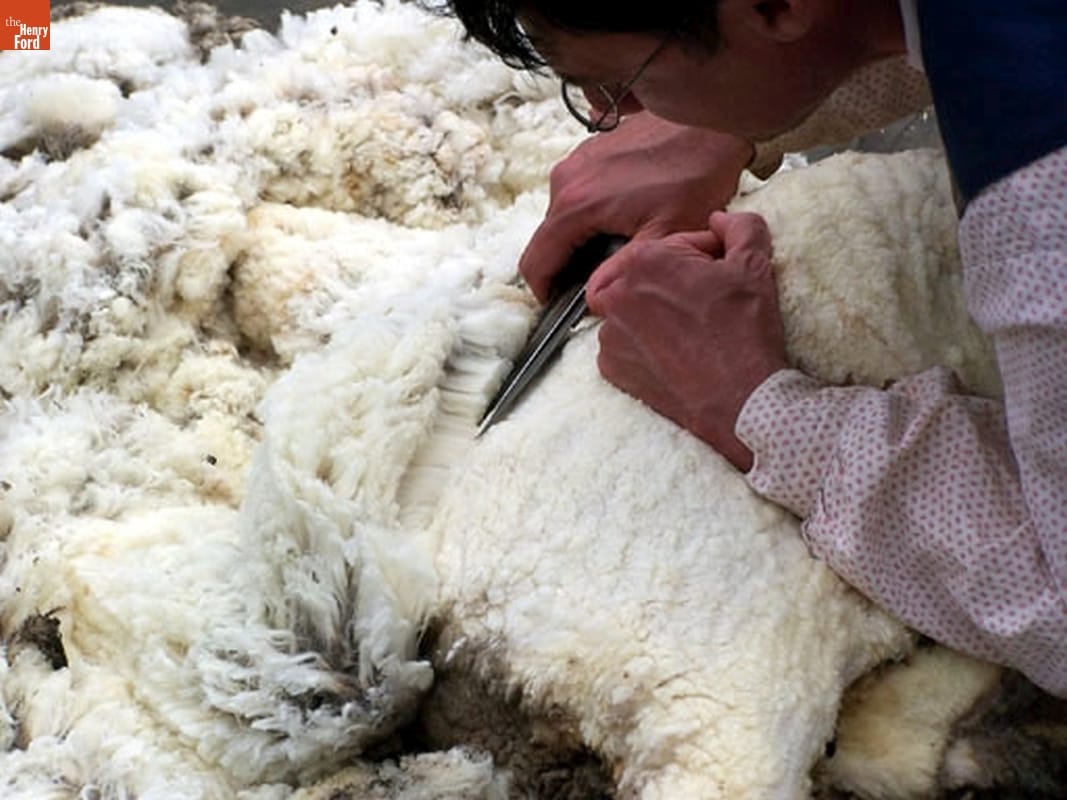
- Demonstrating Blade-Shearing of Merino Sheep in Greenfield Village, May 2005 - Heavy coats of fine wool made Merino sheep a popular breed among nineteenth-century wool producers. Every spring, shearers carefully navigated blade shears to remove each sheep's thick fleece -- a process that could take several hours. More than a century later, presenters demonstrate this labor-intensive blade-shearing process at Firestone Farm in Greenfield Village.
- May 01, 2005
- Collections - Artifact
Demonstrating Blade-Shearing of Merino Sheep in Greenfield Village, May 2005
Heavy coats of fine wool made Merino sheep a popular breed among nineteenth-century wool producers. Every spring, shearers carefully navigated blade shears to remove each sheep's thick fleece -- a process that could take several hours. More than a century later, presenters demonstrate this labor-intensive blade-shearing process at Firestone Farm in Greenfield Village.
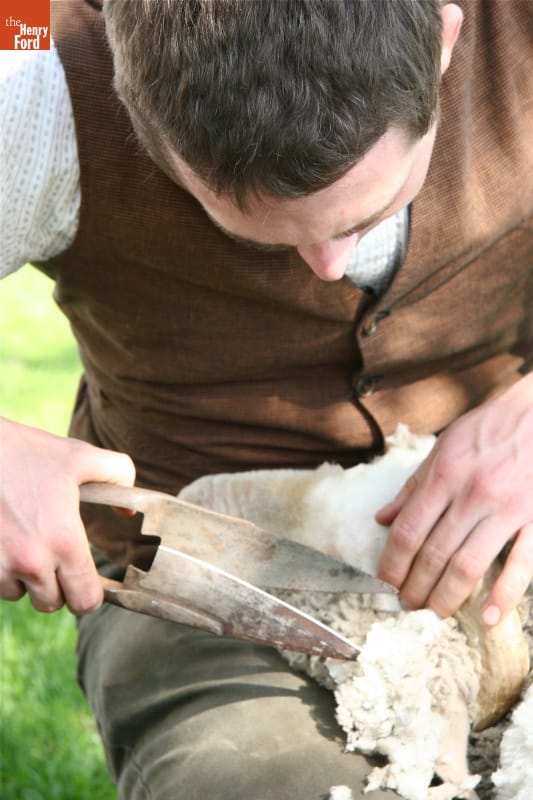
- Demonstrating Blade-Shearing of Merino Sheep in Greenfield Village, April 2010 - Heavy coats of fine wool made Merino sheep a popular breed among nineteenth-century wool producers. Every spring, shearers carefully navigated blade shears to remove each sheep's thick fleece -- a process that could take several hours. More than a century later, presenters demonstrate this labor-intensive blade-shearing process at Firestone Farm in Greenfield Village.
- April 29, 2010
- Collections - Artifact
Demonstrating Blade-Shearing of Merino Sheep in Greenfield Village, April 2010
Heavy coats of fine wool made Merino sheep a popular breed among nineteenth-century wool producers. Every spring, shearers carefully navigated blade shears to remove each sheep's thick fleece -- a process that could take several hours. More than a century later, presenters demonstrate this labor-intensive blade-shearing process at Firestone Farm in Greenfield Village.
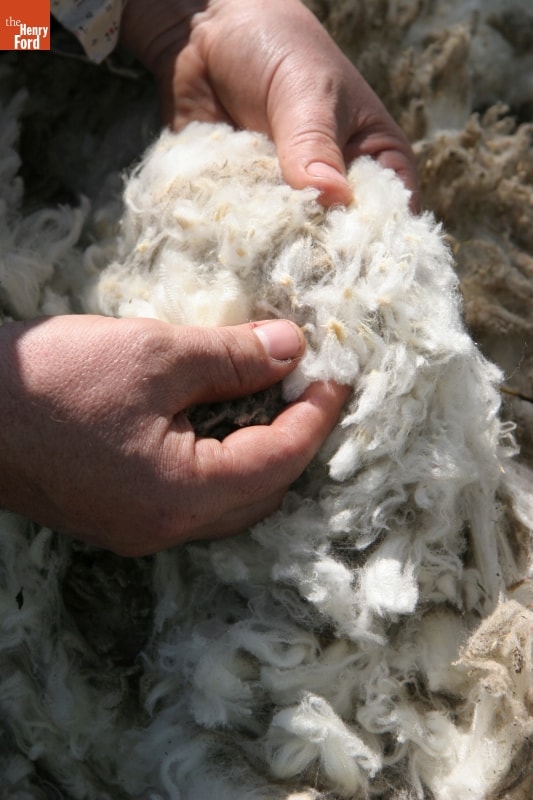
- Lanolin in Wool from Merino Sheep-Shearing, Greenfield Village, April 2010 - The skin of Merino sheep secretes an excess of lanolin. Clumps of this protective waxy substance often remain in the fleece after shearing. A warm, soapy wash of the fleece removes lanolin, along with dirt and matted wool, before raw wool is processed into yarn or fabric.
- April 30, 2010
- Collections - Artifact
Lanolin in Wool from Merino Sheep-Shearing, Greenfield Village, April 2010
The skin of Merino sheep secretes an excess of lanolin. Clumps of this protective waxy substance often remain in the fleece after shearing. A warm, soapy wash of the fleece removes lanolin, along with dirt and matted wool, before raw wool is processed into yarn or fabric.
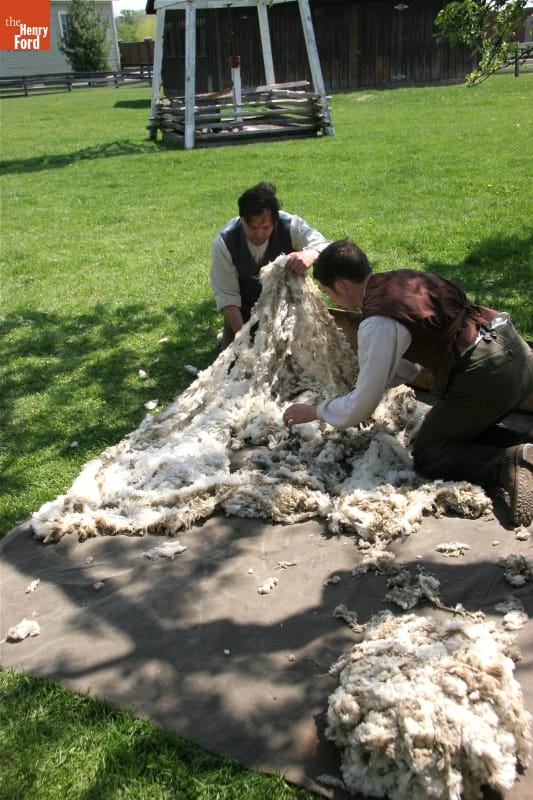
- Skirting the Wool Fleece from Merino Sheep-Shearing Demonstration, Greenfield Village, April 2010 - Heavy, yet fine fleeces made Merino sheep a popular breed among nineteenth-century wool producers. Every spring, after carefully navigating blade shears to cut away each sheep's thick fleece, farmers removed especially dirty or coarse sections of wool. This process, called skirting, helped maximize profit, as farmers and wool buyers negotiated a price per pound of wool based on fleece quality.
- April 30, 2010
- Collections - Artifact
Skirting the Wool Fleece from Merino Sheep-Shearing Demonstration, Greenfield Village, April 2010
Heavy, yet fine fleeces made Merino sheep a popular breed among nineteenth-century wool producers. Every spring, after carefully navigating blade shears to cut away each sheep's thick fleece, farmers removed especially dirty or coarse sections of wool. This process, called skirting, helped maximize profit, as farmers and wool buyers negotiated a price per pound of wool based on fleece quality.
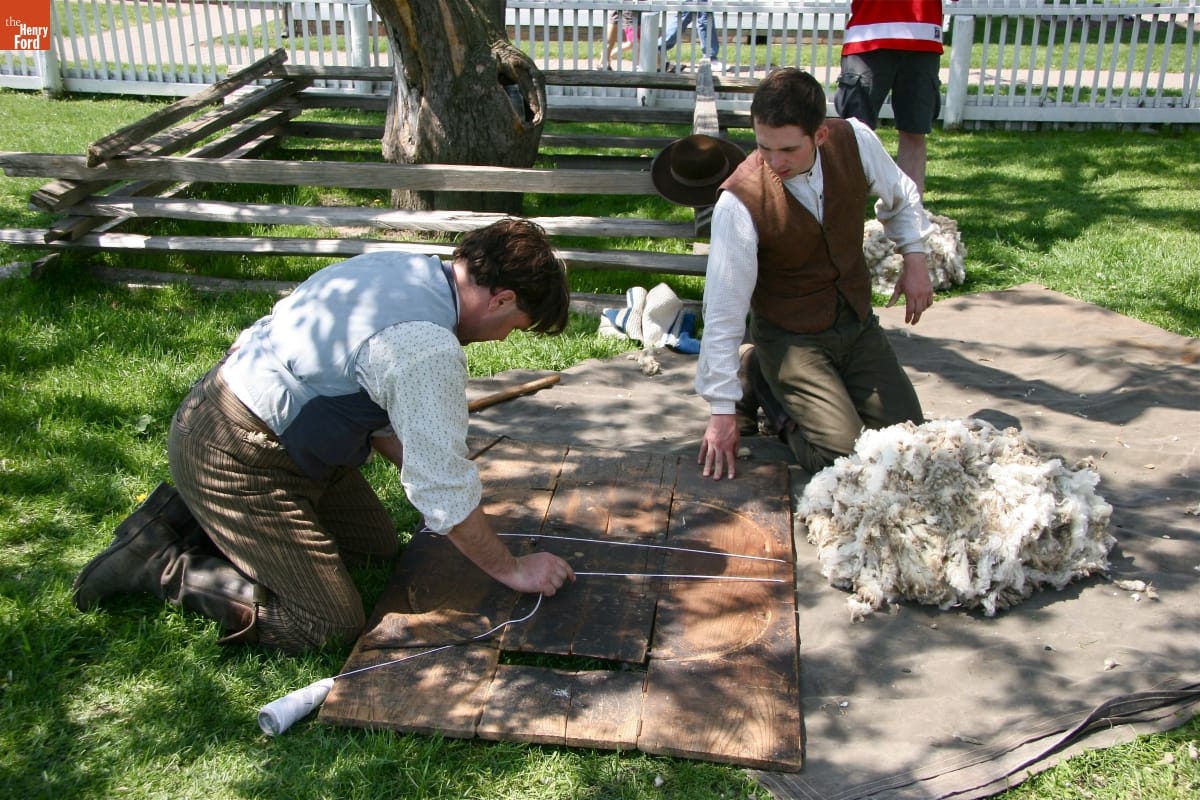
- Preparing the Wool Fleece for Weighing, Merino Sheep-Shearing Demonstration at Greenfield Village, April 2010 - Heavy coats of valuable wool made Merino sheep a popular breed among nineteenth-century wool producers. Every spring, shearers carefully navigated blade shears to remove each sheep's fleece by hand. Shearing as much usable wool as possible was key to maximizing profit, as farmers and wool buyers negotiated a price per pound of wool.
- April 30, 2010
- Collections - Artifact
Preparing the Wool Fleece for Weighing, Merino Sheep-Shearing Demonstration at Greenfield Village, April 2010
Heavy coats of valuable wool made Merino sheep a popular breed among nineteenth-century wool producers. Every spring, shearers carefully navigated blade shears to remove each sheep's fleece by hand. Shearing as much usable wool as possible was key to maximizing profit, as farmers and wool buyers negotiated a price per pound of wool.