
Search
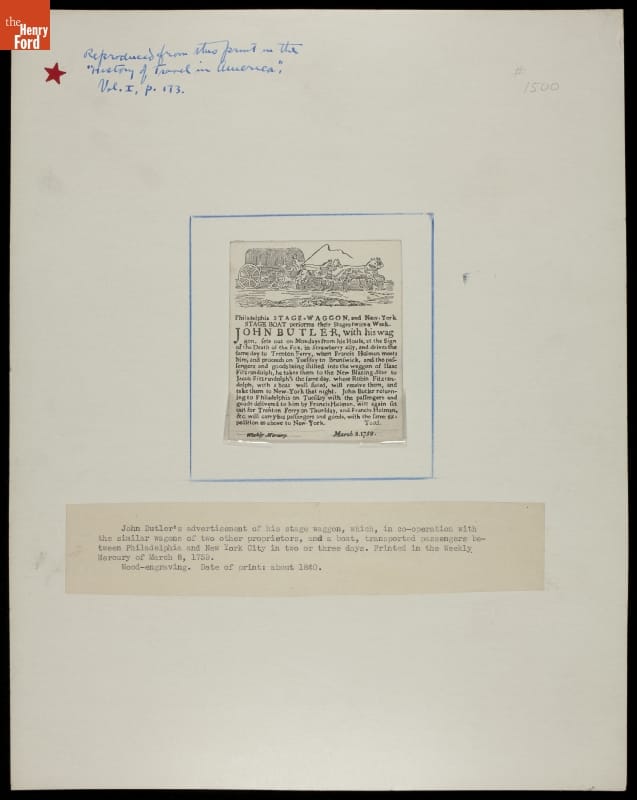
- Advertisement for Stage Wagon and Boat Transportation Between Philadelphia and New York City, circa 1840 - Originally printed March 8, 1759, in the <em>Weekly Mercury</em>, this advertisement features a wood engraving of John Butler's stage wagon. This stage line ran between Philadelphia, Pennsylvania, and New York City.
- March 08, 1759
- Collections - Artifact
Advertisement for Stage Wagon and Boat Transportation Between Philadelphia and New York City, circa 1840
Originally printed March 8, 1759, in the Weekly Mercury, this advertisement features a wood engraving of John Butler's stage wagon. This stage line ran between Philadelphia, Pennsylvania, and New York City.
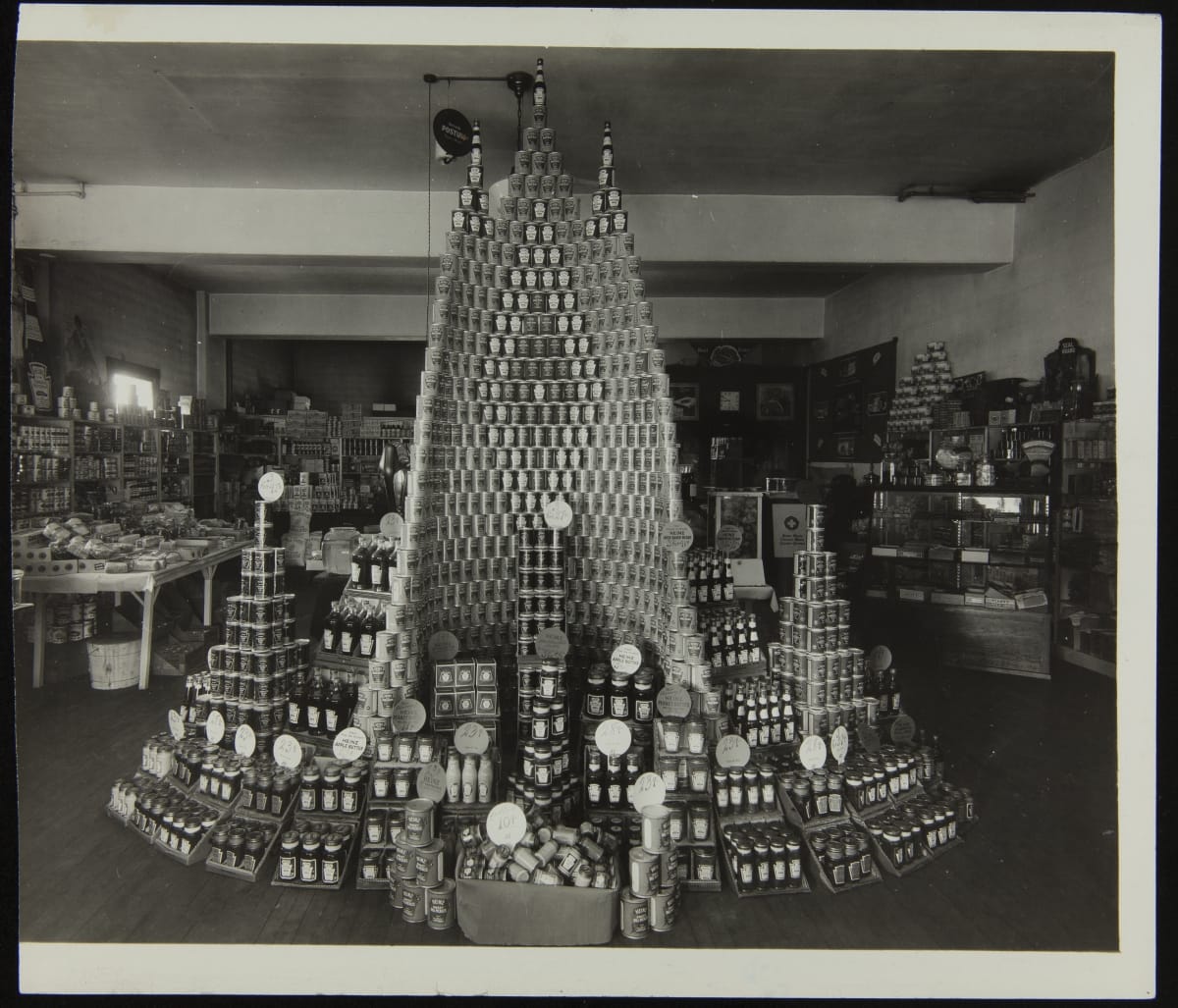
- O. C. Bedell Grocery Store, Floor Display of Heinz Products, Newton, Ohio, circa 1930 - H. J. Heinz was at the forefront of creative marketing in the manufactured food industry. He developed a comprehensive advertising strategy that included elaborate product displays in local grocery stores. Shoppers were greeted with colorful posters and meticulously designed floor-to-ceiling pyramids of canned and jarred products created by Heinz salespeople.
- circa 1930
- Collections - Artifact
O. C. Bedell Grocery Store, Floor Display of Heinz Products, Newton, Ohio, circa 1930
H. J. Heinz was at the forefront of creative marketing in the manufactured food industry. He developed a comprehensive advertising strategy that included elaborate product displays in local grocery stores. Shoppers were greeted with colorful posters and meticulously designed floor-to-ceiling pyramids of canned and jarred products created by Heinz salespeople.
- Sam Joseph Grocery Store Display of Heinz Products, Grand Rapids, Michigan, 1929 - "Pickle King" H. J. Heinz's confidence in his products prompted his extraordinary guarantee -- if you didn't find his food satisfactory, you could get your money back. His faith in his product established trust in his customers and provided them with zero financial risk in trying a new product. His guarantee is featured here in the middle of his other advertisements.

- 1929
- Collections - Artifact
Sam Joseph Grocery Store Display of Heinz Products, Grand Rapids, Michigan, 1929
"Pickle King" H. J. Heinz's confidence in his products prompted his extraordinary guarantee -- if you didn't find his food satisfactory, you could get your money back. His faith in his product established trust in his customers and provided them with zero financial risk in trying a new product. His guarantee is featured here in the middle of his other advertisements.
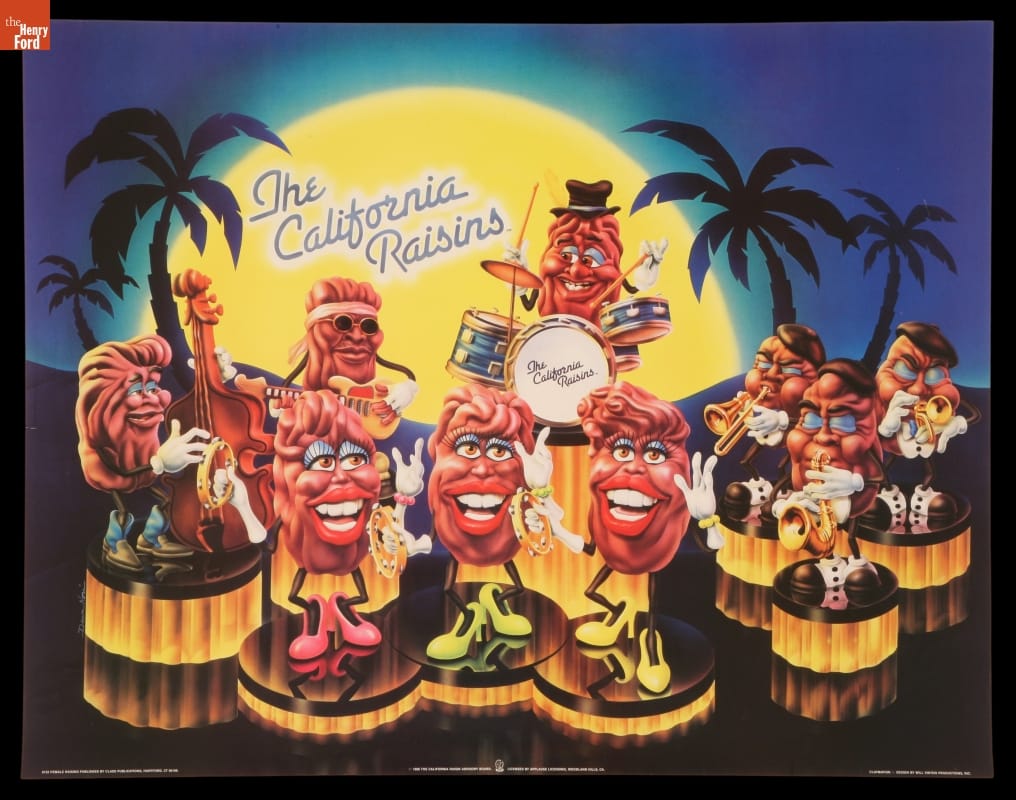
- Advertising Poster, "The California Raisins," 1988 - In the 1980s, the California Raisin Advisory Board brought their product to life as an animated rhythm and blues band. The group's rendition of Marvin Gaye's "I Heard It Through the Grapevine" aired on a 1986 TV commercial and left the public wanting more. By 1988, The California Raisins had four albums, a Billboard Hot 100 hit, and a mockumentary about their origins.
- 1988
- Collections - Artifact
Advertising Poster, "The California Raisins," 1988
In the 1980s, the California Raisin Advisory Board brought their product to life as an animated rhythm and blues band. The group's rendition of Marvin Gaye's "I Heard It Through the Grapevine" aired on a 1986 TV commercial and left the public wanting more. By 1988, The California Raisins had four albums, a Billboard Hot 100 hit, and a mockumentary about their origins.
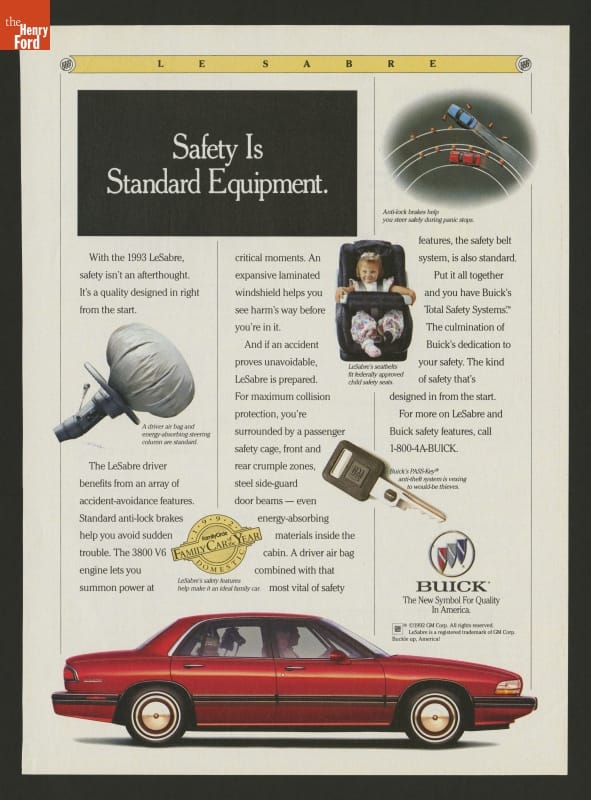
- 1992 Buick LeSabre Ad, "Safety is Standard Equipment" - When safety sells, auto manufacturers incorporate new safety feature and trumpet their successes. This ad for the 1993 Buick LeSabre highlighted the car's standard equipment that keeps drivers and passengers safe.
- 1992
- Collections - Artifact
1992 Buick LeSabre Ad, "Safety is Standard Equipment"
When safety sells, auto manufacturers incorporate new safety feature and trumpet their successes. This ad for the 1993 Buick LeSabre highlighted the car's standard equipment that keeps drivers and passengers safe.
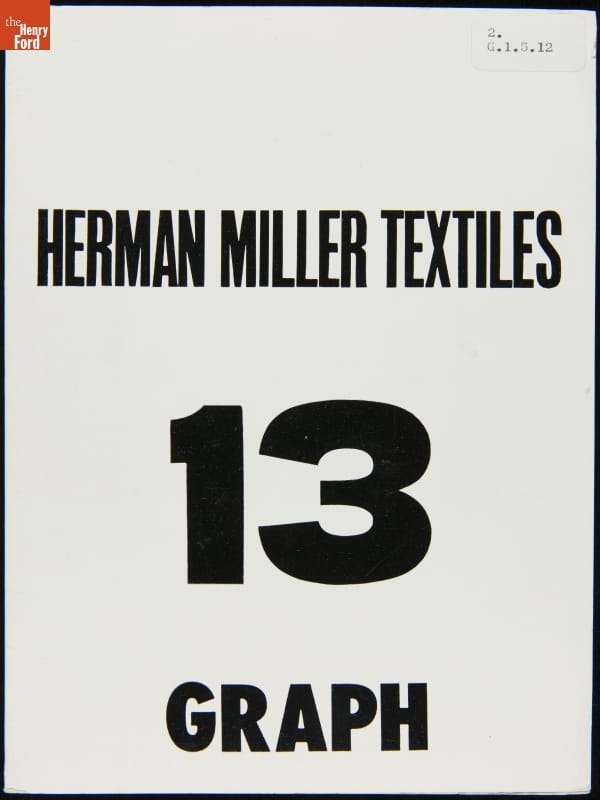
- Herman Miller Textiles Swatches, "13 Graph," 1964 - Early modernist design was starkly minimal, but mid-century modern designer Alexander Girard's work challenged and expanded the movement. Girard humanized modernism through his colorful and whimsical textile, furniture, graphic, and interior designs. As the Director of Design in Herman Miller's Textile Division from 1952 until 1973, Girard designed over 300 textiles, often using bold color combinations and abstract patterns.
- 1964
- Collections - Artifact
Herman Miller Textiles Swatches, "13 Graph," 1964
Early modernist design was starkly minimal, but mid-century modern designer Alexander Girard's work challenged and expanded the movement. Girard humanized modernism through his colorful and whimsical textile, furniture, graphic, and interior designs. As the Director of Design in Herman Miller's Textile Division from 1952 until 1973, Girard designed over 300 textiles, often using bold color combinations and abstract patterns.
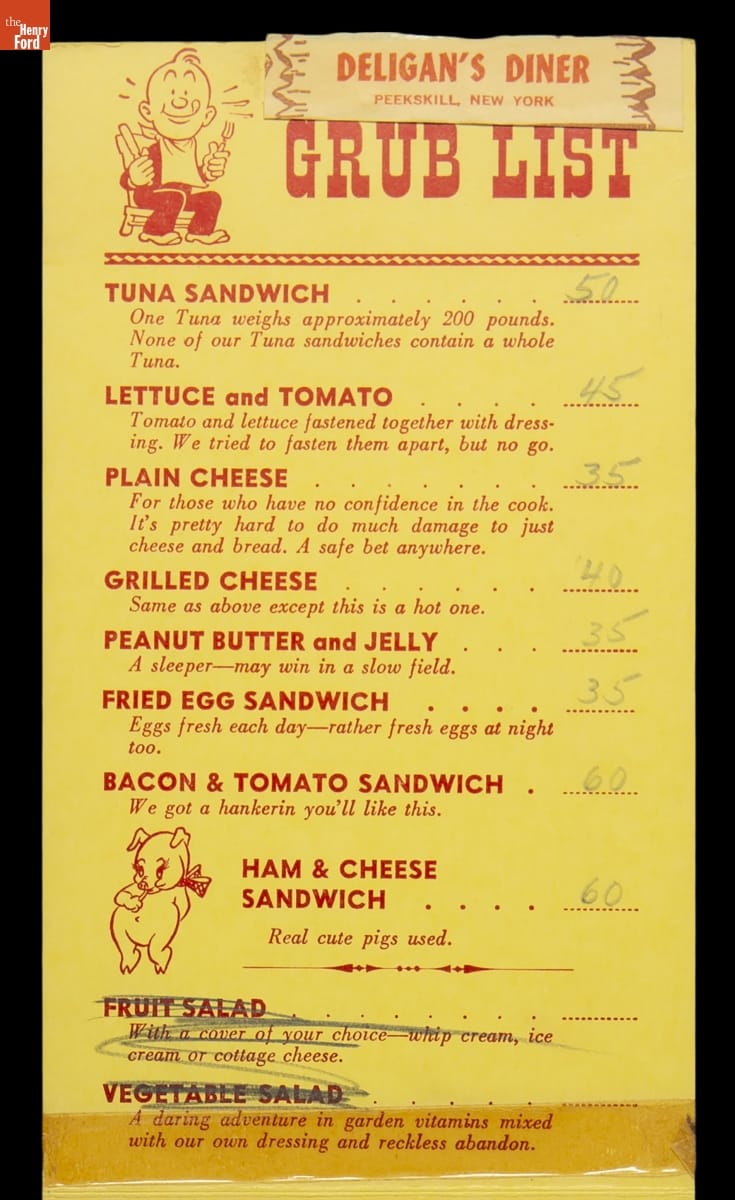
- Deligan's Diner Menu, "Grub List," circa 1972 -
- circa 1972
- Collections - Artifact
Deligan's Diner Menu, "Grub List," circa 1972
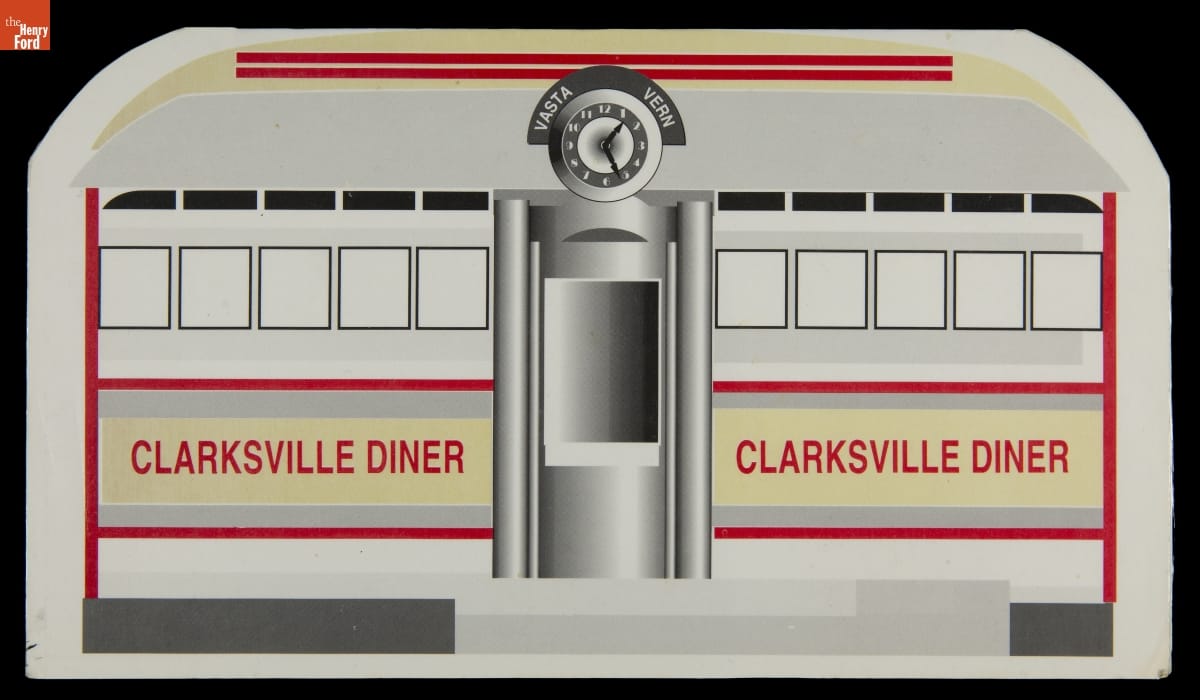
- Clarksville Diner Menu, March 1995 -
- March 01, 1995
- Collections - Artifact
Clarksville Diner Menu, March 1995
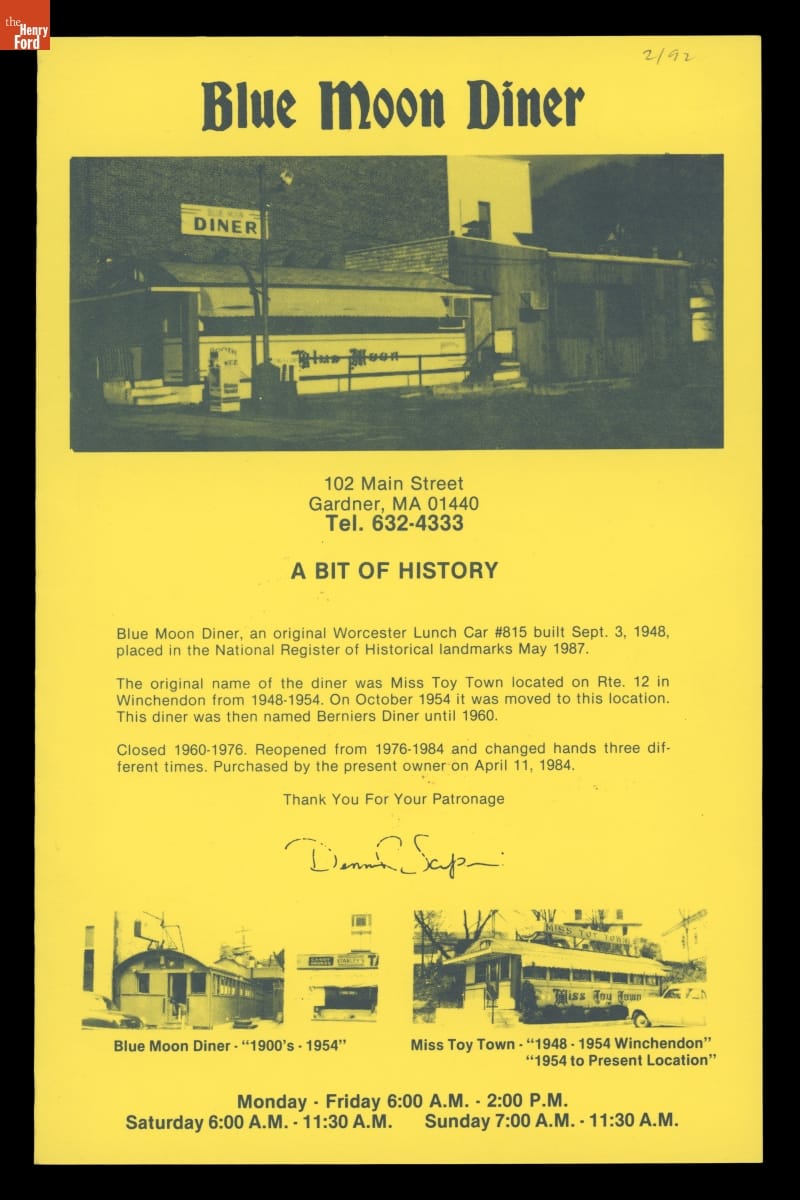
- Blue Moon Diner Menu, 1992 -
- 1992
- Collections - Artifact
Blue Moon Diner Menu, 1992
- Zip's Diner Menu, November 2011 -
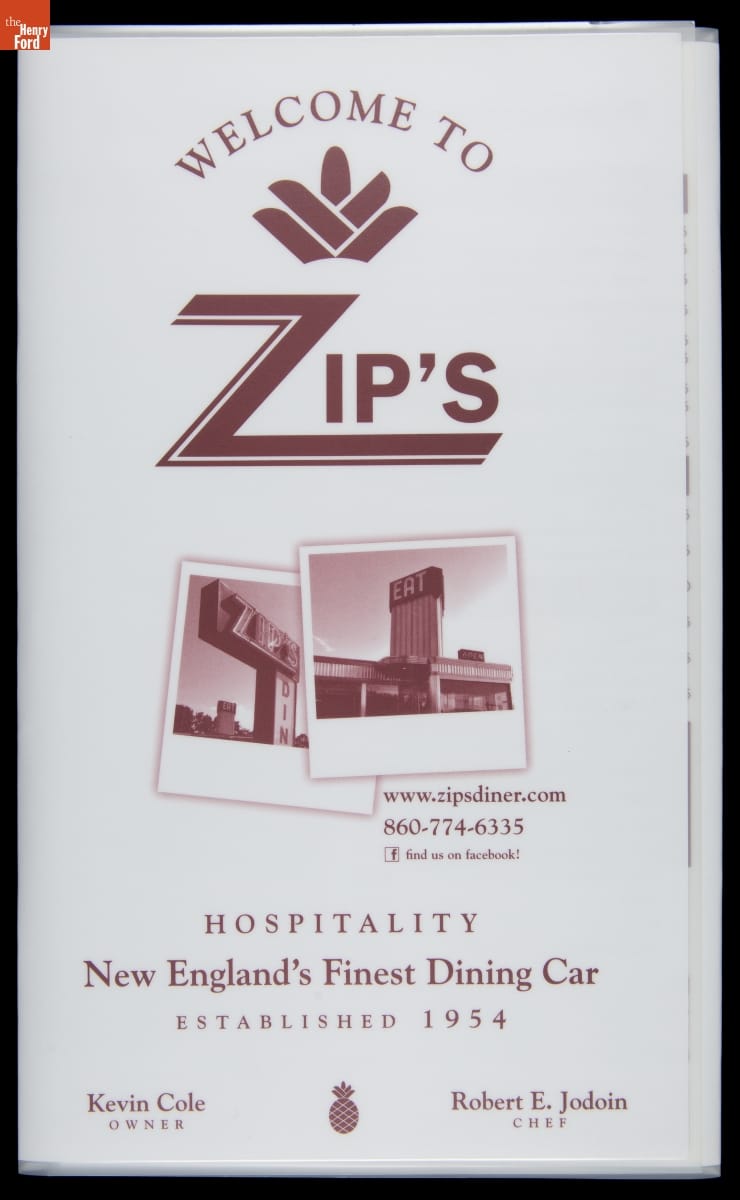
- November 01, 2011
- Collections - Artifact
Zip's Diner Menu, November 2011