
Search
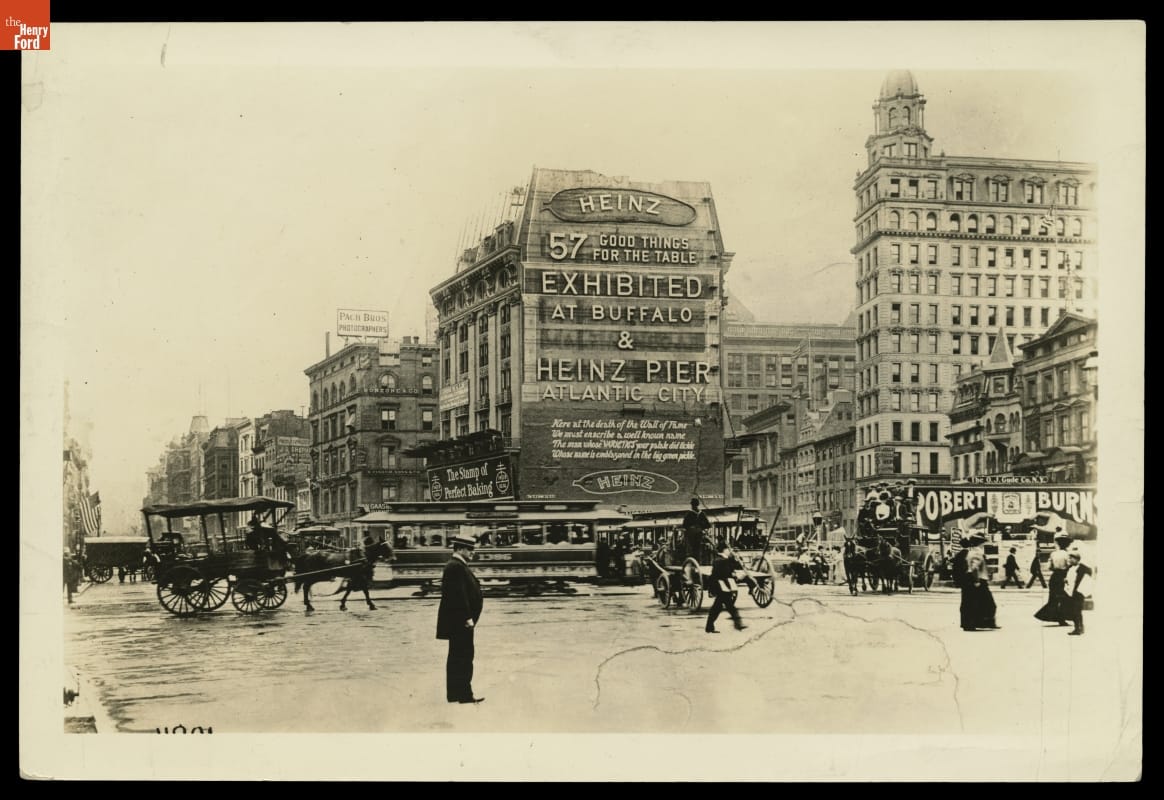
- H. J. Heinz Co. Electric Advertising Sign, New York City, circa 1902 - Henry J. Heinz rarely missed an opportunity to raise customer awareness for his line of packaged foods. He was a prolific promoter whose schemes were innovative and often flamboyant. Built in 1900, this was the first electric display of its kind. The massive sign stood six stories, used 1,200 incandescent lights, and was topped with a 43-foot-long flashing Heinz pickle.
- 1901
- Collections - Artifact
H. J. Heinz Co. Electric Advertising Sign, New York City, circa 1902
Henry J. Heinz rarely missed an opportunity to raise customer awareness for his line of packaged foods. He was a prolific promoter whose schemes were innovative and often flamboyant. Built in 1900, this was the first electric display of its kind. The massive sign stood six stories, used 1,200 incandescent lights, and was topped with a 43-foot-long flashing Heinz pickle.
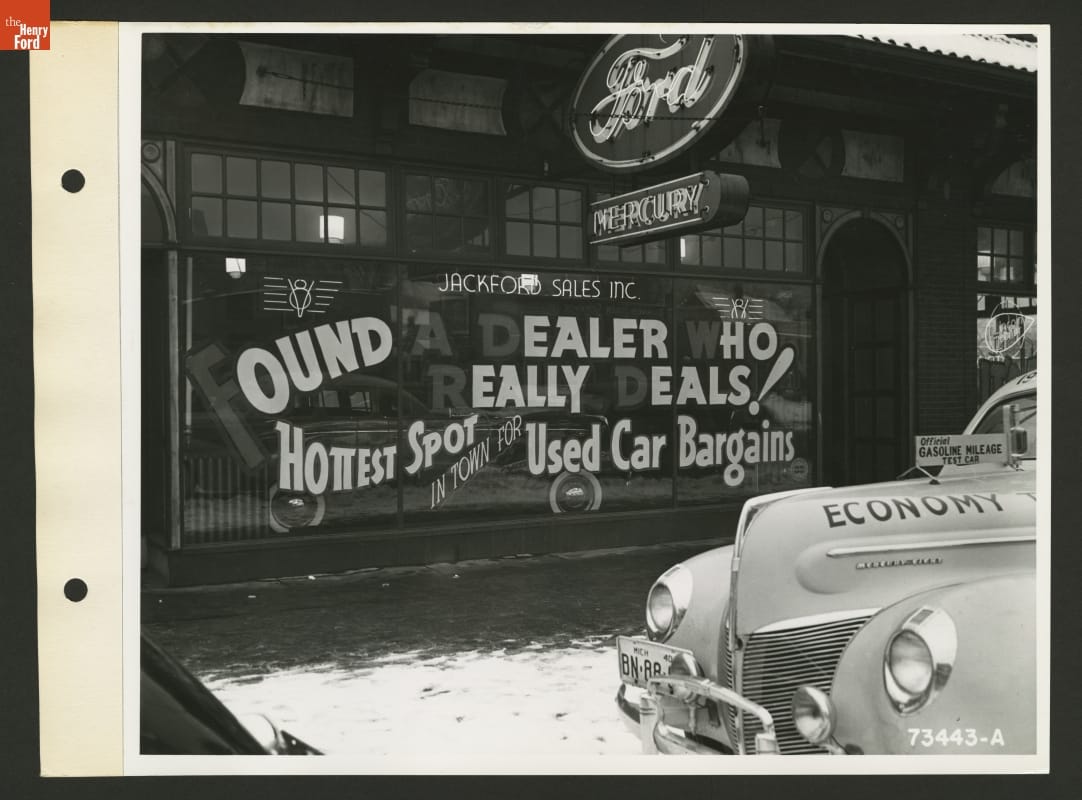
- Mercury V-8 Gasoline Mileage Test Car at Ford Dealership, Jackson, Michigan, 1940 - Used car sales took off in the 1930s as frugal car buyers looked for deals. This photograph from 1940 shows a Jackson, Michigan, dealer's display window advertising the "Hottest Spot in Town for Used Car Bargains."
- March 27, 1940
- Collections - Artifact
Mercury V-8 Gasoline Mileage Test Car at Ford Dealership, Jackson, Michigan, 1940
Used car sales took off in the 1930s as frugal car buyers looked for deals. This photograph from 1940 shows a Jackson, Michigan, dealer's display window advertising the "Hottest Spot in Town for Used Car Bargains."
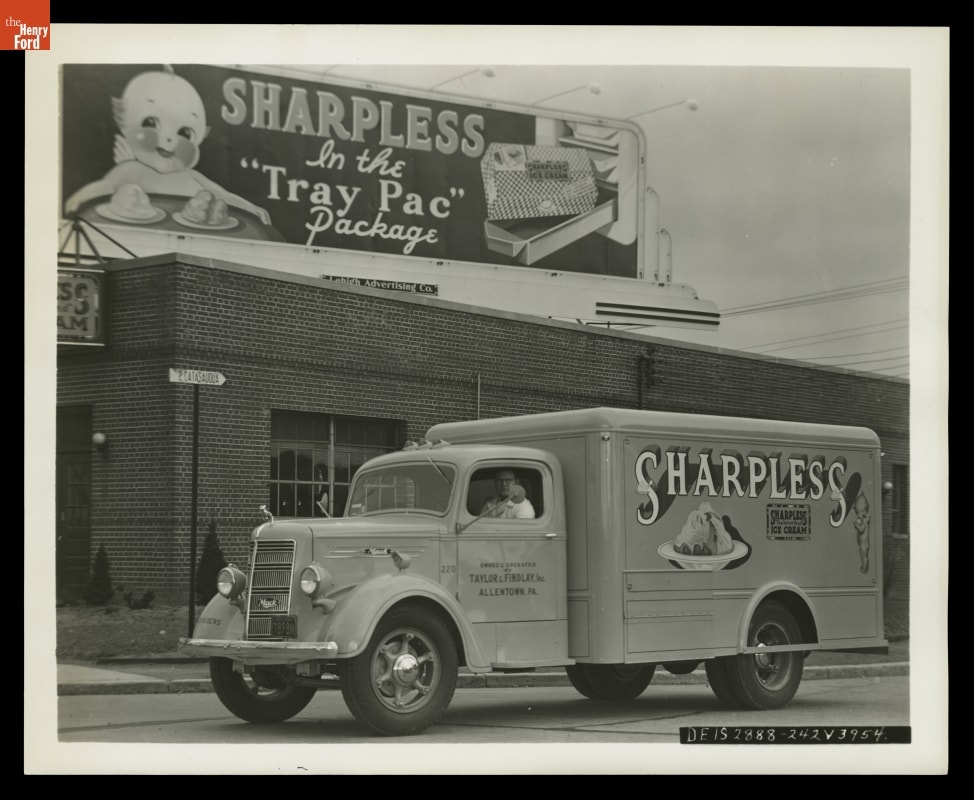
- 1942 Mack Model DEIS Truck Delivering Sharpless Ice Cream, Allentown, Pennsylvania - By the 1940s, refrigerated trucks were transporting pre-packaged ice cream to retail outlets across the country. In this 1942 photograph, a truck stands ready to transport cartons of Sharpless Ice Cream from the plant in Allentown, Pennsylvania. The billboard above points out how the ice cream carton's "Tray Pac" design conveniently fit into the freezer compartment of a home refrigerator.
- February 01, 1942
- Collections - Artifact
1942 Mack Model DEIS Truck Delivering Sharpless Ice Cream, Allentown, Pennsylvania
By the 1940s, refrigerated trucks were transporting pre-packaged ice cream to retail outlets across the country. In this 1942 photograph, a truck stands ready to transport cartons of Sharpless Ice Cream from the plant in Allentown, Pennsylvania. The billboard above points out how the ice cream carton's "Tray Pac" design conveniently fit into the freezer compartment of a home refrigerator.
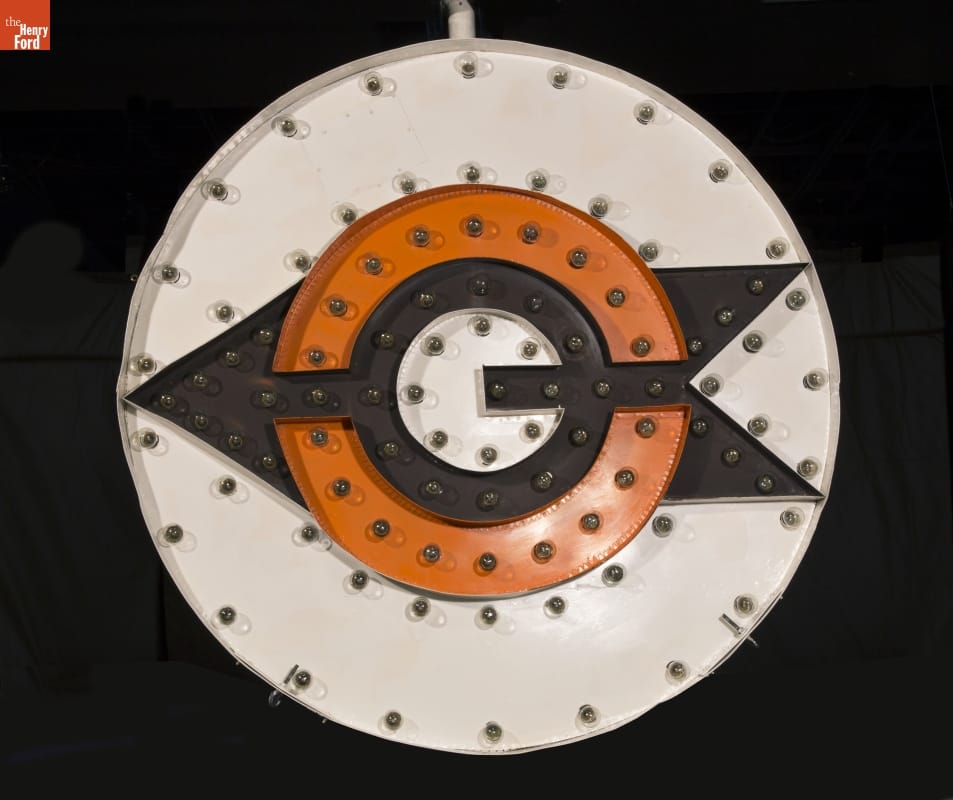
- A&W Drive-In Highway Sign, circa 1955 - Roy W. Allen ran a small walk-up root beer stand in California, then partnered with his employee Frank Wright. Together, "A" and "W" opened three subsequent root beer stands, then began selling franchises. By the 1930s, A & W's had taken the form of drive-ins -- among the country's earliest restaurants of that type. This sign beckoned customers from the highway.
- circa 1955
- Collections - Artifact
A&W Drive-In Highway Sign, circa 1955
Roy W. Allen ran a small walk-up root beer stand in California, then partnered with his employee Frank Wright. Together, "A" and "W" opened three subsequent root beer stands, then began selling franchises. By the 1930s, A & W's had taken the form of drive-ins -- among the country's earliest restaurants of that type. This sign beckoned customers from the highway.
- Douglas Drive-In Theatre Sign and Movie Screen in Original Location, Kalamazoo, Michigan, 1987 - This sign attracted motorists to a drive-in theatre located on old U.S. 131, on the outskirts of Kalamazoo, Michigan. The theatre operated from about 1955 to 1985, when -- like many other drive-in theatres -- it closed due to urban sprawl, declining interest by movie-goers, and the expense of maintaining and running a seasonal operation.
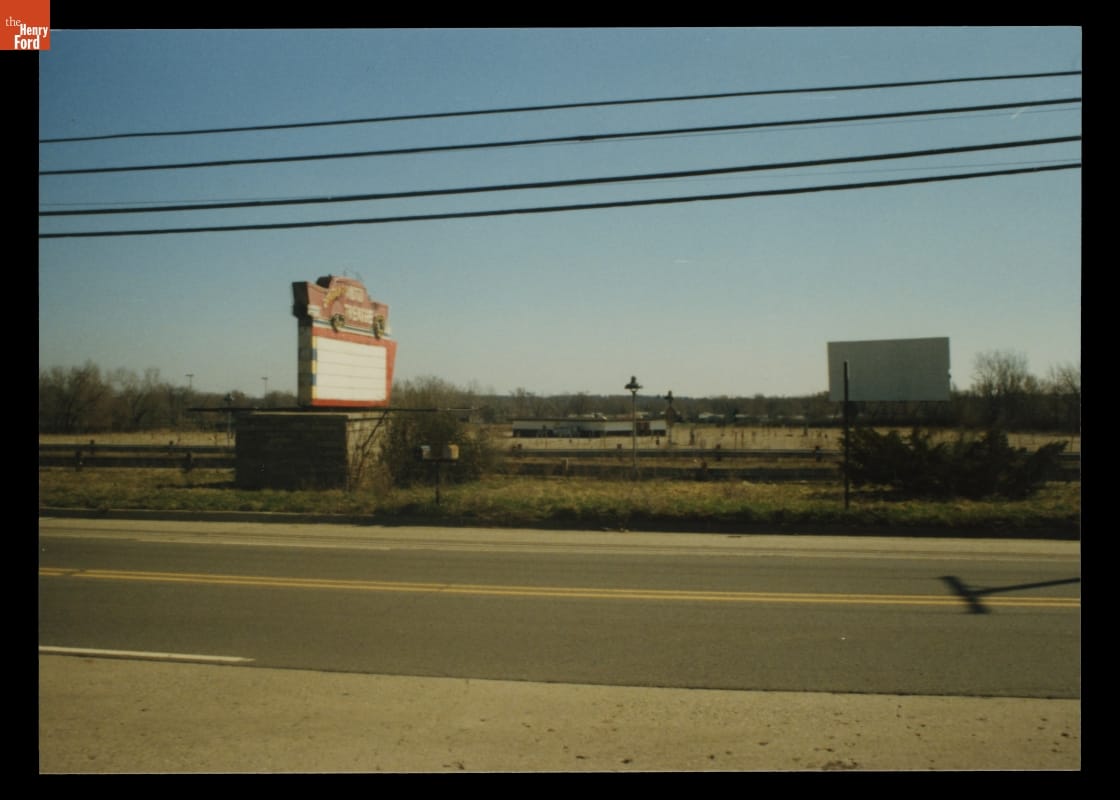
- 1987
- Collections - Artifact
Douglas Drive-In Theatre Sign and Movie Screen in Original Location, Kalamazoo, Michigan, 1987
This sign attracted motorists to a drive-in theatre located on old U.S. 131, on the outskirts of Kalamazoo, Michigan. The theatre operated from about 1955 to 1985, when -- like many other drive-in theatres -- it closed due to urban sprawl, declining interest by movie-goers, and the expense of maintaining and running a seasonal operation.
- Weed Tire Chains Sign, circa 1925 - This circa 1925 sign has a dual purpose -- to alert potential customers to the price of gas, and to advertise the necessity of "Weed Tire Chains." In 1904, Harry D. Weed was issued a patent for his "Grip-Tread for Pneumatic Tires," a non-skid tire chain used to increase traction on roads slick with mud, snow, or ice.
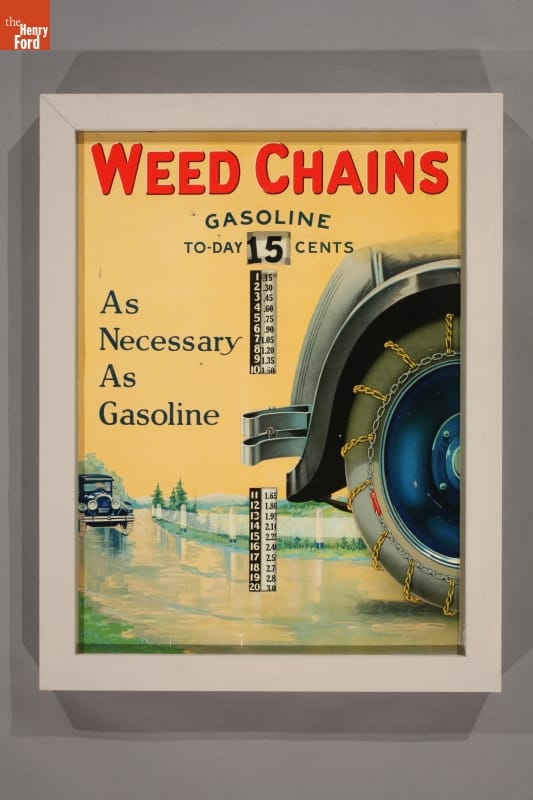
- circa 1925
- Collections - Artifact
Weed Tire Chains Sign, circa 1925
This circa 1925 sign has a dual purpose -- to alert potential customers to the price of gas, and to advertise the necessity of "Weed Tire Chains." In 1904, Harry D. Weed was issued a patent for his "Grip-Tread for Pneumatic Tires," a non-skid tire chain used to increase traction on roads slick with mud, snow, or ice.
- Domino's Pizza Delivery Car Sign, circa 1985 -
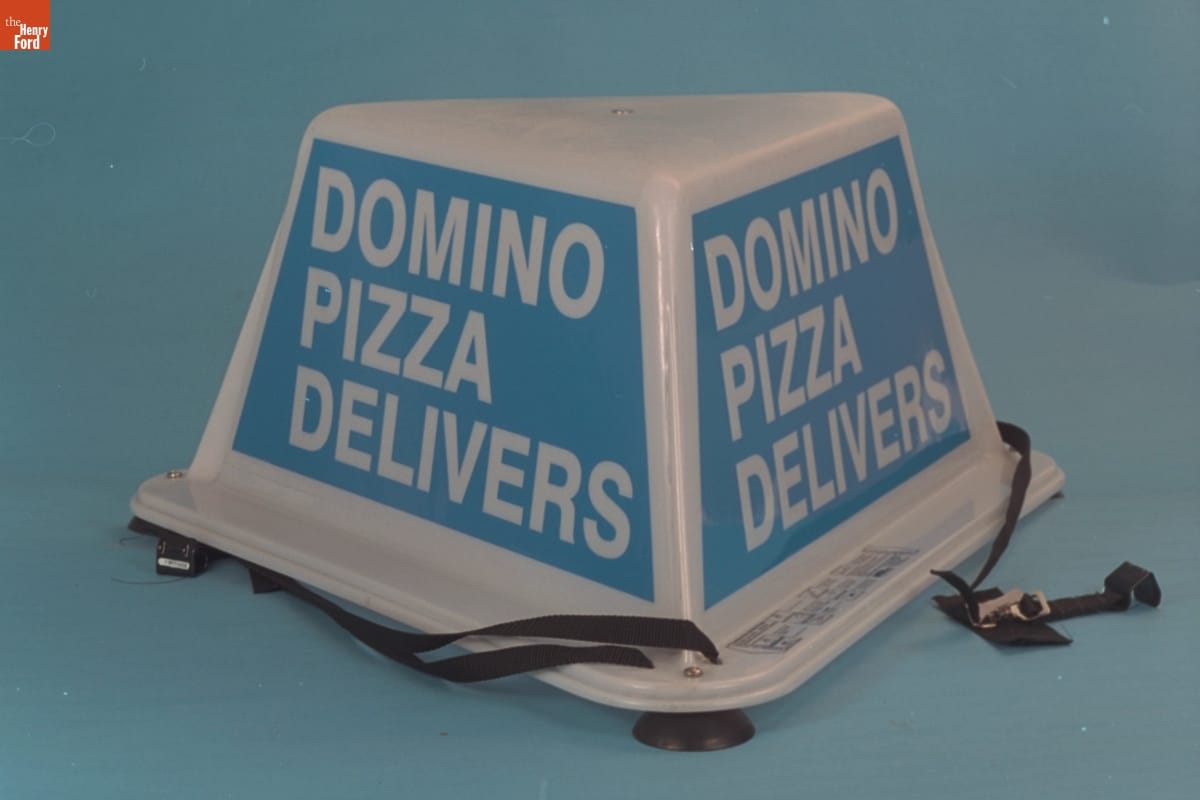
- circa 1985
- Collections - Artifact
Domino's Pizza Delivery Car Sign, circa 1985
- Sign Warning Drivers in the Cimiotti Garage, New York City, circa 1910 - In 1913, Henry Ford established Ford Motor Company's photographic department. Though few internal records describe company photography, remaining photographs reveal a wide range of departmental activity. Over nearly 100 years, Ford photographers documented company ventures, personal affairs, and daily life around the world. This image shows a warning sign posted in a New York City service garage around 1910.
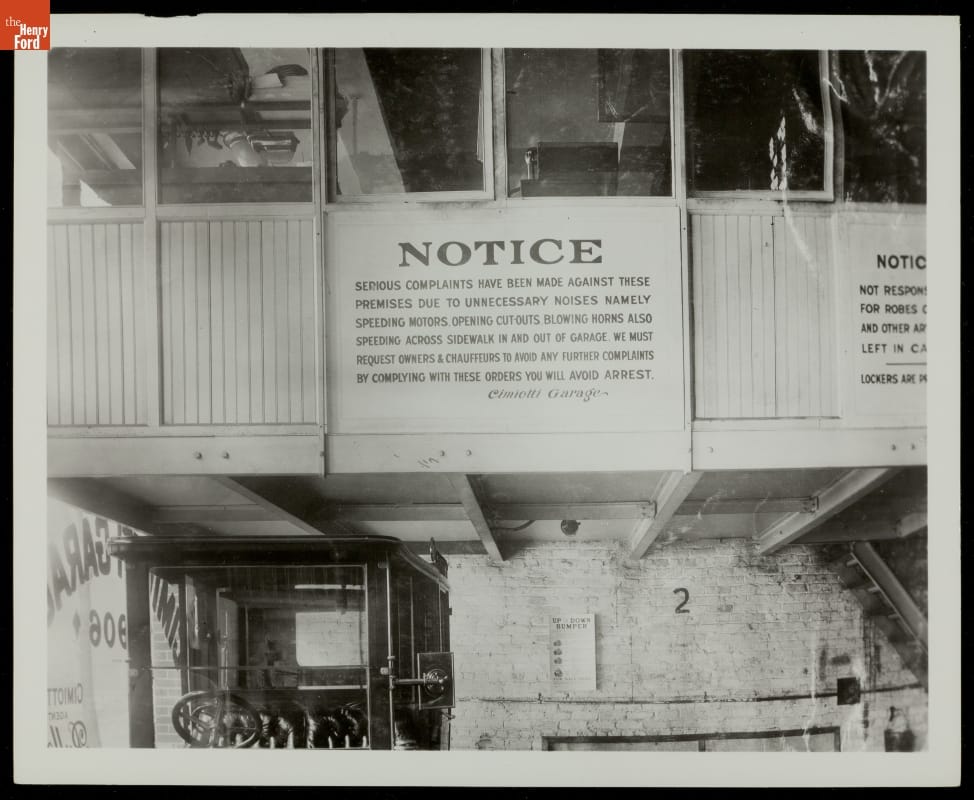
- circa 1910
- Collections - Artifact
Sign Warning Drivers in the Cimiotti Garage, New York City, circa 1910
In 1913, Henry Ford established Ford Motor Company's photographic department. Though few internal records describe company photography, remaining photographs reveal a wide range of departmental activity. Over nearly 100 years, Ford photographers documented company ventures, personal affairs, and daily life around the world. This image shows a warning sign posted in a New York City service garage around 1910.
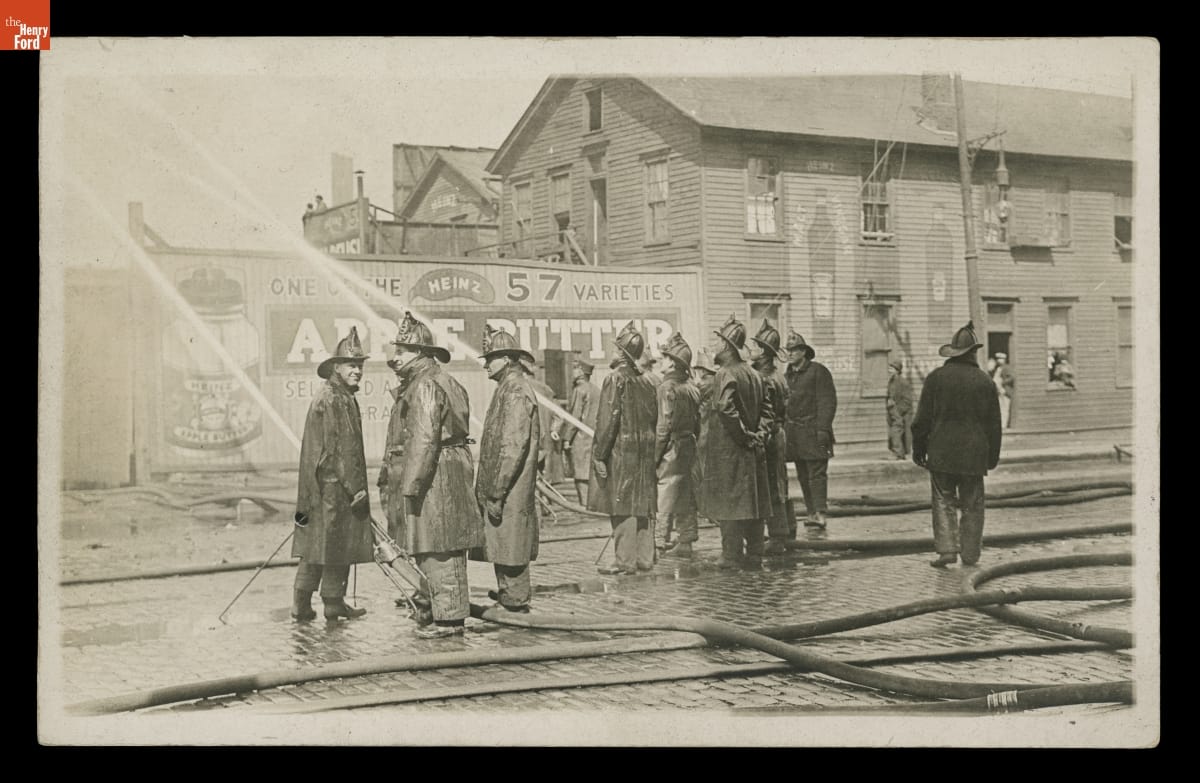
- Firefighters at the Scene of the H.J. Heinz Chicago Branch House Fire, 1911 - This photograph shows the scene of a destructive fire at a H.J. Heinz Company branch house in Chicago, Illinois, in 1911. Fire was a constant threat to factories and industrial facilities. Firefighters focused their efforts on saving lives, controlling the fire, and preventing damage to nearby buildings.
- 1911
- Collections - Artifact
Firefighters at the Scene of the H.J. Heinz Chicago Branch House Fire, 1911
This photograph shows the scene of a destructive fire at a H.J. Heinz Company branch house in Chicago, Illinois, in 1911. Fire was a constant threat to factories and industrial facilities. Firefighters focused their efforts on saving lives, controlling the fire, and preventing damage to nearby buildings.
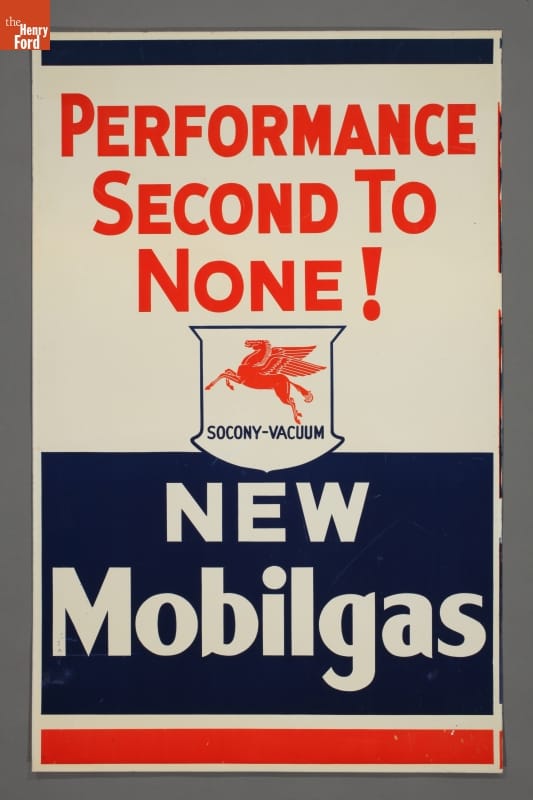
- Mobilgas Sign, 1940-1959 - Mobil formed from a merger of Socony and Vacuum Oil in 1931 -- both with extensive networks of gas stations. The company adopted the brand name Mobilgas in 1934 and began using Vacuum Oil's Pegasus flying red horse logo. Mobilgas built its brand on friendly service, economy, and performance. The brand name was shortened to Mobil in 1956.
- 1940-1959
- Collections - Artifact
Mobilgas Sign, 1940-1959
Mobil formed from a merger of Socony and Vacuum Oil in 1931 -- both with extensive networks of gas stations. The company adopted the brand name Mobilgas in 1934 and began using Vacuum Oil's Pegasus flying red horse logo. Mobilgas built its brand on friendly service, economy, and performance. The brand name was shortened to Mobil in 1956.