
Search
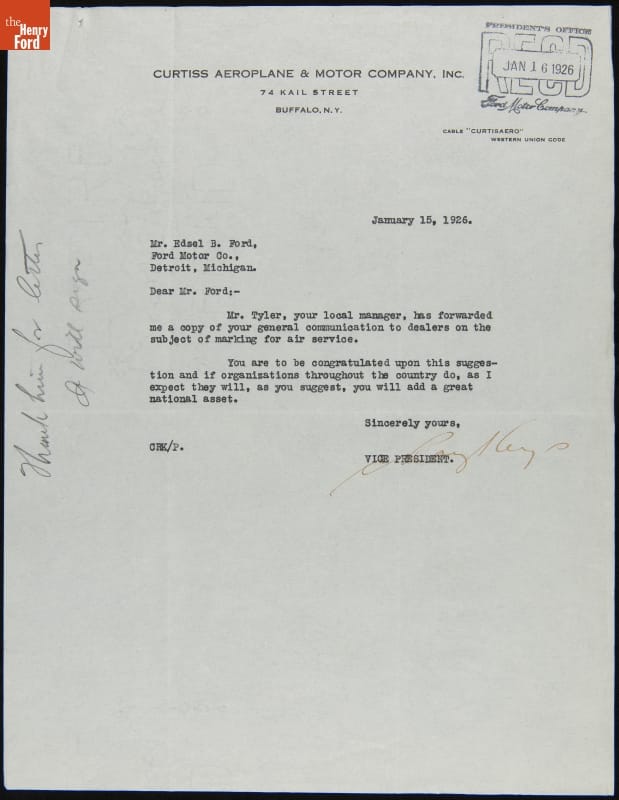
- Letter Congratulating Edsel Ford for Involving Ford Dealers with Airmarking Buildings in Their Towns, January 15, 1926 - Edsel Ford championed the development of commercial aviation in the United States. As an aid to aerial navigation, he wrote letters to Ford dealers encouraging them to paint two things on each dealer's roof: the name of the city and an arrow pointing due north. More than 4,000 communities had aerial markings of some sort by 1929.
- January 15, 1926
- Collections - Artifact
Letter Congratulating Edsel Ford for Involving Ford Dealers with Airmarking Buildings in Their Towns, January 15, 1926
Edsel Ford championed the development of commercial aviation in the United States. As an aid to aerial navigation, he wrote letters to Ford dealers encouraging them to paint two things on each dealer's roof: the name of the city and an arrow pointing due north. More than 4,000 communities had aerial markings of some sort by 1929.
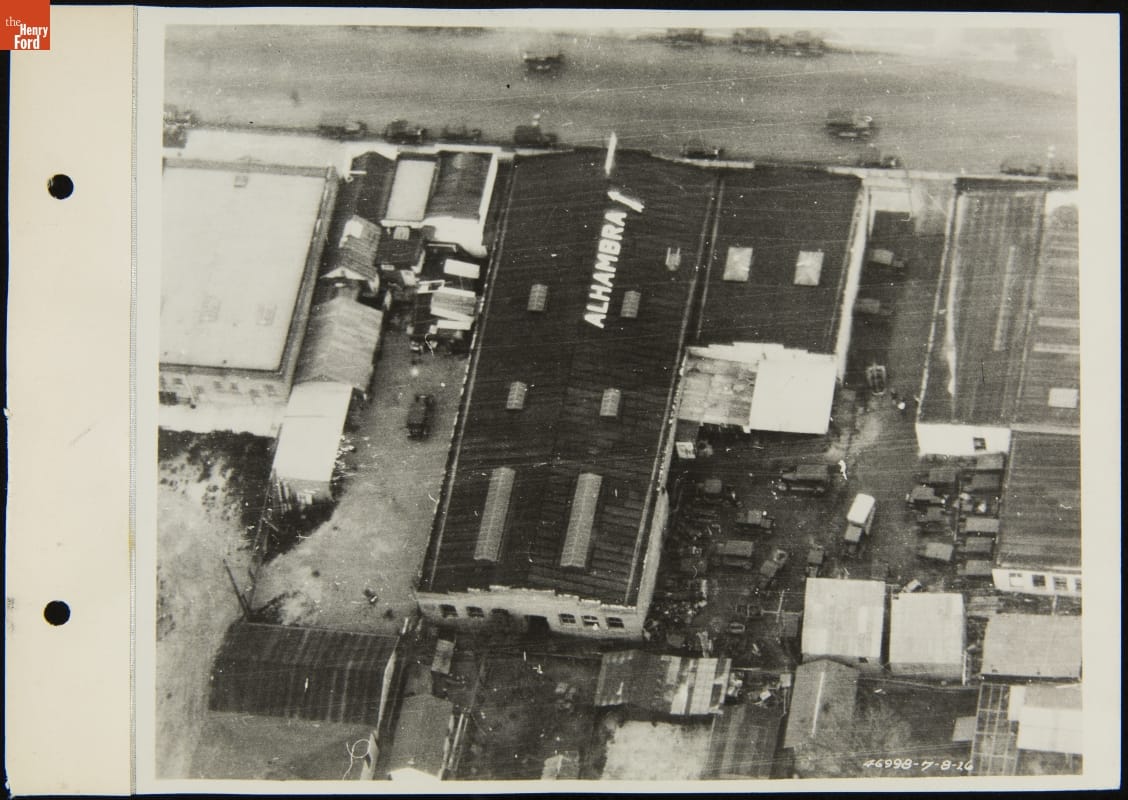
- Airmarker Painted on a Ford Dealership Roof, Alhambra, California, July 1926 - Edsel Ford championed the development of commercial aviation in the United States. As an aid to aerial navigation, he wrote letters to Ford dealers encouraging them to paint two things on each dealer's roof: the name of the city and an arrow pointing due north. More than 4,000 communities had aerial markings of some sort by 1929.
- July 08, 1926
- Collections - Artifact
Airmarker Painted on a Ford Dealership Roof, Alhambra, California, July 1926
Edsel Ford championed the development of commercial aviation in the United States. As an aid to aerial navigation, he wrote letters to Ford dealers encouraging them to paint two things on each dealer's roof: the name of the city and an arrow pointing due north. More than 4,000 communities had aerial markings of some sort by 1929.
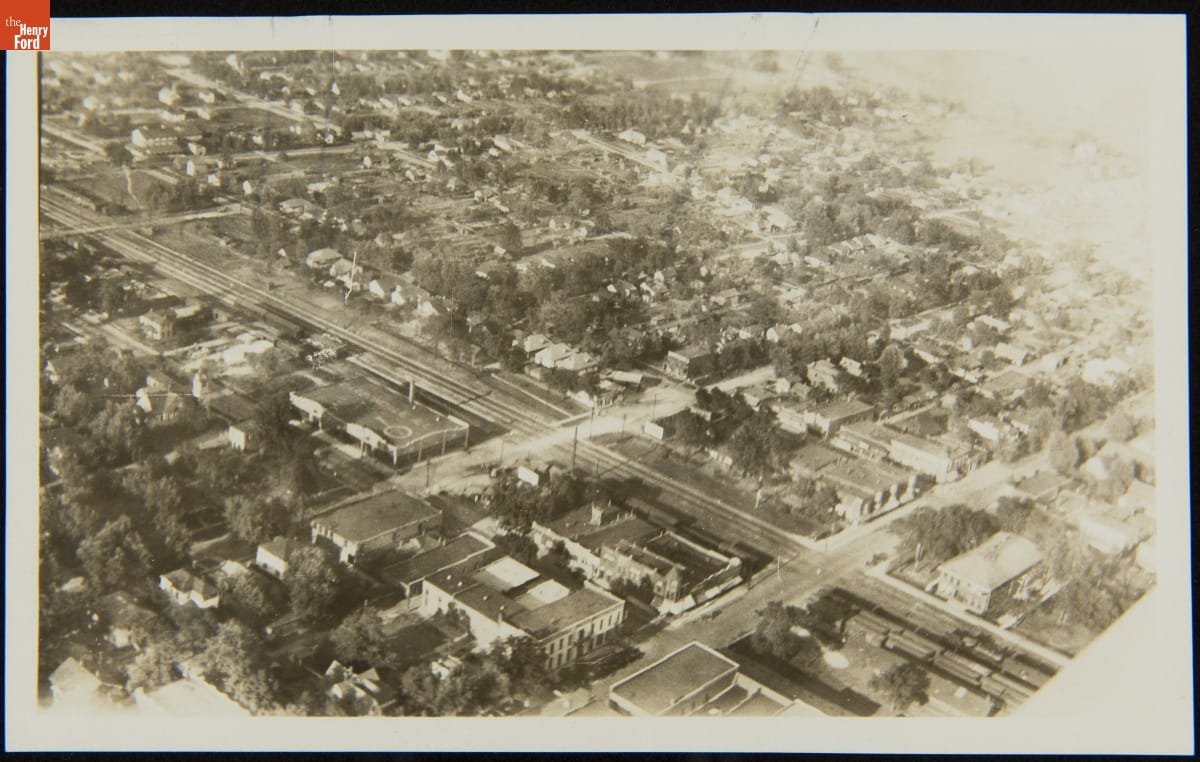
- Aerial Photo of Carbondale, Illinois, Showing Airmarker on a Ford Dealer's Roof, 1929 - Edsel Ford championed the development of commercial aviation in the United States. As an aid to aerial navigation, he wrote letters to Ford dealers encouraging them to paint two things on each dealer's roof: the name of the city and an arrow pointing due north. More than 4,000 communities had aerial markings of some sort by 1929.
- 1929
- Collections - Artifact
Aerial Photo of Carbondale, Illinois, Showing Airmarker on a Ford Dealer's Roof, 1929
Edsel Ford championed the development of commercial aviation in the United States. As an aid to aerial navigation, he wrote letters to Ford dealers encouraging them to paint two things on each dealer's roof: the name of the city and an arrow pointing due north. More than 4,000 communities had aerial markings of some sort by 1929.
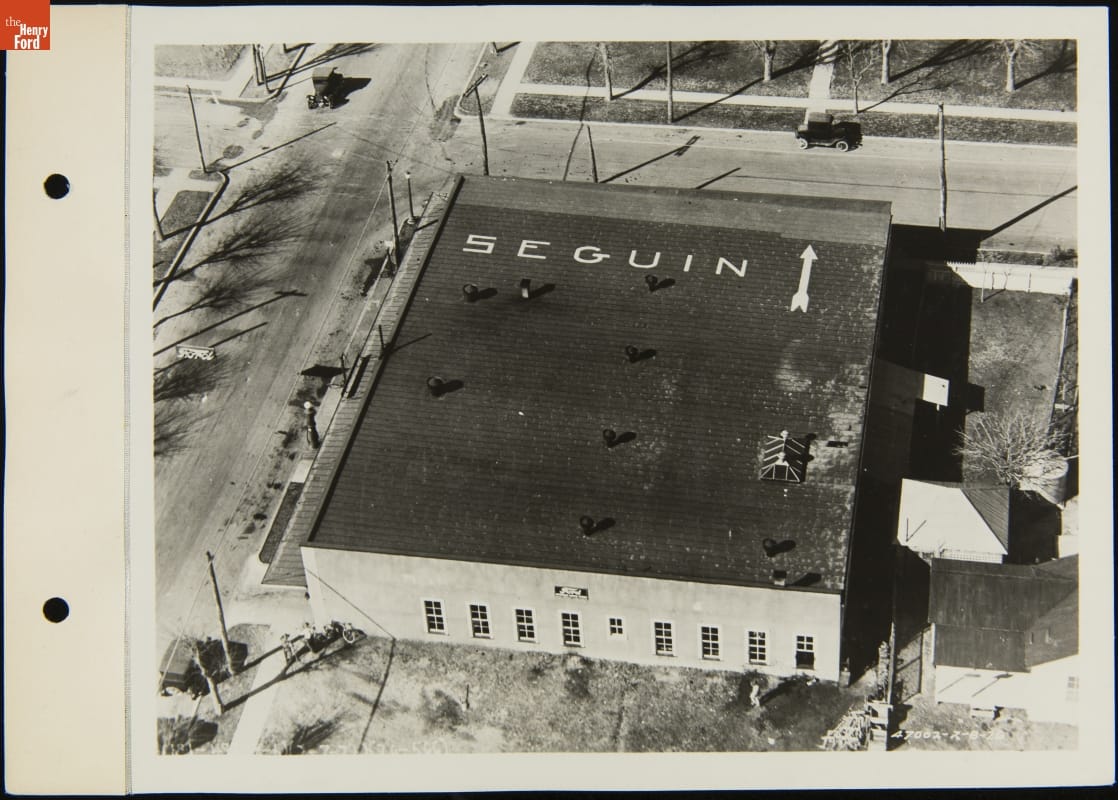
- Airmarker Painted on a Ford Dealership Roof, Seguin, Texas, July 1926 - Edsel Ford championed the development of commercial aviation in the United States. As an aid to aerial navigation, he wrote letters to Ford dealers encouraging them to paint two things on each dealer's roof: the name of the city and an arrow pointing due north. More than 4,000 communities had aerial markings of some sort by 1929.
- July 08, 1926
- Collections - Artifact
Airmarker Painted on a Ford Dealership Roof, Seguin, Texas, July 1926
Edsel Ford championed the development of commercial aviation in the United States. As an aid to aerial navigation, he wrote letters to Ford dealers encouraging them to paint two things on each dealer's roof: the name of the city and an arrow pointing due north. More than 4,000 communities had aerial markings of some sort by 1929.
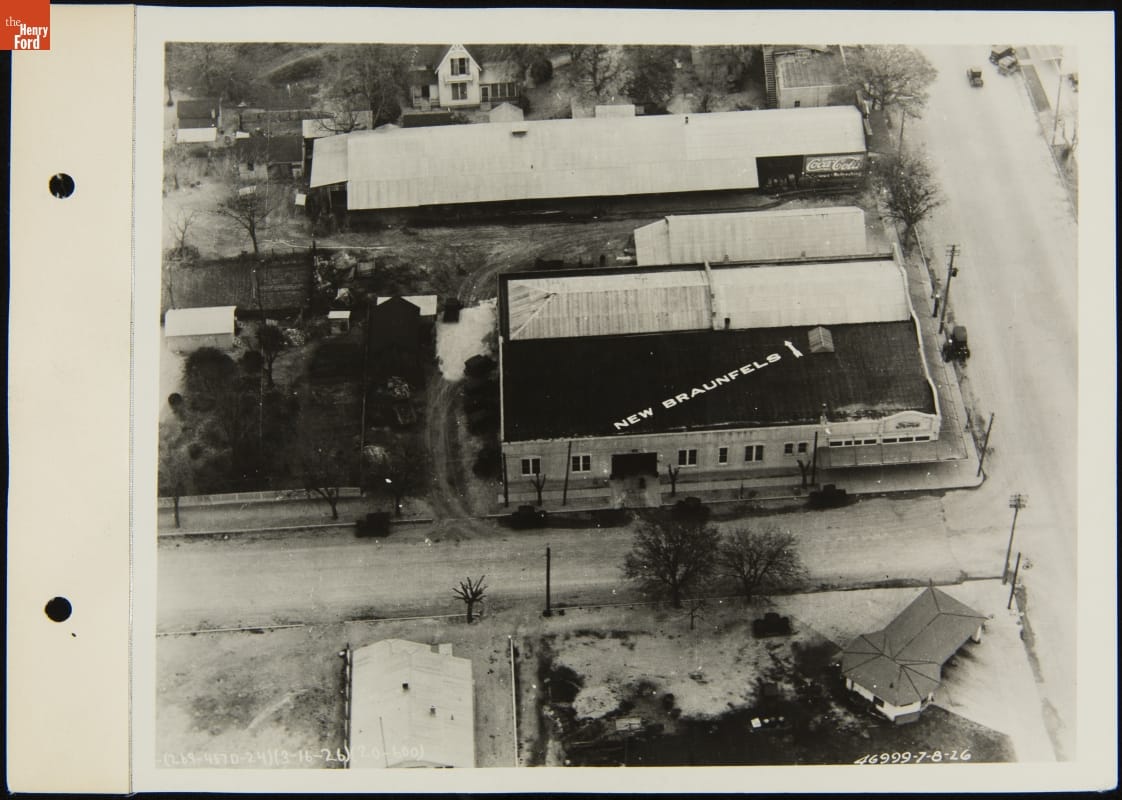
- Airmarker Painted on a Ford Dealership Roof, New Braunfels, Texas, July 1926 - Edsel Ford championed the development of commercial aviation in the United States. As an aid to aerial navigation, he wrote letters to Ford dealers encouraging them to paint two things on each dealer's roof: the name of the city and an arrow pointing due north. More than 4,000 communities had aerial markings of some sort by 1929.
- July 08, 1926
- Collections - Artifact
Airmarker Painted on a Ford Dealership Roof, New Braunfels, Texas, July 1926
Edsel Ford championed the development of commercial aviation in the United States. As an aid to aerial navigation, he wrote letters to Ford dealers encouraging them to paint two things on each dealer's roof: the name of the city and an arrow pointing due north. More than 4,000 communities had aerial markings of some sort by 1929.
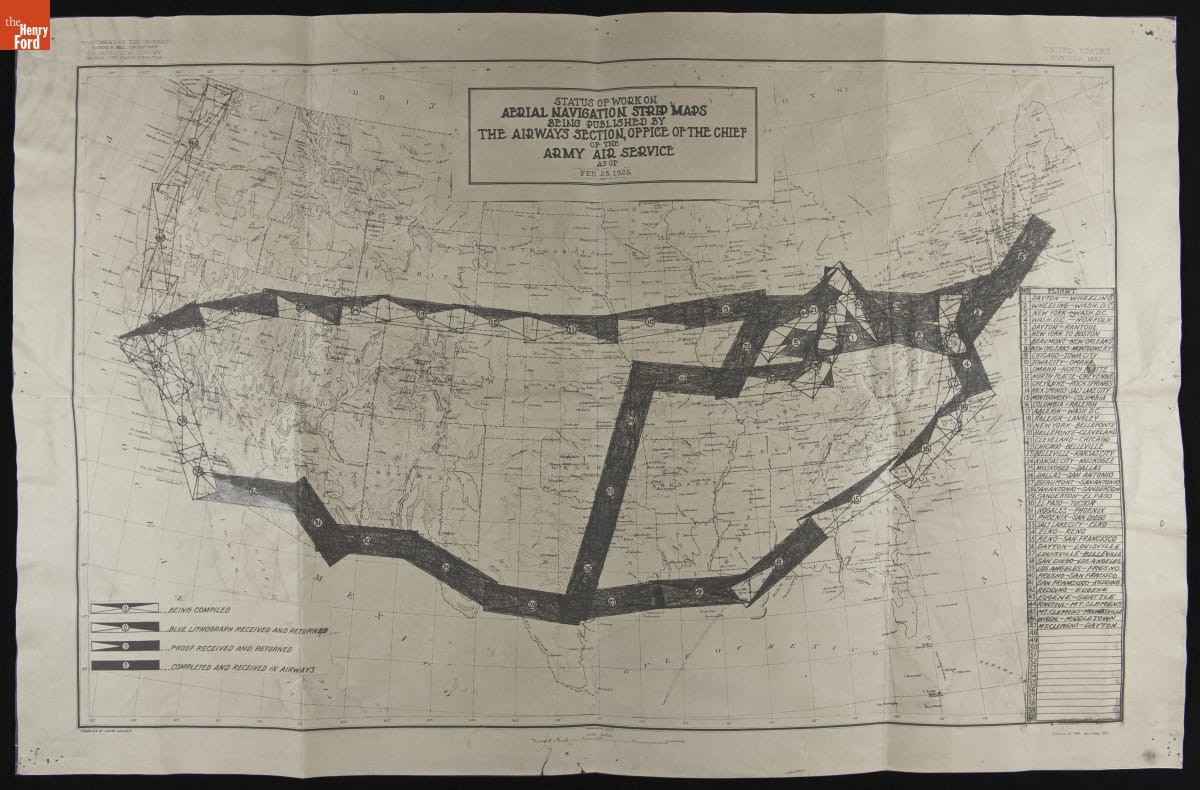
- Status of Work on Aerial Navigation Strip Maps Being Published by the Army Air Service as of February 25, 1925 - Navigating in an early airplane -- without the benefit of sophisticated cockpit instruments or radio communication -- wasn't easy. The U.S. Army, in cooperation with the U.S. Post Office, established a network of flyways across the country. These routes were marked with lighted beacons, creating reliable paths that pilots could follow day and night.
- February 25, 1925
- Collections - Artifact
Status of Work on Aerial Navigation Strip Maps Being Published by the Army Air Service as of February 25, 1925
Navigating in an early airplane -- without the benefit of sophisticated cockpit instruments or radio communication -- wasn't easy. The U.S. Army, in cooperation with the U.S. Post Office, established a network of flyways across the country. These routes were marked with lighted beacons, creating reliable paths that pilots could follow day and night.
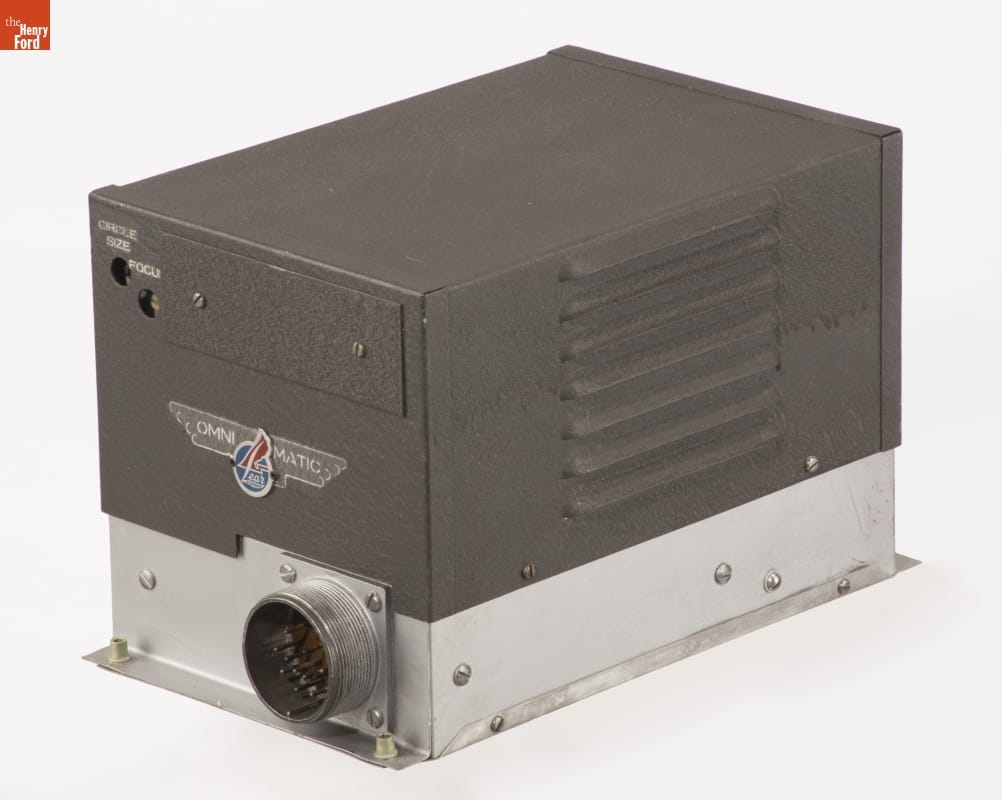
- Model LCP-5 Converter, Part of a Lear LTRA-6 Navigation System, circa 1952 - This device is part of the LTRA-6 aircraft radio navigation unit. Its creator Lear, Inc. was a pioneering company interested in expanding the popularity of private flight. This system was affordable and combined several low and high frequency radio navigation aids that were essential to the safe travel of small aircraft.
- circa 1952
- Collections - Artifact
Model LCP-5 Converter, Part of a Lear LTRA-6 Navigation System, circa 1952
This device is part of the LTRA-6 aircraft radio navigation unit. Its creator Lear, Inc. was a pioneering company interested in expanding the popularity of private flight. This system was affordable and combined several low and high frequency radio navigation aids that were essential to the safe travel of small aircraft.
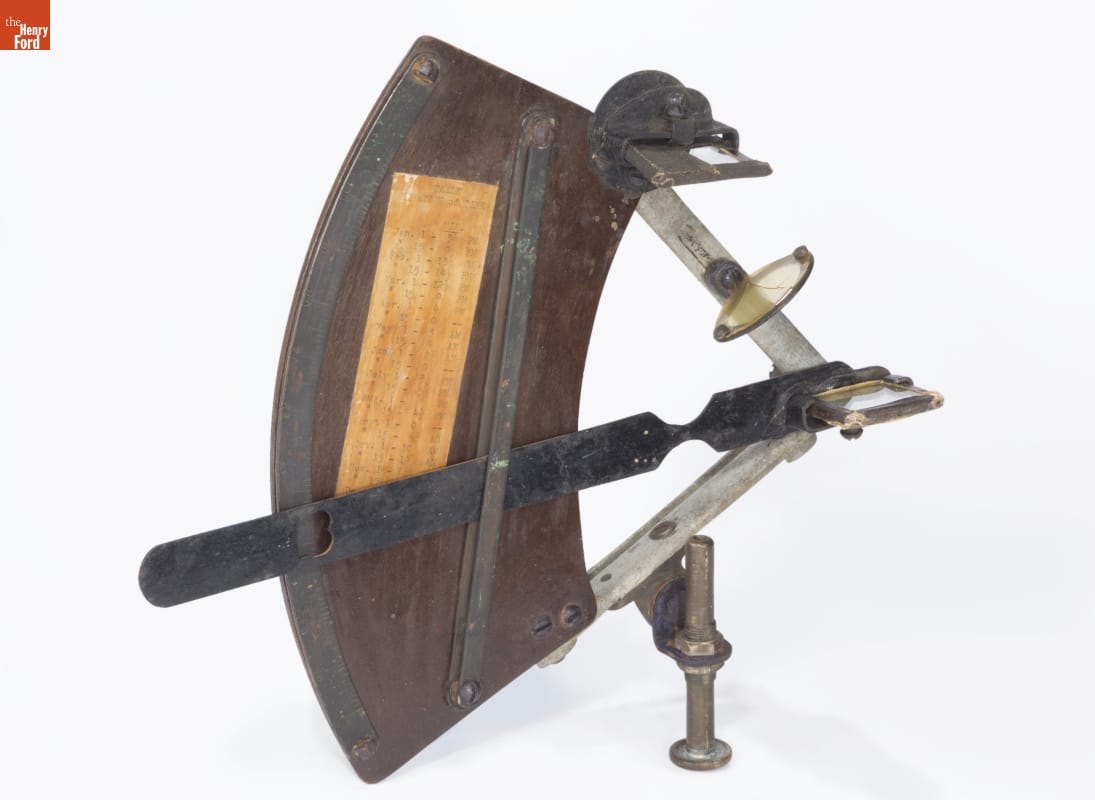
- Handmade Sextant. On Loan from Jeff Mahl, George Schuster's Great-Grandson. - George Schuster, an employee of the E.R. Thomas Motor Company, used this handmade sextant while driving a Thomas Flyer in an auto race from New York to Paris in 1908. Schuster won, overcoming unmapped territory, abysmal roads and multiple breakdowns. In 2010, Schuster was inducted into the Automotive Hall of Fame in recognition of his victory.
- 1908
- Collections - Artifact
Handmade Sextant. On Loan from Jeff Mahl, George Schuster's Great-Grandson.
George Schuster, an employee of the E.R. Thomas Motor Company, used this handmade sextant while driving a Thomas Flyer in an auto race from New York to Paris in 1908. Schuster won, overcoming unmapped territory, abysmal roads and multiple breakdowns. In 2010, Schuster was inducted into the Automotive Hall of Fame in recognition of his victory.
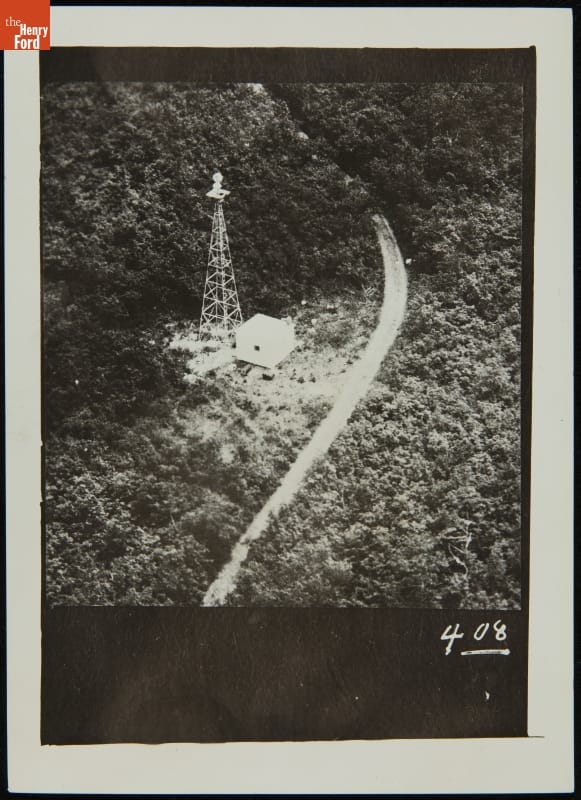
- Aeronautical Beacon in the Alleghenies, circa 1925 - In 1924, with the success of experimental night operations and increasing business interest in next-day mail, the U.S. Air Mail Service announced plans to establish regular overnight flights between New York and Chicago. Preparations included mounting floodlights and searchlights at airfields and constructing a series of routing beacons and emergency landing fields along the route. The first official flights departed from both terminal cities on July 1, 1925.
- circa 1925
- Collections - Artifact
Aeronautical Beacon in the Alleghenies, circa 1925
In 1924, with the success of experimental night operations and increasing business interest in next-day mail, the U.S. Air Mail Service announced plans to establish regular overnight flights between New York and Chicago. Preparations included mounting floodlights and searchlights at airfields and constructing a series of routing beacons and emergency landing fields along the route. The first official flights departed from both terminal cities on July 1, 1925.
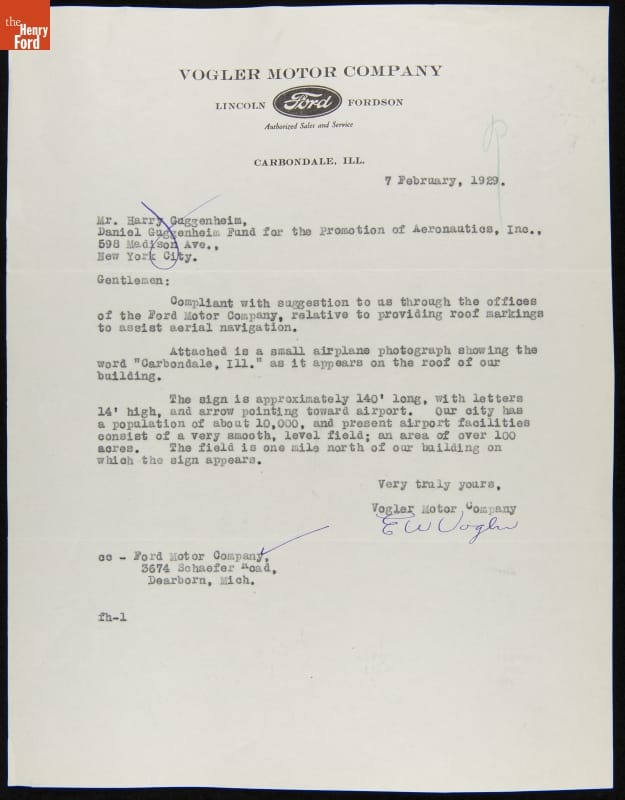
- Letter from a Ford Dealer to Harry Guggenheim regarding an Airmarker on Their Roof, February 5, 1929 - Edsel Ford championed the development of commercial aviation in the United States. As an aid to aerial navigation, he wrote letters to Ford dealers encouraging them to paint two things on each dealer's roof: the name of the city and an arrow pointing due north. More than 4,000 communities had aerial markings of some sort by 1929.
- February 07, 1929
- Collections - Artifact
Letter from a Ford Dealer to Harry Guggenheim regarding an Airmarker on Their Roof, February 5, 1929
Edsel Ford championed the development of commercial aviation in the United States. As an aid to aerial navigation, he wrote letters to Ford dealers encouraging them to paint two things on each dealer's roof: the name of the city and an arrow pointing due north. More than 4,000 communities had aerial markings of some sort by 1929.