
Search
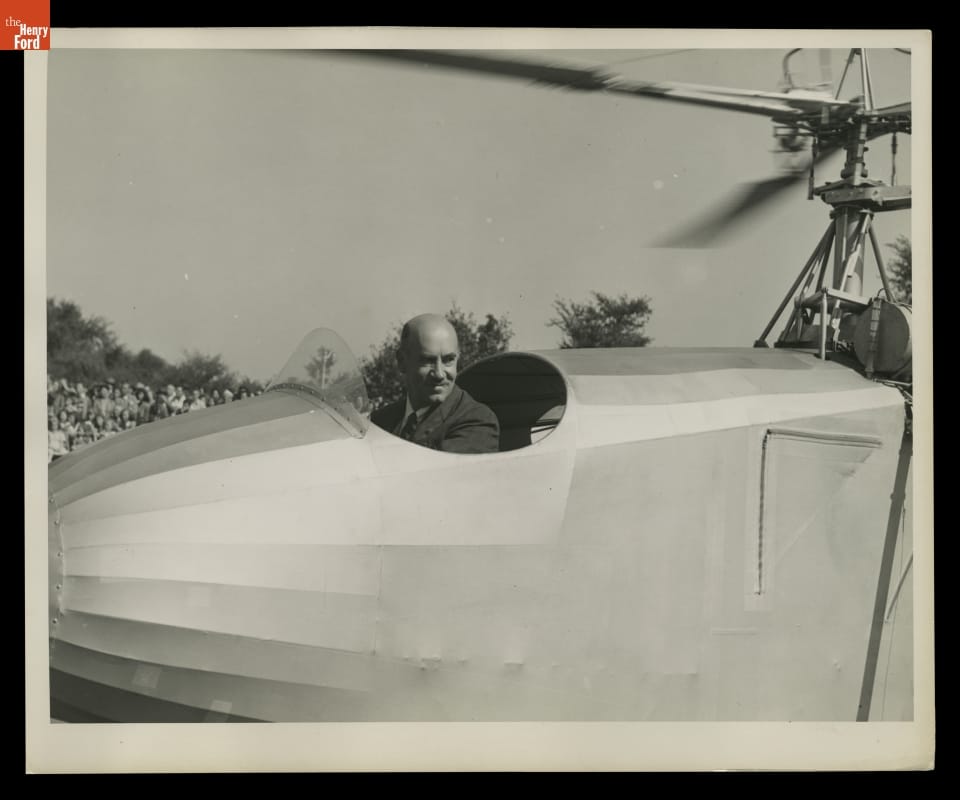
- Igor Sikorsky in the VS-300 Helicopter before Presenting it to Henry Ford Museum, October 7, 1943 - Russian-American inventor Igor Sikorsky first experimented with helicopters in 1909, but he soon realized that the technology of that time was insufficient. He moved to fixed-wing craft and built the first four-engine airplane in 1913. Sikorsky returned to helicopters in 1939 with the successful VS-300. After further refinements, Sikorsky donated the helicopter to The Henry Ford in 1943.
- October 07, 1943
- Collections - Artifact
Igor Sikorsky in the VS-300 Helicopter before Presenting it to Henry Ford Museum, October 7, 1943
Russian-American inventor Igor Sikorsky first experimented with helicopters in 1909, but he soon realized that the technology of that time was insufficient. He moved to fixed-wing craft and built the first four-engine airplane in 1913. Sikorsky returned to helicopters in 1939 with the successful VS-300. After further refinements, Sikorsky donated the helicopter to The Henry Ford in 1943.
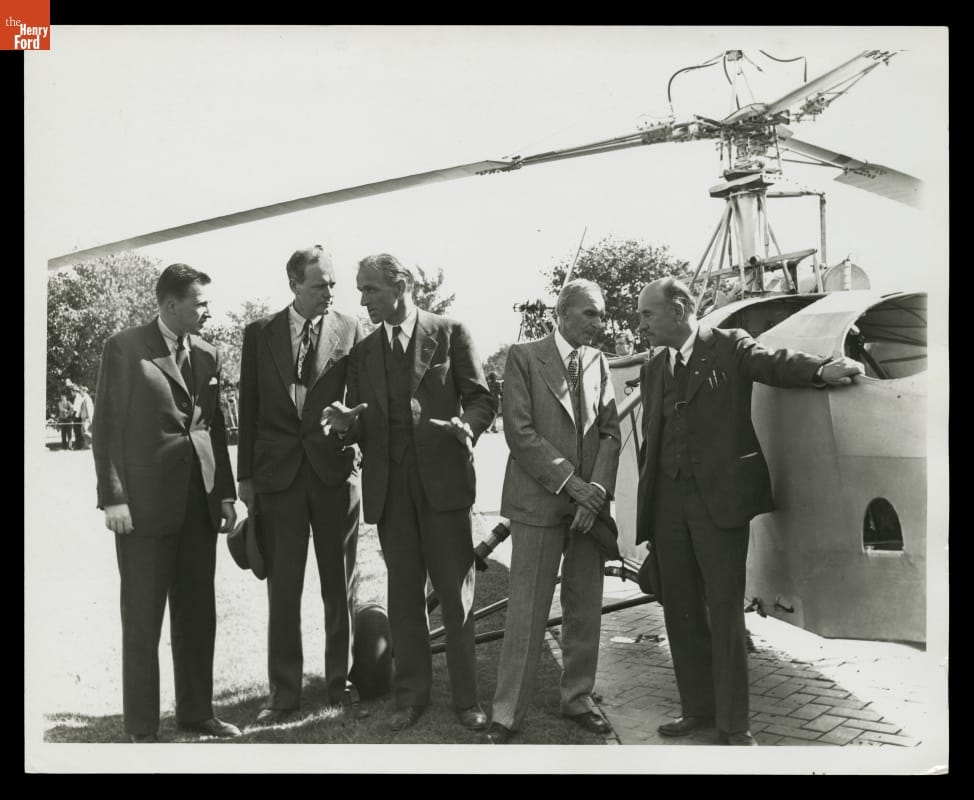
- Henry Ford II, Charles Lindbergh, Les Morris, Henry Ford and Igor Sikorsky at the VS-300 Helicopter Presentation, October 7, 1943 - Henry Ford and helicopter innovator Igor Sikorsky shared a mutual friend in Charles Lindbergh, the pilot celebrated for his 1927 solo transatlantic flight. When Sikorsky mentioned his admiration for Ford to Lindbergh, Lindbergh arranged an introduction. The meeting ultimately led to Sikorsky donating his VS-300 helicopter to The Henry Ford in 1943 at a ceremony attended by all three men.
- October 07, 1943
- Collections - Artifact
Henry Ford II, Charles Lindbergh, Les Morris, Henry Ford and Igor Sikorsky at the VS-300 Helicopter Presentation, October 7, 1943
Henry Ford and helicopter innovator Igor Sikorsky shared a mutual friend in Charles Lindbergh, the pilot celebrated for his 1927 solo transatlantic flight. When Sikorsky mentioned his admiration for Ford to Lindbergh, Lindbergh arranged an introduction. The meeting ultimately led to Sikorsky donating his VS-300 helicopter to The Henry Ford in 1943 at a ceremony attended by all three men.
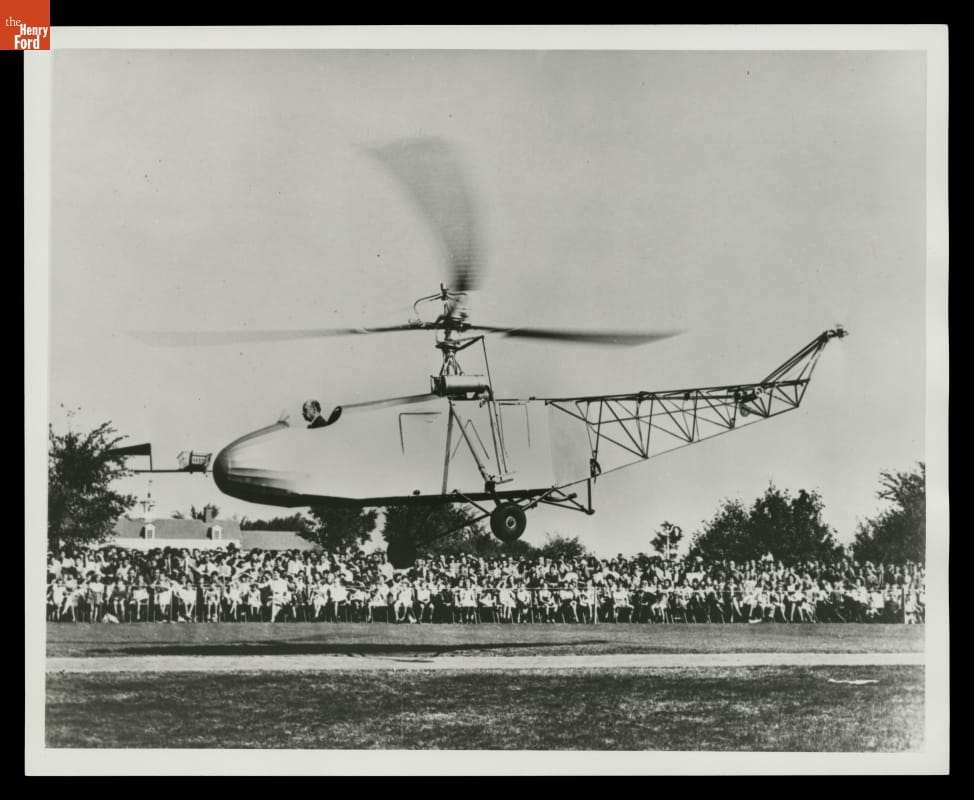
- Igor Sikorsky Landing the VS-300 Helicopter at Henry Ford Museum before Presenting it to Henry Ford, October 7, 1943 - Igor Sikorsky donated his pioneering VS-300 helicopter to The Henry Ford in October 1943. During the presentation ceremony, Sikorsky and his test pilot demonstrated the helicopter's exceptional maneuverability. They slipped the aircraft's nose probe through a small ring, set one of its wheels on a handkerchief spread on the ground, and carried souvenir "air mail" letters in its front basket.
- October 07, 1943
- Collections - Artifact
Igor Sikorsky Landing the VS-300 Helicopter at Henry Ford Museum before Presenting it to Henry Ford, October 7, 1943
Igor Sikorsky donated his pioneering VS-300 helicopter to The Henry Ford in October 1943. During the presentation ceremony, Sikorsky and his test pilot demonstrated the helicopter's exceptional maneuverability. They slipped the aircraft's nose probe through a small ring, set one of its wheels on a handkerchief spread on the ground, and carried souvenir "air mail" letters in its front basket.
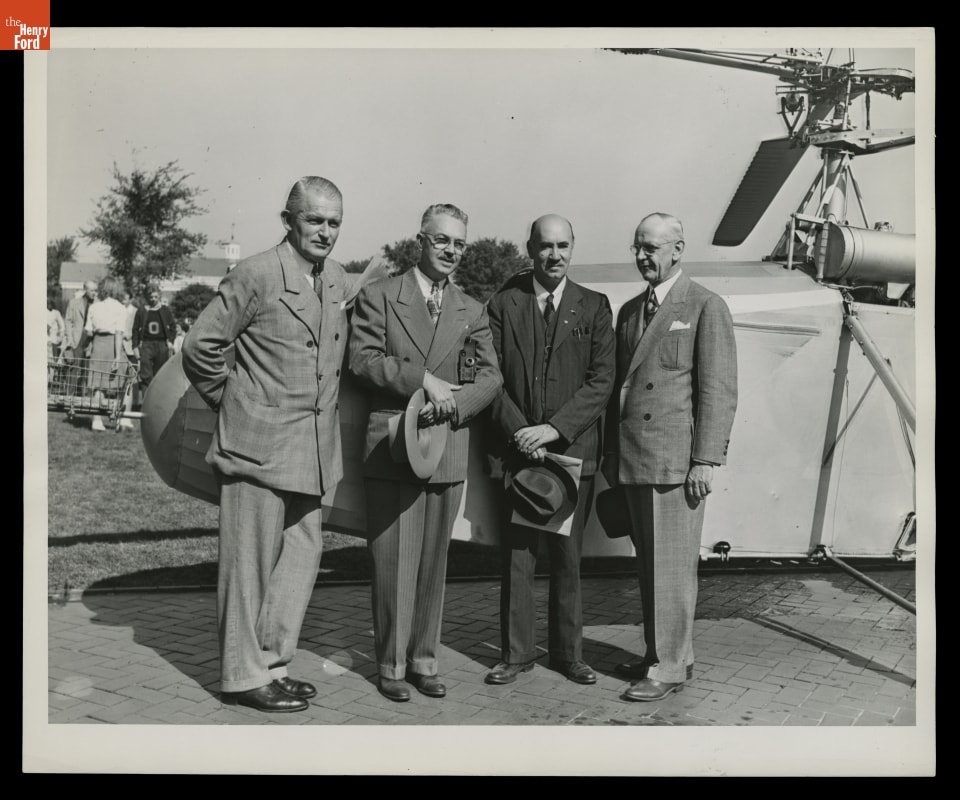
- Charles Sorensen (left) and Igor Sikorsky (2nd from right) at the Presentation of the VS-300 Helicopter to Henry Ford Museum, October 7, 1943 - Igor Sikorsky (second from right) donated his pioneering VS-300 helicopter, the first successful helicopter flown in the Western Hemisphere, to Henry Ford Museum in October 1943. With World War II underway, Ford Motor Company was building B-24 bomber airplanes at the time. Charles Sorensen (left), Ford's production chief, managed their assembly at the company's Willow Run plant.
- October 07, 1943
- Collections - Artifact
Charles Sorensen (left) and Igor Sikorsky (2nd from right) at the Presentation of the VS-300 Helicopter to Henry Ford Museum, October 7, 1943
Igor Sikorsky (second from right) donated his pioneering VS-300 helicopter, the first successful helicopter flown in the Western Hemisphere, to Henry Ford Museum in October 1943. With World War II underway, Ford Motor Company was building B-24 bomber airplanes at the time. Charles Sorensen (left), Ford's production chief, managed their assembly at the company's Willow Run plant.
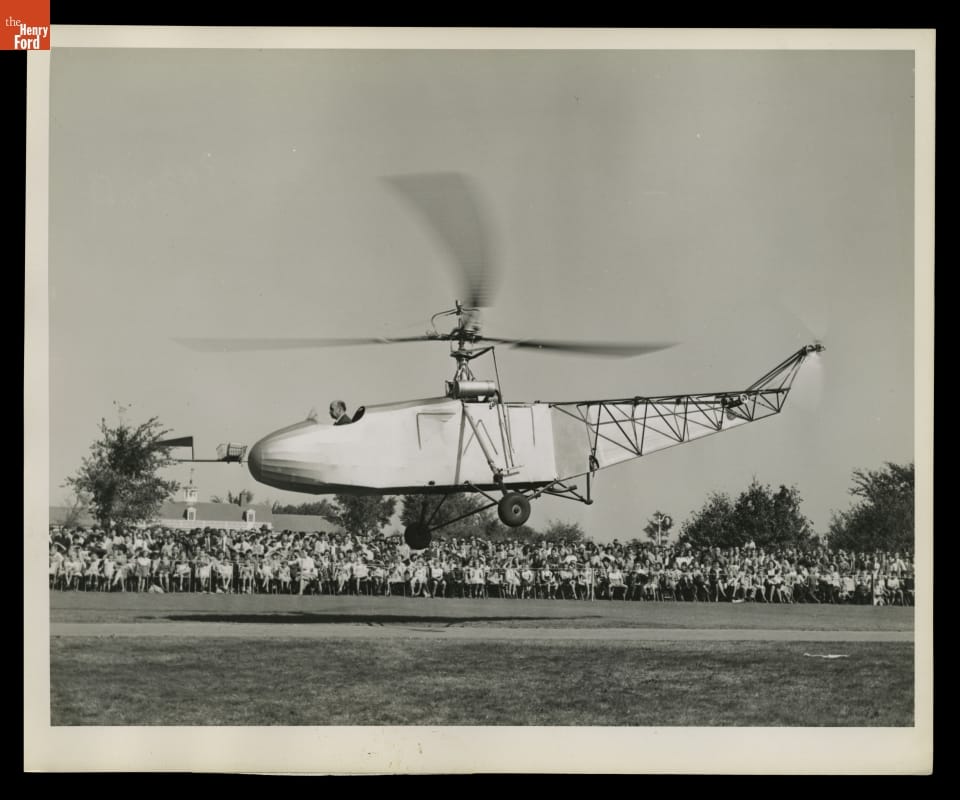
- Igor Sikorsky Landing the VS-300 Helicopter before Presenting it to Henry Ford Museum, October 7, 1943 - Igor Sikorsky donated his pioneering VS-300 helicopter to The Henry Ford in October 1943. During the presentation ceremony, Sikorsky and his test pilot demonstrated the helicopter's exceptional maneuverability. They slipped the aircraft's nose probe through a small ring, set one of its wheels on a handkerchief spread on the ground, and carried souvenir "air mail" letters in its front basket.
- October 07, 1943
- Collections - Artifact
Igor Sikorsky Landing the VS-300 Helicopter before Presenting it to Henry Ford Museum, October 7, 1943
Igor Sikorsky donated his pioneering VS-300 helicopter to The Henry Ford in October 1943. During the presentation ceremony, Sikorsky and his test pilot demonstrated the helicopter's exceptional maneuverability. They slipped the aircraft's nose probe through a small ring, set one of its wheels on a handkerchief spread on the ground, and carried souvenir "air mail" letters in its front basket.
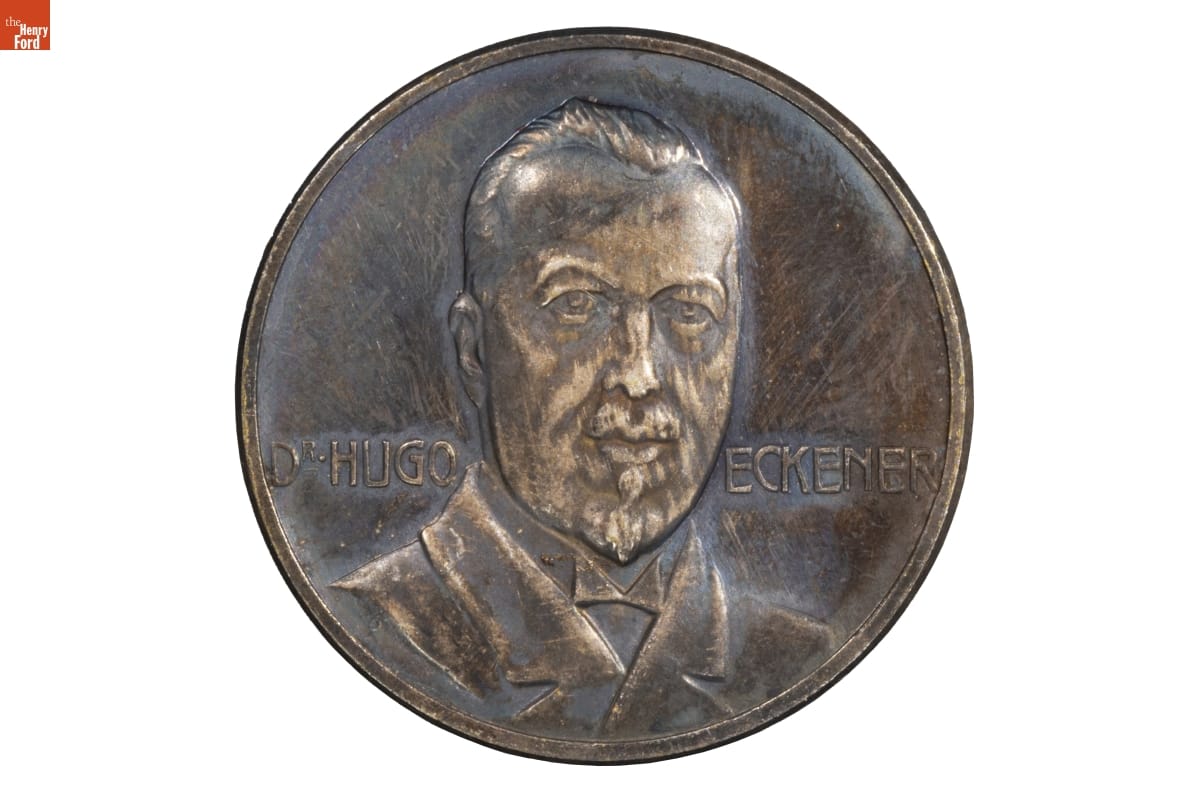
- Medallion Commemorating Dr. Hugo Eckener and the Trans-Atlantic Flight of the LZ 126 Airship (USS Los Angeles), 1924 - This medallion commemorated Dr. Hugo Eckener's successful delivery of the airship LZ126 (later the USS <em>Los Angeles</em>) to the United States Navy in 1924. The airship was part of Germany's reparations following World War I. Eckener, depicted on the front, headed up the Zeppelin Company--the airship's manufacturer. He later commanded another airship, <em>Graf Zeppelin</em>, on its famous around-the-world flight.
- 1924
- Collections - Artifact
Medallion Commemorating Dr. Hugo Eckener and the Trans-Atlantic Flight of the LZ 126 Airship (USS Los Angeles), 1924
This medallion commemorated Dr. Hugo Eckener's successful delivery of the airship LZ126 (later the USS Los Angeles) to the United States Navy in 1924. The airship was part of Germany's reparations following World War I. Eckener, depicted on the front, headed up the Zeppelin Company--the airship's manufacturer. He later commanded another airship, Graf Zeppelin, on its famous around-the-world flight.
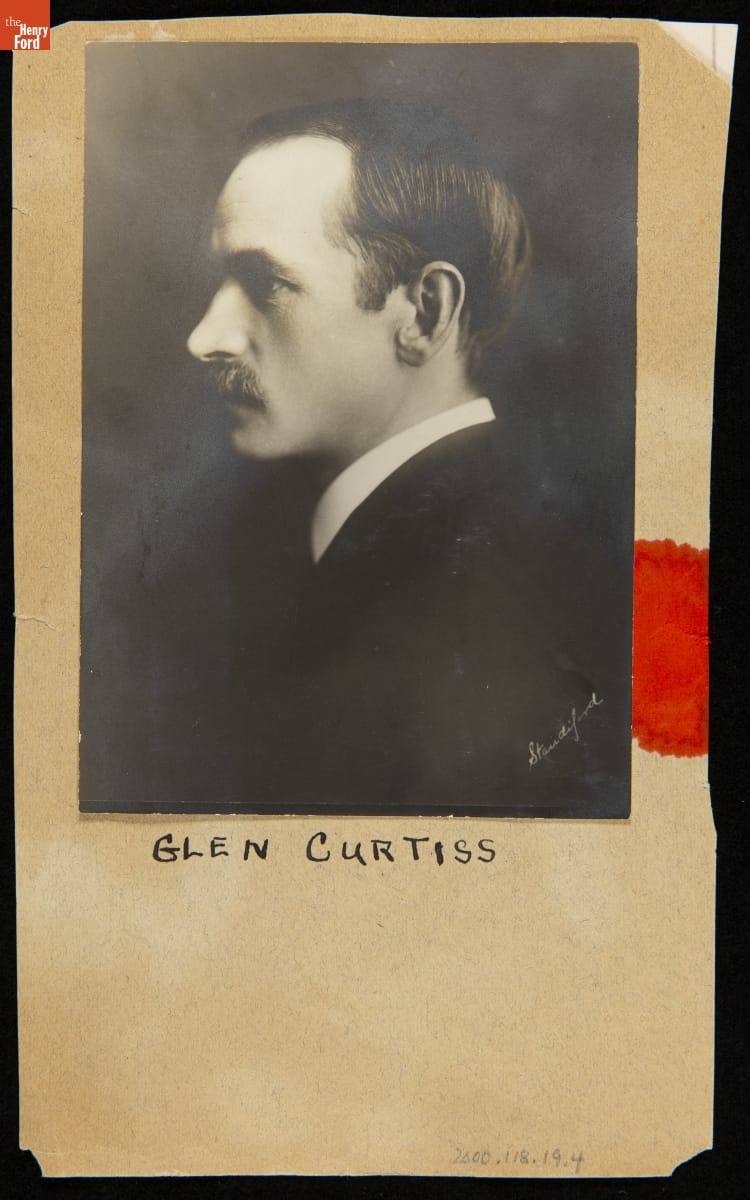
- Portrait of Glenn Curtiss, 1910-1912 - Glenn Curtiss pioneered aileron control systems and designed some of the first successful seaplanes. He formed an exhibition flying team, and he set several flight records of his own. Starting in 1909, Curtiss was involved in a bitter patent dispute with the Wright brothers. It wasn't resolved until 1917, when World War I forced the creation of a patent pool.
- 1910-1912
- Collections - Artifact
Portrait of Glenn Curtiss, 1910-1912
Glenn Curtiss pioneered aileron control systems and designed some of the first successful seaplanes. He formed an exhibition flying team, and he set several flight records of his own. Starting in 1909, Curtiss was involved in a bitter patent dispute with the Wright brothers. It wasn't resolved until 1917, when World War I forced the creation of a patent pool.
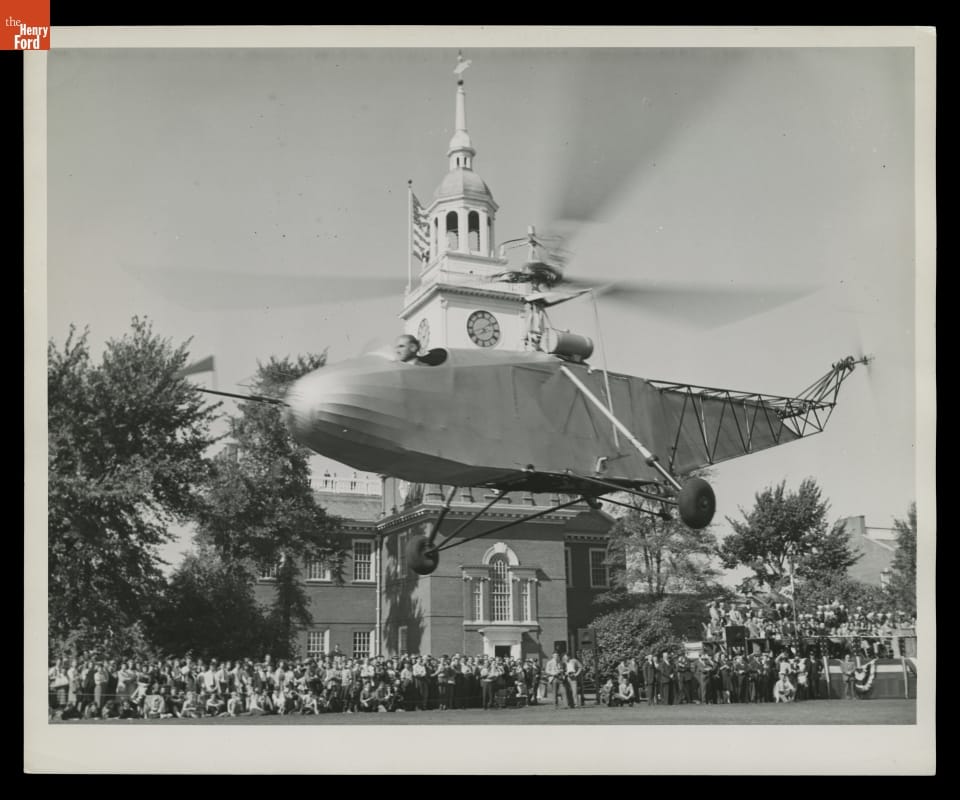
- Igor Sikorsky Landing the VS-300 Helicopter before Presenting it to Henry Ford Museum, October 7, 1943 - Igor Sikorsky donated his pioneering VS-300 helicopter to The Henry Ford in October 1943. During the presentation ceremony, Sikorsky and his test pilot demonstrated the helicopter's exceptional maneuverability. They slipped the aircraft's nose probe through a small ring, set one of its wheels on a handkerchief spread on the ground, and carried souvenir "air mail" letters in its front basket.
- October 07, 1943
- Collections - Artifact
Igor Sikorsky Landing the VS-300 Helicopter before Presenting it to Henry Ford Museum, October 7, 1943
Igor Sikorsky donated his pioneering VS-300 helicopter to The Henry Ford in October 1943. During the presentation ceremony, Sikorsky and his test pilot demonstrated the helicopter's exceptional maneuverability. They slipped the aircraft's nose probe through a small ring, set one of its wheels on a handkerchief spread on the ground, and carried souvenir "air mail" letters in its front basket.
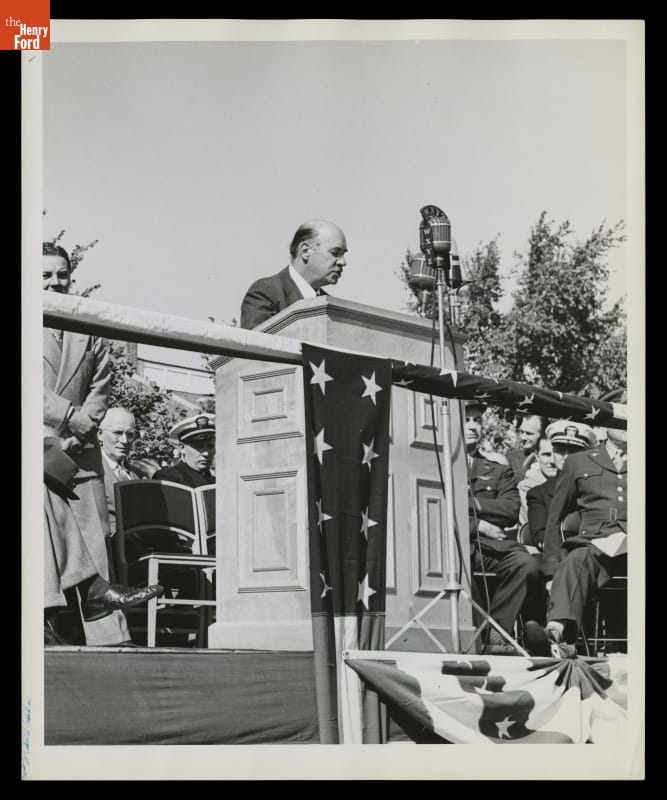
- Igor Sikorsky Speaking during the Presentation of the VS-300 Helicopter to Henry Ford Museum, October 7, 1943 - Igor Sikorsky donated his VS-300 to The Henry Ford in 1943. In remarks at the ceremony, Sikorsky predicted that the helicopter would not replace the airplane or automobile, but "it will render a service that no other vehicle can." He stated that he was happy to have the VS-300 in the museum, and eagerly awaited further helicopter development after World War II.
- October 07, 1943
- Collections - Artifact
Igor Sikorsky Speaking during the Presentation of the VS-300 Helicopter to Henry Ford Museum, October 7, 1943
Igor Sikorsky donated his VS-300 to The Henry Ford in 1943. In remarks at the ceremony, Sikorsky predicted that the helicopter would not replace the airplane or automobile, but "it will render a service that no other vehicle can." He stated that he was happy to have the VS-300 in the museum, and eagerly awaited further helicopter development after World War II.
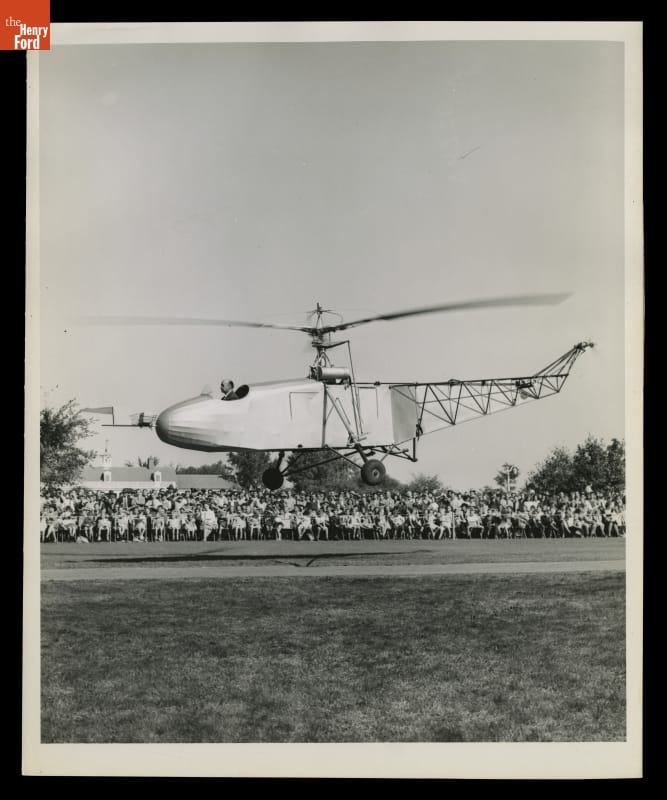
- Igor Sikorsky Landing the VS-300 Helicopter before Presenting it to Henry Ford Museum, October 7, 1943 - Igor Sikorsky donated his pioneering VS-300 helicopter to The Henry Ford in October 1943. During the presentation ceremony, Sikorsky and his test pilot demonstrated the helicopter's exceptional maneuverability. They slipped the aircraft's nose probe through a small ring, set one of its wheels on a handkerchief spread on the ground, and carried souvenir "air mail" letters in its front basket.
- October 07, 1943
- Collections - Artifact
Igor Sikorsky Landing the VS-300 Helicopter before Presenting it to Henry Ford Museum, October 7, 1943
Igor Sikorsky donated his pioneering VS-300 helicopter to The Henry Ford in October 1943. During the presentation ceremony, Sikorsky and his test pilot demonstrated the helicopter's exceptional maneuverability. They slipped the aircraft's nose probe through a small ring, set one of its wheels on a handkerchief spread on the ground, and carried souvenir "air mail" letters in its front basket.