
Search
- Drawing, Outside Ends of South Parlor Bay, Noah Webster House, New Haven, Connecticut, September 28, 1936 -
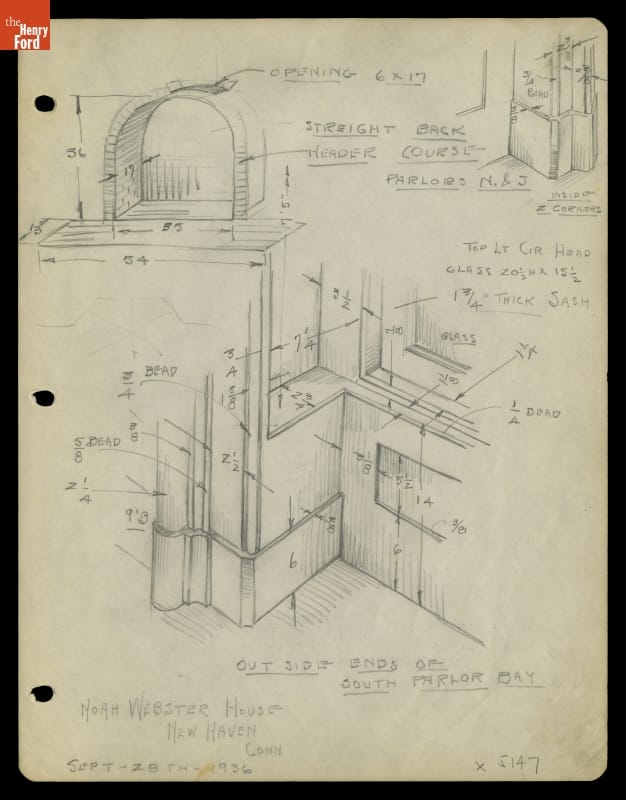
- September 28, 1936
- Collections - Artifact
Drawing, Outside Ends of South Parlor Bay, Noah Webster House, New Haven, Connecticut, September 28, 1936
- Drawing, Wright Cycle Shop, Dayton, Ohio, 1936 - In October 1936, Henry Ford purchased the bicycle shop used by Wilbur and Orville Wright in Dayton, Ohio. Over the next 18 months, Ford relocated and reassembled the building at his Greenfield Village museum complex in Dearborn, Michigan. Before the move, architect Edward Cutler made detailed drawings of the shop to ensure the project's accuracy.
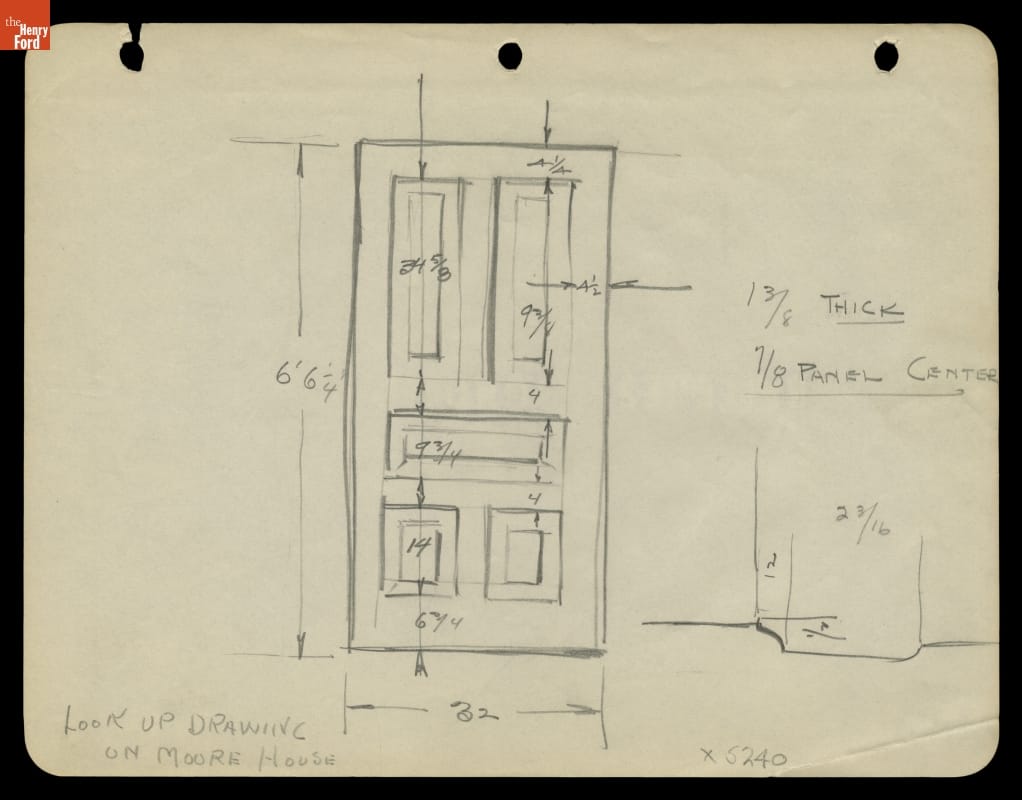
- 1936
- Collections - Artifact
Drawing, Wright Cycle Shop, Dayton, Ohio, 1936
In October 1936, Henry Ford purchased the bicycle shop used by Wilbur and Orville Wright in Dayton, Ohio. Over the next 18 months, Ford relocated and reassembled the building at his Greenfield Village museum complex in Dearborn, Michigan. Before the move, architect Edward Cutler made detailed drawings of the shop to ensure the project's accuracy.
- Drawing, "Chimney, M. Wells House Union Conn." (now Daggett Farmhouse), June 26, 1977 -
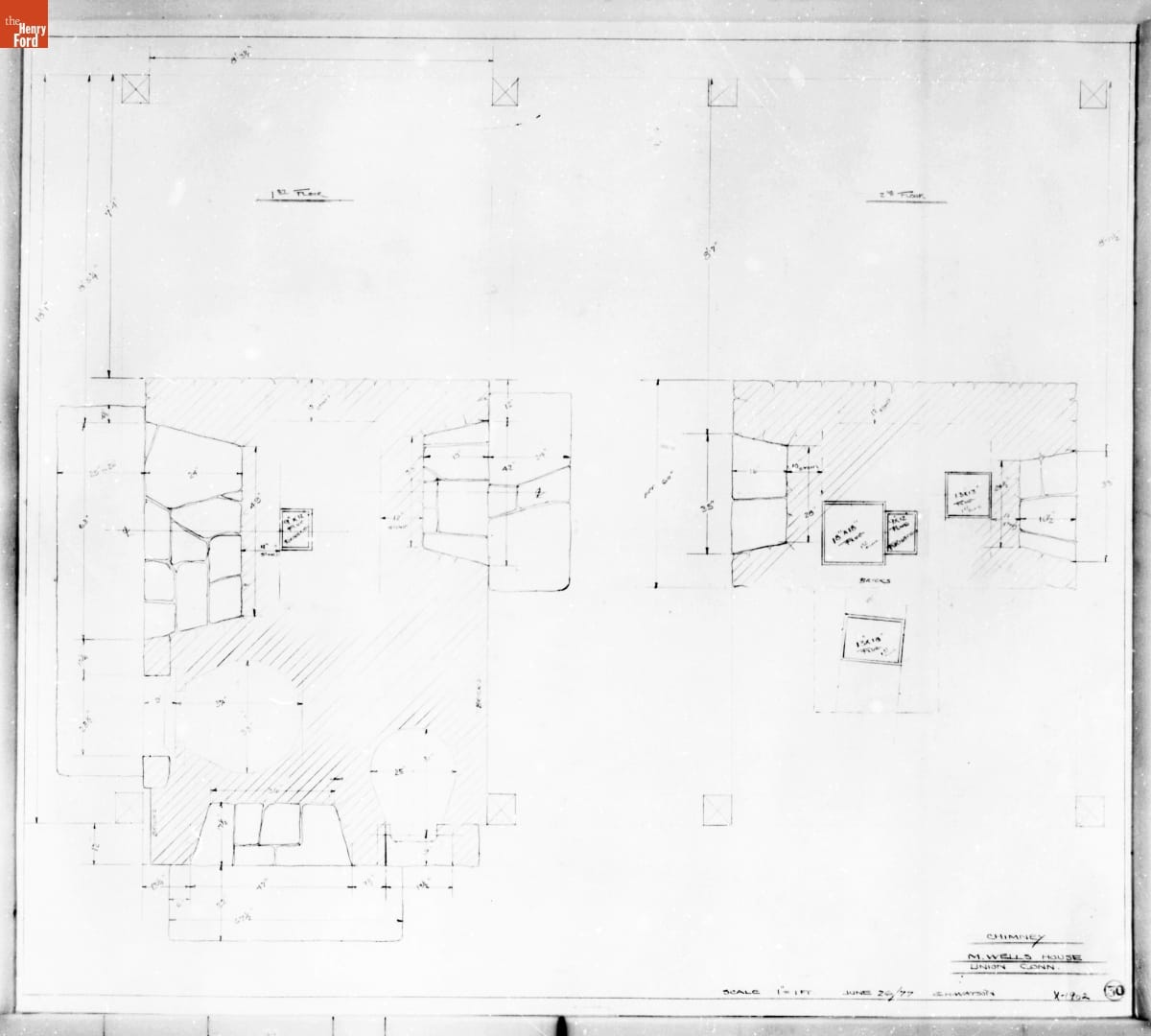
- June 26, 1977
- Collections - Artifact
Drawing, "Chimney, M. Wells House Union Conn." (now Daggett Farmhouse), June 26, 1977
- Drawing, "Liv. Rm Fire Place and Kitchen Fire Place Mrs. Wells House Union Conn" (now Daggett Farmhouse), April 5, 1977 -
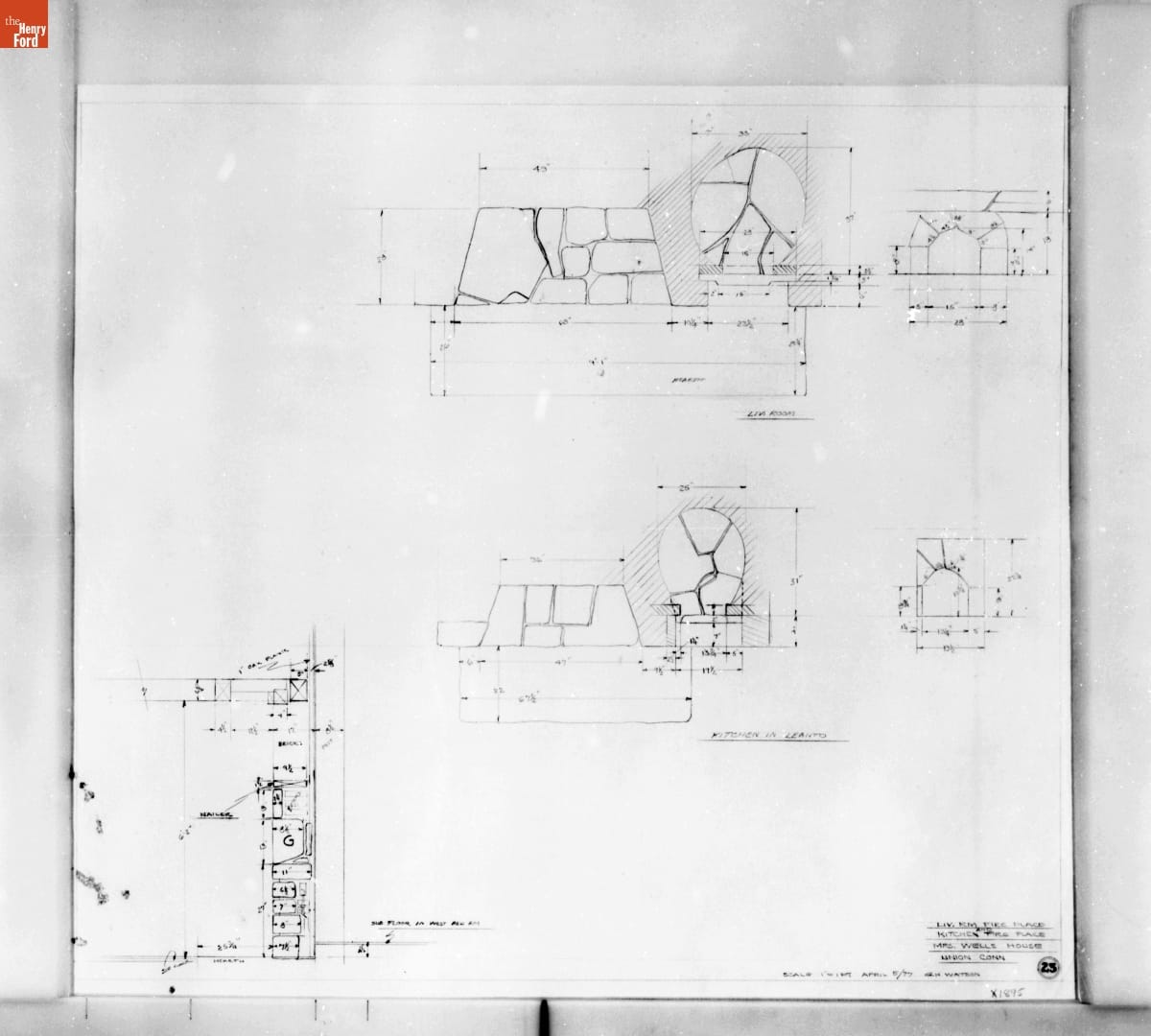
- April 05, 1977
- Collections - Artifact
Drawing, "Liv. Rm Fire Place and Kitchen Fire Place Mrs. Wells House Union Conn" (now Daggett Farmhouse), April 5, 1977
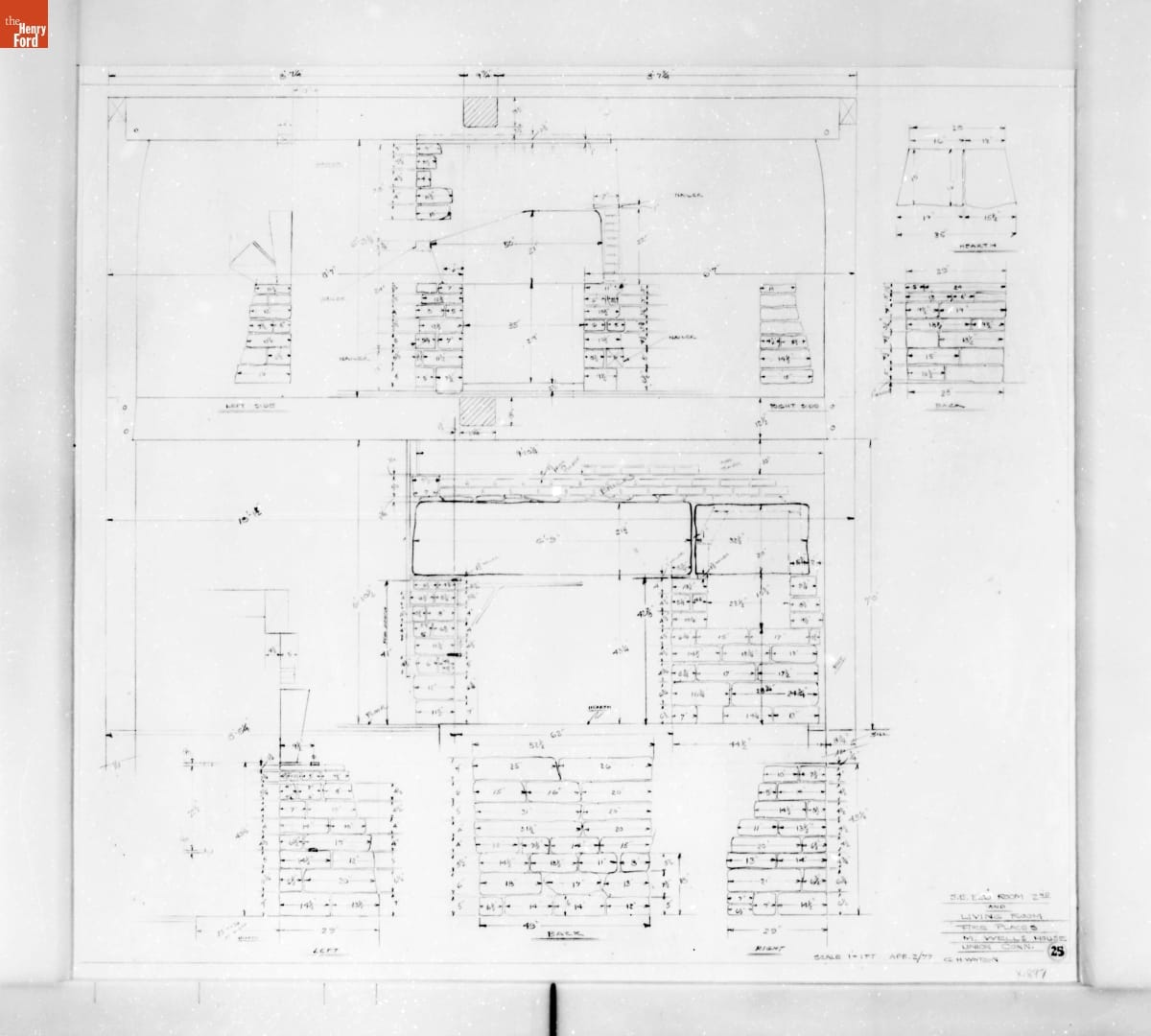
- Drawing, "S.E. Bed Room 2nd and Living Room Fire Places M. Wells House Union Conn." (now Daggett Farmhouse), April 2, 1977 -
- April 02, 1977
- Collections - Artifact
Drawing, "S.E. Bed Room 2nd and Living Room Fire Places M. Wells House Union Conn." (now Daggett Farmhouse), April 2, 1977
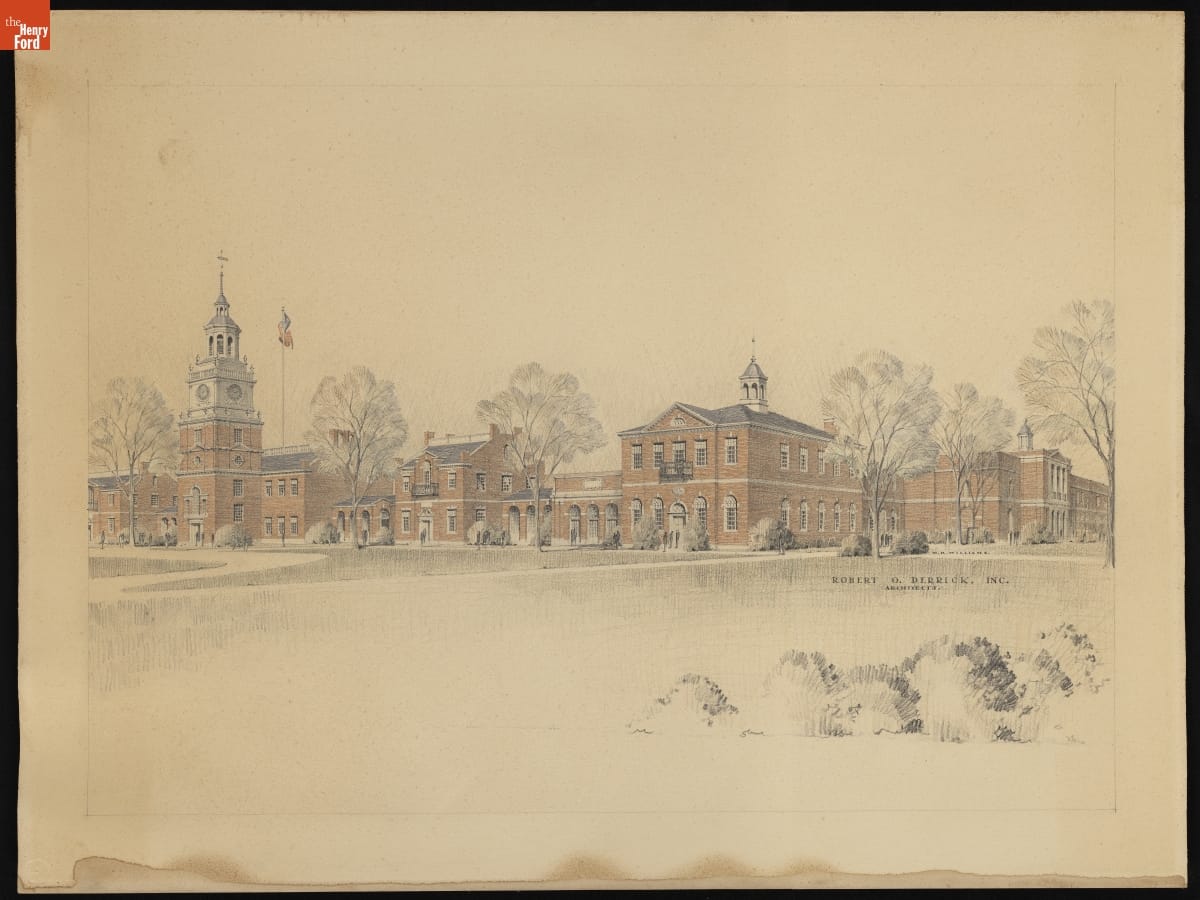
- Architectural Concept Drawing of Henry Ford Museum, Southeast Facade, circa 1927 - This is one of three color perspective renderings of the proposed Museum building presented to Henry Ford by architect Robert O. Derrick. This worm's eye view shows the front façade from the southeast perspective. The focal point is a full-scale replica of Independence Hall in Philadelphia, which appears on the left side. Although altered, much of this design was completed.
- circa 1927
- Collections - Artifact
Architectural Concept Drawing of Henry Ford Museum, Southeast Facade, circa 1927
This is one of three color perspective renderings of the proposed Museum building presented to Henry Ford by architect Robert O. Derrick. This worm's eye view shows the front façade from the southeast perspective. The focal point is a full-scale replica of Independence Hall in Philadelphia, which appears on the left side. Although altered, much of this design was completed.
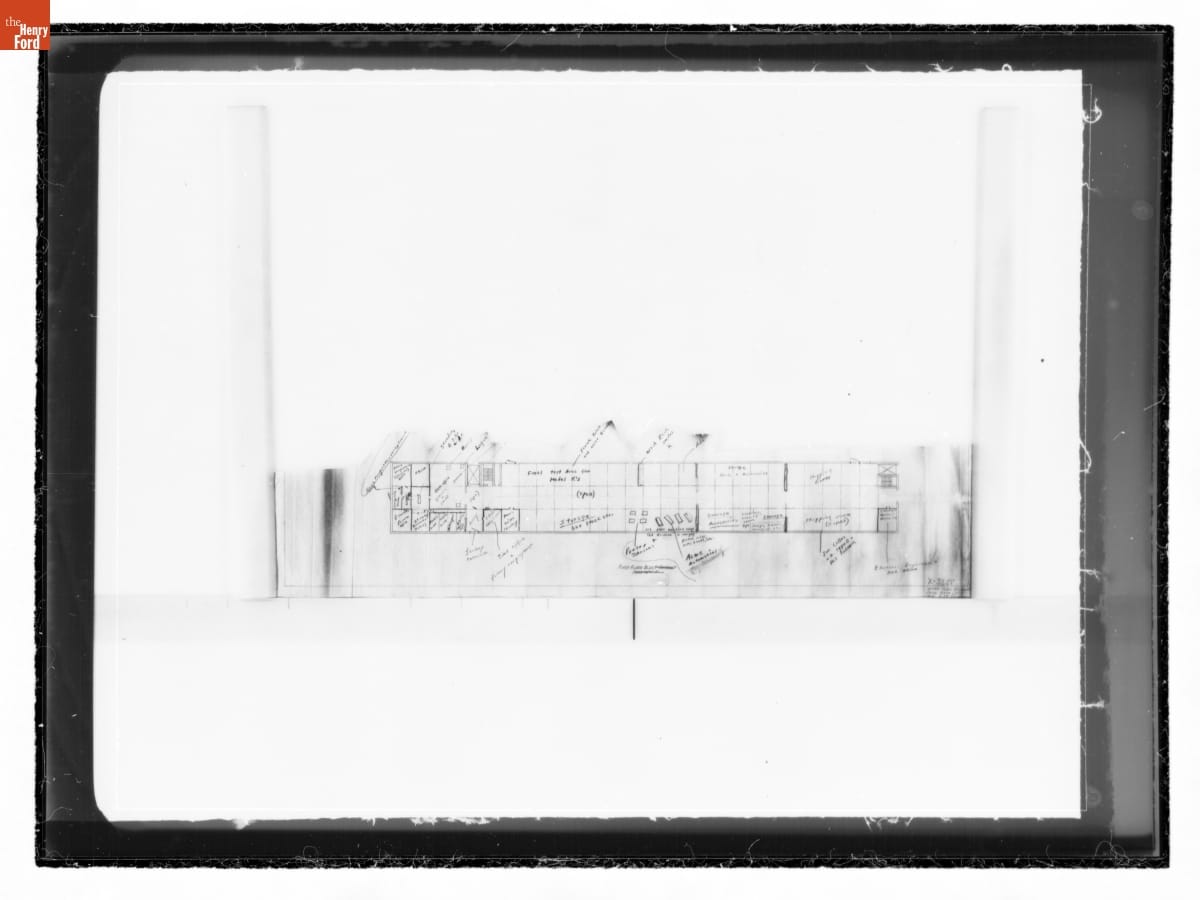
- Floor Plan, Ford Motor Company Piquette Avenue Plant, First Floor, 1907 - Ford Motor Company quickly outgrew its first factory on Detroit's Mack Avenue and moved into the newly constructed Piquette Avenue Plant in 1904. This floor plan shows how some of the plant's rooms and workspaces were being used a few years later. When Ford grew too big for the three-story Piquette building, it moved into larger quarters in 1910.
- August 28, 1953
- Collections - Artifact
Floor Plan, Ford Motor Company Piquette Avenue Plant, First Floor, 1907
Ford Motor Company quickly outgrew its first factory on Detroit's Mack Avenue and moved into the newly constructed Piquette Avenue Plant in 1904. This floor plan shows how some of the plant's rooms and workspaces were being used a few years later. When Ford grew too big for the three-story Piquette building, it moved into larger quarters in 1910.
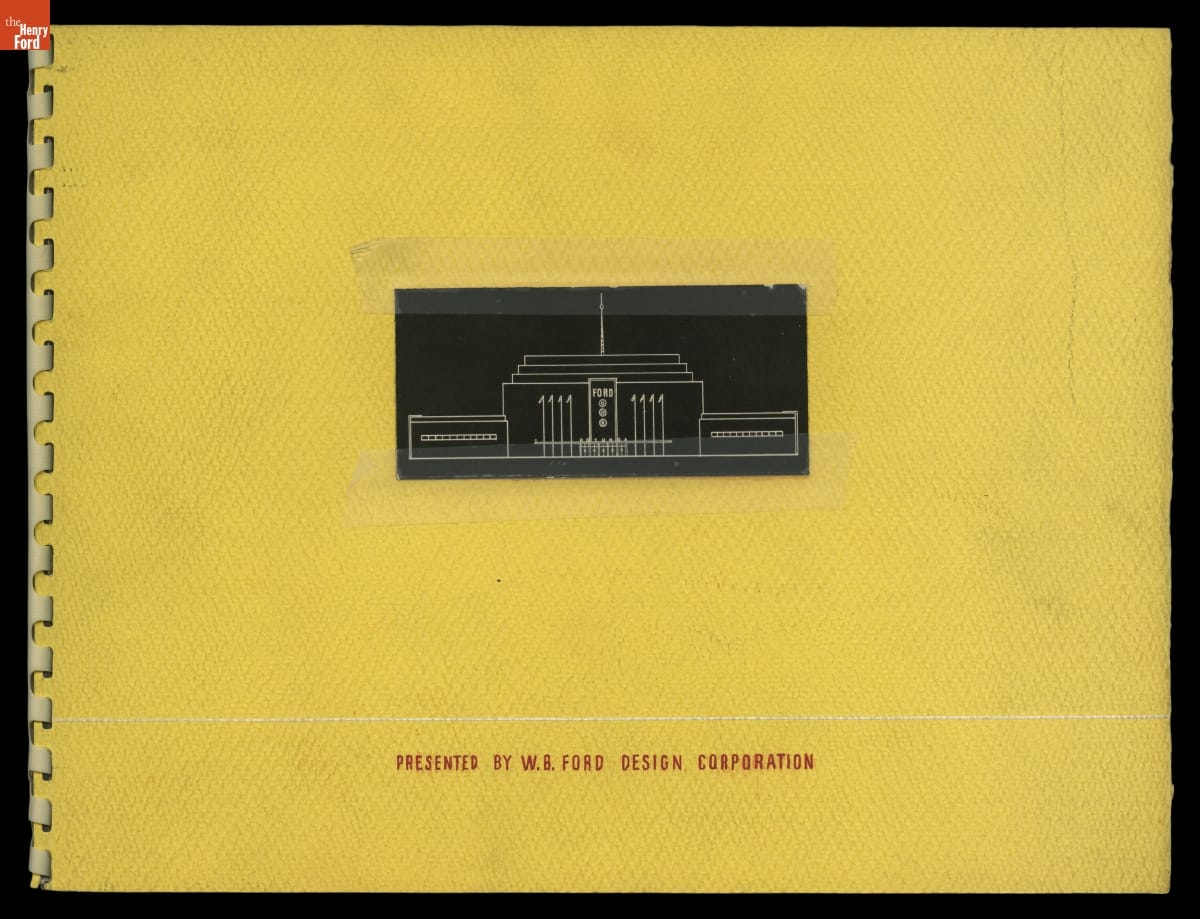
- Design Booklet for the Ford Rotunda Renovation, 1952-1953 - As part of its fiftieth anniversary celebration in 1953, Ford Motor Company refurbished the Rotunda -- an exhibit area and hospitality center for Ford's Rouge factory tours. In addition to several dedicated exhibition spaces, the new design included an auditorium, a public lounge, and a themed outdoor ride. The Rotunda drew two million visitors annually until it was destroyed by fire in 1962.
- 1952-1953
- Collections - Artifact
Design Booklet for the Ford Rotunda Renovation, 1952-1953
As part of its fiftieth anniversary celebration in 1953, Ford Motor Company refurbished the Rotunda -- an exhibit area and hospitality center for Ford's Rouge factory tours. In addition to several dedicated exhibition spaces, the new design included an auditorium, a public lounge, and a themed outdoor ride. The Rotunda drew two million visitors annually until it was destroyed by fire in 1962.
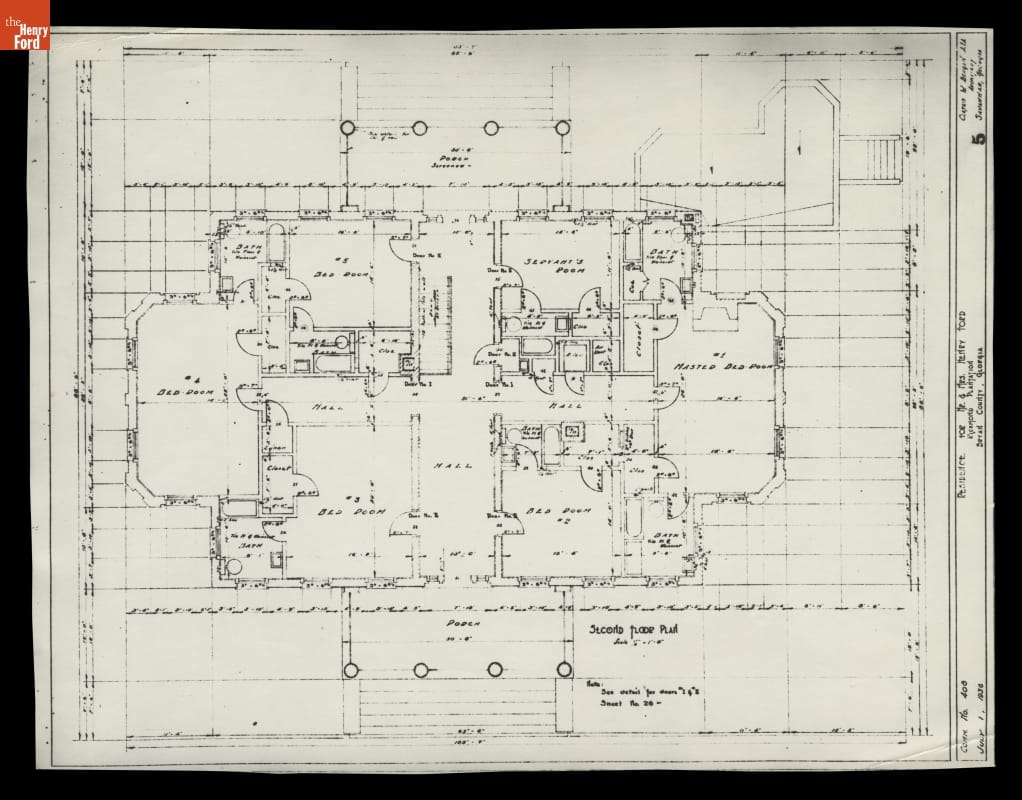
- Second Floor Plan, Residence for Mr. & Mrs. Henry Ford, Richmond Plantation, Bryan County, Georgia, July 1, 1936 - Henry Ford purchased vast amounts of land around present-day Richmond Hill, Georgia, beginning in the 1920s. Here, Ford dabbled in agricultural experimentation. He also became interested in the civic improvement of the area -- building schools, churches and community centers. In the late 1930s, Henry and Clara built a large home as a winter residence.
- July 01, 1936
- Collections - Artifact
Second Floor Plan, Residence for Mr. & Mrs. Henry Ford, Richmond Plantation, Bryan County, Georgia, July 1, 1936
Henry Ford purchased vast amounts of land around present-day Richmond Hill, Georgia, beginning in the 1920s. Here, Ford dabbled in agricultural experimentation. He also became interested in the civic improvement of the area -- building schools, churches and community centers. In the late 1930s, Henry and Clara built a large home as a winter residence.
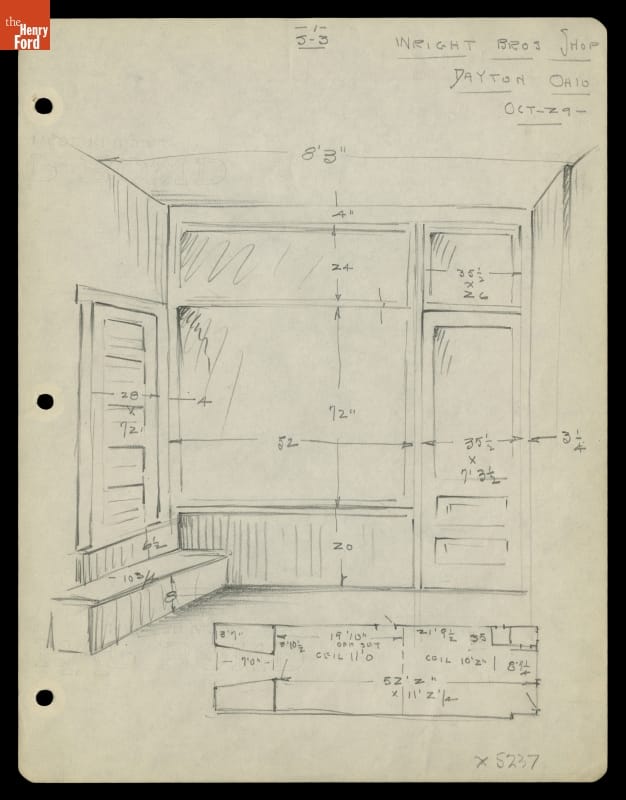
- Drawing, Wright Cycle Shop, Dayton, Ohio, October 29, 1936 - In October 1936, Henry Ford purchased the bicycle shop used by Wilbur and Orville Wright in Dayton, Ohio. Over the next 18 months, Ford relocated and reassembled the building at his Greenfield Village museum complex in Dearborn, Michigan. Before the move, architect Edward Cutler made detailed drawings of the shop to ensure the project's accuracy.
- October 29, 1936
- Collections - Artifact
Drawing, Wright Cycle Shop, Dayton, Ohio, October 29, 1936
In October 1936, Henry Ford purchased the bicycle shop used by Wilbur and Orville Wright in Dayton, Ohio. Over the next 18 months, Ford relocated and reassembled the building at his Greenfield Village museum complex in Dearborn, Michigan. Before the move, architect Edward Cutler made detailed drawings of the shop to ensure the project's accuracy.