
Search
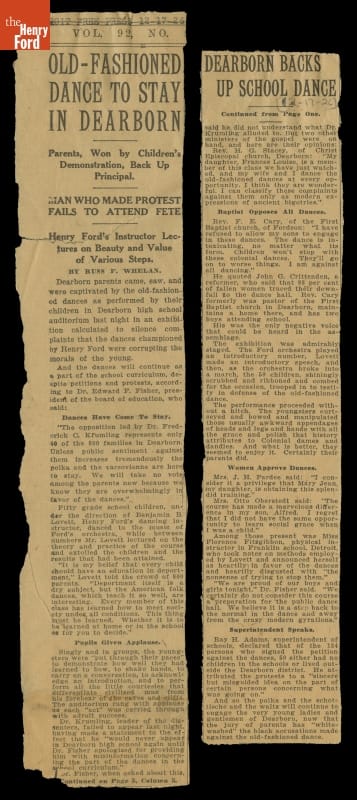
- Newspaper Article, "Old-Fashioned Dance to Stay in Dearborn...Dearborn Backs Up School Dance," 1926 - As Henry Ford extended his traditional American dance classes to local Dearborn schoolchildren, some parents grew alarmed--they weren't sure they approved of boys and girls dancing together. A dance demonstration by the children soon set most of the parents' minds at ease. They quickly realized the benefit of having their children learn these old-time dances--and the good manners that went along with them.
- December 17, 1926
- Collections - Artifact
Newspaper Article, "Old-Fashioned Dance to Stay in Dearborn...Dearborn Backs Up School Dance," 1926
As Henry Ford extended his traditional American dance classes to local Dearborn schoolchildren, some parents grew alarmed--they weren't sure they approved of boys and girls dancing together. A dance demonstration by the children soon set most of the parents' minds at ease. They quickly realized the benefit of having their children learn these old-time dances--and the good manners that went along with them.
- Collier's, Volume XL, January 4-June 27, 1908 -
- 04 January 1908-27 June 1908
- Collections - Artifact
Collier's, Volume XL, January 4-June 27, 1908
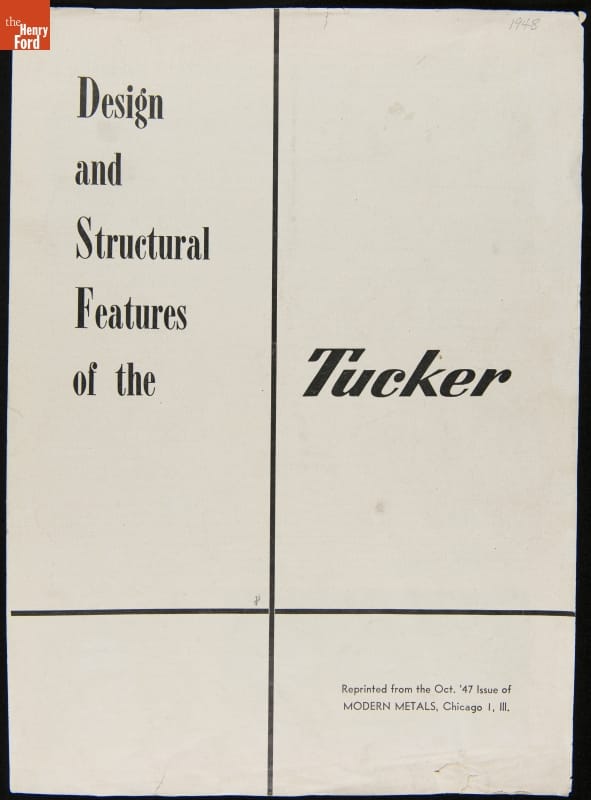
- "Design and Structural Features of the Tucker," October 1947 - Preston Tucker previewed his all-new Tucker 48 sedan with a massive marketing campaign. Articles and advertisements heralded the car's many features said to improve performance, safety, and economy. Some of these claims were premature. The hydraulic torque-converter transmission and disc brakes described in this article, for example, never actually made it into Tucker's production cars.
- October 01, 1947
- Collections - Artifact
"Design and Structural Features of the Tucker," October 1947
Preston Tucker previewed his all-new Tucker 48 sedan with a massive marketing campaign. Articles and advertisements heralded the car's many features said to improve performance, safety, and economy. Some of these claims were premature. The hydraulic torque-converter transmission and disc brakes described in this article, for example, never actually made it into Tucker's production cars.
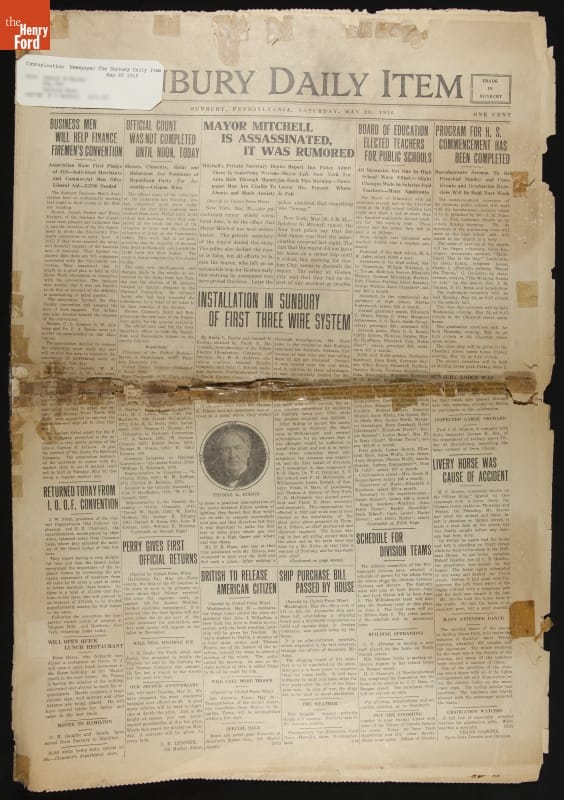
- Sunbury Daily Item Newspaper for May 20, 1916 -
- May 20, 1916
- Collections - Artifact
Sunbury Daily Item Newspaper for May 20, 1916
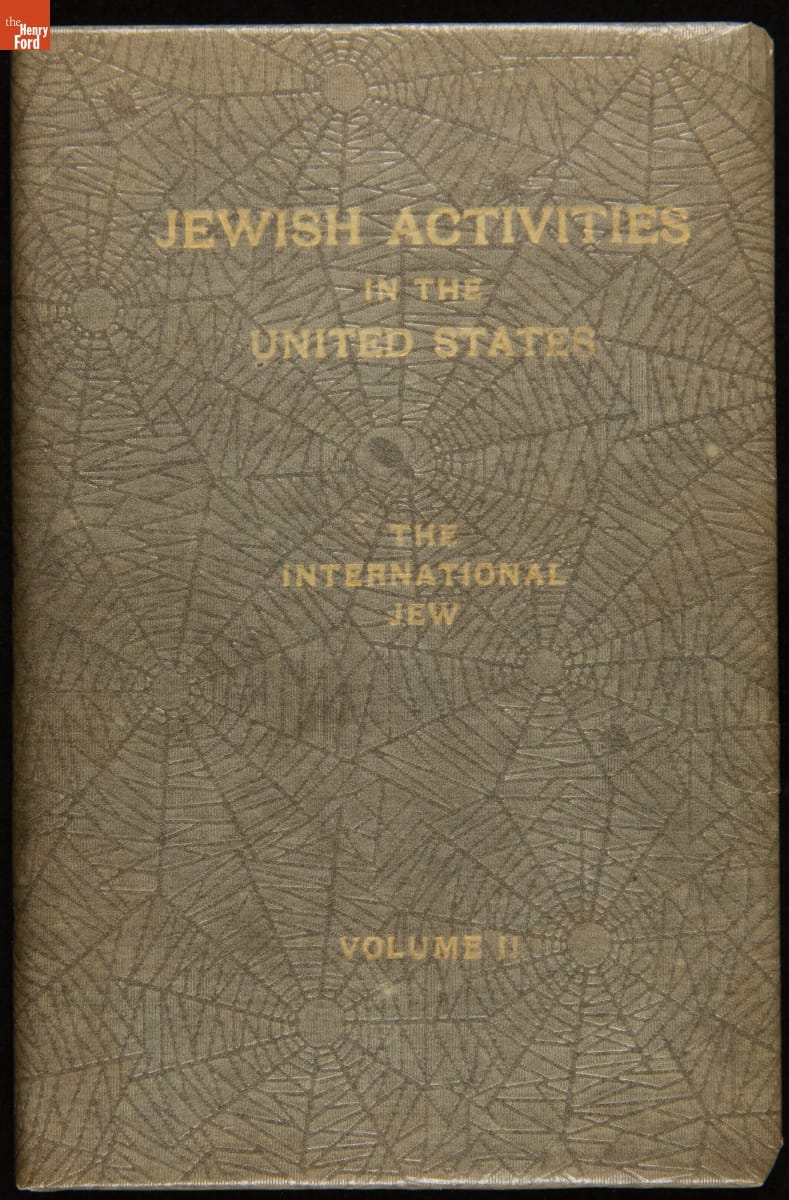
- The International Jew - The World's Foremost Problem, Volume 2, "Jewish Activities in the United States," 1921 - Henry Ford published the weekly <em>The Dearborn Independent</em> from 1919 to 1927 as a forum for his views. Between 1920 and 1922, the paper ran a series of front-page articles (penned by its editor, William Cameron) entitled <em>The International Jew</em> that denounced all things Jewish. Many of these articles were later compiled, reprinted, and distributed in a four-volume set. These defamatory articles exposed Ford's deep anti-Semitic sentiments and sadly legitimized these prejudices to hundreds of thousands of readers. Though Ford later apologized and printed a retraction, this episode forever tarnished the influential automaker's reputation.
- April 01, 1921
- Collections - Artifact
The International Jew - The World's Foremost Problem, Volume 2, "Jewish Activities in the United States," 1921
Henry Ford published the weekly The Dearborn Independent from 1919 to 1927 as a forum for his views. Between 1920 and 1922, the paper ran a series of front-page articles (penned by its editor, William Cameron) entitled The International Jew that denounced all things Jewish. Many of these articles were later compiled, reprinted, and distributed in a four-volume set. These defamatory articles exposed Ford's deep anti-Semitic sentiments and sadly legitimized these prejudices to hundreds of thousands of readers. Though Ford later apologized and printed a retraction, this episode forever tarnished the influential automaker's reputation.
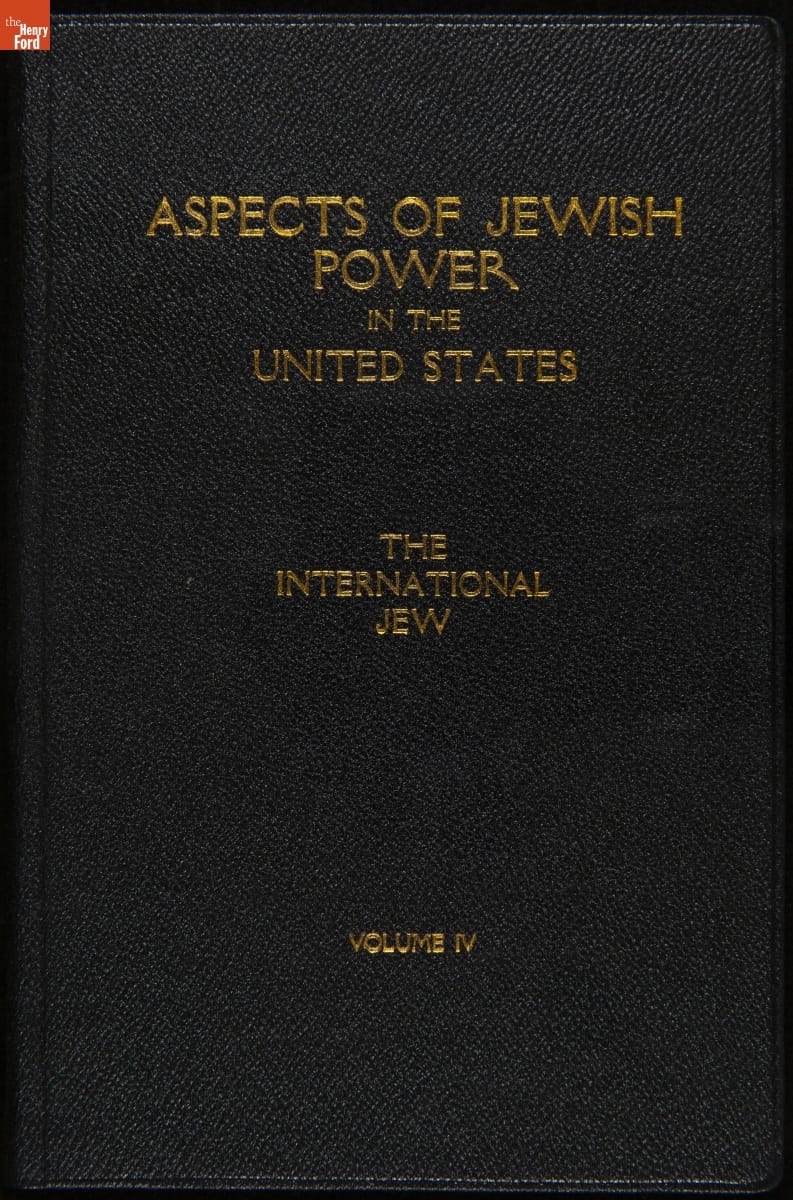
- The International Jew - The World's Foremost Problem, Volume 4, "Aspects of Jewish Power in the United States," 1922 - Henry Ford published the weekly <em>The Dearborn Independent</em> from 1919 to 1927 as a forum for his views. Between 1920 and 1922, the paper ran a series of front-page articles (penned by its editor, William Cameron) entitled <em>The International Jew</em> that denounced all things Jewish. Many of these articles were later compiled, reprinted, and distributed in a four-volume set. These defamatory articles exposed Ford's deep anti-Semitic sentiments and sadly legitimized these prejudices to hundreds of thousands of readers. Though Ford later apologized and printed a retraction, this episode forever tarnished the influential automaker's reputation.
- May 01, 1922
- Collections - Artifact
The International Jew - The World's Foremost Problem, Volume 4, "Aspects of Jewish Power in the United States," 1922
Henry Ford published the weekly The Dearborn Independent from 1919 to 1927 as a forum for his views. Between 1920 and 1922, the paper ran a series of front-page articles (penned by its editor, William Cameron) entitled The International Jew that denounced all things Jewish. Many of these articles were later compiled, reprinted, and distributed in a four-volume set. These defamatory articles exposed Ford's deep anti-Semitic sentiments and sadly legitimized these prejudices to hundreds of thousands of readers. Though Ford later apologized and printed a retraction, this episode forever tarnished the influential automaker's reputation.
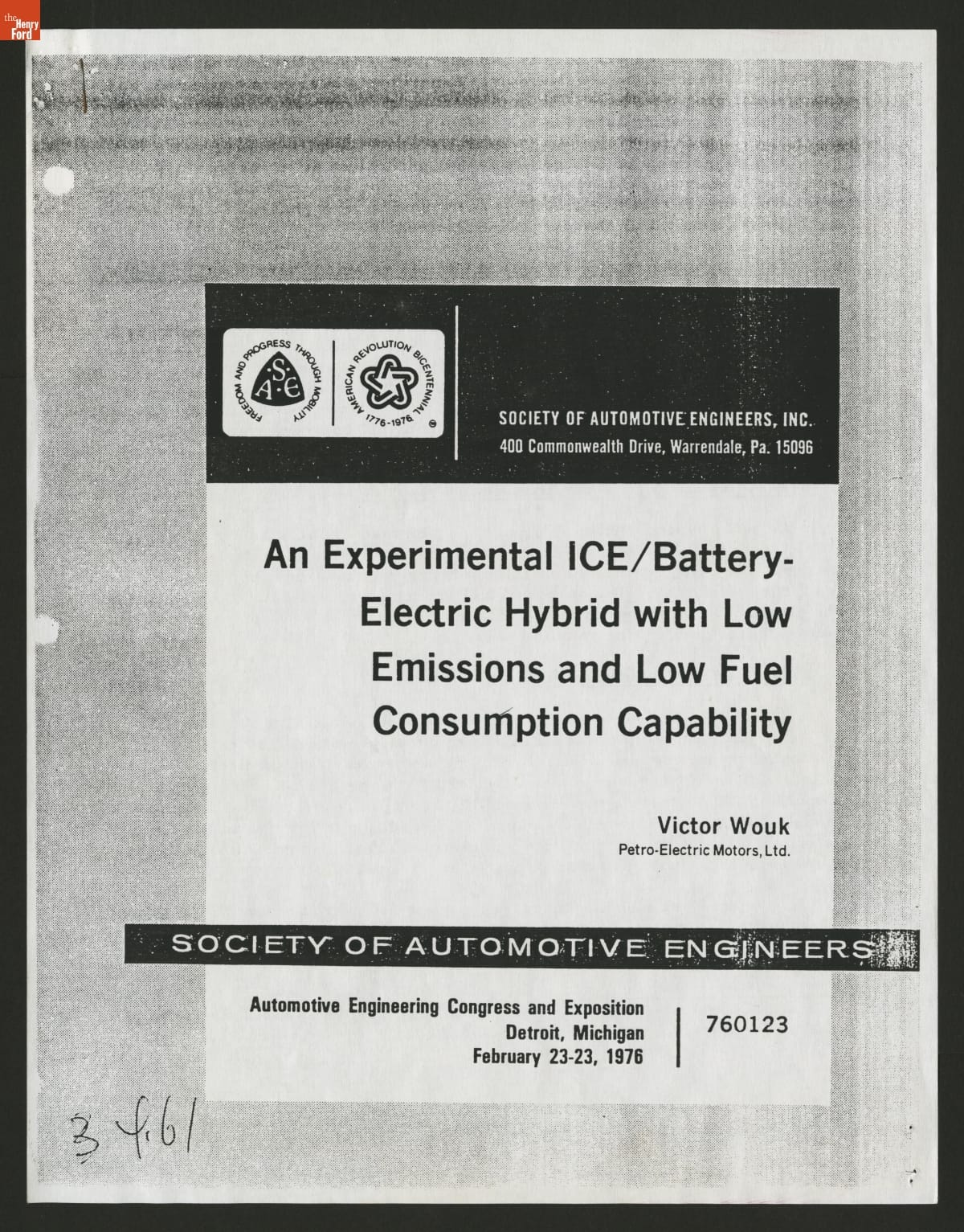
- An Experimental ICE/Battery-Electric Hybrid with Low Emissions and Low Fuel Consumption Capability, February 23, 1976 - In 1974, electrical engineer Victor Wouk entered a gasoline-electric hybrid in an Environmental Protection Agency competition to encourage development of low-polluting cars. It was the only vehicle to meet the emissions requirements. This 1976 paper on gasoline-electric hybrids is one of more than 100 Wouk wrote between 1974 and 2000.
- February 23, 1976
- Collections - Artifact
An Experimental ICE/Battery-Electric Hybrid with Low Emissions and Low Fuel Consumption Capability, February 23, 1976
In 1974, electrical engineer Victor Wouk entered a gasoline-electric hybrid in an Environmental Protection Agency competition to encourage development of low-polluting cars. It was the only vehicle to meet the emissions requirements. This 1976 paper on gasoline-electric hybrids is one of more than 100 Wouk wrote between 1974 and 2000.
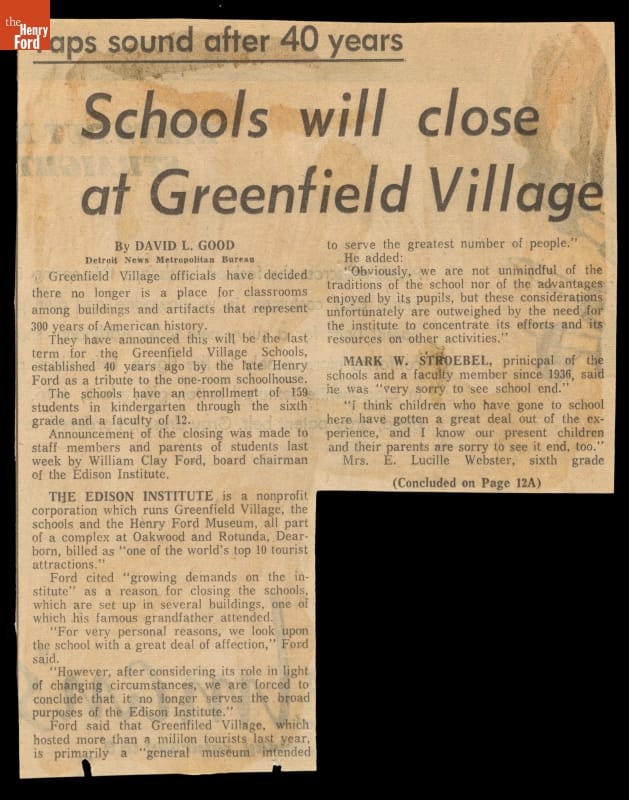
- Detroit News Article, 1969, "Schools Will Close at Greenfield Village" -
- May 12, 1969
- Collections - Artifact
Detroit News Article, 1969, "Schools Will Close at Greenfield Village"
- Article, "The New Show at Greenfield," from Michigan: The Magazine of The Detroit News, July 1982 -
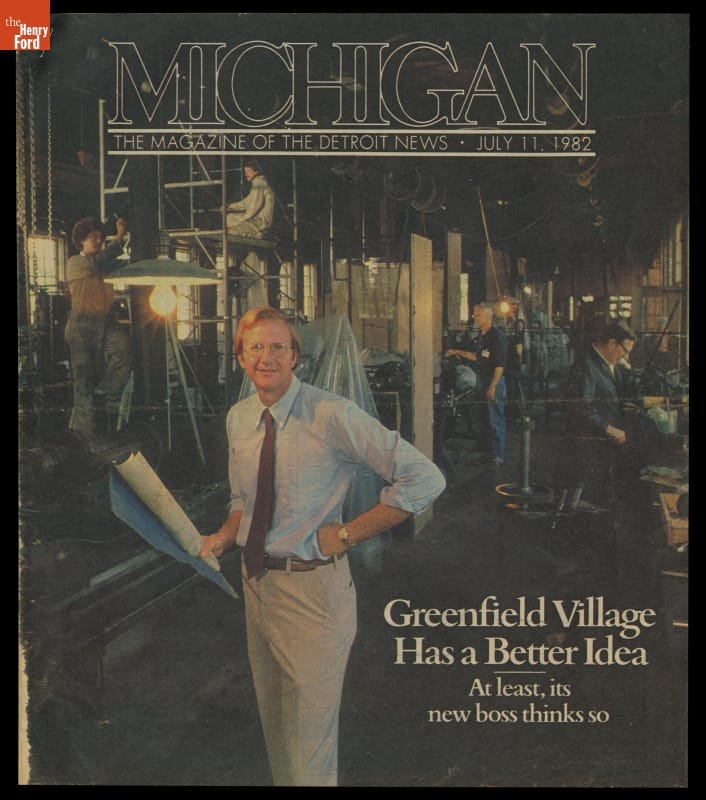
- July 11, 1982
- Collections - Artifact
Article, "The New Show at Greenfield," from Michigan: The Magazine of The Detroit News, July 1982
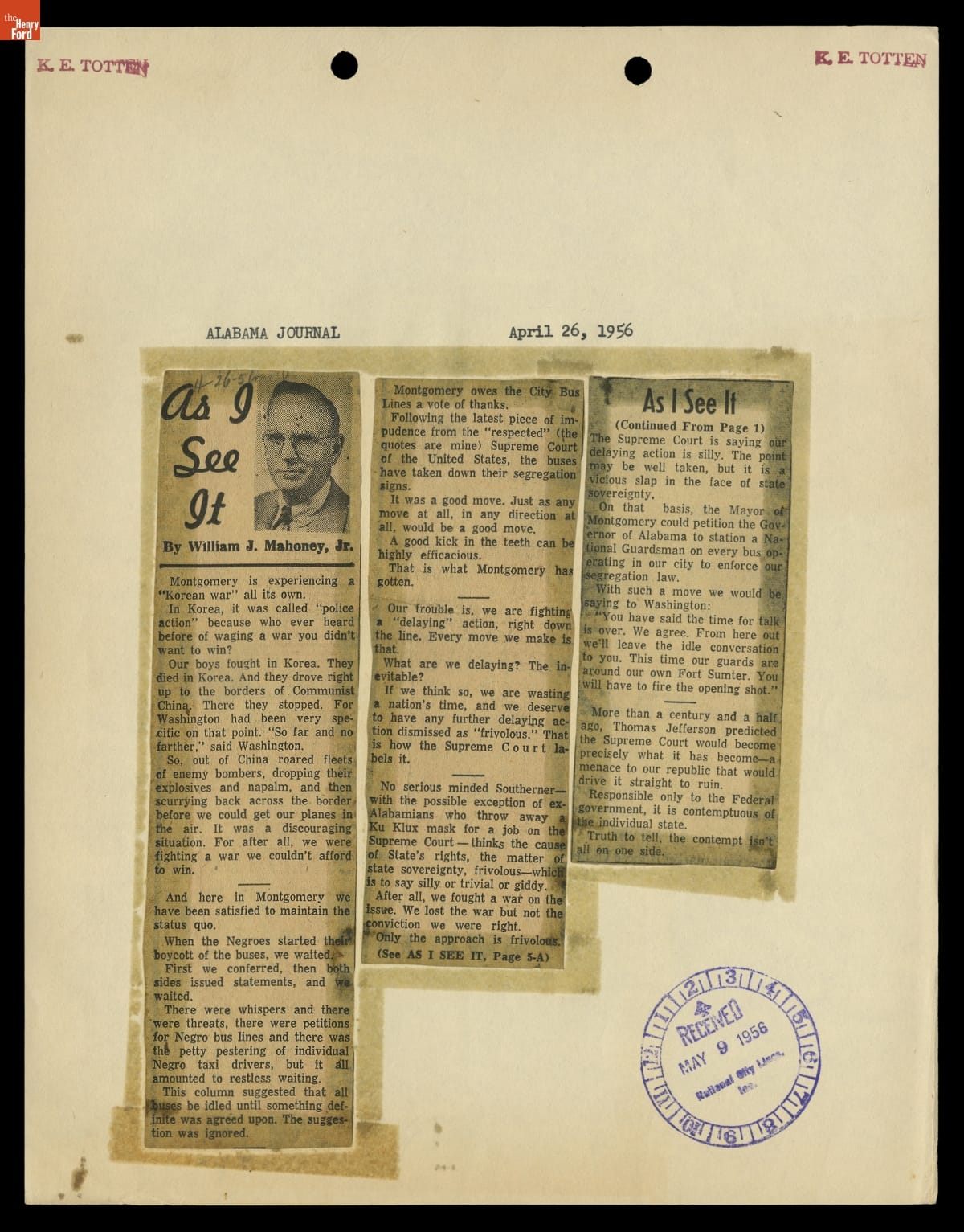
- Montgomery Bus Boycott Scrapbook, November 1955 - April 1957 (Part 5 of 6) - These newspaper articles come from a scrapbook of newspaper clippings saved by Charles "Homer" Cummings, a Montgomery City bus lines manager. Together, these articles recount the story of the 381-day Montgomery bus boycott that was inspired by the arrest of Rosa Parks, who refused to give up her bus seat to a white man despite existing segregation laws.
- June 1956-August 1956
- Collections - Artifact
Montgomery Bus Boycott Scrapbook, November 1955 - April 1957 (Part 5 of 6)
These newspaper articles come from a scrapbook of newspaper clippings saved by Charles "Homer" Cummings, a Montgomery City bus lines manager. Together, these articles recount the story of the 381-day Montgomery bus boycott that was inspired by the arrest of Rosa Parks, who refused to give up her bus seat to a white man despite existing segregation laws.