
Search
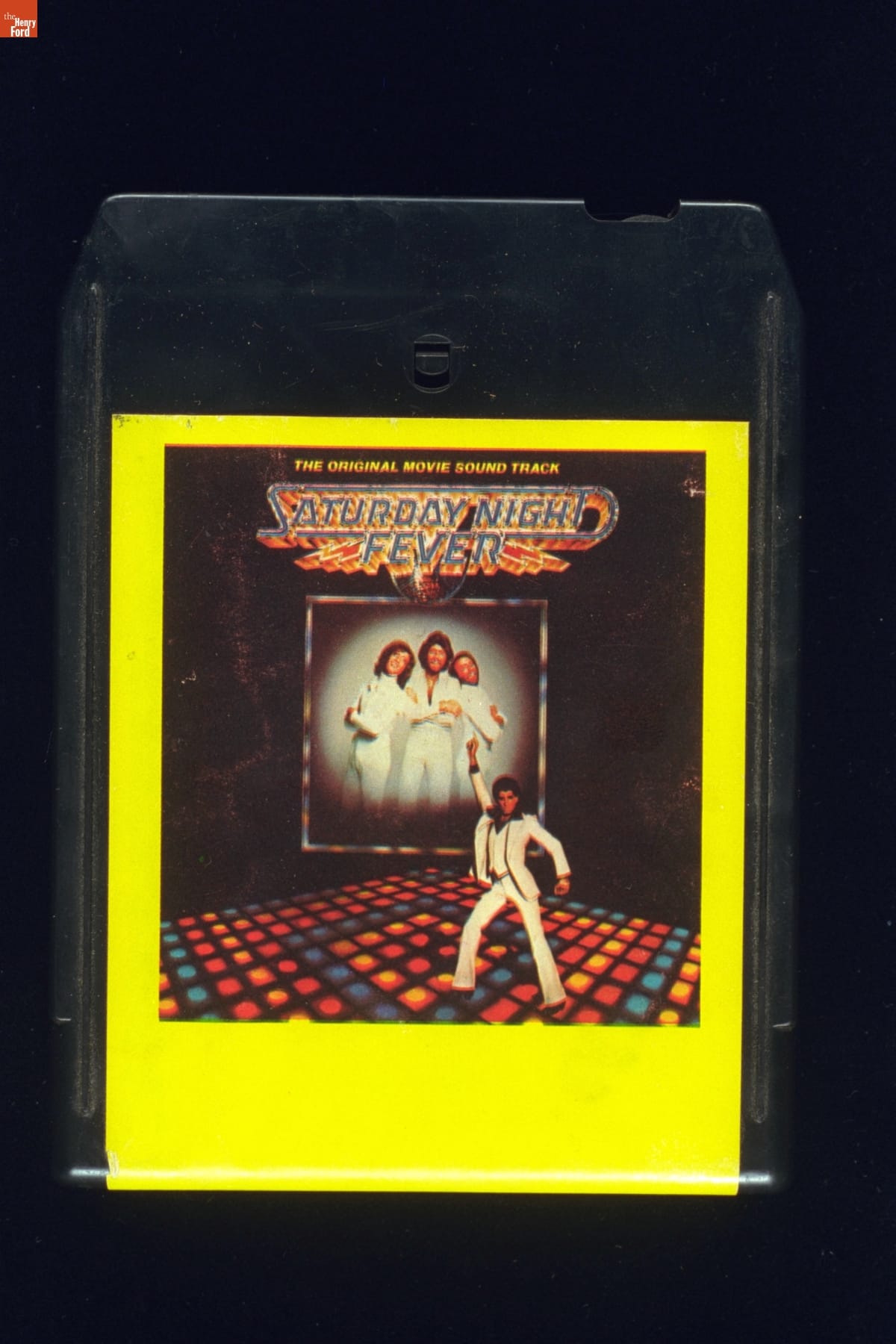
- "Saturday Night Fever" Eight Track Tape, 1977 - The 8-track tape is an endless-loop, magnetic-tape sound recording technology developed in the mid-1960s. Inventors initially conceived of the 8-track tape and player to provide music in automobiles--its portability was an attractive feature. An 8-track tape also offered long playing times, but other features could hinder listening pleasure. Improved cassette tapes and new compact disc technology displaced the 8-track in the early 1980s.
- 1977
- Collections - Artifact
"Saturday Night Fever" Eight Track Tape, 1977
The 8-track tape is an endless-loop, magnetic-tape sound recording technology developed in the mid-1960s. Inventors initially conceived of the 8-track tape and player to provide music in automobiles--its portability was an attractive feature. An 8-track tape also offered long playing times, but other features could hinder listening pleasure. Improved cassette tapes and new compact disc technology displaced the 8-track in the early 1980s.
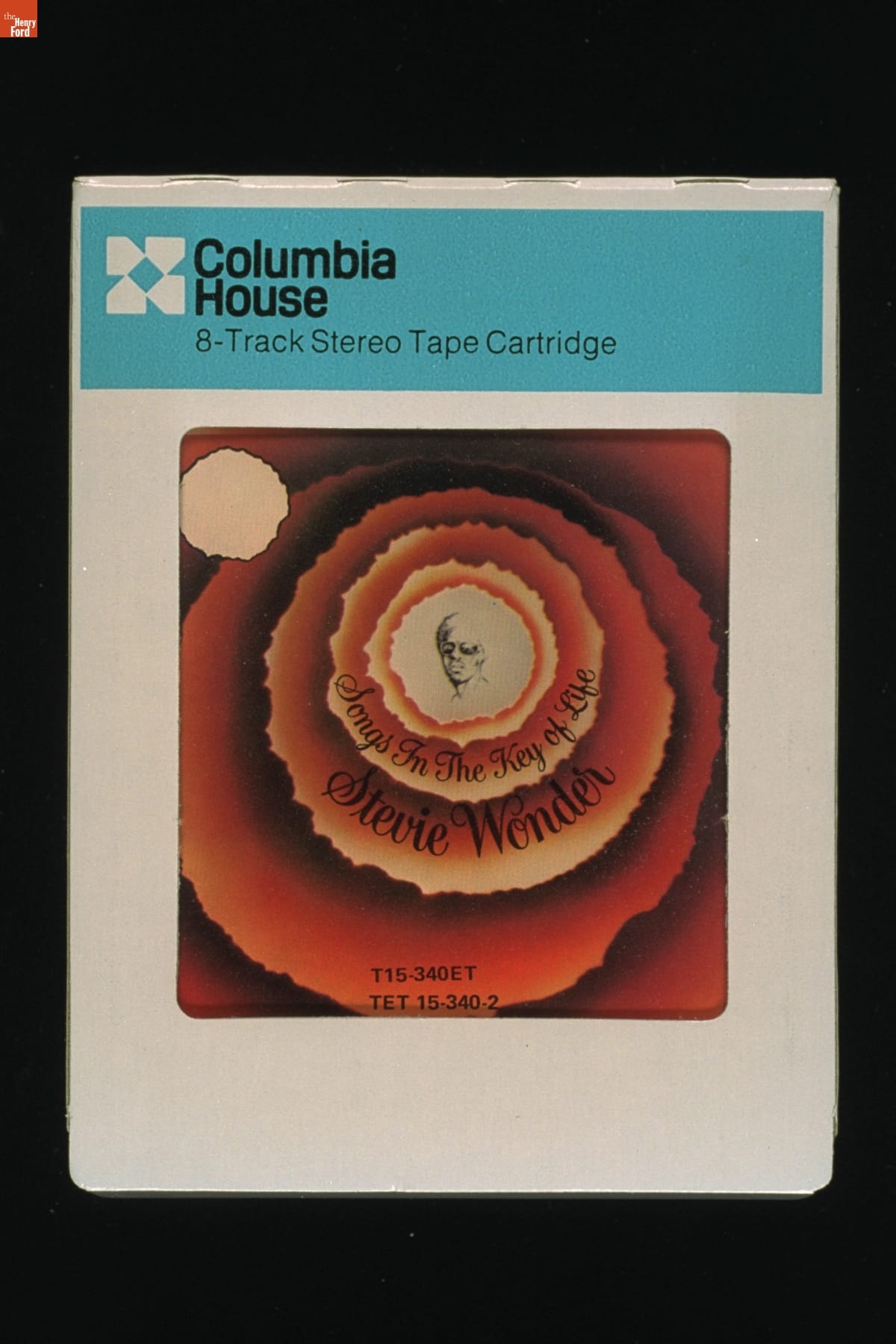
- Stevie Wonder "Songs in the Key of Life" Eight Track Tape, 1976 - The 8-track tape is an endless-loop, magnetic-tape sound recording technology developed in the mid-1960s. Inventors initially conceived of the 8-track tape and player to provide music in automobiles--its portability was an attractive feature. An 8-track tape also offered long playing times, but other features could hinder listening pleasure. Improved cassette tapes and new compact disc technology displaced the 8-track in the early 1980s.
- 1976
- Collections - Artifact
Stevie Wonder "Songs in the Key of Life" Eight Track Tape, 1976
The 8-track tape is an endless-loop, magnetic-tape sound recording technology developed in the mid-1960s. Inventors initially conceived of the 8-track tape and player to provide music in automobiles--its portability was an attractive feature. An 8-track tape also offered long playing times, but other features could hinder listening pleasure. Improved cassette tapes and new compact disc technology displaced the 8-track in the early 1980s.
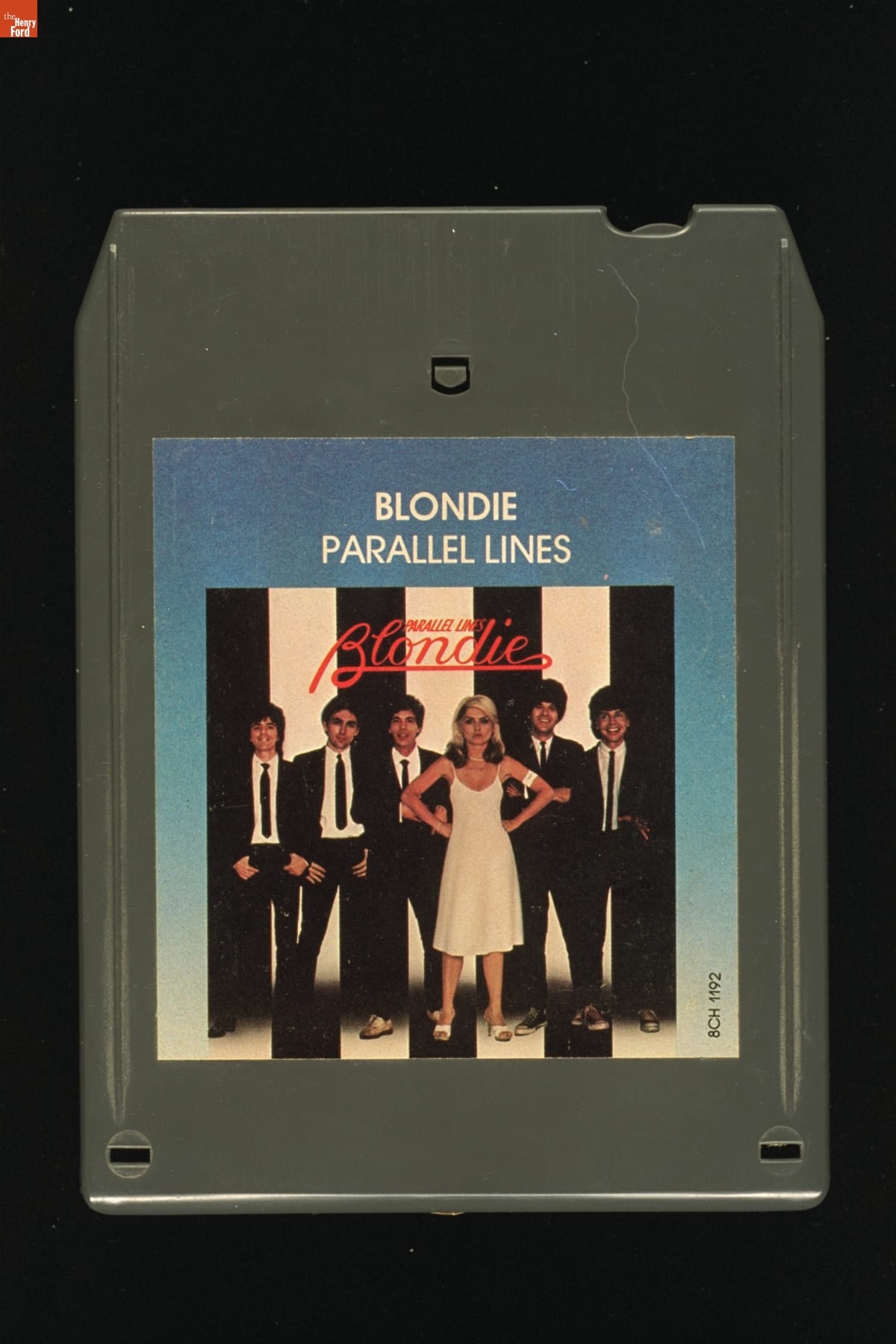
- Blondie "Parallel Lines" Eight Track Tape, 1978 - The 8-track tape is an endless-loop, magnetic-tape sound recording technology developed in the mid-1960s. Inventors initially conceived of the 8-track tape and player to provide music in automobiles--its portability was an attractive feature. An 8-track tape also offered long playing times, but other features could hinder listening pleasure. Improved cassette tapes and new compact disc technology displaced the 8-track in the early 1980s.
- 1978
- Collections - Artifact
Blondie "Parallel Lines" Eight Track Tape, 1978
The 8-track tape is an endless-loop, magnetic-tape sound recording technology developed in the mid-1960s. Inventors initially conceived of the 8-track tape and player to provide music in automobiles--its portability was an attractive feature. An 8-track tape also offered long playing times, but other features could hinder listening pleasure. Improved cassette tapes and new compact disc technology displaced the 8-track in the early 1980s.
- Box of TDK CD Power 110 Blank Audio Cassette Tapes -

- circa 1995
- Collections - Artifact
Box of TDK CD Power 110 Blank Audio Cassette Tapes
- Box of TDK CD Power 110 Blank Audio Cassette Tapes -

- circa 1995
- Collections - Artifact
Box of TDK CD Power 110 Blank Audio Cassette Tapes
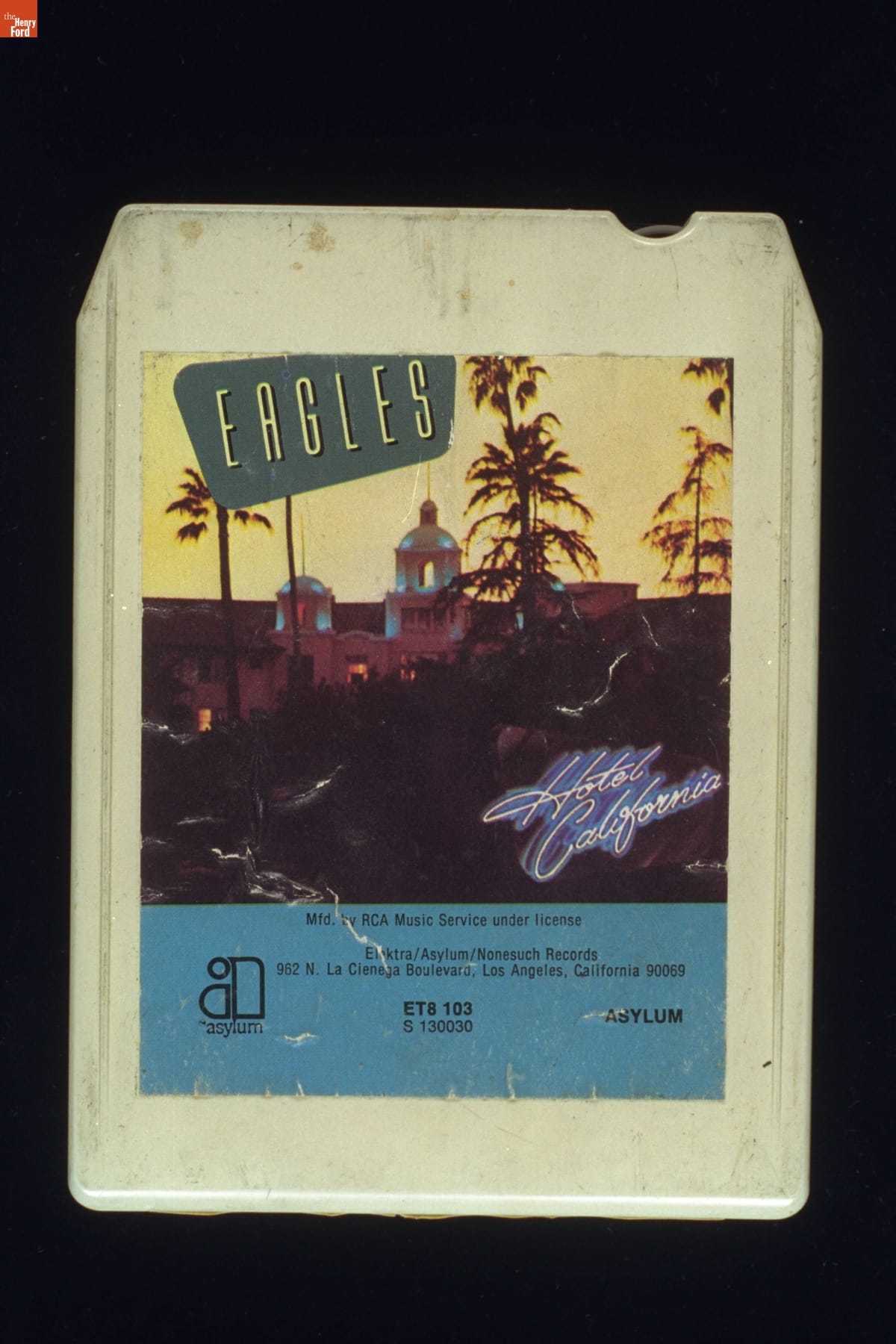
- The Eagles "Hotel California" Eight Track Tape, 1976 - The 8-track tape is an endless-loop, magnetic-tape sound recording technology developed in the mid-1960s. Inventors initially conceived of the 8-track tape and player to provide music in automobiles--its portability was an attractive feature. An 8-track tape also offered long playing times, but other features could hinder listening pleasure. Improved cassette tapes and new compact disc technology displaced the 8-track in the early 1980s.
- 1976
- Collections - Artifact
The Eagles "Hotel California" Eight Track Tape, 1976
The 8-track tape is an endless-loop, magnetic-tape sound recording technology developed in the mid-1960s. Inventors initially conceived of the 8-track tape and player to provide music in automobiles--its portability was an attractive feature. An 8-track tape also offered long playing times, but other features could hinder listening pleasure. Improved cassette tapes and new compact disc technology displaced the 8-track in the early 1980s.
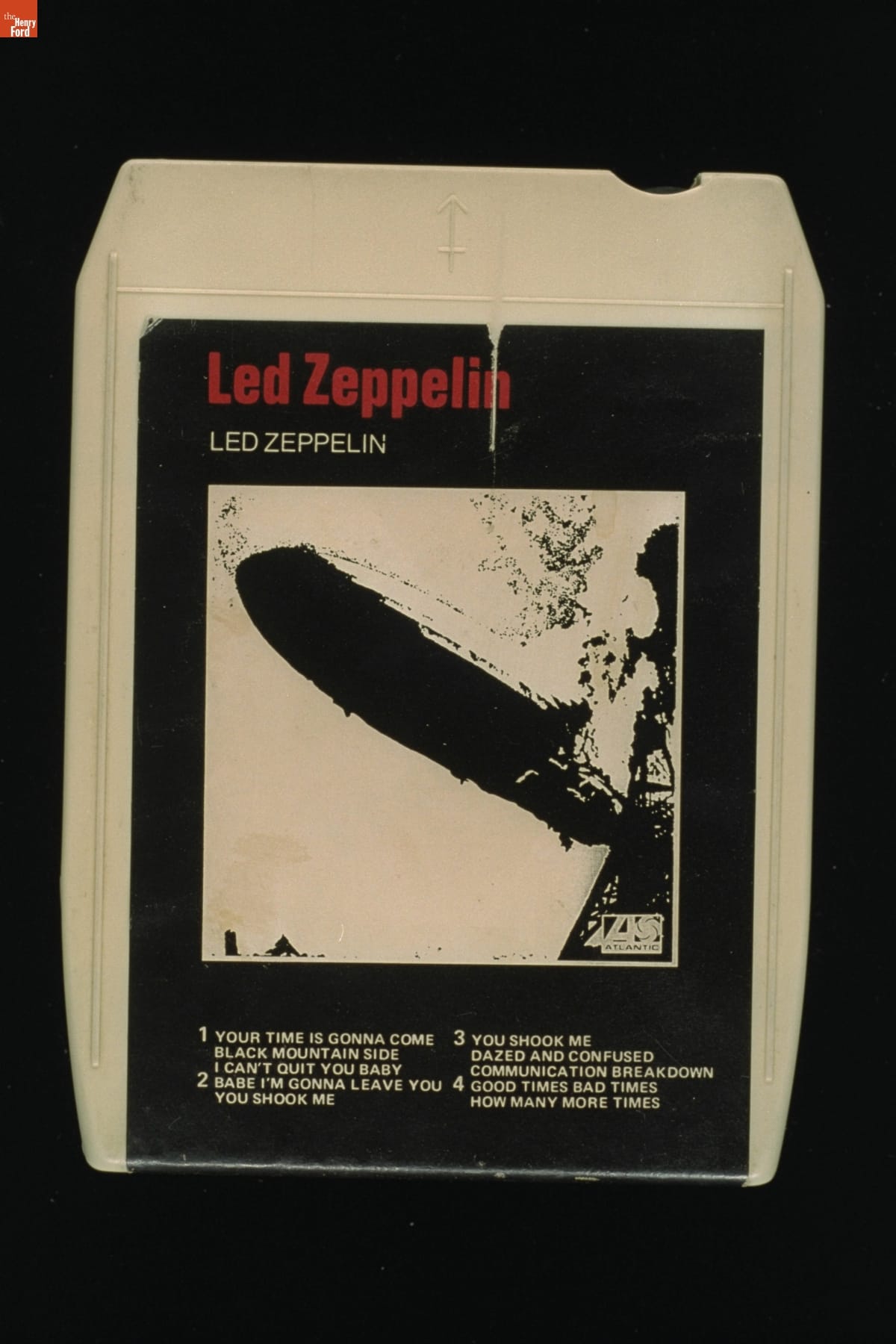
- Led Zeppelin "Led Zeppelin" Eight Track Tape, 1973 - The 8-track tape is an endless-loop, magnetic-tape sound recording technology developed in the mid-1960s. Inventors initially conceived of the 8-track tape and player to provide music in automobiles--its portability was an attractive feature. An 8-track tape also offered long playing times, but other features could hinder listening pleasure. Improved cassette tapes and new compact disc technology displaced the 8-track in the early 1980s.
- 1973
- Collections - Artifact
Led Zeppelin "Led Zeppelin" Eight Track Tape, 1973
The 8-track tape is an endless-loop, magnetic-tape sound recording technology developed in the mid-1960s. Inventors initially conceived of the 8-track tape and player to provide music in automobiles--its portability was an attractive feature. An 8-track tape also offered long playing times, but other features could hinder listening pleasure. Improved cassette tapes and new compact disc technology displaced the 8-track in the early 1980s.
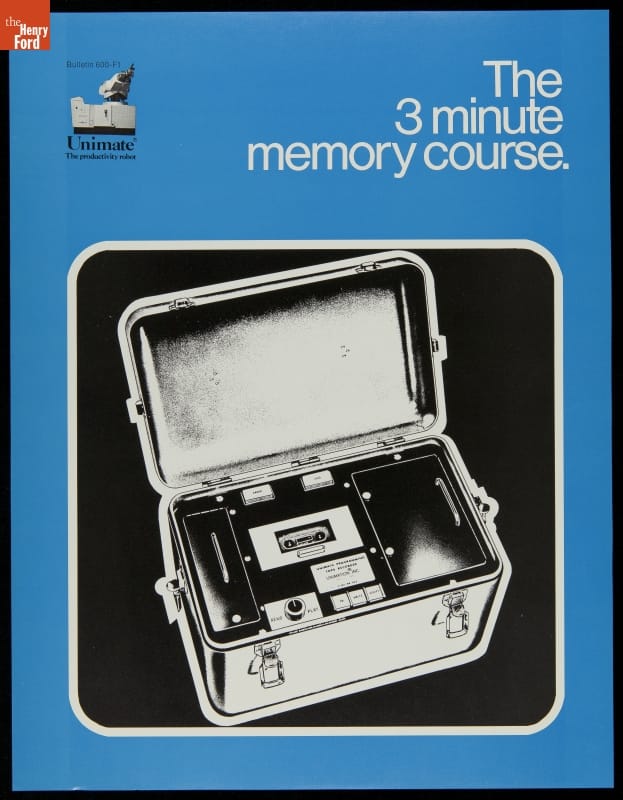
- The 3 Minute Memory Course, Unimation Inc., 1971 - George Devol revolutionized manufacturing with his invention of the Unimate -- the world's first industrial robot. These rugged programmable units were designed to perform repetitive, arduous and hazardous tasks. The first Unimate was installed in a General Motors plant in 1961. This brochure, part of a larger archival collection documenting Devol's work, illustrates the functions and uses of his innovative idea.
- 1971
- Collections - Artifact
The 3 Minute Memory Course, Unimation Inc., 1971
George Devol revolutionized manufacturing with his invention of the Unimate -- the world's first industrial robot. These rugged programmable units were designed to perform repetitive, arduous and hazardous tasks. The first Unimate was installed in a General Motors plant in 1961. This brochure, part of a larger archival collection documenting Devol's work, illustrates the functions and uses of his innovative idea.
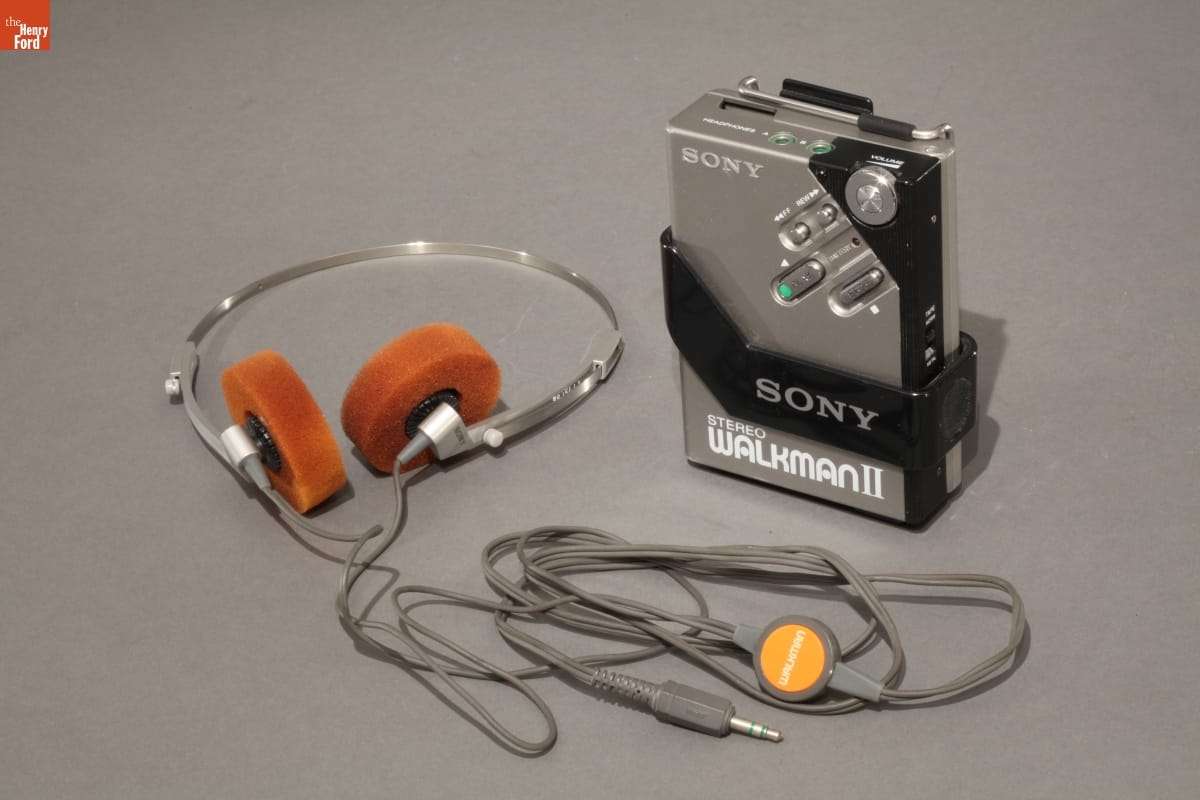
- Sony Walkman II, circa 1982 - Introduced in Japan in 1979 and in the US the following year, the Walkman allowed users to enjoy music while walking, exercising, or using public transport. It changed the way people enjoy music--providing a private experience in the midst of everyday life--encouraging a trend that escalated with the development of the iPod and other digital music players.
- circa 1982
- Collections - Artifact
Sony Walkman II, circa 1982
Introduced in Japan in 1979 and in the US the following year, the Walkman allowed users to enjoy music while walking, exercising, or using public transport. It changed the way people enjoy music--providing a private experience in the midst of everyday life--encouraging a trend that escalated with the development of the iPod and other digital music players.
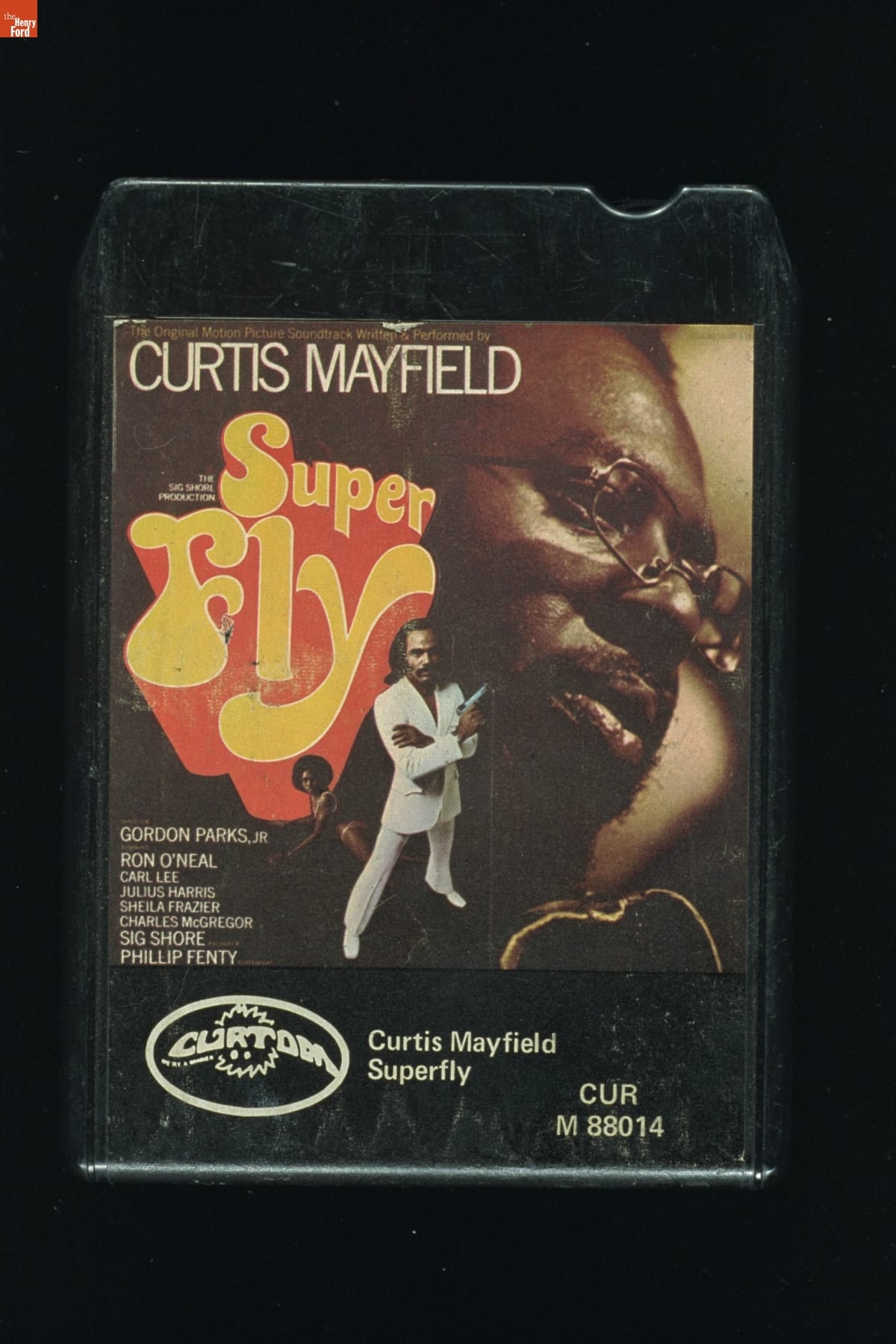
- "Superfly" Eight Track Tape, 1972 - The 8-track tape is an endless-loop, magnetic-tape sound recording technology developed in the mid-1960s. Inventors initially conceived of the 8-track tape and player to provide music in automobiles--its portability was an attractive feature. An 8-track tape also offered long playing times, but other features could hinder listening pleasure. Improved cassette tapes and new compact disc technology displaced the 8-track in the early 1980s.
- 1972
- Collections - Artifact
"Superfly" Eight Track Tape, 1972
The 8-track tape is an endless-loop, magnetic-tape sound recording technology developed in the mid-1960s. Inventors initially conceived of the 8-track tape and player to provide music in automobiles--its portability was an attractive feature. An 8-track tape also offered long playing times, but other features could hinder listening pleasure. Improved cassette tapes and new compact disc technology displaced the 8-track in the early 1980s.