
Search
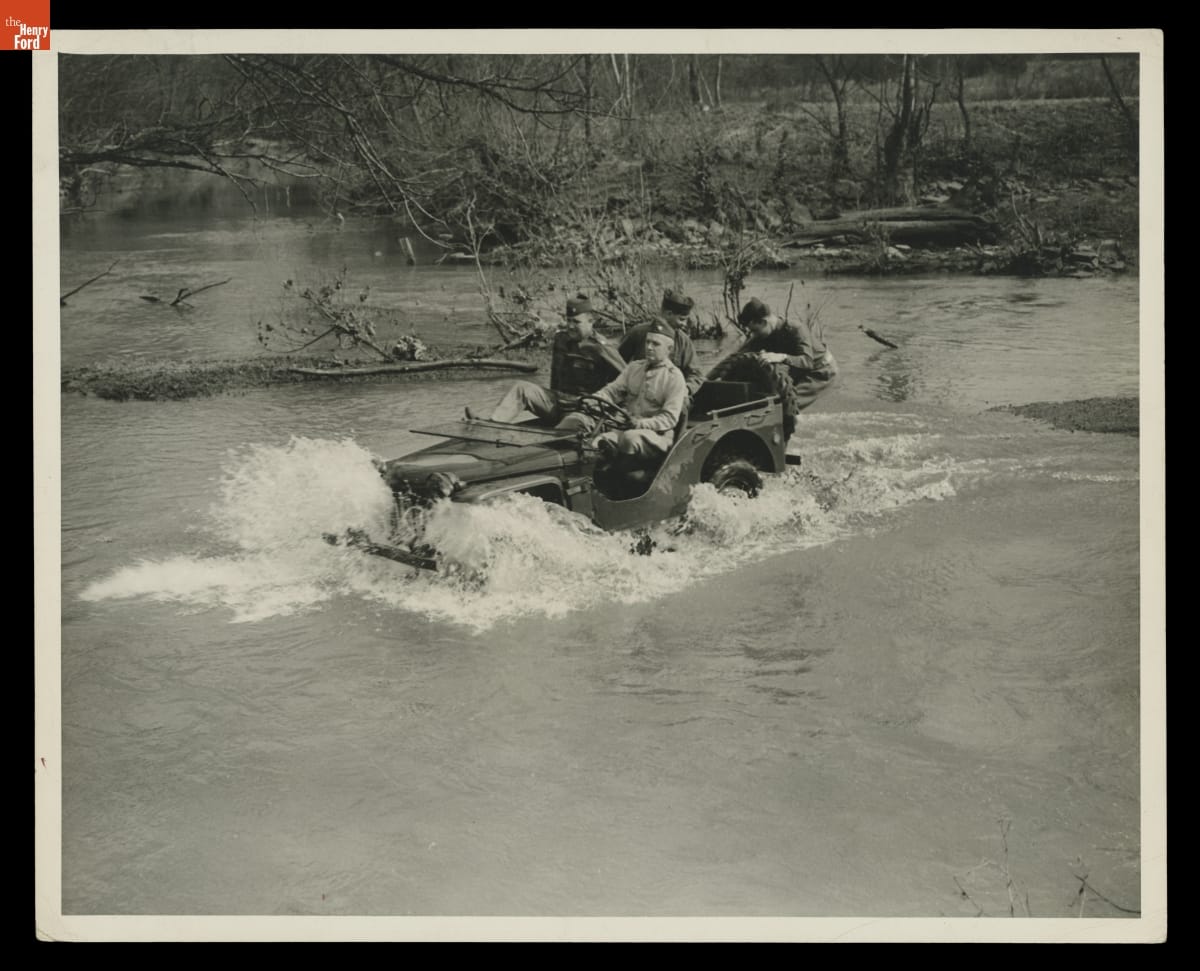
- Crossing a Stream in a Willys Military Jeep, circa 1943 - Few things are as iconic of World War II as the jeep. American Bantam created the design in response to a call from the U.S. Army, but Bantam couldn't produce it in the quantities required. Willys-Overland and Ford built the majority of the 650,000 jeeps manufactured for the war effort. Willys built Jeeps for the civilian market after the war.
- circa 1943
- Collections - Artifact
Crossing a Stream in a Willys Military Jeep, circa 1943
Few things are as iconic of World War II as the jeep. American Bantam created the design in response to a call from the U.S. Army, but Bantam couldn't produce it in the quantities required. Willys-Overland and Ford built the majority of the 650,000 jeeps manufactured for the war effort. Willys built Jeeps for the civilian market after the war.
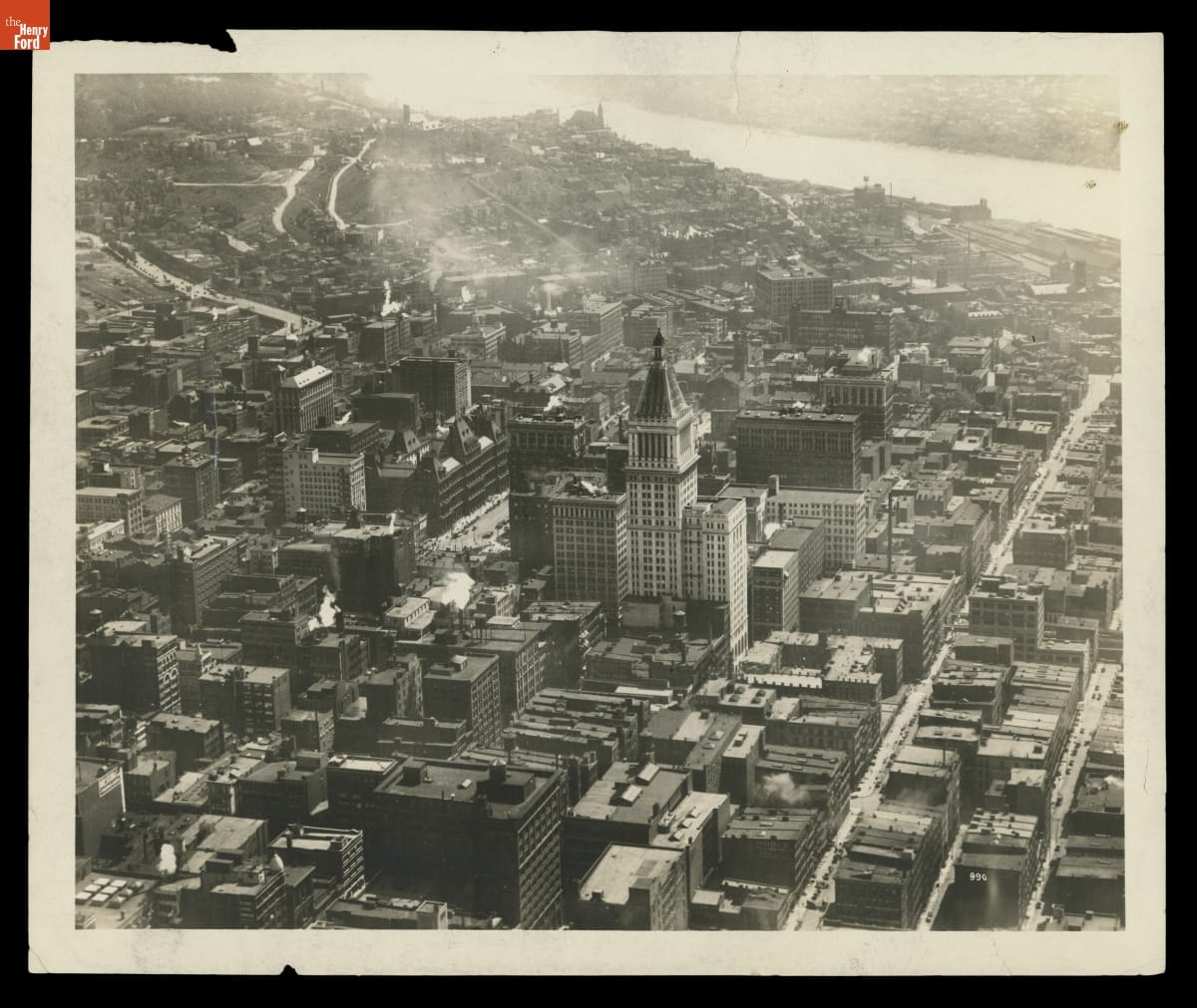
- Aerial View of Cincinnati, Ohio, circa 1923 - Military aerial reconnaissance during World War I accelerated the evolution of domestic aerial photography after the war. During the 1920s, aerial images like this one taken over Cincinnati by the U.S. Army Air Service helped document population shifts and environmental changes. They also informed urban planning, agricultural practices, and engineering projects.
- circa 1923
- Collections - Artifact
Aerial View of Cincinnati, Ohio, circa 1923
Military aerial reconnaissance during World War I accelerated the evolution of domestic aerial photography after the war. During the 1920s, aerial images like this one taken over Cincinnati by the U.S. Army Air Service helped document population shifts and environmental changes. They also informed urban planning, agricultural practices, and engineering projects.
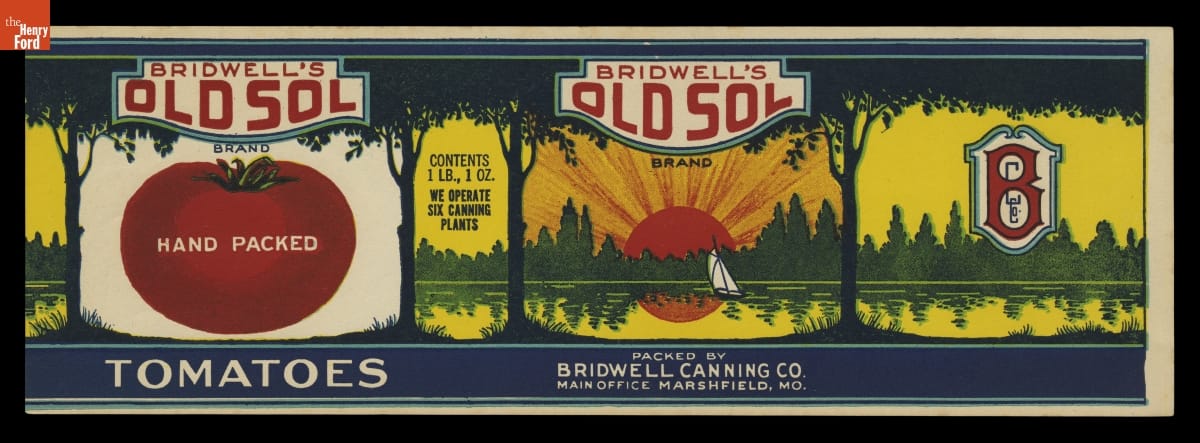
- "Bridwell's Old Sol Brand Tomatoes," 1930-1939 - Food companies sought ways to make their packaged goods stand out on store shelves from other similar products. Attractive labels, like this eye-catching design for Bridwell's Old Sol tomatoes, helped catch the attention of potential customers and encouraged them to purchase the company's product rather than that of a competitor.
- 1930-1939
- Collections - Artifact
"Bridwell's Old Sol Brand Tomatoes," 1930-1939
Food companies sought ways to make their packaged goods stand out on store shelves from other similar products. Attractive labels, like this eye-catching design for Bridwell's Old Sol tomatoes, helped catch the attention of potential customers and encouraged them to purchase the company's product rather than that of a competitor.
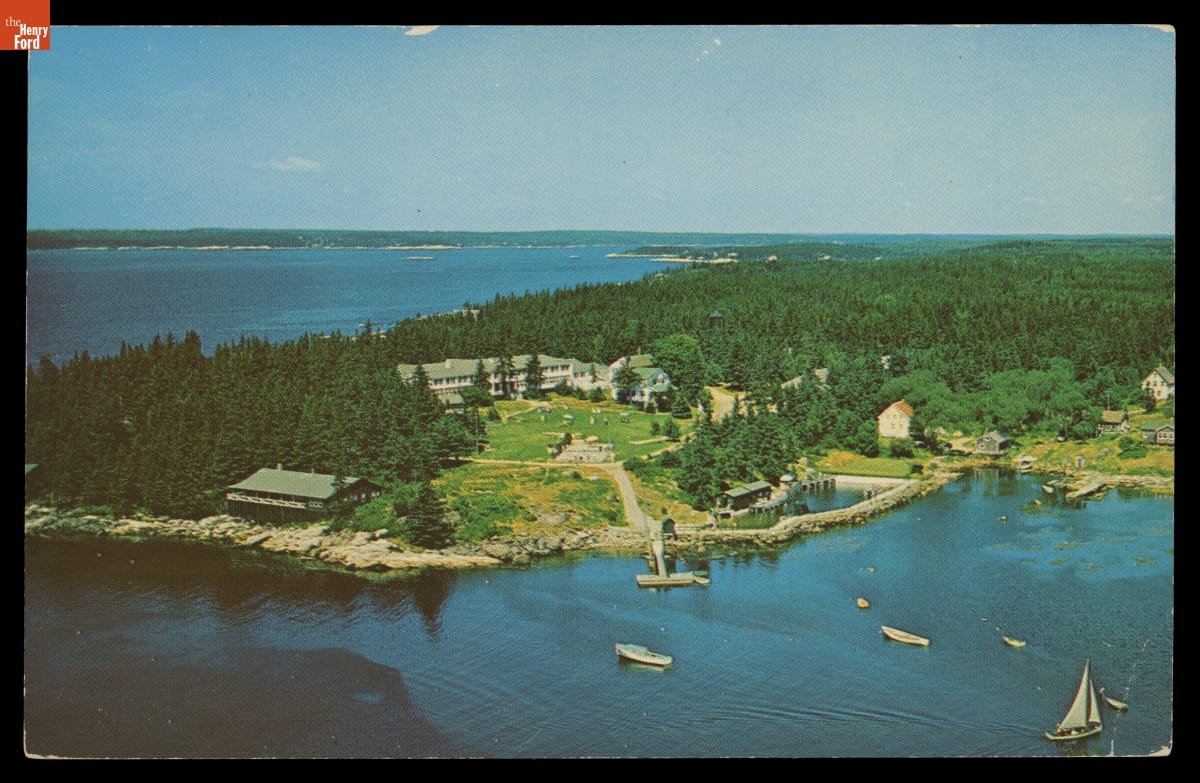
- "Newagen Inn and Cottages, Cape Newagen, Maine," 1956 -
- 1947-1956
- Collections - Artifact
"Newagen Inn and Cottages, Cape Newagen, Maine," 1956
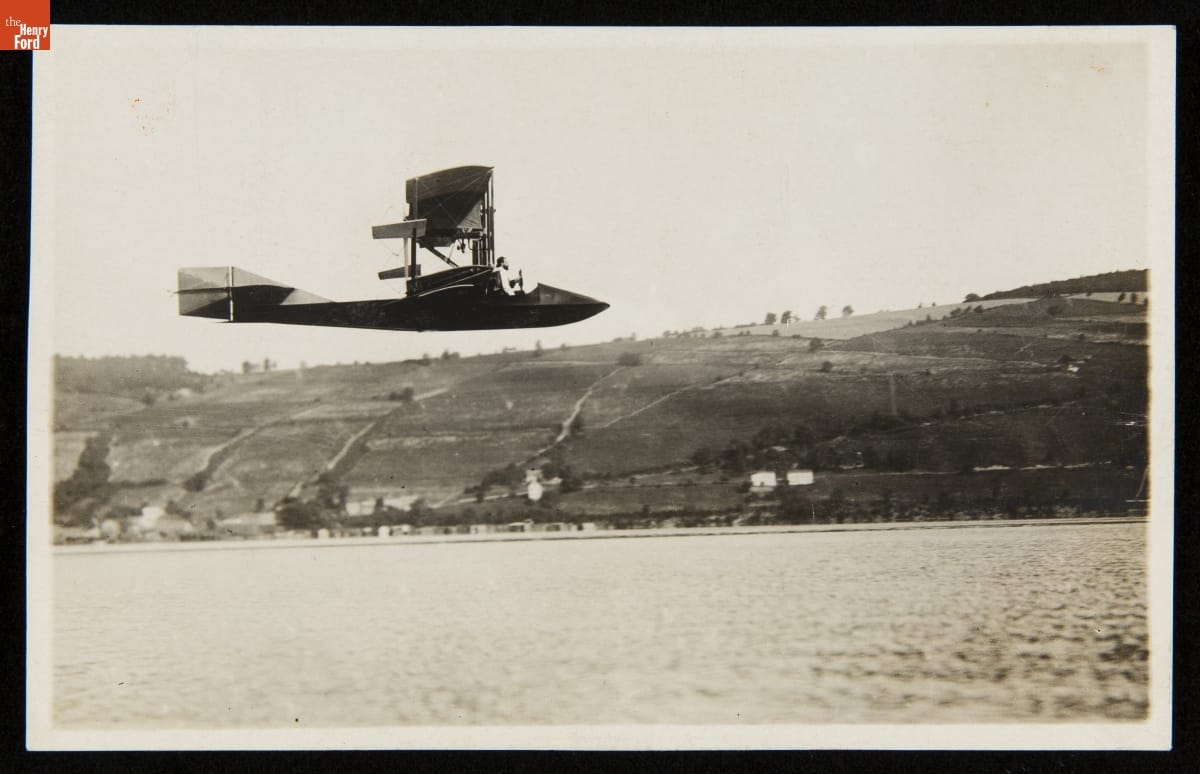
- Curtiss Model E Flying Boat in Flight over Water, 1910-1912 - In addition to his pioneering work with aileron control surfaces, Glenn Curtiss designed and built some of the earliest seaplanes in the United States. His first experiments involved little more than strapping a canoe to the bottom of a standard airplane. But by 1911, the potential of Curtiss's flying boats had earned him a contract with the U.S. Navy.
- 1910-1912
- Collections - Artifact
Curtiss Model E Flying Boat in Flight over Water, 1910-1912
In addition to his pioneering work with aileron control surfaces, Glenn Curtiss designed and built some of the earliest seaplanes in the United States. His first experiments involved little more than strapping a canoe to the bottom of a standard airplane. But by 1911, the potential of Curtiss's flying boats had earned him a contract with the U.S. Navy.
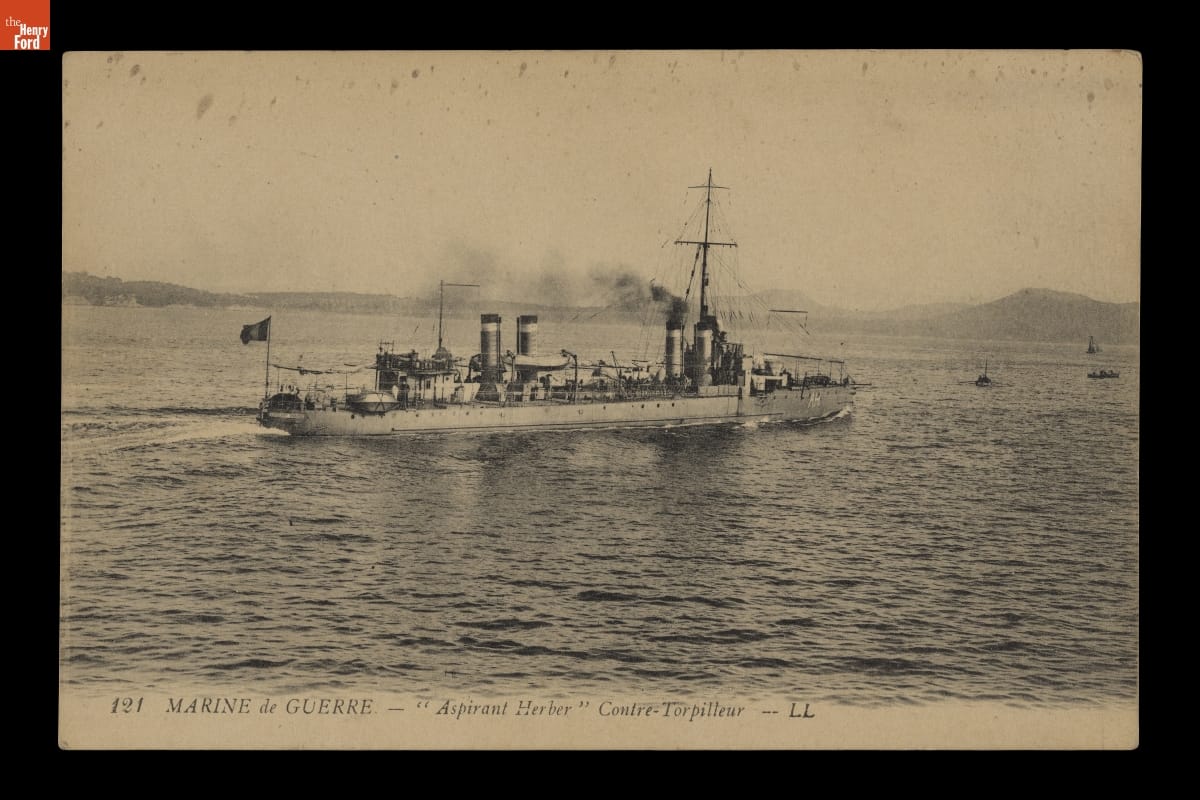
- "Marine de Guerre - "Aspirant Herber" Contre-Torpilleur," 1914-1917 - Andrew Purnell Jr. (1898-1975) was born in Selma, Alabama. He joined the all-Black 303rd Stevedore Regiment (with later unit designations) in December 1917. Private Purnell was stationed in Bordeaux, France. He returned to the U.S. in 1919, married, and worked as a railroad freight handler. Like many service members, Purnell kept cards, letters, photographs, and souvenirs from his time in the military.
- 1914-1918
- Collections - Artifact
"Marine de Guerre - "Aspirant Herber" Contre-Torpilleur," 1914-1917
Andrew Purnell Jr. (1898-1975) was born in Selma, Alabama. He joined the all-Black 303rd Stevedore Regiment (with later unit designations) in December 1917. Private Purnell was stationed in Bordeaux, France. He returned to the U.S. in 1919, married, and worked as a railroad freight handler. Like many service members, Purnell kept cards, letters, photographs, and souvenirs from his time in the military.
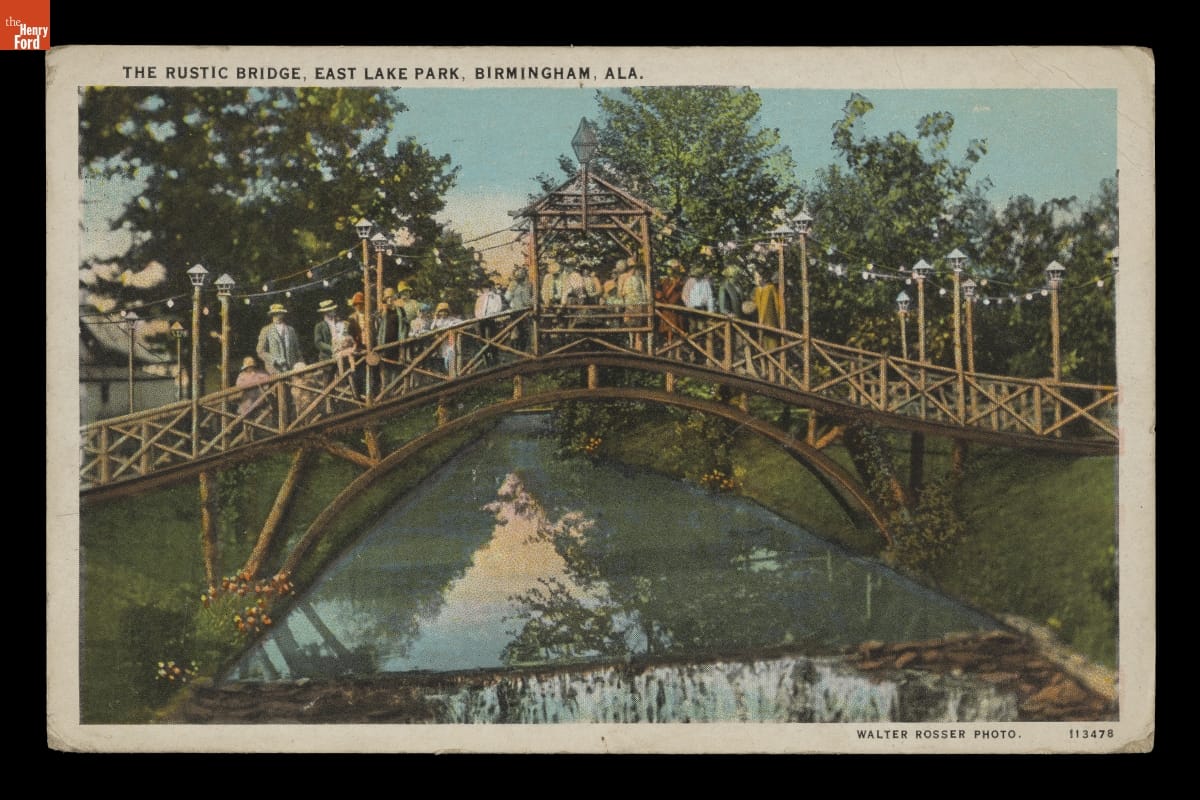
- "The Rustic Bridge, East Lake Park, Birmingham, Ala.," Sent to Andrew Purnell, Postmarked July 30, 1927 - Andrew Purnell Jr. (1898-1975) was born in Selma, Alabama. He served in France during World War I and returned to the U.S. in 1919. Purnell married Lela May Cooper in 1920, and by 1926, the couple had moved to Mobile, where he worked as a railroad freight handler. The Purnells kept in touch with family and friends by exchanging postcards and letters.
- Collections - Artifact
"The Rustic Bridge, East Lake Park, Birmingham, Ala.," Sent to Andrew Purnell, Postmarked July 30, 1927
Andrew Purnell Jr. (1898-1975) was born in Selma, Alabama. He served in France during World War I and returned to the U.S. in 1919. Purnell married Lela May Cooper in 1920, and by 1926, the couple had moved to Mobile, where he worked as a railroad freight handler. The Purnells kept in touch with family and friends by exchanging postcards and letters.
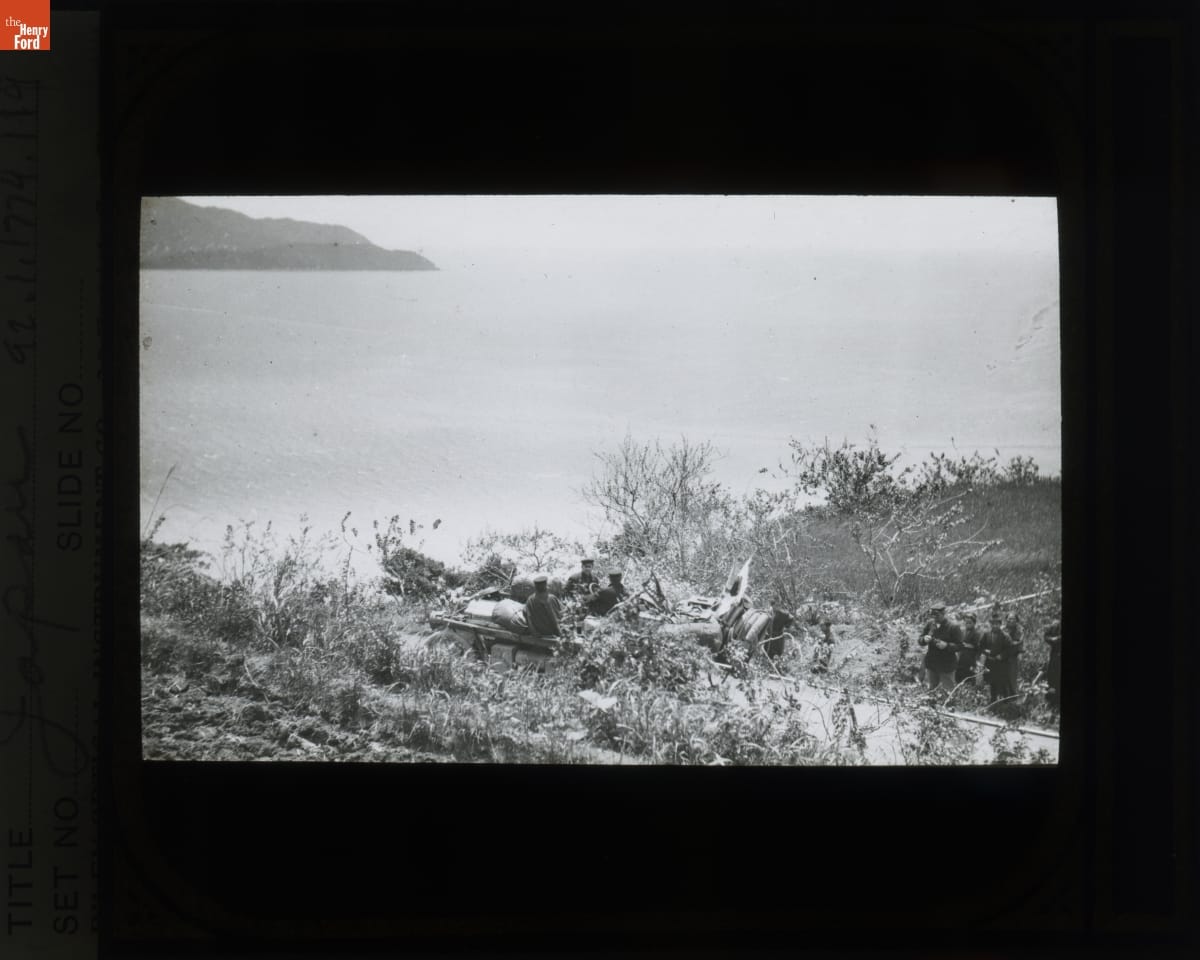
- Thomas Flyer On a Hillside in Japan, New York to Paris Race, 1908 - The 1908 New York to Paris race was a 22,000-mile automobile endurance contest. After crossing the continental United States, teams shipped their vehicles to Asia. The Americans, driving a Thomas Flyer, disembarked in Japan in early May. As the Flyer and crew trekked carefully over the narrow Japanese roads, they encountered many inquisitive, courteous and helpful people.
- 1908
- Collections - Artifact
Thomas Flyer On a Hillside in Japan, New York to Paris Race, 1908
The 1908 New York to Paris race was a 22,000-mile automobile endurance contest. After crossing the continental United States, teams shipped their vehicles to Asia. The Americans, driving a Thomas Flyer, disembarked in Japan in early May. As the Flyer and crew trekked carefully over the narrow Japanese roads, they encountered many inquisitive, courteous and helpful people.
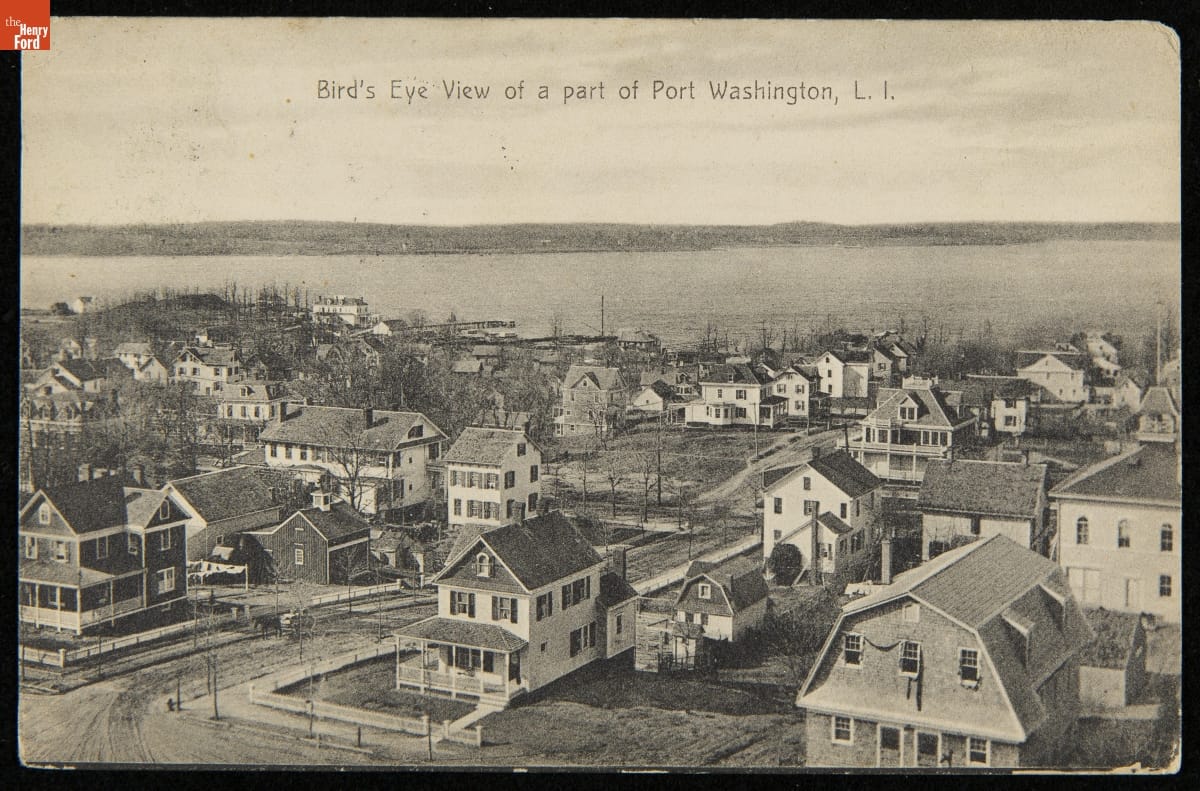
- Bird's Eye View of a Part of Port Washington, L.I., circa 1910 -
- circa 1910
- Collections - Artifact
Bird's Eye View of a Part of Port Washington, L.I., circa 1910
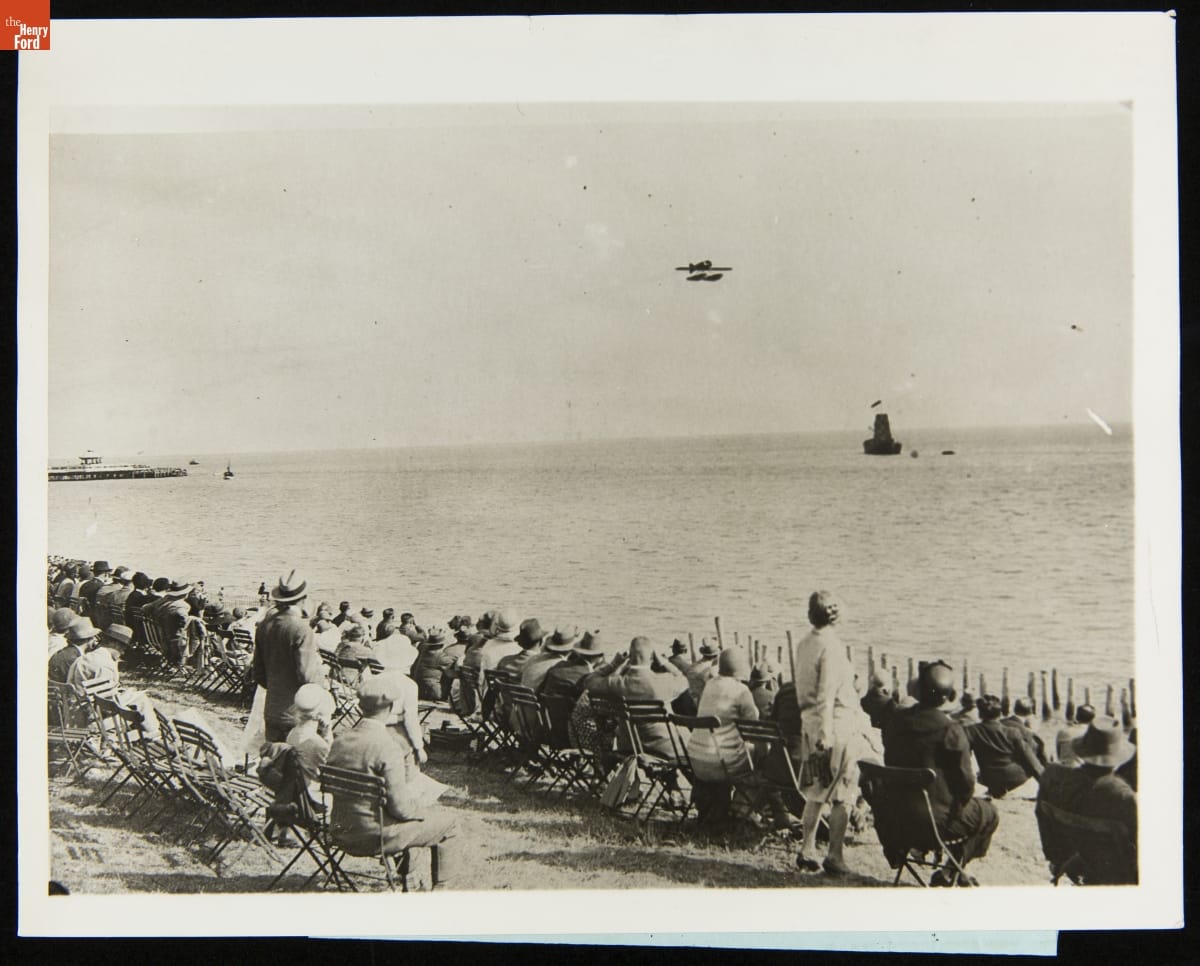
- Great Britain's Schneider Trophy Victory, September 1929 - The Schneider Trophy Race, established by French aviation enthusiast Jacques Schneider, was held 12 times from 1913 to 1931. The competition was created specifically for seaplanes and flying boats. Each year's winning country was tasked with hosting the next year's event. Host countries included Monaco, the United Kingdom, Italy, and the United States.
- September 07, 1929
- Collections - Artifact
Great Britain's Schneider Trophy Victory, September 1929
The Schneider Trophy Race, established by French aviation enthusiast Jacques Schneider, was held 12 times from 1913 to 1931. The competition was created specifically for seaplanes and flying boats. Each year's winning country was tasked with hosting the next year's event. Host countries included Monaco, the United Kingdom, Italy, and the United States.