
Search
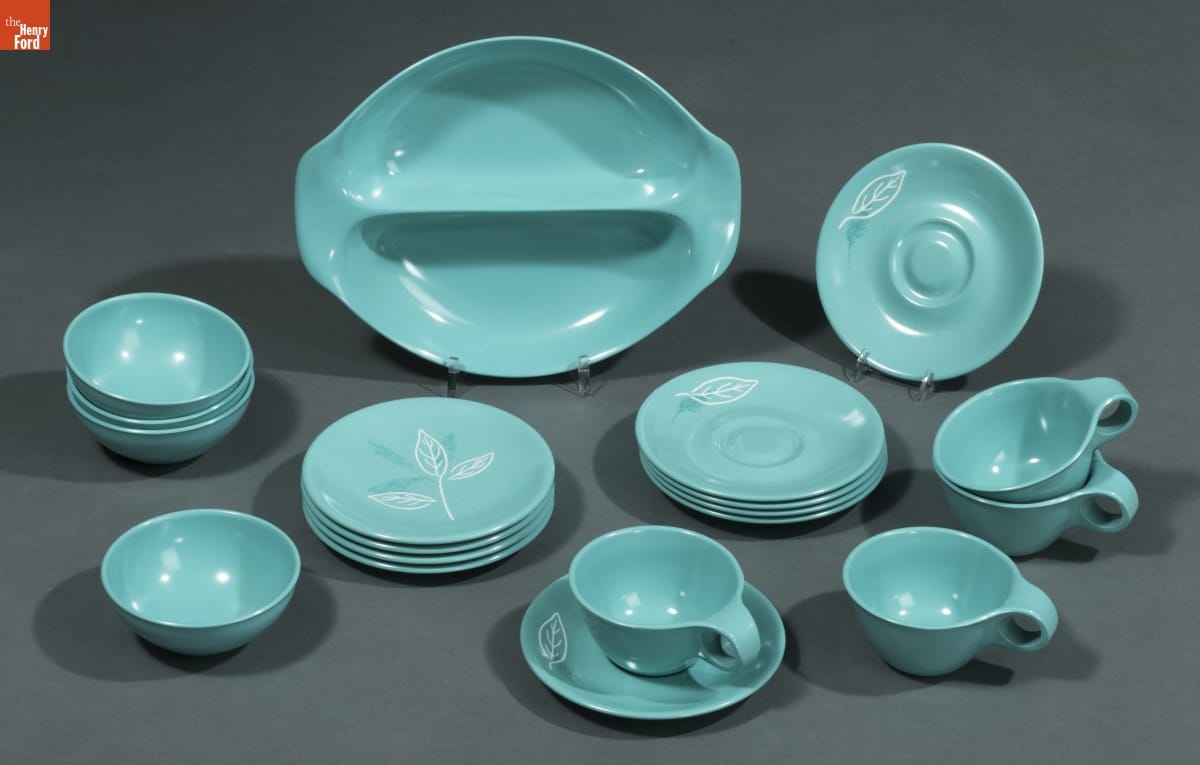
- Set of Melamine Tableware, 1950-1960 - During the early 1950s, plastic dinnerware in the form of melamine was introduced to the American market. By 1956, twenty-five percent of Americans owned at least a pair of these plates. Industrial designers Russel and Mary Wright were famous for producing aesthetically pleasing ceramic dinnerware as early as the 1930s. This set, in fashionable turquoise, was the Wrights' first design in plastic.
- 1950-1960
- Collections - Artifact
Set of Melamine Tableware, 1950-1960
During the early 1950s, plastic dinnerware in the form of melamine was introduced to the American market. By 1956, twenty-five percent of Americans owned at least a pair of these plates. Industrial designers Russel and Mary Wright were famous for producing aesthetically pleasing ceramic dinnerware as early as the 1930s. This set, in fashionable turquoise, was the Wrights' first design in plastic.
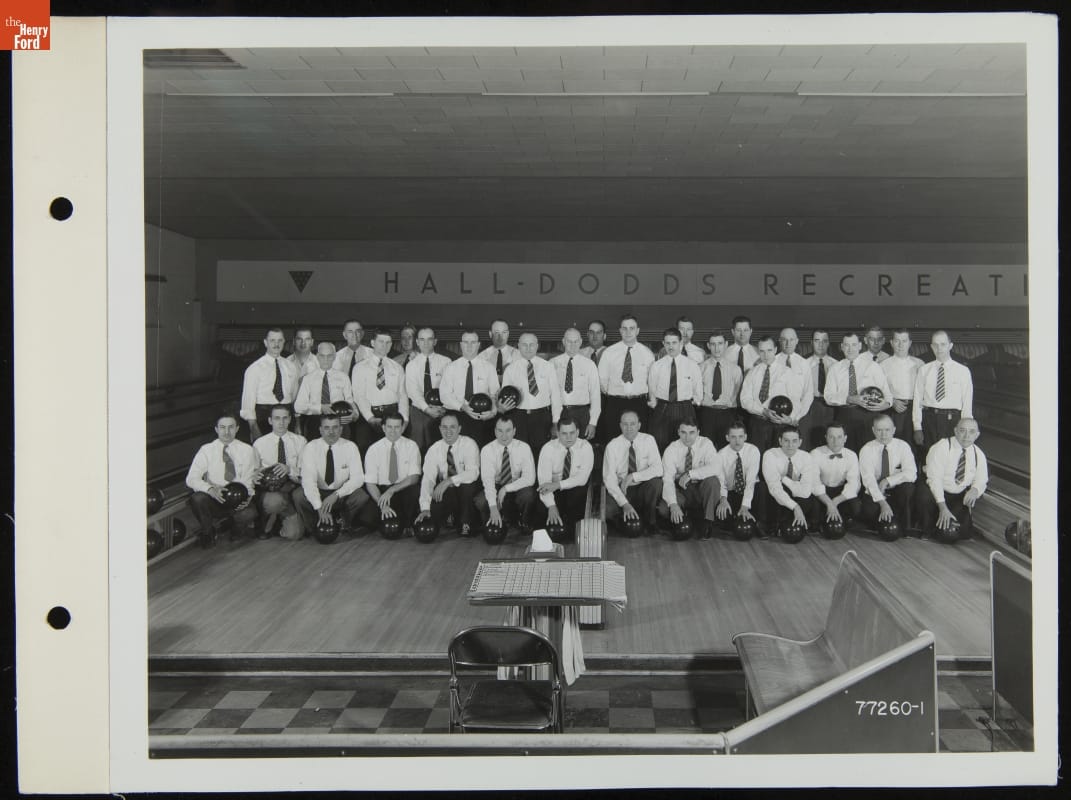
- Ford Bowling Team at Hall Dodds Recreation, December 1942 - Employees of Ford Motor Company participated in a variety of organized after-work sports teams and leagues. Baseball, softball, hockey, golf, and bowling were all played at various times. These sporting events provided recreational opportunities for employees at all levels of the company. They also helped build camaraderie among co-workers.
- December 10, 1942
- Collections - Artifact
Ford Bowling Team at Hall Dodds Recreation, December 1942
Employees of Ford Motor Company participated in a variety of organized after-work sports teams and leagues. Baseball, softball, hockey, golf, and bowling were all played at various times. These sporting events provided recreational opportunities for employees at all levels of the company. They also helped build camaraderie among co-workers.
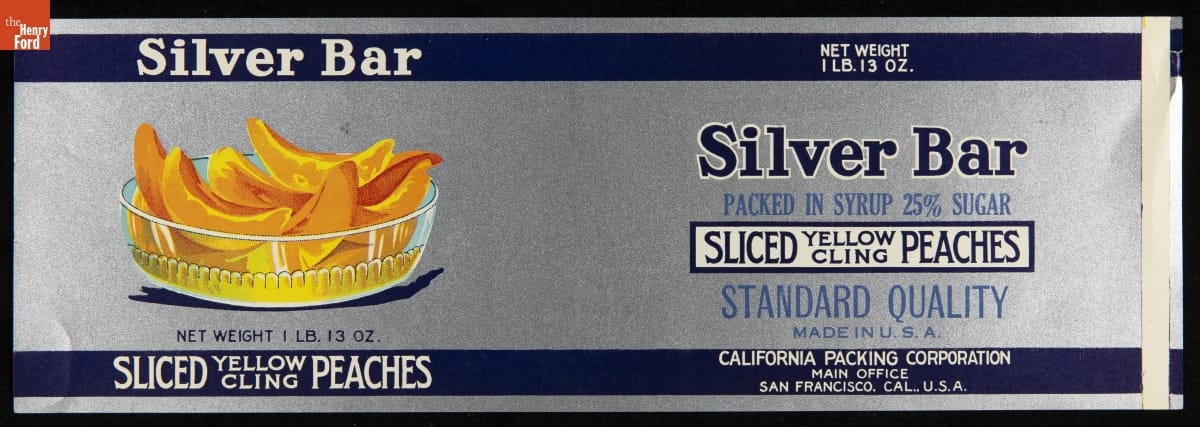
- Can Label, "Silver Bar Brand Sliced Yellow Cling Peaches," circa 1920 - Manufacturers of similar products sought ways to make their company's goods stand out on store shelves. Attractive labels, like this design for Silver Bar Brand Yellow Cling Peaches, helped catch the attention of potential customers -- hopefully encouraging them to purchase the company's product rather than that of a competitor.
- circa 1920
- Collections - Artifact
Can Label, "Silver Bar Brand Sliced Yellow Cling Peaches," circa 1920
Manufacturers of similar products sought ways to make their company's goods stand out on store shelves. Attractive labels, like this design for Silver Bar Brand Yellow Cling Peaches, helped catch the attention of potential customers -- hopefully encouraging them to purchase the company's product rather than that of a competitor.
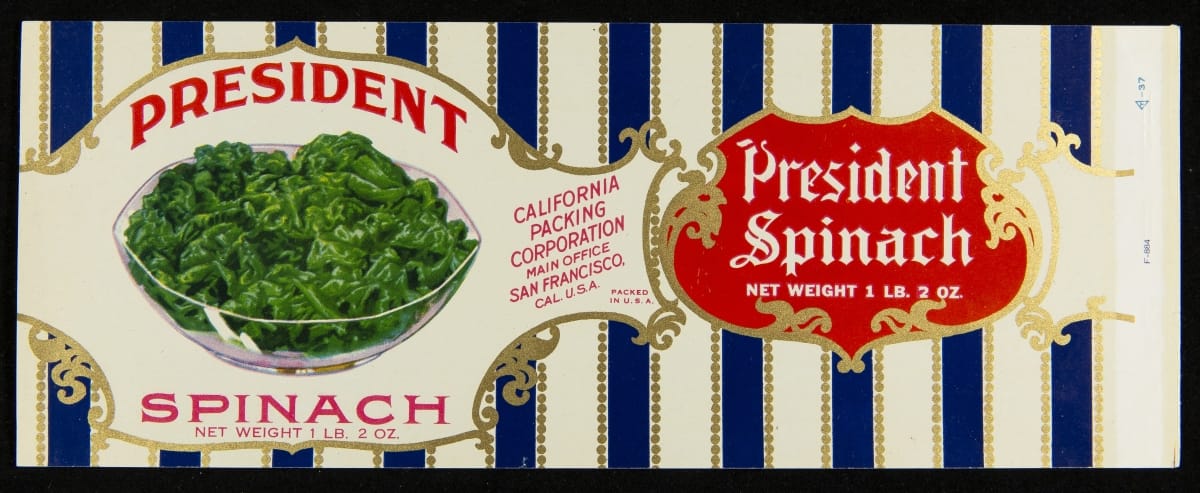
- Can Label, "President Brand Spinach," 1920-1940 - Manufacturers of similar products sought ways to make their company's goods stand out on store shelves. Attractive labels, like this design for President Brand Spinach, helped catch the attention of potential customers -- hopefully encouraging them to purchase the company's product rather than that of a competitor.
- 1920-1940
- Collections - Artifact
Can Label, "President Brand Spinach," 1920-1940
Manufacturers of similar products sought ways to make their company's goods stand out on store shelves. Attractive labels, like this design for President Brand Spinach, helped catch the attention of potential customers -- hopefully encouraging them to purchase the company's product rather than that of a competitor.
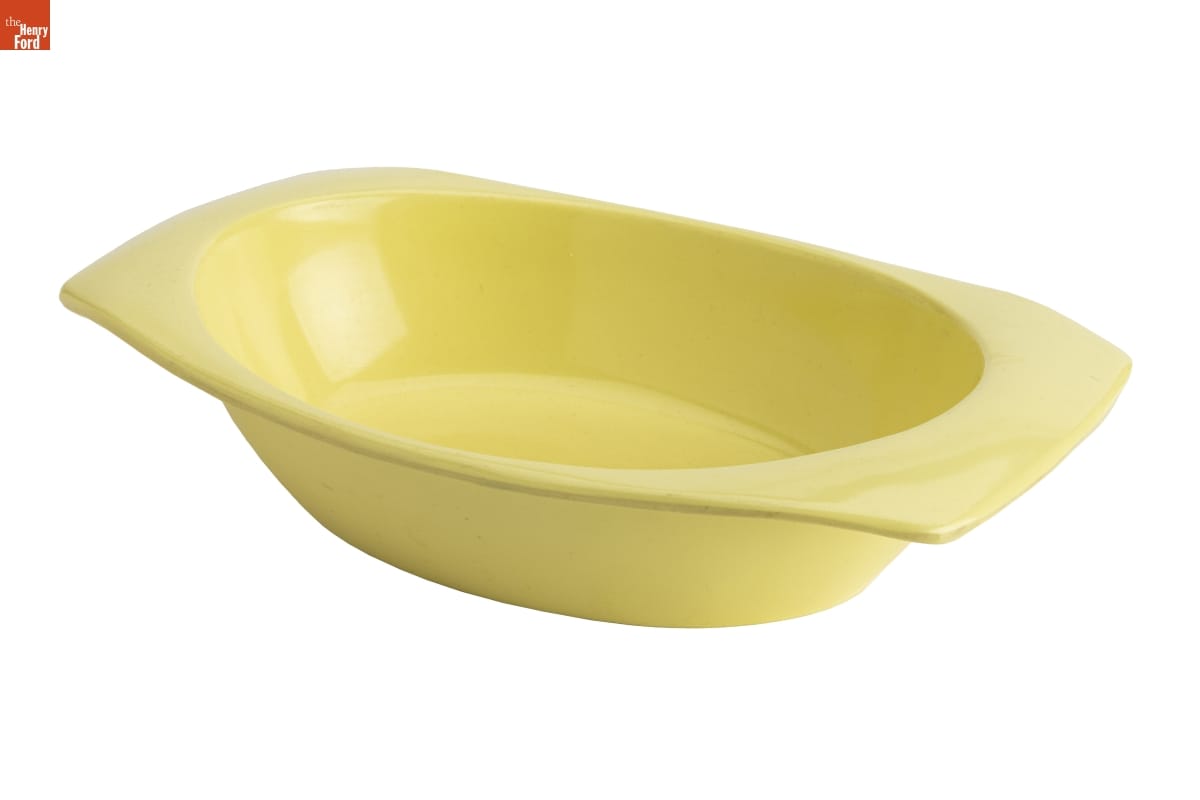
- Prolon Bowl, 1950-1960 - After World War II, the Pro-Phy-Lac-Tic Brush Company expanded its product line from toothbrushes to items made from plastic resins. In 1955, building on the popularity of Melmac dinnerware (made with shatterproof, lightweight melamine), the company introduced its Prolon brand of dinnerware. This colorful line of dinnerware was designed by Irving Harper of the industrial design firm George Nelson Associates.
- 1950-1960
- Collections - Artifact
Prolon Bowl, 1950-1960
After World War II, the Pro-Phy-Lac-Tic Brush Company expanded its product line from toothbrushes to items made from plastic resins. In 1955, building on the popularity of Melmac dinnerware (made with shatterproof, lightweight melamine), the company introduced its Prolon brand of dinnerware. This colorful line of dinnerware was designed by Irving Harper of the industrial design firm George Nelson Associates.
- Bowl, 1830-1835 -
- 1830-1835
- Collections - Artifact
Bowl, 1830-1835
- Bryce Brothers "Buzz Star" Toy Tableware Set, 1907-1930 -
- 1907-1930
- Collections - Artifact
Bryce Brothers "Buzz Star" Toy Tableware Set, 1907-1930
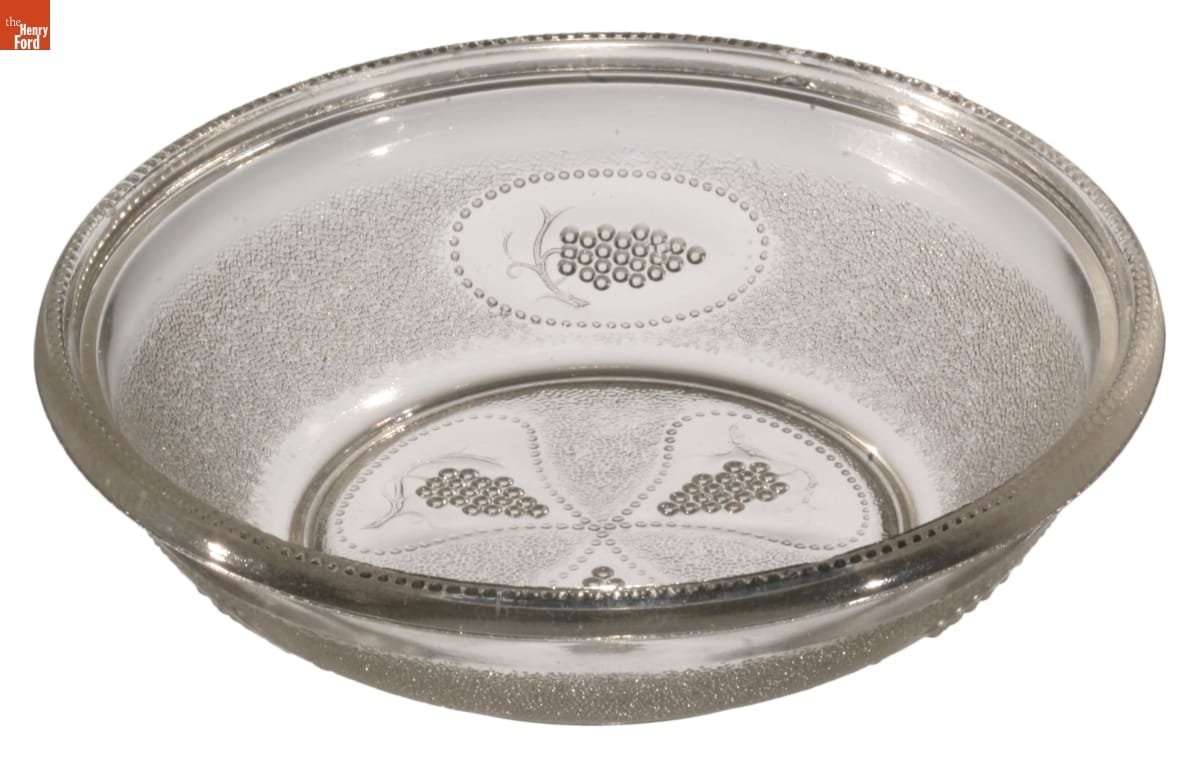
- Bowl, 1869-1871 - The Boston Silver Glass Company was established in East Cambridge, Massachusetts, in about 1857. Starting in 1869, the company produced pressed glass tableware in its "beaded grape medallion" pattern. The inexpensive glassware came in various forms: plates, dishes, bowls, compotes, goblets, and pitchers, among others. The company operated until about 1871.
- 1869-1871
- Collections - Artifact
Bowl, 1869-1871
The Boston Silver Glass Company was established in East Cambridge, Massachusetts, in about 1857. Starting in 1869, the company produced pressed glass tableware in its "beaded grape medallion" pattern. The inexpensive glassware came in various forms: plates, dishes, bowls, compotes, goblets, and pitchers, among others. The company operated until about 1871.
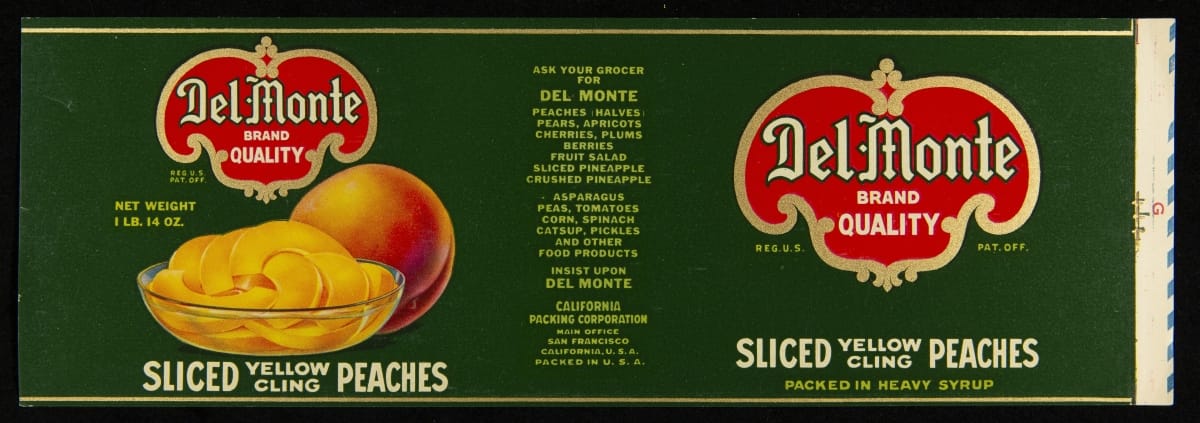
- Can Label, "Del Monte Sliced Yellow Cling Peaches," 1920-1935 - Manufacturers of similar products sought ways to make their companies' goods stand out on store shelves. Some companies established a uniform label design for their multi-product offerings -- a strategy which helped customers distinguish one brand over another. Del Monte Brand products were identified by the company's characteristic green label and its signature "shield" logo. These design features are still found on Del Monte products today.
- 1920-1935
- Collections - Artifact
Can Label, "Del Monte Sliced Yellow Cling Peaches," 1920-1935
Manufacturers of similar products sought ways to make their companies' goods stand out on store shelves. Some companies established a uniform label design for their multi-product offerings -- a strategy which helped customers distinguish one brand over another. Del Monte Brand products were identified by the company's characteristic green label and its signature "shield" logo. These design features are still found on Del Monte products today.
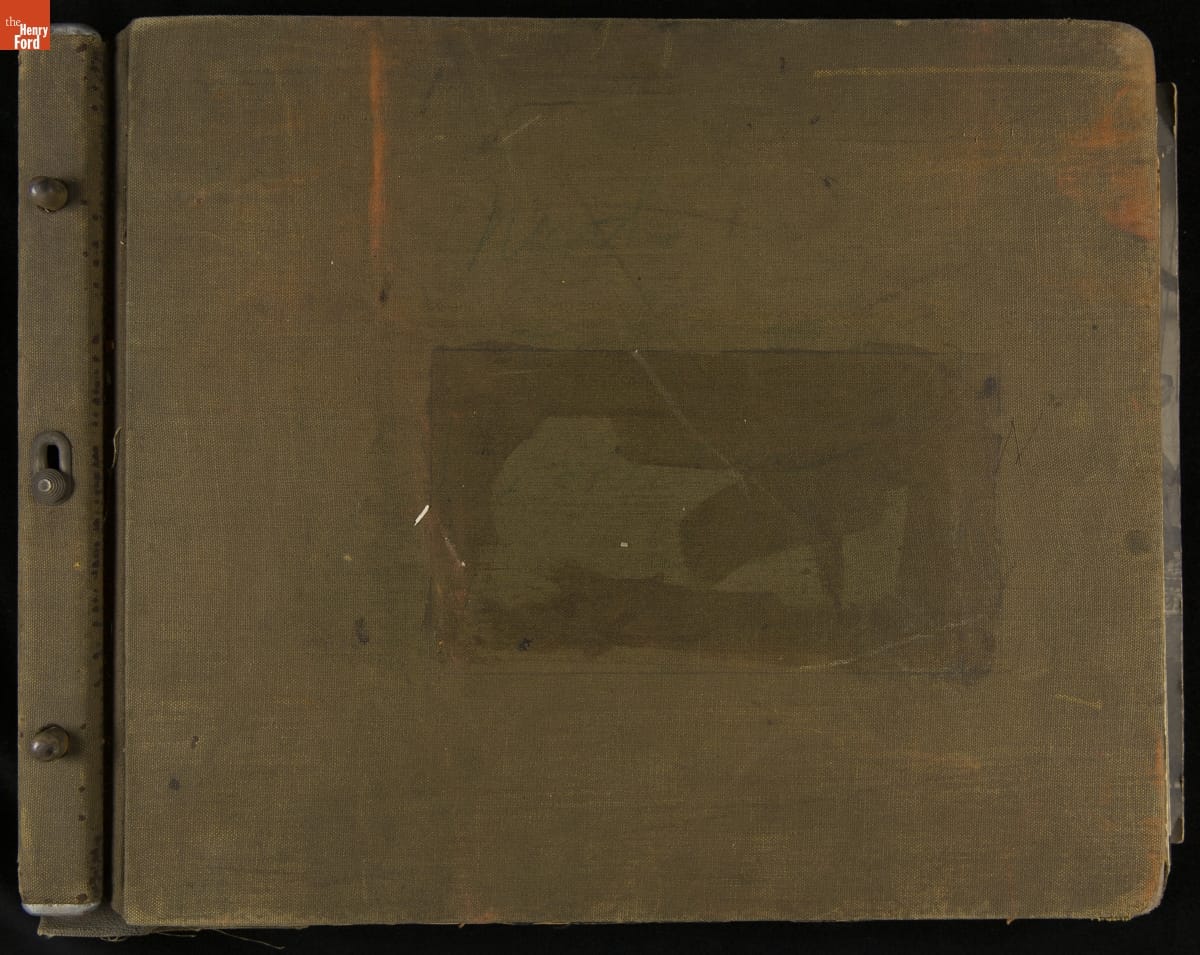
- Photograph Album of the Heinz Girls' 57 Club Banquets and Bowling League, 1922-1930 - Company scrapbooks are often reminders of the company's history, significant moments in time, and the employees who worked there. This album, compiled by the H. J. Heinz Company, includes photographs from the Heinz Girls' 57 Club banquets and bowling league. Other photographs feature the actors and actresses of the Heinz Players group and Howard Heinz with employees at the branch factory in London.
- 1922-1930
- Collections - Artifact
Photograph Album of the Heinz Girls' 57 Club Banquets and Bowling League, 1922-1930
Company scrapbooks are often reminders of the company's history, significant moments in time, and the employees who worked there. This album, compiled by the H. J. Heinz Company, includes photographs from the Heinz Girls' 57 Club banquets and bowling league. Other photographs feature the actors and actresses of the Heinz Players group and Howard Heinz with employees at the branch factory in London.