
Search
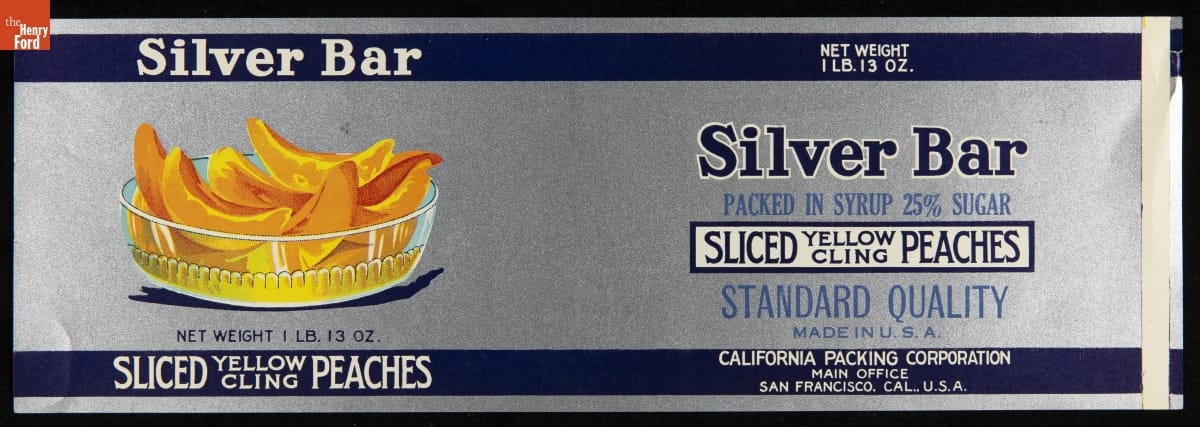
- Can Label, "Silver Bar Brand Sliced Yellow Cling Peaches," circa 1920 - Manufacturers of similar products sought ways to make their company's goods stand out on store shelves. Attractive labels, like this design for Silver Bar Brand Yellow Cling Peaches, helped catch the attention of potential customers -- hopefully encouraging them to purchase the company's product rather than that of a competitor.
- circa 1920
- Collections - Artifact
Can Label, "Silver Bar Brand Sliced Yellow Cling Peaches," circa 1920
Manufacturers of similar products sought ways to make their company's goods stand out on store shelves. Attractive labels, like this design for Silver Bar Brand Yellow Cling Peaches, helped catch the attention of potential customers -- hopefully encouraging them to purchase the company's product rather than that of a competitor.
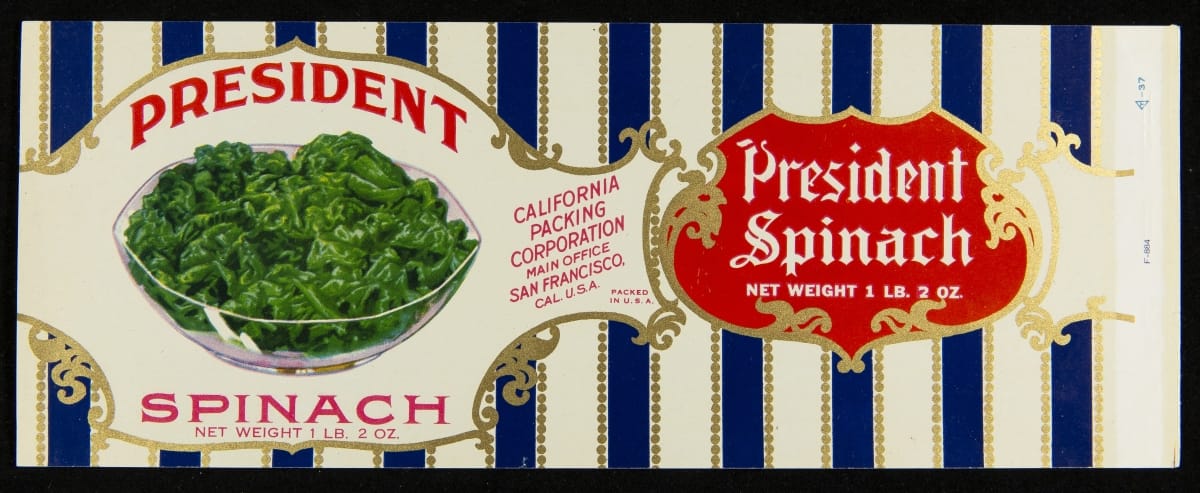
- Can Label, "President Brand Spinach," 1920-1940 - Manufacturers of similar products sought ways to make their company's goods stand out on store shelves. Attractive labels, like this design for President Brand Spinach, helped catch the attention of potential customers -- hopefully encouraging them to purchase the company's product rather than that of a competitor.
- 1920-1940
- Collections - Artifact
Can Label, "President Brand Spinach," 1920-1940
Manufacturers of similar products sought ways to make their company's goods stand out on store shelves. Attractive labels, like this design for President Brand Spinach, helped catch the attention of potential customers -- hopefully encouraging them to purchase the company's product rather than that of a competitor.
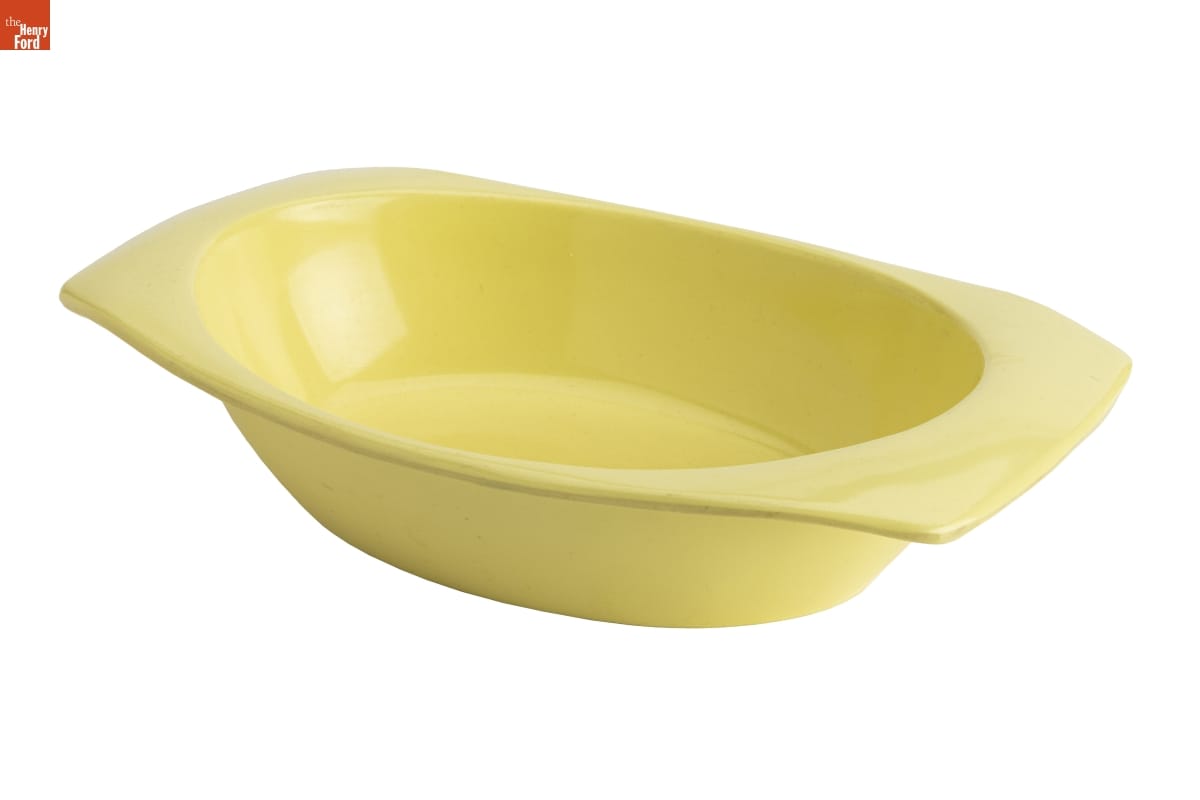
- Prolon Bowl, 1950-1960 - After World War II, the Pro-Phy-Lac-Tic Brush Company expanded its product line from toothbrushes to items made from plastic resins. In 1955, building on the popularity of Melmac dinnerware (made with shatterproof, lightweight melamine), the company introduced its Prolon brand of dinnerware. This colorful line of dinnerware was designed by Irving Harper of the industrial design firm George Nelson Associates.
- 1950-1960
- Collections - Artifact
Prolon Bowl, 1950-1960
After World War II, the Pro-Phy-Lac-Tic Brush Company expanded its product line from toothbrushes to items made from plastic resins. In 1955, building on the popularity of Melmac dinnerware (made with shatterproof, lightweight melamine), the company introduced its Prolon brand of dinnerware. This colorful line of dinnerware was designed by Irving Harper of the industrial design firm George Nelson Associates.
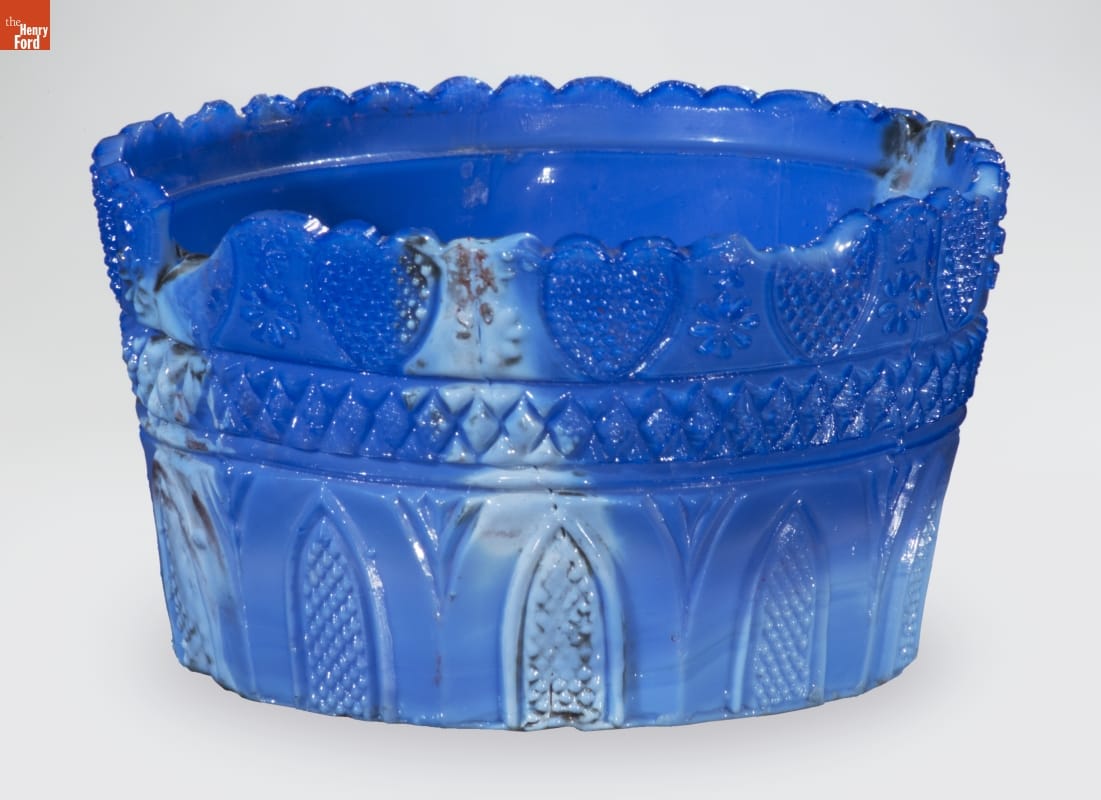
- Bowl, 1830-1835 -
- 1830-1835
- Collections - Artifact
Bowl, 1830-1835
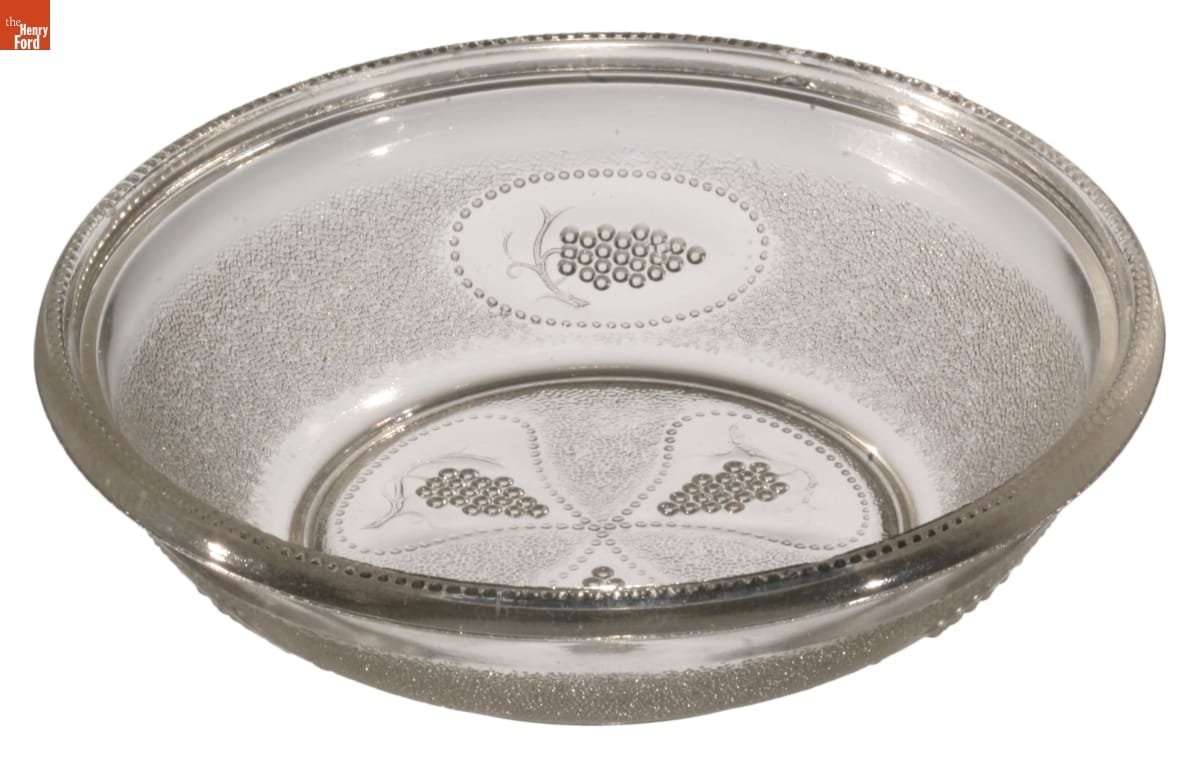
- Bowl, 1869-1871 - The Boston Silver Glass Company was established in East Cambridge, Massachusetts, in about 1857. Starting in 1869, the company produced pressed glass tableware in its "beaded grape medallion" pattern. The inexpensive glassware came in various forms: plates, dishes, bowls, compotes, goblets, and pitchers, among others. The company operated until about 1871.
- 1869-1871
- Collections - Artifact
Bowl, 1869-1871
The Boston Silver Glass Company was established in East Cambridge, Massachusetts, in about 1857. Starting in 1869, the company produced pressed glass tableware in its "beaded grape medallion" pattern. The inexpensive glassware came in various forms: plates, dishes, bowls, compotes, goblets, and pitchers, among others. The company operated until about 1871.
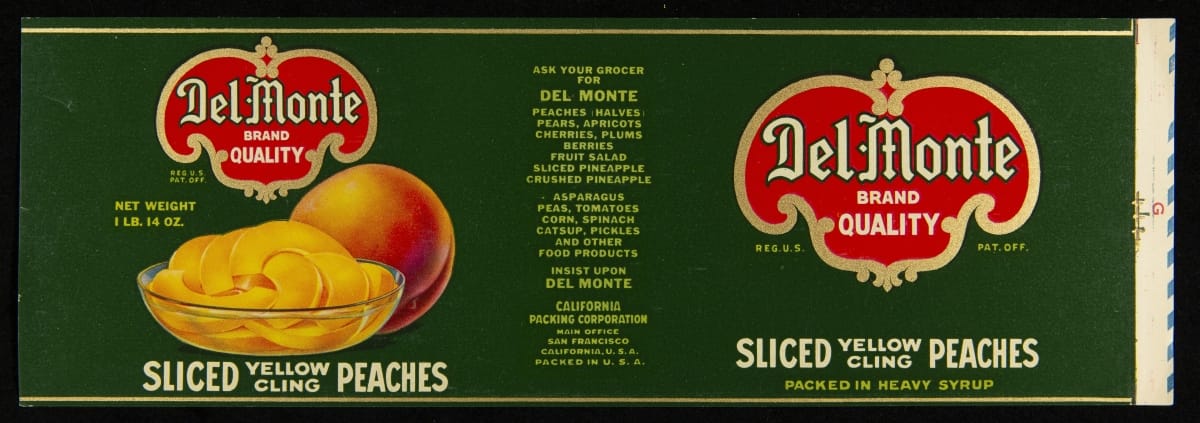
- Can Label, "Del Monte Sliced Yellow Cling Peaches," 1920-1935 - Manufacturers of similar products sought ways to make their companies' goods stand out on store shelves. Some companies established a uniform label design for their multi-product offerings -- a strategy which helped customers distinguish one brand over another. Del Monte Brand products were identified by the company's characteristic green label and its signature "shield" logo. These design features are still found on Del Monte products today.
- 1920-1935
- Collections - Artifact
Can Label, "Del Monte Sliced Yellow Cling Peaches," 1920-1935
Manufacturers of similar products sought ways to make their companies' goods stand out on store shelves. Some companies established a uniform label design for their multi-product offerings -- a strategy which helped customers distinguish one brand over another. Del Monte Brand products were identified by the company's characteristic green label and its signature "shield" logo. These design features are still found on Del Monte products today.
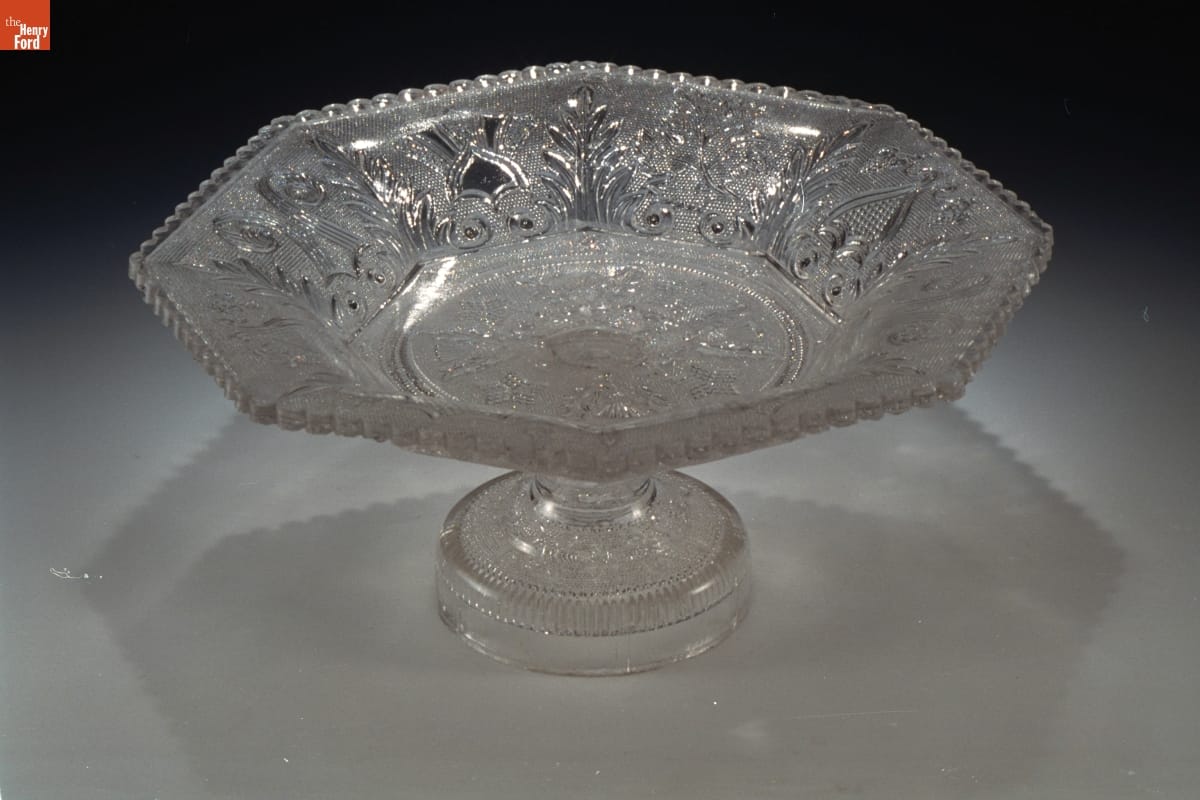
- Compote, 1830-1840 - Compotes are all-purpose serving dishes. These usually footed bowls -- with or without lids or covers -- held special desserts, fruits, candies or sauces, jellies and other foods. Blown or pressed glass compotes provided a culinary presentation method suitable to 19th-century middle-class households.
- 1830-1840
- Collections - Artifact
Compote, 1830-1840
Compotes are all-purpose serving dishes. These usually footed bowls -- with or without lids or covers -- held special desserts, fruits, candies or sauces, jellies and other foods. Blown or pressed glass compotes provided a culinary presentation method suitable to 19th-century middle-class households.
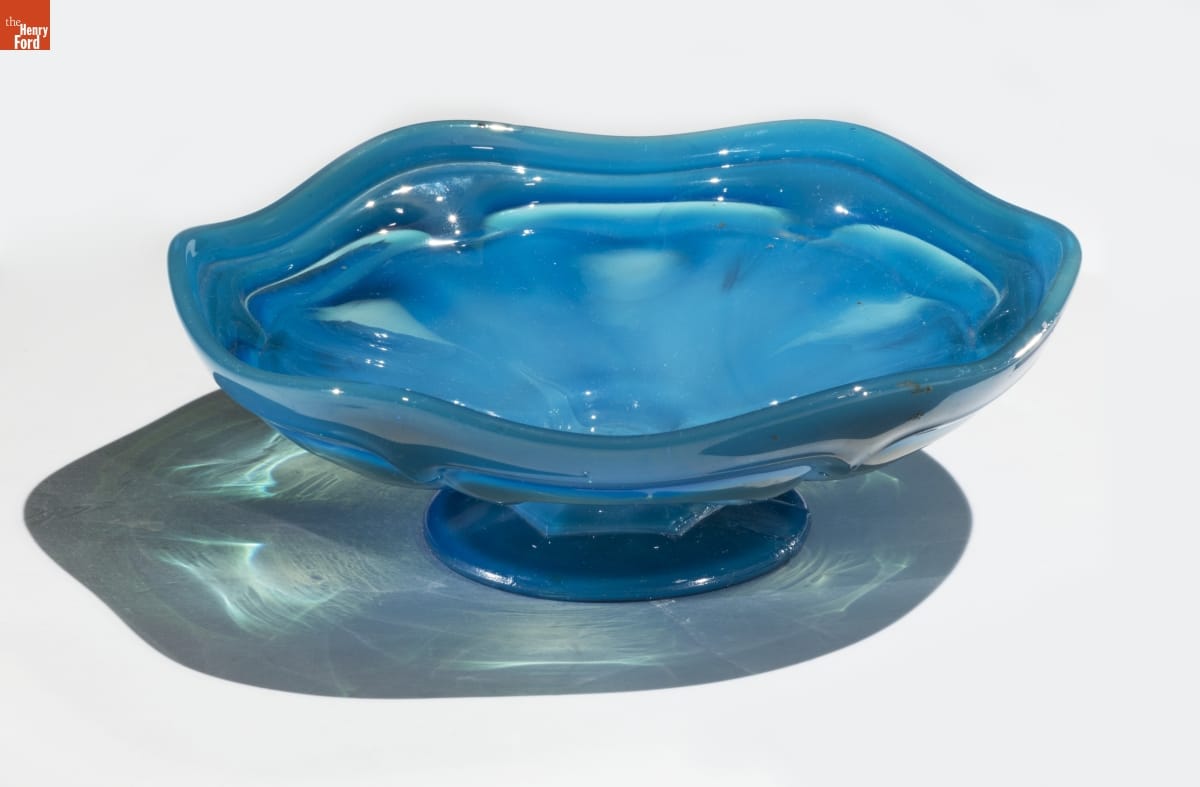
- Compote, 1865-1875 - Compotes are all-purpose serving dishes. These usually footed bowls -- with or without lids or covers -- held special desserts, fruits, candies or sauces, jellies and other foods. Blown or pressed glass compotes provided a culinary presentation method suitable to 19th-century middle-class households.
- 1865-1875
- Collections - Artifact
Compote, 1865-1875
Compotes are all-purpose serving dishes. These usually footed bowls -- with or without lids or covers -- held special desserts, fruits, candies or sauces, jellies and other foods. Blown or pressed glass compotes provided a culinary presentation method suitable to 19th-century middle-class households.
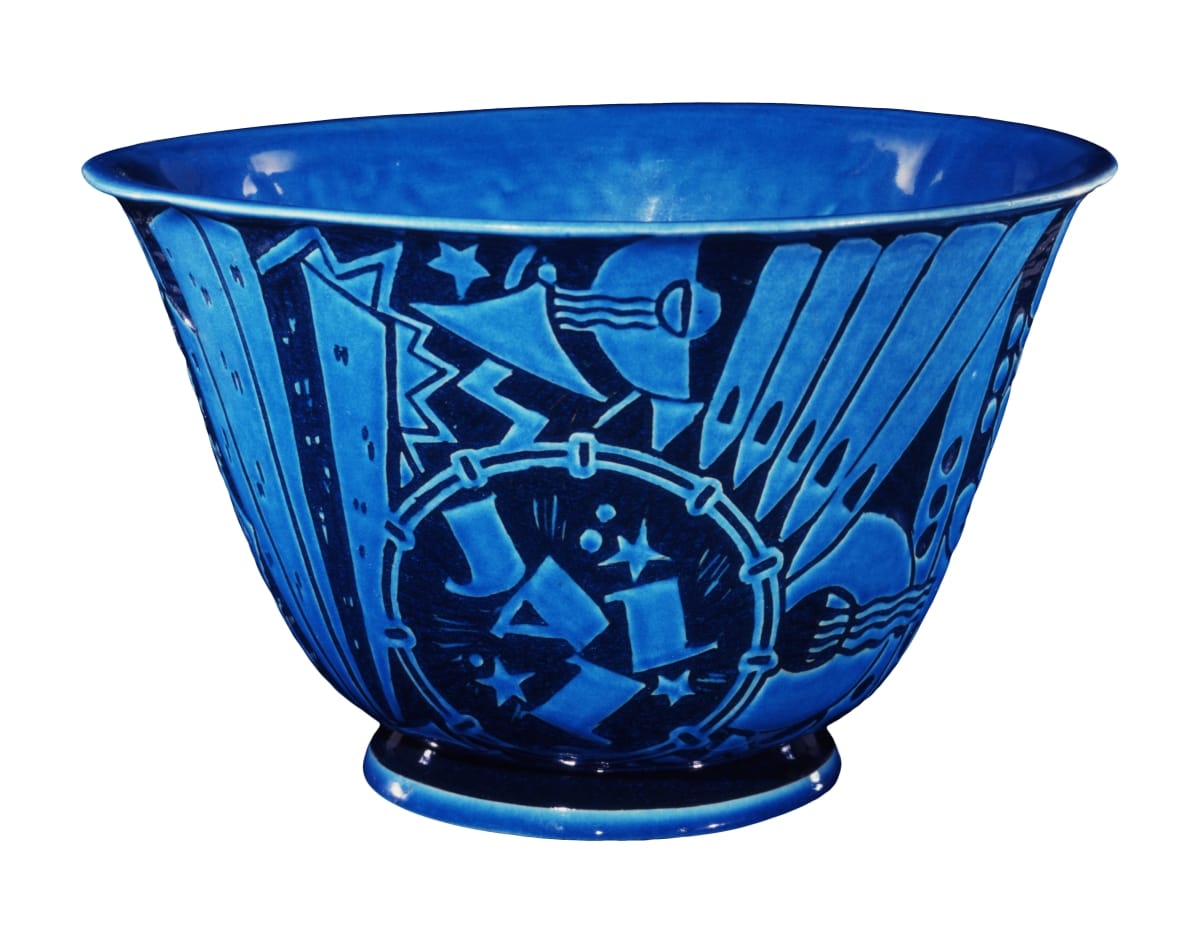
- Jazz Bowl, circa 1931 - 24-year-old-artist Vilktor Schreckengost designed a punch bowl in 1930 depicting New Year's Eve festivities in New York City as a celebration of the Jazz Age. He was commissioned by Eleanor Roosevelt who was so pleased with it that she ordered two more copies. Three versions were produced; this is the third version, intended for mass-production, dubbed "The Poor Man's Jazz Bowl".
- circa 1931
- Collections - Artifact
Jazz Bowl, circa 1931
24-year-old-artist Vilktor Schreckengost designed a punch bowl in 1930 depicting New Year's Eve festivities in New York City as a celebration of the Jazz Age. He was commissioned by Eleanor Roosevelt who was so pleased with it that she ordered two more copies. Three versions were produced; this is the third version, intended for mass-production, dubbed "The Poor Man's Jazz Bowl".
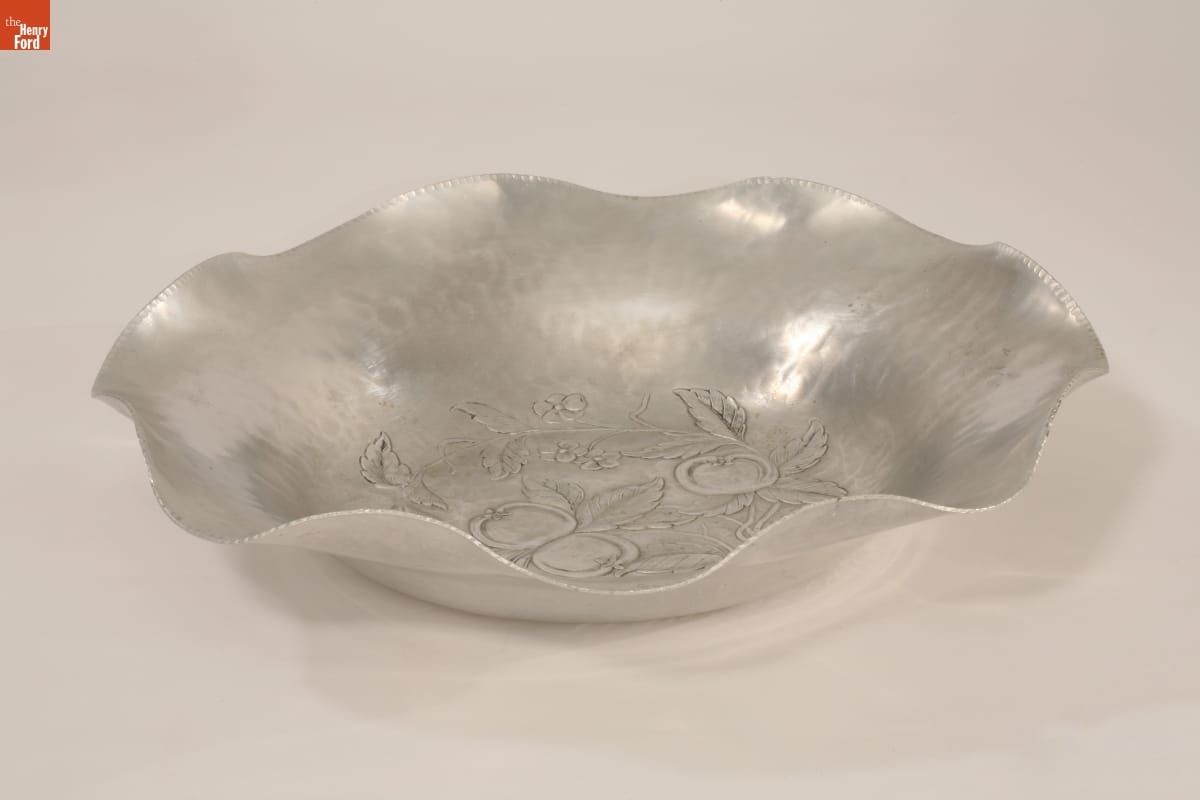
- Everlast "Forged Apple" Fruit Bowl, 1938-1950 - In 1932, Louis Schnitzer and Nathan Gelfman formed Everlast Metal Products Corporation, producing high-quality, hand-forged aluminum giftware. In an era of growing uniformity via factory production, the "made by hand" aspect of these products held an aesthetic appeal for consumers. In 1933, Everlast introduced its first product line, "Forged Giftware" featuring Colonial Revival inspired designs.
- 1938-1950
- Collections - Artifact
Everlast "Forged Apple" Fruit Bowl, 1938-1950
In 1932, Louis Schnitzer and Nathan Gelfman formed Everlast Metal Products Corporation, producing high-quality, hand-forged aluminum giftware. In an era of growing uniformity via factory production, the "made by hand" aspect of these products held an aesthetic appeal for consumers. In 1933, Everlast introduced its first product line, "Forged Giftware" featuring Colonial Revival inspired designs.