
Search
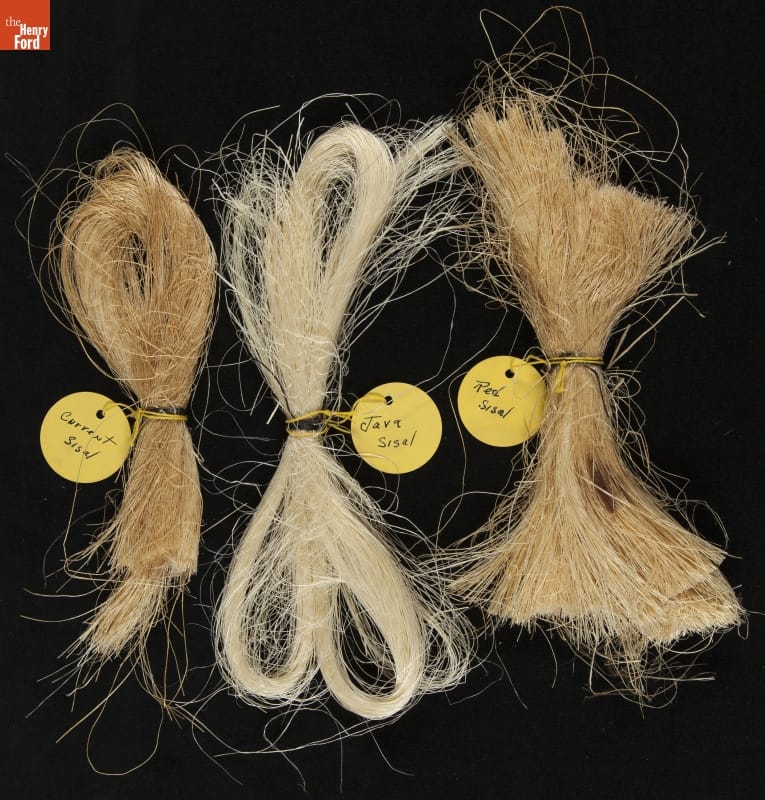
- "Plant Samples--Sample #73--Java Sisal, Red Sisal and Current Sisal, 1931" - In 1928, Henry Ford established rubber tree plantations in the Brazilian rainforest to supply rubber for automobile production. He also explored how to profit from the native plants already growing on his land holdings. Samples of Brazilian plants like this were sent to Ford's Rouge factory in Dearborn, Michigan, to determine if they could be used to make commercially viable products.
- June 04, 1931
- Collections - Artifact
"Plant Samples--Sample #73--Java Sisal, Red Sisal and Current Sisal, 1931"
In 1928, Henry Ford established rubber tree plantations in the Brazilian rainforest to supply rubber for automobile production. He also explored how to profit from the native plants already growing on his land holdings. Samples of Brazilian plants like this were sent to Ford's Rouge factory in Dearborn, Michigan, to determine if they could be used to make commercially viable products.
- Radio Transmitter House, Fordlandia, Brazil -
- 1926 - 1946
- Collections - Artifact
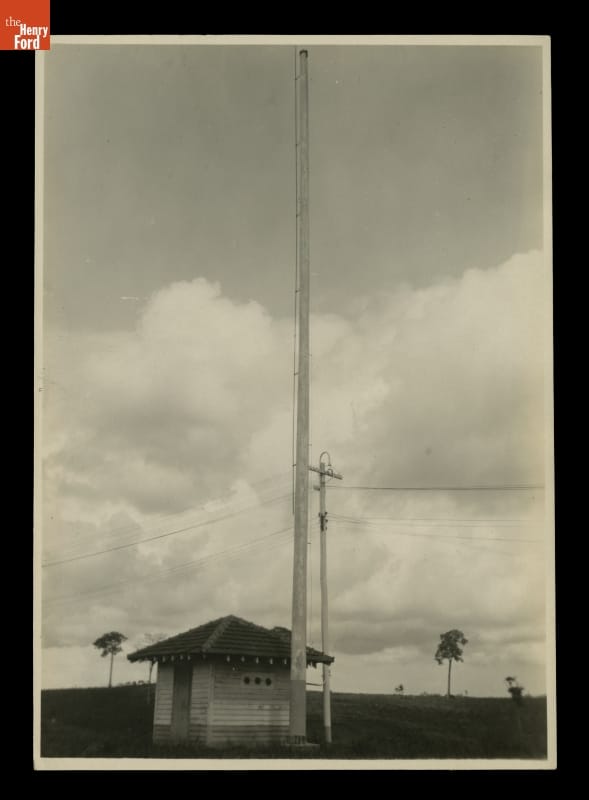
Radio Transmitter House, Fordlandia, Brazil
- Construction of Radio Transmitter House, Fordlandia, Brazil, March 1929 -
- March 23, 1929
- Collections - Artifact
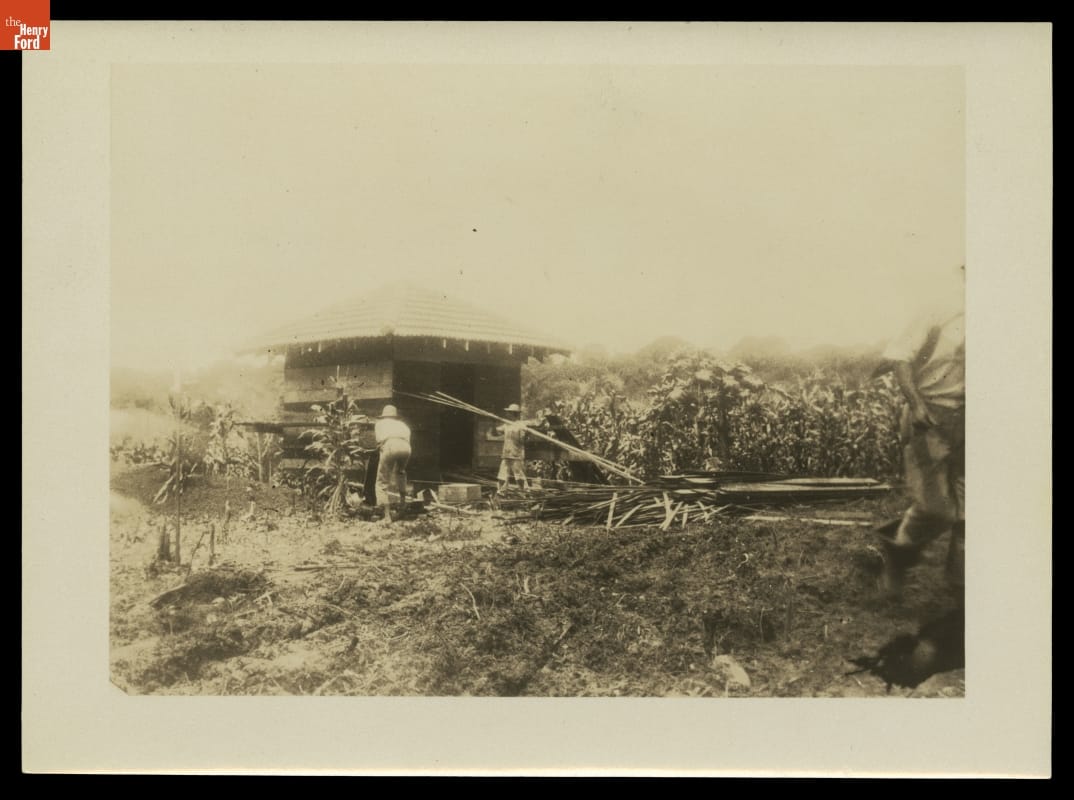
Construction of Radio Transmitter House, Fordlandia, Brazil, March 1929
- Radio Transmitter House, Fordlandia, Brazil, 1929 -
- March 23, 1929
- Collections - Artifact
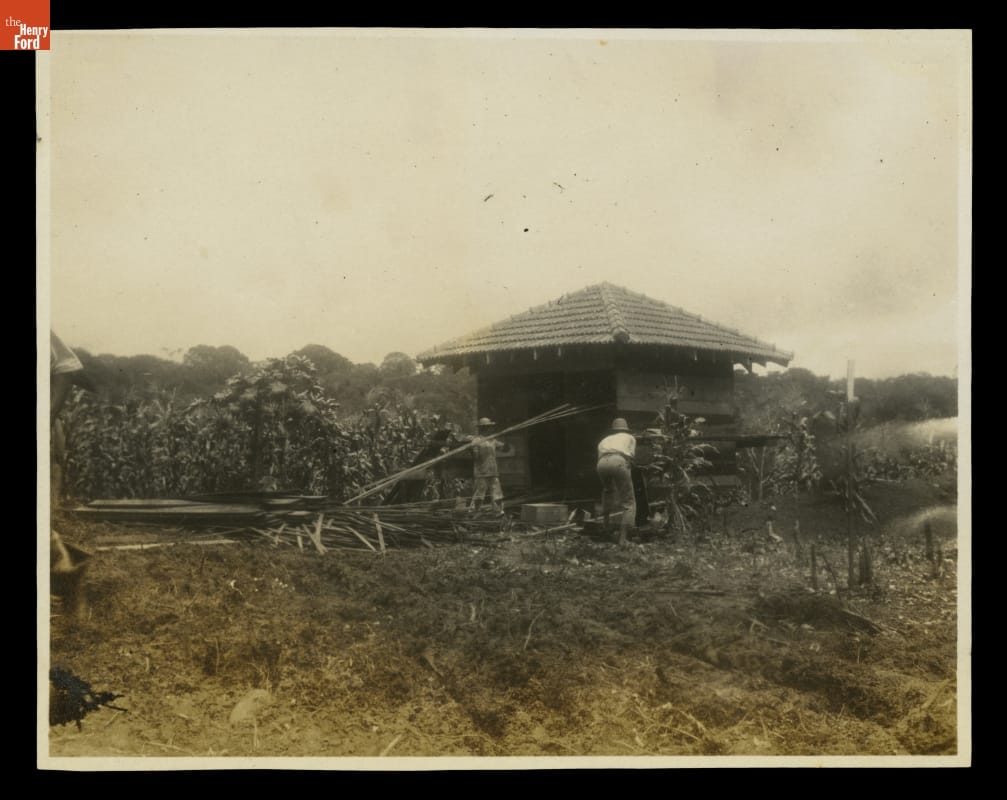
Radio Transmitter House, Fordlandia, Brazil, 1929
- Employee Housing, Fordlandia, Brazil, June 1932 - In 1928, Ford Motor Company established Fordlandia, a 2.5 million-acre rubber plantation and industrial town, in the Amazon Rainforest. Native workers rioted two years later against imposed American work rules and behavioral restrictions. To alleviate tensions, Ford began building new housing and other amenities. The building designs, however, were patterned after management's Midwestern American aesthetics -- inappropriate for Brazil's tropical climate.
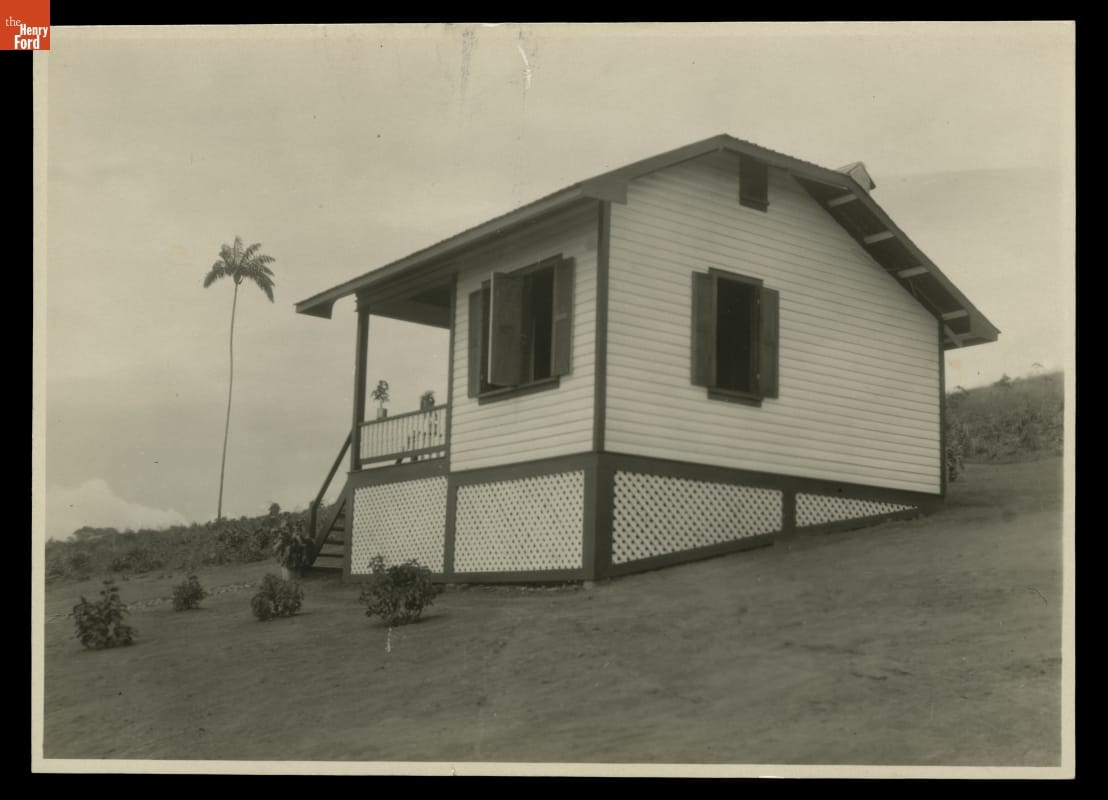
- June 20, 1932
- Collections - Artifact
Employee Housing, Fordlandia, Brazil, June 1932
In 1928, Ford Motor Company established Fordlandia, a 2.5 million-acre rubber plantation and industrial town, in the Amazon Rainforest. Native workers rioted two years later against imposed American work rules and behavioral restrictions. To alleviate tensions, Ford began building new housing and other amenities. The building designs, however, were patterned after management's Midwestern American aesthetics -- inappropriate for Brazil's tropical climate.
- Employee Housing, Fordlandia, Brazil, June 1932 - In 1928, Ford Motor Company established Fordlandia, a 2.5 million-acre rubber plantation and industrial town, in the Amazon Rainforest. Native workers rioted two years later against imposed American work rules and behavioral restrictions. To alleviate tensions, Ford began building new housing and other amenities. The building designs, however, were patterned after management's Midwestern American aesthetics -- inappropriate for Brazil's tropical climate.
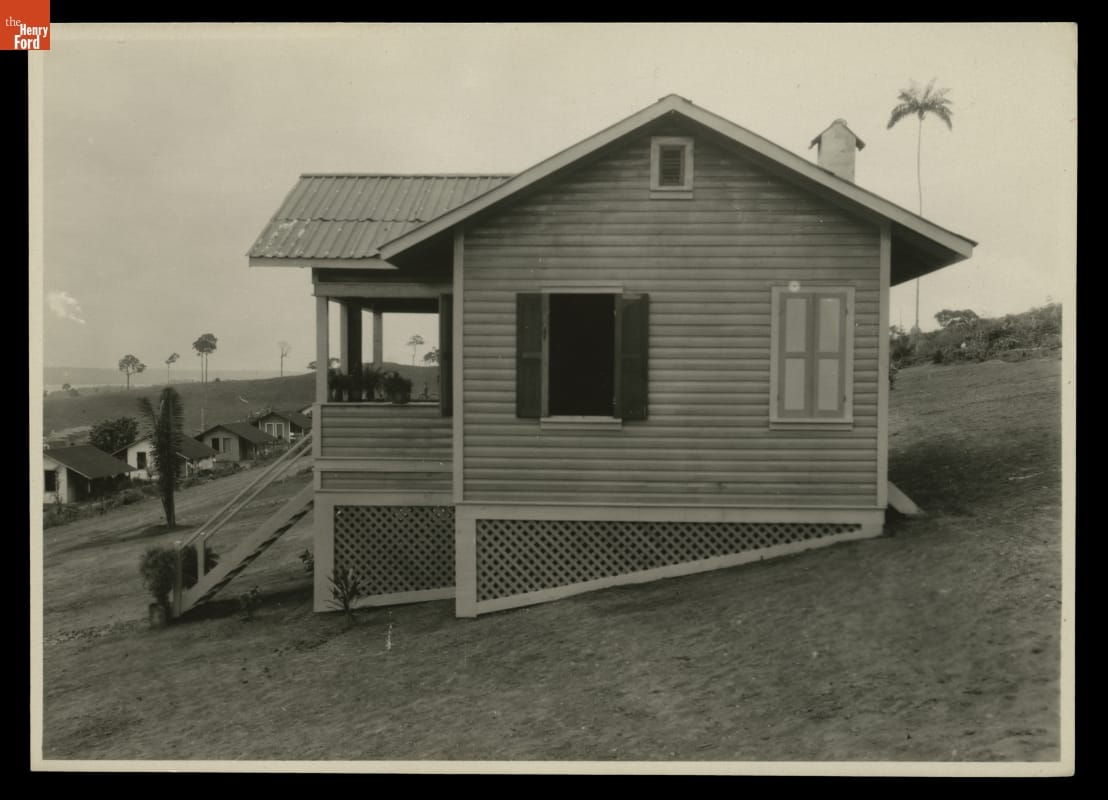
- June 20, 1932
- Collections - Artifact
Employee Housing, Fordlandia, Brazil, June 1932
In 1928, Ford Motor Company established Fordlandia, a 2.5 million-acre rubber plantation and industrial town, in the Amazon Rainforest. Native workers rioted two years later against imposed American work rules and behavioral restrictions. To alleviate tensions, Ford began building new housing and other amenities. The building designs, however, were patterned after management's Midwestern American aesthetics -- inappropriate for Brazil's tropical climate.
- Employee Housing, Fordlandia, Brazil, June 1932 - In 1928, Ford Motor Company established Fordlandia, a 2.5 million-acre rubber plantation and industrial town, in the Amazon Rainforest. Native workers rioted two years later against imposed American work rules and behavioral restrictions. To alleviate tensions, Ford began building new housing and other amenities. The building designs, however, were patterned after management's Midwestern American aesthetics -- inappropriate for Brazil's tropical climate.
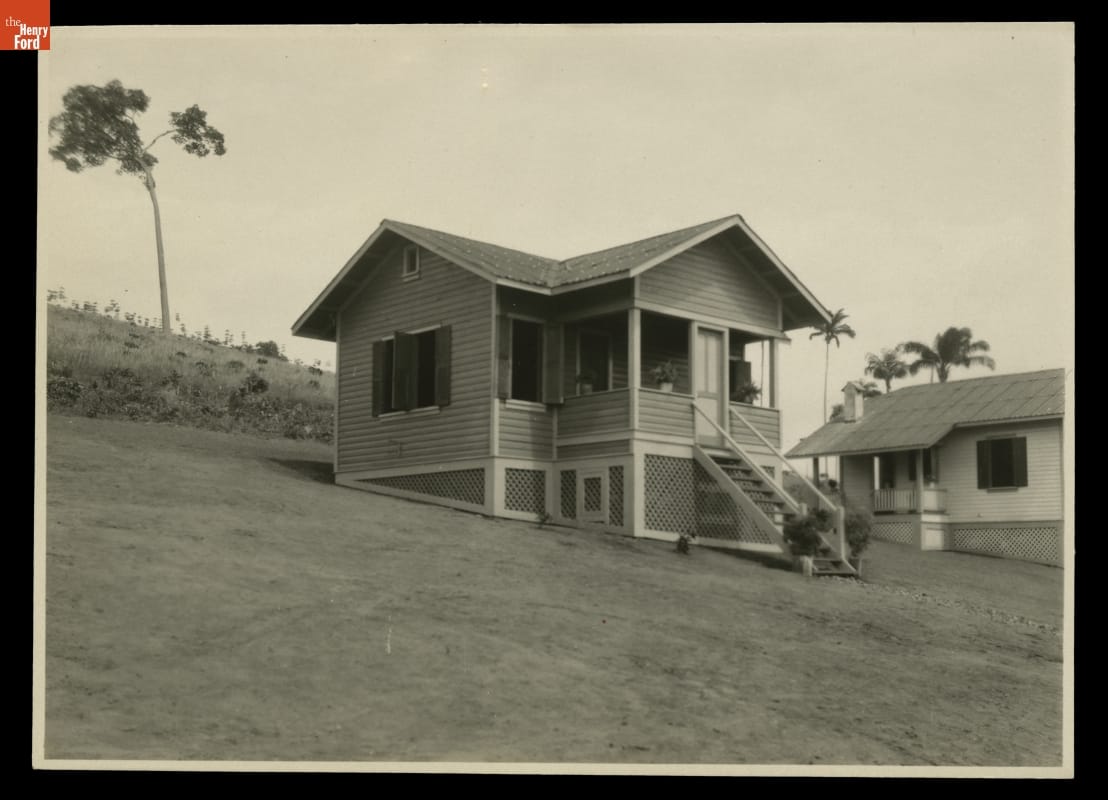
- June 20, 1932
- Collections - Artifact
Employee Housing, Fordlandia, Brazil, June 1932
In 1928, Ford Motor Company established Fordlandia, a 2.5 million-acre rubber plantation and industrial town, in the Amazon Rainforest. Native workers rioted two years later against imposed American work rules and behavioral restrictions. To alleviate tensions, Ford began building new housing and other amenities. The building designs, however, were patterned after management's Midwestern American aesthetics -- inappropriate for Brazil's tropical climate.
- President Vargas of Brazil Visits Hospital at Belterra, Brazil, 1940 - Brazilian President Getulio Vargas rose to power during a 1930 revolution. A proponent of modernizing the state of Brazil, Vargas looked to develop the Amazon and supported Ford Motor Company's attempts to establish rubber plantations in the region. In 1940, while on a promotional tour through the Amazon, Vargas was invited by Edsel Ford to visit and review Ford's plantation town of Belterra.
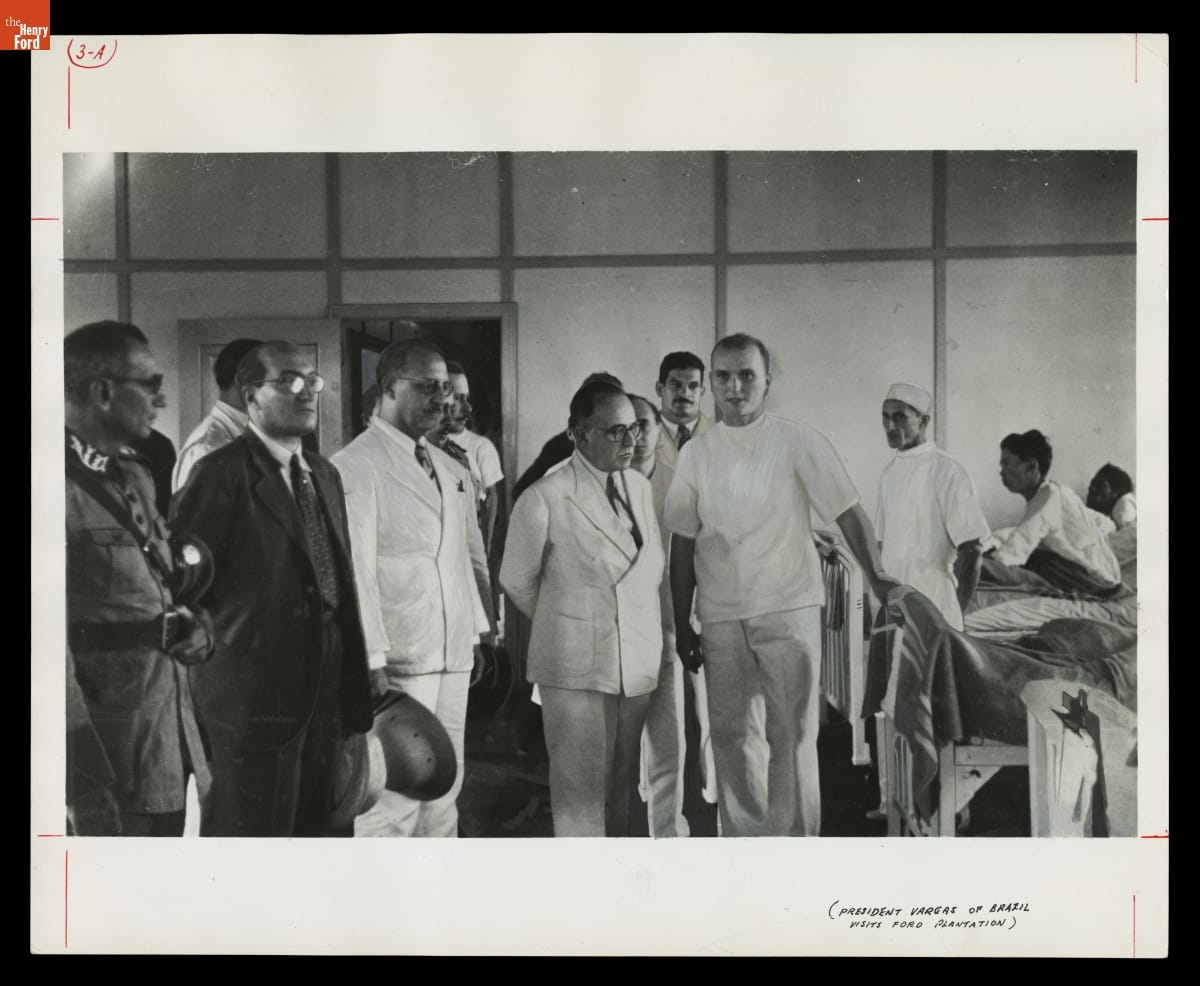
- 1940
- Collections - Artifact
President Vargas of Brazil Visits Hospital at Belterra, Brazil, 1940
Brazilian President Getulio Vargas rose to power during a 1930 revolution. A proponent of modernizing the state of Brazil, Vargas looked to develop the Amazon and supported Ford Motor Company's attempts to establish rubber plantations in the region. In 1940, while on a promotional tour through the Amazon, Vargas was invited by Edsel Ford to visit and review Ford's plantation town of Belterra.
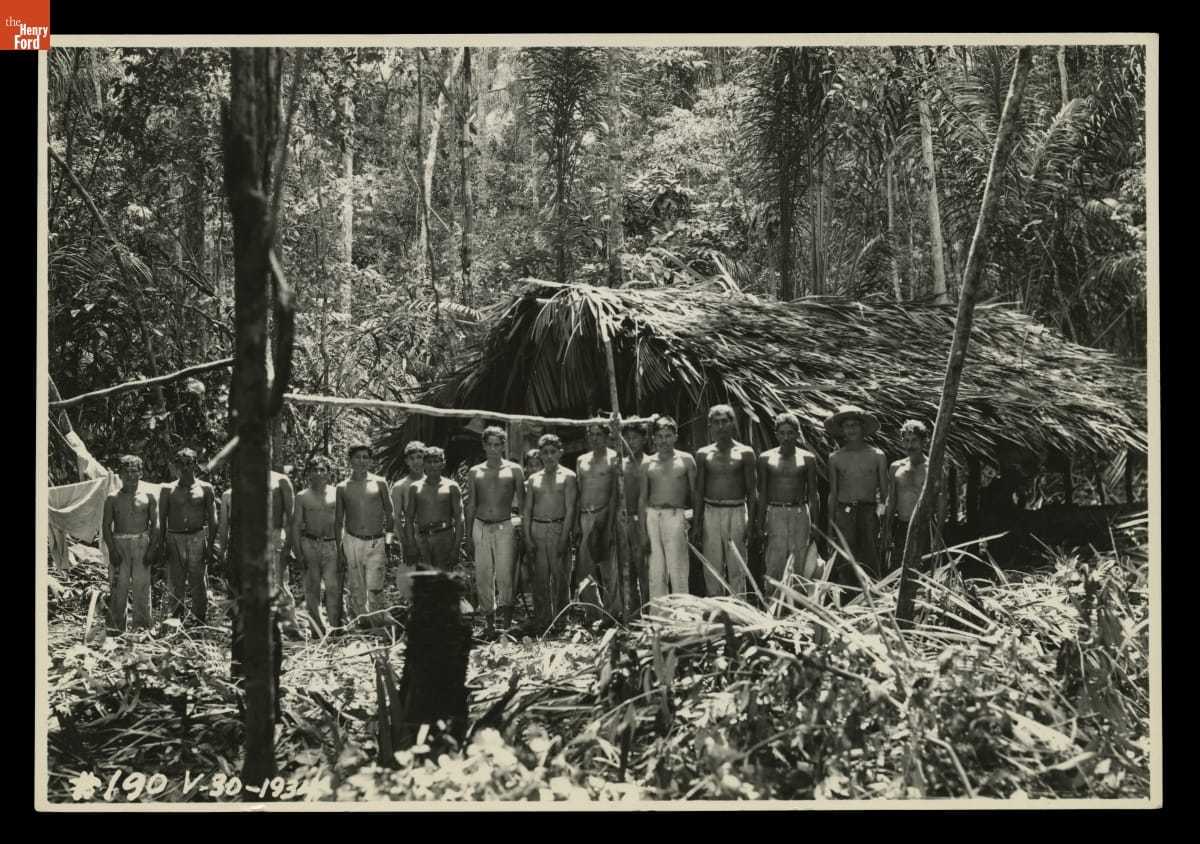
- Laborers at Belterra Plantation, Brazil, 1934 -
- 1934
- Collections - Artifact
Laborers at Belterra Plantation, Brazil, 1934
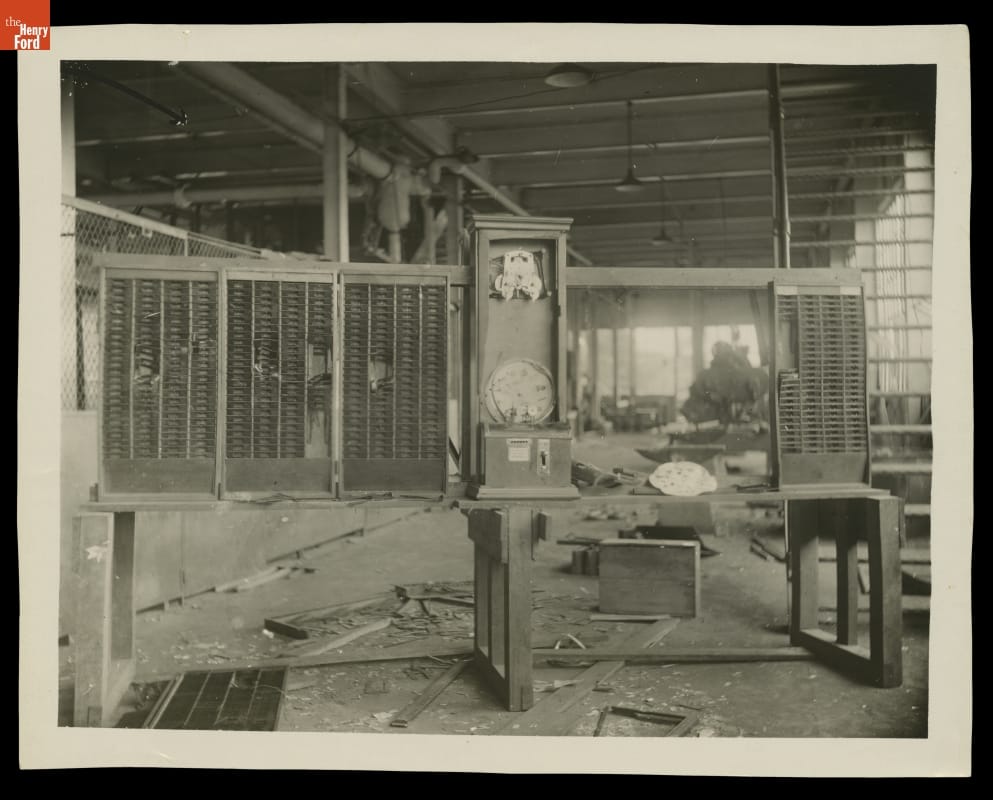
- Fordlandia Time Clock, Destroyed in the Riot of December 1930 - In 1928, Henry Ford established Fordlandia in the Brazilian rainforest to supply rubber for automobile production. Ford hired indigenous workers to clear the forest, plant rubber trees and build infrastructure. Though he paid good wages, Ford also imposed foreign work traditions and behavioral restrictions which the workers resented. Workers revolted against Ford's managers on several occasions during the first years of operations.
- December 22, 1930
- Collections - Artifact
Fordlandia Time Clock, Destroyed in the Riot of December 1930
In 1928, Henry Ford established Fordlandia in the Brazilian rainforest to supply rubber for automobile production. Ford hired indigenous workers to clear the forest, plant rubber trees and build infrastructure. Though he paid good wages, Ford also imposed foreign work traditions and behavioral restrictions which the workers resented. Workers revolted against Ford's managers on several occasions during the first years of operations.