
Search
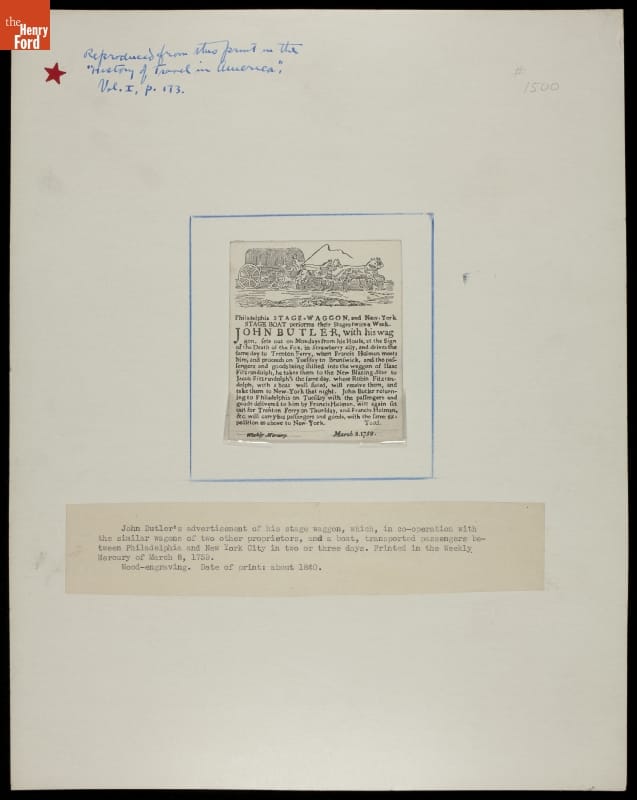
- Advertisement for Stage Wagon and Boat Transportation Between Philadelphia and New York City, circa 1840 - Originally printed March 8, 1759, in the <em>Weekly Mercury</em>, this advertisement features a wood engraving of John Butler's stage wagon. This stage line ran between Philadelphia, Pennsylvania, and New York City.
- March 08, 1759
- Collections - Artifact
Advertisement for Stage Wagon and Boat Transportation Between Philadelphia and New York City, circa 1840
Originally printed March 8, 1759, in the Weekly Mercury, this advertisement features a wood engraving of John Butler's stage wagon. This stage line ran between Philadelphia, Pennsylvania, and New York City.
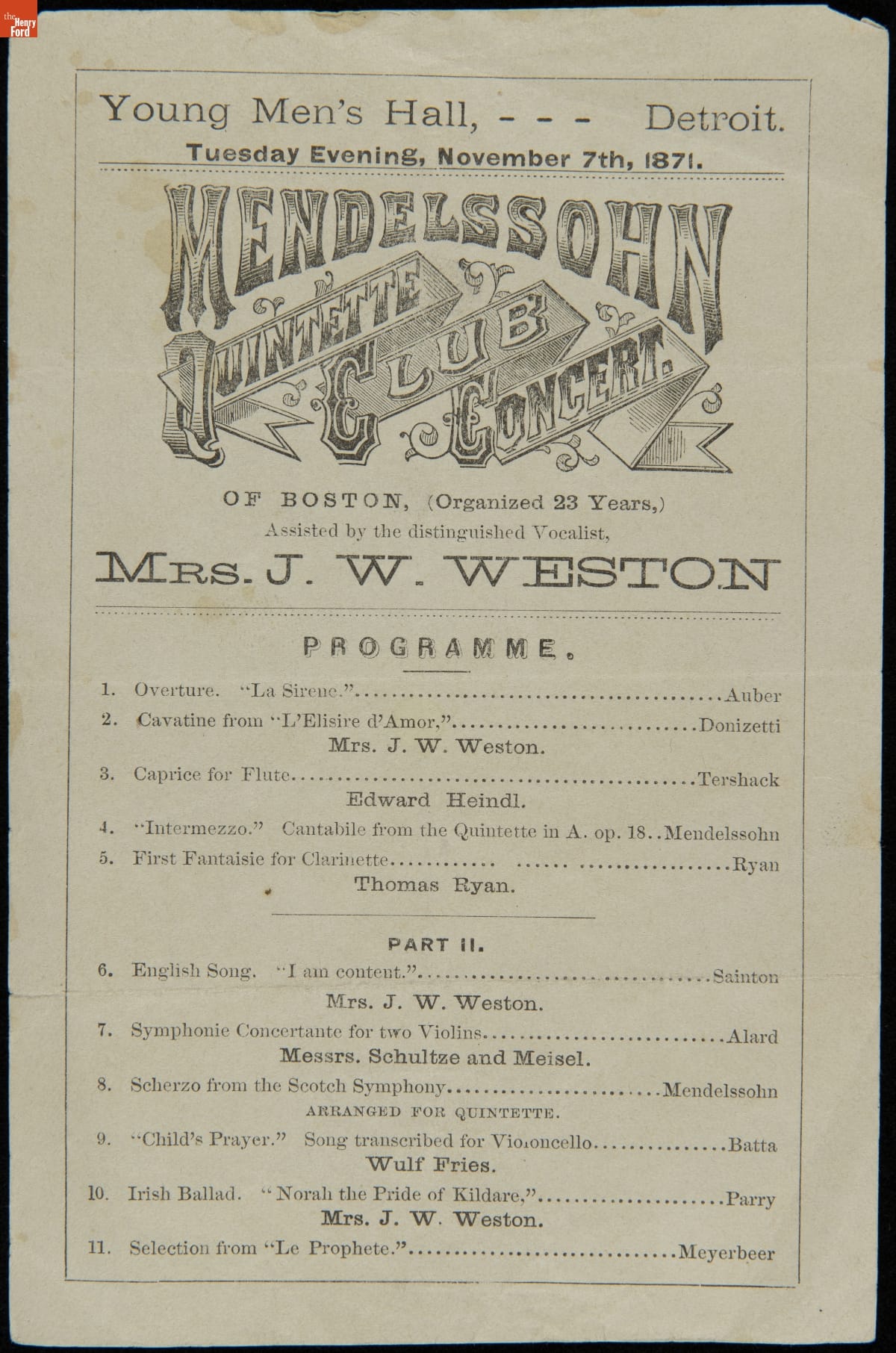
- Program, "Mendelssohn Quintette Club Concert," Young Men's Hall, Detroit, Michigan, November 7, 1871 -
- November 07, 1871
- Collections - Artifact
Program, "Mendelssohn Quintette Club Concert," Young Men's Hall, Detroit, Michigan, November 7, 1871
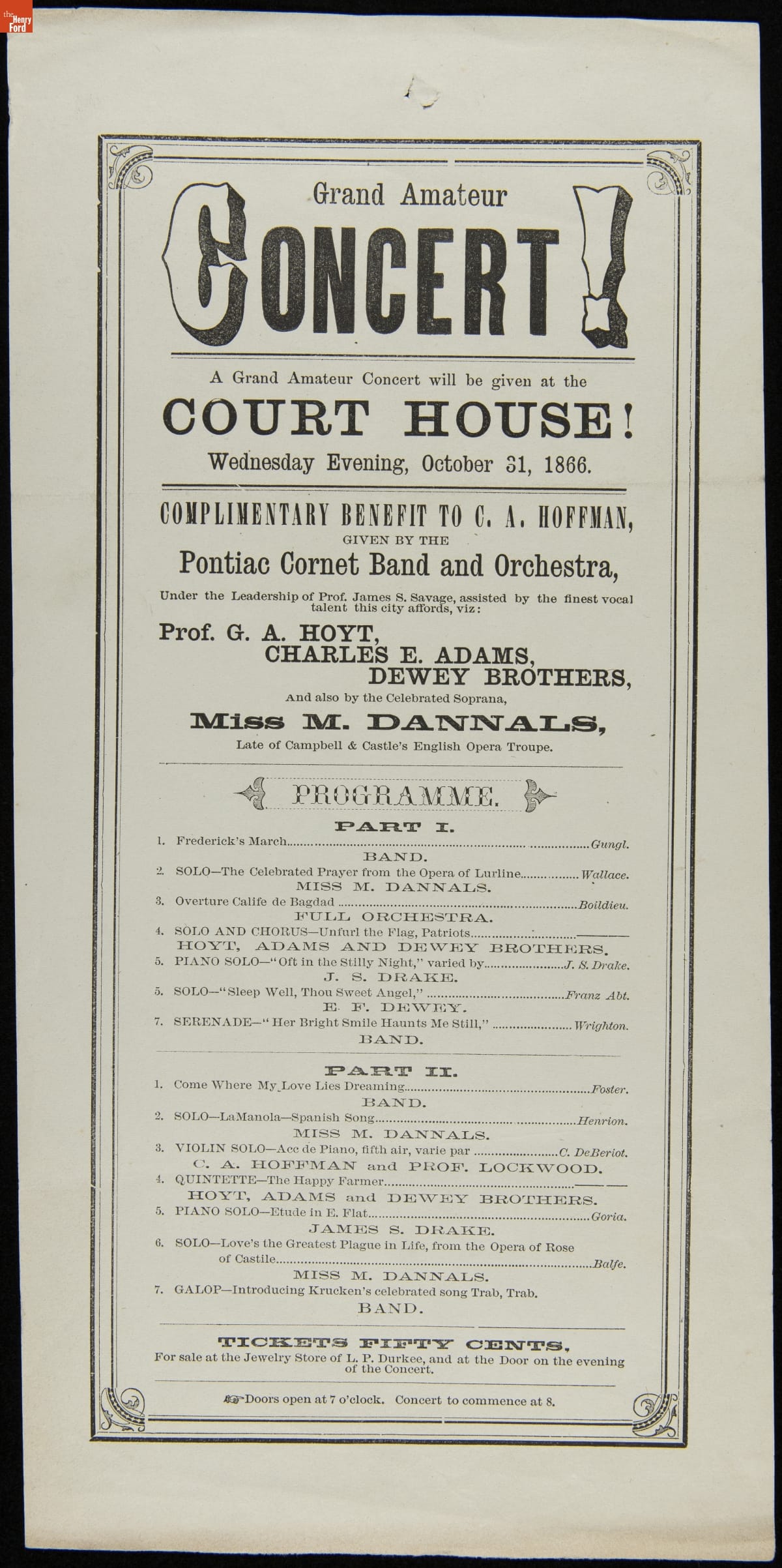
- Program, "Grand Amateur Concert!," Court House, Detroit, Michigan, October 31, 1866 -
- October 31, 1866
- Collections - Artifact
Program, "Grand Amateur Concert!," Court House, Detroit, Michigan, October 31, 1866
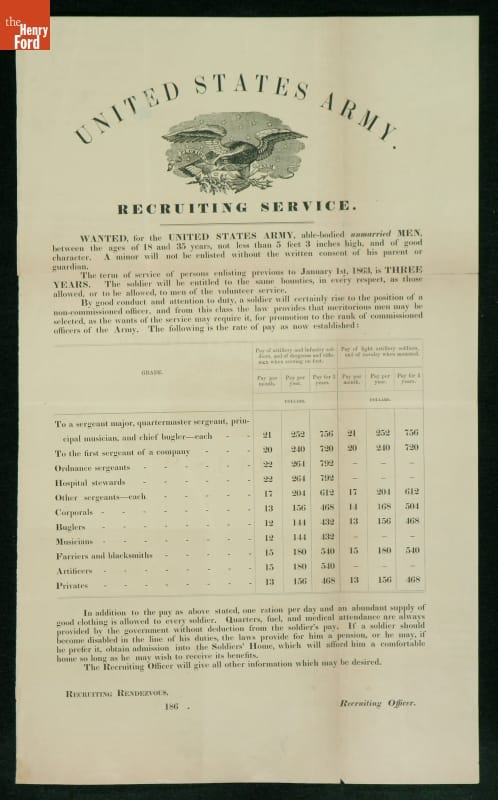
- United States Army Recruiting Service Broadside, circa 1863 - At the outbreak of the Civil War, President Lincoln called for soldiers -- both regular and volunteer -- to help save the Union. Recruiters could use this 1863 poster to enlist men into the regular United States army. This broadside listed pay grades and other benefits available to those who signed up.
- circa 1863
- Collections - Artifact
United States Army Recruiting Service Broadside, circa 1863
At the outbreak of the Civil War, President Lincoln called for soldiers -- both regular and volunteer -- to help save the Union. Recruiters could use this 1863 poster to enlist men into the regular United States army. This broadside listed pay grades and other benefits available to those who signed up.
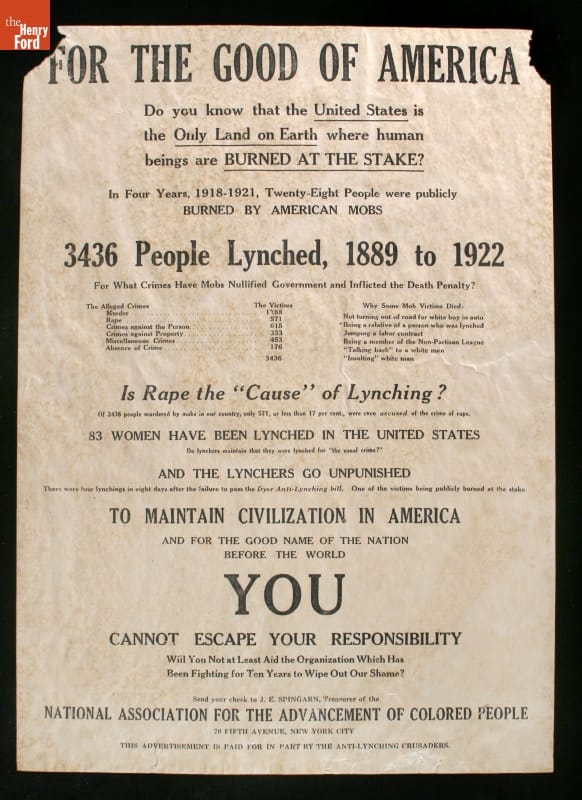
- "For the Good of America... You Cannot Escape Your Responsibility," 1923 - In 1912, the NAACP began a formal campaign to ban lynching. This 1923 broadside informed Americans about the numbers, causes and brutality of lynching. An anti-lynching bill was first introduced in Congress in 1918. A later version -- and others that followed -- failed to pass in the United States Senate. In June 2005, the Senate finally issued a formal apology for never having outlawed lynching.
- 1923
- Collections - Artifact
"For the Good of America... You Cannot Escape Your Responsibility," 1923
In 1912, the NAACP began a formal campaign to ban lynching. This 1923 broadside informed Americans about the numbers, causes and brutality of lynching. An anti-lynching bill was first introduced in Congress in 1918. A later version -- and others that followed -- failed to pass in the United States Senate. In June 2005, the Senate finally issued a formal apology for never having outlawed lynching.
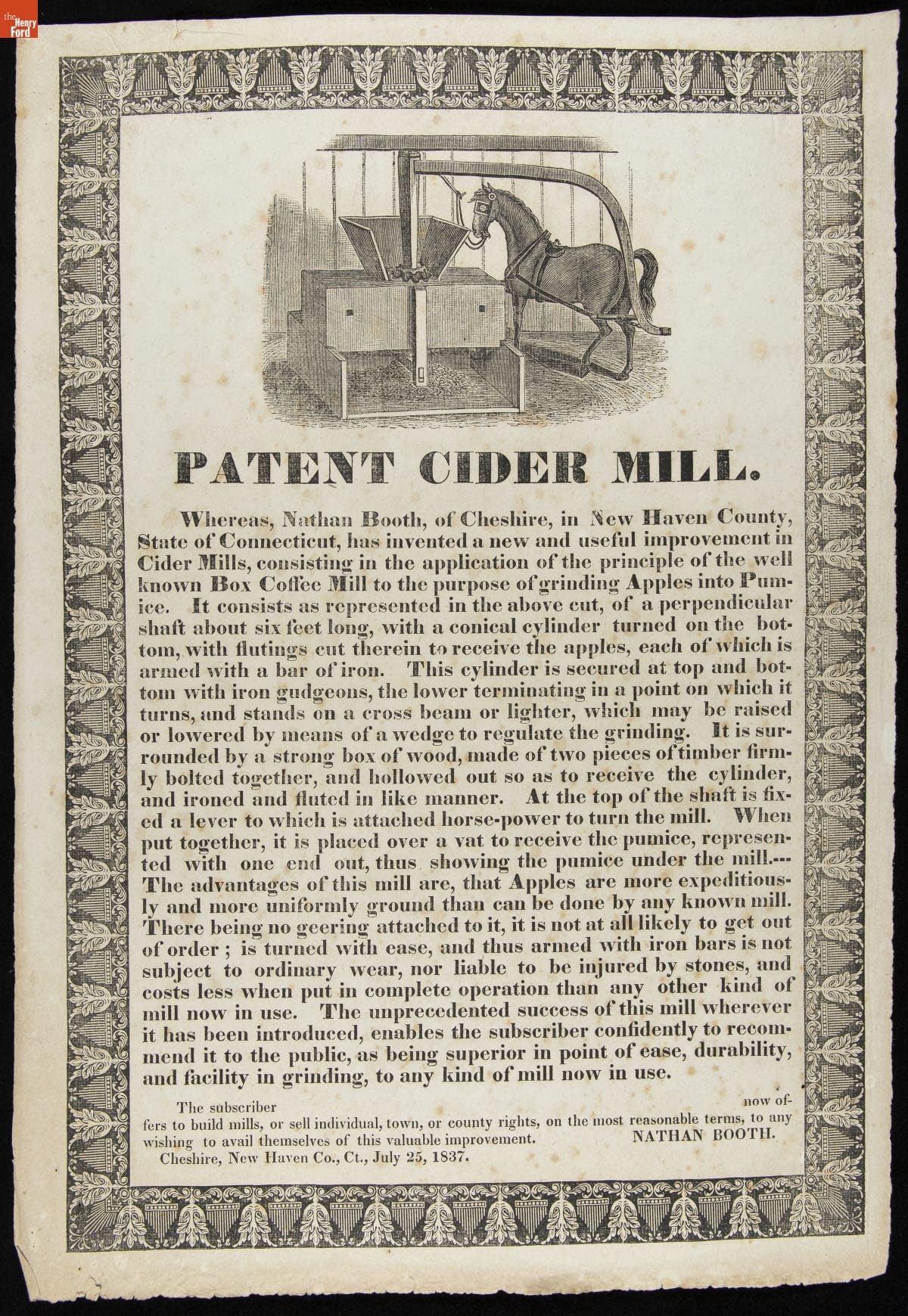
- Patent Cider Mill, 1837 -
- July 25, 1837
- Collections - Artifact
Patent Cider Mill, 1837
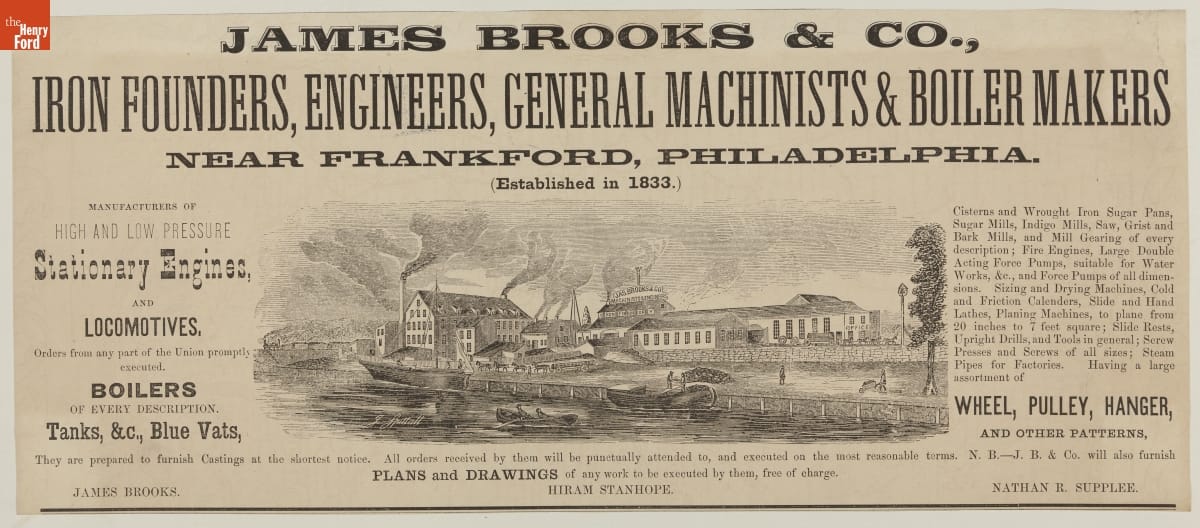
- Broadside Advertising James Brooks & Co., Iron Founders, near Philadelphia, circa 1855 - This circa 1855 broadside advertised James Brooks & Co., located in the Frankford area of Philadelphia, Pennsylvania. James Brooks & Co. was in the business of manufacturing stationary steam engines, as well as locomotives and boilers. The broadside includes a pictorial rendering of the factory along the river.
- circa 1855
- Collections - Artifact
Broadside Advertising James Brooks & Co., Iron Founders, near Philadelphia, circa 1855
This circa 1855 broadside advertised James Brooks & Co., located in the Frankford area of Philadelphia, Pennsylvania. James Brooks & Co. was in the business of manufacturing stationary steam engines, as well as locomotives and boilers. The broadside includes a pictorial rendering of the factory along the river.
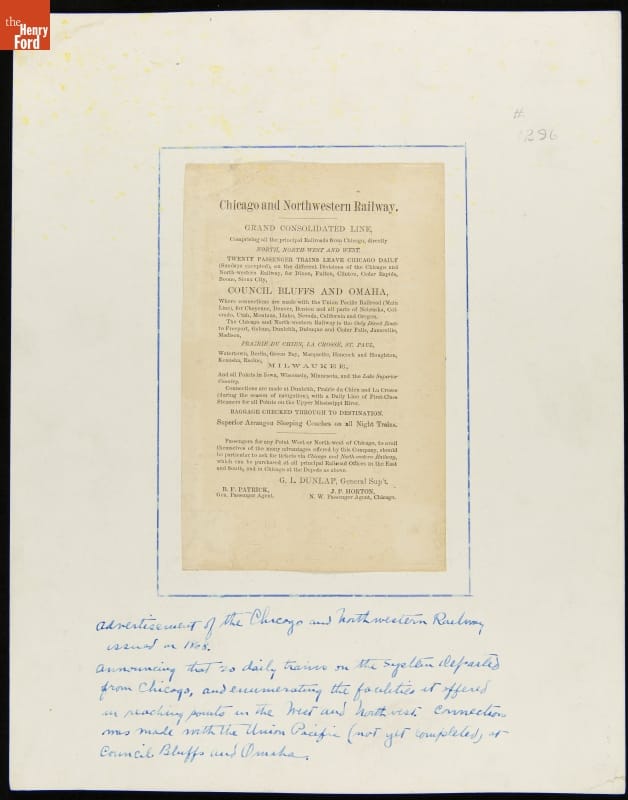
- Chicago and Northwestern Railway Advertising Broadside, 1868 - President Lincoln designated Council Bluffs, Iowa, as the official eastern terminus of the First Transcontinental Railroad. (Though the Missouri River wasn't bridged until 1872, making Omaha, Nebraska, the effective terminus until then.) The transcontinental route connected with the rest of the eastern U.S. railroad network via the Chicago & North Western Railway, completed to Council Bluffs from Chicago in 1867.
- 1868
- Collections - Artifact
Chicago and Northwestern Railway Advertising Broadside, 1868
President Lincoln designated Council Bluffs, Iowa, as the official eastern terminus of the First Transcontinental Railroad. (Though the Missouri River wasn't bridged until 1872, making Omaha, Nebraska, the effective terminus until then.) The transcontinental route connected with the rest of the eastern U.S. railroad network via the Chicago & North Western Railway, completed to Council Bluffs from Chicago in 1867.
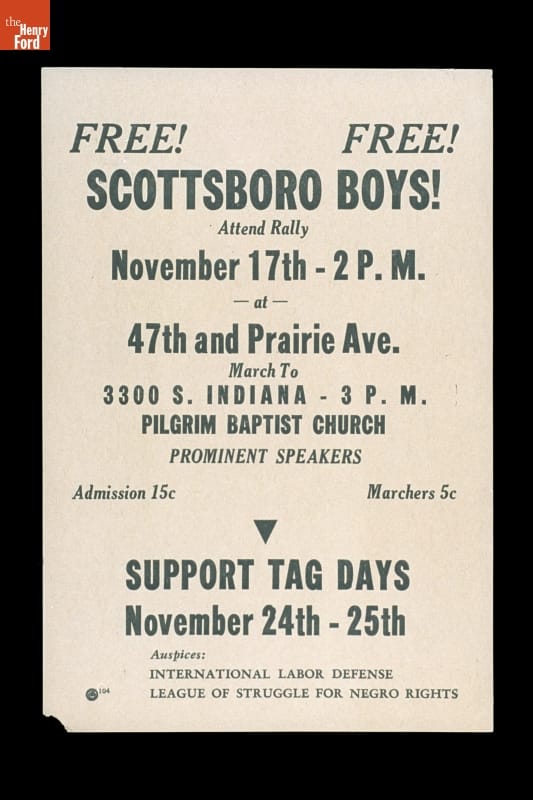
- Handbill for a Rally in Support of the Scottsboro Boys, Pilgrim Baptist Church, Chicago, Illinois, November 17, 1933 - In 1931, nine black youths were unjustly accused of raping two white women in Alabama. White juries quickly convicted and sentenced eight of the defendants to death. The International Labor Defense, the legal arm of the Communist Party of the United States, issued this handbill to rally public support to combat this injustice and to free the "Scottsboro Boys."
- November 17, 1933
- Collections - Artifact
Handbill for a Rally in Support of the Scottsboro Boys, Pilgrim Baptist Church, Chicago, Illinois, November 17, 1933
In 1931, nine black youths were unjustly accused of raping two white women in Alabama. White juries quickly convicted and sentenced eight of the defendants to death. The International Labor Defense, the legal arm of the Communist Party of the United States, issued this handbill to rally public support to combat this injustice and to free the "Scottsboro Boys."
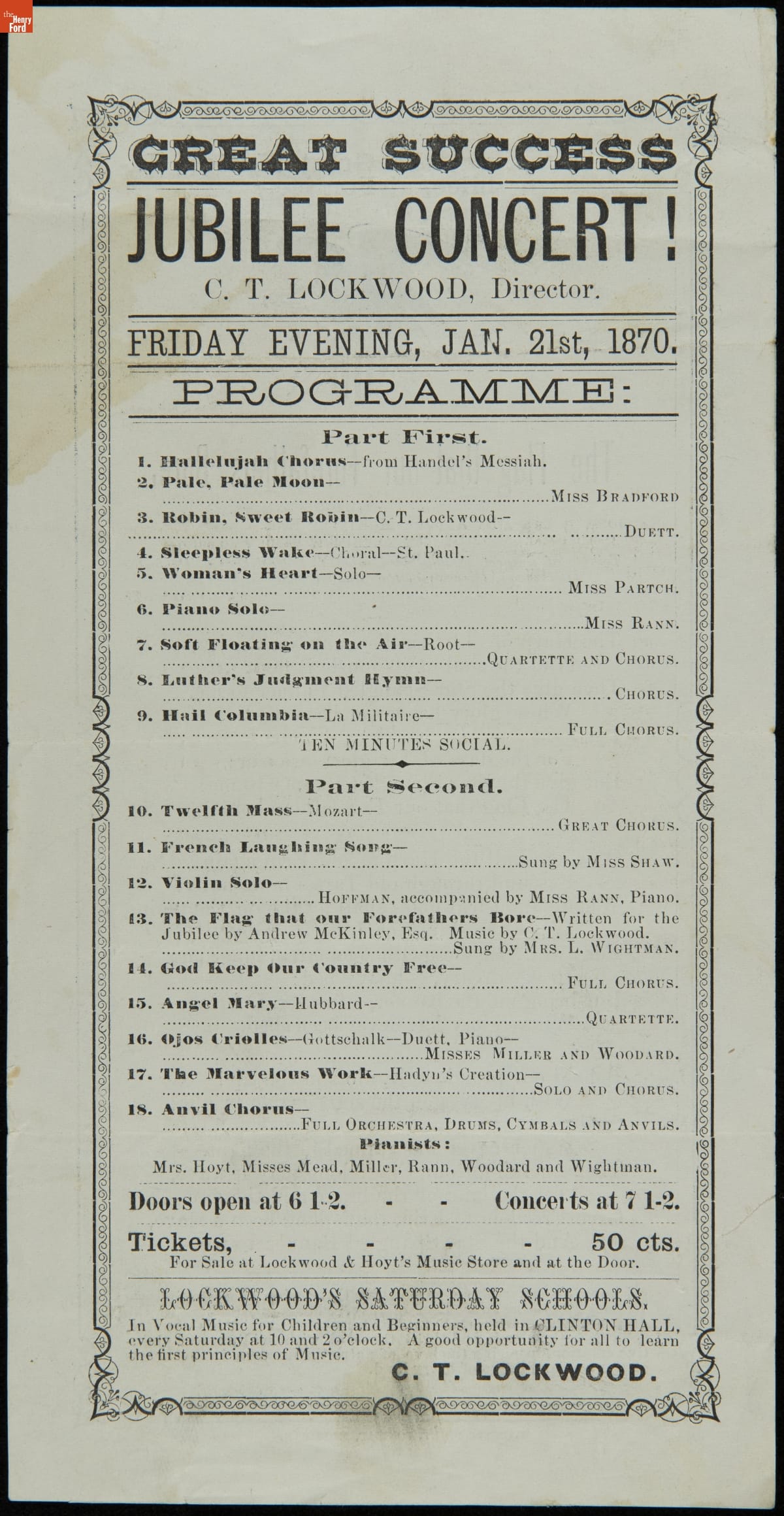
- Program, "Jubilee Concert," Pontiac, Michigan, January 21, 1870 -
- January 21, 1870
- Collections - Artifact
Program, "Jubilee Concert," Pontiac, Michigan, January 21, 1870