
Search
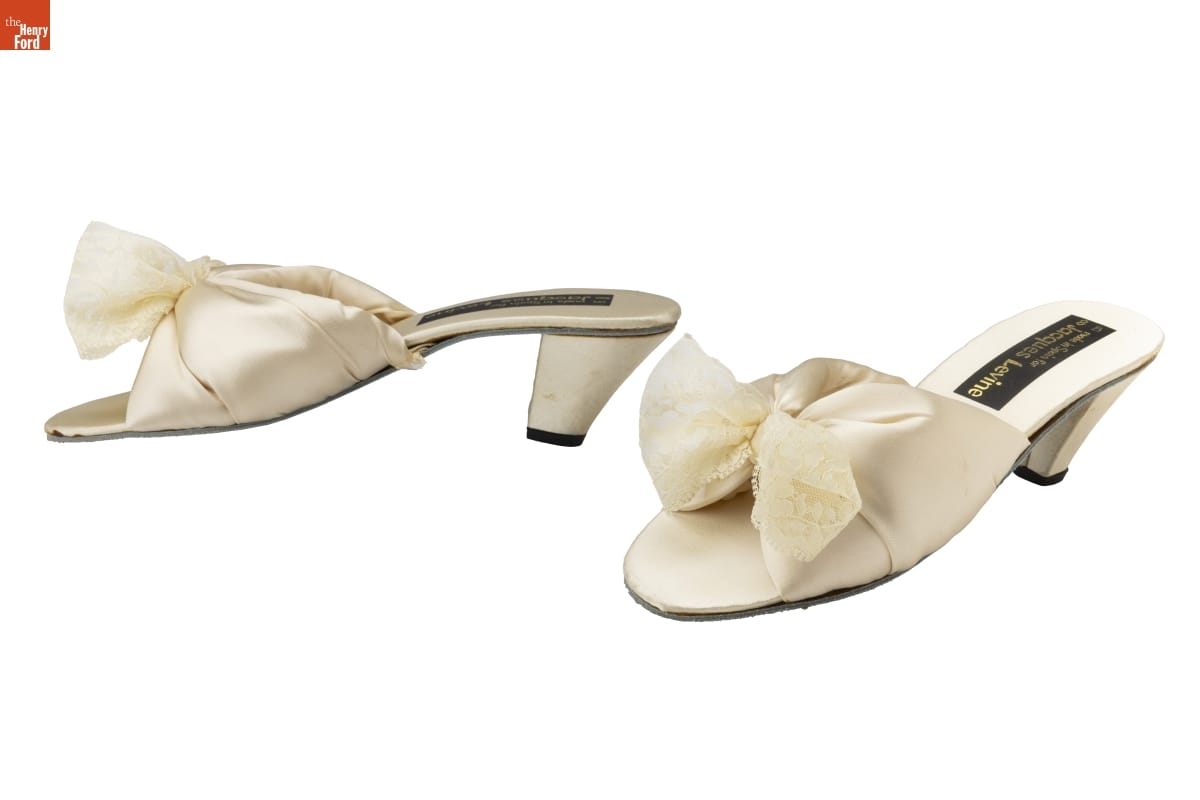
- Slippers, Worn by Patricia Mooradian, 1985 -
- 1985
- Collections - Artifact
Slippers, Worn by Patricia Mooradian, 1985
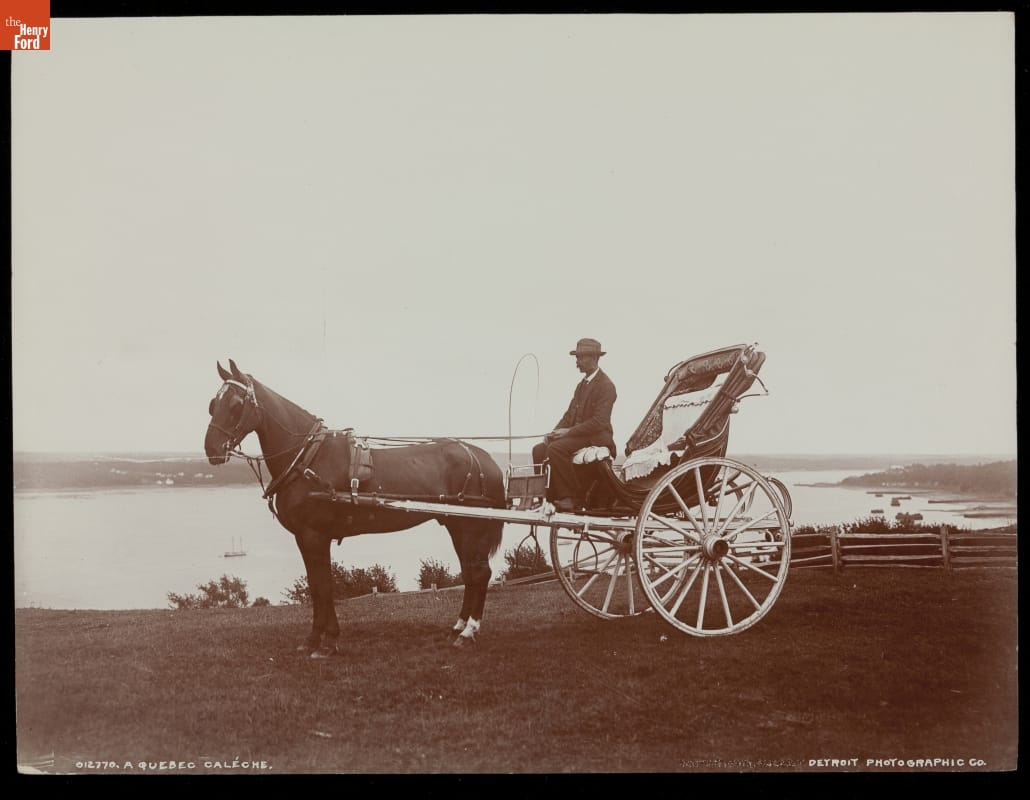
- A Quebec Caleche, circa 1900 - French Canadians called this two-wheeled carriage a caleche. With a folding hood and seats for two riders, they were used for everyday transportation. Some caleche drivers -- without passengers -- also participated in informal races. Though automobiles eventually replaced horse-drawn vehicles for most ordinary travel, the caleche remained popular among sightseeing tourists in places like Montreal and Quebec City.
- circa 1900
- Collections - Artifact
A Quebec Caleche, circa 1900
French Canadians called this two-wheeled carriage a caleche. With a folding hood and seats for two riders, they were used for everyday transportation. Some caleche drivers -- without passengers -- also participated in informal races. Though automobiles eventually replaced horse-drawn vehicles for most ordinary travel, the caleche remained popular among sightseeing tourists in places like Montreal and Quebec City.
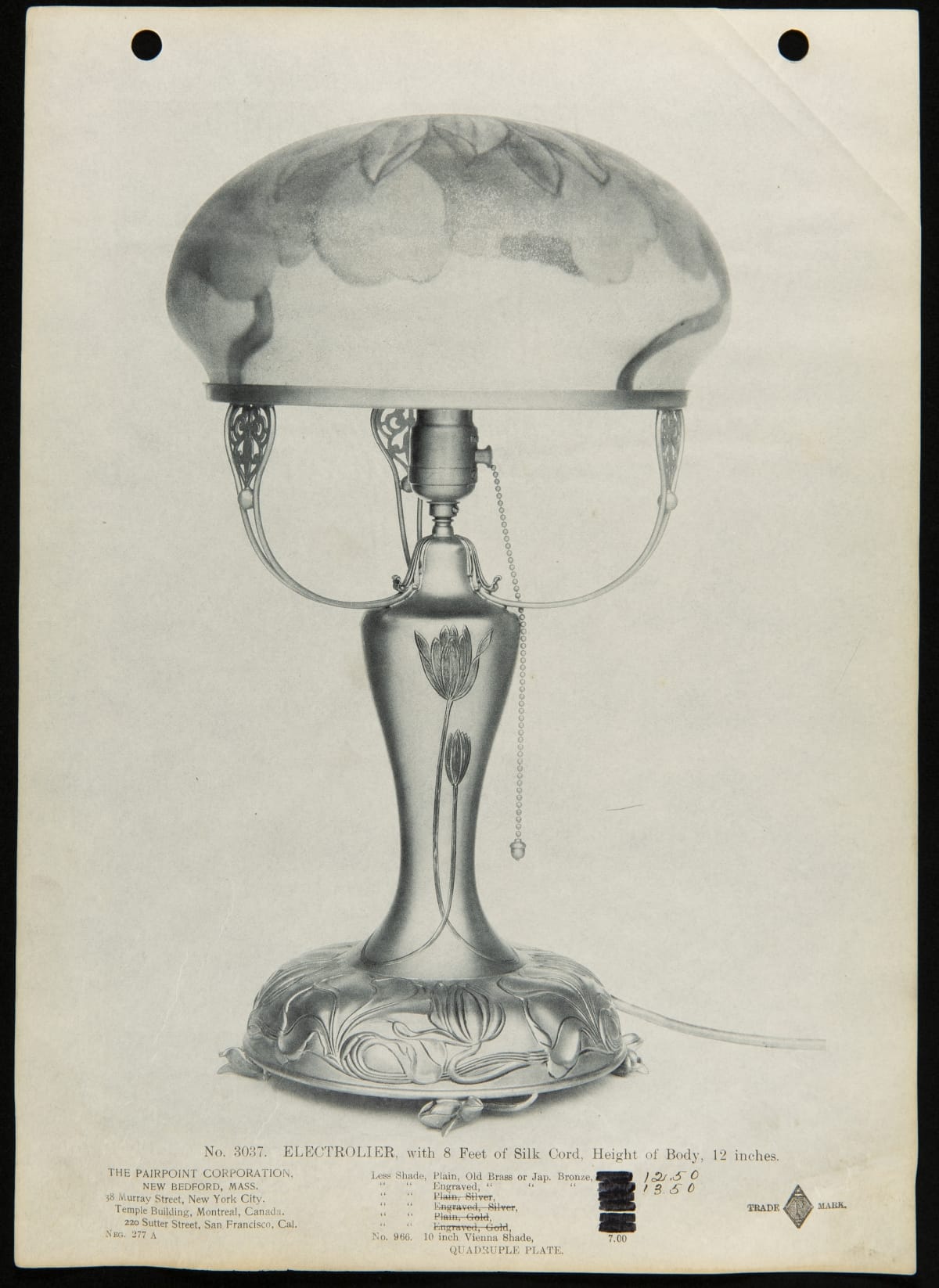
- Trade Literature for Pairpoint Electrolier No. 3037, 1899-1907 - In the early 1890s, Louis Comfort Tiffany applied the emerging Art Nouveau style to lighting products. They became so popular that other companies -- especially the Pairpoint Corporation of New Bedford, Massachusetts -- produced lamps to rival Tiffany's. The undulating lines and botanical motifs encircling the Pairpoint lamp depicted here are characteristic of Art Nouveau aesthetics.
- 1899-1907
- Collections - Artifact
Trade Literature for Pairpoint Electrolier No. 3037, 1899-1907
In the early 1890s, Louis Comfort Tiffany applied the emerging Art Nouveau style to lighting products. They became so popular that other companies -- especially the Pairpoint Corporation of New Bedford, Massachusetts -- produced lamps to rival Tiffany's. The undulating lines and botanical motifs encircling the Pairpoint lamp depicted here are characteristic of Art Nouveau aesthetics.
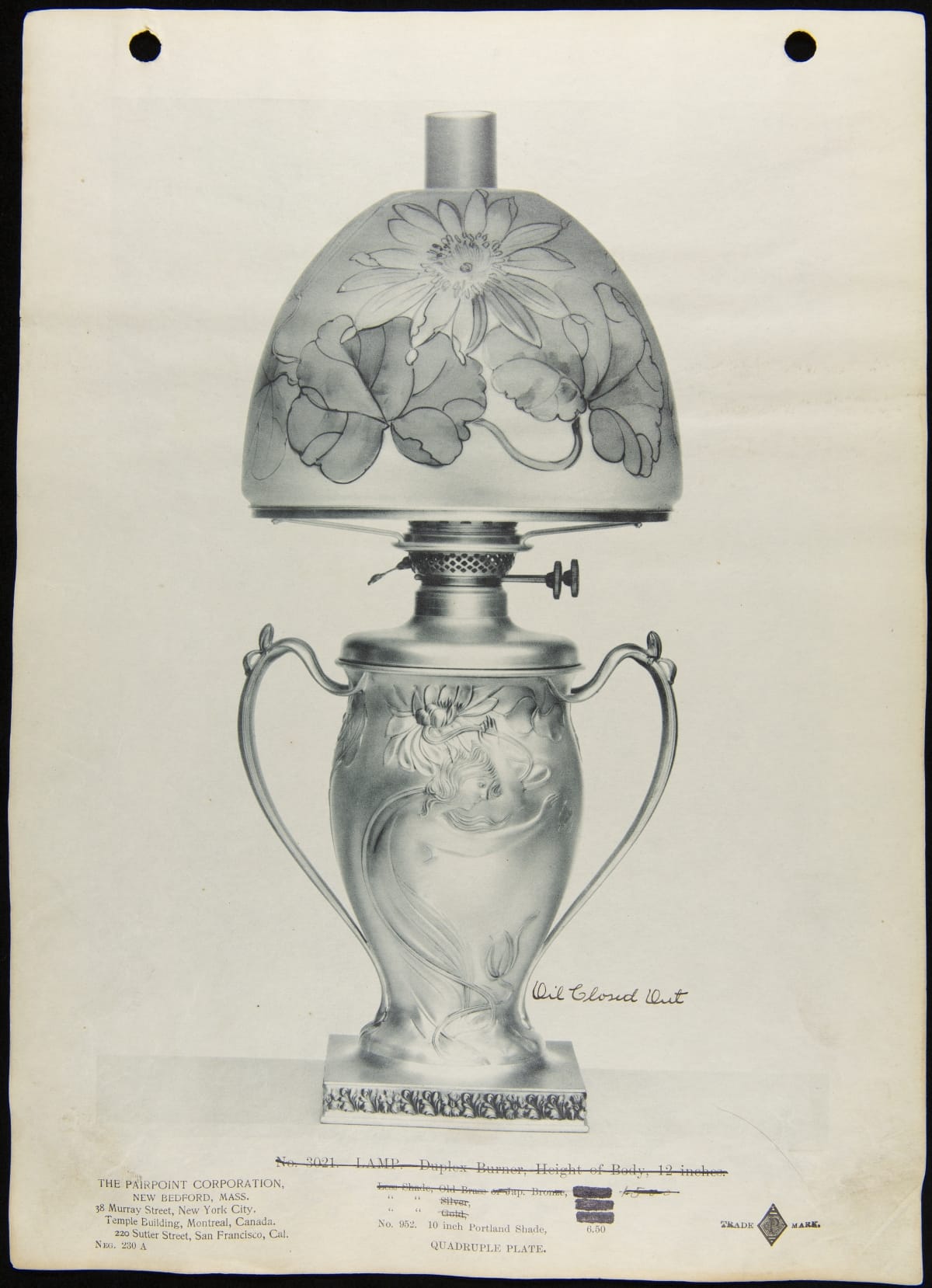
- Trade Literature for Pairpoint Oil Lamp No. 3021, 1899-1907 - In the early 1890s, Louis Comfort Tiffany applied the emerging Art Nouveau style to lighting products. They became so popular that other companies -- especially the Pairpoint Corporation of New Bedford, Massachusetts -- produced lamps to rival Tiffany's. The undulating lines, botanical motifs, and female figure encircling the Pairpoint lamp depicted here are characteristic of Art Nouveau aesthetics.
- 1899-1907
- Collections - Artifact
Trade Literature for Pairpoint Oil Lamp No. 3021, 1899-1907
In the early 1890s, Louis Comfort Tiffany applied the emerging Art Nouveau style to lighting products. They became so popular that other companies -- especially the Pairpoint Corporation of New Bedford, Massachusetts -- produced lamps to rival Tiffany's. The undulating lines, botanical motifs, and female figure encircling the Pairpoint lamp depicted here are characteristic of Art Nouveau aesthetics.
- 1928 Junkers W33 "Bremen" Airplane - The <EM>Bremen</EM> was the first aircraft to fly nonstop from Europe to North America. Hermann Kohl, Ehrenfried Guenther von Huenefeld, and James Fitzmaurice took off from Baldonnel, Ireland, on April 12, 1928, and touched down on Greenly Island, Canada, the next day. The east-to-west crossing, made against prevailing winds, was more difficult than a flight from North America to Europe.
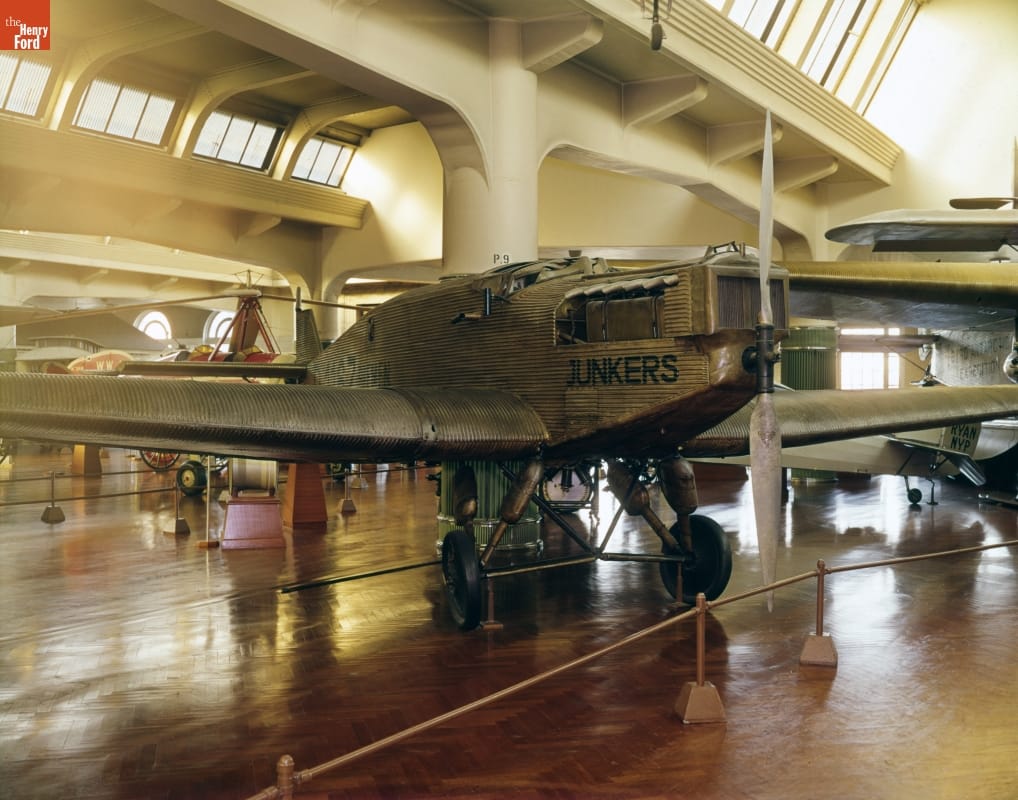
- 1928
- Collections - Artifact
1928 Junkers W33 "Bremen" Airplane
The Bremen was the first aircraft to fly nonstop from Europe to North America. Hermann Kohl, Ehrenfried Guenther von Huenefeld, and James Fitzmaurice took off from Baldonnel, Ireland, on April 12, 1928, and touched down on Greenly Island, Canada, the next day. The east-to-west crossing, made against prevailing winds, was more difficult than a flight from North America to Europe.
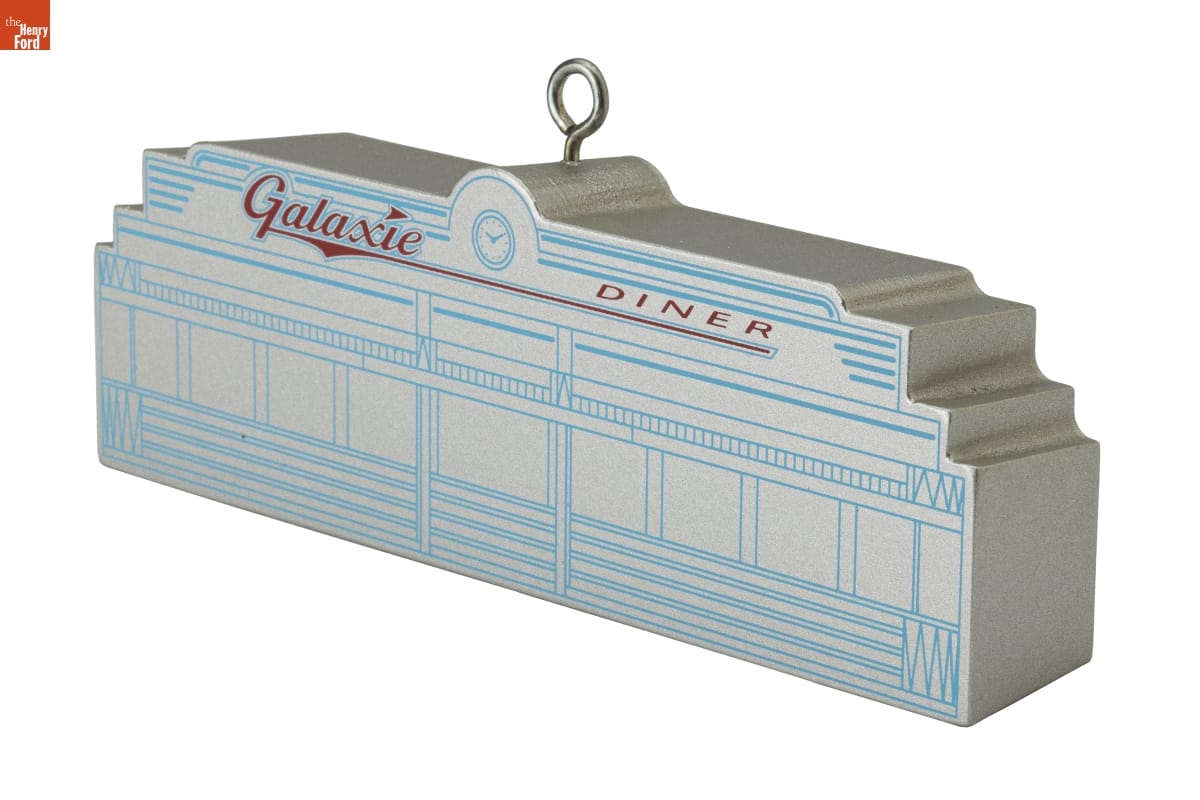
- "Galaxie Diner" Promotional Item, circa 1992 -
- circa 1992
- Collections - Artifact
"Galaxie Diner" Promotional Item, circa 1992
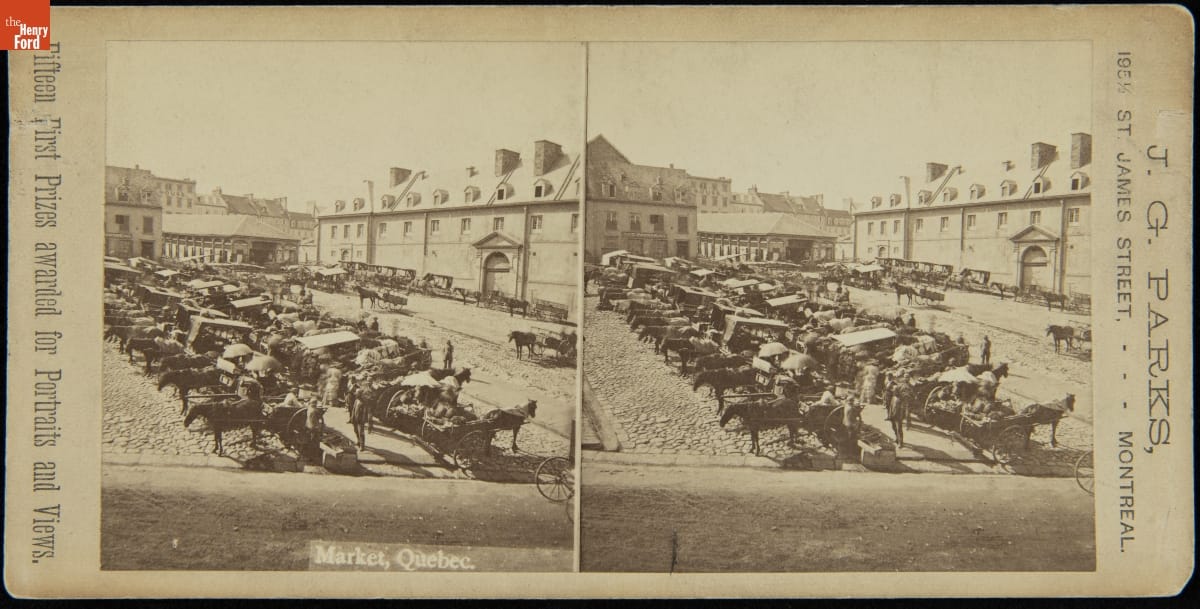
- Market, Quebec, 1864-1894 -
- 1864-1894
- Collections - Artifact
Market, Quebec, 1864-1894
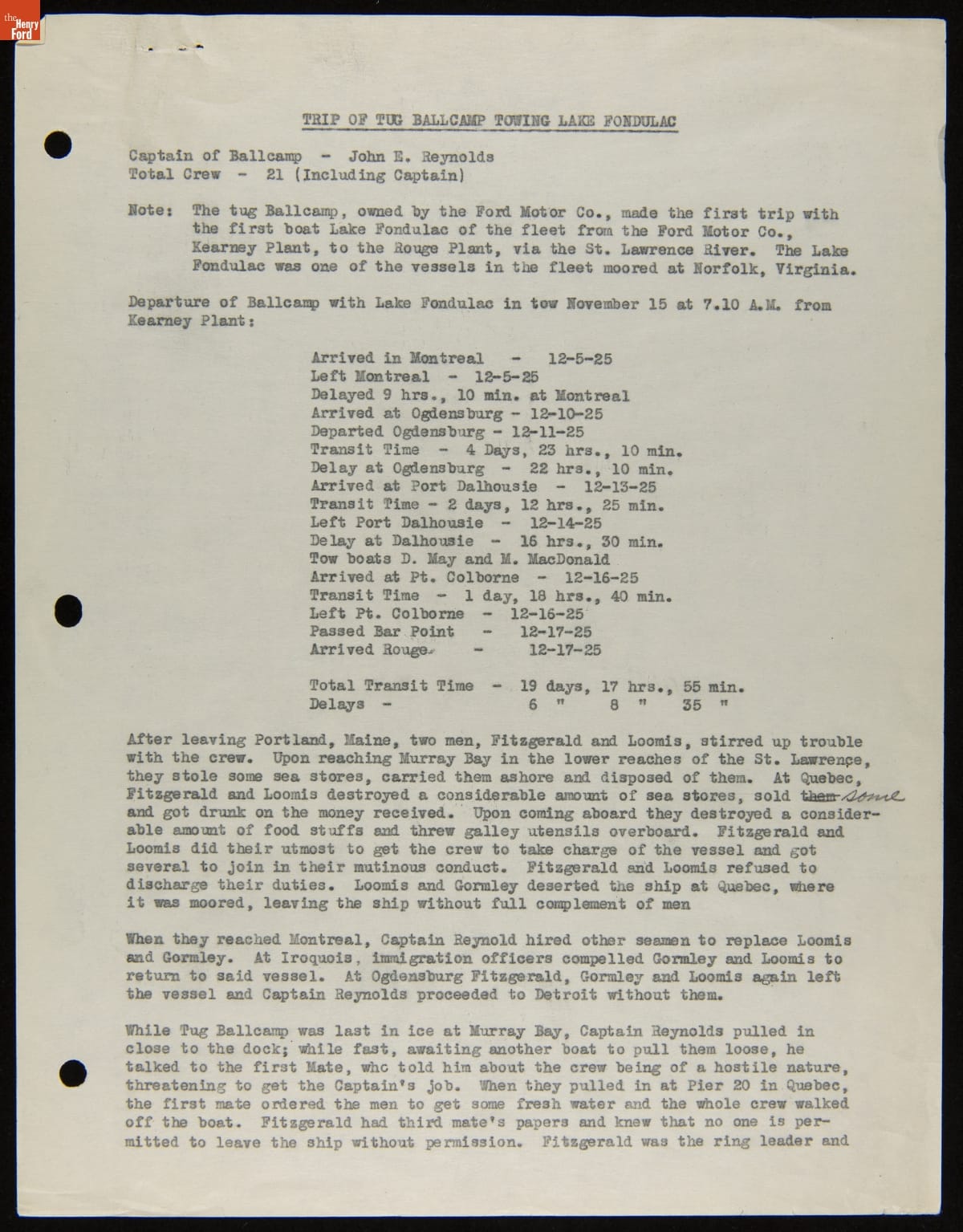
- Trip Report for Ford Tugboat "Ballcamp" Towing Ford Barge "Lake Fondulac," December 1925 - Henry Ford purchased 199 surplus World War I merchant ships from the United States government in 1925. Many of these ships were towed to Ford's River Rouge Plant to be scrapped. The <em>Lake Fondulac</em> was one of the first towed to the scrapyard. This report documents the labor troubles the captain of the tugboat <em>Ballcamp</em> encountered during the voyage.
- December 01, 1925
- Collections - Artifact
Trip Report for Ford Tugboat "Ballcamp" Towing Ford Barge "Lake Fondulac," December 1925
Henry Ford purchased 199 surplus World War I merchant ships from the United States government in 1925. Many of these ships were towed to Ford's River Rouge Plant to be scrapped. The Lake Fondulac was one of the first towed to the scrapyard. This report documents the labor troubles the captain of the tugboat Ballcamp encountered during the voyage.
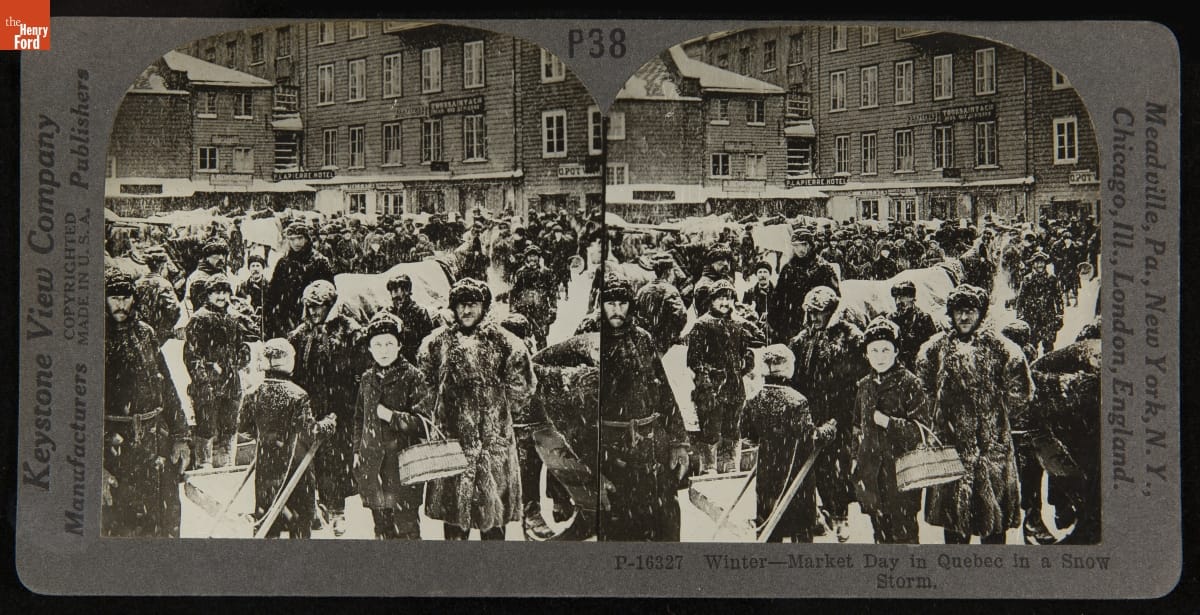
- Winter-Market Day in Quebec in a Snow Storm, 1919 -
- 1919
- Collections - Artifact
Winter-Market Day in Quebec in a Snow Storm, 1919
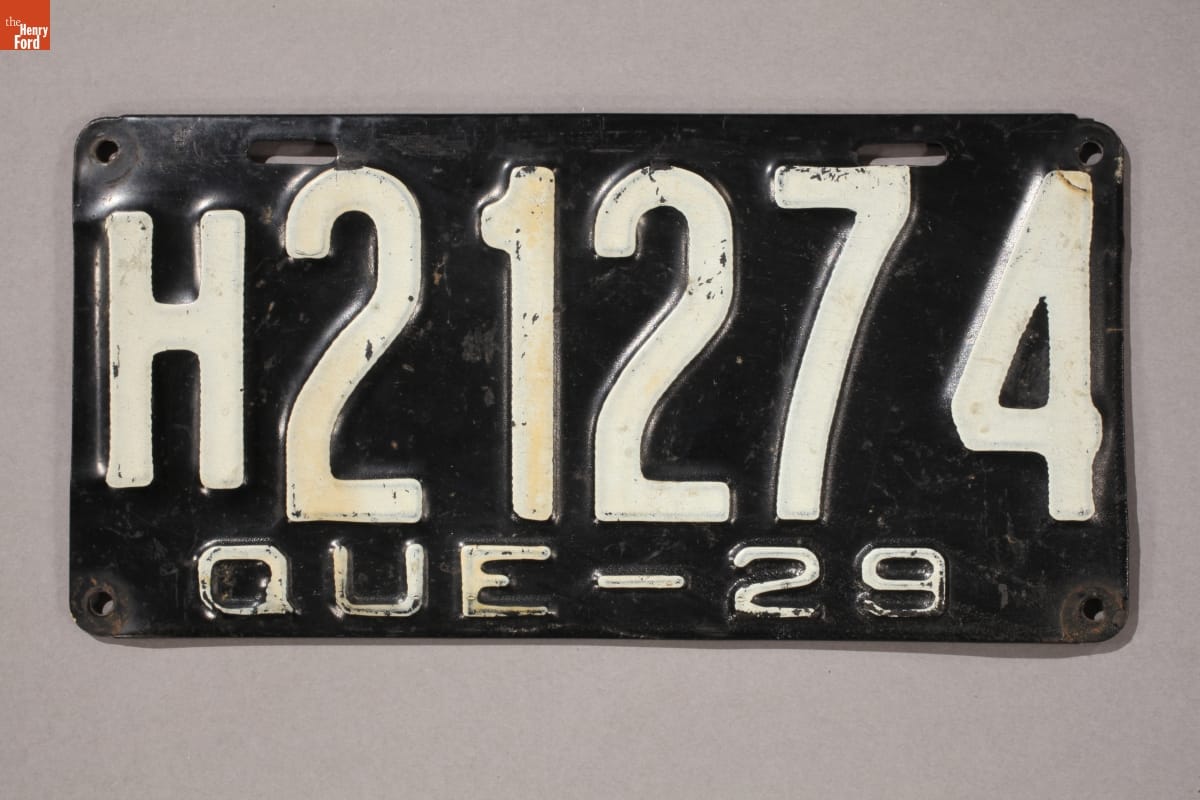
- Quebec License Plate, 1929 - Early license plates issued by Canadian provincial governments consisted of porcelain coated steel, embossed or painted tin, or fiberboard. By the 1920s most provinces produced plates made of embossed steel. Automobiles registered in Quebec in 1929 sported a plate like this one.
- 1929
- Collections - Artifact
Quebec License Plate, 1929
Early license plates issued by Canadian provincial governments consisted of porcelain coated steel, embossed or painted tin, or fiberboard. By the 1920s most provinces produced plates made of embossed steel. Automobiles registered in Quebec in 1929 sported a plate like this one.