
Search
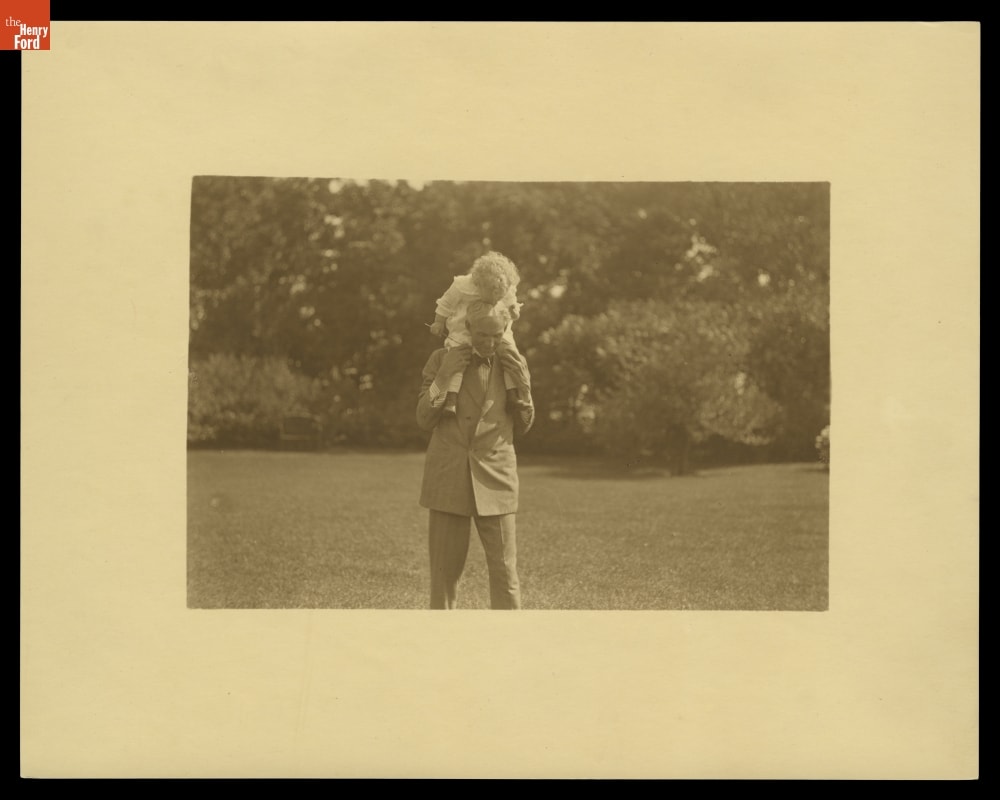
- Henry Ford Carrying Grandson Henry Ford II at Fair Lane, Dearborn, Michigan, 1919 - In the early 1910s, Henry and Clara Ford selected 1300 acres of farmland in Dearborn, Michigan, as the site for a new home. They called the estate Fair Lane. Surrounded by woods, meadows, gardens, and the nature they loved, Henry and Clara found this home a peaceful respite. Here they could wander the landscaped grounds, entertain guests, and play with grandchildren.
- 1919
- Collections - Artifact
Henry Ford Carrying Grandson Henry Ford II at Fair Lane, Dearborn, Michigan, 1919
In the early 1910s, Henry and Clara Ford selected 1300 acres of farmland in Dearborn, Michigan, as the site for a new home. They called the estate Fair Lane. Surrounded by woods, meadows, gardens, and the nature they loved, Henry and Clara found this home a peaceful respite. Here they could wander the landscaped grounds, entertain guests, and play with grandchildren.
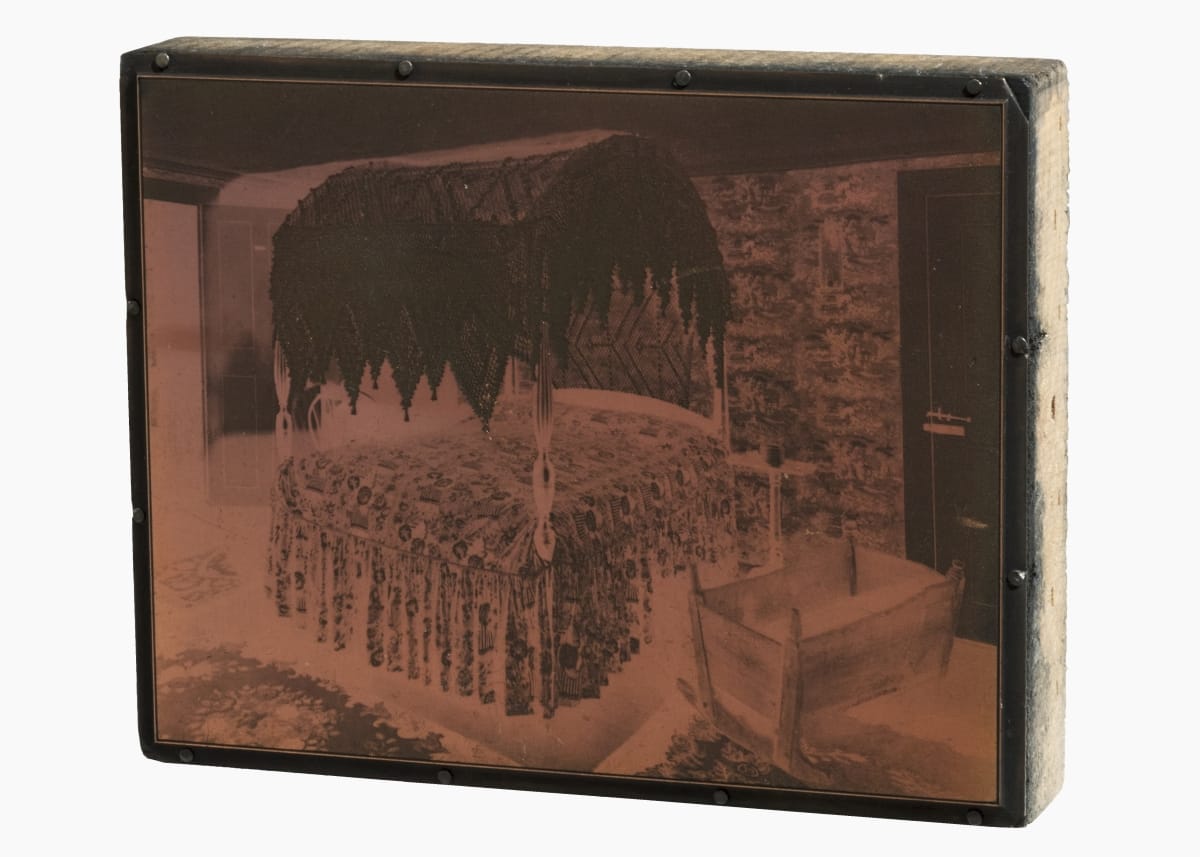
- Printing Plate with Image of a Bedroom Interior -
- Collections - Artifact
Printing Plate with Image of a Bedroom Interior
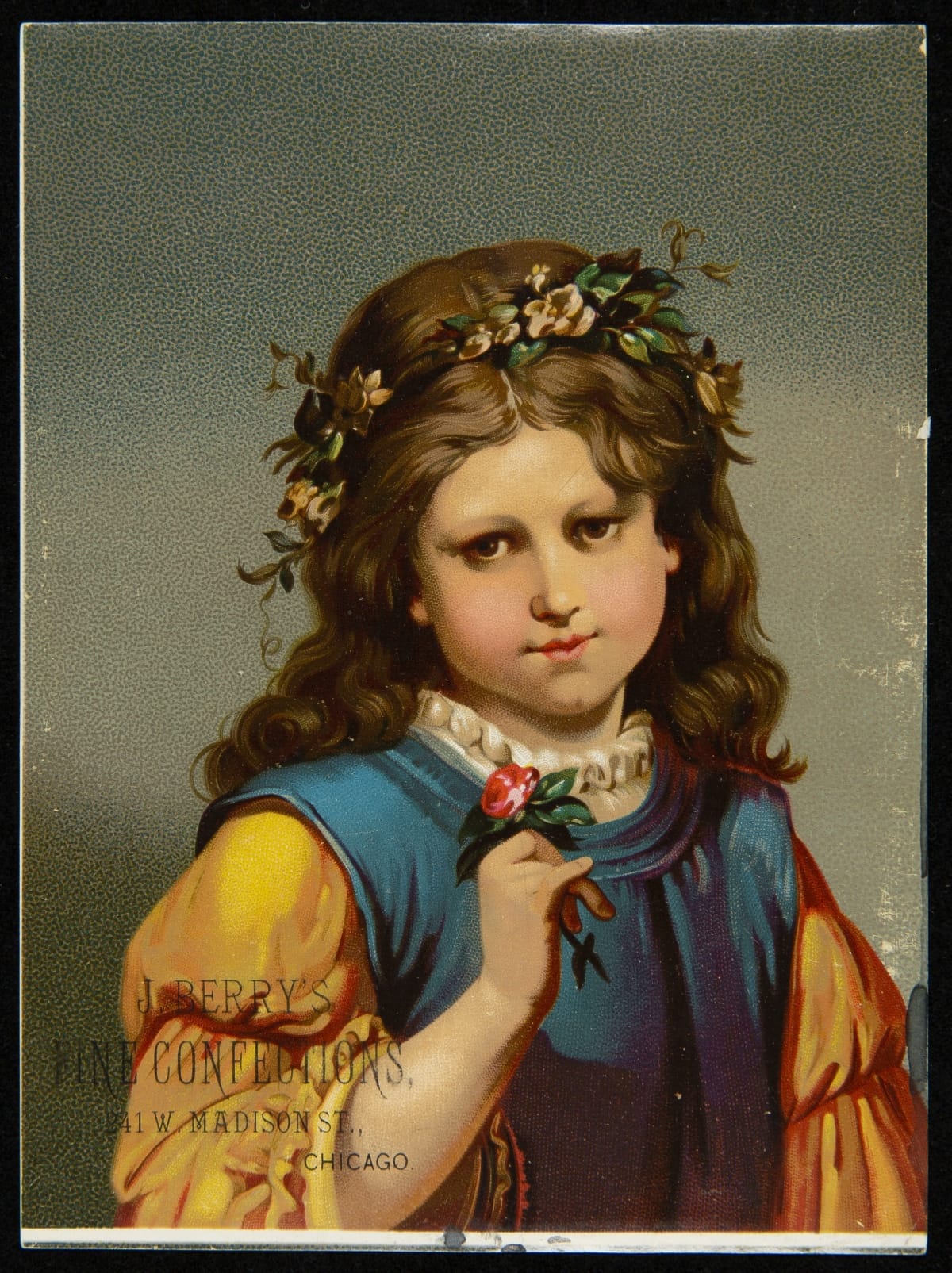
- Label, "J. Berry's Fine Confections," 1886-1905 -
- 1886-1905
- Collections - Artifact
Label, "J. Berry's Fine Confections," 1886-1905
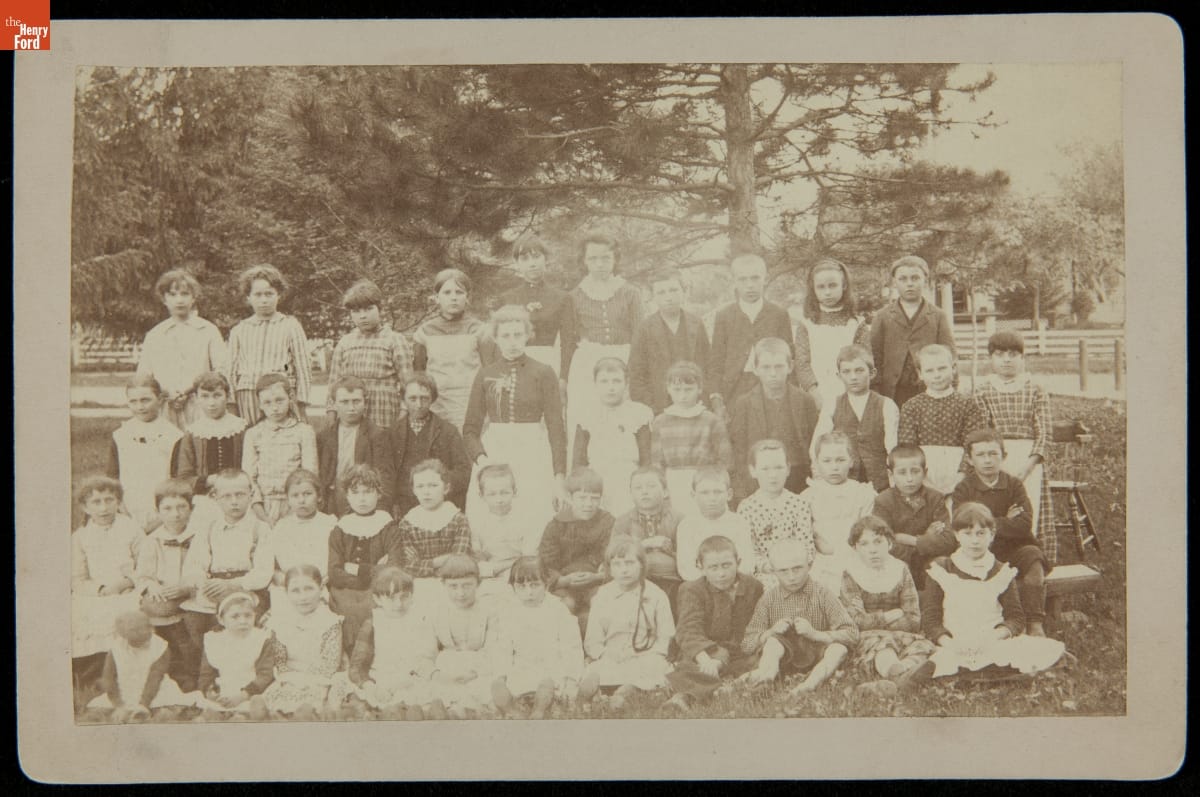
- Group of School Children and Teachers, Hillsdale, Michigan, circa 1890 - This cabinet card shows three teachers and 44 students posing outdoors, perhaps outside the school. This was not a one-room school; the students are approximately the same age. Hillsdale, Michigan, a busy railroad town, had a graded school system. The boys wear shirts, suspenders, and jackets; girls wear pinafores or aprons over their dresses. The teachers wear high-necked, long-sleeve dresses with aprons.
- circa 1890
- Collections - Artifact
Group of School Children and Teachers, Hillsdale, Michigan, circa 1890
This cabinet card shows three teachers and 44 students posing outdoors, perhaps outside the school. This was not a one-room school; the students are approximately the same age. Hillsdale, Michigan, a busy railroad town, had a graded school system. The boys wear shirts, suspenders, and jackets; girls wear pinafores or aprons over their dresses. The teachers wear high-necked, long-sleeve dresses with aprons.
- Weigman Family Portrait, circa 1890 -
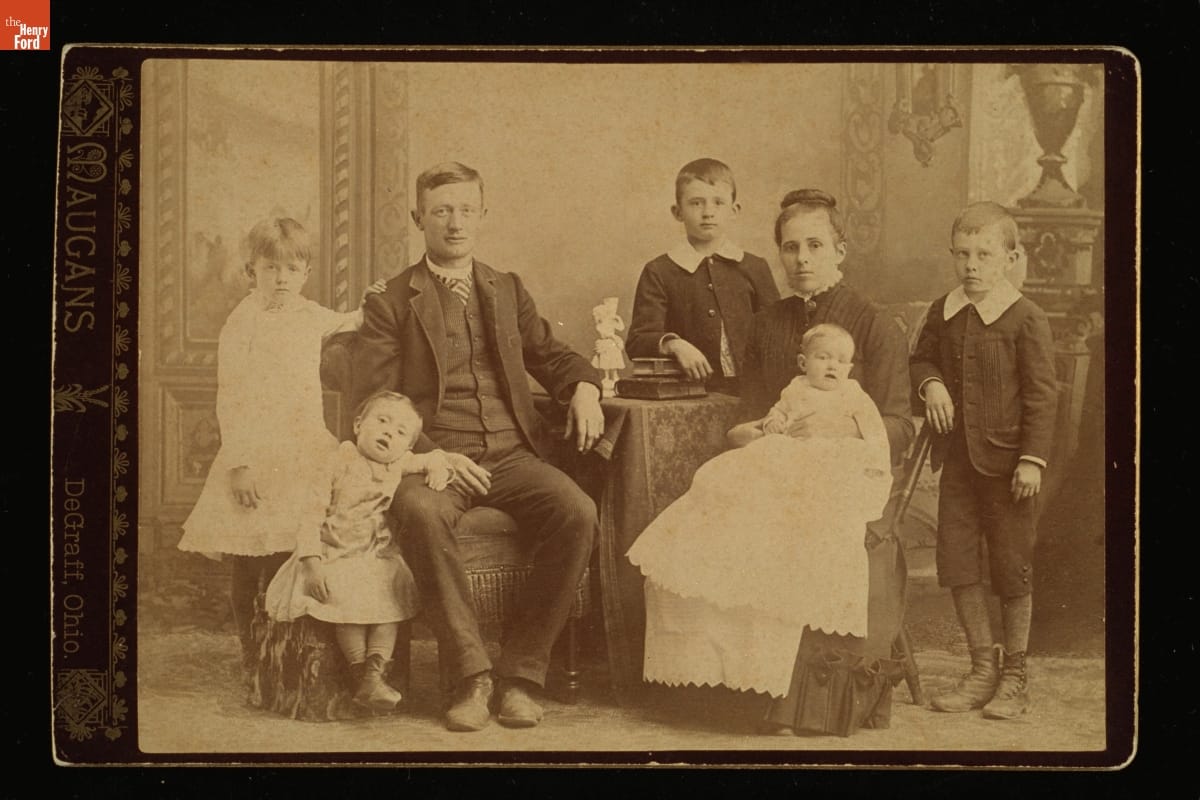
- circa 1890
- Collections - Artifact
Weigman Family Portrait, circa 1890
- Center Medallion Crib Quilt, circa 1880 -
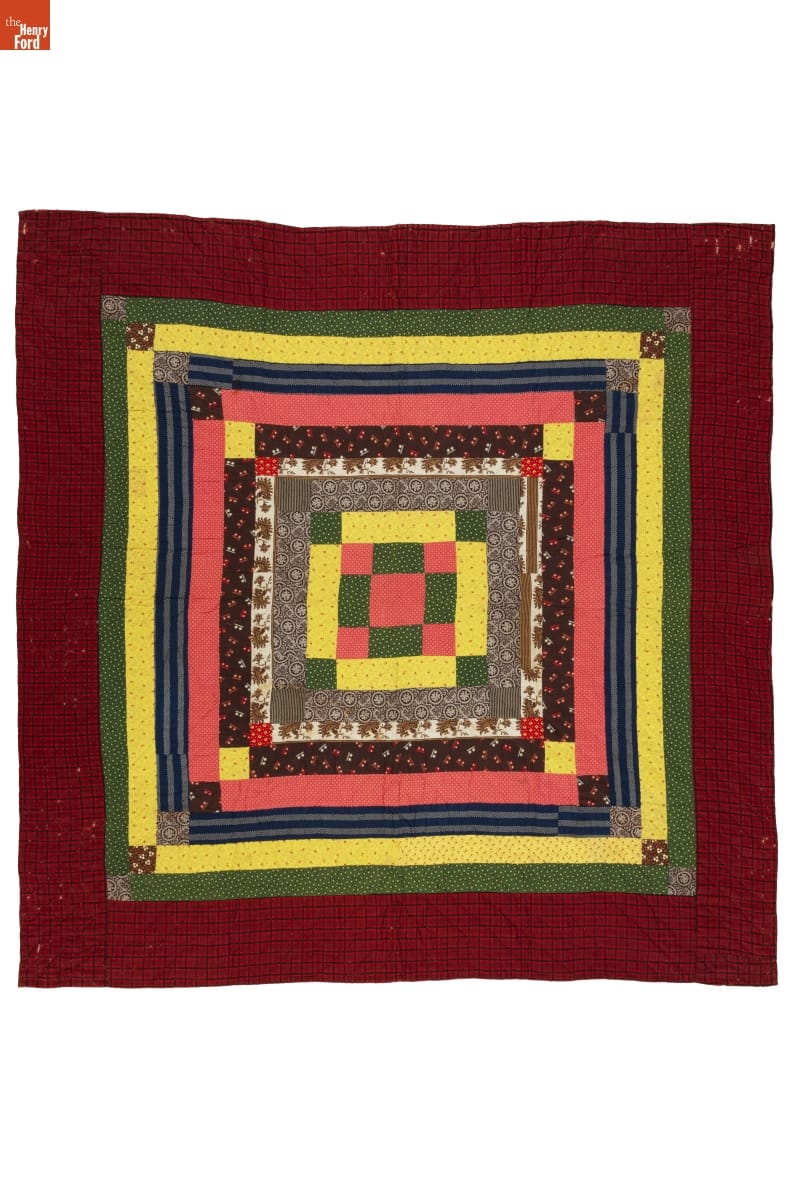
- circa 1880
- Collections - Artifact
Center Medallion Crib Quilt, circa 1880
- Hot Dog Vendor at Grand and Havemeyer Streets, Brooklyn, New York, 1935 -
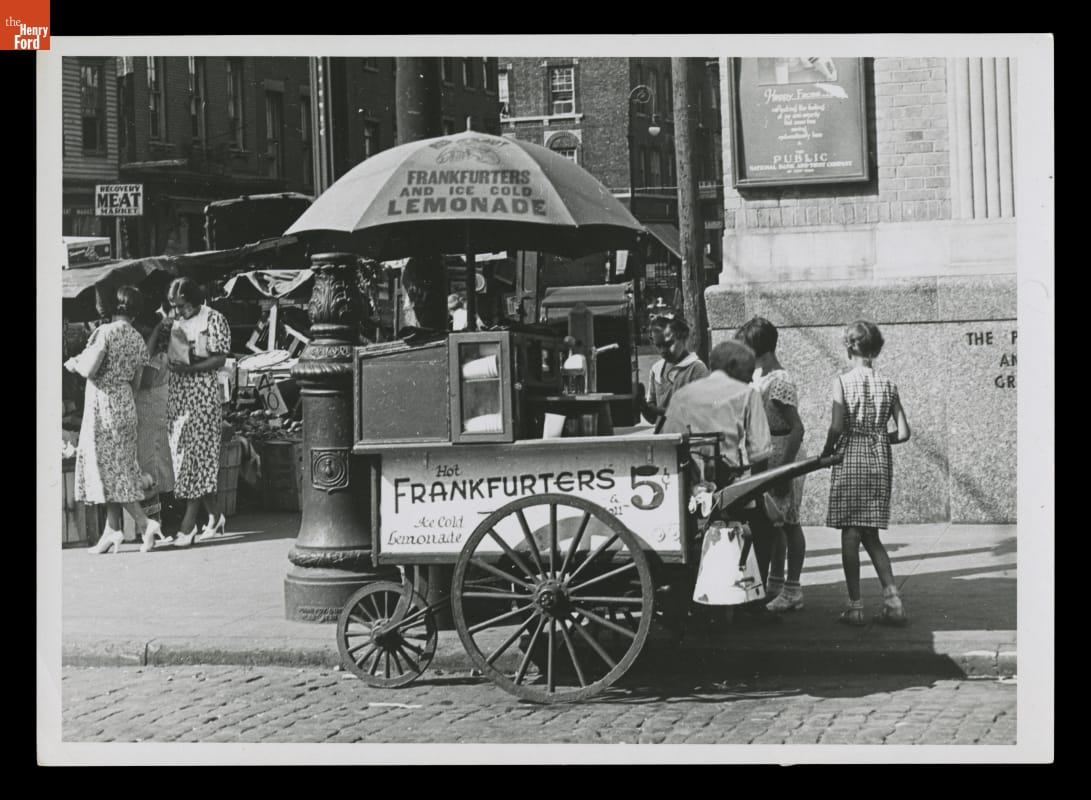
- 1935
- Collections - Artifact
Hot Dog Vendor at Grand and Havemeyer Streets, Brooklyn, New York, 1935
- Young Boy Holding his Hat, circa 1865 -
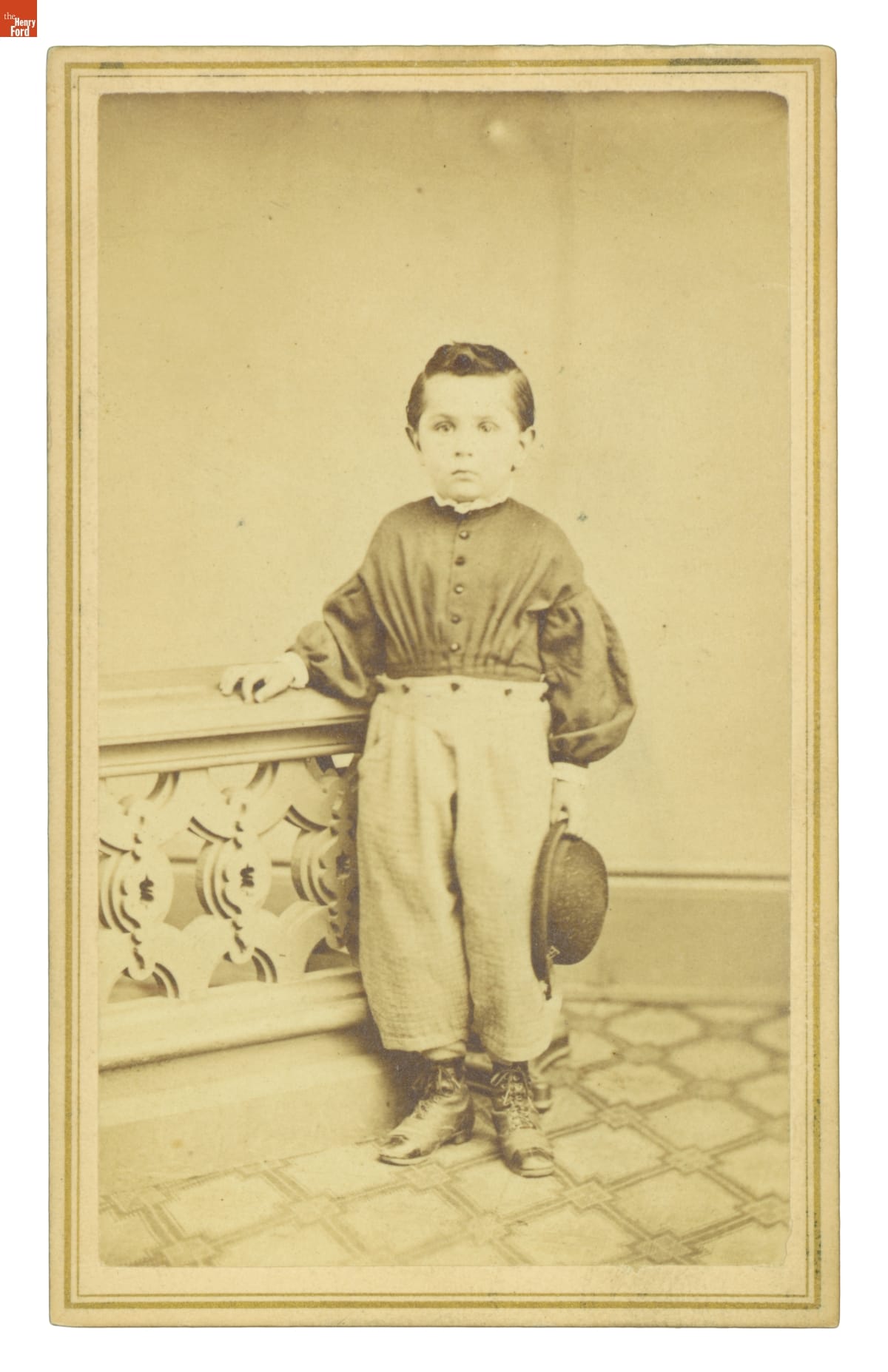
- circa 1865
- Collections - Artifact
Young Boy Holding his Hat, circa 1865
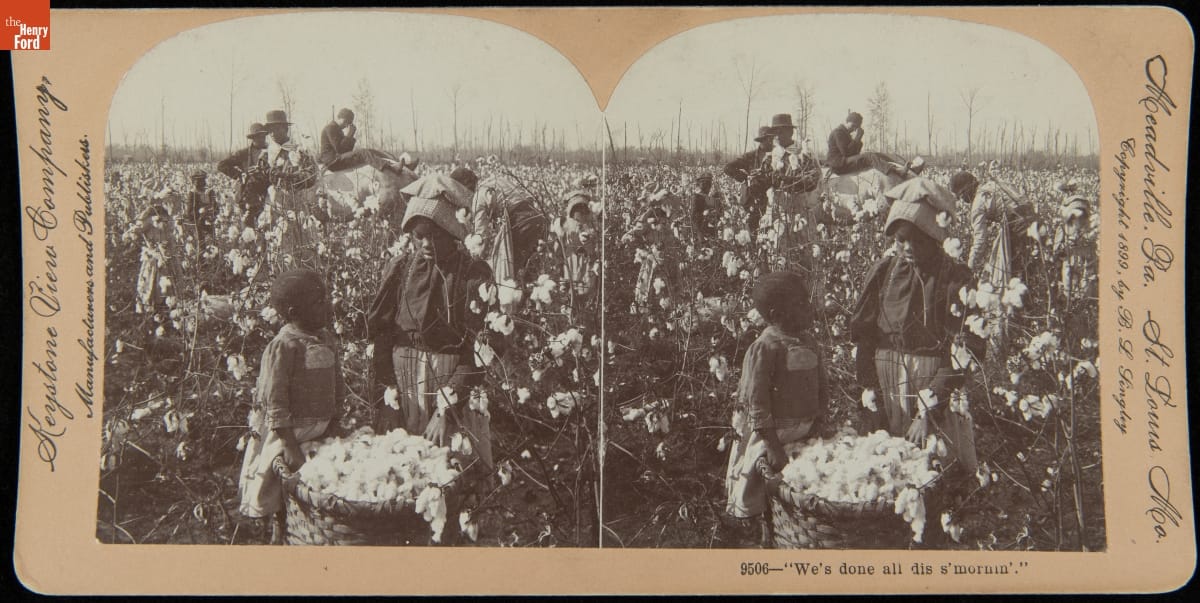
- "We's done all dis s'mornin'," 1899 - This stereograph features children with a full basket of cotton, the cash crop dominating southern agriculture at the time. The caption, in dialect, implied that these children were uneducated. Its translation into six languages conveyed that impression internationally. In reality, cotton pickers earned low wages (one penny per pound) and their impoverished condition undermined access to adequate education.
- 1899
- Collections - Artifact
"We's done all dis s'mornin'," 1899
This stereograph features children with a full basket of cotton, the cash crop dominating southern agriculture at the time. The caption, in dialect, implied that these children were uneducated. Its translation into six languages conveyed that impression internationally. In reality, cotton pickers earned low wages (one penny per pound) and their impoverished condition undermined access to adequate education.
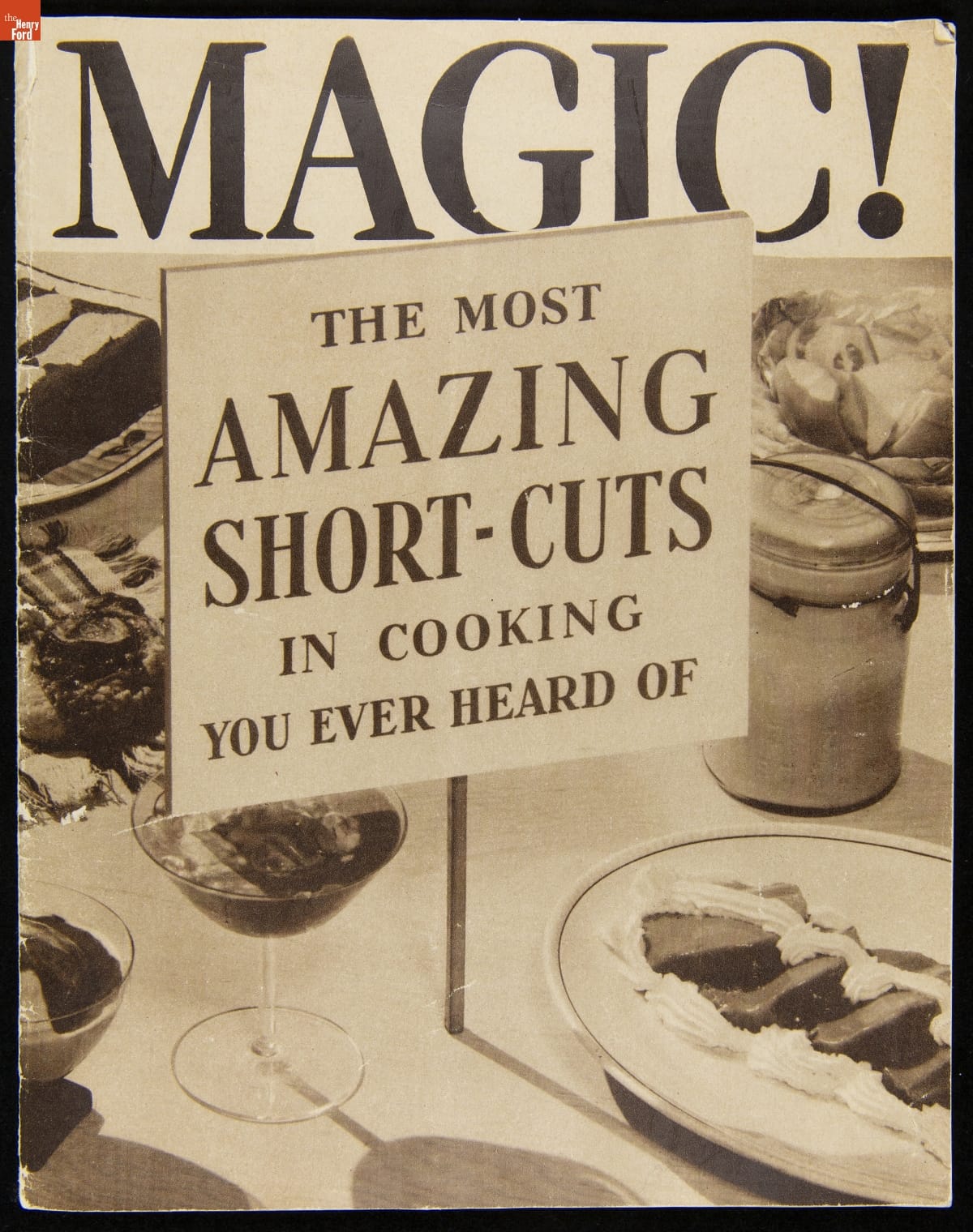
- Recipe Booklet, "MAGIC! The Most Amazing Short-Cuts in Cooking You Ever Heard Of," circa 1930 -
- circa 1930
- Collections - Artifact
Recipe Booklet, "MAGIC! The Most Amazing Short-Cuts in Cooking You Ever Heard Of," circa 1930