
Search
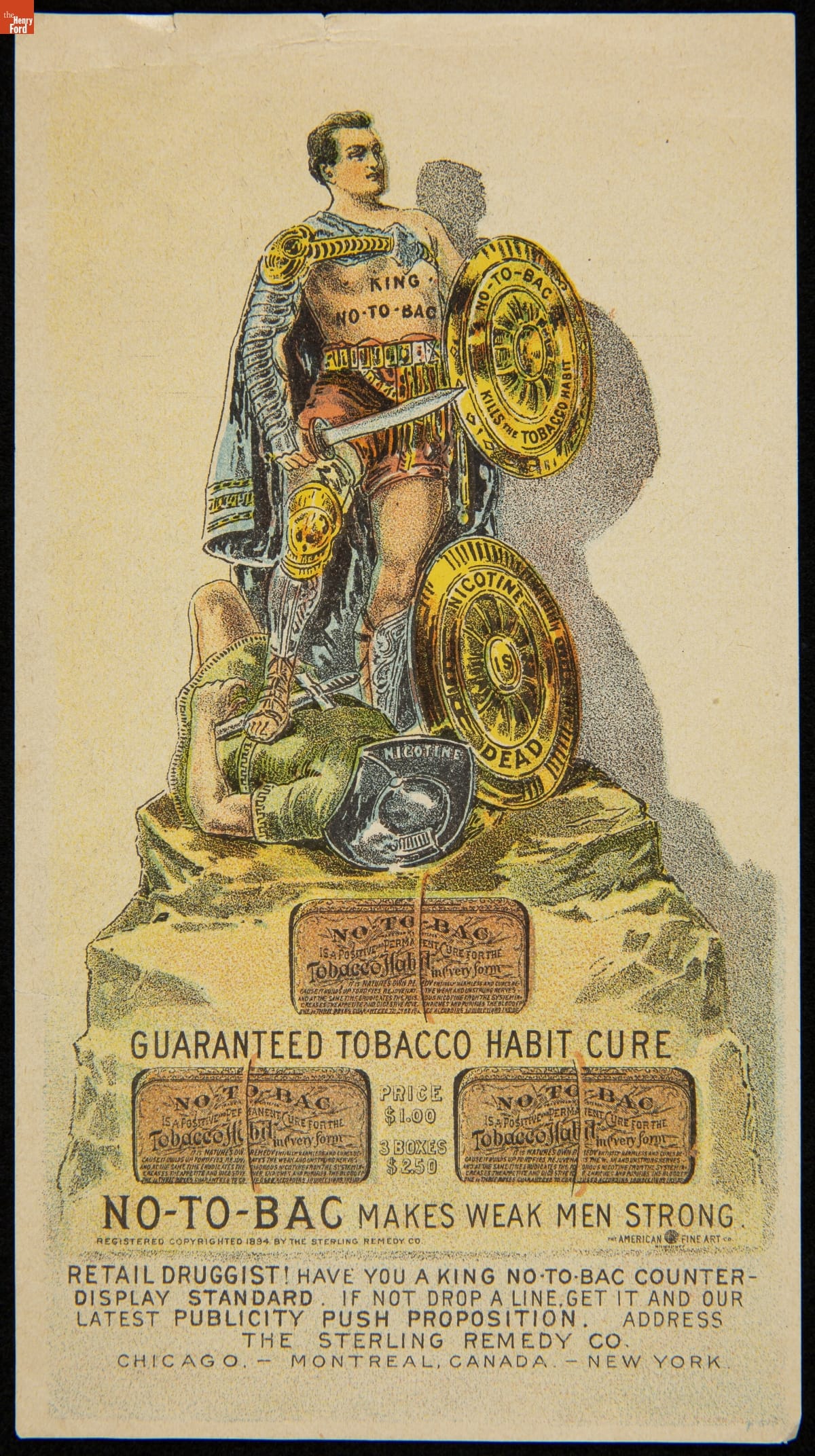
- Trade Card for "No-To-Bac" Tobacco, Sterling Products Co., circa 1894 - In the last third of the nineteenth century, an unprecedented variety of consumer goods and services flooded the American market. Advertisers, armed with new methods of color printing, bombarded potential customers with trade cards. Americans enjoyed and often saved the vibrant little advertisements found in product packages or distributed by local merchants. Many survive as historical records of commercialism in the United States.
- circa 1894
- Collections - Artifact
Trade Card for "No-To-Bac" Tobacco, Sterling Products Co., circa 1894
In the last third of the nineteenth century, an unprecedented variety of consumer goods and services flooded the American market. Advertisers, armed with new methods of color printing, bombarded potential customers with trade cards. Americans enjoyed and often saved the vibrant little advertisements found in product packages or distributed by local merchants. Many survive as historical records of commercialism in the United States.
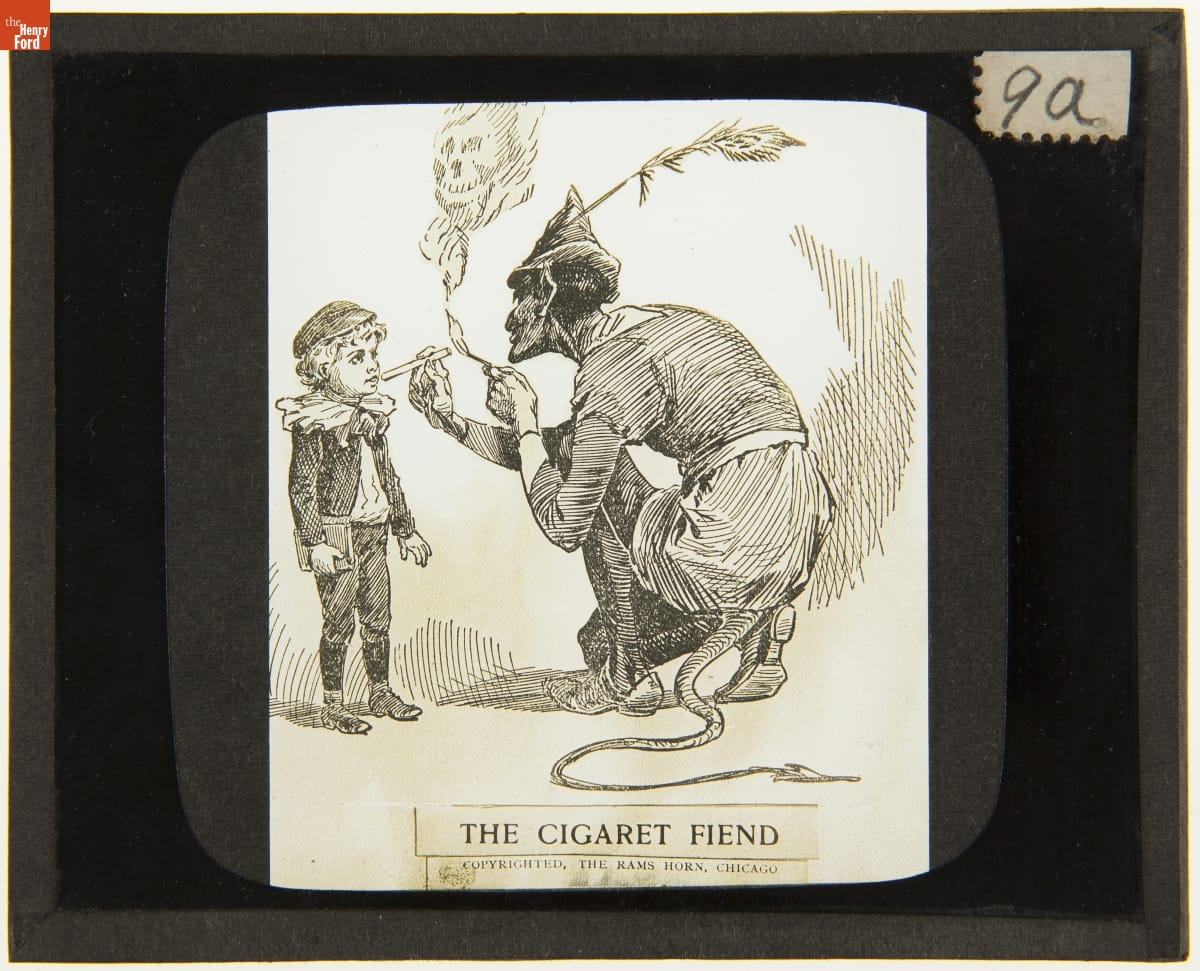
- Lantern Slide, "The Cigaret Fiend" Cartoon, 1890-1910 - Frank Beard (1842-1905), an illustrator, caricaturist, and cartoonist, began his career by sketching scenes of military life for popular publications--such as <em>Harper's Weekly</em>--during the Civil War. His later works promoted Christianity, warned against secularism, and targeted the social ills of the Gilded Age. This slide shows one of his illustrations from <em>The Ram's Horn</em>, a non-denominational Christian periodical.
- 1890-1910
- Collections - Artifact
Lantern Slide, "The Cigaret Fiend" Cartoon, 1890-1910
Frank Beard (1842-1905), an illustrator, caricaturist, and cartoonist, began his career by sketching scenes of military life for popular publications--such as Harper's Weekly--during the Civil War. His later works promoted Christianity, warned against secularism, and targeted the social ills of the Gilded Age. This slide shows one of his illustrations from The Ram's Horn, a non-denominational Christian periodical.
- Everlast "Neocraft Flower" Ashtray, 1938-1955 - In 1932, Louis Schnitzer and Nathan Gelfman formed Everlast Metal Products Corporation, producing high-quality, hand-forged aluminum giftware. In an era of growing uniformity via factory production, the "made by hand" aspect of these products held an aesthetic appeal for consumers. In 1938, Everlast introduced the "Neocraft" product line, made of anodized aluminum and featuring vibrant colors and clean lines.

- 1938-1955
- Collections - Artifact
Everlast "Neocraft Flower" Ashtray, 1938-1955
In 1932, Louis Schnitzer and Nathan Gelfman formed Everlast Metal Products Corporation, producing high-quality, hand-forged aluminum giftware. In an era of growing uniformity via factory production, the "made by hand" aspect of these products held an aesthetic appeal for consumers. In 1938, Everlast introduced the "Neocraft" product line, made of anodized aluminum and featuring vibrant colors and clean lines.
- Everlast "Neocraft Flower" Ashtray, 1938-1955 - In 1932, Louis Schnitzer and Nathan Gelfman formed Everlast Metal Products Corporation, producing high-quality, hand-forged aluminum giftware. In an era of growing uniformity via factory production, the "made by hand" aspect of these products held an aesthetic appeal for consumers. In 1938, Everlast introduced the "Neocraft" product line, made of anodized aluminum and featuring vibrant colors and clean lines.

- 1938-1955
- Collections - Artifact
Everlast "Neocraft Flower" Ashtray, 1938-1955
In 1932, Louis Schnitzer and Nathan Gelfman formed Everlast Metal Products Corporation, producing high-quality, hand-forged aluminum giftware. In an era of growing uniformity via factory production, the "made by hand" aspect of these products held an aesthetic appeal for consumers. In 1938, Everlast introduced the "Neocraft" product line, made of anodized aluminum and featuring vibrant colors and clean lines.
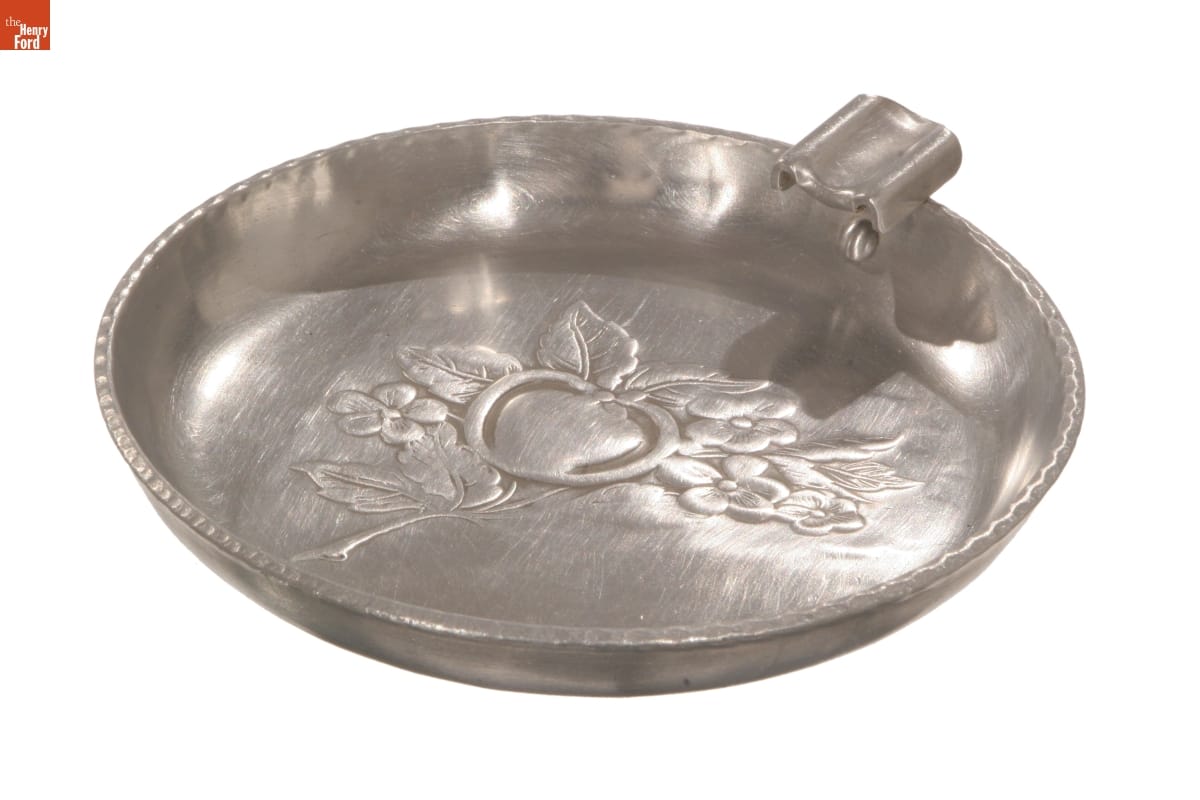
- Everlast "Forged Apple" Ashtray, 1947-1960 - In 1932, Louis Schnitzer and Nathan Gelfman formed Everlast Metal Products Corporation, producing high-quality, hand-forged aluminum giftware. In an era of growing uniformity via factory production, the "made by hand" aspect of these products held an aesthetic appeal for consumers. In 1933, Everlast introduced its first product line, "Forged Giftware" featuring Colonial Revival inspired designs.
- 1947-1960
- Collections - Artifact
Everlast "Forged Apple" Ashtray, 1947-1960
In 1932, Louis Schnitzer and Nathan Gelfman formed Everlast Metal Products Corporation, producing high-quality, hand-forged aluminum giftware. In an era of growing uniformity via factory production, the "made by hand" aspect of these products held an aesthetic appeal for consumers. In 1933, Everlast introduced its first product line, "Forged Giftware" featuring Colonial Revival inspired designs.
- "I Like Ike" Cigarette Package, 1952 - Dwight D. Eisenhower's "I Like Ike" slogan of 1952 was one of the most successful slogans in American political history. The slogan first appeared as "They Like Ike" in Irving Berlin's musical, "Call Me Madam," in 1950. Market research revealed that American felt comfortable with and trusted Eisenhower and the slogan stuck. At the time, cigarettes symbolized glamour and sophistication.

- 1952
- Collections - Artifact
"I Like Ike" Cigarette Package, 1952
Dwight D. Eisenhower's "I Like Ike" slogan of 1952 was one of the most successful slogans in American political history. The slogan first appeared as "They Like Ike" in Irving Berlin's musical, "Call Me Madam," in 1950. Market research revealed that American felt comfortable with and trusted Eisenhower and the slogan stuck. At the time, cigarettes symbolized glamour and sophistication.
- "A Woman's Way: The Stop-Smoking Book for Women," 1995 -

- 1995
- Collections - Artifact
"A Woman's Way: The Stop-Smoking Book for Women," 1995
- "Stop Smoking Stay Skinny," 1998 -

- 1998
- Collections - Artifact
"Stop Smoking Stay Skinny," 1998
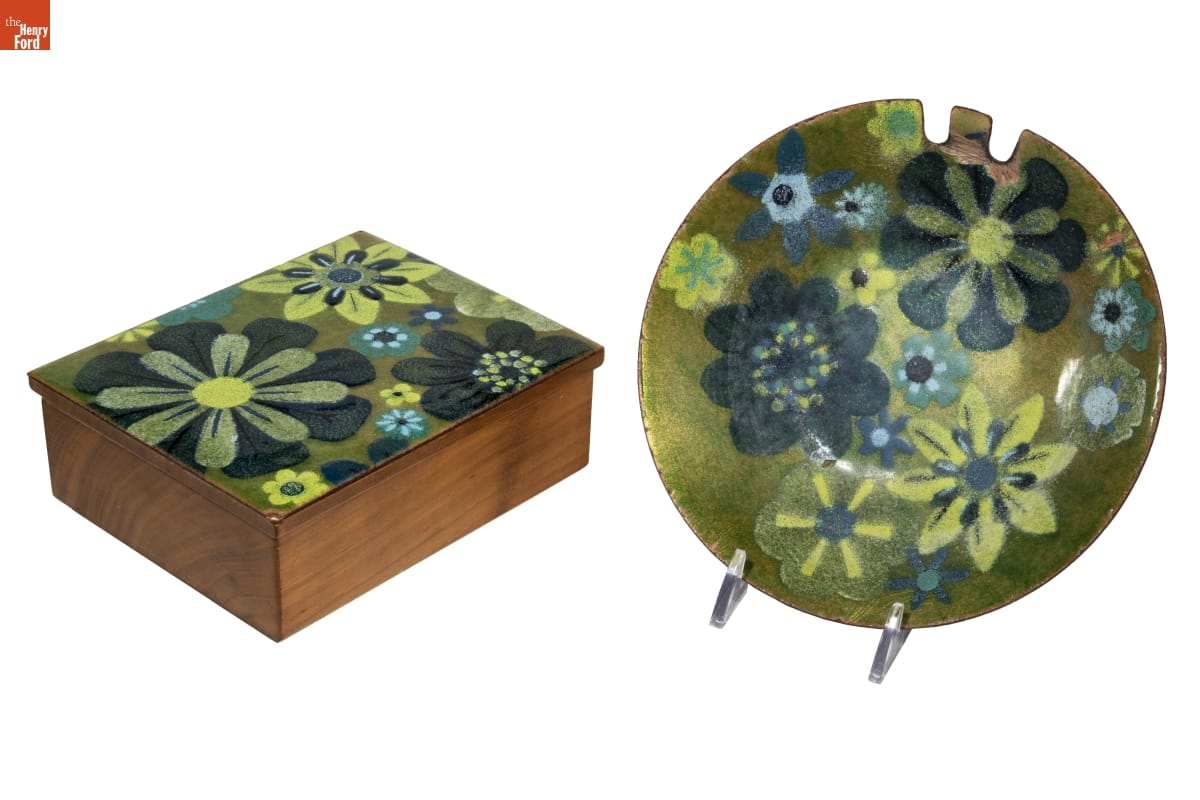
- Cigarette Box and Ashtray Set, 1960-1972 -
- 1960-1972
- Collections - Artifact
Cigarette Box and Ashtray Set, 1960-1972
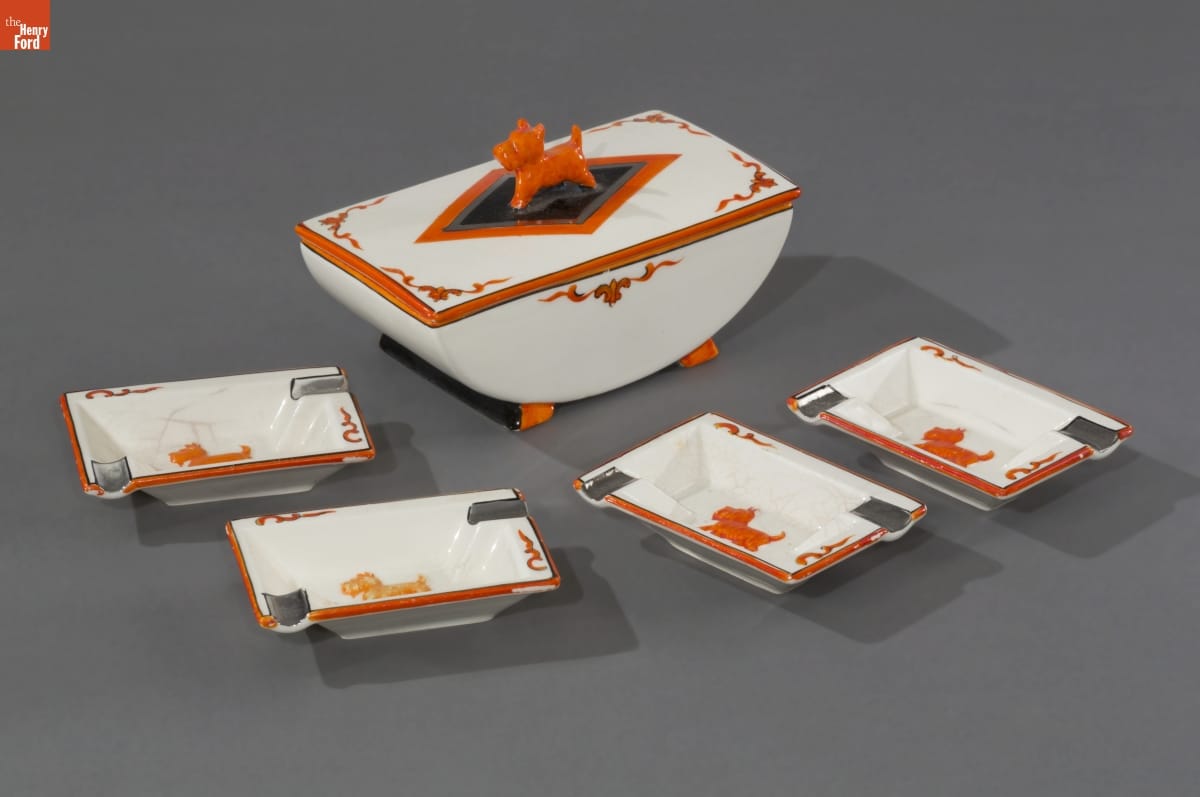
- "Scottie Dog" Cigarette Holder and Ash Trays, 1935-1940 - This ceramic set featured a popular motif of the 1930s and early 1940s -- the Scottish Terrier. Customers seeking a cigarette holder and matching ash trays could purchase the utilitarian mass-produced set for use during afternoon teas, card parties, and other domestic gatherings prior to World War II.
- 1935-1940
- Collections - Artifact
"Scottie Dog" Cigarette Holder and Ash Trays, 1935-1940
This ceramic set featured a popular motif of the 1930s and early 1940s -- the Scottish Terrier. Customers seeking a cigarette holder and matching ash trays could purchase the utilitarian mass-produced set for use during afternoon teas, card parties, and other domestic gatherings prior to World War II.