
Search
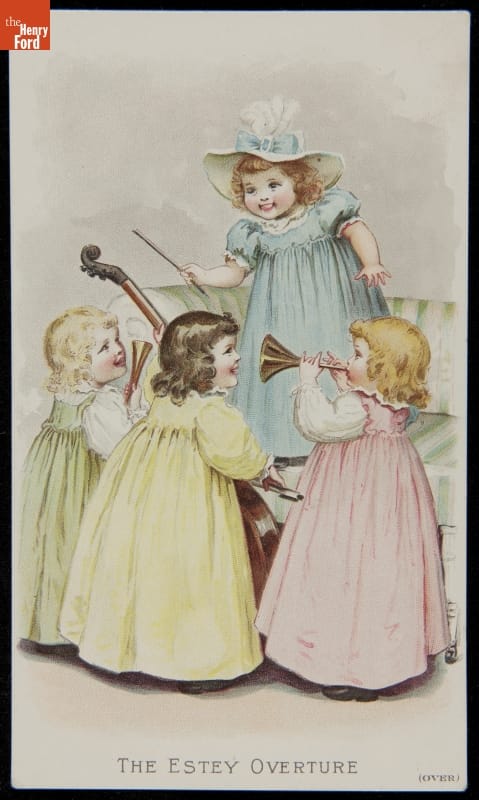
- Trade Card for Estey Organ Company, "The Estey Overture," 1880-1890 - In the last third of the nineteenth century, an unprecedented variety of consumer goods and services flooded the American market. Advertisers, armed with new methods of color printing, bombarded potential customers with trade cards. Americans enjoyed and often saved the vibrant little advertisements found in product packages or distributed by local merchants. Many survive as historical records of commercialism in the United States.
- 1880-1890
- Collections - Artifact
Trade Card for Estey Organ Company, "The Estey Overture," 1880-1890
In the last third of the nineteenth century, an unprecedented variety of consumer goods and services flooded the American market. Advertisers, armed with new methods of color printing, bombarded potential customers with trade cards. Americans enjoyed and often saved the vibrant little advertisements found in product packages or distributed by local merchants. Many survive as historical records of commercialism in the United States.
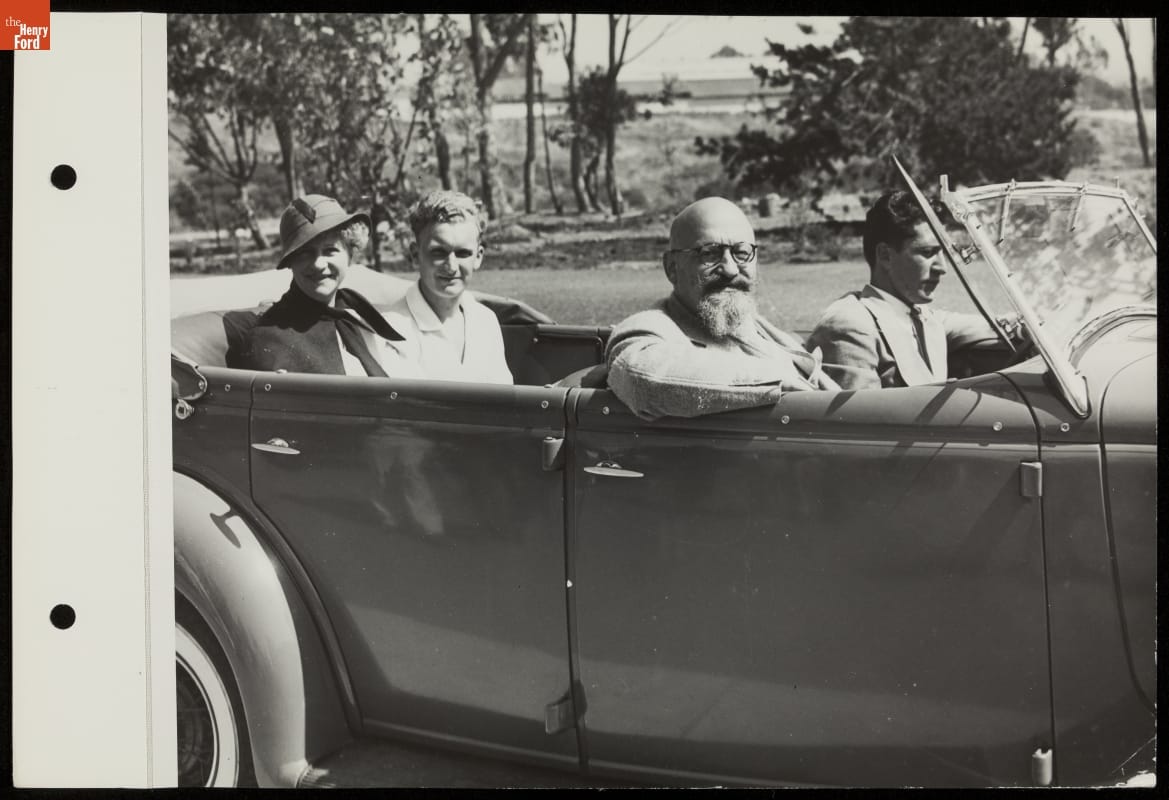
- Dr. Alfred Hertz and Others Visiting 'Roads of the Pacific,' California Pacific International Exposition, San Diego, 1935 - The Ford Exhibit at the 1935 California Pacific International Exposition featured "Roads of the Pacific," where visitors rode in brand new Ford V-8s over realistic reproductions of historic and modern roadways. In this photograph, Dr. Alfred Hertz (next to driver)--whose San Francisco Symphony Orchestra performed many concerts during the exposition--sets out for a tour of Ford's immersive experience.
- 1935
- Collections - Artifact
Dr. Alfred Hertz and Others Visiting 'Roads of the Pacific,' California Pacific International Exposition, San Diego, 1935
The Ford Exhibit at the 1935 California Pacific International Exposition featured "Roads of the Pacific," where visitors rode in brand new Ford V-8s over realistic reproductions of historic and modern roadways. In this photograph, Dr. Alfred Hertz (next to driver)--whose San Francisco Symphony Orchestra performed many concerts during the exposition--sets out for a tour of Ford's immersive experience.
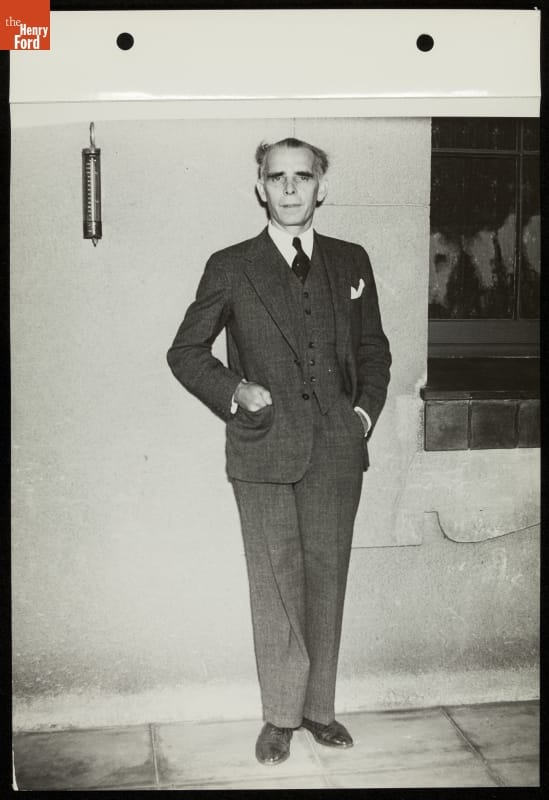
- Portland, Oregon Symphony Orchestra Conductor Willem van Hoogstraten, in San Diego, California for the California Pacific International Exposition, 1935 - Ford Motor Company poured resources into the 1935 California Pacific International Exposition in San Diego, constructing the fair's largest and most popular exhibition. Performers in the 3,000-seat Ford Music Bowl amphitheatre included the Portland Symphony Orchestra. Music Bowl concerts - free to visitors and broadcast nationally by radio - broadened Ford's corporate presence at the Exposition and provided bonus advertising.
- 1935
- Collections - Artifact
Portland, Oregon Symphony Orchestra Conductor Willem van Hoogstraten, in San Diego, California for the California Pacific International Exposition, 1935
Ford Motor Company poured resources into the 1935 California Pacific International Exposition in San Diego, constructing the fair's largest and most popular exhibition. Performers in the 3,000-seat Ford Music Bowl amphitheatre included the Portland Symphony Orchestra. Music Bowl concerts - free to visitors and broadcast nationally by radio - broadened Ford's corporate presence at the Exposition and provided bonus advertising.
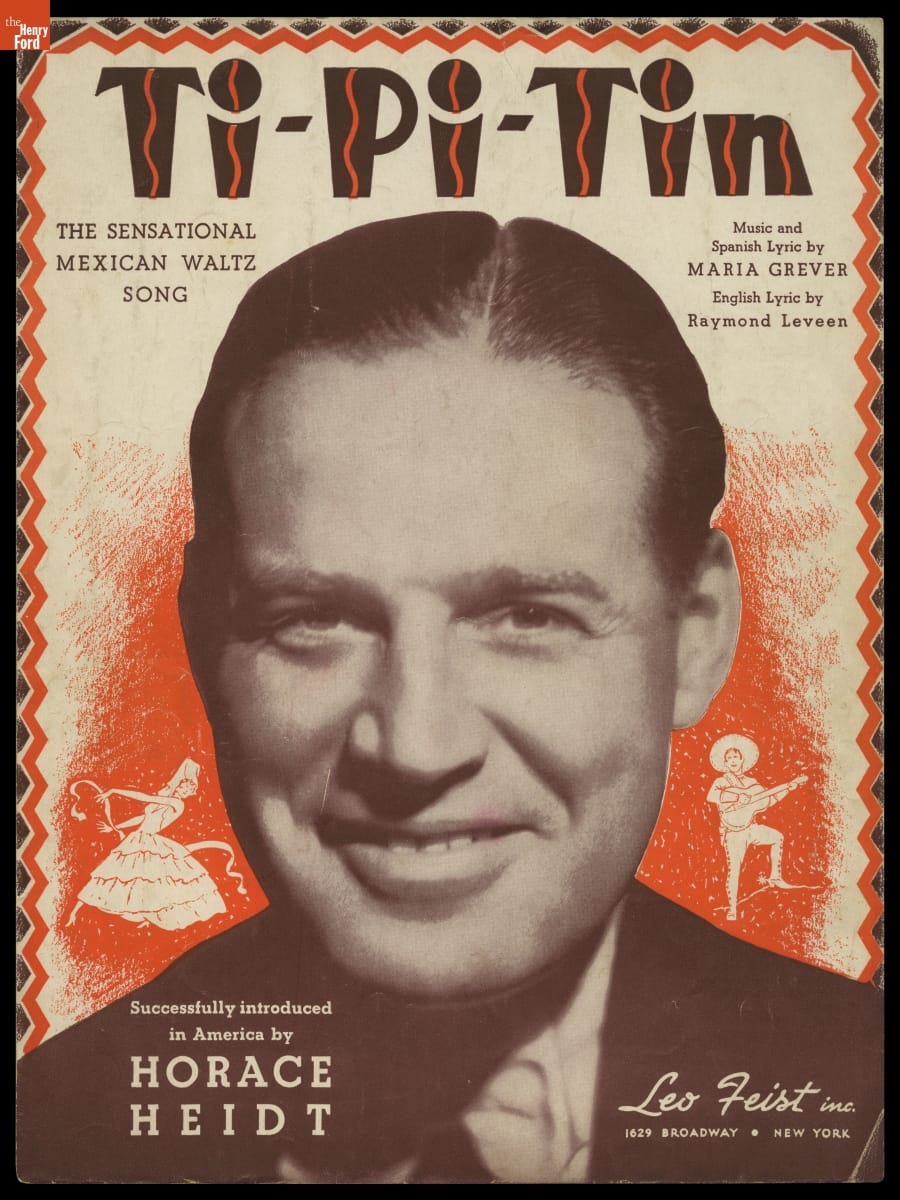
- "Ti-Pi-Tin, the Sensational Waltz Song," 1938 - In 1938, "Ti-Pi-Tin" became Mexican composer Maria Grever's first big hit after moving to America. Finding no interest, Grever published it herself. Bandleader Horace Heidt heard the song and recognized its possibilities. His orchestra played it on NBC radio--immediately launching the song to success and creating a demand for sheet music. To keep up, Grever allowed Leo Feist Inc. to publish it.
- 1938
- Collections - Artifact
"Ti-Pi-Tin, the Sensational Waltz Song," 1938
In 1938, "Ti-Pi-Tin" became Mexican composer Maria Grever's first big hit after moving to America. Finding no interest, Grever published it herself. Bandleader Horace Heidt heard the song and recognized its possibilities. His orchestra played it on NBC radio--immediately launching the song to success and creating a demand for sheet music. To keep up, Grever allowed Leo Feist Inc. to publish it.
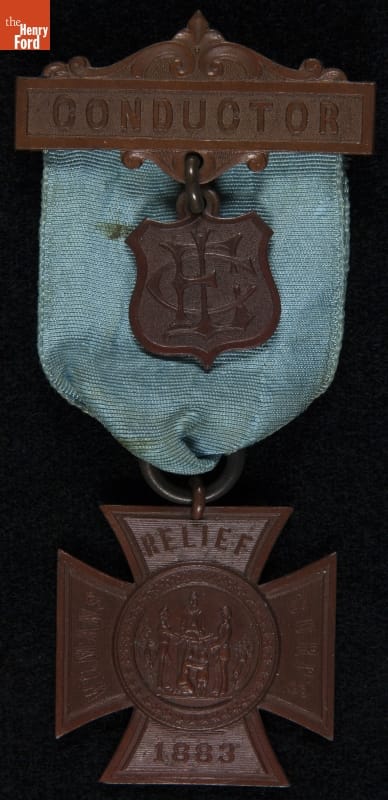
- Woman's Relief Corps (W.R.C.) Conductor Badge, 1883-1920 - In 1883, the Woman's Relief Corp (WRC) was recognized as an auxiliary organization to the Grand Army of the Republic (G.A.R.), a Civil War Union veterans' association. The WRC not only supported the G.A.R.'s mission to aid Union veterans, but also assisted former Army nurses and promoted patriotism through education. WRC conventions were usually held at the same time as the ones for the G.A.R.
- 1883-1920
- Collections - Artifact
Woman's Relief Corps (W.R.C.) Conductor Badge, 1883-1920
In 1883, the Woman's Relief Corp (WRC) was recognized as an auxiliary organization to the Grand Army of the Republic (G.A.R.), a Civil War Union veterans' association. The WRC not only supported the G.A.R.'s mission to aid Union veterans, but also assisted former Army nurses and promoted patriotism through education. WRC conventions were usually held at the same time as the ones for the G.A.R.
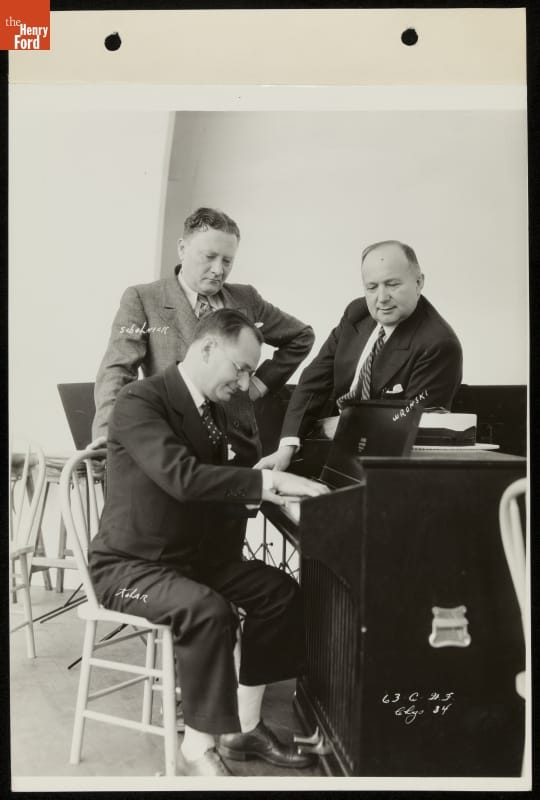
- Victor Kolar at the Piano, Ford Symphony Gardens, Century of Progress International Exposition, Chicago, Illinois, 1934 - Ford Motor Company poured resources into the largest, most talked-about exhibition at Chicago's Century of Progress Exposition in 1934. The installation included Ford Symphony Gardens, an outdoor bandshell where fairgoers could relax and enjoy performances by groups like the Detroit Symphony Orchestra--conducted by Victor Kolar. These concerts and plays broadened Ford's corporate presence at the fair and provided bonus advertising.
- 1934
- Collections - Artifact
Victor Kolar at the Piano, Ford Symphony Gardens, Century of Progress International Exposition, Chicago, Illinois, 1934
Ford Motor Company poured resources into the largest, most talked-about exhibition at Chicago's Century of Progress Exposition in 1934. The installation included Ford Symphony Gardens, an outdoor bandshell where fairgoers could relax and enjoy performances by groups like the Detroit Symphony Orchestra--conducted by Victor Kolar. These concerts and plays broadened Ford's corporate presence at the fair and provided bonus advertising.
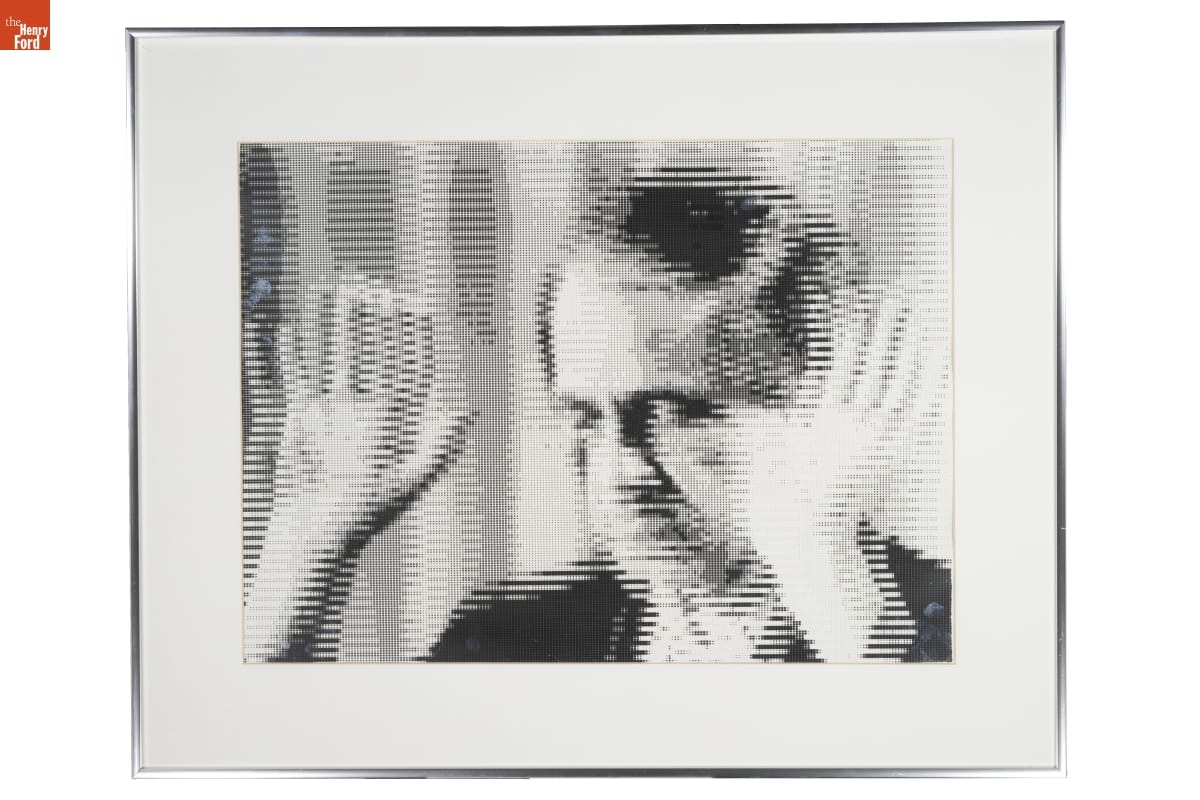
- "Pierre Boulez Conducting from Rituel" by Lillian F. Schwartz, circa 1979 - Lillian Schwartz is a pioneer of computer-generated art. From 1969-2002, she was a "resident visitor" at Bell Laboratories, producing groundbreaking films, videos, and multimedia works. The Schwartz Collection spans Lillian's childhood into her late career, documenting an expansive mindset, mastery over traditional and experimental mediums alike--and above all--an ability to create inspirational connections between science, art, and technology.
- circa 1979
- Collections - Artifact
"Pierre Boulez Conducting from Rituel" by Lillian F. Schwartz, circa 1979
Lillian Schwartz is a pioneer of computer-generated art. From 1969-2002, she was a "resident visitor" at Bell Laboratories, producing groundbreaking films, videos, and multimedia works. The Schwartz Collection spans Lillian's childhood into her late career, documenting an expansive mindset, mastery over traditional and experimental mediums alike--and above all--an ability to create inspirational connections between science, art, and technology.
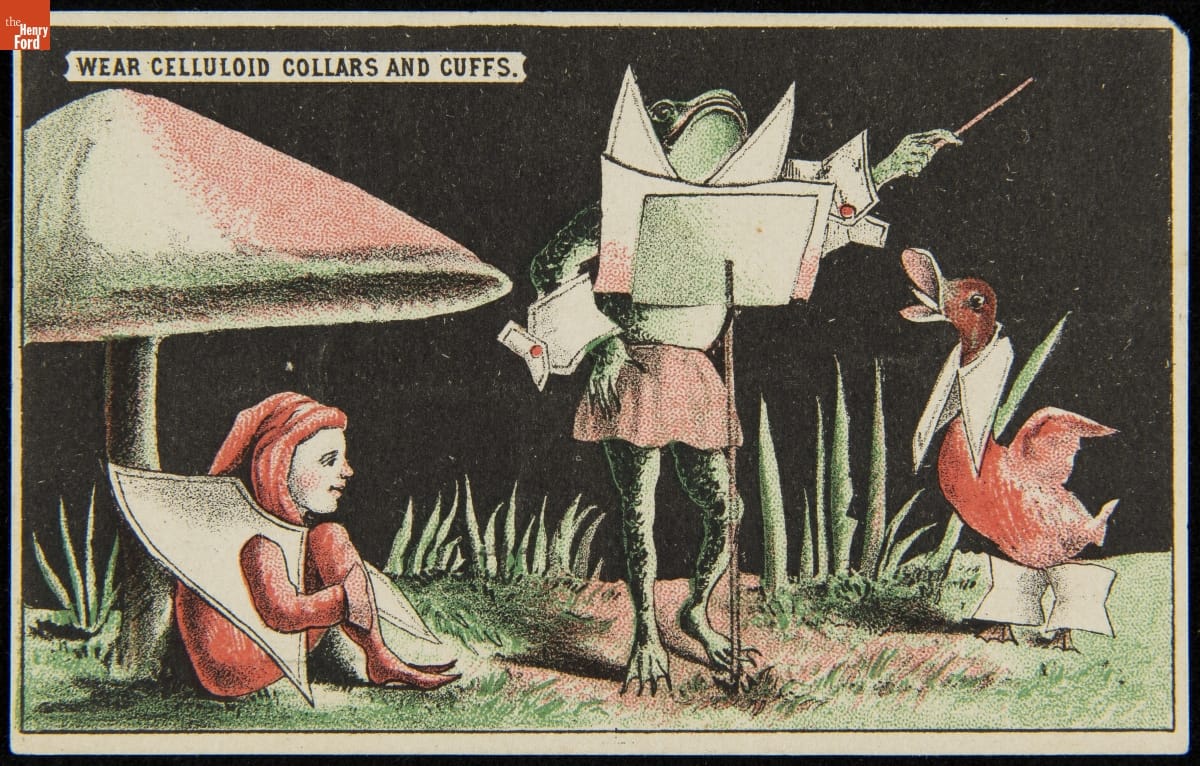
- Trade Card for Celluloid Collars and Cuffs, Celluloid Co., 1870-1895 - As color printing gained momentum in the late 19th century, trade cards became a major means of advertising goods and services. Americans enjoyed and often saved the little advertisements found in product packages or distributed by local merchants. This trade card advertises Celluloid Waterproof Collars, Cuffs & Shirt Bosoms.
- 1870-1895
- Collections - Artifact
Trade Card for Celluloid Collars and Cuffs, Celluloid Co., 1870-1895
As color printing gained momentum in the late 19th century, trade cards became a major means of advertising goods and services. Americans enjoyed and often saved the little advertisements found in product packages or distributed by local merchants. This trade card advertises Celluloid Waterproof Collars, Cuffs & Shirt Bosoms.
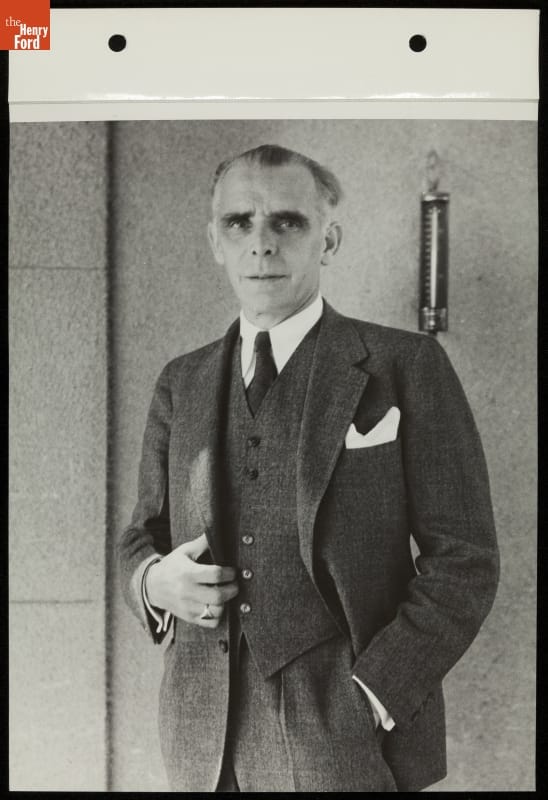
- Portland, Oregon Symphony Orchestra Conductor Willem van Hoogstraten in San Diego, California for the California Pacific International Exposition, 1935 - Ford Motor Company poured resources into the 1935 California Pacific International Exposition in San Diego, constructing the fair's largest and most popular exhibition. Performers in the 3,000-seat Ford Music Bowl amphitheatre included the Portland Symphony Orchestra. Music Bowl concerts - free to visitors and broadcast nationally by radio - broadened Ford's corporate presence at the Exposition and provided bonus advertising.
- 1935
- Collections - Artifact
Portland, Oregon Symphony Orchestra Conductor Willem van Hoogstraten in San Diego, California for the California Pacific International Exposition, 1935
Ford Motor Company poured resources into the 1935 California Pacific International Exposition in San Diego, constructing the fair's largest and most popular exhibition. Performers in the 3,000-seat Ford Music Bowl amphitheatre included the Portland Symphony Orchestra. Music Bowl concerts - free to visitors and broadcast nationally by radio - broadened Ford's corporate presence at the Exposition and provided bonus advertising.
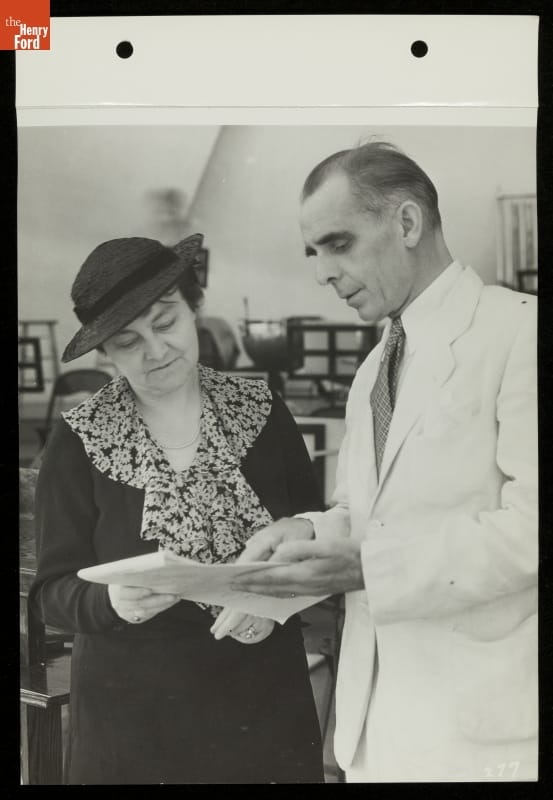
- Conductor van Hoogstraten and Manager of Portland Symphony Orchestra, California Pacific International Exposition, San Diego, 1935 - Ford Motor Company poured resources into the 1935 California Pacific International Exposition in San Diego, constructing the fair's largest and most popular exhibition. Performers in the 3,000-seat Ford Music Bowl amphitheatre included the Portland Symphony Orchestra. Music Bowl concerts - free to visitors and broadcast nationally by radio - broadened Ford's corporate presence at the Exposition and provided bonus advertising.
- 1935
- Collections - Artifact
Conductor van Hoogstraten and Manager of Portland Symphony Orchestra, California Pacific International Exposition, San Diego, 1935
Ford Motor Company poured resources into the 1935 California Pacific International Exposition in San Diego, constructing the fair's largest and most popular exhibition. Performers in the 3,000-seat Ford Music Bowl amphitheatre included the Portland Symphony Orchestra. Music Bowl concerts - free to visitors and broadcast nationally by radio - broadened Ford's corporate presence at the Exposition and provided bonus advertising.