
Search
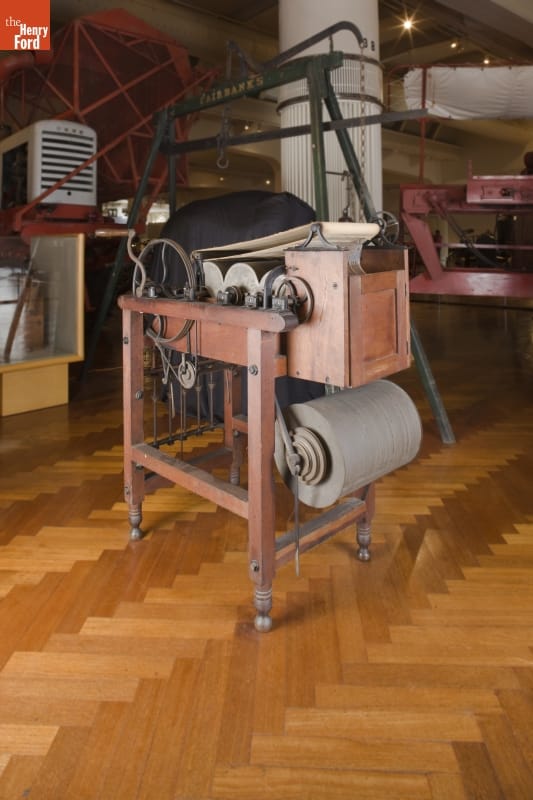
- Cotton Ginning, Carding, & Spinning Machine, 1835-1840 - Called a "plantation spinner" or "spinster", this small machine combined the three processes required to convert raw cotton to yarn -- ginning, carding and spinning. Its small size and human-powered design was made for enslaved plantation laborers. By the time of the Civil War, there were 3,000 in use across the south. After emancipation they were no longer economically viable.
- 1835-1840
- Collections - Artifact
Cotton Ginning, Carding, & Spinning Machine, 1835-1840
Called a "plantation spinner" or "spinster", this small machine combined the three processes required to convert raw cotton to yarn -- ginning, carding and spinning. Its small size and human-powered design was made for enslaved plantation laborers. By the time of the Civil War, there were 3,000 in use across the south. After emancipation they were no longer economically viable.
- Distaff, circa 1800 -
- circa 1800
- Collections - Artifact
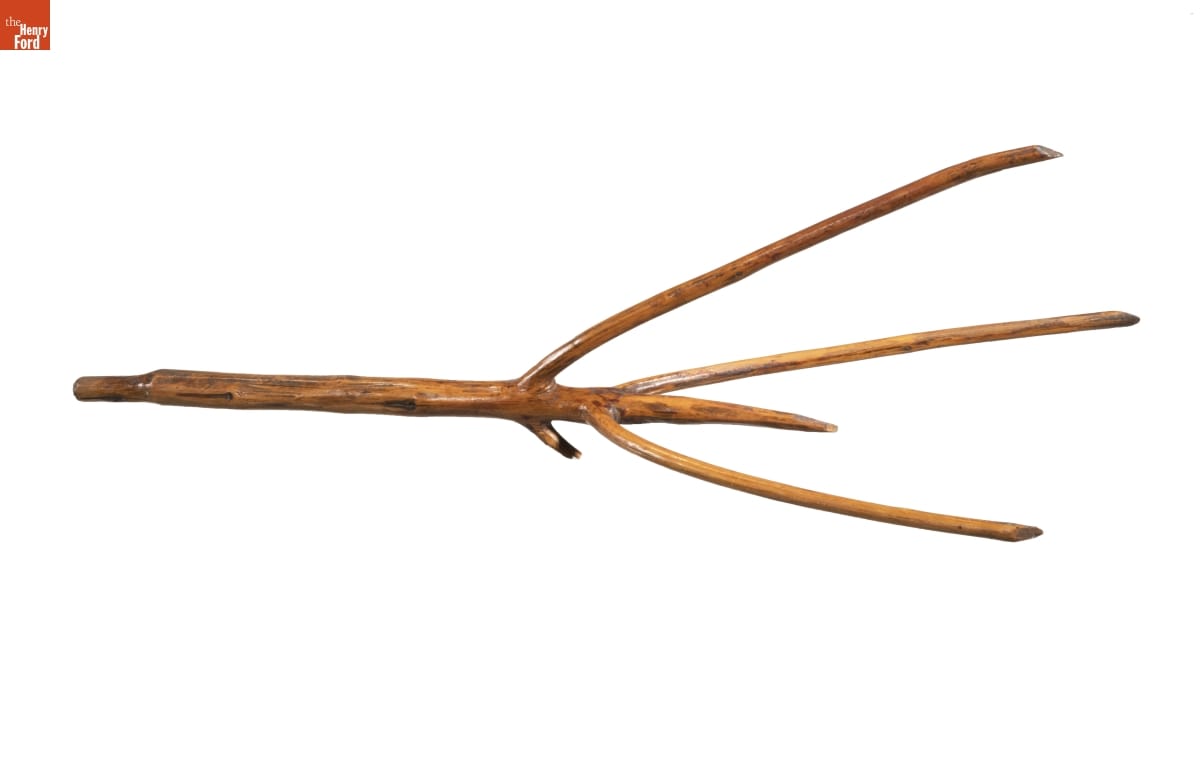
Distaff, circa 1800
- Spinning Wheel, circa 1795 -
- circa 1795
- Collections - Artifact
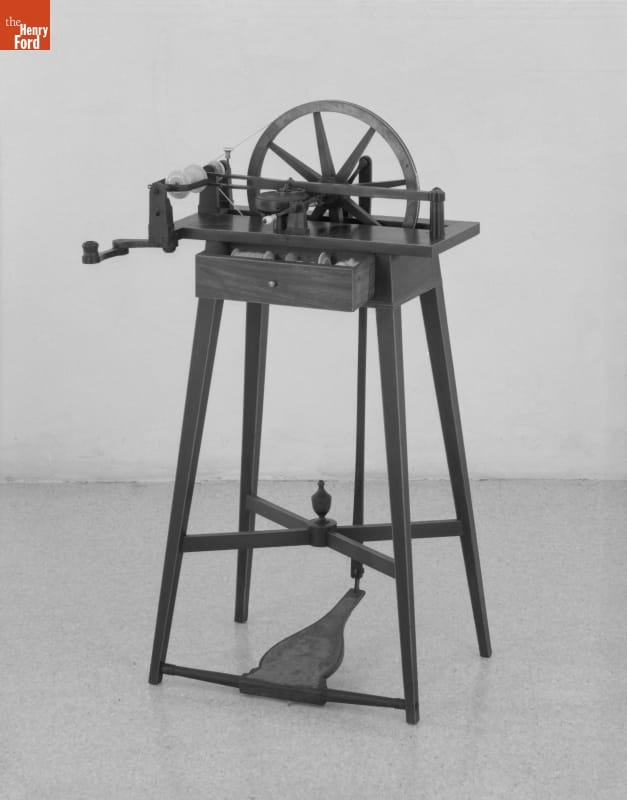
Spinning Wheel, circa 1795
- Close up of a Bobbin on a Textile Spinning Machine, circa 1935 -
- circa 1935
- Collections - Artifact
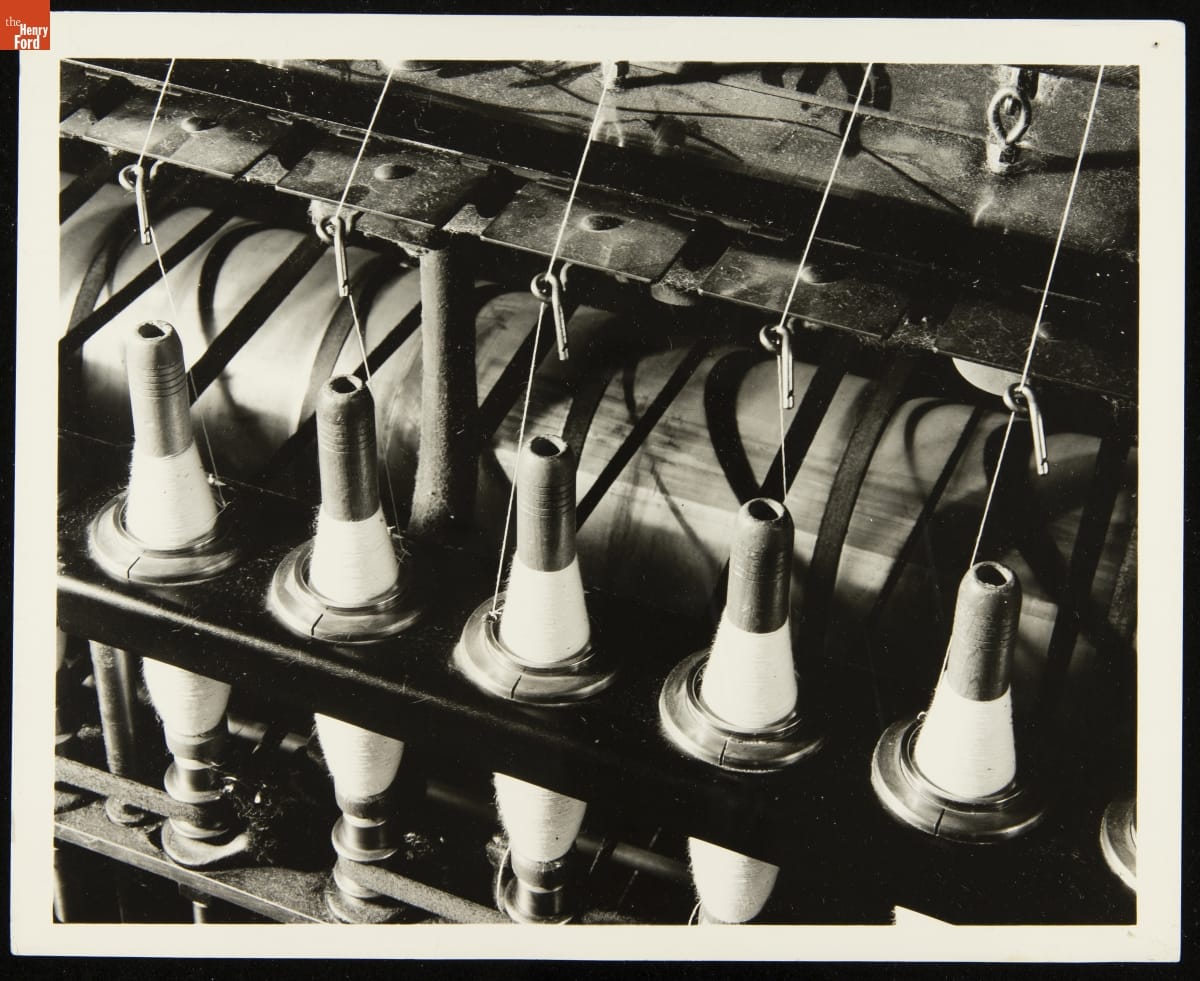
Close up of a Bobbin on a Textile Spinning Machine, circa 1935
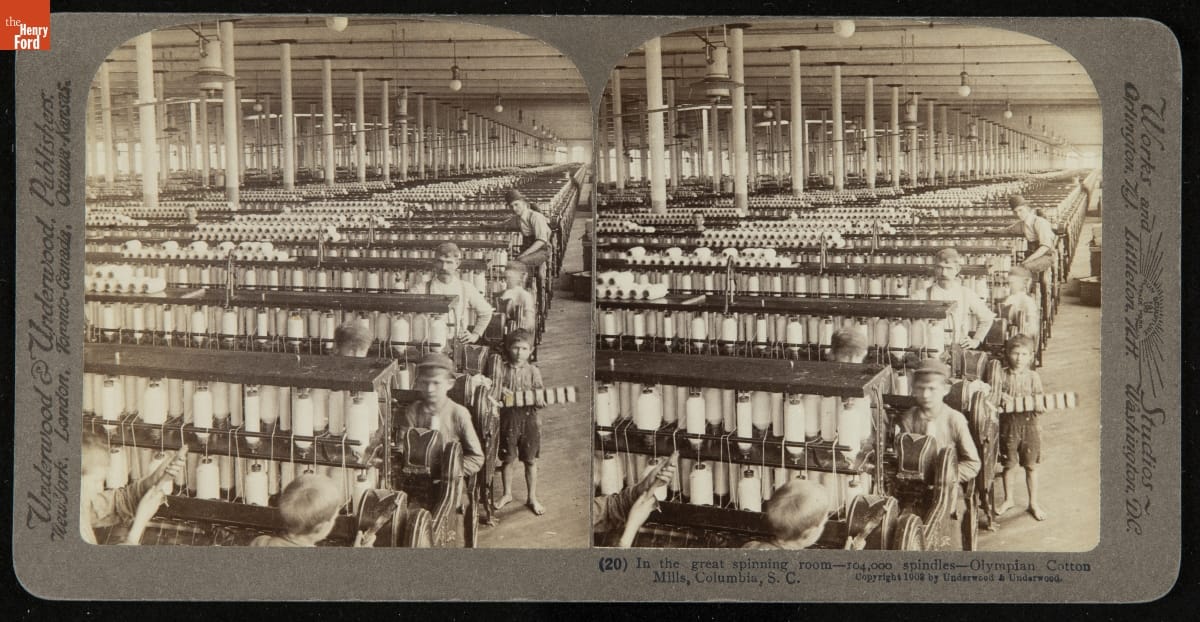
- In the Great Spinning Room - 104,000 Spindles - Olympian Cotton Mills, Columbia, South Carolina, 1903 - Mill owners used the most up-to-date machines in their factories to increase production and cut labor costs, hiring children to tend some of them. A typical child's job was that of spinner, tending 6 or 7 rows of rotating bobbins and watching for breaks in the cotton--then quickly mending them. By 1900, laws in the North limited child labor to an extent, but the practice was widespread in the South, where much of the textile industry had moved.
- 1903
- Collections - Artifact
In the Great Spinning Room - 104,000 Spindles - Olympian Cotton Mills, Columbia, South Carolina, 1903
Mill owners used the most up-to-date machines in their factories to increase production and cut labor costs, hiring children to tend some of them. A typical child's job was that of spinner, tending 6 or 7 rows of rotating bobbins and watching for breaks in the cotton--then quickly mending them. By 1900, laws in the North limited child labor to an extent, but the practice was widespread in the South, where much of the textile industry had moved.
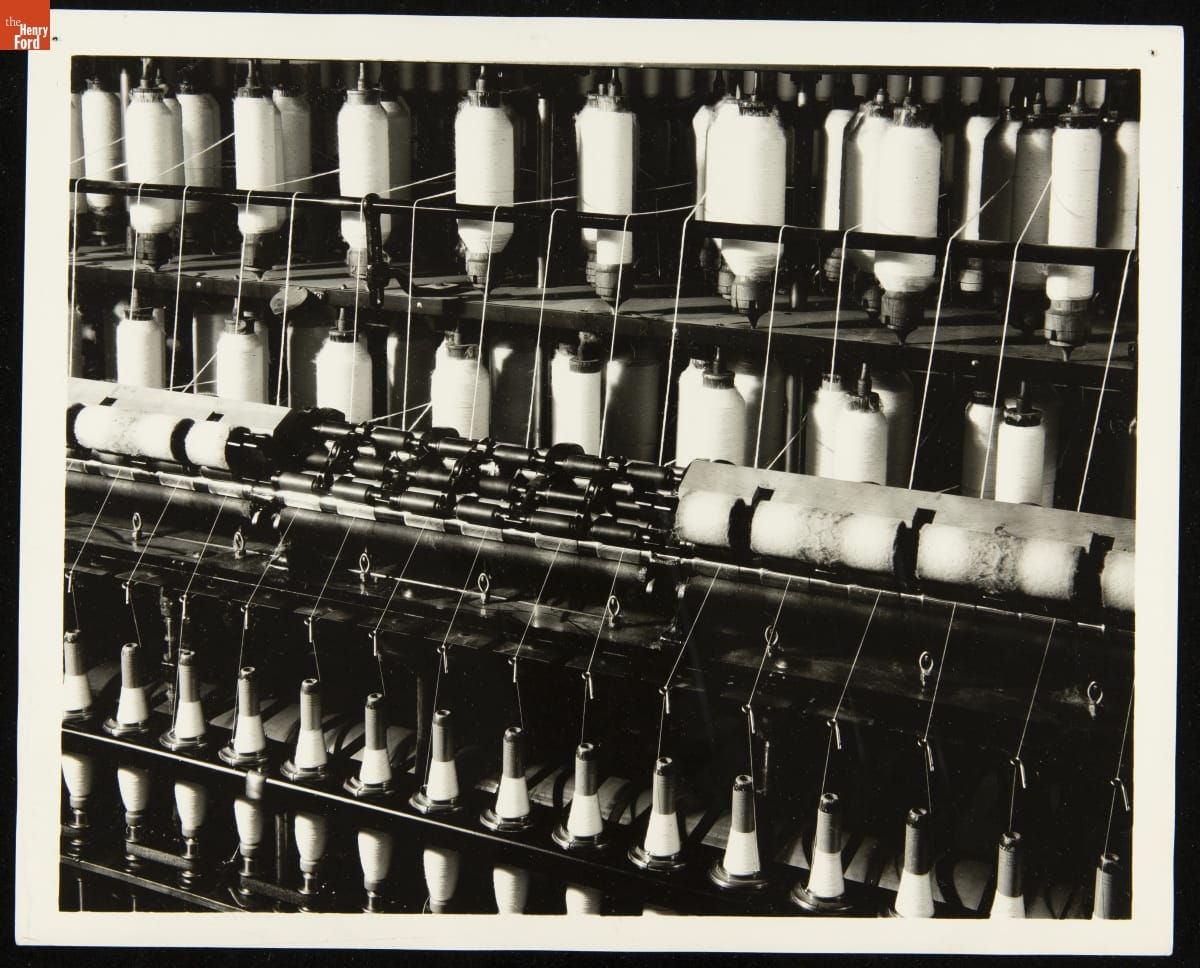
- Spindles on a Cotton Spinning Frame, circa 1935 -
- circa 1935
- Collections - Artifact
Spindles on a Cotton Spinning Frame, circa 1935
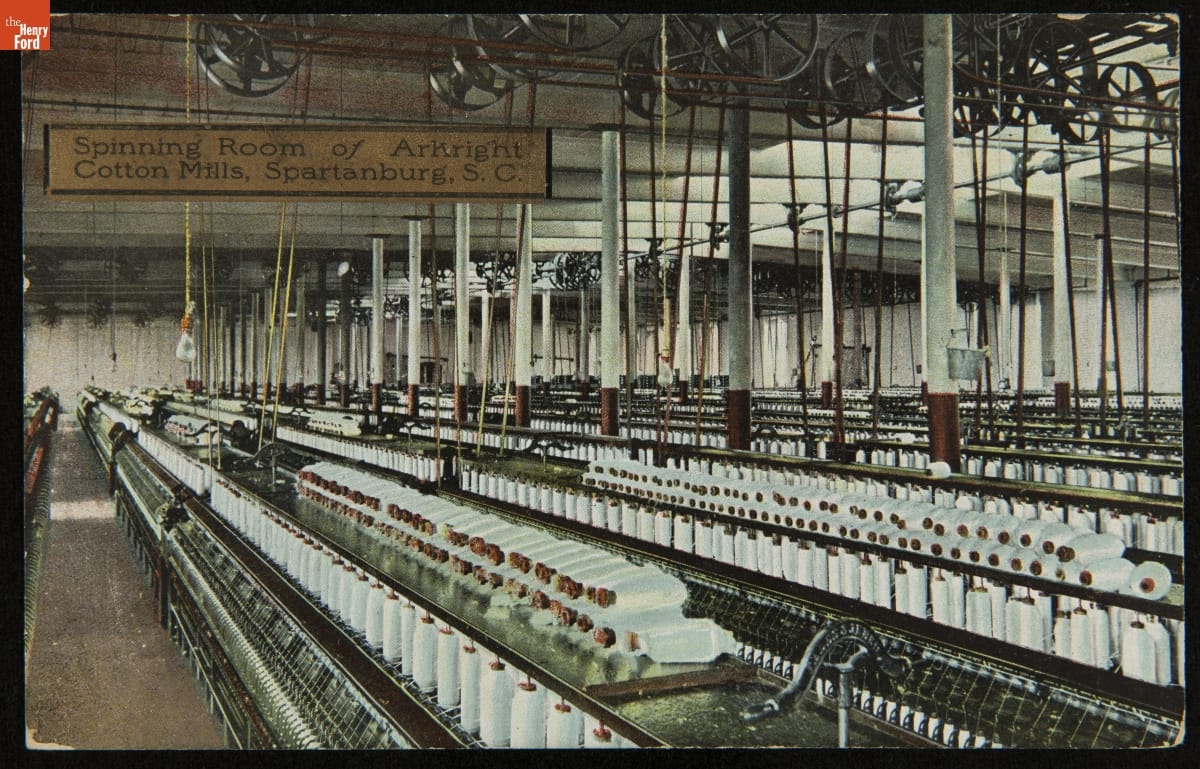
- Postcard, "Spinning Room of Arkwright Cotton Mills, Spartanburg, S.C.," circa 1912 - After the Civil War, textile mills moved South from New England, where labor was cheap, water and steam power were plentiful, and the local cotton crop saved transportation costs. This Spartanburg, South Carolina, cotton mill, named for British inventor Richard Arkwright, was organized in 1896. Mills like this were noisy, hot, and dangerous, and mill owners drove their workers hard.
- circa 1912
- Collections - Artifact
Postcard, "Spinning Room of Arkwright Cotton Mills, Spartanburg, S.C.," circa 1912
After the Civil War, textile mills moved South from New England, where labor was cheap, water and steam power were plentiful, and the local cotton crop saved transportation costs. This Spartanburg, South Carolina, cotton mill, named for British inventor Richard Arkwright, was organized in 1896. Mills like this were noisy, hot, and dangerous, and mill owners drove their workers hard.
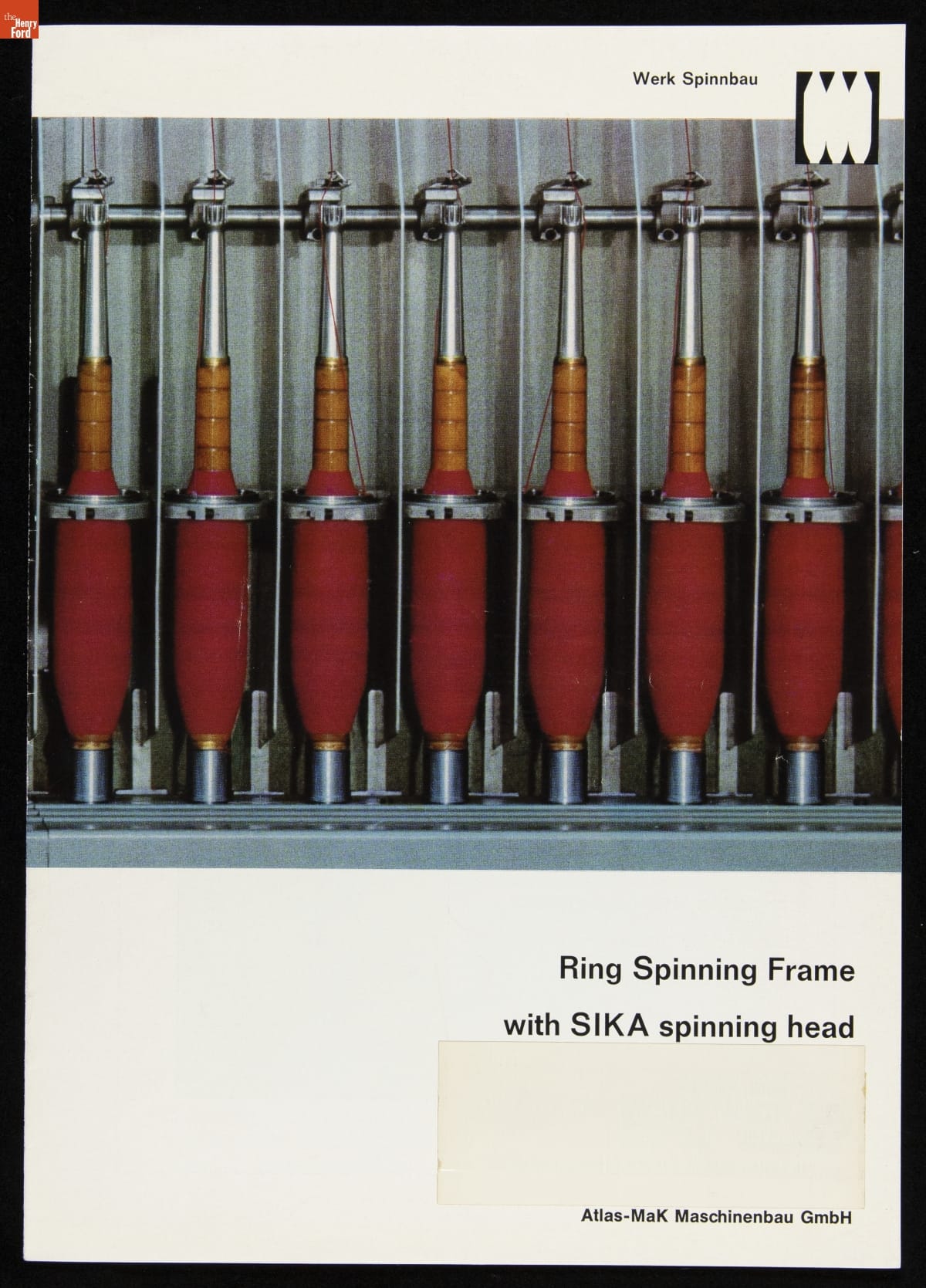
- Atlas-MaK Maschinenbau Trade Catalog, "Ring Spinning Frame with SIKA Spinning Head," 1960-1969 -
- 1960-1969
- Collections - Artifact
Atlas-MaK Maschinenbau Trade Catalog, "Ring Spinning Frame with SIKA Spinning Head," 1960-1969