
Search
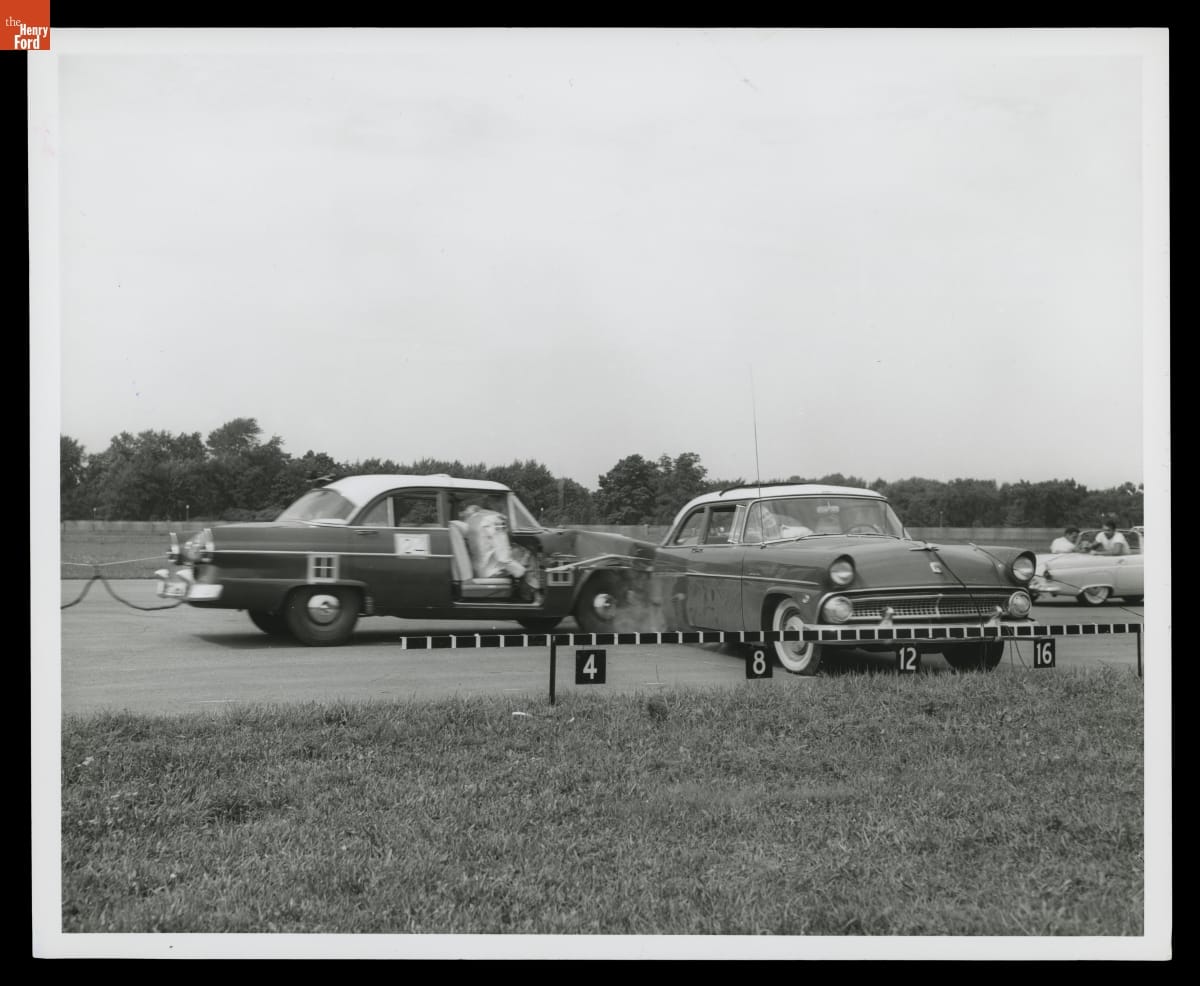
- Crash Testing at Ford Test Track, Dearborn, Michigan, 1955 - As automobiles grew larger and faster, dangers from accidents increased. Automakers began testing their vehicles in controlled collisions. In the 1950s, anthropomorphic dummies were added to the tests, to observe a crash's impact on the human body. More recently, dummies were equipped with highly sensitive instruments measuring the precise speeds and forces involved in a collision.
- August 16, 1955
- Collections - Artifact
Crash Testing at Ford Test Track, Dearborn, Michigan, 1955
As automobiles grew larger and faster, dangers from accidents increased. Automakers began testing their vehicles in controlled collisions. In the 1950s, anthropomorphic dummies were added to the tests, to observe a crash's impact on the human body. More recently, dummies were equipped with highly sensitive instruments measuring the precise speeds and forces involved in a collision.
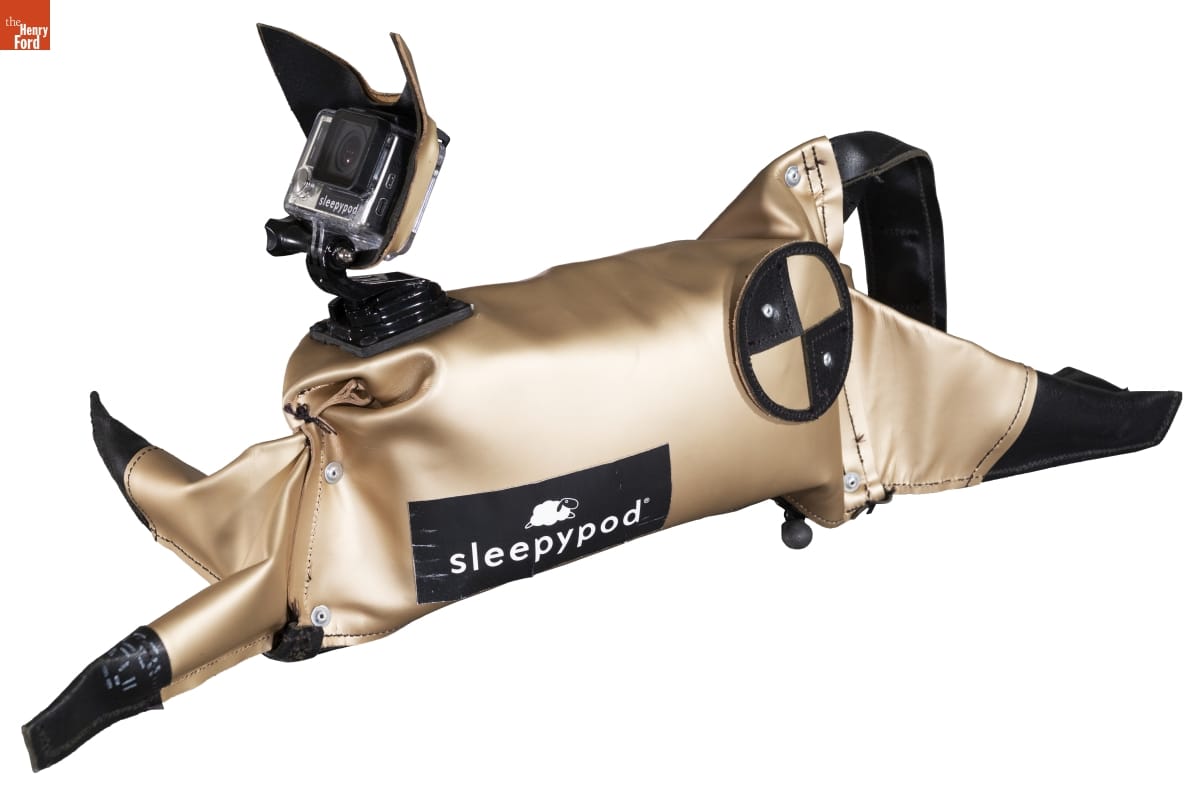
- Sleepypod "CLEO" Crash-Test Cat, 2015 - Sleepypod tested and refined its automobile pet carriers using some of the same facilities used to test child safety seats. Sleepypod created CLEO to simulate a cat riding in one of the company's carriers. The video camera mounted in CLEO's face allowed technicians to study the collision tests from a "cat's-eye" view.
- 2015
- Collections - Artifact
Sleepypod "CLEO" Crash-Test Cat, 2015
Sleepypod tested and refined its automobile pet carriers using some of the same facilities used to test child safety seats. Sleepypod created CLEO to simulate a cat riding in one of the company's carriers. The video camera mounted in CLEO's face allowed technicians to study the collision tests from a "cat's-eye" view.
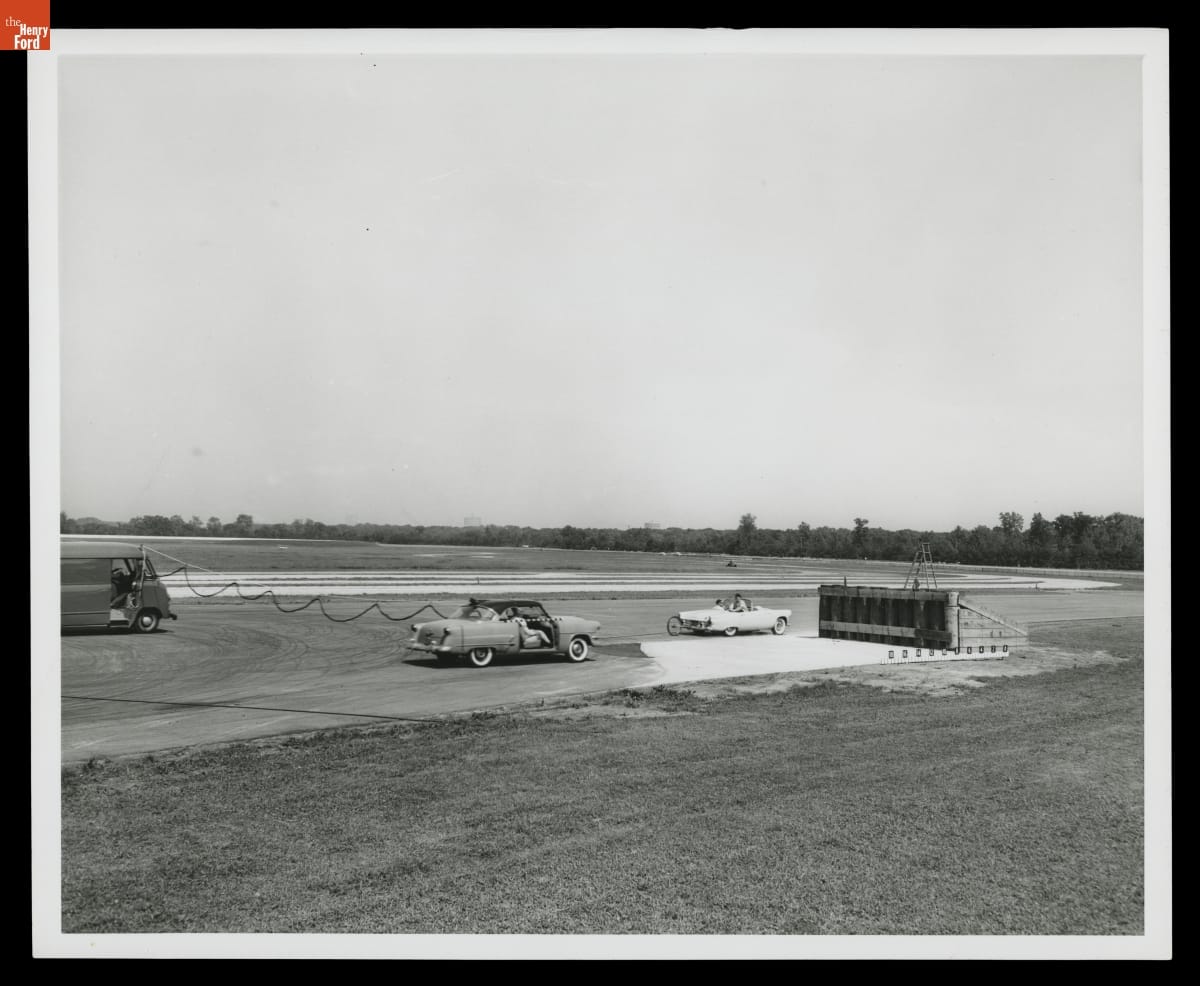
- Crash Testing at Ford Test Track, Dearborn, Michigan, 1955 - As automobiles grew larger and faster, dangers from accidents increased. Automakers began testing their vehicles in controlled collisions. In the 1950s, anthropomorphic dummies were added to the tests, to observe a crash's impact on the human body. More recently, dummies were equipped with highly sensitive instruments measuring the precise speeds and forces involved in a collision.
- May 26, 1955
- Collections - Artifact
Crash Testing at Ford Test Track, Dearborn, Michigan, 1955
As automobiles grew larger and faster, dangers from accidents increased. Automakers began testing their vehicles in controlled collisions. In the 1950s, anthropomorphic dummies were added to the tests, to observe a crash's impact on the human body. More recently, dummies were equipped with highly sensitive instruments measuring the precise speeds and forces involved in a collision.
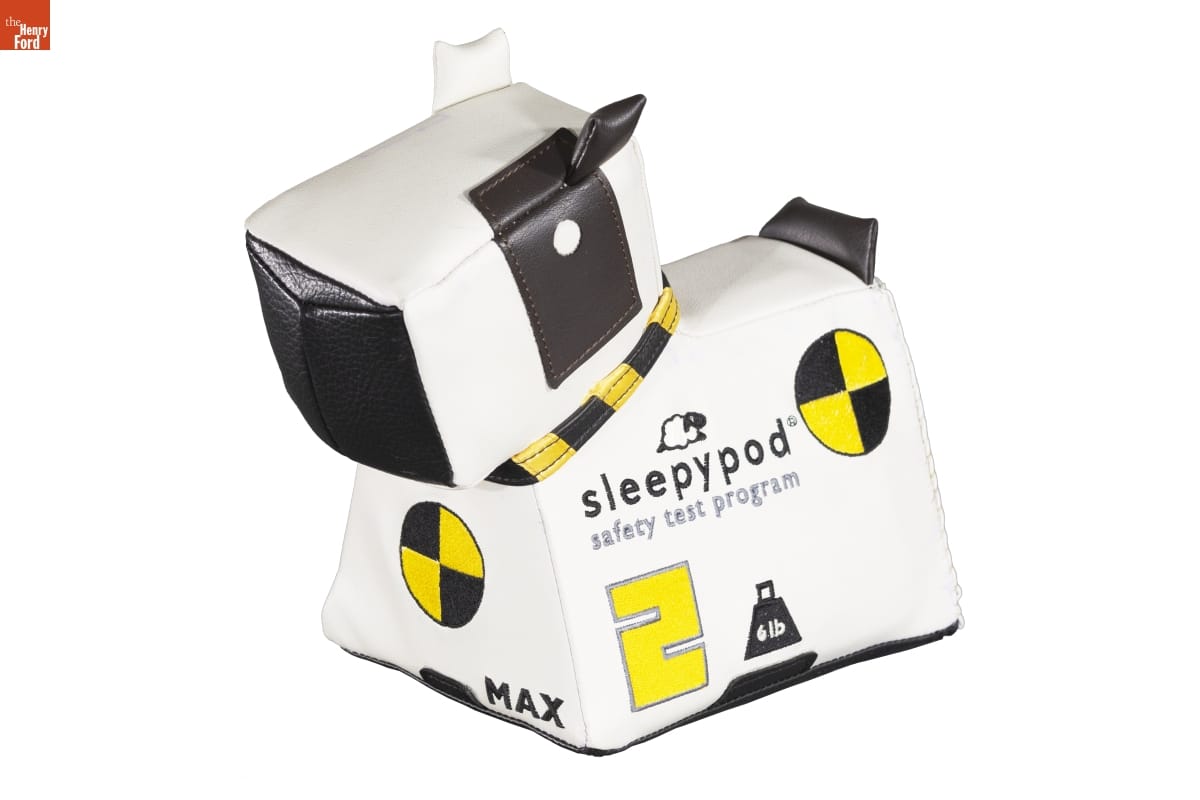
- Sleepypod "MAX 2" Crash-Test Dog, 2012 - Sleepypod tested and refined its automobile pet carriers using some of the same facilities used to test child safety seats. Sleepypod created MAX 2 to simulate a small, six-pound dog riding in one of the company's carriers. MAX 2 and his carrier both endured vehicle crash tests at speeds up to 30 miles per hour.
- 2012
- Collections - Artifact
Sleepypod "MAX 2" Crash-Test Dog, 2012
Sleepypod tested and refined its automobile pet carriers using some of the same facilities used to test child safety seats. Sleepypod created MAX 2 to simulate a small, six-pound dog riding in one of the company's carriers. MAX 2 and his carrier both endured vehicle crash tests at speeds up to 30 miles per hour.
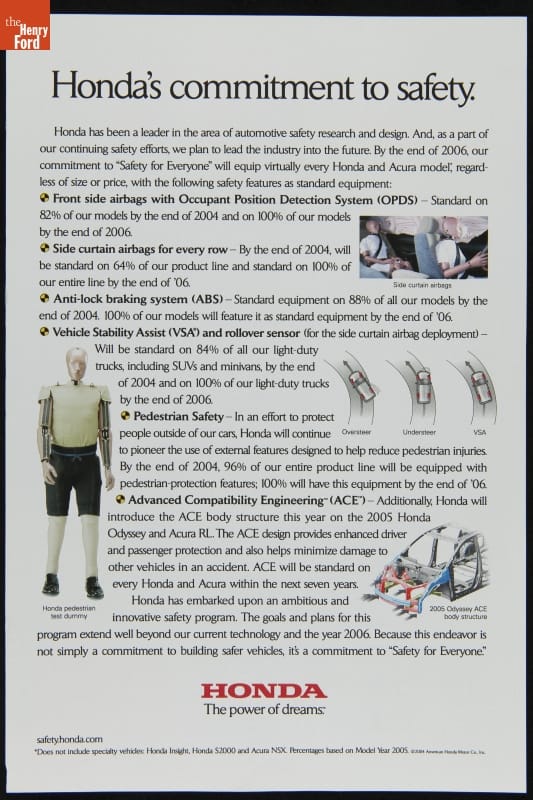
- Advertisement for American Honda, 2004, "Honda's Commitment to Safety" - This 2004 advertisement from Honda detailed the company's commitment to safety. Airbags, anti-lock brakes, and stability-assist features were all listed. A careful reading of the ad revealed that, while these features were standard on <em>most</em> Honda cars in 2004, they wouldn't be standard on <em>all</em> the company's cars until the end of 2006.
- 2004
- Collections - Artifact
Advertisement for American Honda, 2004, "Honda's Commitment to Safety"
This 2004 advertisement from Honda detailed the company's commitment to safety. Airbags, anti-lock brakes, and stability-assist features were all listed. A careful reading of the ad revealed that, while these features were standard on most Honda cars in 2004, they wouldn't be standard on all the company's cars until the end of 2006.
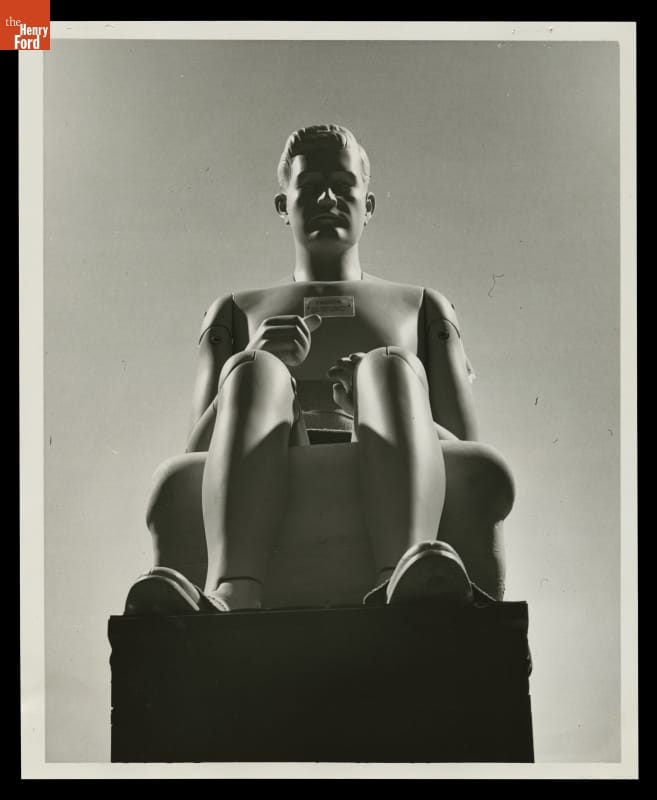
- Ford "Average Man" Automobile Design and Testing Mannequin, 1952 - Ford Motor Company created its "average man" mannequin to aid in the design and testing of its automobiles. The figure's measurements -- height: 5 feet, 9 inches; weight: 164-3/4 pounds -- were based on averages culled from U.S. Army physicals conducted during World War II. "Average man" assisted designers in creating seats, arm rests, and general vehicle interior dimensions.
- 01 May 1952 - 04 June 1952
- Collections - Artifact
Ford "Average Man" Automobile Design and Testing Mannequin, 1952
Ford Motor Company created its "average man" mannequin to aid in the design and testing of its automobiles. The figure's measurements -- height: 5 feet, 9 inches; weight: 164-3/4 pounds -- were based on averages culled from U.S. Army physicals conducted during World War II. "Average man" assisted designers in creating seats, arm rests, and general vehicle interior dimensions.
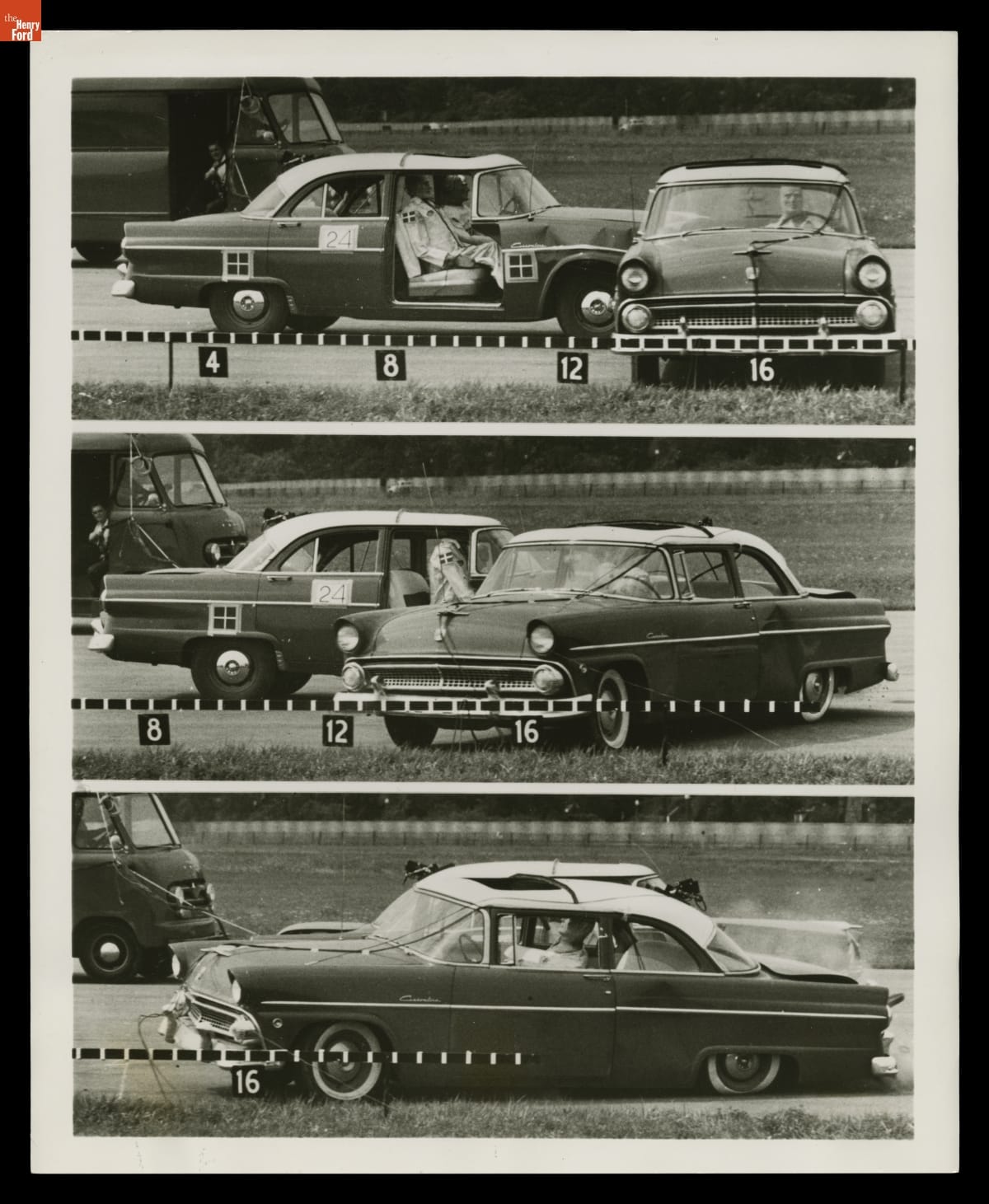
- Crash Testing 1956 Ford Customline Automobiles Equipped with New Safety Features, August 1955 - As automobiles grew larger and faster, dangers from accidents increased. Automakers began testing their vehicles in controlled collisions. In the 1950s, anthropomorphic dummies were added to the tests, to observe a crash's impact on the human body. More recently, dummies were equipped with highly sensitive instruments measuring the precise speeds and forces involved in a collision.
- August 23, 1955
- Collections - Artifact
Crash Testing 1956 Ford Customline Automobiles Equipped with New Safety Features, August 1955
As automobiles grew larger and faster, dangers from accidents increased. Automakers began testing their vehicles in controlled collisions. In the 1950s, anthropomorphic dummies were added to the tests, to observe a crash's impact on the human body. More recently, dummies were equipped with highly sensitive instruments measuring the precise speeds and forces involved in a collision.