
Search
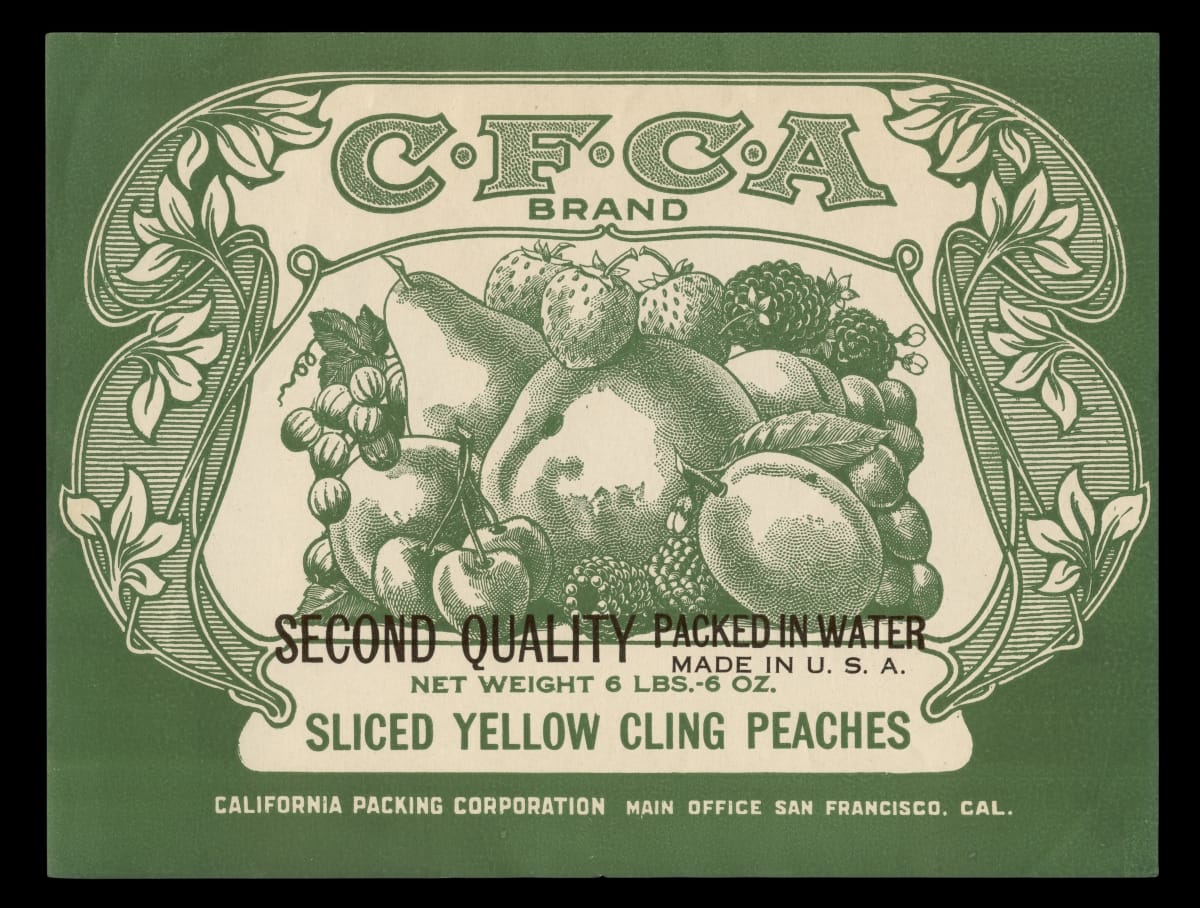
- Crate Label, "C.F.C.A. Brand Sliced Yellow Cling Peaches," 1920-1930 - In 1869, the transcontinental railroad opened eastern markets to the West Coast produce industry for the first time. As produce companies shipped crates of fruits and vegetables across the country, they needed a way to distinguish their goods from their competitors'. Colorful, eye-catching labels, like this one for C.F.C.A. Brand Sliced Yellow Cling Peaches, were created to attract grocers purchasing goods from wholesale markets.
- 1920-1930
- Collections - Artifact
Crate Label, "C.F.C.A. Brand Sliced Yellow Cling Peaches," 1920-1930
In 1869, the transcontinental railroad opened eastern markets to the West Coast produce industry for the first time. As produce companies shipped crates of fruits and vegetables across the country, they needed a way to distinguish their goods from their competitors'. Colorful, eye-catching labels, like this one for C.F.C.A. Brand Sliced Yellow Cling Peaches, were created to attract grocers purchasing goods from wholesale markets.
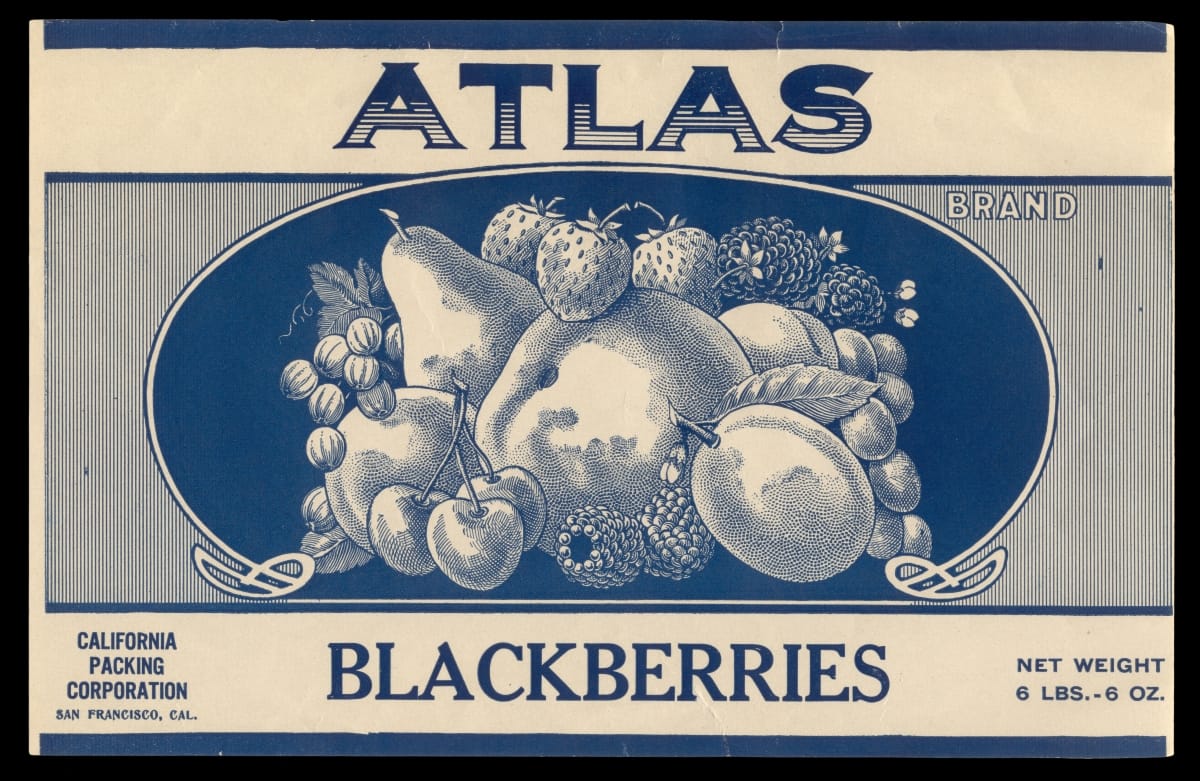
- Crate Label, "Atlas Brand Blackberries," 1920-1930 - In 1869, the transcontinental railroad opened eastern markets to the West Coast produce industry for the first time. As produce companies shipped crates of fruits and vegetables across the country, they needed a way to distinguish their goods from their competitors'. Colorful, eye-catching labels, like this one for Atlas Brand Blackberries, were created to attract grocers purchasing goods from wholesale markets.
- 1920-1930
- Collections - Artifact
Crate Label, "Atlas Brand Blackberries," 1920-1930
In 1869, the transcontinental railroad opened eastern markets to the West Coast produce industry for the first time. As produce companies shipped crates of fruits and vegetables across the country, they needed a way to distinguish their goods from their competitors'. Colorful, eye-catching labels, like this one for Atlas Brand Blackberries, were created to attract grocers purchasing goods from wholesale markets.
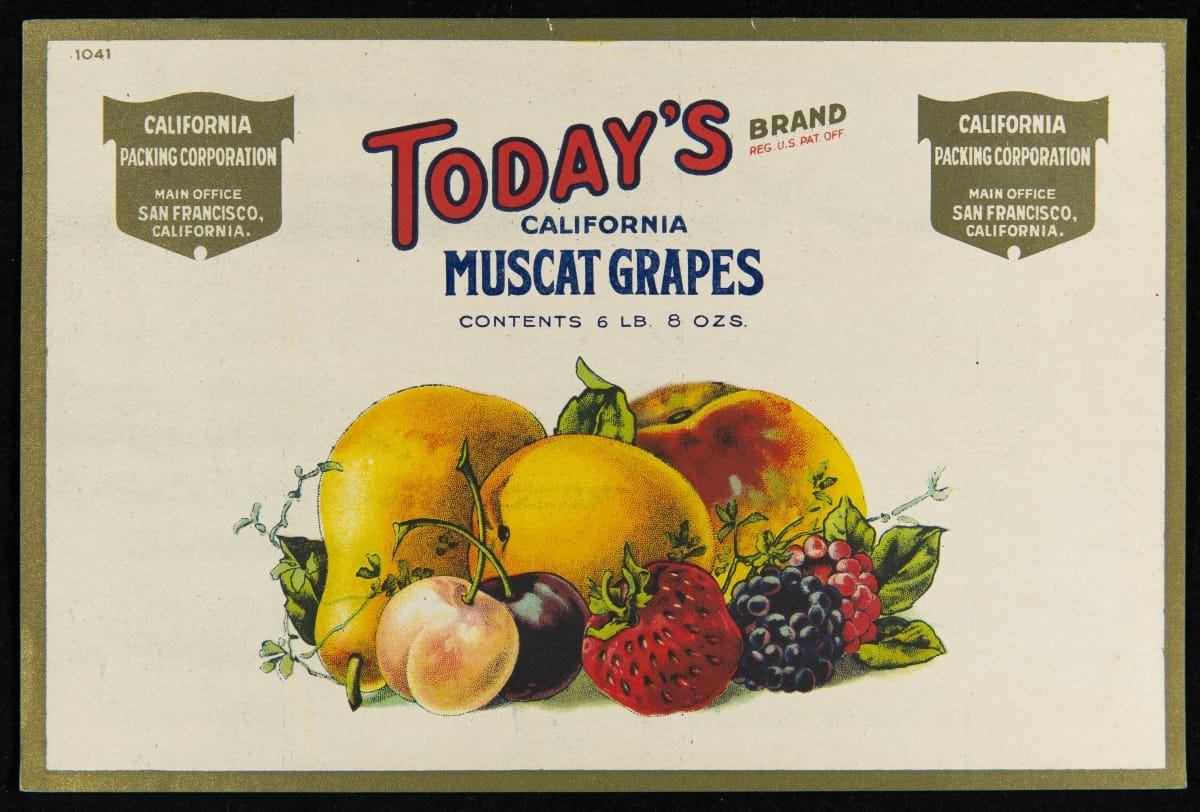
- Crate Label, "Today's Brand California Muscat Grapes," 1920-1940 - In 1869, the transcontinental railroad opened eastern markets to the West Coast produce industry for the first time. As produce companies shipped crates of fruits and vegetables across the country, they needed a way to distinguish their goods from their competitors'. Colorful, eye-catching labels, like this one for Today's Brand California Muscat Grapes, were created to attract grocers purchasing goods from wholesale markets.
- 1920-1940
- Collections - Artifact
Crate Label, "Today's Brand California Muscat Grapes," 1920-1940
In 1869, the transcontinental railroad opened eastern markets to the West Coast produce industry for the first time. As produce companies shipped crates of fruits and vegetables across the country, they needed a way to distinguish their goods from their competitors'. Colorful, eye-catching labels, like this one for Today's Brand California Muscat Grapes, were created to attract grocers purchasing goods from wholesale markets.
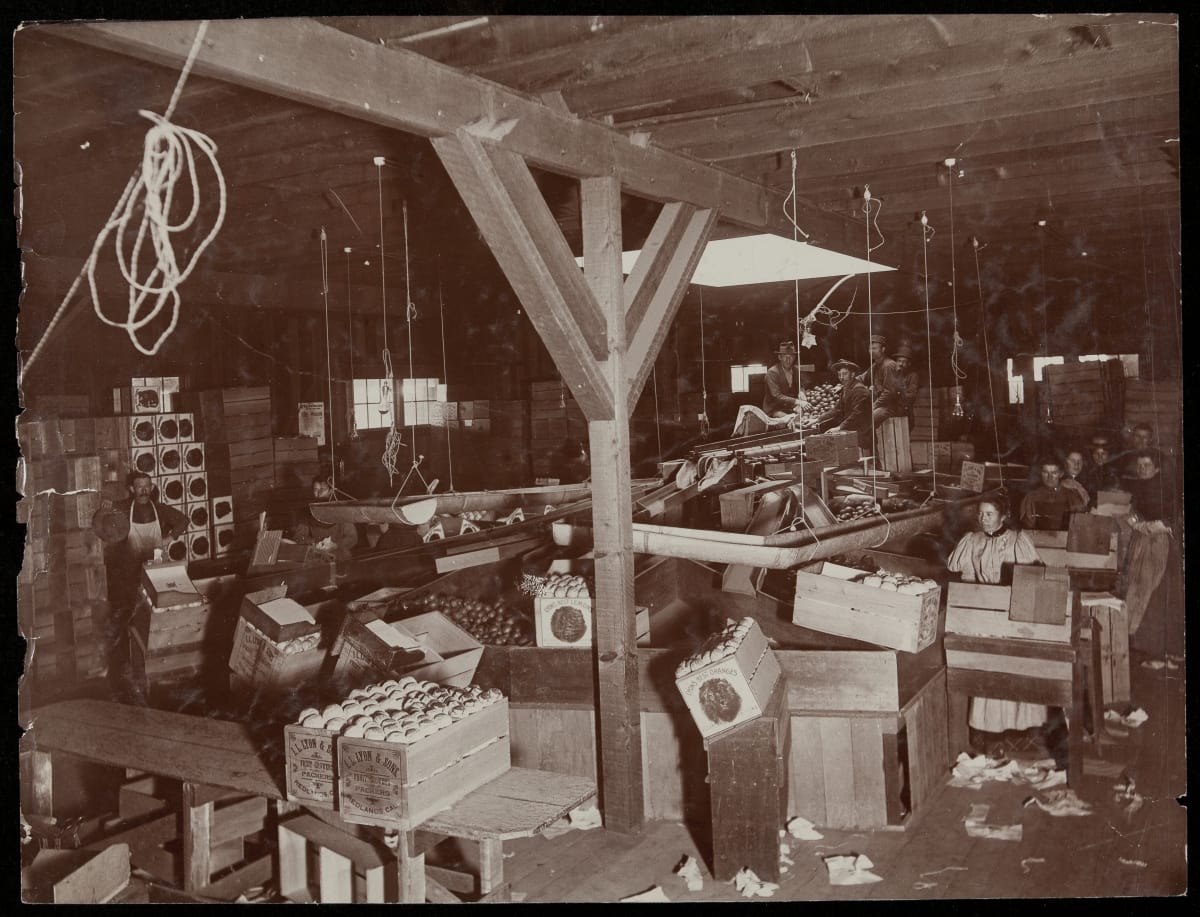
- Workers at L. L. Lyon & Sons Fruit Growers & Packers, Redlands, California, circa 1900 - For nearly thirty years, 1895 to 1924, the Detroit Publishing Company was one of the major image publishers in the world. The company had a wide-ranging stock of original photographs, including many scenes from across North America. Here, workers in California pack lemons and oranges for shipping.
- circa 1900
- Collections - Artifact
Workers at L. L. Lyon & Sons Fruit Growers & Packers, Redlands, California, circa 1900
For nearly thirty years, 1895 to 1924, the Detroit Publishing Company was one of the major image publishers in the world. The company had a wide-ranging stock of original photographs, including many scenes from across North America. Here, workers in California pack lemons and oranges for shipping.
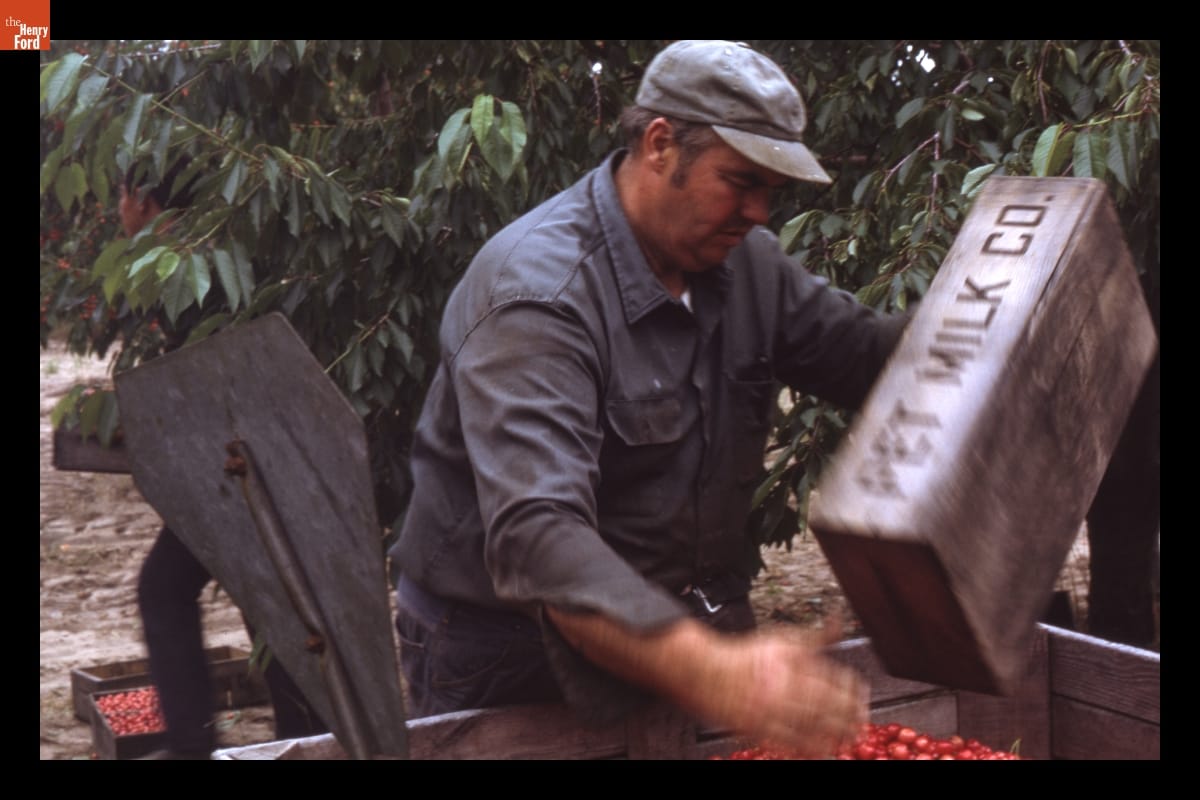
- Henry Gee Loading Cherries into a Crate, 1972 - Cherry growers hired pickers (often migrant laborers) to harvest their crops, but growers sought faster, less labor-intensive solutions. Agricultural engineers developed mechanical harvesters by the late 1960s. These machines shook the trees, causing the ripe fruit to drop onto collecting mats. This slide shows a stage in a mechanical harvest on a family farm in Michigan's cherry-growing region near Traverse City.
- 1972
- Collections - Artifact
Henry Gee Loading Cherries into a Crate, 1972
Cherry growers hired pickers (often migrant laborers) to harvest their crops, but growers sought faster, less labor-intensive solutions. Agricultural engineers developed mechanical harvesters by the late 1960s. These machines shook the trees, causing the ripe fruit to drop onto collecting mats. This slide shows a stage in a mechanical harvest on a family farm in Michigan's cherry-growing region near Traverse City.
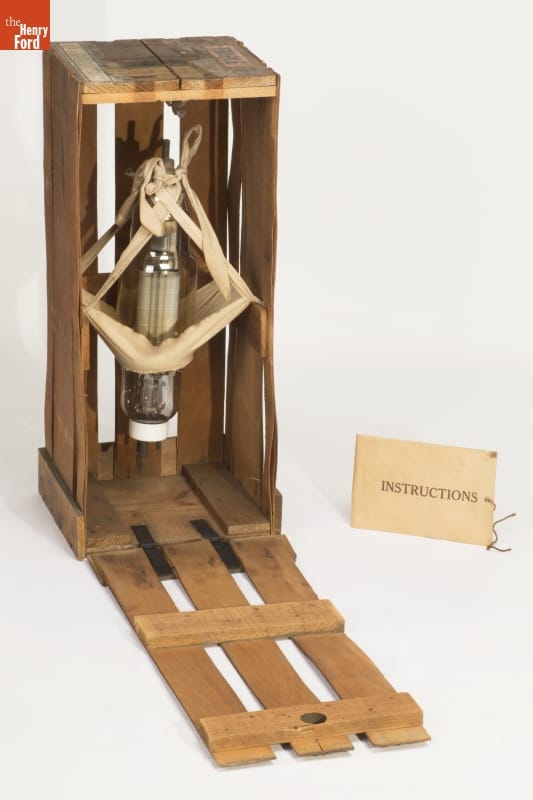
- Western Electric Transmitting Tube, Type 270-A, Used at Radio Station WWJ, Detroit, Michigan, circa 1935 - Vacuum tubes appear in older radios, televisions, amplifiers, computers, and other electronic devices. Their function: to amplify or transmit electronic signals. Typical tubes are sealed glass bulbs evacuated of gas, allowing electron flow to be influenced by an interior cathode, plate and grid. Perfected in 1906, the vacuum tube was the genesis of a communications revolution.
- 1936
- Collections - Artifact
Western Electric Transmitting Tube, Type 270-A, Used at Radio Station WWJ, Detroit, Michigan, circa 1935
Vacuum tubes appear in older radios, televisions, amplifiers, computers, and other electronic devices. Their function: to amplify or transmit electronic signals. Typical tubes are sealed glass bulbs evacuated of gas, allowing electron flow to be influenced by an interior cathode, plate and grid. Perfected in 1906, the vacuum tube was the genesis of a communications revolution.
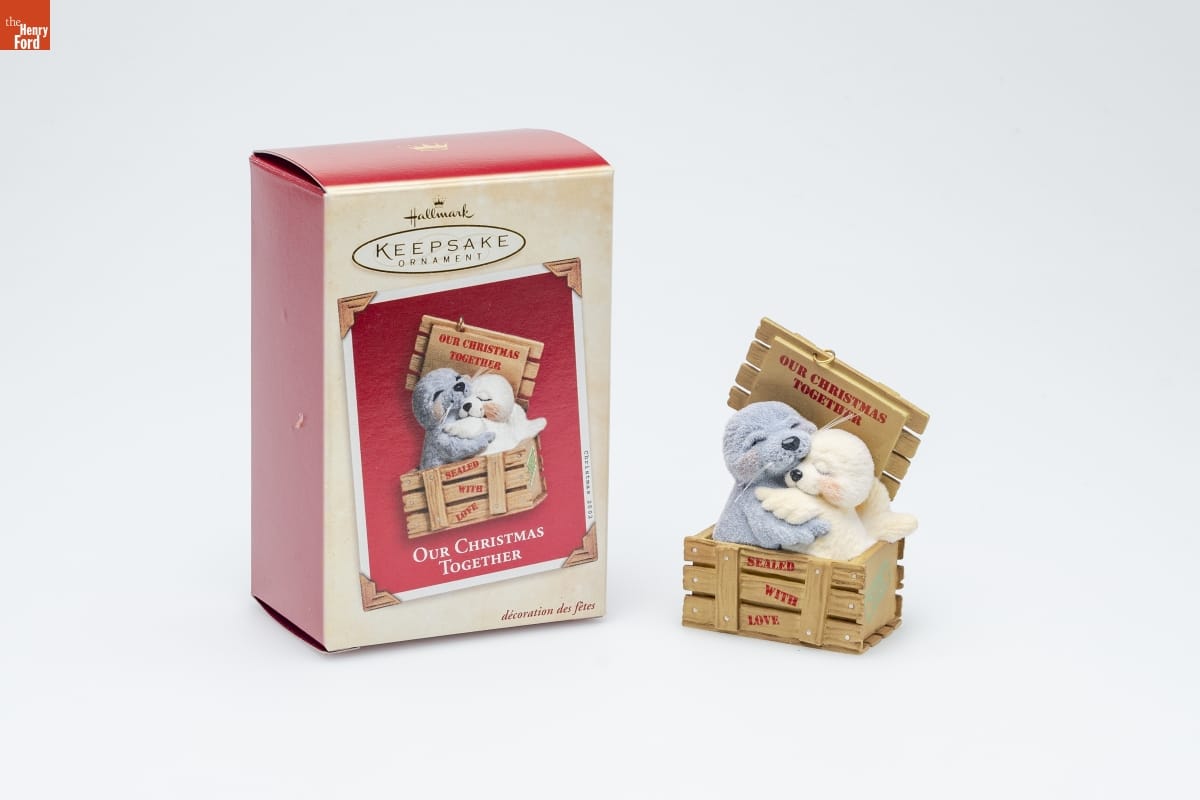
- Hallmark "Our Christmas Together" Christmas Ornament, 2002 - Already known for greeting cards, Hallmark introduced a line of Christmas ornaments in 1973. The company's annual release of an increasing array of ornaments revolutionized Christmas decorating, appealing to customers' interest in marking memories and milestones as well as expressing one's personality and unique tastes.
- 2002
- Collections - Artifact
Hallmark "Our Christmas Together" Christmas Ornament, 2002
Already known for greeting cards, Hallmark introduced a line of Christmas ornaments in 1973. The company's annual release of an increasing array of ornaments revolutionized Christmas decorating, appealing to customers' interest in marking memories and milestones as well as expressing one's personality and unique tastes.
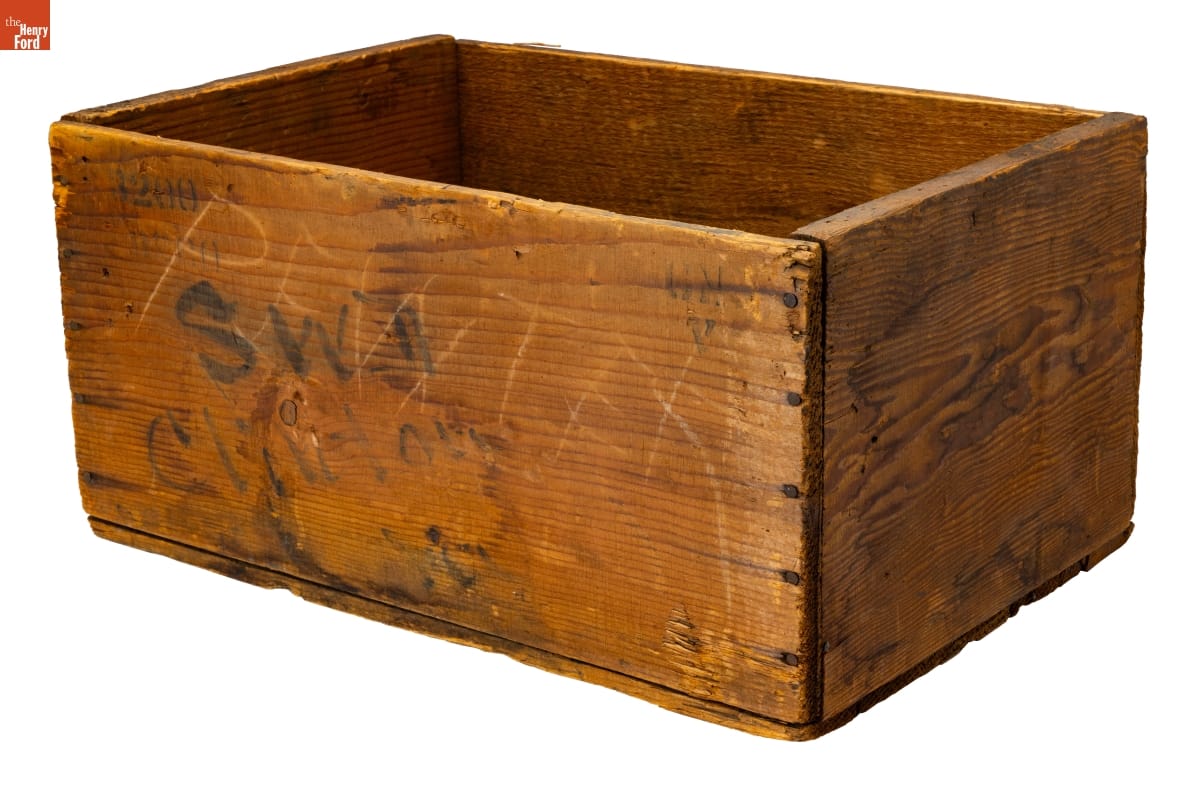
- Crate -
- Collections - Artifact
Crate
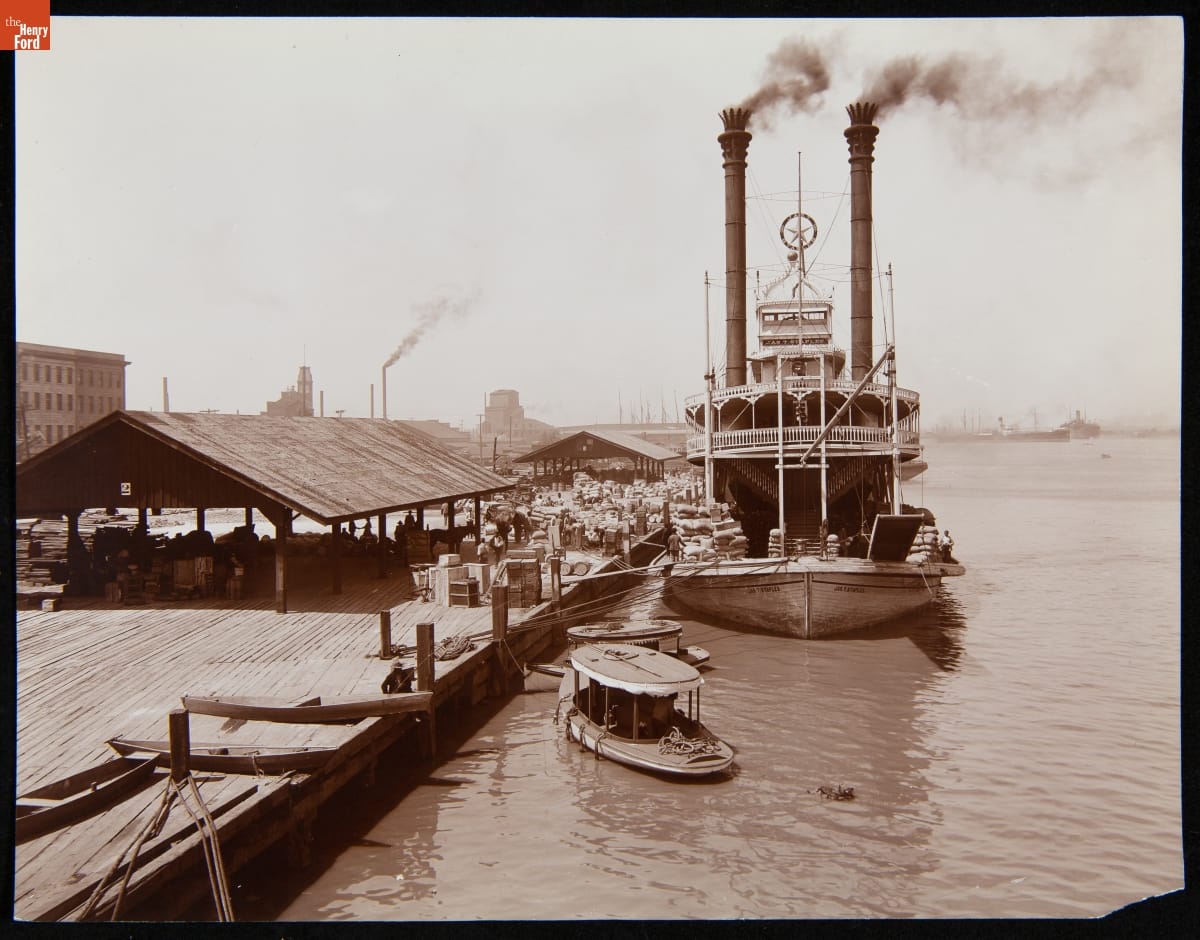
- Along the Docks, Mobile, Alabama, 1900-1915 -
- 1900-1915
- Collections - Artifact
Along the Docks, Mobile, Alabama, 1900-1915
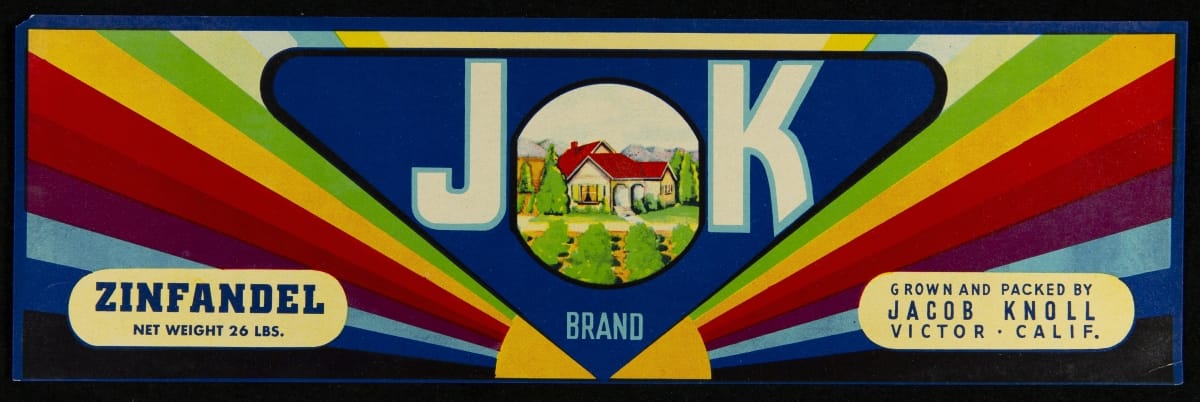
- Crate Label, "J.K. Brand Zinfandel Grapes," circa 1940 - In 1869, the transcontinental railroad opened eastern markets to the West Coast produce industry for the first time. As produce companies shipped crates of fruits and vegetables across the country, they needed a way to distinguish their goods from their competitors'. Colorful, eye-catching labels, like this one for J.K. Brand Zinfandel Grapes, were created to attract grocers purchasing goods from wholesale markets.
- circa 1940
- Collections - Artifact
Crate Label, "J.K. Brand Zinfandel Grapes," circa 1940
In 1869, the transcontinental railroad opened eastern markets to the West Coast produce industry for the first time. As produce companies shipped crates of fruits and vegetables across the country, they needed a way to distinguish their goods from their competitors'. Colorful, eye-catching labels, like this one for J.K. Brand Zinfandel Grapes, were created to attract grocers purchasing goods from wholesale markets.