
Search
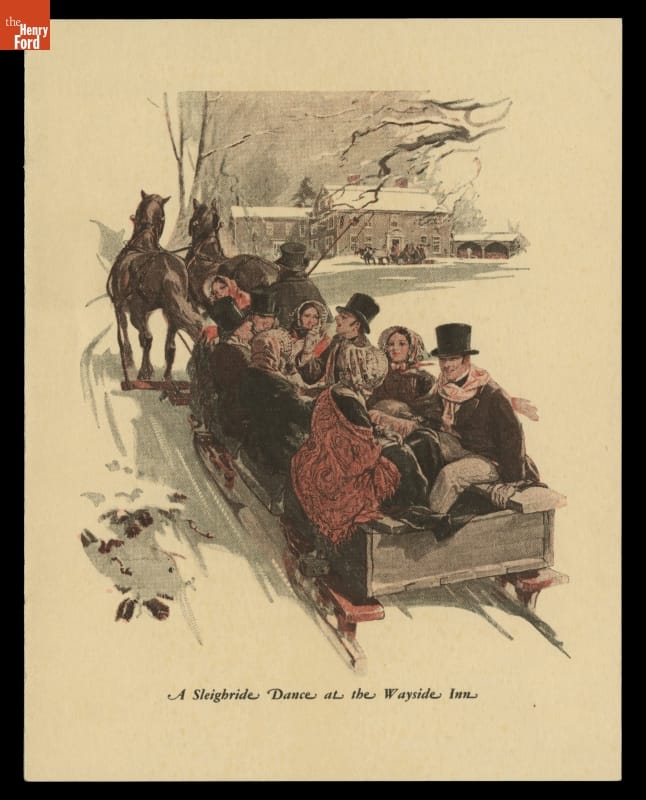
- Souvenir Card, "A Sleighride Dance at the Wayside Inn," 1927 -
- January 18, 1927
- Collections - Artifact
Souvenir Card, "A Sleighride Dance at the Wayside Inn," 1927
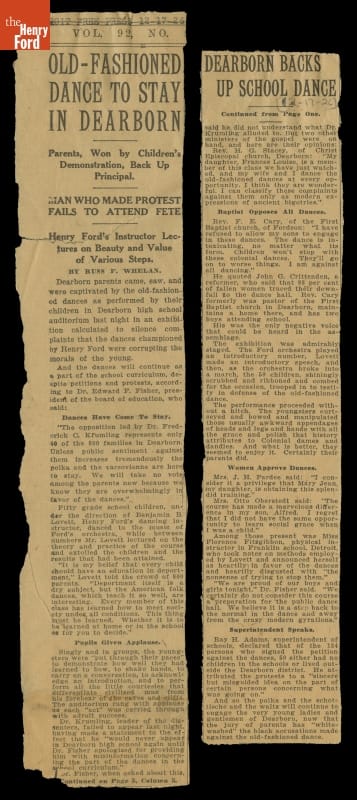
- Newspaper Article, "Old-Fashioned Dance to Stay in Dearborn...Dearborn Backs Up School Dance," 1926 - As Henry Ford extended his traditional American dance classes to local Dearborn schoolchildren, some parents grew alarmed--they weren't sure they approved of boys and girls dancing together. A dance demonstration by the children soon set most of the parents' minds at ease. They quickly realized the benefit of having their children learn these old-time dances--and the good manners that went along with them.
- December 17, 1926
- Collections - Artifact
Newspaper Article, "Old-Fashioned Dance to Stay in Dearborn...Dearborn Backs Up School Dance," 1926
As Henry Ford extended his traditional American dance classes to local Dearborn schoolchildren, some parents grew alarmed--they weren't sure they approved of boys and girls dancing together. A dance demonstration by the children soon set most of the parents' minds at ease. They quickly realized the benefit of having their children learn these old-time dances--and the good manners that went along with them.
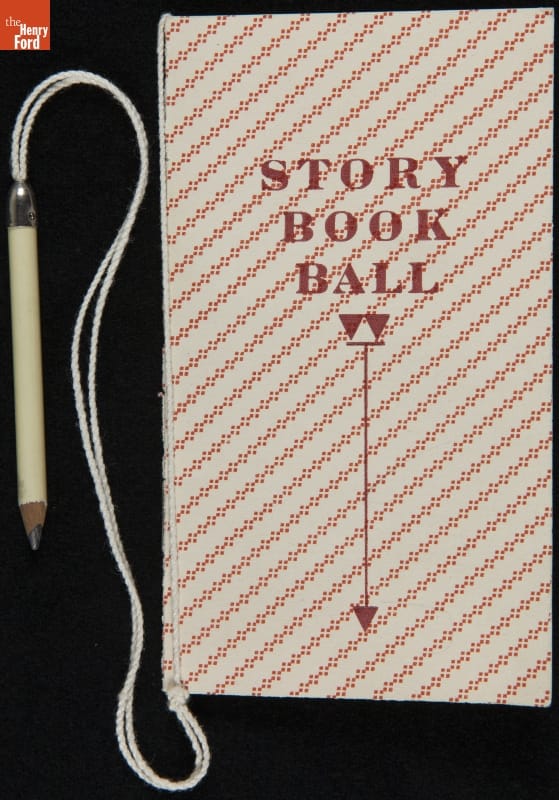
- "Story Book Ball," Prom Dance Card, 1932 -
- April 15, 1932
- Collections - Artifact
"Story Book Ball," Prom Dance Card, 1932
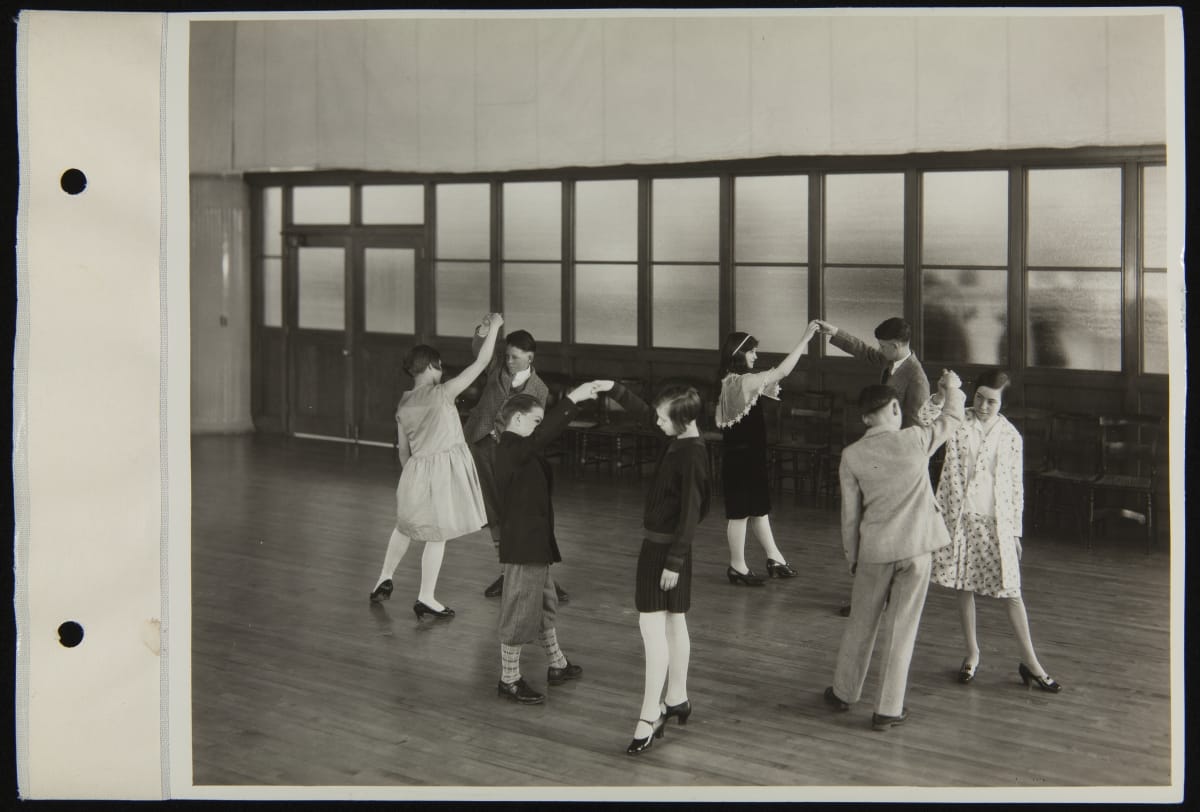
- Edison Institute School Students in the Dance Room of Ford Engineering Laboratory, May 1929 - Henry Ford created a room for dancing at Ford Motor Company's Engineering Lab, where his office and the company's engineering activities were located. These students are learning the traditional American dances of Henry Ford's youth -- along with dance etiquette. Later, Ford built Lovett Hall, an elegant ballroom named for his dancing master.
- May 11, 1929
- Collections - Artifact
Edison Institute School Students in the Dance Room of Ford Engineering Laboratory, May 1929
Henry Ford created a room for dancing at Ford Motor Company's Engineering Lab, where his office and the company's engineering activities were located. These students are learning the traditional American dances of Henry Ford's youth -- along with dance etiquette. Later, Ford built Lovett Hall, an elegant ballroom named for his dancing master.
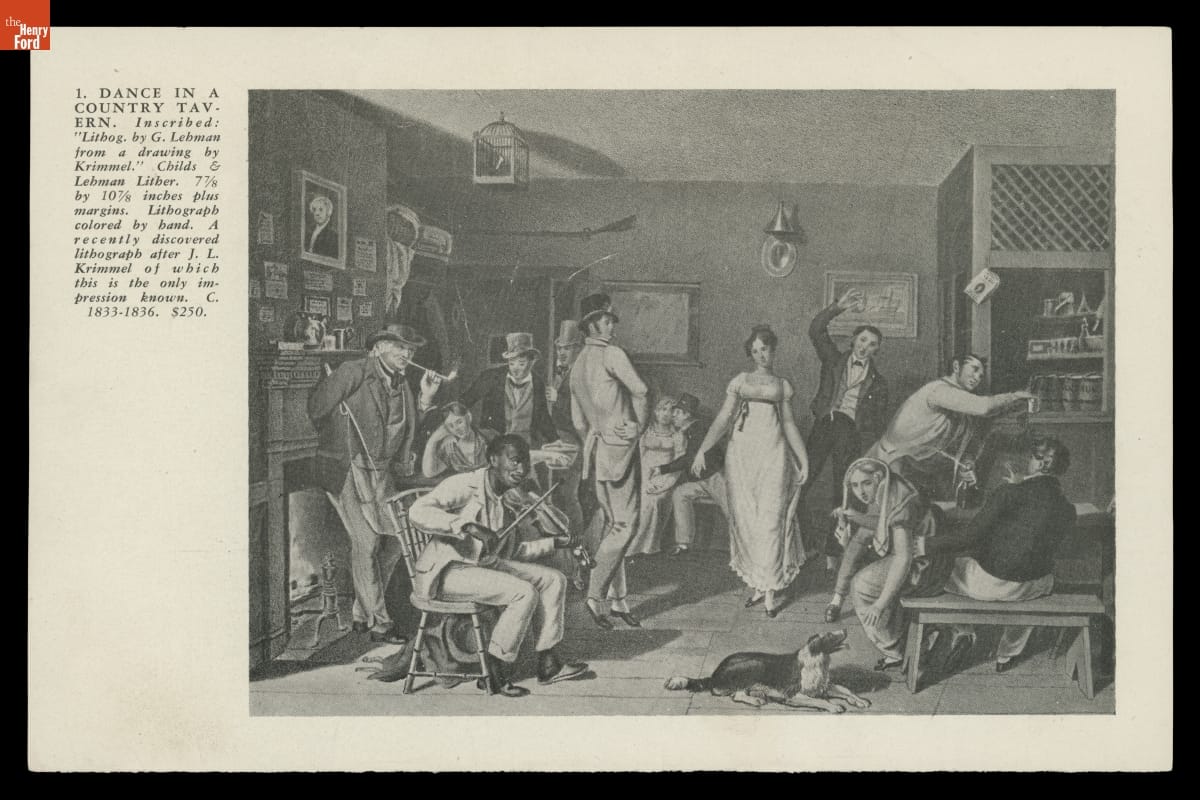
- The Print, "Dance in a Country Tavern," Offered for Sale in "The Old Print Shop Portfolio" Catalog, December 1948 - In the late 1810s, German-born Philadelphia artist John Lewis Krimmel (1786-1821) depicted the people and events at a country tavern. Krimmel's richly detailed portrait holds many clues to the lives of Americans in the early republic. Printmakers created prints of this drawing years after Krimmel's death.
- December 01, 1948
- Collections - Artifact
The Print, "Dance in a Country Tavern," Offered for Sale in "The Old Print Shop Portfolio" Catalog, December 1948
In the late 1810s, German-born Philadelphia artist John Lewis Krimmel (1786-1821) depicted the people and events at a country tavern. Krimmel's richly detailed portrait holds many clues to the lives of Americans in the early republic. Printmakers created prints of this drawing years after Krimmel's death.
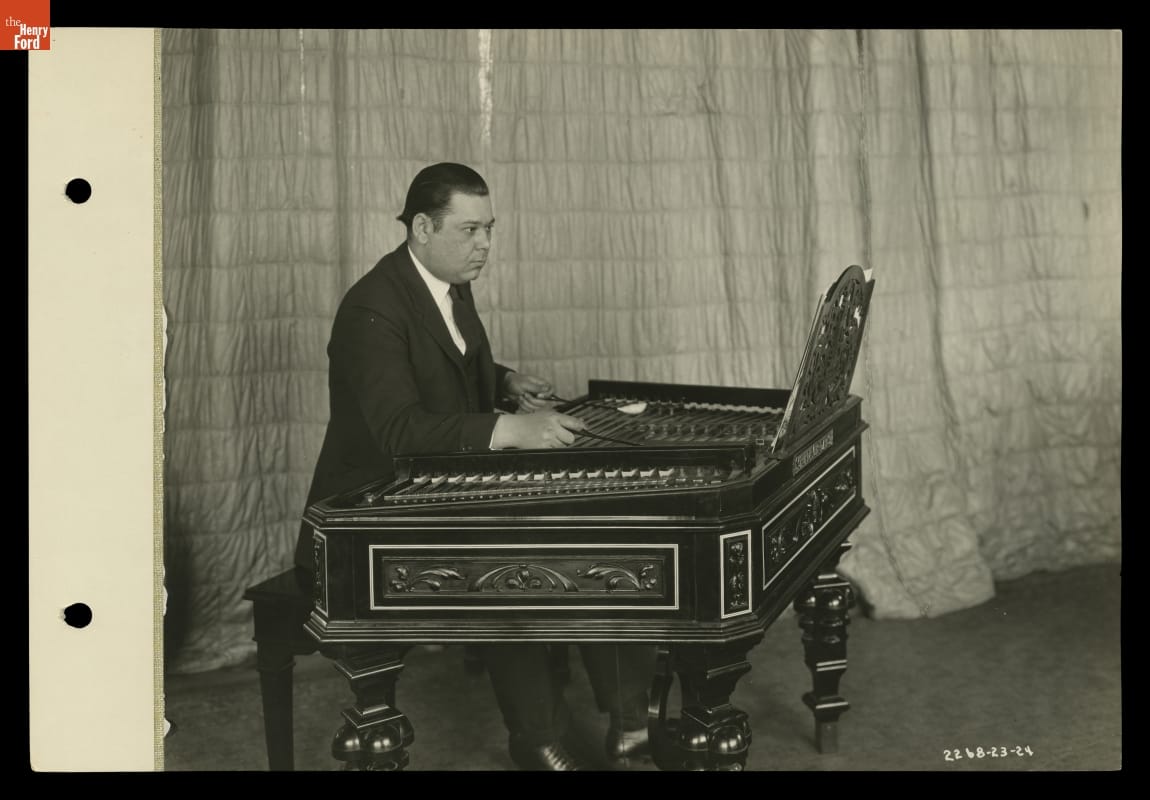
- Edmund Berky Playing the Cimbalom during a Ford Radio Station WWI Broadcast, 1924 - Edmund Berky provided musical entertainment for a Ford Motor Company radio program in May 1924. Berky played several selections -- ranging from classical to folk tunes -- on a cimbalom, which is similar to a dulcimer. Musicians play the cimbalom by striking metal strings with spoon-shaped wooden hammers covered with cotton, felt, or leather.
- May 22, 1924
- Collections - Artifact
Edmund Berky Playing the Cimbalom during a Ford Radio Station WWI Broadcast, 1924
Edmund Berky provided musical entertainment for a Ford Motor Company radio program in May 1924. Berky played several selections -- ranging from classical to folk tunes -- on a cimbalom, which is similar to a dulcimer. Musicians play the cimbalom by striking metal strings with spoon-shaped wooden hammers covered with cotton, felt, or leather.
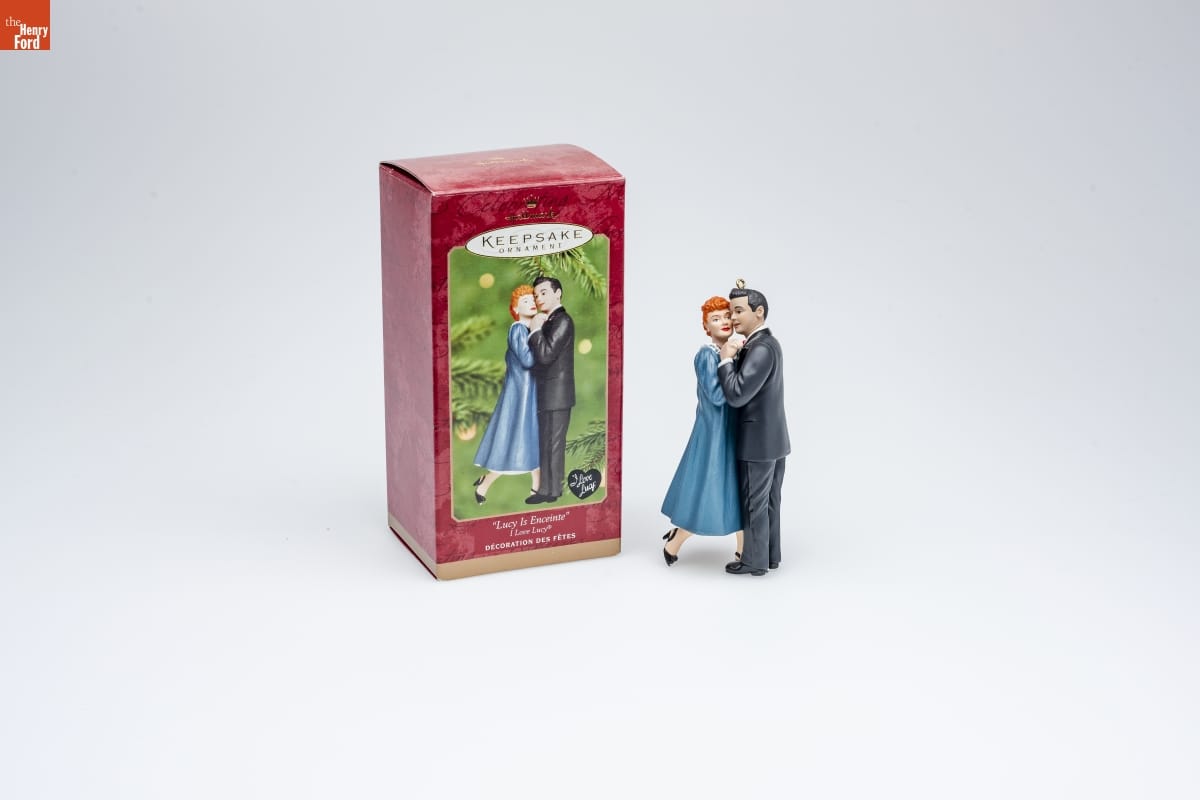
- Hallmark "I Love Lucy: 'Lucy Is Enceinte'" Christmas Ornament, 2000 - Already known for greeting cards, Hallmark introduced a line of Christmas ornaments in 1973. The company's annual release of an increasing array of ornaments revolutionized Christmas decorating, appealing to customers' interest in marking memories and milestones as well as expressing one's personality and unique tastes.
- 2000
- Collections - Artifact
Hallmark "I Love Lucy: 'Lucy Is Enceinte'" Christmas Ornament, 2000
Already known for greeting cards, Hallmark introduced a line of Christmas ornaments in 1973. The company's annual release of an increasing array of ornaments revolutionized Christmas decorating, appealing to customers' interest in marking memories and milestones as well as expressing one's personality and unique tastes.
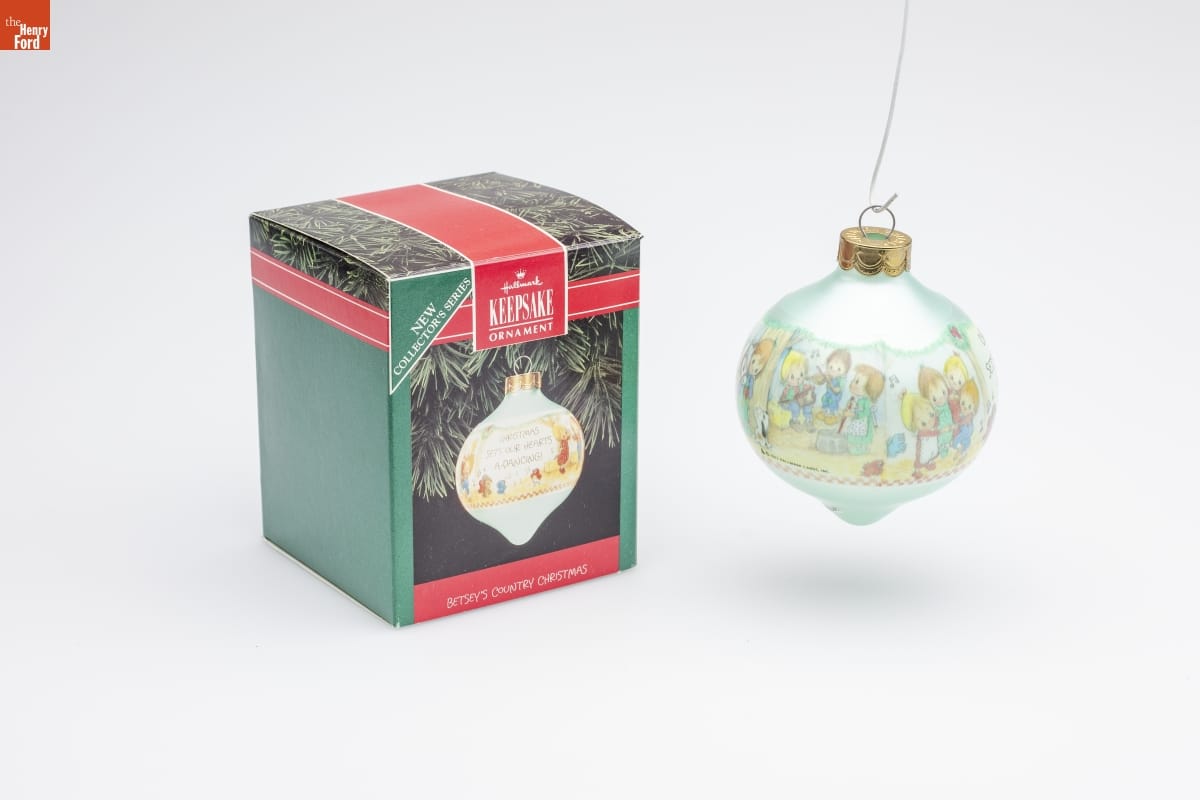
- Hallmark "Betsey's Country Christmas Series" Christmas Ornament, 1992 - Already known for greeting cards, Hallmark introduced a line of Christmas ornaments in 1973. The company's annual release of an increasing array of ornaments revolutionized Christmas decorating, appealing to customers' interest in marking memories and milestones as well as expressing one's personality and unique tastes.
- 1992
- Collections - Artifact
Hallmark "Betsey's Country Christmas Series" Christmas Ornament, 1992
Already known for greeting cards, Hallmark introduced a line of Christmas ornaments in 1973. The company's annual release of an increasing array of ornaments revolutionized Christmas decorating, appealing to customers' interest in marking memories and milestones as well as expressing one's personality and unique tastes.
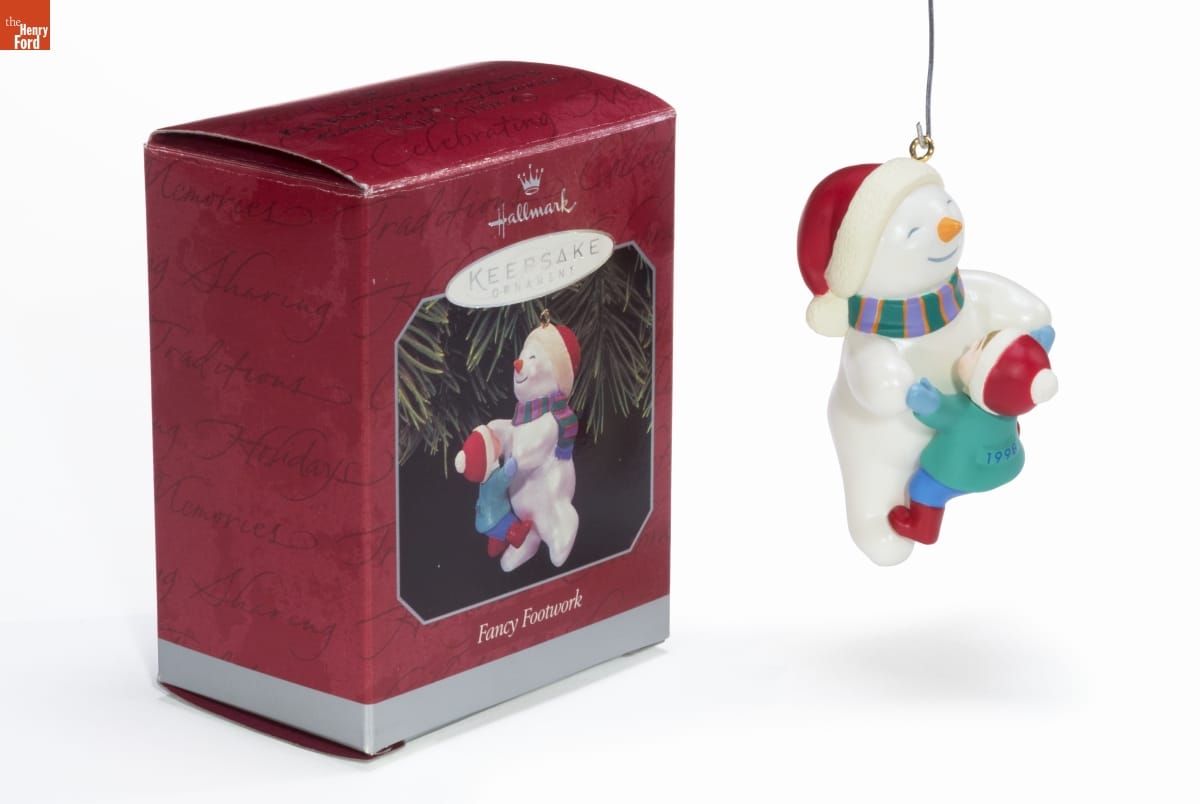
- Hallmark "Fancy Footwork" Christmas Ornament, 1998 - Already known for greeting cards, Hallmark introduced a line of Christmas ornaments in 1973. The company's annual release of an increasing array of ornaments revolutionized Christmas decorating, appealing to customers' interest in marking memories and milestones as well as expressing one's personality and unique tastes.
- 1998
- Collections - Artifact
Hallmark "Fancy Footwork" Christmas Ornament, 1998
Already known for greeting cards, Hallmark introduced a line of Christmas ornaments in 1973. The company's annual release of an increasing array of ornaments revolutionized Christmas decorating, appealing to customers' interest in marking memories and milestones as well as expressing one's personality and unique tastes.
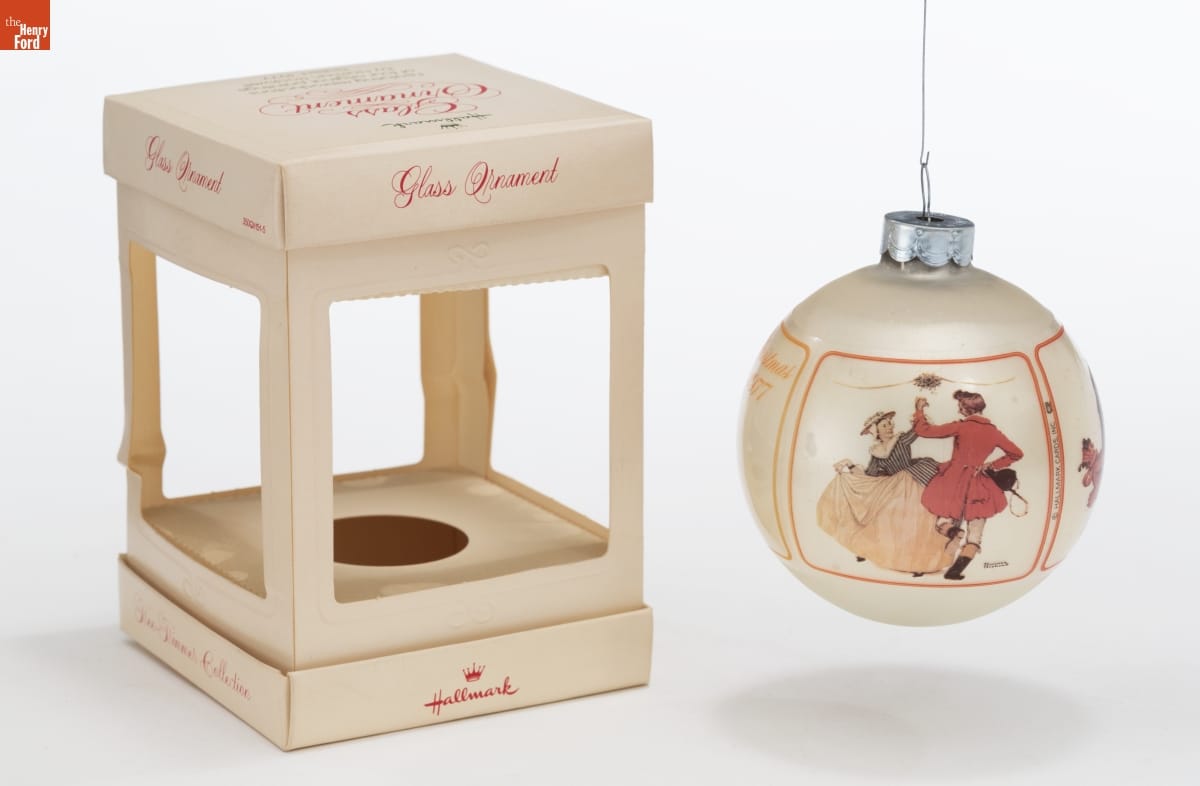
- Hallmark "Norman Rockwell" Christmas Ornament, 1977 - Already known for greeting cards, Hallmark introduced a line of Christmas ornaments in 1973. The company's annual release of an increasing array of ornaments revolutionized Christmas decorating, appealing to customers' interest in marking memories and milestones as well as expressing one's personality and unique tastes.
- 1977
- Collections - Artifact
Hallmark "Norman Rockwell" Christmas Ornament, 1977
Already known for greeting cards, Hallmark introduced a line of Christmas ornaments in 1973. The company's annual release of an increasing array of ornaments revolutionized Christmas decorating, appealing to customers' interest in marking memories and milestones as well as expressing one's personality and unique tastes.