
Search
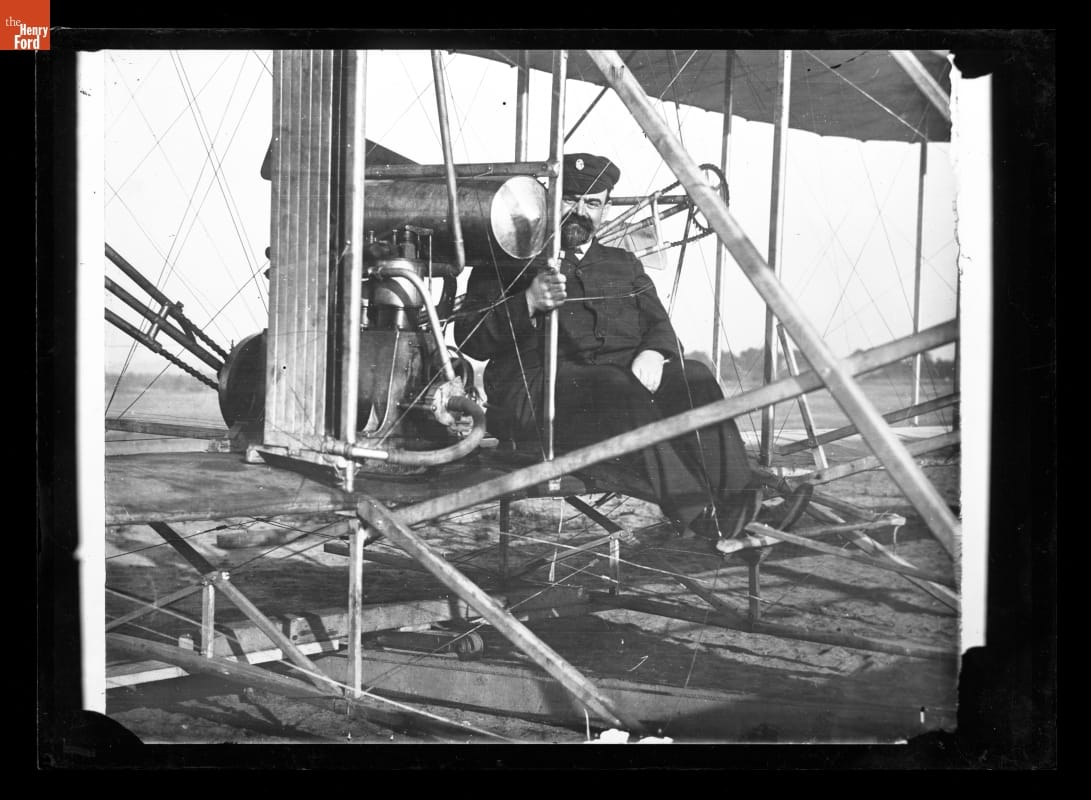
- Leon Bollee Sitting at the Controls of the Wright Flyer at Camp d'Auvours, near Le Mans, France, 1908-1909 - Leon Bollee was a close and important friend to Wilbur Wright during Wright's airplane demonstrations in France in 1908. Bollee offered Wright workspace and a crew of mechanics in his Le Mans automobile factory, and he asked for nothing in return. Nevertheless, Wright repaid the favor by taking Bollee up for a flight.
- 1908-1909
- Collections - Artifact
Leon Bollee Sitting at the Controls of the Wright Flyer at Camp d'Auvours, near Le Mans, France, 1908-1909
Leon Bollee was a close and important friend to Wilbur Wright during Wright's airplane demonstrations in France in 1908. Bollee offered Wright workspace and a crew of mechanics in his Le Mans automobile factory, and he asked for nothing in return. Nevertheless, Wright repaid the favor by taking Bollee up for a flight.
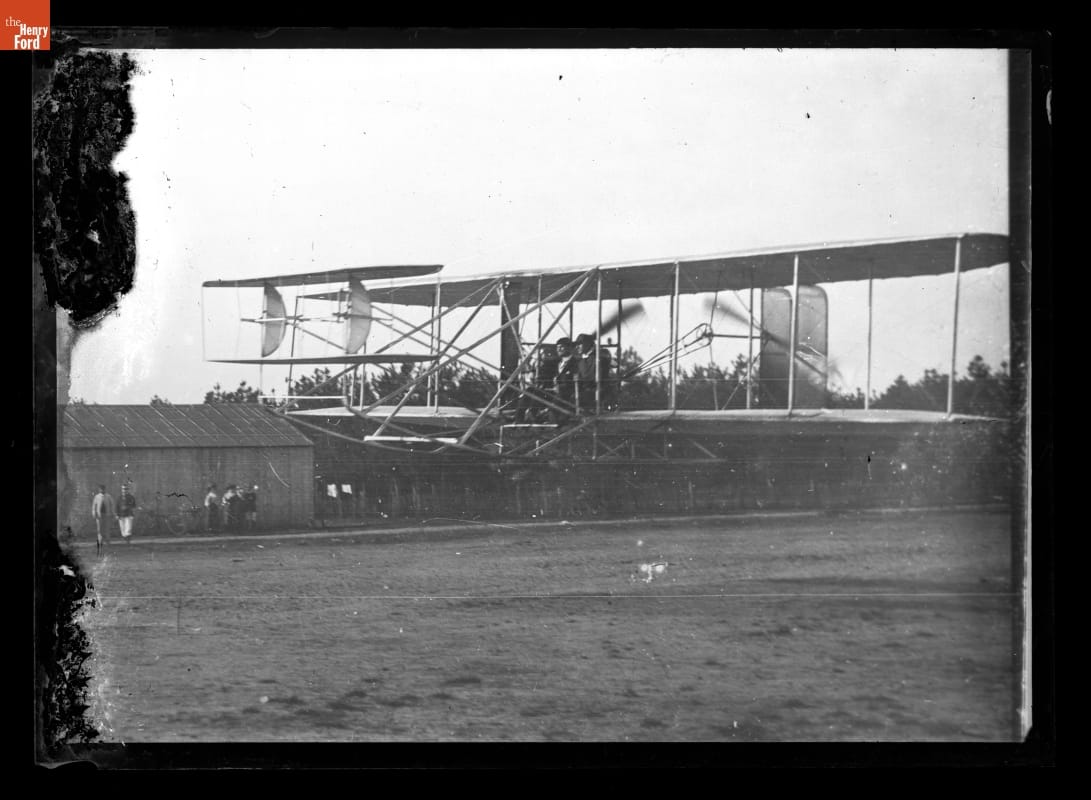
- Wilbur Wright and Passenger during a Flight over Camp D'Avours, near Le Mans, France, 1908-1909 - The Wright brothers are famous for their first flight in a powered, heavier-than-air craft on December 17, 1903. It was not until August 8, 1908 that they made their first official public demonstration of their unique controllable flyer. This shows Wilbur Wright flying near the ground while taking off at Les Hunandières horse racing track near Le Mans, France.
- 1908-1909
- Collections - Artifact
Wilbur Wright and Passenger during a Flight over Camp D'Avours, near Le Mans, France, 1908-1909
The Wright brothers are famous for their first flight in a powered, heavier-than-air craft on December 17, 1903. It was not until August 8, 1908 that they made their first official public demonstration of their unique controllable flyer. This shows Wilbur Wright flying near the ground while taking off at Les Hunandières horse racing track near Le Mans, France.
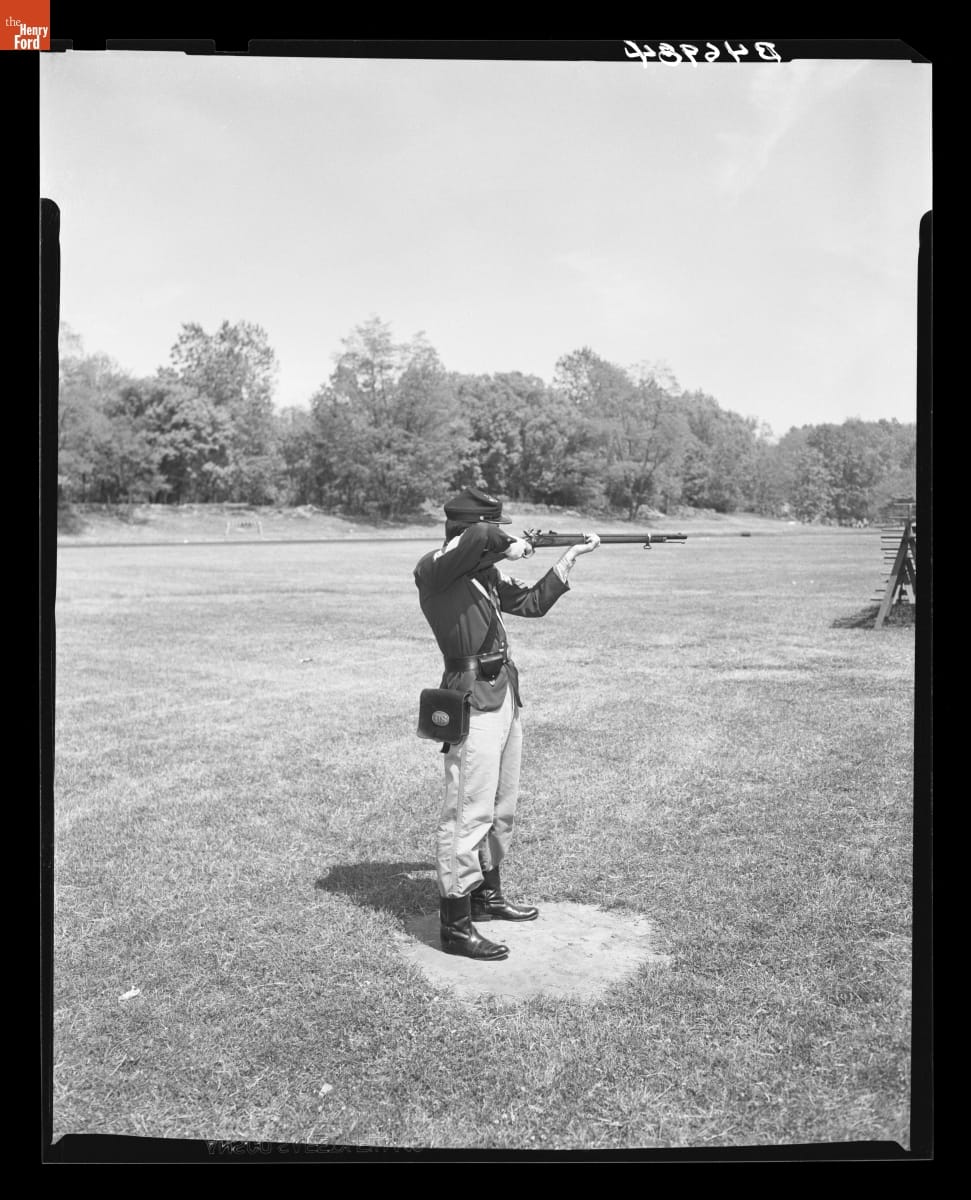
- Rudy Ruzicska at Muzzle Loaders Festival in Greenfield Village, June 1967 - Greenfield Village hosted an annual Muzzle Loaders Festival for more than thirty years, from the mid-1950s to the late 1980s. The event attracted hundreds of participants, recreating activities from 1830 to 1865. Visitors could see black powder shooting demonstrations and competitions, mid-1800s craft presentations, costume contests, parades, and other ceremonies.
- 24 June 1967 - 25 June 1967
- Collections - Artifact
Rudy Ruzicska at Muzzle Loaders Festival in Greenfield Village, June 1967
Greenfield Village hosted an annual Muzzle Loaders Festival for more than thirty years, from the mid-1950s to the late 1980s. The event attracted hundreds of participants, recreating activities from 1830 to 1865. Visitors could see black powder shooting demonstrations and competitions, mid-1800s craft presentations, costume contests, parades, and other ceremonies.
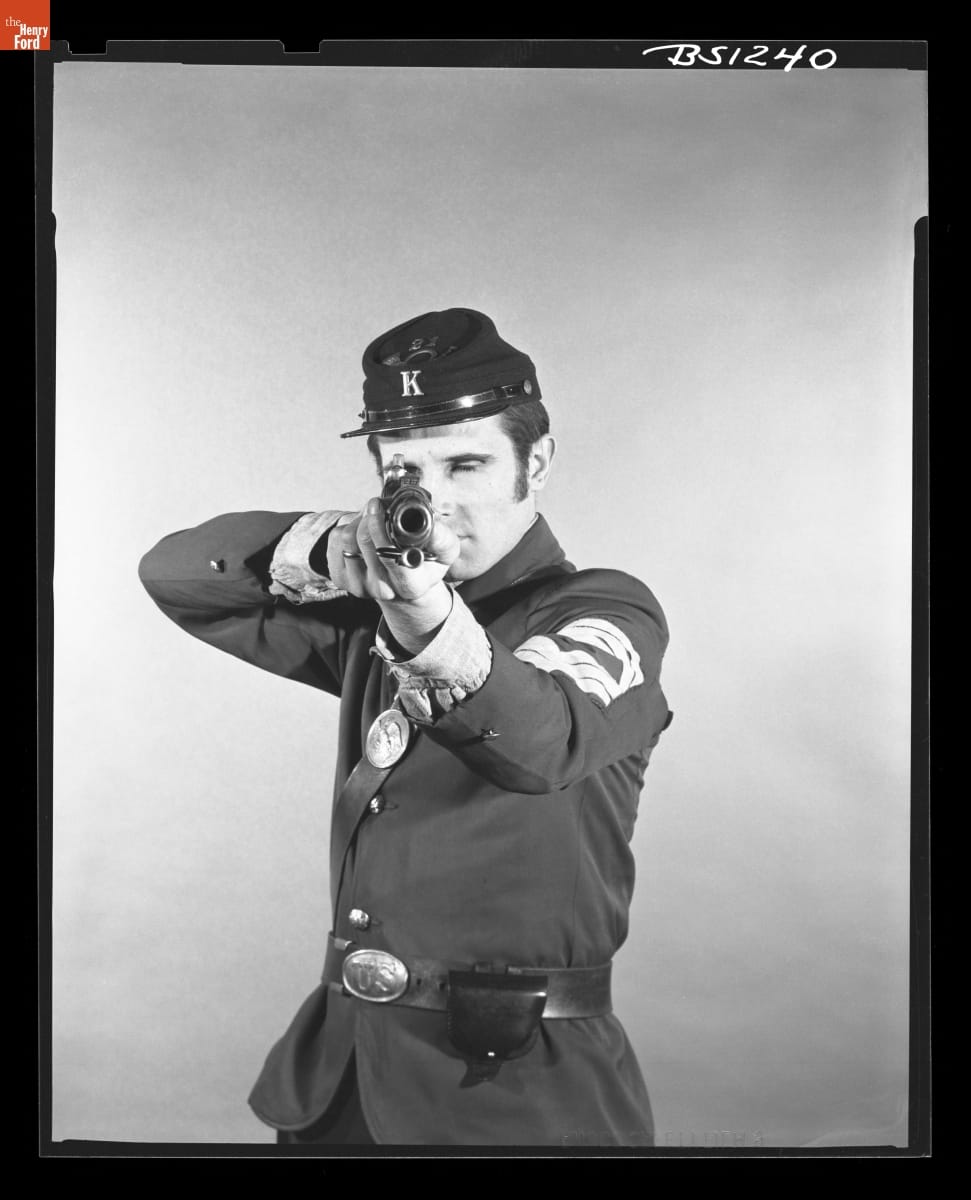
- Rudy Ruzicska Posing for Muzzle Loaders Festival Promotional Materials, 1969 - Rudy Ruzicska was a long-time photographer at The Henry Ford. He started his 66-year-long career in 1956 while still in high school, working part-time in maintenance and cleaning. When a position opened in photography, he took it, remaining there until he retired in 2022. Rudy also actively promoted the Muzzle Loaders Festival, an annual event once held at The Henry Ford.
- February 01, 1969
- Collections - Artifact
Rudy Ruzicska Posing for Muzzle Loaders Festival Promotional Materials, 1969
Rudy Ruzicska was a long-time photographer at The Henry Ford. He started his 66-year-long career in 1956 while still in high school, working part-time in maintenance and cleaning. When a position opened in photography, he took it, remaining there until he retired in 2022. Rudy also actively promoted the Muzzle Loaders Festival, an annual event once held at The Henry Ford.
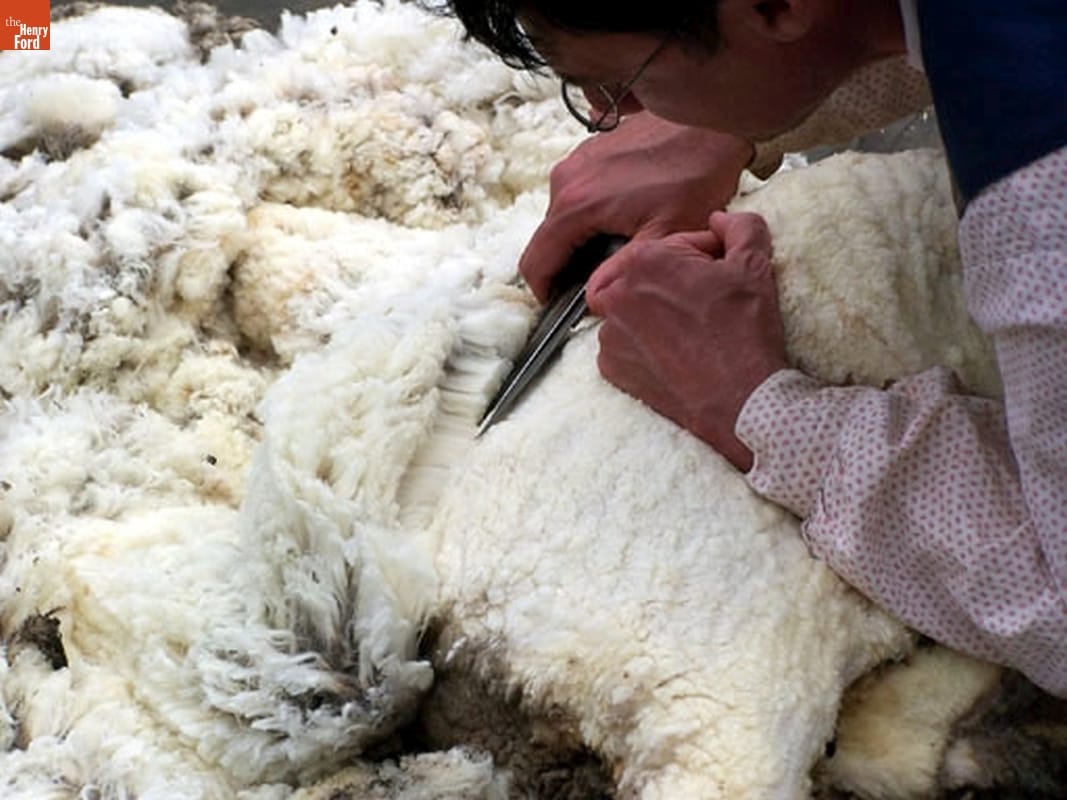
- Demonstrating Blade-Shearing of Merino Sheep in Greenfield Village, May 2005 - Heavy coats of fine wool made Merino sheep a popular breed among nineteenth-century wool producers. Every spring, shearers carefully navigated blade shears to remove each sheep's thick fleece -- a process that could take several hours. More than a century later, presenters demonstrate this labor-intensive blade-shearing process at Firestone Farm in Greenfield Village.
- May 01, 2005
- Collections - Artifact
Demonstrating Blade-Shearing of Merino Sheep in Greenfield Village, May 2005
Heavy coats of fine wool made Merino sheep a popular breed among nineteenth-century wool producers. Every spring, shearers carefully navigated blade shears to remove each sheep's thick fleece -- a process that could take several hours. More than a century later, presenters demonstrate this labor-intensive blade-shearing process at Firestone Farm in Greenfield Village.
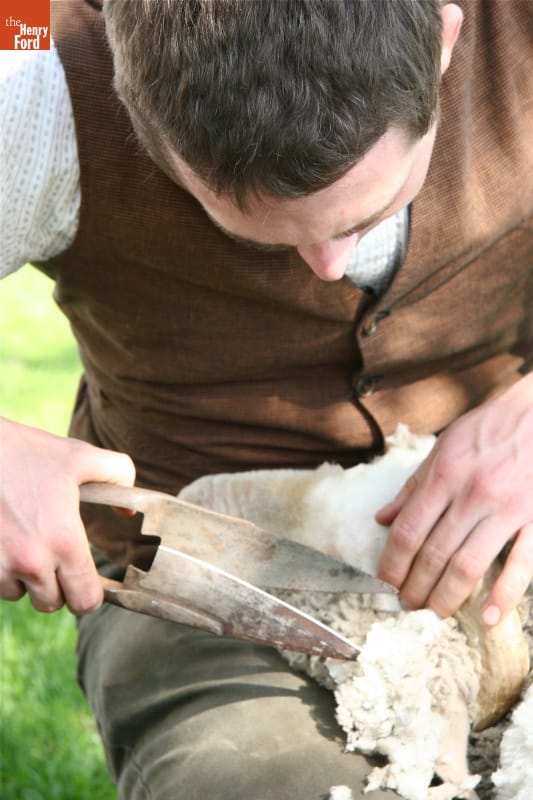
- Demonstrating Blade-Shearing of Merino Sheep in Greenfield Village, April 2010 - Heavy coats of fine wool made Merino sheep a popular breed among nineteenth-century wool producers. Every spring, shearers carefully navigated blade shears to remove each sheep's thick fleece -- a process that could take several hours. More than a century later, presenters demonstrate this labor-intensive blade-shearing process at Firestone Farm in Greenfield Village.
- April 29, 2010
- Collections - Artifact
Demonstrating Blade-Shearing of Merino Sheep in Greenfield Village, April 2010
Heavy coats of fine wool made Merino sheep a popular breed among nineteenth-century wool producers. Every spring, shearers carefully navigated blade shears to remove each sheep's thick fleece -- a process that could take several hours. More than a century later, presenters demonstrate this labor-intensive blade-shearing process at Firestone Farm in Greenfield Village.
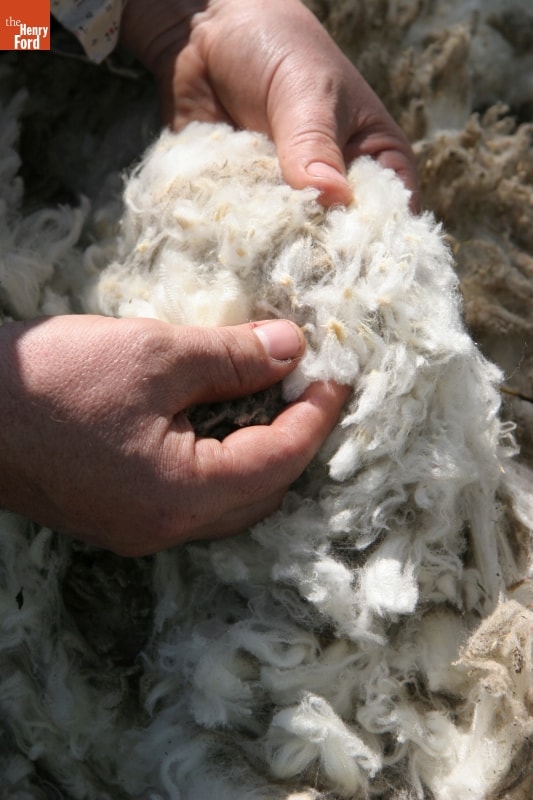
- Lanolin in Wool from Merino Sheep-Shearing, Greenfield Village, April 2010 - The skin of Merino sheep secretes an excess of lanolin. Clumps of this protective waxy substance often remain in the fleece after shearing. A warm, soapy wash of the fleece removes lanolin, along with dirt and matted wool, before raw wool is processed into yarn or fabric.
- April 30, 2010
- Collections - Artifact
Lanolin in Wool from Merino Sheep-Shearing, Greenfield Village, April 2010
The skin of Merino sheep secretes an excess of lanolin. Clumps of this protective waxy substance often remain in the fleece after shearing. A warm, soapy wash of the fleece removes lanolin, along with dirt and matted wool, before raw wool is processed into yarn or fabric.
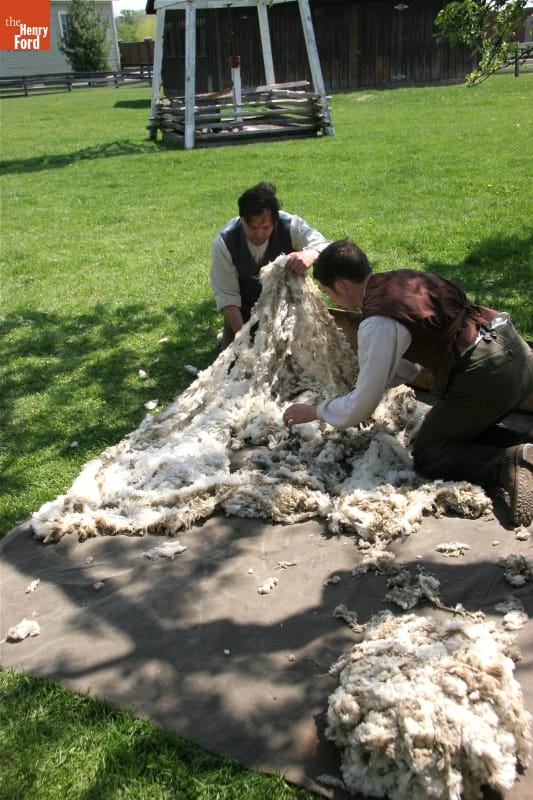
- Skirting the Wool Fleece from Merino Sheep-Shearing Demonstration, Greenfield Village, April 2010 - Heavy, yet fine fleeces made Merino sheep a popular breed among nineteenth-century wool producers. Every spring, after carefully navigating blade shears to cut away each sheep's thick fleece, farmers removed especially dirty or coarse sections of wool. This process, called skirting, helped maximize profit, as farmers and wool buyers negotiated a price per pound of wool based on fleece quality.
- April 30, 2010
- Collections - Artifact
Skirting the Wool Fleece from Merino Sheep-Shearing Demonstration, Greenfield Village, April 2010
Heavy, yet fine fleeces made Merino sheep a popular breed among nineteenth-century wool producers. Every spring, after carefully navigating blade shears to cut away each sheep's thick fleece, farmers removed especially dirty or coarse sections of wool. This process, called skirting, helped maximize profit, as farmers and wool buyers negotiated a price per pound of wool based on fleece quality.
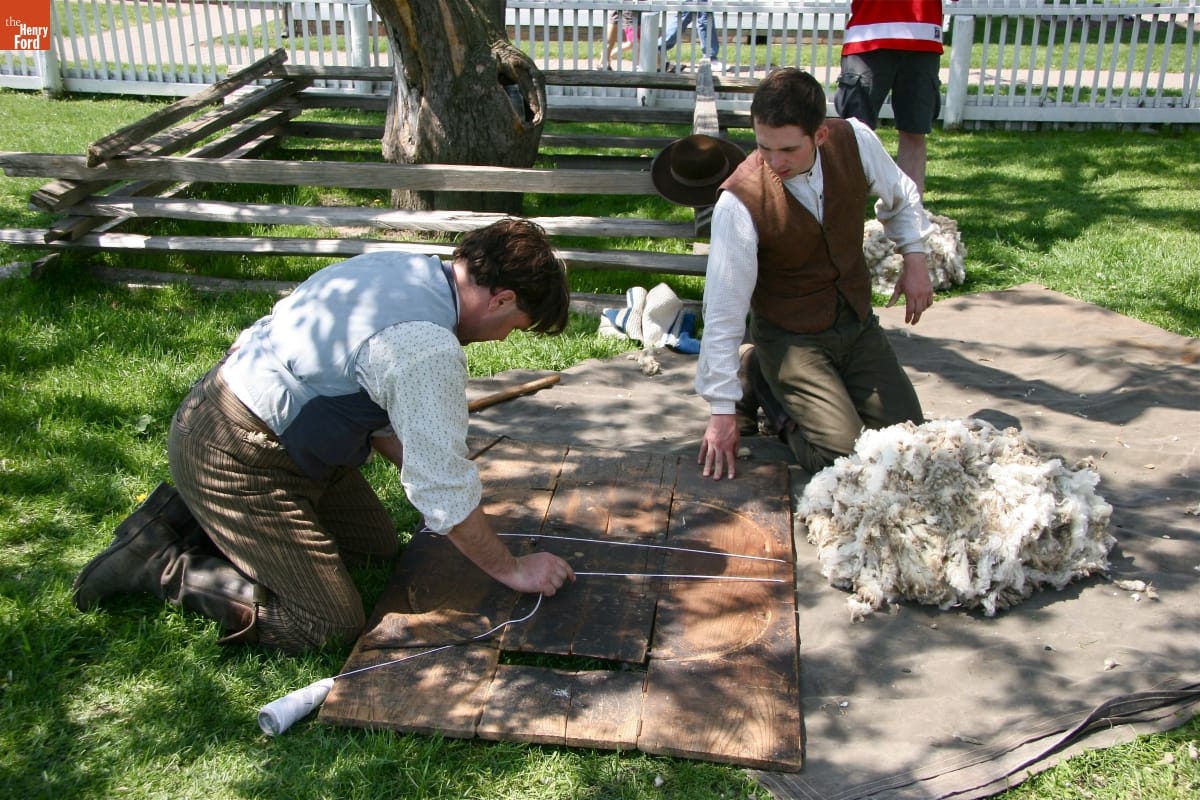
- Preparing the Wool Fleece for Weighing, Merino Sheep-Shearing Demonstration at Greenfield Village, April 2010 - Heavy coats of valuable wool made Merino sheep a popular breed among nineteenth-century wool producers. Every spring, shearers carefully navigated blade shears to remove each sheep's fleece by hand. Shearing as much usable wool as possible was key to maximizing profit, as farmers and wool buyers negotiated a price per pound of wool.
- April 30, 2010
- Collections - Artifact
Preparing the Wool Fleece for Weighing, Merino Sheep-Shearing Demonstration at Greenfield Village, April 2010
Heavy coats of valuable wool made Merino sheep a popular breed among nineteenth-century wool producers. Every spring, shearers carefully navigated blade shears to remove each sheep's fleece by hand. Shearing as much usable wool as possible was key to maximizing profit, as farmers and wool buyers negotiated a price per pound of wool.
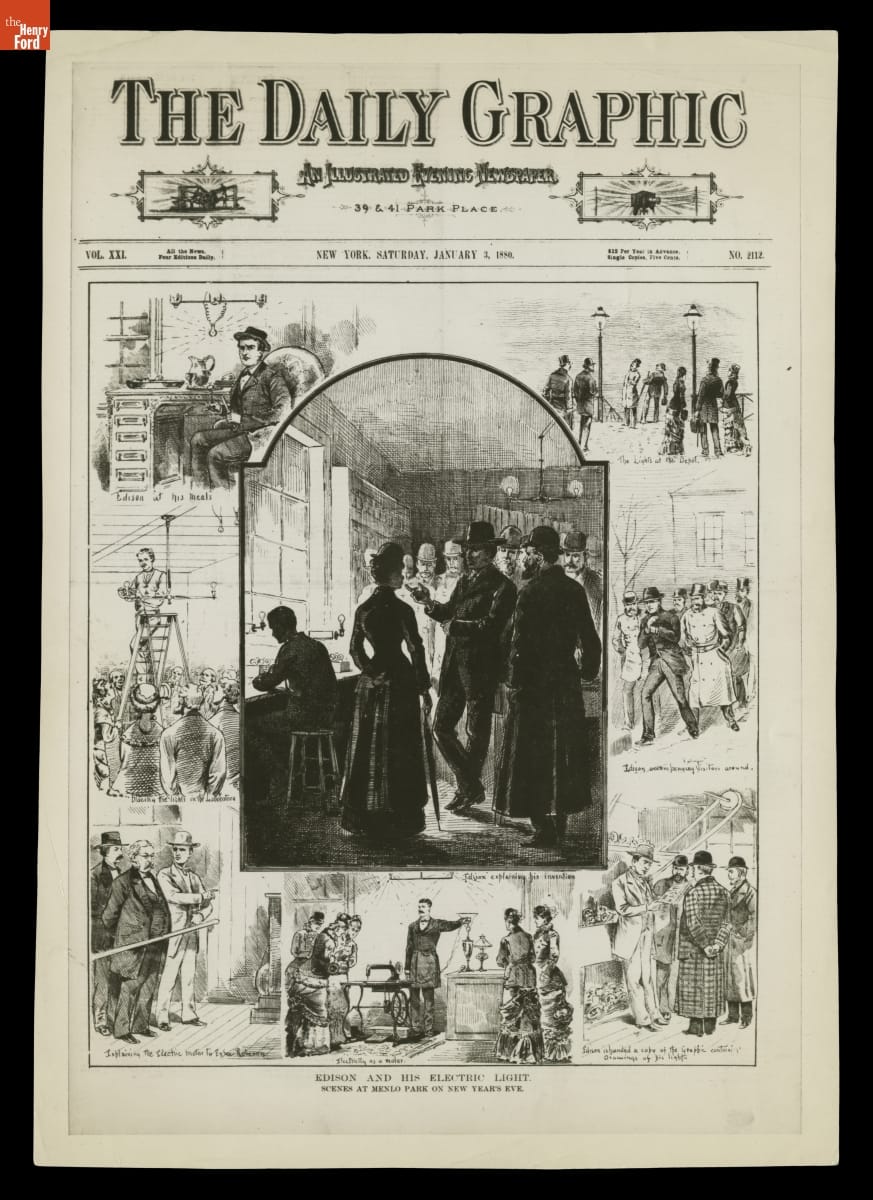
- Cover of The Daily Graphic Newspaper for January 3, 1880, "Edison and His Electric Light" -
- December 31, 1879
- Collections - Artifact
Cover of The Daily Graphic Newspaper for January 3, 1880, "Edison and His Electric Light"