
Search
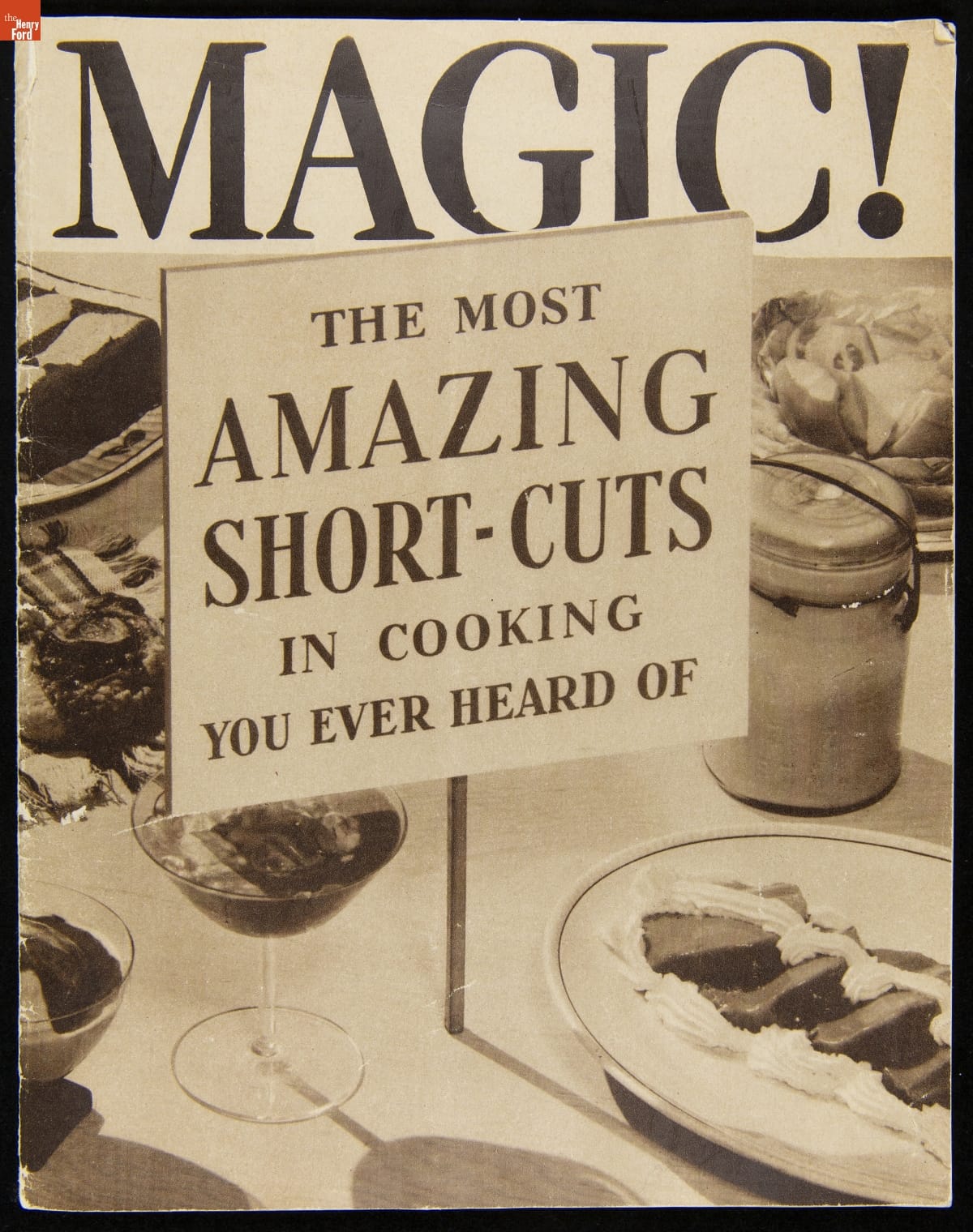
- Recipe Booklet, "MAGIC! The Most Amazing Short-Cuts in Cooking You Ever Heard Of," circa 1930 -
- circa 1930
- Collections - Artifact
Recipe Booklet, "MAGIC! The Most Amazing Short-Cuts in Cooking You Ever Heard Of," circa 1930
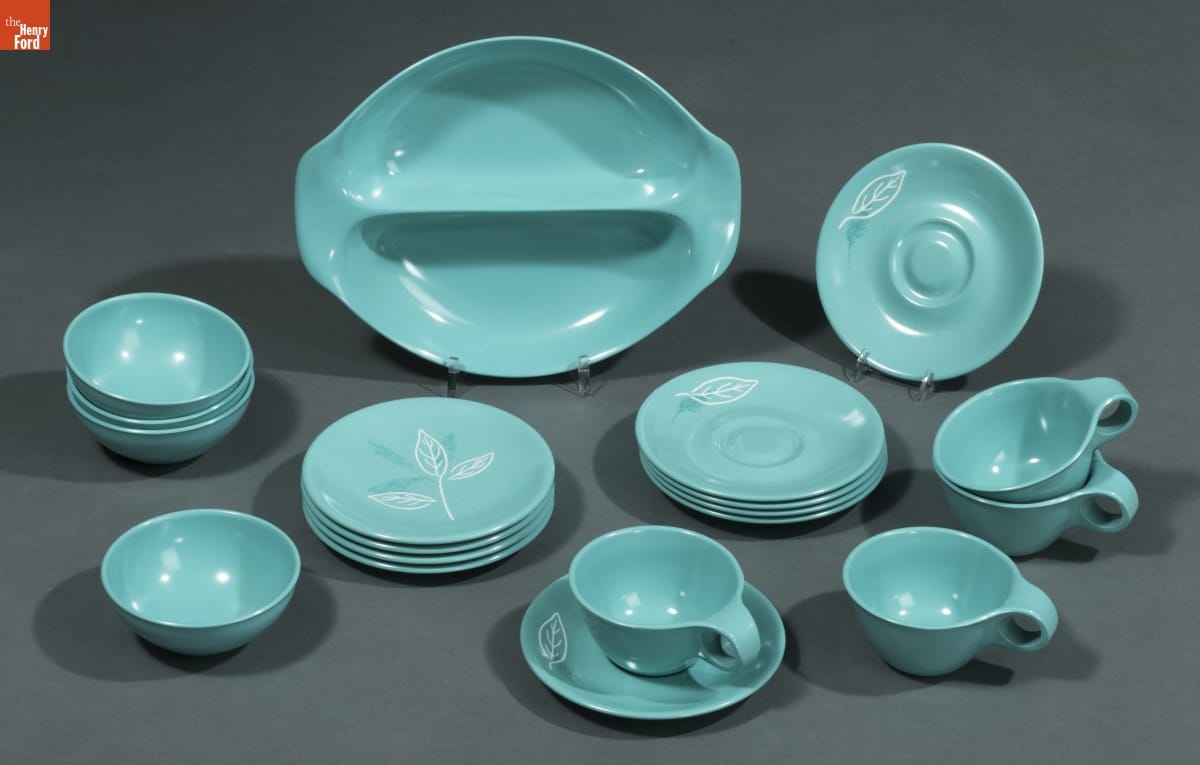
- Set of Melamine Tableware, 1950-1960 - During the early 1950s, plastic dinnerware in the form of melamine was introduced to the American market. By 1956, twenty-five percent of Americans owned at least a pair of these plates. Industrial designers Russel and Mary Wright were famous for producing aesthetically pleasing ceramic dinnerware as early as the 1930s. This set, in fashionable turquoise, was the Wrights' first design in plastic.
- 1950-1960
- Collections - Artifact
Set of Melamine Tableware, 1950-1960
During the early 1950s, plastic dinnerware in the form of melamine was introduced to the American market. By 1956, twenty-five percent of Americans owned at least a pair of these plates. Industrial designers Russel and Mary Wright were famous for producing aesthetically pleasing ceramic dinnerware as early as the 1930s. This set, in fashionable turquoise, was the Wrights' first design in plastic.
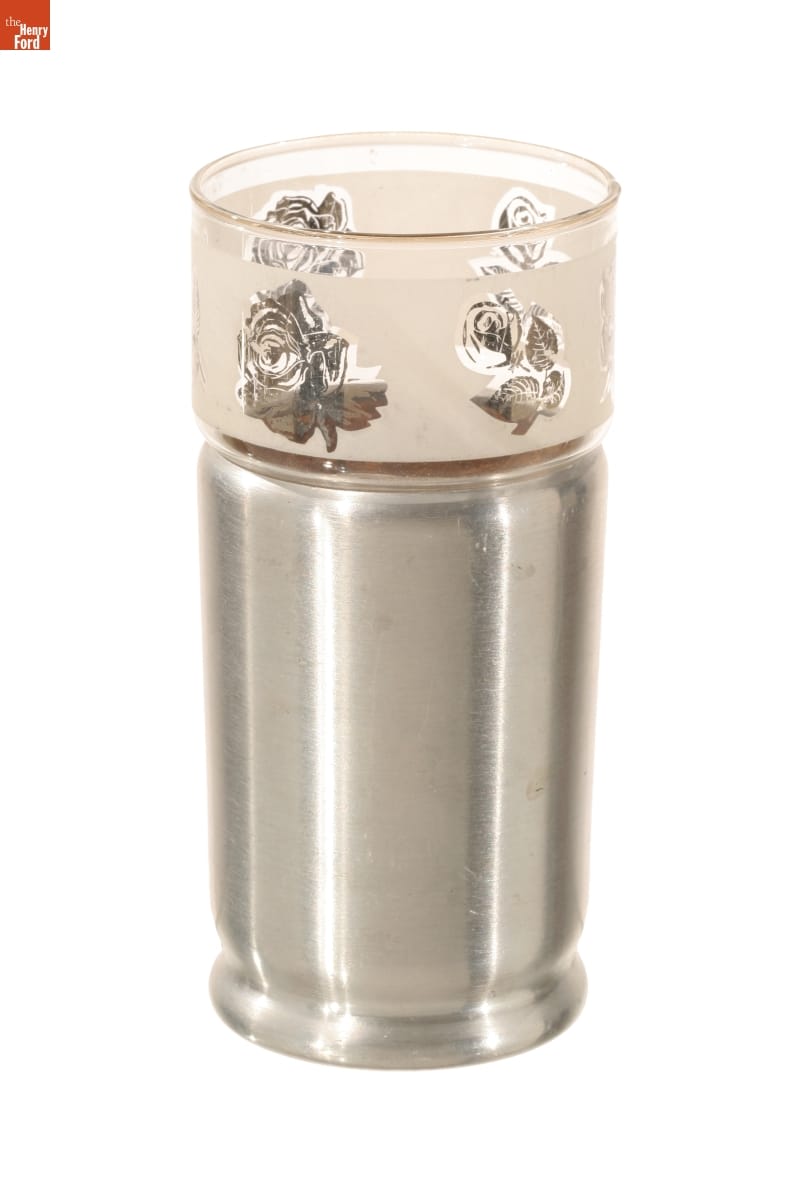
- Everlast "Forged" Tumbler, 1955-1960 - In 1932, Louis Schnitzer and Nathan Gelfman formed Everlast Metal Products Corporation, producing high-quality, hand-forged aluminum giftware. In an era of growing uniformity via factory production, the "made by hand" aspect of these products held an aesthetic appeal for consumers. This piece is an example of the aluminum giftware sold by Everlast.
- 1955-1960
- Collections - Artifact
Everlast "Forged" Tumbler, 1955-1960
In 1932, Louis Schnitzer and Nathan Gelfman formed Everlast Metal Products Corporation, producing high-quality, hand-forged aluminum giftware. In an era of growing uniformity via factory production, the "made by hand" aspect of these products held an aesthetic appeal for consumers. This piece is an example of the aluminum giftware sold by Everlast.
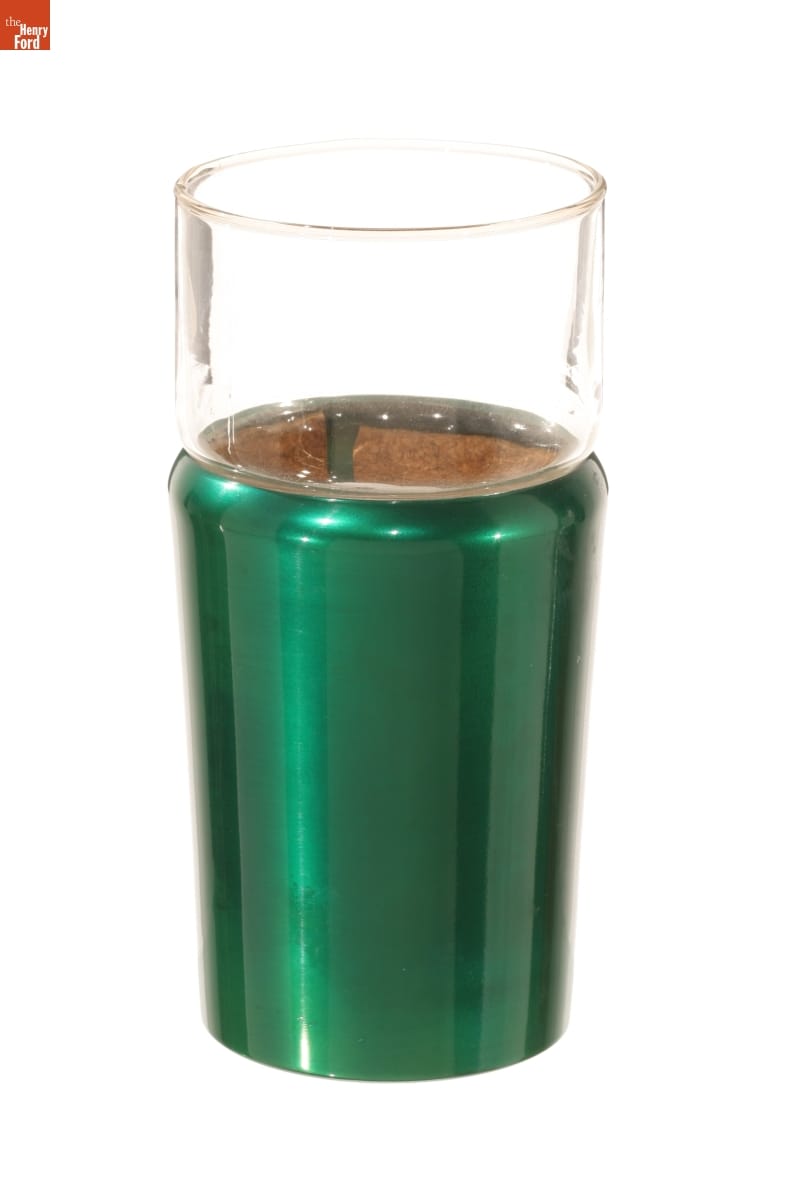
- Everlast "Forged" Tumbler, 1947-1951 -
- 1947-1951
- Collections - Artifact
Everlast "Forged" Tumbler, 1947-1951
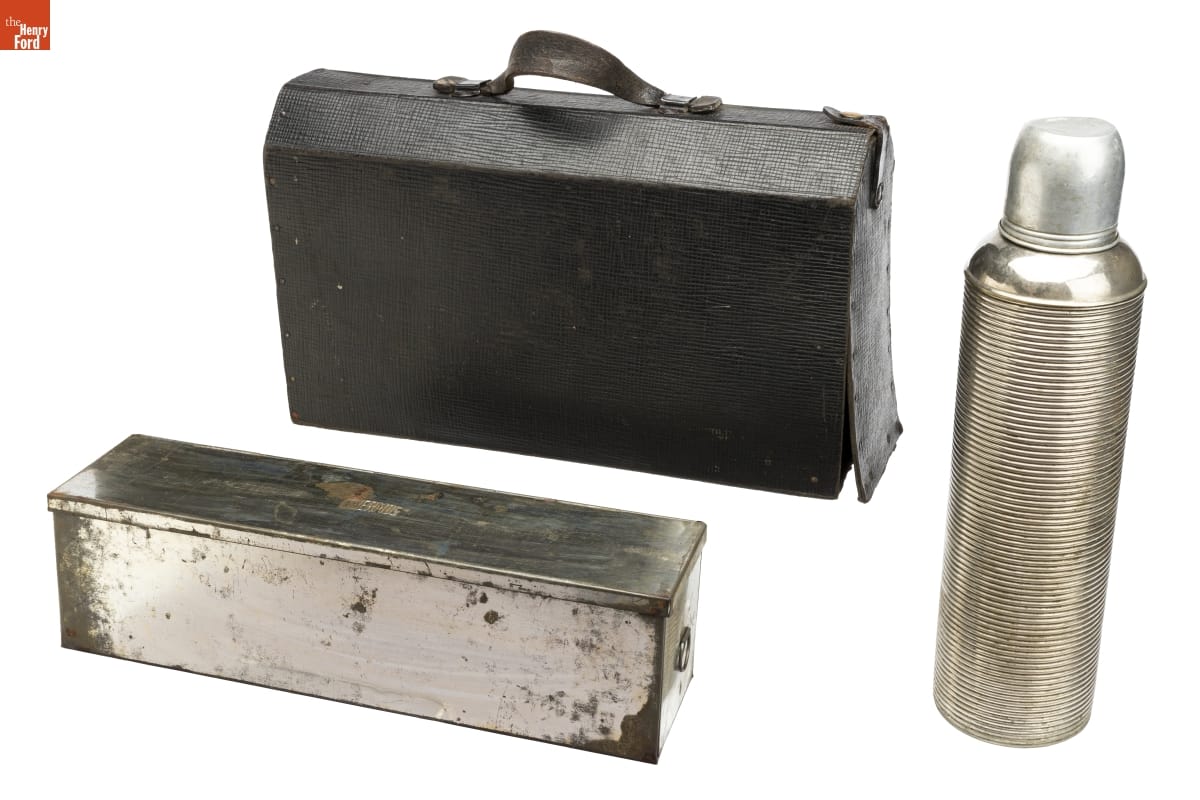
- Lunch Box, 1910-1956 -
- 1910-1956
- Collections - Artifact
Lunch Box, 1910-1956
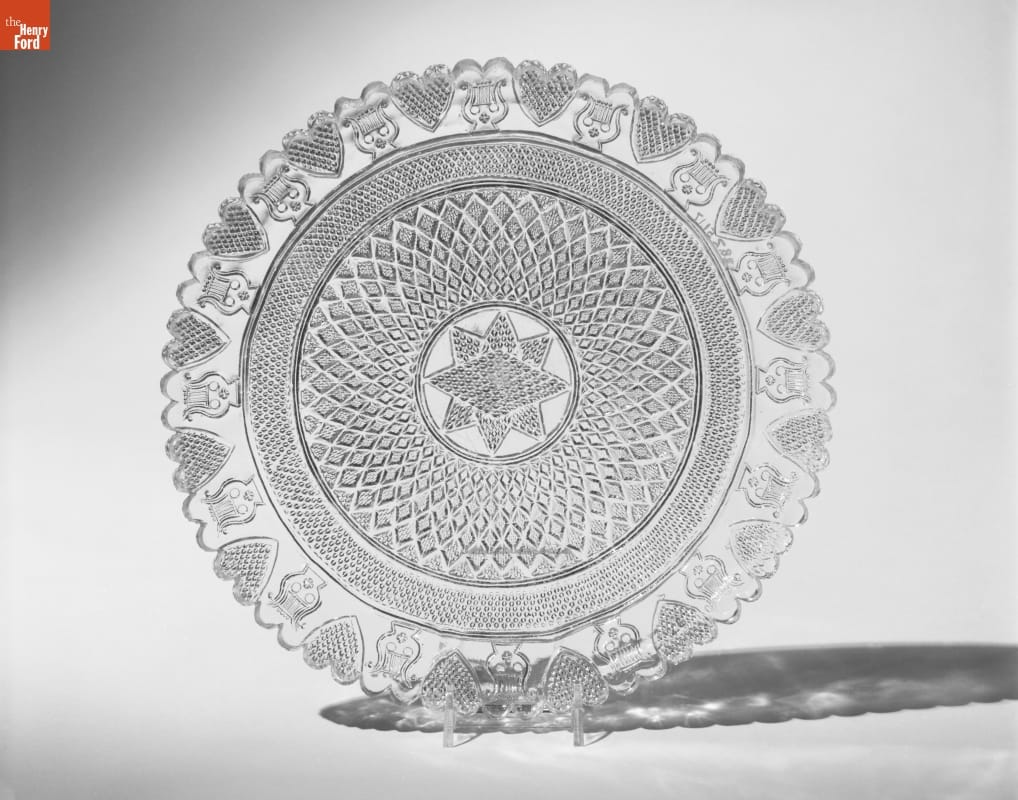
- Dish, 1825-1845 - Mechanically pressed glass was an innovation in glass history, making decorative, "patterned" glass available to a broad audience. One of the earliest types of pressed glass, dating to the 1830s is known as "Lacy Glass". Complex stippled patterns were developed to help hide technical defects caused by early presses, when the glass gather was cut off and dropped into a mold.
- 1825-1845
- Collections - Artifact
Dish, 1825-1845
Mechanically pressed glass was an innovation in glass history, making decorative, "patterned" glass available to a broad audience. One of the earliest types of pressed glass, dating to the 1830s is known as "Lacy Glass". Complex stippled patterns were developed to help hide technical defects caused by early presses, when the glass gather was cut off and dropped into a mold.
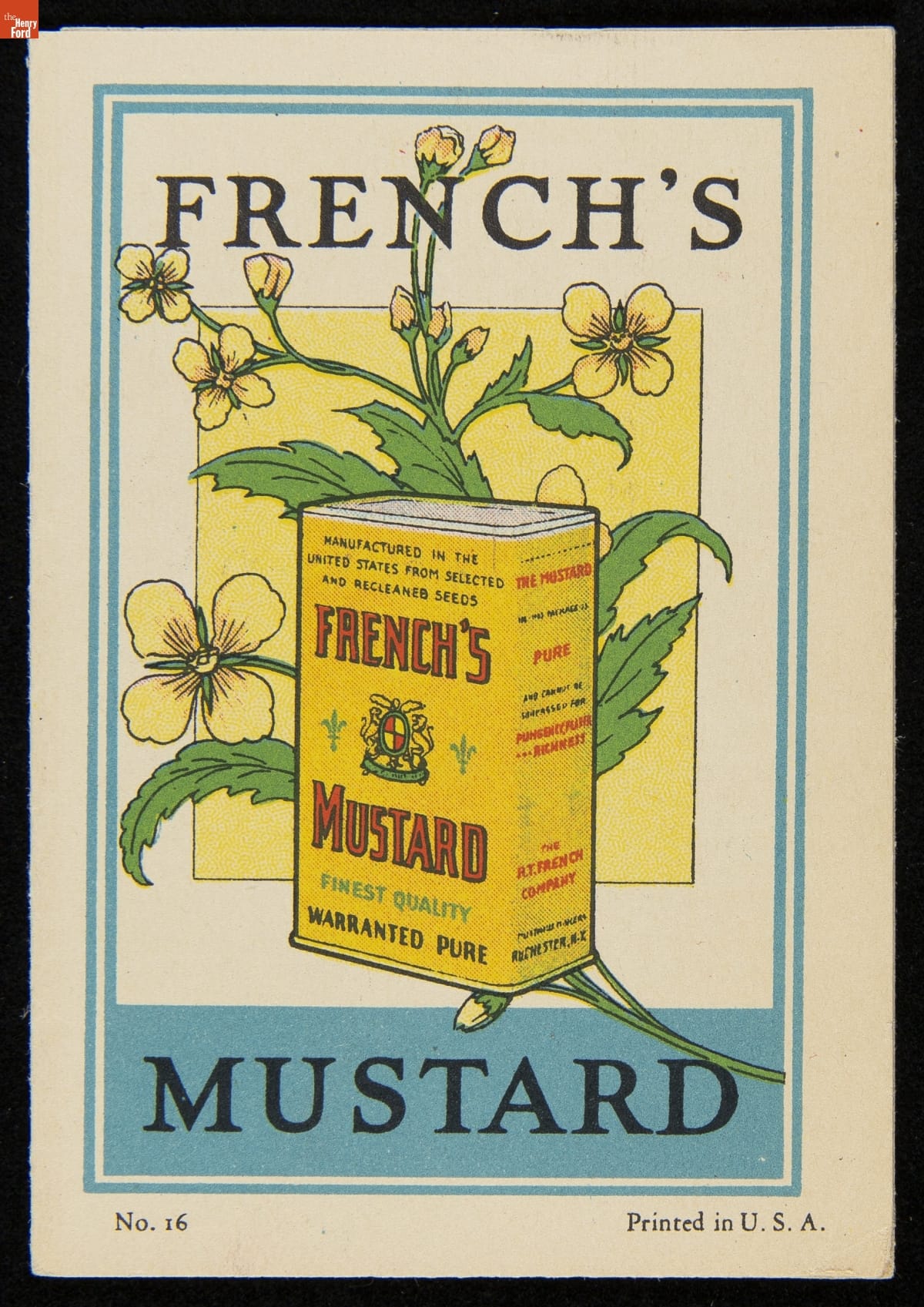
- French's Mustard Recipe Booklet No. 16, 1926 - In 1904, the R.T. French Company introduced its Cream Salad Mustard. Prior to this, mustard was stone ground, thick, and often grainy, but French's new processed condiment was mild in flavor and easy to spread. It soon became a staple in American ballparks, where hot dogs were common fare. This recipe booklet offered additional uses, making it a favorite condiment in home kitchens as well.
- 1926
- Collections - Artifact
French's Mustard Recipe Booklet No. 16, 1926
In 1904, the R.T. French Company introduced its Cream Salad Mustard. Prior to this, mustard was stone ground, thick, and often grainy, but French's new processed condiment was mild in flavor and easy to spread. It soon became a staple in American ballparks, where hot dogs were common fare. This recipe booklet offered additional uses, making it a favorite condiment in home kitchens as well.
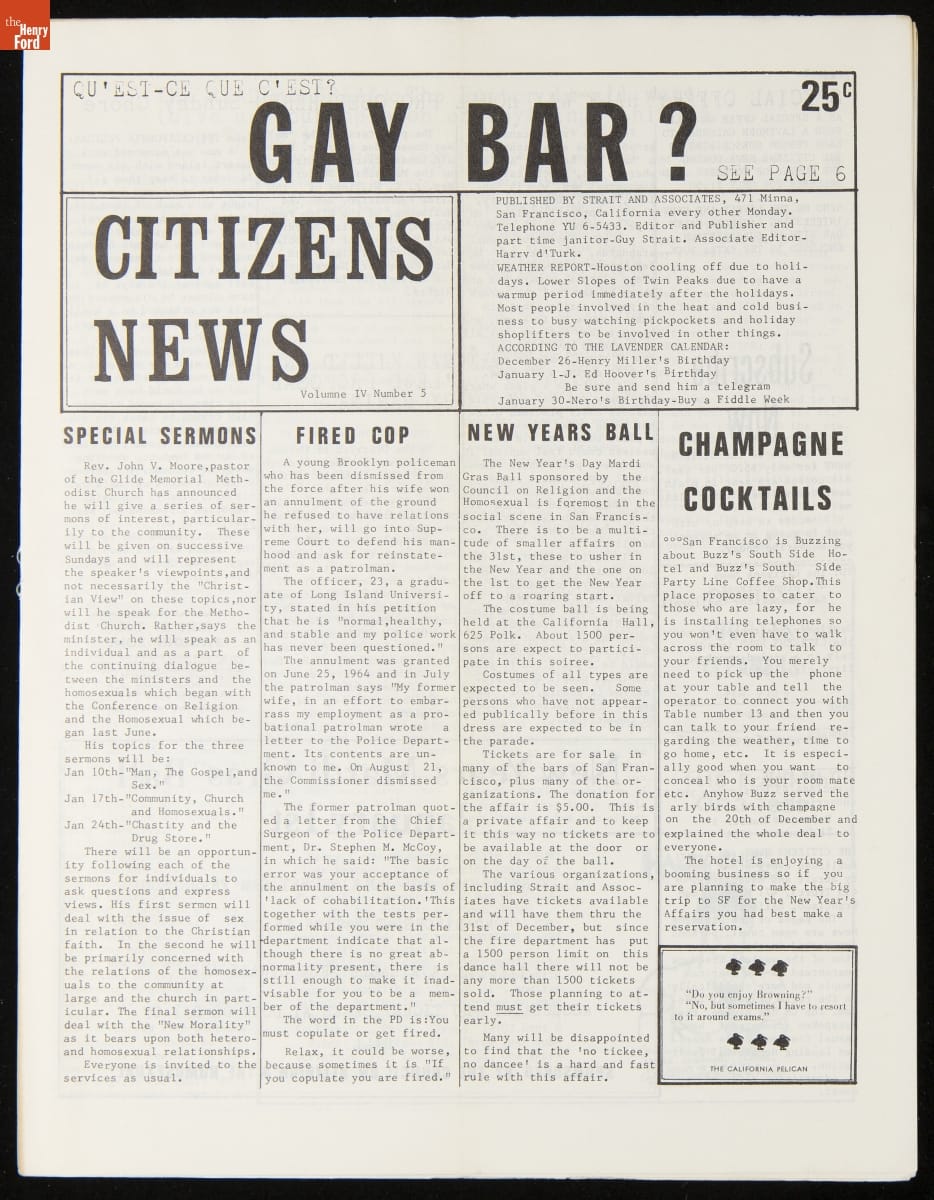
- Citizens News, Volume IV, Number 5, 1964-1965 - LGBTQ+ newspapers became more available beginning in the 1950s as organizations added print media to their activist tool kit. These newspapers were a regionally focused way to rally the LGBTQ+ community, share information, and fight discrimination. Many of these newspapers came to rely on gay bars as a location for disbursement as they were among the only private gay spaces in many cities.
- 1964-1965
- Collections - Artifact
Citizens News, Volume IV, Number 5, 1964-1965
LGBTQ+ newspapers became more available beginning in the 1950s as organizations added print media to their activist tool kit. These newspapers were a regionally focused way to rally the LGBTQ+ community, share information, and fight discrimination. Many of these newspapers came to rely on gay bars as a location for disbursement as they were among the only private gay spaces in many cities.
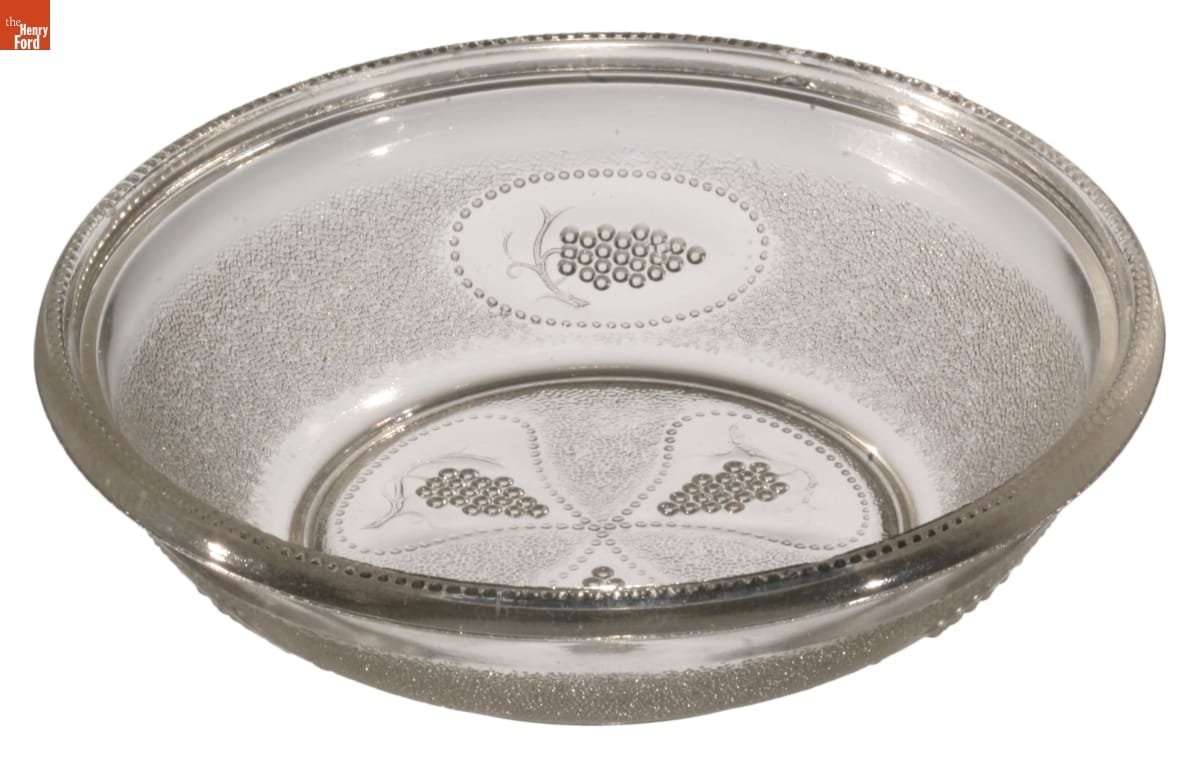
- Bowl, 1869-1871 - The Boston Silver Glass Company was established in East Cambridge, Massachusetts, in about 1857. Starting in 1869, the company produced pressed glass tableware in its "beaded grape medallion" pattern. The inexpensive glassware came in various forms: plates, dishes, bowls, compotes, goblets, and pitchers, among others. The company operated until about 1871.
- 1869-1871
- Collections - Artifact
Bowl, 1869-1871
The Boston Silver Glass Company was established in East Cambridge, Massachusetts, in about 1857. Starting in 1869, the company produced pressed glass tableware in its "beaded grape medallion" pattern. The inexpensive glassware came in various forms: plates, dishes, bowls, compotes, goblets, and pitchers, among others. The company operated until about 1871.
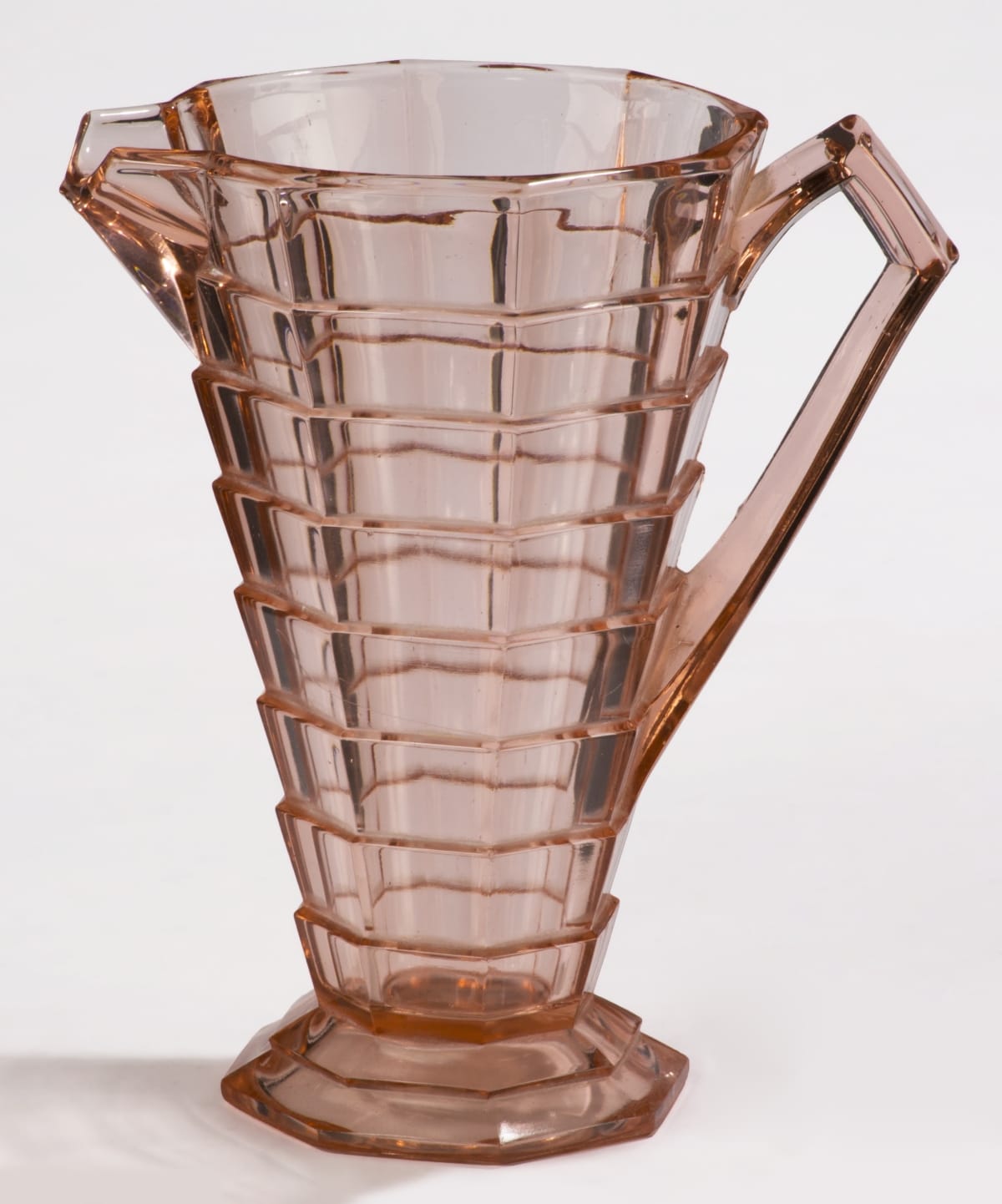
- Pitcher, 1926-1931 - This footed pitcher is part of a larger dinnerware service produced by the Indiana Glass Company of Dunkirk, Indiana. Known as "Depression Glass" these wares were distributed free, or at low cost, in the United States around the time of the Great Depression of the 1930s. The stepped or zig-zag design is the epitome of the Art Deco style, popular at that time.
- 1926-1931
- Collections - Artifact
Pitcher, 1926-1931
This footed pitcher is part of a larger dinnerware service produced by the Indiana Glass Company of Dunkirk, Indiana. Known as "Depression Glass" these wares were distributed free, or at low cost, in the United States around the time of the Great Depression of the 1930s. The stepped or zig-zag design is the epitome of the Art Deco style, popular at that time.