
Search
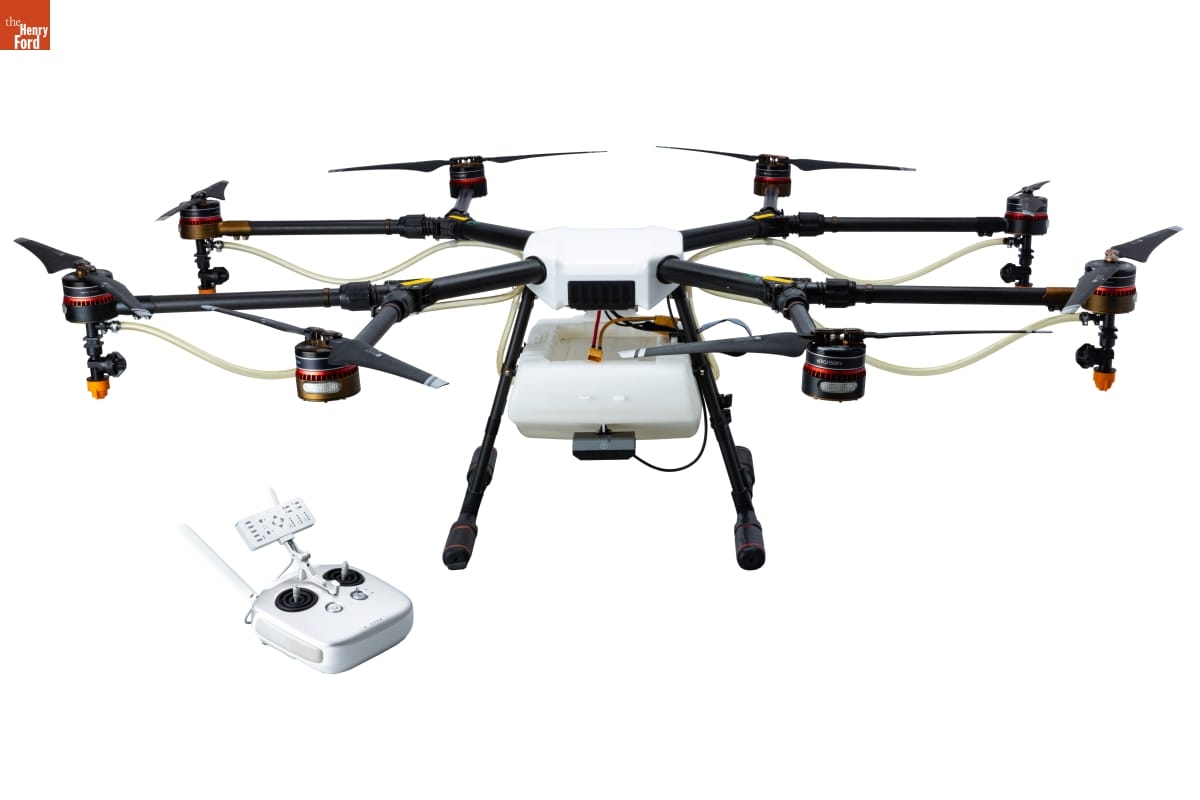
- "Agras MG-1" Drone, 2016 - The first uncrewed aerial vehicles or drones began hovering over farm fields in 2000. Some collected data. Others applied agricultural chemicals. Industry-leading China-based DJI designed its Agras MG-1 drone for precision spraying. Northwestern Michigan College used it to train operators after the Federal Aviation Administration began regulating drone use in 2016.
- 2016
- Collections - Artifact
"Agras MG-1" Drone, 2016
The first uncrewed aerial vehicles or drones began hovering over farm fields in 2000. Some collected data. Others applied agricultural chemicals. Industry-leading China-based DJI designed its Agras MG-1 drone for precision spraying. Northwestern Michigan College used it to train operators after the Federal Aviation Administration began regulating drone use in 2016.
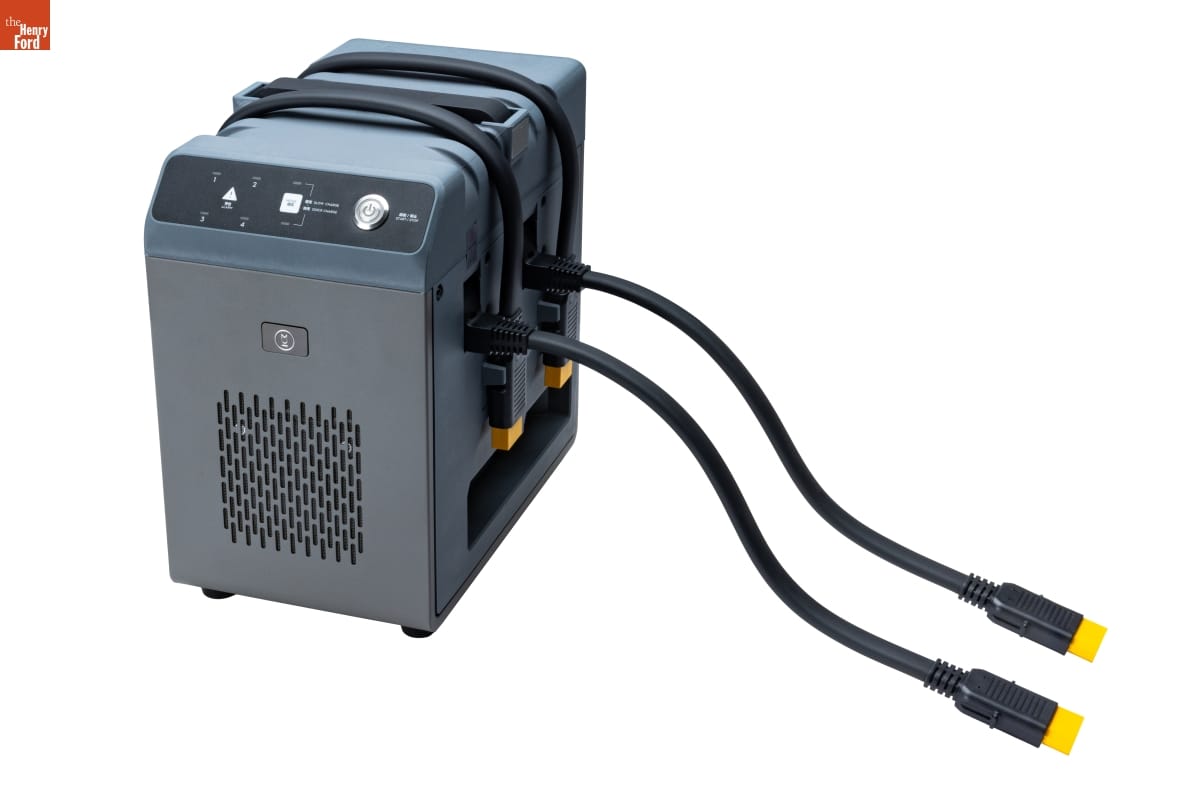
- Battery Charger for "Agras MG-1" Drone, 2016 - Drones used in agriculture collect data for mapping farm fields, monitoring crops, or spot-spraying chemicals. This spray drone, when loaded, can weigh up to 30 pounds, including one 8.8-pound LiPo 12S battery. Operators had to purchase the batteries separately. The drone landed when power levels ebbed.
- 2016
- Collections - Artifact
Battery Charger for "Agras MG-1" Drone, 2016
Drones used in agriculture collect data for mapping farm fields, monitoring crops, or spot-spraying chemicals. This spray drone, when loaded, can weigh up to 30 pounds, including one 8.8-pound LiPo 12S battery. Operators had to purchase the batteries separately. The drone landed when power levels ebbed.
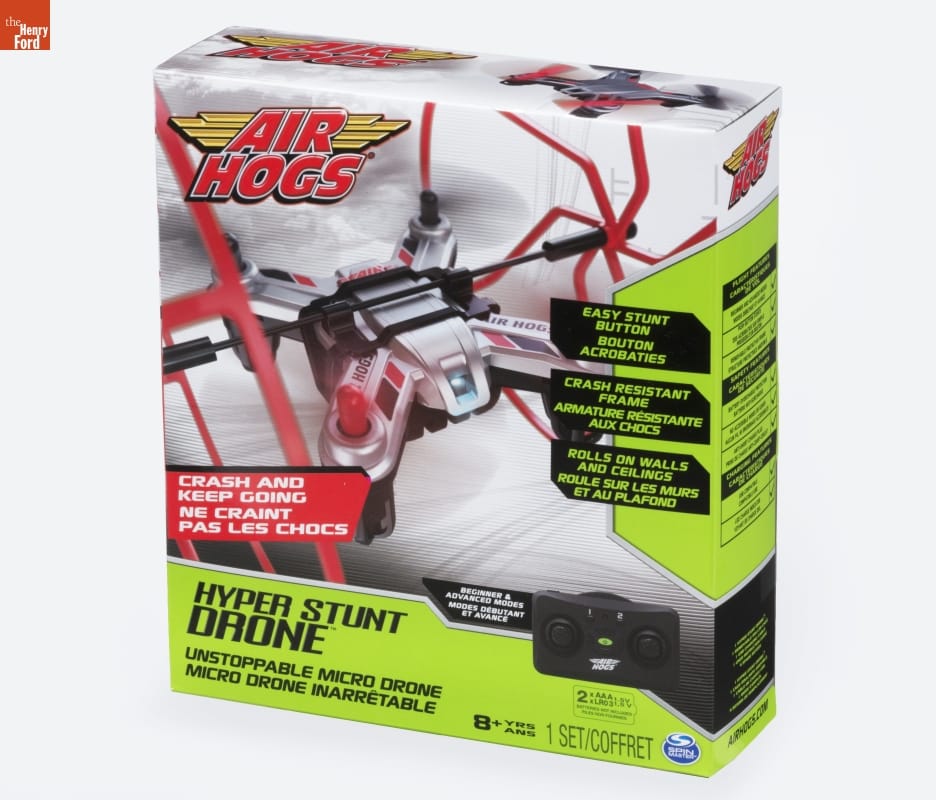
- Spin Master "Air Hogs Hyper Stunt Drone," 2016 -
- 2016
- Collections - Artifact
Spin Master "Air Hogs Hyper Stunt Drone," 2016
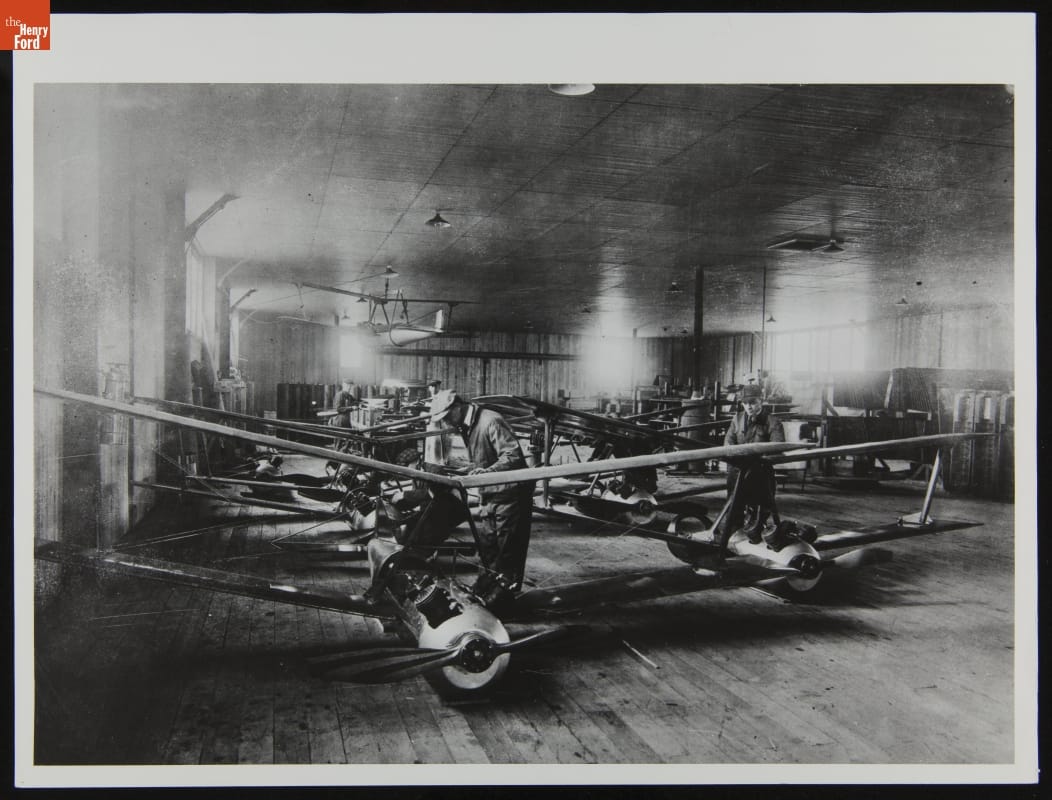
- Employees of the Dayton-Wright Airplane Company Working on the Kettering Bug, 1918 - Delco founder Charles Kettering designed the Kettering Bug for the U.S. Army during World War I. Powered by a four-cylinder engine, the Bug used a gyroscope and a system of electric and pneumatic controls to automatically fly a payload of explosives to a remote target. Unreliable in tests, the Bug was never used in combat.
- 1918
- Collections - Artifact
Employees of the Dayton-Wright Airplane Company Working on the Kettering Bug, 1918
Delco founder Charles Kettering designed the Kettering Bug for the U.S. Army during World War I. Powered by a four-cylinder engine, the Bug used a gyroscope and a system of electric and pneumatic controls to automatically fly a payload of explosives to a remote target. Unreliable in tests, the Bug was never used in combat.