
Search
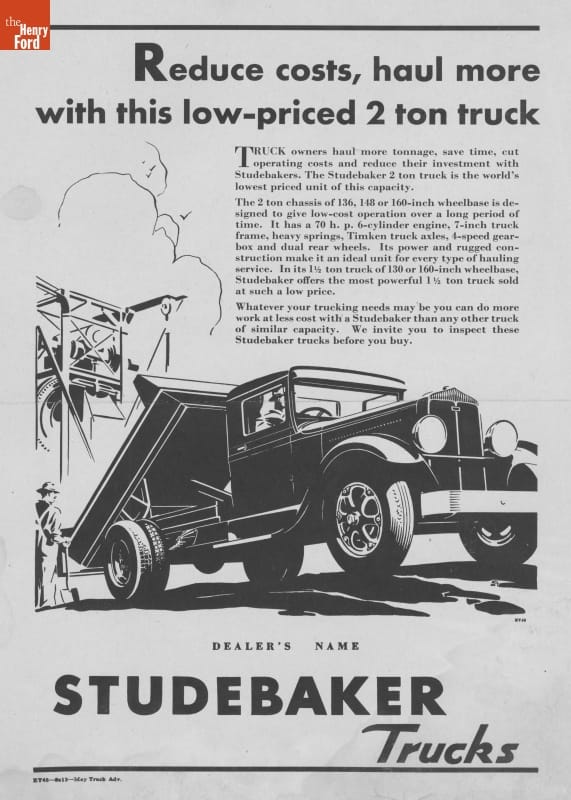
- "Reduce Costs, Haul More with this Low-Priced 2 Ton Truck" Studebaker Advertisement, circa 1932 - Studebaker had built horse-drawn commercial vehicles from the company's founding in 1852, but its entry into the motorized commercial vehicle market was more gradual. Studebaker's first significant heavy-duty trucks debuted for 1931. The company continued to offer various light, medium, and heavy-duty trucks into 1964 -- just two years before Studebaker ended motor vehicle production altogether.
- circa 1932
- Collections - Artifact
"Reduce Costs, Haul More with this Low-Priced 2 Ton Truck" Studebaker Advertisement, circa 1932
Studebaker had built horse-drawn commercial vehicles from the company's founding in 1852, but its entry into the motorized commercial vehicle market was more gradual. Studebaker's first significant heavy-duty trucks debuted for 1931. The company continued to offer various light, medium, and heavy-duty trucks into 1964 -- just two years before Studebaker ended motor vehicle production altogether.
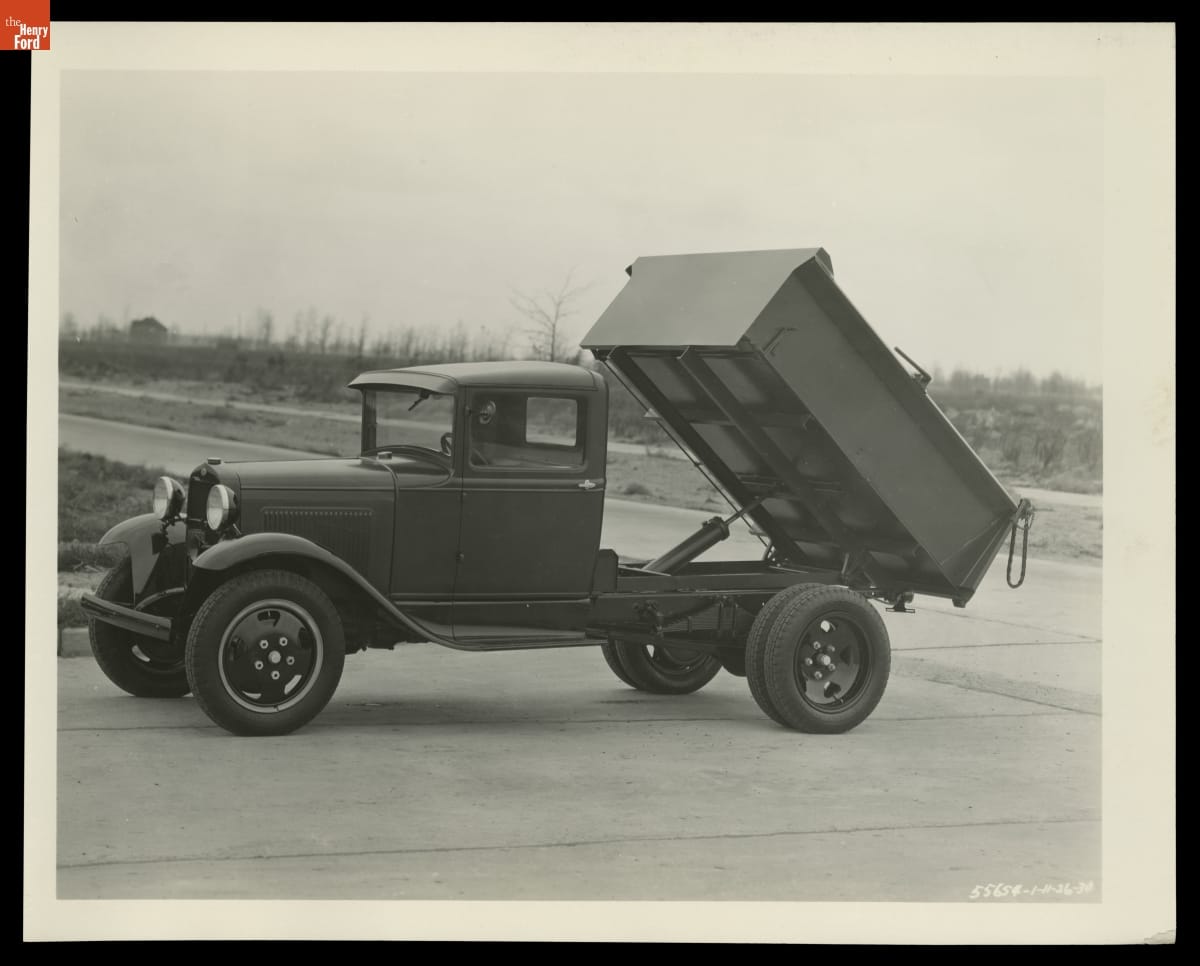
- Ford Model AA Dump Truck, November 1930 - Ford Motor Company's Model AA truck was based on its Model A automobile platform, but with a longer wheelbase, a stronger frame, and generally sturdier chassis components. The Model AA was available in several body styles to permit its use as a panel truck, an express delivery truck, a garbage truck, a bus, or an ambulance, among other options.
- November 26, 1930
- Collections - Artifact
Ford Model AA Dump Truck, November 1930
Ford Motor Company's Model AA truck was based on its Model A automobile platform, but with a longer wheelbase, a stronger frame, and generally sturdier chassis components. The Model AA was available in several body styles to permit its use as a panel truck, an express delivery truck, a garbage truck, a bus, or an ambulance, among other options.
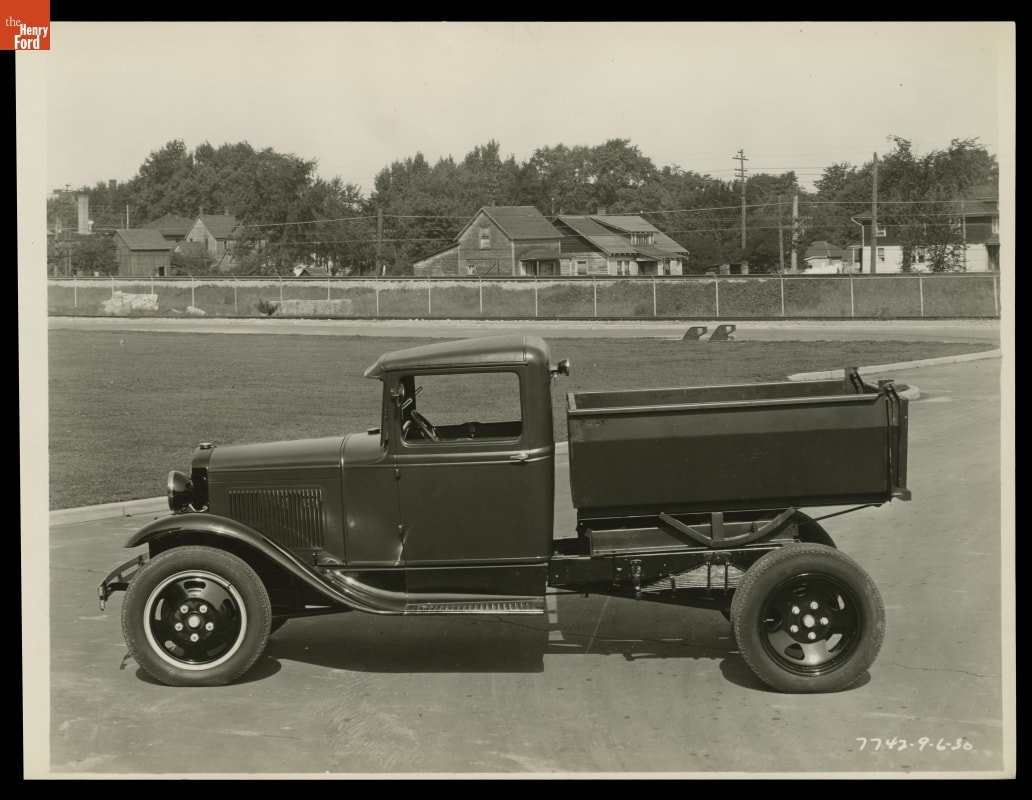
- Ford Model AA Dump Truck, September 1930 - Ford Motor Company's Model AA truck was based on its Model A automobile platform, but with a longer wheelbase, a stronger frame, and generally sturdier chassis components. The Model AA was available in several body styles to permit its use as a panel truck, an express delivery truck, a garbage truck, a bus, or an ambulance, among other options.
- September 06, 1930
- Collections - Artifact
Ford Model AA Dump Truck, September 1930
Ford Motor Company's Model AA truck was based on its Model A automobile platform, but with a longer wheelbase, a stronger frame, and generally sturdier chassis components. The Model AA was available in several body styles to permit its use as a panel truck, an express delivery truck, a garbage truck, a bus, or an ambulance, among other options.
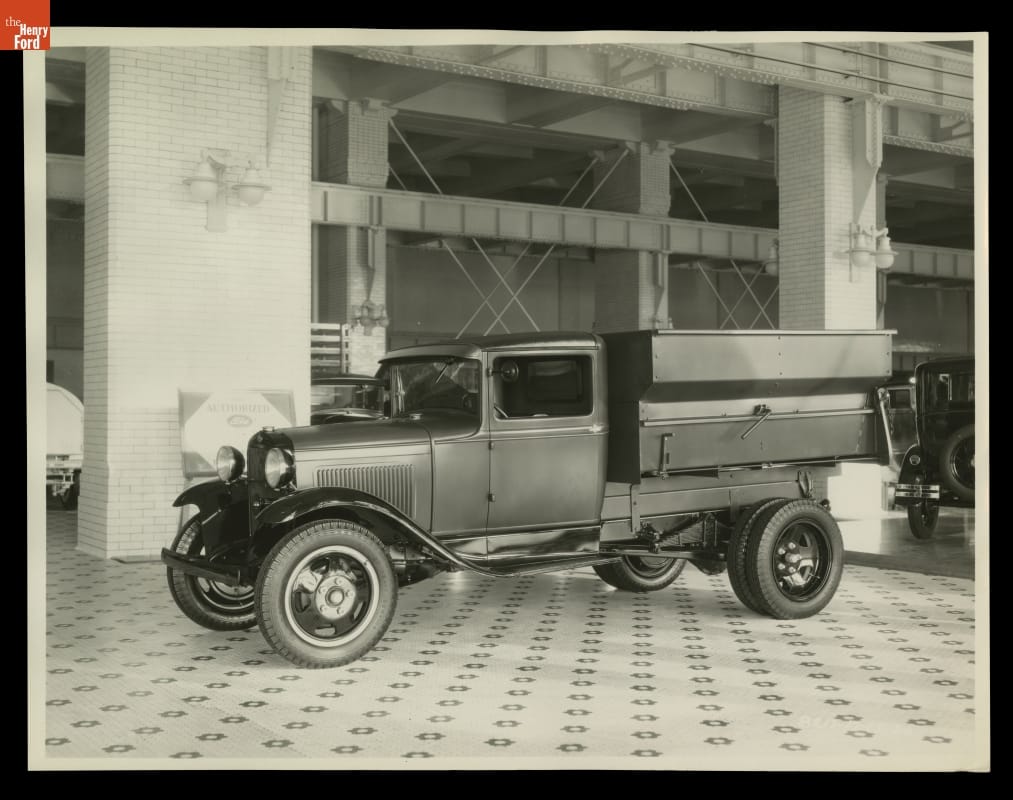
- Ford Model AA Coal Truck, December 1930 - Ford Motor Company's Model AA truck was based on its Model A automobile platform, but with a longer wheelbase, a stronger frame, and generally sturdier chassis components. The Model AA was available in several body styles to permit its use as a panel truck, an express delivery truck, a garbage truck, a bus, or an ambulance, among other options.
- December 15, 1930
- Collections - Artifact
Ford Model AA Coal Truck, December 1930
Ford Motor Company's Model AA truck was based on its Model A automobile platform, but with a longer wheelbase, a stronger frame, and generally sturdier chassis components. The Model AA was available in several body styles to permit its use as a panel truck, an express delivery truck, a garbage truck, a bus, or an ambulance, among other options.
- Hallmark "Tonka Mighty Dump Truck" Christmas Ornament, 1996 - Already known for greeting cards, Hallmark introduced a line of Christmas ornaments in 1973. The company's annual release of an increasing array of ornaments revolutionized Christmas decorating, appealing to customers' interest in marking memories and milestones as well as expressing one's personality and unique tastes.
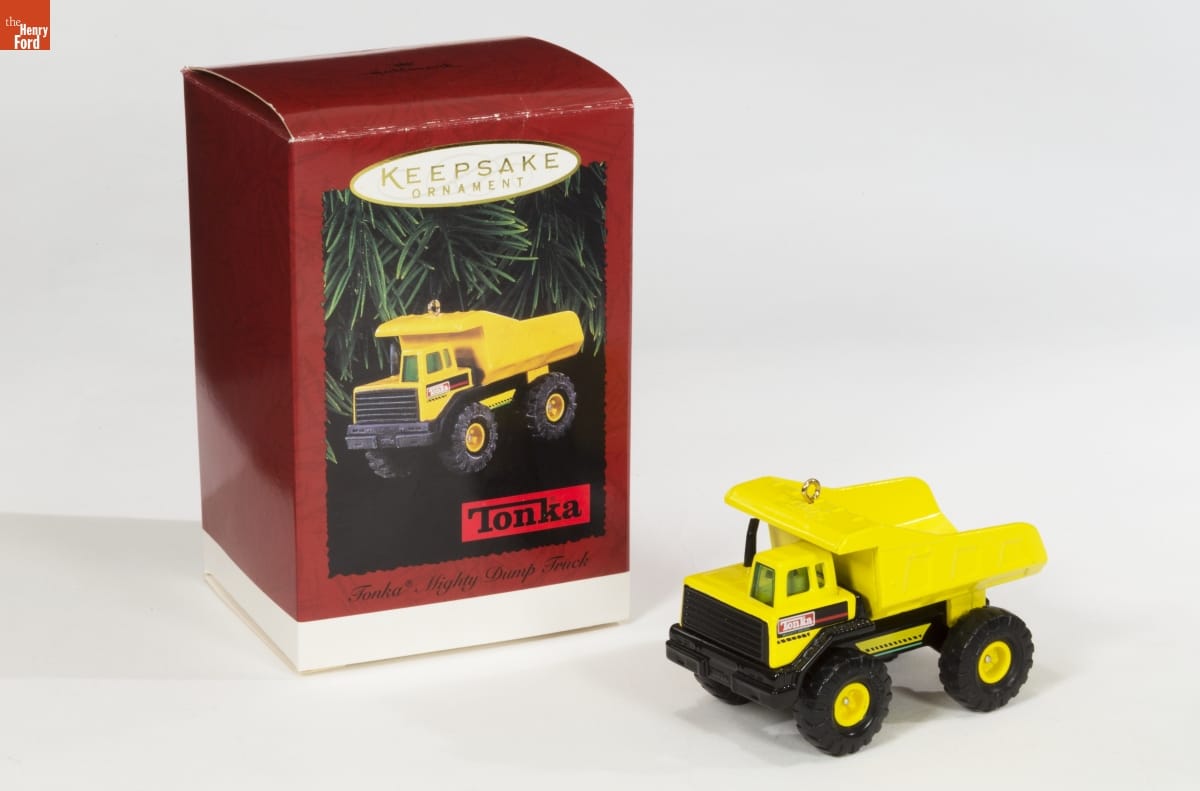
- 1996
- Collections - Artifact
Hallmark "Tonka Mighty Dump Truck" Christmas Ornament, 1996
Already known for greeting cards, Hallmark introduced a line of Christmas ornaments in 1973. The company's annual release of an increasing array of ornaments revolutionized Christmas decorating, appealing to customers' interest in marking memories and milestones as well as expressing one's personality and unique tastes.
- Ford Model AA Garbage Truck, December 1930 - Ford Motor Company's Model AA truck was based on its Model A automobile platform, but with a longer wheelbase, a stronger frame, and generally sturdier chassis components. The Model AA was available in several body styles to permit its use as a panel truck, an express delivery truck, a garbage truck, a bus, or an ambulance, among other options.
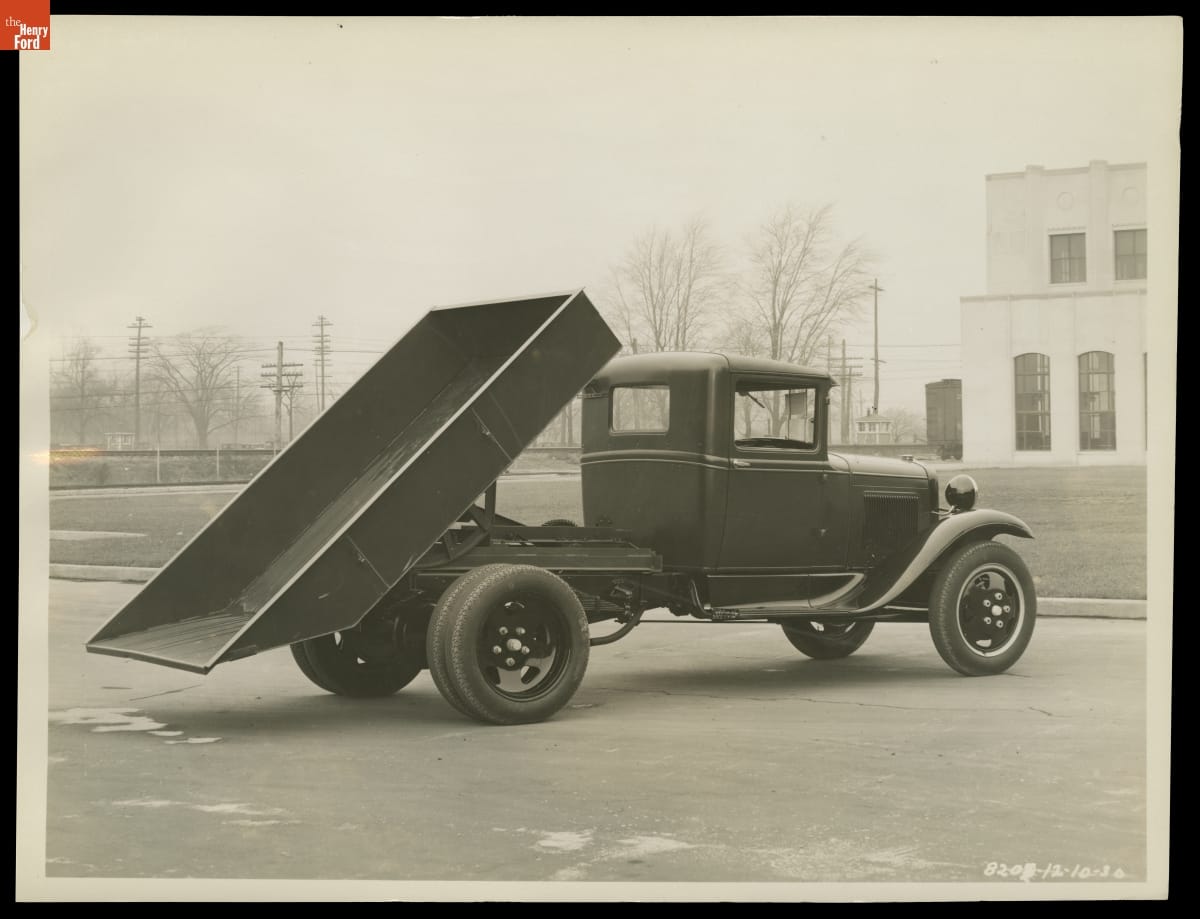
- December 10, 1930
- Collections - Artifact
Ford Model AA Garbage Truck, December 1930
Ford Motor Company's Model AA truck was based on its Model A automobile platform, but with a longer wheelbase, a stronger frame, and generally sturdier chassis components. The Model AA was available in several body styles to permit its use as a panel truck, an express delivery truck, a garbage truck, a bus, or an ambulance, among other options.
- Ford F-7 Dump Truck and a Tractor-drawn Sugar Beet Harvester in a Field, 1950 -
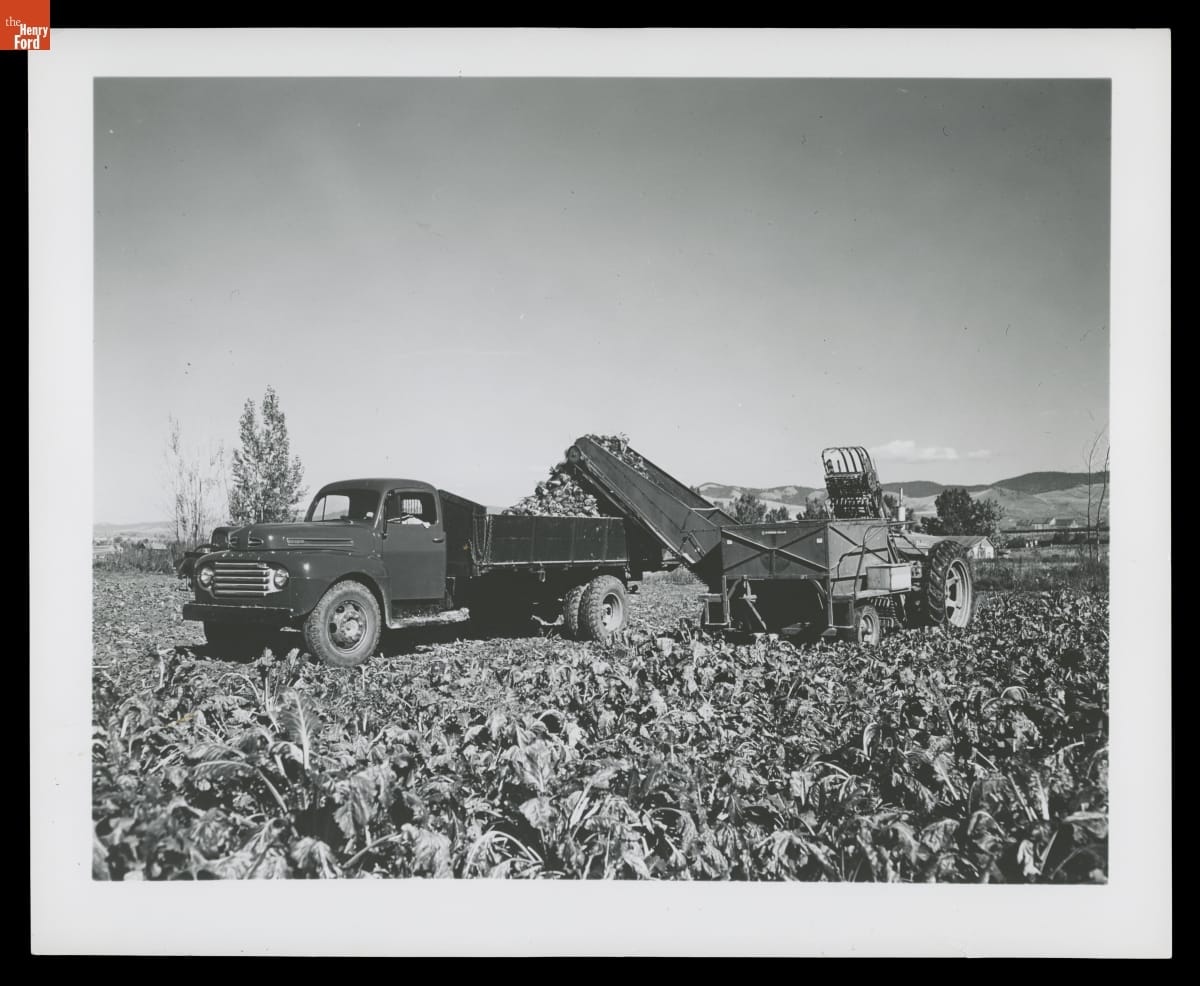
- March 23, 1951
- Collections - Artifact
Ford F-7 Dump Truck and a Tractor-drawn Sugar Beet Harvester in a Field, 1950
- "Big Buddys" Toy Dump Truck, 1996-1998 -
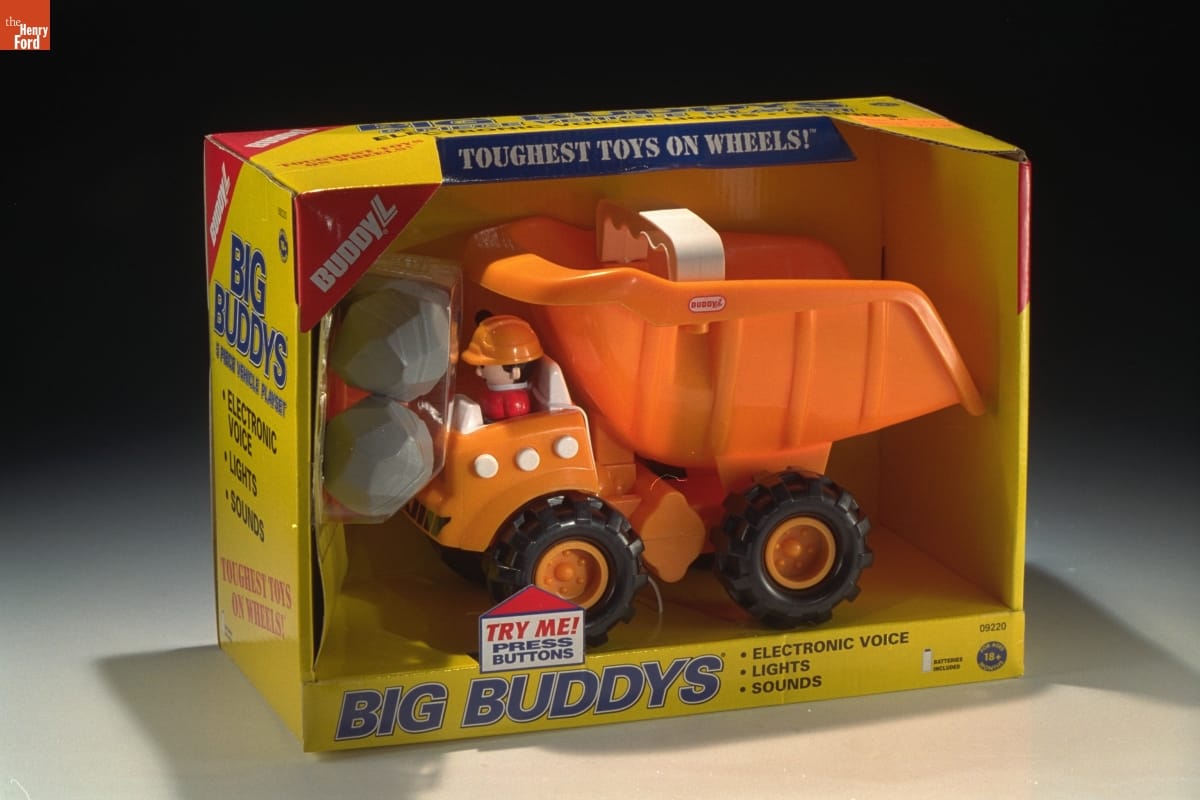
- 1996-1998
- Collections - Artifact
"Big Buddys" Toy Dump Truck, 1996-1998
- 1955 Ford T-800 "Big Job" Dump Truck -
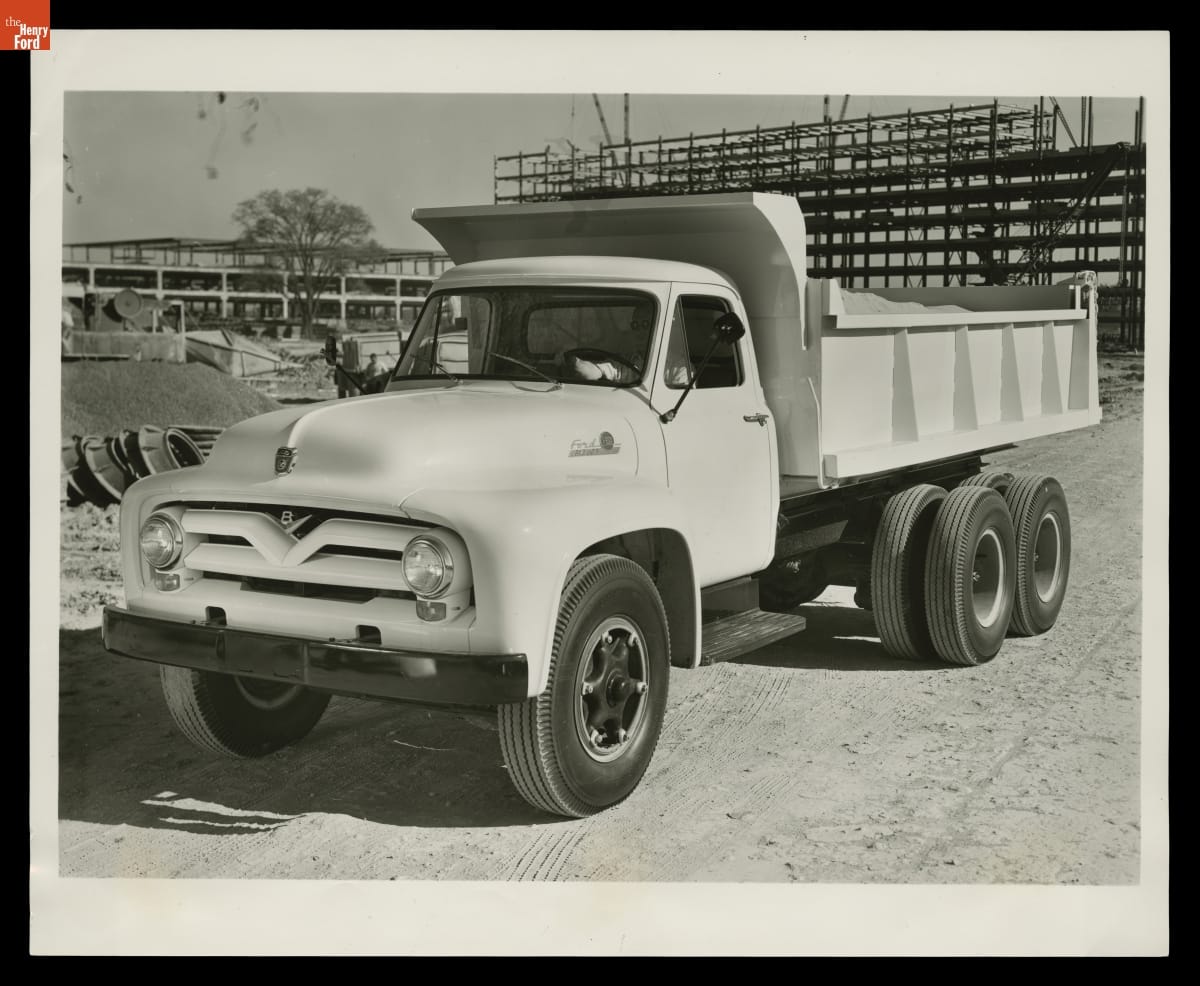
- November 09, 1954
- Collections - Artifact
1955 Ford T-800 "Big Job" Dump Truck
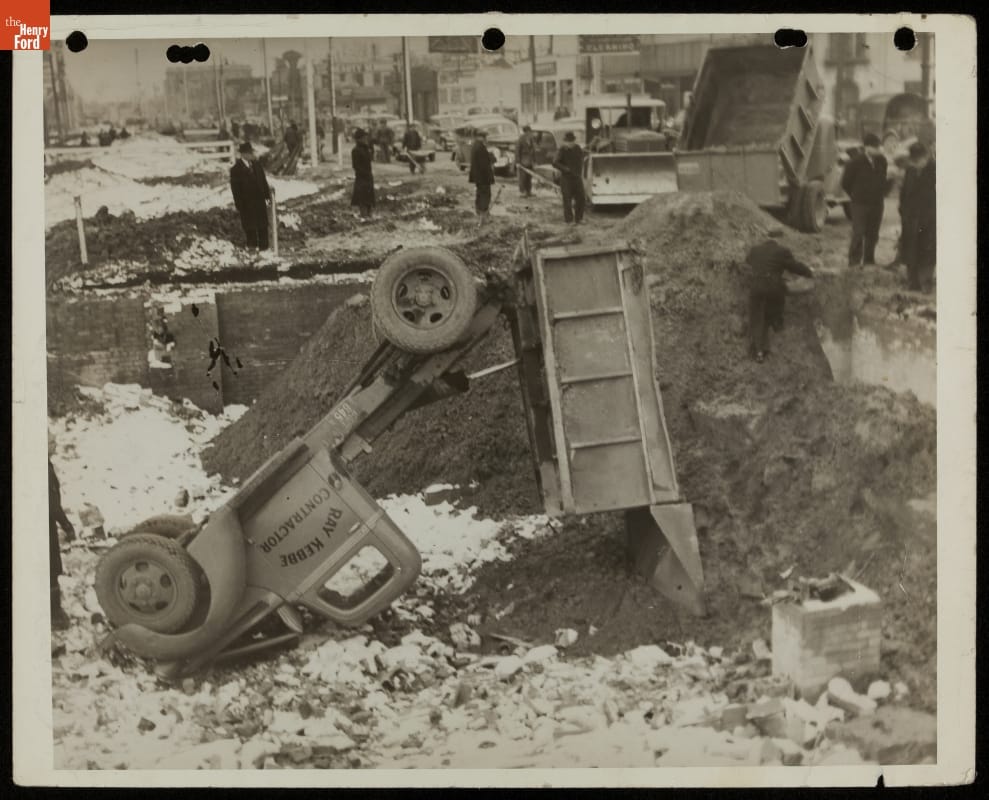
- Dump Truck Flipped Over at Construction Site, Detroit, Michigan, 1930-1945 - Automobiles are fast, powerful, and potentially dangerous. Accidents like this one, which drew crowds to a Detroit, Michigan, construction site, became more commonplace as automotive speeds and the number of drivers on American roads rapidly increased in the 20th century. Eventually, manufacturers, governments, and drivers themselves were compelled to improve automotive safety.
- 1930-1945
- Collections - Artifact
Dump Truck Flipped Over at Construction Site, Detroit, Michigan, 1930-1945
Automobiles are fast, powerful, and potentially dangerous. Accidents like this one, which drew crowds to a Detroit, Michigan, construction site, became more commonplace as automotive speeds and the number of drivers on American roads rapidly increased in the 20th century. Eventually, manufacturers, governments, and drivers themselves were compelled to improve automotive safety.